Consular Processing Florida: Your 2026 Immigrant Visa Guide
For those aspiring to move to Florida from abroad, consular processing is the essential path to obtaining an immigrant visa. This guide provides a comprehensive overview for 2026 applicants, detailing the step-by-step process from filing the initial petition with USCIS to the final embassy interview. We cover crucial stages like NVC processing, required documentation, estimated timelines, and associated costs. Learn how to avoid common mistakes that could delay your application and understand when professional legal assistance is indispensable. Florida Immigration Lawyers offers guidance to help you navigate this complex journey, ensuring your application for a Florida immigrant visa is handled with precision and care.
Quick Answer: Consular processing is the process by which individuals residing outside the United States obtain an immigrant visa through a U.S. embassy or consulate abroad to become lawful permanent residents. This multi-stage journey involves U.S. Citizenship and Immigration Services (USCIS), the National Visa Center (NVC), a medical examination, and a final interview, typically taking place in your home country. It is a critical path for many Florida-bound immigrants.
- Initiate with a USCIS-approved petition (e.g., Form I-130).
- The National Visa Center (NVC) collects and reviews all required documents.
- Complete a mandatory medical examination by an approved panel physician.
- Attend an immigrant visa interview at a U.S. embassy or consulate.
- Receive your immigrant visa, travel to the U.S., and await your Green Card.
Are you dreaming of joining your family in Gainesville, Florida, or starting a new life and career in the Sunshine State, but currently reside outside the United States? For many aspiring immigrants looking to make Florida their home, consular processing is the primary pathway to obtaining a Green Card. This intricate legal process allows you to apply for an immigrant visa at a U.S. embassy or consulate in your home country.
Navigating the complexities of U.S. immigration law can feel overwhelming, especially when you are thousands of miles away. Understanding each step, from initial petition filing to the final embassy interview, is crucial for a successful outcome. This comprehensive guide, tailored for Florida-bound applicants in 2026, will walk you through the entire consular processing journey.
We will cover everything from required documentation and timelines to common pitfalls and cost factors. Our goal is to equip you with the knowledge needed to pursue your dream of living in Florida. For personalized guidance and to discuss your specific situation, call Florida Immigration Lawyers at 1-844-YO-PELEO for a free consultation. Our experienced team is here to help you every step of the way.
Understanding Consular Processing for Florida Residents in 2026
Consular processing is the standard procedure for individuals seeking an immigrant visa who are living abroad. Instead of adjusting their status within the U.S., these applicants complete their Green Card application at a U.S. embassy or consulate in their home country. This pathway is distinct from Adjustment of Status, which is generally for those already physically present in the United States.
For those planning to settle in Florida, whether in bustling Miami, scenic Orlando, or charming Gainesville, understanding the nuances of consular processing is vital. The process ensures that all security checks are completed and that applicants meet all eligibility requirements before entering the U.S. as lawful permanent residents. This method is governed by specific sections of the Immigration and Nationality Act (INA), such as INA Section 222(g), which outlines the requirements for immigrant visas.
The journey primarily involves three key governmental entities: U.S. Citizenship and Immigration Services (USCIS), the National Visa Center (NVC), and the U.S. Embassy or Consulate abroad. USCIS first approves the underlying immigrant petition, establishing your eligibility for a visa. Subsequently, the NVC takes over to collect all necessary documents and fees, preparing your case for the final interview.
Finally, the U.S. embassy or consulate conducts the interview, makes a final determination, and issues the immigrant visa. While the general process is uniform, specific requirements and processing times can vary based on your country of origin and the type of visa you are seeking. This is why having a clear understanding of each stage is so important for those looking to move to Florida.
For many Florida immigrant visa applicants, especially those sponsored by family members, the process begins with an approved Form I-130, Petition for Alien Relative. Other petitions, like Form I-140 for employment-based visas, also follow a similar consular processing route. The goal is to ensure a smooth transition to your new life in Florida, with minimal delays and complications.
Step-by-Step Guide to the Consular Processing Journey
Embarking on the consular processing journey requires meticulous attention to detail and adherence to strict procedures. Here is a detailed, step-by-step guide to help Florida-bound applicants navigate this complex path:
-
Step 1: File the Immigrant Petition with USCIS. The first stage involves filing an immigrant petition with USCIS. This is typically done by a U.S. citizen or lawful permanent resident petitioner on behalf of the visa applicant. Common petitions include Form I-130, Petition for Alien Relative, for family-based immigration, or Form I-140, Immigrant Petition for Alien Worker, for employment-based cases. USCIS reviews this petition to determine eligibility for the underlying immigration benefit. This initial approval is foundational to the entire process. Learn more about family-based immigration and how we can help at Florida Immigration Lawyers' Family Immigration page.
-
Step 2: USCIS Approval and Transfer to the National Visa Center (NVC). Once USCIS approves your petition, it is then forwarded to the Department of State's National Visa Center (NVC). The NVC acts as a liaison, collecting all necessary fees and documents before your interview can be scheduled. They will assign a case number and invoice ID number, which you will use to access the Consular Electronic Application Center (CEAC) portal. This transfer signifies that your case is moving closer to the interview stage.
-
Step 3: NVC Processing – Fee Payments and Document Submission. At this stage, the NVC will instruct you to pay the required fees: the Immigrant Visa Application Processing Fee and the Affidavit of Support Fee. After payment, you and your petitioner must submit various civil documents and forms electronically. This includes Form DS-260, Immigrant Visa and Alien Registration Application, and Form I-864, Affidavit of Support, along with supporting financial and civil documents like birth certificates, marriage certificates, and police certificates. All documents must be scanned and uploaded to the CEAC portal. This is a crucial phase where thoroughness is paramount to avoid delays.
-
Step 4: Complete the Medical Examination. Once your documents are accepted by the NVC, you will receive instructions to schedule a medical examination. This exam must be conducted by a physician approved by the U.S. embassy or consulate in your country of residence. The medical exam assesses your health, ensuring you meet U.S. health standards and are not inadmissible on medical grounds under INA Section 212(a)(1). The results are typically sealed and given to you to present at your interview.
-
Step 5: Immigrant Visa Interview Scheduling. After the NVC confirms that all fees and documents have been properly submitted and reviewed, they will schedule your embassy interview. The NVC sends an appointment letter to both the petitioner and the applicant, indicating the date, time, and location of the interview at the designated U.S. embassy or consulate. This is the final step before a decision is made on your visa application. The interview location is usually in the applicant's country of nationality or last habitual residence.
-
Step 6: Attend the Immigrant Visa Interview. This is the culmination of the consular processing journey. You must attend the interview with all original documents, including those submitted to the NVC, your passport, and the sealed medical exam results. A consular officer will review your application, verify your identity, and ask questions to ensure you are eligible for the immigrant visa and not subject to any grounds of inadmissibility. Honesty and thorough preparation are key here. Our firm can help you prepare for this critical step; visit our Immigration Services page for more information.
-
Step 7: Visa Issuance. If your interview is successful and the consular officer approves your application, your immigrant visa will be stamped into your passport. You will also receive a sealed packet of documents, which you must not open. This packet contains important information that you will present to U.S. Customs and Border Protection (CBP) upon your arrival in the United States.
-
Step 8: Entry to the U.S. and Green Card Mailing. With your immigrant visa, you can now travel to the United States. Upon arrival at a U.S. port of entry, a CBP officer will review your documents and process your entry as a lawful permanent resident. After your entry, you will typically need to pay the USCIS Immigrant Fee online. Your physical Green Card will then be mailed to your designated address in Florida, usually within a few weeks or months. Welcome to Florida!
Essential Document Checklist for Your Immigrant Visa Interview
A crucial part of successful consular processing is presenting a complete and accurate set of documents at your embassy interview. Missing or incorrect documents can lead to significant delays, known as administrative processing, or even a denial. Here is a comprehensive checklist of documents typically required for your Florida immigrant visa application:
- Passport: A valid passport that will not expire for at least six months beyond your intended date of entry into the United States.
- DS-260 Confirmation Page: A printed confirmation page of your electronically submitted Form DS-260, Immigrant Visa and Alien Registration Application.
- Birth Certificates: Your original birth certificate and, if applicable, the birth certificates of your petitioner and any accompanying family members.
- Marriage Certificates: Original marriage certificates (if married) and divorce or death certificates for any previous marriages of both you and your petitioner.
- Police Certificates: Original police certificates from all countries where you have lived for certain periods since age 16. Specific requirements vary by country.
- Court and Prison Records: If you have any criminal history, certified copies of all court and prison records, regardless of the outcome or how minor the offense.
- Military Records: If you served in the military of any country, provide certified copies of your military records.
- Affidavit of Support (Form I-864) and Financial Evidence: The original Form I-864 completed by your petitioner (and any joint sponsors), along with supporting financial documents such as federal tax returns, W-2s, and employment verification letters. This demonstrates the petitioner's ability to financially support you and prevents you from becoming a public charge under 8 U.S.C. § 1182(a)(4).
- Medical Examination Results: The sealed envelope containing the results of your mandatory medical examination. Do not open this envelope.
- Photographs: Two identical color photographs that meet specific U.S. visa photo requirements (typically 2x2 inches, white background, no glasses, recent).
- Interview Appointment Letter: The letter you received from the NVC confirming your interview date and time.
- Originals/Copies of All Submitted NVC Documents: While you submitted documents electronically to the NVC, it is crucial to bring the originals and a complete set of photocopies of all documents to your interview. The consular officer may ask to see them.
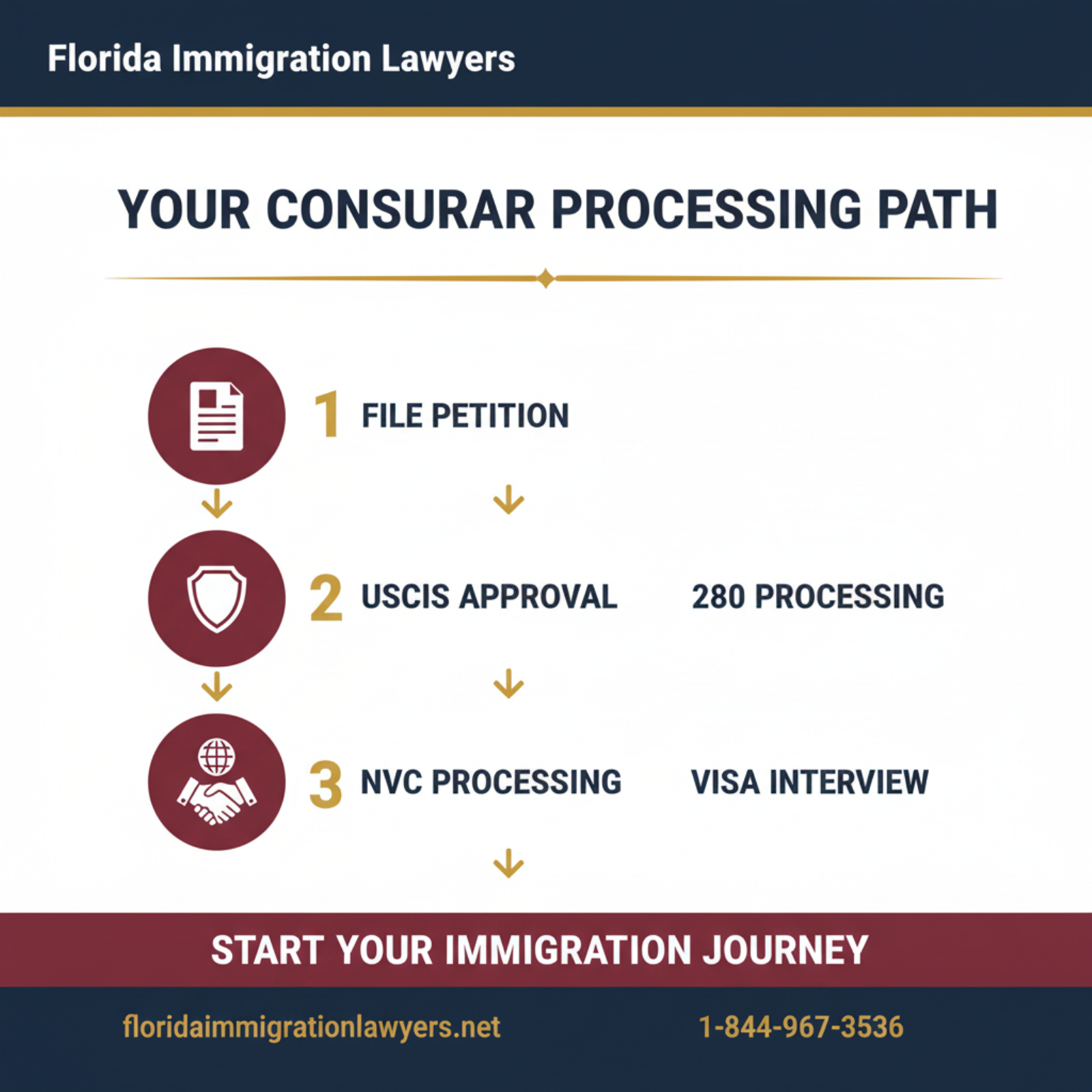
Organizing these documents thoroughly before your interview can significantly reduce stress and help ensure a smoother process. Our team at Florida Immigration Lawyers can help you compile and review all necessary documentation for your application.
Consular Processing Timeline and Expectations for Florida Applicants
One of the most common questions we receive from individuals hoping to move to Florida is, "How long is the consular processing process?" The answer is not straightforward, as the total green card processing time can vary significantly. Several factors influence the timeline, including the type of immigrant visa, the country where the petition is filed, current backlogs, and the efficiency of the applicant in submitting documents.
Generally, the process can be broken down into three main phases:
-
USCIS Petition Processing: This initial stage, where your I-130 or I-140 petition is reviewed and approved by USCIS, can take anywhere from several months to several years. Family-based petitions, especially for certain categories, often have longer waiting periods due to visa availability. You can check "USCIS family immigration" processing times on the USCIS website for general estimates. The "immigration waiting list by country" and specific visa categories play a significant role here, as outlined in the Visa Bulletin.
-
National Visa Center (NVC) Processing: Once USCIS approves your petition, it moves to the NVC. This stage typically takes 2-6 months, assuming you promptly pay fees and submit all required documents. The NVC will review your submitted documents for completeness. If documents are missing or incorrect, it can lead to significant delays, as your case will be placed on hold until corrections are made. This is where efficient "NVC processing" is vital.
-
U.S. Embassy/Consulate Interview and Visa Issuance: After NVC processing is complete, your case is sent to the U.S. embassy or consulate. The time it takes to schedule your embassy interview can vary from a few weeks to several months, depending on the consulate's workload and appointment availability. Following a successful interview, the visa is typically issued within a few days to a few weeks. However, some cases may undergo "administrative processing," which can extend the timeline further.
It is important to regularly check the Department of State's Visa Bulletin at travel.state.gov to see if your "priority date current" for your specific visa category and country of chargeability. This bulletin provides crucial information on visa availability and helps manage expectations regarding when an "immigrant visa number is not immediately available." While the process can be lengthy, especially for those looking to join family in Gainesville or other Florida cities, careful preparation and timely responses are your best allies.
Cost Factors and Fee Breakdown in Consular Processing
Understanding the financial aspects of consular processing is essential for any applicant hoping to secure a Florida immigrant visa. The total cost involves several fees payable to different government agencies, along with other related expenses. It is important to budget carefully, as these fees are generally non-refundable, regardless of the outcome of your application. Please note that specific fee amounts are subject to change by the U.S. government; always refer to official USCIS and Department of State websites for the most current figures.
Here’s a breakdown of the typical cost factors:
-
USCIS Petition Filing Fees: The initial fee is paid when the petitioner files Form I-130 (Petition for Alien Relative) or Form I-140 (Immigrant Petition for Alien Worker) with USCIS. This fee covers the processing of the underlying petition that establishes your eligibility for an immigrant visa. This is the first significant expense in the consular processing journey.
-
National Visa Center (NVC) Processing Fees: Once your petition is approved by USCIS and transferred to the NVC, you will need to pay two distinct fees for "NVC processing":
- Immigrant Visa Application Processing Fee: This fee is for the processing of your Form DS-260, Immigrant Visa and Alien Registration Application.
- Affidavit of Support Processing Fee: This fee is for the processing of the Form I-864, Affidavit of Support, submitted by your petitioner (and any joint sponsors).
-
Medical Examination Fees: The cost of the mandatory medical examination is paid directly to the authorized panel physician. These fees vary by country and by clinic, but they are a necessary expense. This examination includes a review of your medical history, a physical examination, chest X-ray, and blood tests for certain conditions.
-
USCIS Immigrant Fee: After your immigrant visa is issued and you have entered the United States, you will typically need to pay the USCIS Immigrant Fee online. This fee covers the cost of producing and mailing your physical Green Card. It is important to pay this fee promptly to ensure you receive your Green Card without delay.
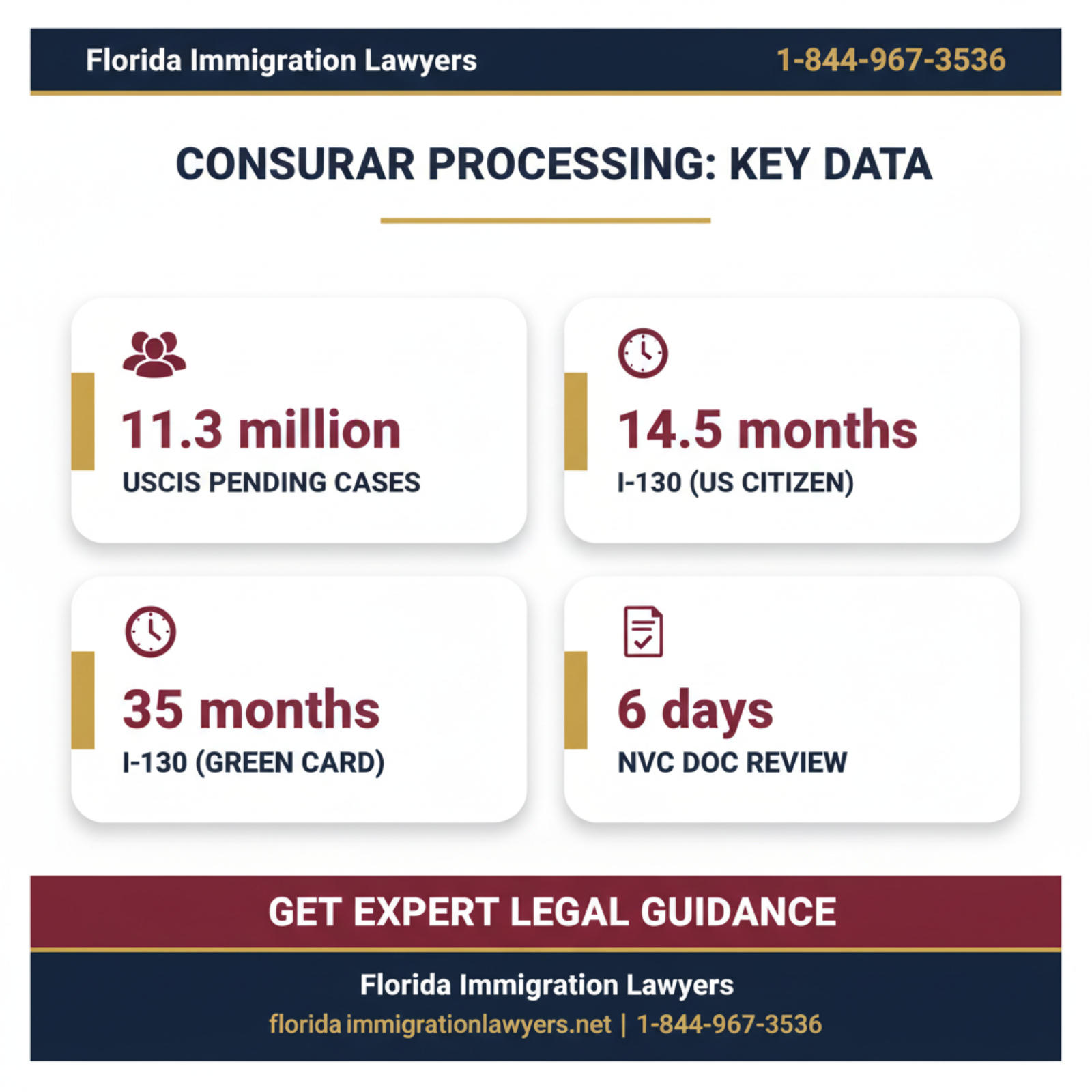
Key Statistics & Data -
Travel Costs: Do not forget to factor in the cost of travel to and from the U.S. embassy or consulate for your interview, as well as airfare to Florida once your visa is approved. These expenses can be substantial, especially for families.
-
Legal Fees: While not mandatory, retaining an experienced immigration attorney is highly recommended. Legal fees cover professional guidance, document review, interview preparation, and assistance with any complexities that may arise. Investing in legal counsel can save you time, stress, and potentially costly mistakes. We invite you to consider our services at Florida Immigration Lawyers for your Florida immigrant visa application.
Careful financial planning is a key component of a successful immigration journey to Florida. Always verify current fees on official government websites like USCIS.gov and travel.state.gov.
Do not navigate this complex process alone. Contact Florida Immigration Lawyers today for assistance.
Common Mistakes to Avoid During Consular Processing
The consular processing journey, while offering a clear path to a Florida immigrant visa, is fraught with potential pitfalls. Making even a small error can lead to significant delays, requests for additional evidence, or even the denial of your application. Avoiding these common mistakes is crucial for a smooth and timely process.
-
Incomplete or Inaccurate Documentation: Submitting an application with missing forms, outdated information, or incorrect translations is a frequent cause of delays. The NVC will send your case back for corrections, prolonging the "NVC processing" time. Always double-check every document against the NVC checklist and ensure all translations are certified.
-
Missing Deadlines: The NVC provides specific deadlines for fee payments and document submissions. Failing to meet these deadlines can result in your case being administratively closed or terminated. Reopening a closed case is possible but adds considerable time and complexity to your journey for a "Florida immigrant visa."
-
Failure to Disclose All Information: Deliberately withholding or misrepresenting material facts, such as prior arrests, immigration violations, or previous visa denials, can lead to a finding of inadmissibility under INA Section 212(a)(6)(C)(i). This often results in a permanent bar from the U.S., unless a waiver is available and approved. Honesty is always the best policy.
-
Incorrectly Completing Form DS-260: The online Immigrant Visa and Alien Registration Application (DS-260) is a critical document. Errors here can cause problems at your "embassy interview." Ensure all biographical information, addresses, and answers to eligibility questions are precise and consistent with your other documents.
-
Inadequate Financial Support (Form I-864): The Affidavit of Support (Form I-864) must demonstrate that the petitioner (and any joint sponsors) has sufficient income to support the immigrant and will prevent them from becoming a public charge. Insufficient income or incomplete supporting financial documents (tax returns, W-2s, employment letters) can lead to a request for a joint sponsor or even a denial based on public charge grounds under 8 U.S.C. § 1182(a)(4).
-
Ignoring Medical Exam Requirements: Not scheduling your medical exam with an approved panel physician, or failing to follow their instructions, can jeopardize your application. Certain medical conditions, if not properly addressed, can also lead to inadmissibility.
-
Poor Interview Preparation: Arriving at your "embassy interview" unprepared can lead to nervousness, confusion, and an inability to answer questions clearly. Practice answering common questions, understand the purpose of your visa, and be ready to explain any discrepancies in your application.
-
Not Updating Contact Information: Moving or changing phone numbers without updating the NVC or the consulate can mean missing critical notices, appointment letters, or requests for additional information. This can cause significant delays or even case termination.
-
Traveling to the U.S. on a Non-Immigrant Visa While Processing: In some cases, entering the U.S. on a non-immigrant visa (like a tourist visa) with the intent to adjust status, while also undergoing consular processing, can be seen as misrepresentation. This can complicate your application or lead to accusations of visa fraud. It is generally advisable to remain outside the U.S. during consular processing.
-
Failure to Understand Inadmissibility Grounds: Many applicants are unaware of the various grounds of inadmissibility, which can range from certain criminal convictions and health-related issues to prior immigration violations or security concerns. A thorough understanding can help identify potential issues early and explore possible waivers. For example, individuals with prior deportations or certain criminal records may face significant hurdles, and could benefit from reviewing information on deportation defense.
-
Not Consulting an Attorney: The biggest mistake is trying to navigate the complex U.S. immigration system without professional legal guidance. An experienced immigration attorney can identify potential issues, ensure all documents are correct, prepare you for your interview, and represent you if complications arise. This is especially true for "Florida immigrant visa" applicants who might have unique circumstances.
When to Call Florida Immigration Lawyers
While this guide provides a comprehensive overview of consular processing for those seeking a Florida immigrant visa, individual cases often present unique challenges. The U.S. immigration system is notoriously complex, and even minor errors can lead to significant delays or denials. Knowing when to seek professional legal assistance is paramount to protecting your future in Florida.
You should consider contacting Florida Immigration Lawyers if any of the following scenarios apply to you:
-
Complex Family Situations: If your family structure is unusual, involves step-relations, prior marriages, or adoptions, an attorney can help ensure all relationships are properly documented and meet USCIS requirements.
-
Previous Visa Denials or Immigration Issues: If you or your petitioner have a history of visa denials, overstays, or any prior immigration violations, these issues can complicate your current application. An attorney can analyze your immigration history and advise on the best course of action.
-
Criminal History: Any criminal record, no matter how minor or how long ago, can be a ground of inadmissibility. An attorney can assess the impact of your criminal history, determine if a waiver is available, and help you prepare for questions during your "embassy interview."
-
Prior Deportations or Removals: If you have ever been deported or removed from the U.S., you face significant bars to re-entry. Navigating these grounds of inadmissibility and potential waivers requires specialized legal expertise. Our firm focuses on deportation defense and can provide crucial guidance.
-
Need for Waiver Applications: If you are found inadmissible for any reason, you may need to apply for a waiver. Waiver applications are highly complex and require strong legal arguments and extensive documentation. An attorney is essential for successfully preparing and submitting these applications.
-
NVC Administrative Processing Delays: If your case is stuck in "NVC processing" or "administrative processing" at the consulate for an unusually long time without clear reasons, an attorney can inquire on your behalf and help resolve the issues.
-
Any Doubts or Anxieties: If you feel overwhelmed, confused, or anxious about any part of the consular processing journey, a consultation with an attorney can provide clarity and peace of mind. We can explain the process in simple terms and prepare you for every step.
Florida Immigration Lawyers serves clients throughout Florida, including Orlando. Our dedicated attorneys are committed to providing empathetic, clear, and effective legal representation. Don't risk your future in Florida by navigating the system alone. We are here to help you achieve your dream. Learn more about our team on our attorneys page.
About Florida Immigration Lawyers
Florida Immigration Lawyers is an immigration law firm dedicated to helping individuals and families achieve their American dreams across the Sunshine State. With a deep understanding of U.S. immigration laws and a commitment to client success, we provide comprehensive legal services to immigrants in Gainesville, Miami, Orlando, Tampa, and all surrounding areas of Florida.
Our experienced attorneys focus on a wide range of immigration matters, including family-based immigration, employment visas, deportation defense, asylum, and citizenship. We pride ourselves on offering personalized, compassionate, and effective legal representation, ensuring that each client receives the attention and experience their case deserves. Our firm is founded on the principles of integrity, advocacy, and unwavering support for the immigrant community.
Why Choose Florida Immigration Lawyers?
- Experienced Team: Our attorneys possess extensive knowledge of immigration law and experience.
- Client-Centered Approach: We prioritize your needs, providing clear communication and empathetic guidance throughout your legal journey.
- Comprehensive Services: From initial consultations to complex litigation, we cover all aspects of immigration law.
- Local Insight: While we serve all of Florida, our understanding of local nuances and resources benefits clients across the state.
- Bilingual Support: We offer services in both English and Spanish to ensure effective communication for a diverse clientele.
Your journey to a new life in Florida is important to us. We are available 24/7 to answer your questions and offer free consultations to discuss your immigration needs. Let us be your trusted partner in navigating the complexities of immigration law.
Contact Florida Immigration Lawyers today:
- Phone: 1-844-YO-PELEO
- Website: https://www.floridaimmigrationlawyers.net
- Available: 24/7 for your convenience
- Consultations: Free and confidential
Sources and References
- U.S. Citizenship and Immigration Services (USCIS)
- U.S. Department of State - Visa Bulletin
- U.S. Department of State - Fees for Visa Services
- Executive Office for Immigration Review (EOIR)
- 8 U.S.C. Chapter 12 - Immigration and Nationality Act (INA)
- INA Section 212(a) - Grounds of Inadmissibility
- 8 U.S.C. § 1182(a)(4) - Public Charge Ground of Inadmissibility
- INA Section 222(g) - Immigrant Visa Application Procedures
- 22 CFR Part 42 - Immigrant Visas
- USCIS Policy Manual
This article provides general legal information and is not intended as legal advice. Every case is unique, and outcomes depend on specific facts and circumstances. Contact an attorney for advice about your particular situation. Immigration laws are subject to change.
Your journey to a new life in Florida begins with informed decisions and strong legal support. Don't leave your future to chance. Contact Florida Immigration Lawyers today at 1-844-YO-PELEO for a free, confidential consultation. We are ready to help you navigate the complexities of consular processing and achieve your immigration goals.
Se Habla Español - Estamos aquí para ayudarle.
Do Not Navigate This Process Alone
Our experienced immigration attorneys are ready to fight for you. Get a free, confidential case review today.
Se Habla Español
Or leave your details and we’ll call you:
Free Evaluation in 24 Hours
Or talk to us right now

AI voice assistant — available 24/7
FreeFrequently Asked Questions

William J. Vásquez
Founding Attorney · Vasquez Law Firm
U.S. Air Force veteran and immigration attorney with years of hands-on U.S. immigration experience. J.D., NCCU School of Law. AILA member. Admitted to the 4th, 5th, and 11th Circuit Courts.
Available 24/7 - Free Evaluations
Reviewed for legal accuracy by William J. Vásquez
Licensed in North Carolina; U.S. immigration is federal practice.
Related Legal Services
Our Florida immigration attorneys can help you with business immigration, deportation defense and family immigration services. Call today at 1-844-YO-PELEO for a free case review.
Related Links
Related Topics
Free Legal Case Review
Discuss your case with our experienced attorneys. We're available 24/7.
Se Habla Español - Estamos aquí para ayudarle.
Related Articles
DUI Immigration Consequences in Florida 2026
A DUI conviction in Florida can have severe immigration consequences, potentially leading to inadmissibility, deportation, or denial of immigration benefits. For non-citizens, a DUI is not just a traffic offense but a serious criminal matter that federal immigration law scrutinizes closely. Factors like multiple offenses, injury, or property damage can escalate a simple DUI to a Crime Involving Moral Turpitude (CIMT) or even an aggravated felony, triggering mandatory detention and removal proceedings. Understanding the specific nature of your Florida conviction and its interpretation under the Immigration and Nationality Act (INA) is crucial. This article outlines how DUIs impact immigration status, the grounds for inadmissibility and deportation, a step-by-step guide to navigating the process, essential documentation, and expected timelines for 2026. We also highlight common mistakes to avoid and when to seek legal counsel from an experienced immigration attorney. Florida Immigration Lawyers offers comprehensive support for individuals facing these challenging situations, providing expert guidance through complex legal landscapes.
Dual Citizenship Lawyer in Florida: What You Need to Know
For Florida residents, the concept of dual citizenship, or holding two passports, offers a compelling blend of opportunities and challenges. While the U.S. generally permits dual nationality, the path to achieving this status requires a meticulous understanding of both U.S. immigration laws and the citizenship policies of your country of origin. This guide explores the definition of dual citizenship, the detailed step-by-step process for U.S. naturalization, and the significant benefits and potential pitfalls involved. We cover essential documentation, typical timelines, and cost considerations for 2026, providing crucial insights for anyone in Orlando, Miami, or across Florida considering this important legal step. Learn about common mistakes to avoid and understand when to seek professional legal counsel to navigate this complex process successfully. Florida Immigration Lawyers is here to provide expert, bilingual support for your dual citizenship journey.
Immigration Lawyer Orlando Free Consultation in Florida
For individuals and families in Orlando, Florida, navigating the complexities of U.S. immigration law requires expert guidance. An immigration lawyer in Orlando offers crucial support for everything from visa applications and green card processes to naturalization and deportation defense. This comprehensive guide details what a free consultation covers, providing a step-by-step overview of immigration pathways, essential document checklists, and expected timelines in 2026. We also highlight common mistakes to avoid, discuss the critical role of legal counsel in deportation and asylum cases, and explain why choosing a local Orlando immigration attorney is beneficial. Florida Immigration Lawyers is dedicated to serving the diverse community of Orlando with compassionate, effective legal solutions, ensuring you receive personalized advice and robust representation for a successful immigration journey.
EAD Advance Parole Combo Card in Florida: What You Need
An EAD advance parole combo card allows individuals with pending adjustment applications to both work and travel abroad without jeopardizing their green card application. Learn how to apply in Florida, what documents you need, and common mistakes to avoid.