Re-Entry Permit: Avoid Green Card Abandonment in Florida
For U.S. Lawful Permanent Residents (LPRs) in Florida, understanding how to prevent green card abandonment during extended international travel is crucial. A re-entry permit, obtained by filing Form I-131 with USCIS, is designed to protect your permanent resident status when you plan to be outside the U.S. for more than one year but less than two. This comprehensive guide from Florida Immigration Lawyers details the application process, eligibility requirements, necessary documentation, and common mistakes to avoid. Learn how to safeguard your green card, navigate processing timelines, and ensure a smooth return to Florida without risking your hard-earned residency. Protect your future by taking proactive steps.

A re-entry permit is a crucial document for U.S. Lawful Permanent Residents (LPRs) who plan to stay outside the United States for an extended period, typically one year or more but less than two years. It serves as evidence that you do not intend to abandon your green card status, protecting you from potential issues upon re-entry. Without this permit, prolonged absences can lead immigration officials to presume abandonment of your permanent residency. Obtaining a re-entry permit is a proactive step to maintain your status and avoid complex legal challenges when returning to Florida.
- A re-entry permit (Form I-131) helps prevent green card abandonment during long absences.
- It is generally valid for up to two years and serves as a travel document.
- Applying for the permit must be done while physically present in the U.S.
- Failure to obtain one can lead to questioning and potential loss of LPR status.
- Consulting an experienced immigration attorney in Florida is highly recommended for this process.
Navigating the complexities of U.S. immigration law can be daunting, especially when your permanent resident status is on the line. As a Lawful Permanent Resident (LPR) in Florida, you enjoy many rights and privileges, but these come with responsibilities, including maintaining your residency. One significant concern arises when you need to travel outside the United States for an extended period. Many LPRs, perhaps visiting family abroad or working on international assignments, unknowingly put their green card status at risk of green card abandonment.
This comprehensive guide from Florida Immigration Lawyers will walk you through everything you need to know about preventing green card abandonment, specifically focusing on the vital tool known as a re-entry permit. We will explore what constitutes abandonment, who needs a re-entry permit, the application process for Form I-131, and common pitfalls to avoid. Our goal is to equip you with the knowledge to protect your permanent residency and ensure smooth international travel. Understanding these rules is essential for any LPR residing in cities like Naples, Miami, or Orlando, who plans to be away from the U.S. for an extended duration. Do not risk your future; take proactive steps to safeguard your status.
If you are a permanent resident in Florida contemplating extended travel, or if you are concerned about your green card status, do not hesitate to seek expert legal guidance. Call Florida Immigration Lawyers at 1-844-967-3536 for a free consultation. We are here to help you understand your options and secure your future.
Understanding Green Card Abandonment and LPR Travel Rights
As a Lawful Permanent Resident (LPR), your green card signifies your right to live and work permanently in the United States. However, this status is not absolute and can be jeopardized by prolonged absences from the country. U.S. immigration law presumes that an LPR intends to abandon their permanent residency if they remain outside the U.S. for more than one year. While this is a presumption, it places the burden on the LPR to prove they did not intend to abandon their status upon their return. This can lead to significant challenges at the port of entry, including potential denial of entry and even deportation proceedings.
The intent to abandon is a critical factor. Immigration officers at ports of entry, such as Miami International Airport or Port Everglades, will assess various factors to determine if you have abandoned your residency. These factors include the length of your absence, whether you maintained ties to the U.S. (e.g., property, bank accounts, family), your reasons for leaving, and your efforts to return. Even absences shorter than one year can raise questions if there's evidence suggesting an intent to reside permanently elsewhere. For instance, if you move your entire family, sell your Florida home, and take up a job abroad with no return date, an officer might infer abandonment.
The Immigration and Nationality Act (INA) defines a permanent resident as a person lawfully accorded the privilege of residing permanently in the U.S. as an immigrant in accordance with U.S. immigration laws, such as INA Section 101(a)(20) (8 U.S.C. § 1101(a)(20)). This privilege requires active maintenance. Understanding these regulations is vital for LPRs in Florida, particularly those with strong ties to their home countries or who have international business obligations. A re-entry permit is specifically designed to counteract the presumption of abandonment by clearly stating your intent to return to the U.S. within the authorized period, thus safeguarding your LPR status.
What is a Re-Entry Permit (Form I-131)?
A re-entry permit is a travel document issued by U.S. Citizenship and Immigration Services (USCIS) to Lawful Permanent Residents (LPRs) who plan to remain outside the United States for an extended period, typically between one and two years. It serves as official evidence that you do not intend to abandon your permanent resident status, even during a prolonged absence. This permit is particularly valuable for Florida LPRs who may need to travel frequently for work, family matters, or educational pursuits, ensuring they can return to their homes in Naples, Orlando, or Tampa without undue scrutiny regarding their immigration status.
The re-entry permit is issued on Form I-131, Application for Travel Document. It functions as both a travel document, similar to a passport, and as proof that you are maintaining your intent to return to the U.S. and continue your permanent residency. Without a re-entry permit, LPRs who stay outside the U.S. for more than one year risk being deemed to have abandoned their status upon their return, potentially leading to significant immigration challenges. The permit alleviates this burden of proof, making your re-entry process smoother and more secure. It is generally valid for two years from the date of issuance, though specific circumstances may affect its validity period.
Eligibility for a Re-Entry Permit
To be eligible for a re-entry permit, you must be a Lawful Permanent Resident or a conditional permanent resident. You must file Form I-131 while you are physically present in the United States. This is a critical requirement; you cannot apply for or be issued a re-entry permit if you are outside the U.S. at the time of filing. There are limited exceptions for individuals who were outside the U.S. for compelling reasons at the time of filing, but these are rare and require specific justification. Generally, USCIS wants to ensure that you are genuinely maintaining ties to the U.S. and are not simply using the permit as a way to avoid residency requirements while living predominantly abroad.
The Application Process for Florida Residents
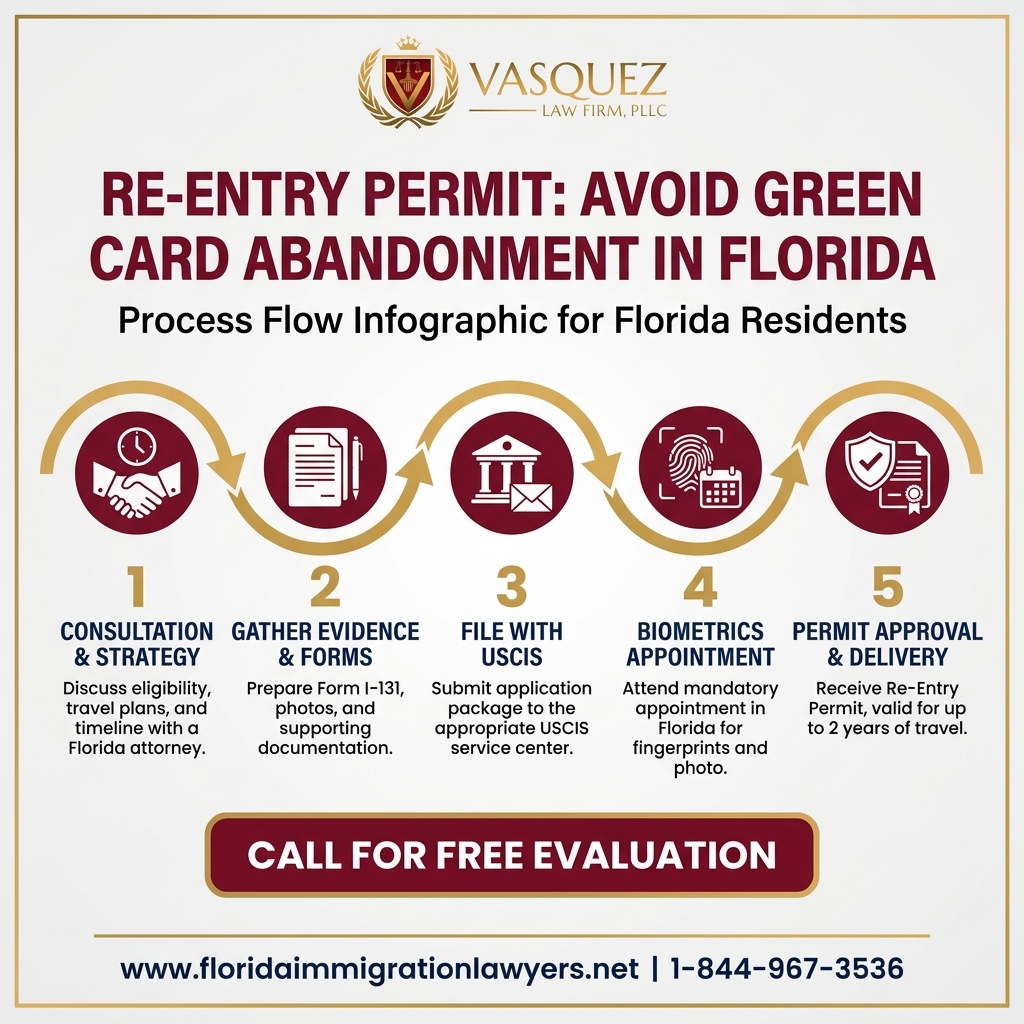
For Florida residents, the application process for a re-entry permit follows the standard USCIS procedures. You will complete and submit Form I-131, along with supporting documentation and the required fees, to the appropriate USCIS Lockbox facility. After filing, you will typically receive a biometrics appointment notice. This appointment, usually held at a local Application Support Center (ASC) in Florida (e.g., in Miami, Orlando, or Tampa), is mandatory. During the biometrics appointment, your fingerprints, photograph, and signature will be collected. These are used for background checks and to verify your identity. It is crucial to attend this appointment as scheduled, as failure to do so can lead to delays or even denial of your application. While interviews for re-entry permits are uncommon, USCIS reserves the right to request one if further information is needed.
Step-by-Step Guide to Applying for Your Re-Entry Permit
Applying for a re-entry permit requires careful attention to detail and adherence to USCIS procedures. Following these steps can help ensure a smoother process for Florida residents seeking to protect their green card status during extended travel abroad. Remember, the entire application process, including submitting your application and attending biometrics, must be initiated while you are physically present within the United States.
- Determine Your Eligibility: First, confirm you are a Lawful Permanent Resident or a conditional permanent resident. Ensure your planned absence will be between one and two years, as this is the primary purpose of the re-entry permit. Absences shorter than one year usually do not require a permit, though one can still be beneficial.
- Complete Form I-131, Application for Travel Document: Download the latest version of Form I-131 from the USCIS website. Fill out all sections accurately and completely. Pay close attention to Part 3, where you explain the purpose of your trip and the expected duration of your absence. Provide detailed reasons for your extended travel, such as family illness, business assignments, or educational pursuits.
- Gather Required Supporting Documents: Collect all necessary documents as outlined in the form instructions. This typically includes copies of your green card (Form I-551), a copy of your passport's biographic page, two passport-style photos, and any documents supporting the reason for your extended absence. Ensure all copies are clear and legible.
- Pay the Filing Fees: Include the correct filing fee for Form I-131, along with the biometrics services fee. Check the USCIS website or the form instructions for the most current fee amounts, as these are subject to change. Payment can be made by money order, personal check, cashier's check, or credit card using Form G-1450, Authorization for Credit Card Transactions.
- Mail Your Application: Send your completed Form I-131, supporting documents, and fees to the appropriate USCIS Lockbox facility. The mailing address depends on the service center that has jurisdiction over your case, which is typically determined by your residential address in Florida. Always use certified mail with a return receipt or a courier service for tracking purposes.
- Attend Your Biometrics Appointment: After USCIS receives your application, you will receive a Form I-797C, Notice of Action, with a receipt number. Shortly after, you will receive a separate notice for a biometrics appointment at a local Application Support Center (ASC) in Florida. This appointment is mandatory. You must attend to have your fingerprints, photograph, and signature collected. Failure to attend will cause delays or potentially lead to denial.
- Await Decision and Receive Permit: USCIS will process your application. You may depart the U.S. after attending your biometrics appointment, but it is generally recommended to wait until your application has been approved and the permit issued. The re-entry permit will typically be mailed to the address provided on your application, or to your attorney if you have one. If you need to depart before the permit is issued, you may arrange for it to be sent to a U.S. embassy or consulate abroad for pickup, but this requires specific arrangements.
Essential Documents Checklist for Form I-131
To successfully apply for a re-entry permit using Form I-131, a thorough and accurate submission of supporting documents is critical. Missing or incorrect documentation can significantly delay the processing of your application or even lead to a denial. For Florida residents, gathering these documents carefully ensures that your application is complete and ready for review by USCIS. While the exact list can vary slightly based on individual circumstances and USCIS updates, the following checklist covers the generally required items:
- Completed Form I-131, Application for Travel Document: Ensure all sections are filled out truthfully and completely. Do not leave any required fields blank; if a section does not apply, write "N/A."
- Two Passport-Style Photographs: These must be recent (taken within 30 days of filing), unmounted, full-face, two-by-two-inch color photographs with a white to off-white background. Write your name and A-number lightly in pencil on the back of each photo.
- Copy of Your Green Card (Form I-551): Provide a clear, legible copy of both the front and back of your Permanent Resident Card. This is proof of your LPR status.
- Copy of a Government-Issued Photo Identification: This could be your passport's biographic page, a state driver's license, or other official ID.
- Proof of Identity: This might include a copy of your birth certificate with a certified English translation if applicable.
- Evidence of Your Last Entry into the U.S.: A copy of your most recent I-94 Arrival/Departure Record (if applicable) or a stamp in your passport showing your last entry.
- Proof of Filing Fee Payment: A check, money order, or Form G-1450 for credit card payment, made out to the U.S. Department of Homeland Security, for the exact amount of the filing fee and biometrics fee.
- Documentation Supporting Your Need for Extended Travel (Optional but Recommended): While not strictly required, providing evidence of your reasons for extended absence can strengthen your case. This could include a letter from an employer, medical documentation for a family member abroad, or proof of enrollment in an educational program.
- Previous Re-Entry Permit (if applicable): If you have previously held a re-entry permit, include a copy of it.
It is always advisable to keep a complete copy of your entire application package for your records. This includes the completed forms, all supporting documents, and proof of mailing. An experienced immigration attorney at Florida Immigration Lawyers can help you review your documents to ensure completeness and accuracy before submission.
Navigating Timelines and Processing Expectations for I-131
The processing times for Form I-131, Application for Travel Document, can vary significantly depending on the USCIS service center handling your case and the current workload. For Florida residents, it is crucial to check the most up-to-date processing times on the USCIS website before planning your international travel. Typically, these processing times can range from several months to over a year. This variability underscores the importance of filing your application well in advance of your intended departure date.
After filing your I-131 application, you will first receive a receipt notice (Form I-797C). This notice confirms that USCIS has received your application and provides a receipt number, which you can use to track your case status online. The next step is usually the biometrics appointment. For Florida applicants, this appointment will be scheduled at an Application Support Center (ASC) in a convenient location such as Miami, Orlando, or Tampa. You must attend this appointment, as your fingerprints, photograph, and signature are essential for background checks and identity verification. You generally receive the biometrics appointment notice within 3-8 weeks after filing.
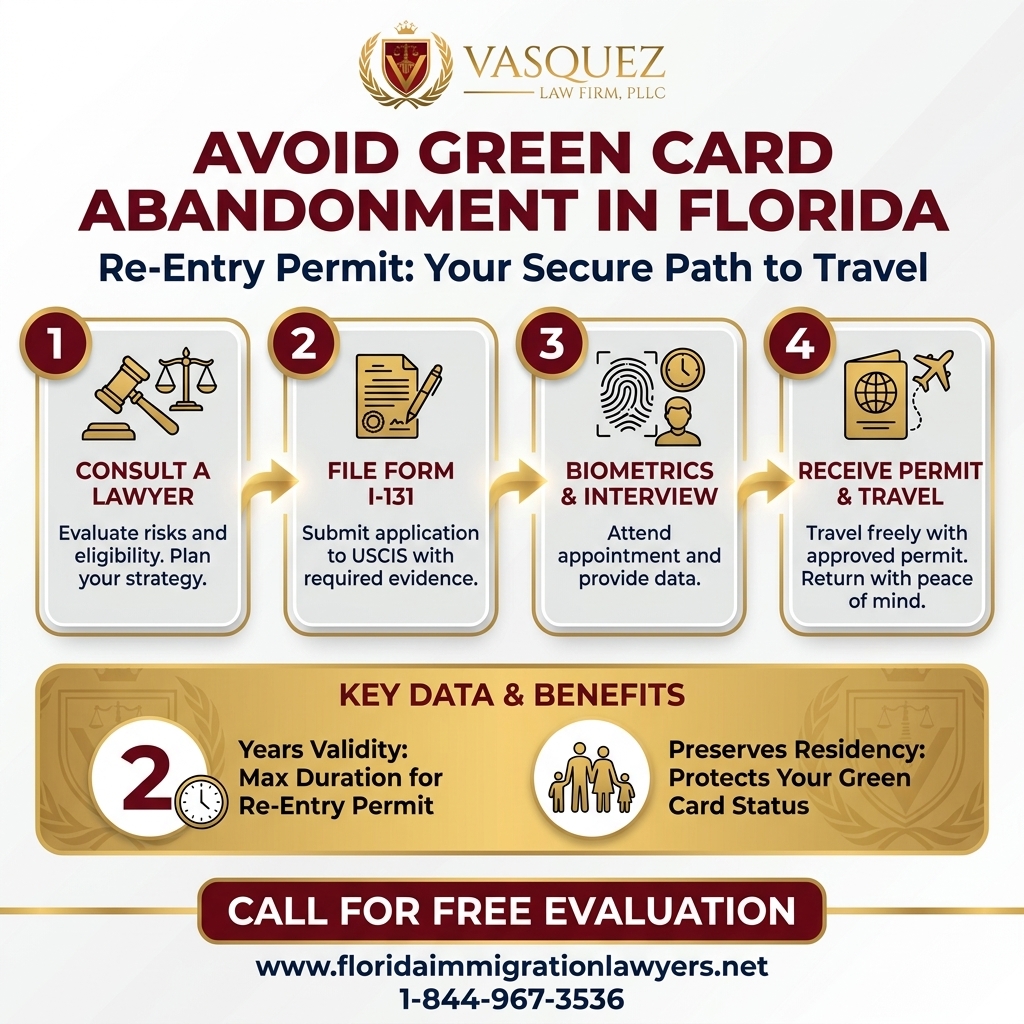
It is important to note that you must be physically present in the United States when you file Form I-131 and when you attend your biometrics appointment. While you are generally permitted to depart the U.S. after completing your biometrics, it is often advisable to wait until your re-entry permit has been approved and mailed to you. If you must travel before receiving the physical permit, you can request that USCIS send the permit to a U.S. embassy or consulate abroad for pickup. However, this arrangement requires careful coordination and is not always guaranteed. Planning your travel around these processing timelines is essential to avoid complications and ensure you have your permit in hand before your extended absence.
Cost Factors and Fee Breakdown for a Re-Entry Permit Application
Understanding the costs associated with applying for a re-entry permit is an important part of the planning process for any Lawful Permanent Resident in Florida. The total cost primarily consists of two components: the USCIS filing fee for Form I-131 and the biometrics services fee. It is imperative to check the most current fee schedule on the USCIS website or in the Form I-131 instructions, as these fees are subject to change without prior notice. Relying on outdated fee information can lead to your application being rejected for insufficient payment, causing significant delays.
The filing fee for Form I-131 is a standard charge for processing your application. This fee covers the administrative costs associated with reviewing your eligibility, conducting background checks, and issuing the travel document. In addition to the filing fee, a separate biometrics services fee is required. This fee covers the cost of collecting your fingerprints, photograph, and signature at an Application Support Center (ASC) in Florida, such as those in Miami, Orlando, or Jacksonville. Both fees are typically submitted together with your Form I-131 application. For example, as of early 2026, the combined fees might be in the range of several hundred dollars, but this exact amount should always be verified directly with USCIS.
Beyond the direct USCIS fees, applicants should also consider other potential costs. These might include attorney fees if you choose to hire an immigration lawyer to assist with your application, which is highly recommended for accuracy and peace of mind. There could also be costs for obtaining passport-style photographs, photocopying documents, and postage for mailing your application. While USCIS does offer fee waivers for certain forms based on financial need, re-entry permits (Form I-131) are generally not eligible for fee waivers. Therefore, budgeting for these expenses is a crucial step to ensure a smooth and successful application process for your re-entry permit.
Do not navigate this process alone. Contact Florida Immigration Lawyers today.
Common Mistakes to Avoid When Applying for a Re-Entry Permit
Applying for a re-entry permit is a critical step to protect your green card status, but many Lawful Permanent Residents (LPRs) make common errors that can lead to delays or even denial. Avoiding these pitfalls is essential for a smooth process, especially for those in Florida planning extended international travel. Here are some frequent mistakes and their potential consequences:
- Filing While Outside the U.S.: This is perhaps the most critical error. You must be physically present in the U.S. when you file Form I-131. Filing from abroad will result in immediate rejection, leaving you vulnerable to green card abandonment issues upon your return.
- Missing Biometrics Appointment: After filing, USCIS will schedule a biometrics appointment at a local Application Support Center (ASC) in Florida. Failing to attend this mandatory appointment without proper rescheduling can lead to the denial of your application, as USCIS cannot complete necessary background checks.
- Incomplete or Inaccurate Form I-131: Leaving sections blank, providing inconsistent information, or making typographical errors can cause your application to be rejected or significantly delayed. USCIS requires all fields to be properly addressed.
- Submitting Incorrect Fees: USCIS fees change periodically. Using an outdated fee amount or sending the wrong payment method will cause your application to be returned unprocessed. Always verify current fees on the USCIS website.
- Insufficient Supporting Documentation: Failing to include clear copies of your green card, passport photos, or other required evidence can lead to a Request for Evidence (RFE) or denial. This prolongs the process and adds stress.
- Departing Before Biometrics: While you can often leave after biometrics, departing before this crucial step can lead to your application being denied because you cannot complete a required part of the process.
- Assuming the Permit Guarantees Re-Entry: A re-entry permit strongly supports your intent not to abandon residency, but it does not guarantee re-entry if you have committed other immigration violations or criminal offenses. It mitigates abandonment risk, not other inadmissibility grounds.
- Overstaying the Permit's Validity: A re-entry permit is typically valid for two years. Remaining outside the U.S. beyond this period, or beyond your original stated intent, can still lead to questions about abandonment upon your return, even with the permit.
- Not Keeping Copies of Your Application: It is vital to retain a complete copy of your submitted application package, including all forms, supporting documents, and proof of mailing. This is your record and can be crucial if issues arise.
- Failing to Update Address Changes: If your mailing address in Florida changes while your application is pending, you must notify USCIS promptly. Failure to do so can result in missed notices, including your biometrics appointment or the permit itself.
- Not Consulting an Attorney: Attempting to navigate this complex process alone, especially with unique circumstances, increases the risk of error. An experienced Florida immigration attorney can ensure accuracy, advise on specific situations, and prevent costly mistakes.
When to Call a Lawyer for Your Re-Entry Permit Application
While the process of applying for a re-entry permit might seem straightforward on the surface, various complexities can arise, making legal counsel invaluable. Florida Immigration Lawyers are here to provide the expert guidance you need to ensure your application is successful and your permanent resident status remains secure. You should consider calling an attorney in several key scenarios to protect your interests.
One primary reason to seek legal assistance is if you have a history of prolonged absences from the U.S. or if you have ever been questioned about your intent to abandon your green card at a port of entry. These past interactions can flag your case for additional scrutiny, and an attorney can help you prepare a stronger application and address any potential concerns proactively. Similarly, if your travel plans are unusually long, exceeding the typical two-year validity of a re-entry permit, or if you anticipate needing consecutive permits, a lawyer can advise on the best strategy and potential challenges.
Furthermore, if you have any criminal history, even minor offenses, or if you have had previous immigration violations, consulting with an attorney is crucial. These factors can complicate your eligibility for a re-entry permit or even impact your admissibility to the U.S. upon your return. An attorney can assess your specific situation, identify potential red flags, and help mitigate risks. Our team at Florida Immigration Lawyers is experienced in handling complex cases and can provide tailored advice for your unique circumstances. We can also assist if you need to expedite your application due to an emergency or if you encounter unexpected delays in processing, helping you communicate effectively with USCIS and navigate bureaucratic hurdles. Do not take chances with your permanent residency; contact us for a free consultation.
About Florida Immigration Lawyers
Florida Immigration Lawyers is a leading law firm dedicated to providing comprehensive and compassionate immigration legal services across the entire state of Florida. With offices serving communities from Naples to Jacksonville, Miami to Pensacola, our team of highly skilled attorneys is committed to helping individuals and families achieve their immigration goals. We understand that immigration matters are deeply personal and often life-changing, which is why we approach every case with empathy, diligence, and a commitment to excellence.
Our firm specializes in a wide range of immigration practice areas, including family immigration, business immigration, asylum, deportation defense, citizenship, and, of course, assisting Lawful Permanent Residents with critical issues like obtaining a re-entry permit to prevent green card abandonment. We pride ourselves on offering personalized legal strategies tailored to the unique needs of each client, ensuring clarity and transparency throughout the entire legal process. Our attorneys stay abreast of the latest developments in immigration law and policy, providing up-to-date and effective representation.
Choosing Florida Immigration Lawyers means partnering with a team that genuinely cares about your success. We offer free consultations to discuss your case, providing an opportunity for you to understand your options without financial commitment. Our firm is available 24/7, recognizing that immigration issues do not adhere to regular business hours. We are proud to offer bilingual services, with a dedicated team ready to assist clients in both English and Spanish, ensuring effective communication and understanding. Let us be your trusted advocates in navigating the complexities of U.S. immigration law. Visit our attorneys page to learn more about our dedicated legal team.
Sources and References
- U.S. Citizenship and Immigration Services (USCIS)
- USCIS Form I-131, Application for Travel Document
- U.S. Department of State
- Executive Office for Immigration Review (EOIR)
- 8 U.S.C. Chapter 12 - Immigration and Nationality Act (INA)
- 8 U.S.C. § 1101(a)(20) - Definition of "Permanent Resident"
- 8 CFR § 211.1 - Documentary requirements for immigrants; waivers
Related services: family immigration services, free immigration consultation.
This article provides general legal information and is not intended as legal advice. Every case is unique, and outcomes depend on specific facts and circumstances. Contact an attorney for advice about your particular situation.
Protecting your permanent resident status is paramount, especially when planning international travel. Do not leave your future to chance. The complexities of immigration law require knowledgeable and experienced guidance. Contact Florida Immigration Lawyers today at 1-844-967-3536 for a free consultation. Se Habla Espanol - Estamos aqui para ayudarle.
Do Not Navigate This Process Alone
Our experienced immigration attorneys are ready to fight for you. Get a free, confidential consultation today.
Se Habla Español
Frequently Asked Questions
Florida Immigration Lawyers
Immigration Attorney | Founder, Vasquez Law Firm
U.S. Air Force veteran and immigration attorney with thousands of cases resolved. J.D., NCCU School of Law. AILA member. Admitted to the 4th, 5th, and 11th Circuit Courts.
Available 24/7 - Free Evaluations
Related Legal Services
Our Florida immigration attorneys can help you with experienced immigration attorneys, business immigration and asylum protection. Call today at 1-844-967-3536 for a free consultation.
Related Links
Related Topics
Free Legal Consultation
Discuss your case with our experienced attorneys. We're available 24/7.
Se Habla Español - Estamos aquí para ayudarle.
Related Articles
Dual Citizenship: Navigating Immigration in Florida
Explore the complexities of dual citizenship in Florida, focusing on the naturalization process, eligibility, and common pitfalls. Learn how to navigate the journey of obtaining two passports while maintaining ties to both countries. Contact Florida Immigration Lawyers at 1-844-967-3536 for a free consultation.
I-360 Widow Self-Petition in Florida: A Guide | VLF Florida
If you're a widow or widower of a U.S. citizen in Florida, you may be eligible to self-petition for a green card using Form I-360. Learn about the process, requirements, and how Florida Immigration Lawyers can assist you.
U Visa for Crime Victims in Coral Springs, Florida
Discover how the U visa can provide immigration relief for crime victims in Coral Springs, Florida. This blog covers eligibility, application processes, and common pitfalls to avoid. Contact Florida Immigration Lawyers for expert guidance.
DACA Renewal Florida 2026 Guide for Dreamers | VLF Florida
For thousands of young individuals, Deferred Action for Childhood Arrivals (DACA) provides a vital pathway to live and work legally in the United States. If you are a DACA recipient in Florida, preparing for your 2026 renewal is a critical step to maintain your protected status. This comprehensive guide from Florida Immigration Lawyers details the step-by-step process, essential documents, timelines, and cost factors. We also highlight common mistakes to avoid and specific scenarios when legal counsel is indispensable. Our aim is to provide clarity and empower you with the necessary information for a successful DACA renewal. Do not navigate this complex process alone; our experienced team is ready to assist you every step of the way.
