BIA Remand: Florida Immigration Appeal Guide
A BIA remand can be a pivotal moment in your immigration appeal, offering a chance to revisit your case before an Immigration Judge. This comprehensive guide from Florida Immigration Lawyers explains the BIA remand process, details the steps of an immigration appeal from the BIA to the U.S. Circuit Court of Appeals, and outlines critical documentation, timelines, and costs. Learn to avoid common mistakes and understand when legal expertise is essential. Our firm is dedicated to assisting individuals in Florida with complex immigration challenges. Contact us for a free consultation to discuss your specific situation and explore your options.

A BIA remand occurs when the Board of Immigration Appeals (BIA) sends an immigration case back to the original Immigration Judge (IJ) for further proceedings. This usually happens because the BIA found a legal error, a factual error, or determined that new evidence needs to be considered. For individuals in Florida, a remand can be a critical juncture in their immigration appeal, offering a renewed opportunity to present their case or correct previous mistakes. Understanding this complex process is vital, as it directly impacts your path to legal status or avoiding deportation.
- A BIA remand sends your case back to the Immigration Judge.
- Remands often occur due to legal errors, factual discrepancies, or new evidence.
- This process is a key part of the immigration appeal system.
- Navigating a remand requires careful legal strategy and often new evidence.
- Expert legal counsel is highly recommended to manage the complexities of a remand.
Receiving an adverse decision from an Immigration Judge can be devastating. However, it is often not the final word in your immigration journey. Many individuals in Florida find themselves in the complex world of immigration appeals, hoping for a second chance. When the Board of Immigration Appeals (BIA) reviews your case, one possible outcome is a BIA remand, sending your case back to the Immigration Judge for further review. This decision can feel like a setback, but it also presents a crucial opportunity to strengthen your case and correct previous issues.
Understanding what a BIA remand means, how the immigration appeal process works in Florida, and what steps you need to take is essential. This comprehensive guide will walk you through the intricacies of BIA remands, from the initial appeal to potential further review by a circuit court. We will cover the specific stages, required documentation, expected timelines, and associated costs. Our goal is to empower you with the knowledge to navigate this challenging period.
The stakes are incredibly high in immigration appeals, especially when your future in the United States hangs in the balance. Do not try to navigate this complex legal landscape alone. For dedicated guidance and experienced representation in your immigration appeal or BIA remand case, call Florida Immigration Lawyers at 1-844-967-3536 for a free consultation. Our team is ready to assist you.
Understanding the BIA Remand Process in Florida
The Board of Immigration Appeals (BIA) serves as the highest administrative body for interpreting and applying immigration laws. It is part of the Executive Office for Immigration Review (EOIR), which oversees the nation's immigration court system. When an Immigration Judge (IJ) issues a decision, either party – the immigrant or the government – can appeal that decision to the BIA. The BIA reviews the record of proceedings before the IJ, including any legal arguments and evidence presented.
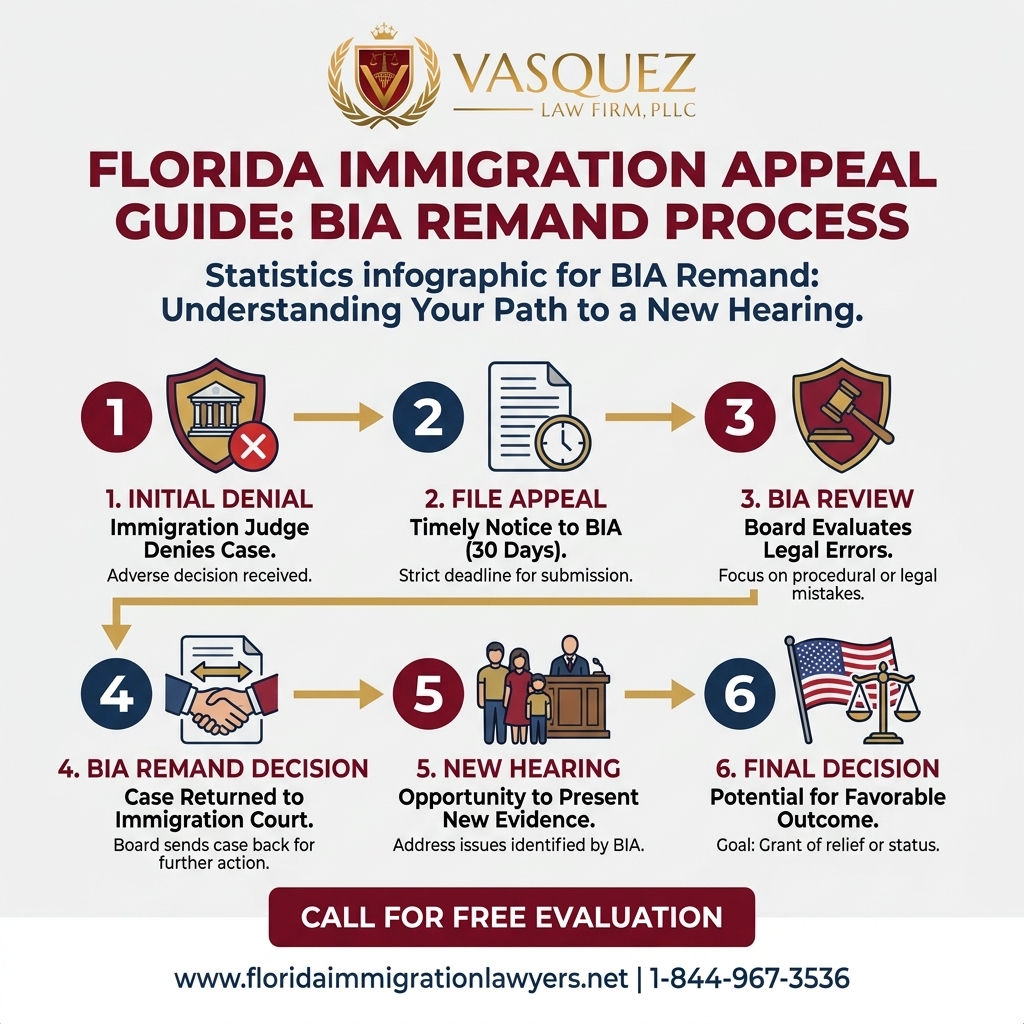
A BIA remand occurs when the BIA determines that the IJ’s decision contained an error that requires further consideration. This means the BIA does not make a final decision on the merits of the case but instead sends it back to the IJ with specific instructions. Common reasons for a BIA remand include an IJ making a legal error in applying the law, misinterpreting facts, or failing to consider crucial evidence. Sometimes, new evidence becomes available after the IJ’s decision, prompting the BIA to remand the case for the IJ to evaluate this new information. For individuals in Florida, a remand means their case returns to one of Florida's immigration courts, such as those in Orlando, Miami, or Bradenton.
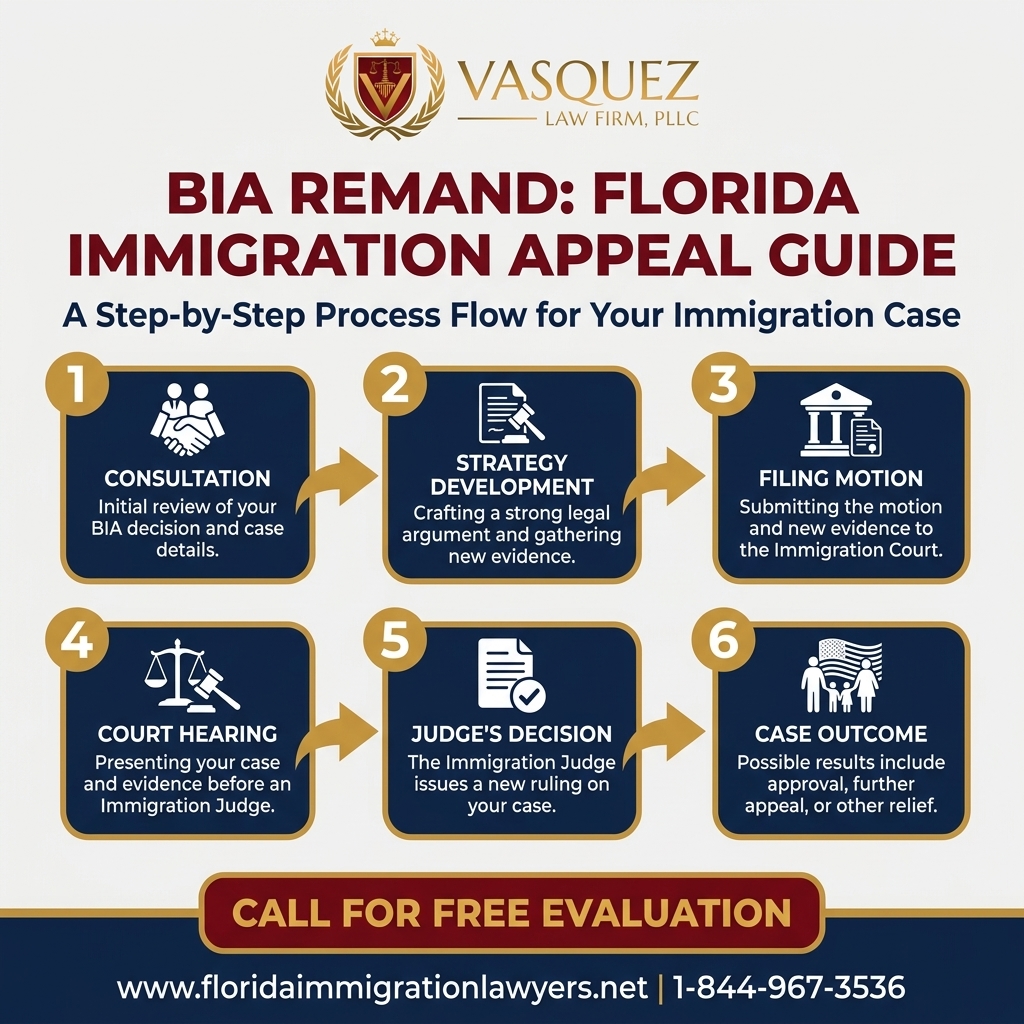
The remand process is governed by specific regulations, such as 8 CFR § 1003.1(d)(6), which outlines the BIA's authority to remand cases. This regulation allows the BIA to send a case back to the IJ for any further action deemed appropriate. The BIA's instructions can vary widely, from simply asking the IJ to re-examine a specific legal point to ordering a new hearing to consider additional testimony or documents. Understanding the precise reasons for the remand and the BIA's directives is critical for building a successful strategy moving forward. An experienced attorney can meticulously analyze the remand order and develop a plan tailored to your specific situation, ensuring that all BIA instructions are met and your rights are protected.
Navigating the Immigration Appeal Process: From IJ to Circuit Court
The journey through the immigration appeal system is often long and filled with intricate legal steps. It typically begins with an adverse decision from an Immigration Judge and can extend all the way to a U.S. Circuit Court of Appeals. Each stage presents unique challenges and strict deadlines, making expert legal representation indispensable. Understanding this multi-tiered process is crucial for anyone facing an immigration appeal in Florida.
Initial Appeal to the Board of Immigration Appeals (BIA)
If an Immigration Judge denies your application or orders your removal, you generally have 30 calendar days to file an appeal with the Board of Immigration Appeals (BIA). This is done by submitting Form EOIR-26, Notice of Appeal, along with the required fee. Missing this deadline is often fatal to your appeal. After filing, you will typically be given a deadline to submit a written brief, outlining the legal and factual errors made by the Immigration Judge. While oral arguments are rare, the BIA reviews your brief, the IJ's decision, and the entire record of proceedings. The BIA can affirm the IJ's decision, reverse it, dismiss the appeal, or issue a BIA remand, sending the case back to the IJ for further action. This is the first critical step in challenging an unfavorable ruling.
What Happens During a BIA Remand?
When the BIA remands your case, it is sent back to the Immigration Judge who initially heard it, or sometimes to a different IJ if circumstances require. The IJ must then follow the specific instructions provided by the BIA. This might involve holding new hearings to take additional testimony, allowing the submission of new evidence, or re-evaluating the case in light of a different legal standard. For individuals in Florida, this means returning to the immigration court where their case was originally heard, such as the busy courts in Miami, Orlando, or Bradenton. This phase is a renewed opportunity to present a stronger case, address the BIA's concerns, and potentially achieve a favorable outcome. A skilled attorney will help you prepare thoroughly for these remand proceedings, ensuring compliance with BIA directives and robust advocacy on your behalf.
Further Appeals to the U.S. Circuit Court of Appeals
If, after a BIA remand and subsequent IJ decision, or if the BIA issues an adverse decision that is not a remand, you may have the option to appeal to a U.S. Circuit Court of Appeals. For cases originating in Florida, this means filing a Petition for Review with the Eleventh Circuit Court of Appeals in Atlanta. This is an extremely complex and highly specialized area of law. The Circuit Court reviews legal questions, not typically factual findings, and requires extensive knowledge of federal appellate procedure and constitutional law. The deadline to file a Petition for Review is usually 30 days from the date of the BIA's final order. This is the final judicial review stage available for most immigration cases, and success at this level often depends on identifying clear legal errors in the BIA's decision. An experienced firm like Florida Immigration Lawyers can assess the viability of such an appeal and represent you vigorously in federal court.
Key Documents and Evidence for a Successful Remand
The success of your case during a BIA remand often hinges on the quality and completeness of the documentation and evidence you present. The BIA's decision to remand usually highlights specific areas where the original presentation was lacking or where further information is needed. Gathering and organizing these materials meticulously is paramount. Your attorney will work closely with you to ensure every piece of evidence supports your claims and addresses the BIA's directives.
Essential documents typically include the original application forms you submitted to USCIS or the Immigration Court, such as Form I-589 for asylum or Form I-485 for adjustment of status. Transcripts from all previous court hearings are also crucial, as they provide a detailed record of testimony and arguments made before the Immigration Judge. The BIA's decision and remand order itself are perhaps the most important documents, as they outline the specific legal or factual issues that need to be addressed upon return to the IJ.
Beyond these foundational documents, new evidence can be critical. This might include updated affidavits from witnesses, expert testimonies on country conditions or psychological evaluations, and medical records. Personal documents like birth certificates, marriage certificates, and financial records can also prove vital in establishing eligibility for certain forms of relief. For those seeking protection, country condition reports from credible sources are essential. Any evidence demonstrating strong ties to your community in Florida, such as utility bills, lease agreements, or letters from employers, can also be beneficial. The U.S. Citizenship and Immigration Services (USCIS) provides guidelines on the types of evidence generally accepted for various immigration benefits, which can serve as a helpful reference. Thorough preparation and presenting compelling, well-supported evidence are key to a favorable outcome during a remand hearing.
Timelines and Expectations for BIA Remand Cases in Florida
Understanding the potential timelines for a BIA remand case is crucial for managing expectations and planning your future. Immigration proceedings are notoriously complex and can be lengthy, and a remand adds another layer of unpredictability. The overall duration of your case will depend on several factors, including the complexity of your specific legal issues, the current backlog at the BIA, and the docket scheduling of the Florida immigration courts.
After an initial appeal is filed, the BIA typically takes several months, and sometimes even years, to issue a decision. If a BIA remand is ordered, the case is then sent back to the Immigration Judge. The speed at which your case is re-calendared for a hearing can vary significantly. Florida's immigration courts, particularly those in Miami and Orlando, often experience substantial backlogs due to the high volume of cases. This means that while some remanded cases might be heard relatively quickly, others could take many months to get back on the IJ's calendar.
Factors that can influence these timelines include the specific instructions from the BIA – whether they require extensive new hearings or just a quick review – and the availability of the original Immigration Judge. Furthermore, broader immigration policy shifts and changes in court administration, as sometimes reported in national news, can impact processing times across the entire Executive Office for Immigration Review (EOIR) system. It is important to remember that these timelines are estimates, and unforeseen delays can occur. Staying in close communication with your attorney and ensuring all documents are promptly submitted are the best ways to keep your case moving forward. While waiting can be frustrating, patience and persistence are key throughout the appeal and remand process.
Cost Factors and Fee Breakdown for an Immigration Appeal
Pursuing an immigration appeal, particularly one involving a BIA remand, can involve significant financial considerations. Understanding these potential costs upfront is important for proper planning. The expenses generally fall into government filing fees and attorney fees, with additional costs for supporting documentation and expert services. These costs can vary widely depending on the complexity of your case and the specific relief you are seeking.
Government filing fees are statutory and must be paid to the U.S. Department of Justice or USCIS, as applicable. For instance, filing a Notice of Appeal (Form EOIR-26) with the BIA requires a specific fee. Should your case ultimately proceed to a U.S. Circuit Court of Appeals, there will be separate filing fees for a Petition for Review. It is important to note that these fees are subject to change, so specific amounts should always be verified with the official EOIR or USCIS websites. Fee waivers may be available in certain circumstances, particularly for individuals demonstrating financial hardship.
Attorney fees constitute another major component of the overall cost. These fees can be structured in various ways, such as hourly rates or flat fees for specific stages of the appeal. The complexity of your immigration appeal, the amount of evidence to be reviewed, the need for extensive legal research, and the number of court appearances required will all influence the total legal fees. Beyond these primary costs, you may incur expenses for translating documents, obtaining certified copies of records, expert witness fees (e.g., psychologists, country conditions experts), and court reporter fees for transcripts of prior proceedings. While these costs can be substantial, investing in experienced legal counsel is often invaluable, as it significantly increases your chances of a successful outcome and helps you avoid costly mistakes that could jeopardize your case entirely. Florida Immigration Lawyers offers transparent fee structures and can discuss payment options during your free consultation.
Do not navigate this complex process alone. Contact Florida Immigration Lawyers today for dedicated support in your BIA remand or immigration appeal. We are here to help you understand your options and vigorously represent your interests. Contact us to schedule your free consultation.
Common Mistakes to Avoid in a BIA Remand Case
Navigating a BIA remand requires precision and careful attention to detail. Even minor missteps can have significant negative consequences for your immigration appeal. Being aware of common pitfalls can help you avoid jeopardizing your case and ensure the best possible outcome. Here are 7-12 mistakes often made during the remand process:
- Missing Deadlines: Strict deadlines apply to filing appeals, submitting briefs, and providing evidence. Missing any of these, even by a day, can lead to the dismissal of your case. Always confirm all deadlines with your attorney.
- Failing to Understand the BIA's Remand Instructions: The BIA remand order is not generic; it contains specific directives for the Immigration Judge. Misinterpreting or failing to fully address these instructions can result in another adverse decision.
- Not Presenting New or Relevant Evidence: A remand often provides an opportunity to introduce evidence that was previously unavailable or overlooked. Failing to gather and present this crucial evidence can weaken your case significantly.
- Filing an Appeal Without Sufficient Legal Grounds: While appealing is your right, pursuing an appeal solely based on disagreement with the IJ's outcome, without identifying clear legal or factual errors, is often a waste of time and resources.
- Improperly Preparing or Serving Documents: The immigration court system has strict rules for formatting, content, and service of documents. Errors here can lead to rejections or delays, jeopardizing your appeal.
- Representing Yourself Without Legal Counsel: Immigration law is incredibly complex. Attempting to navigate a BIA remand or further appeal without an experienced attorney dramatically reduces your chances of success and can lead to irreversible errors.
- Assuming the IJ Will Automatically Rule in Your Favor After Remand: A remand is not a guarantee of approval. It is an opportunity to present your case again, but the IJ will still make an independent decision based on the evidence and BIA instructions.
- Ignoring Changes in Immigration Law or Policy: Immigration law is constantly evolving. What was true yesterday may not be true today. Failing to stay informed about legal updates can render your arguments obsolete or inapplicable.
- Not Preparing for Potential Further Appeals: Even after a remand, the outcome might still be unfavorable. Not considering the possibility of appealing to the U.S. Circuit Court of Appeals can leave you unprepared for the next crucial step.
- Failing to Disclose All Relevant Facts to Your Attorney: Withholding information, even if seemingly minor or embarrassing, can severely hinder your attorney's ability to build a strong defense or identify all available forms of relief.
- Not Updating Your Address with EOIR: If you move during the appeal or remand process, failing to promptly update your address with the Executive Office for Immigration Review can lead to missed notices, hearings, and potentially an in absentia order of removal.
- Underestimating the Emotional and Financial Toll: The appeal process is stressful. Underestimating the need for emotional support or financial planning for legal fees can add unnecessary pressure and impact your ability to focus on your case.
When to Call a Lawyer for Your BIA Remand or Immigration Appeal
The immigration appeal process, especially one involving a BIA remand, is fraught with legal complexities and procedural pitfalls that can easily overwhelm individuals without legal training. Knowing when to seek professional legal assistance is not just advisable, it is often critical for the success of your case. If you are facing any stage of an immigration appeal or a BIA remand, contacting an experienced attorney immediately is paramount.
You should call a lawyer if you have received an adverse decision from an Immigration Judge or the BIA. This includes orders of removal, denial of asylum, or rejection of any other immigration benefit. An attorney can swiftly assess the grounds for appeal, identify legal errors, and ensure that all deadlines are met. If your case has been subject to a BIA remand, an attorney can meticulously analyze the BIA's instructions, help you gather new evidence, and prepare you for subsequent hearings before the Immigration Judge.
Furthermore, if you are considering filing a Petition for Review with a U.S. Circuit Court of Appeals, legal representation is absolutely essential. This federal court process requires specialized knowledge of appellate procedure and constitutional law. Even if you believe your case is straightforward, the nuances of immigration law are vast and constantly changing. Florida Immigration Lawyers specializes in complex deportation defense and appellate matters. Our attorneys can provide the strategic guidance needed to navigate these challenging proceedings effectively, protect your rights, and pursue every available avenue for relief. Do not take chances with your future; let our experienced team advocate for you. Visit our deportation defense page or attorneys section to learn more about how we can help.
About Florida Immigration Lawyers
Florida Immigration Lawyers is a leading immigration law firm dedicated to serving individuals and families across the entire state of Florida. With years of experience and a deep understanding of U.S. immigration law, our firm is committed to providing compassionate, effective, and results-driven legal representation. We understand the profound impact immigration matters have on our clients' lives and approach each case with the seriousness and personalized attention it deserves.
Our comprehensive range of services includes expert guidance through complex immigration appeal processes, including BIA remands and appeals to the U.S. Circuit Courts. We also handle deportation defense, asylum claims, family-based immigration, business immigration, and naturalization. Our team is proficient in navigating the intricacies of USCIS and EOIR procedures, ensuring that our clients receive the highest caliber of legal advocacy.
Choosing Florida Immigration Lawyers means partnering with a team that is available 24/7 to address your urgent concerns. We offer free consultations to help you understand your options without financial commitment. Our bilingual staff ensures clear and effective communication, making us accessible to Florida's diverse immigrant communities. We are here to fight for your rights and help you achieve your immigration goals. Call us today at 1-844-967-3536 or visit www.floridaimmigrationlawyers.net to learn how we can assist you.
Sources and References
- U.S. Citizenship and Immigration Services (USCIS)
- Executive Office for Immigration Review (EOIR)
- 8 U.S.C. Chapter 12 - Immigration and Nationality Act (INA)
- 8 CFR § 1003.1(d)(6) - Board of Immigration Appeals; powers and duties
- Form EOIR-26, Notice of Appeal to the Board of Immigration Appeals
- U.S. Department of State
Related services: asylum and refugee protection, immigration waivers, humanitarian protection programs, DACA renewal and applications.
This article provides general legal information and is not intended as legal advice. Every case is unique, and outcomes depend on specific facts and circumstances. Contact an attorney for advice about your particular situation.
Your immigration journey is too important to navigate without expert legal counsel. If you are facing a BIA remand, an immigration appeal, or any complex immigration matter in Florida, do not hesitate to seek help. Our experienced attorneys at Florida Immigration Lawyers are ready to provide the compassionate and effective representation you deserve. Call us now for a free consultation at 1-844-967-3536. Se Habla Español - Estamos aquí para ayudarle.
If you need legal assistance, learn more about learn about our immigration practice, or call us at 1-844-967-3536 for a free consultation.
Do Not Navigate This Process Alone
Our experienced immigration attorneys are ready to fight for you. Get a free, confidential consultation today.
Se Habla Español
Frequently Asked Questions
Florida Immigration Lawyers
Immigration Attorney | Founder, Vasquez Law Firm
U.S. Air Force veteran and immigration attorney with thousands of cases resolved. J.D., NCCU School of Law. AILA member. Admitted to the 4th, 5th, and 11th Circuit Courts.
Available 24/7 - Free Evaluations
Related Legal Services
Our Florida immigration attorneys can help you with business immigration, asylum protection and deportation defense. Call today at 1-844-967-3536 for a free consultation.
Related Links
Related Topics
Free Legal Consultation
Discuss your case with our experienced attorneys. We're available 24/7.
Se Habla Español - Estamos aquí para ayudarle.
Related Articles
Dual Citizenship Guide for Florida Residents | VLF Florida
Explore the essentials of obtaining dual citizenship in Florida. Learn the benefits, challenges, and steps involved. Contact Florida Immigration Lawyers for expert guidance.
Navigating the Stokes Interview in Florida | VLF Florida
Facing a Stokes interview in Florida? Learn how to navigate this critical immigration step. Florida Immigration Lawyers can help. Call 1-844-967-3536 today.
Immigration Lawyer Miami Services in Florida | VLF Florida
Navigating immigration in Miami, Florida requires expert legal guidance. Learn about the services offered by immigration lawyers and how they can assist you in achieving your immigration goals. Call 1-844-967-3536 for a free consultation.
I-601A Provisional Waiver in Florida | VLF Florida
Learn about the I-601A provisional waiver process in Florida and how it can help you avoid separation from your family. Contact us at 1-844-967-3536.