Immigration Lawyer Fort Lauderdale: Your Florida Guide
Navigating immigration law in Fort Lauderdale, Florida, can be daunting. From visa applications and green card petitions to citizenship and deportation defense, the process is complex and demands expert legal guidance. This guide outlines key immigration pathways, step-by-step procedures, essential documentation, and common pitfalls to avoid. Discover why having an experienced immigration lawyer in Fort Lauderdale is crucial for a successful outcome in your case. Florida Immigration Lawyers offers compassionate, effective representation for individuals and families across the state, ensuring your rights are protected every step of the way. Learn how to secure your future in the U.S. with professional legal support.

An immigration lawyer in Fort Lauderdale, Florida, provides essential legal guidance for individuals and families navigating the complex U.S. immigration system. They assist with a wide range of cases, including visa applications, green card petitions, citizenship processes, and crucial deportation defense. Given the unique challenges and high stakes involved, securing experienced legal representation is vital to protect your rights and improve your chances of a successful outcome. Florida's specific legal landscape, including local USCIS offices and immigration courts, makes local expertise invaluable for residents in Fort Lauderdale and throughout Broward County.
- Expert legal guidance for visas, green cards, and citizenship.
- Crucial representation in deportation and removal proceedings.
- Assistance with complex paperwork and legal requirements.
- Knowledge of Florida-specific immigration courts and USCIS offices.
- Protection of your rights throughout the entire immigration process.
Are you or a loved one facing an immigration challenge in Fort Lauderdale, Florida? The journey through the U.S. immigration system can feel overwhelming, filled with intricate laws, strict deadlines, and often, significant emotional stress. Whether you are seeking to unite with family, pursue professional opportunities, or defend against deportation, understanding your options and rights is paramount. This comprehensive guide will illuminate the path forward, providing critical insights into various immigration processes and how an experienced immigration lawyer Fort Lauderdale can be your most valuable ally.
Florida, with its diverse population and proximity to international borders, is a hub for immigration activity. The legal landscape is constantly evolving, making it difficult for individuals to keep up with the latest changes and requirements. Without proper legal counsel, even minor errors can lead to significant delays or even denials. That's why having a dedicated legal professional by your side is not just helpful, it's often essential. Call Florida Immigration Lawyers at 1-844-967-3536 for a free consultation and take the first step towards securing your future.
Understanding Immigration Law in Fort Lauderdale and Florida
Immigration law in the United States is primarily governed by federal statutes, notably the Immigration and Nationality Act (INA), codified in 8 U.S.C. Chapter 12. However, the practical application of these laws often involves interacting with local and regional offices, such as the USCIS Field Office in Oakland Park (serving Broward County) and immigration courts in Miami and Orlando. These local points of contact mean that while the law is federal, the experience of navigating it can be profoundly influenced by your location within Florida.
Fort Lauderdale, as a major city in Broward County, experiences a high volume of immigration cases ranging from family-based petitions to complex asylum claims and deportation defense. The sheer diversity of cases requires a legal team with broad expertise. Our firm, Florida Immigration Lawyers, understands the specific nuances of practicing in this region. We are familiar with the procedures and expectations of the local USCIS offices and the Executive Office for Immigration Review (EOIR) courts that serve Florida.
Staying informed about policy shifts, such as those concerning mandatory detention which are frequently under review by higher courts, is crucial. An experienced immigration lawyer Fort Lauderdale monitors these developments closely. They can interpret how federal policies impact your individual case and strategize accordingly, ensuring your application or defense is robust and up-to-date with current legal precedents. This proactive approach is vital for success in an ever-changing legal environment.
The Role of an Immigration Lawyer in Broward County
An immigration lawyer in Broward County does more than just fill out forms; they are your advocate, strategist, and guide. They assess your eligibility for various immigration benefits, identify potential pitfalls, and prepare compelling arguments for your case. For instance, in family-based immigration, they help navigate the intricate relationships and documentation required by USCIS, ensuring all aspects of INA Section 201-204 are met. For employment-based visas, they assist businesses and individuals in complying with Department of Labor regulations and complex petition requirements.
In removal proceedings, an attorney's role becomes even more critical. They can challenge allegations, present defenses such as asylum or cancellation of removal, and appeal adverse decisions to the Board of Immigration Appeals (BIA). The stakes in these cases are incredibly high, often involving an individual's right to remain in the U.S. and stay with their family. Having a knowledgeable legal professional who understands the local court system and immigration judges is invaluable for a robust defense.
Key Immigration Pathways
The U.S. immigration system offers multiple avenues for individuals to live, work, and become citizens. These include:
- Family-Based Immigration: Allows U.S. citizens and lawful permanent residents (LPRs) to petition for certain family members. This pathway includes immediate relatives (spouses, unmarried children under 21, parents of U.S. citizens 21 or older) and preference categories (married children, siblings).
- Employment-Based Immigration: Designed for foreign nationals with specific skills or investments, ranging from highly skilled workers and professionals to investors. These visas are often categorized as EB-1, EB-2, EB-3, EB-4, and EB-5.
- Asylum and Refugee Status: Provides protection for individuals who have fled their home countries due to persecution or a well-founded fear of persecution. Asylum claims are handled by USCIS or EOIR, depending on the applicant's status.
- Citizenship and Naturalization: The process by which eligible LPRs can become U.S. citizens, granting them full rights and responsibilities of citizenship.
- Deportation Defense: Legal representation for individuals facing removal from the United States, seeking to challenge deportation orders or apply for relief.
Navigating the Immigration Process: A Step-by-Step Guide
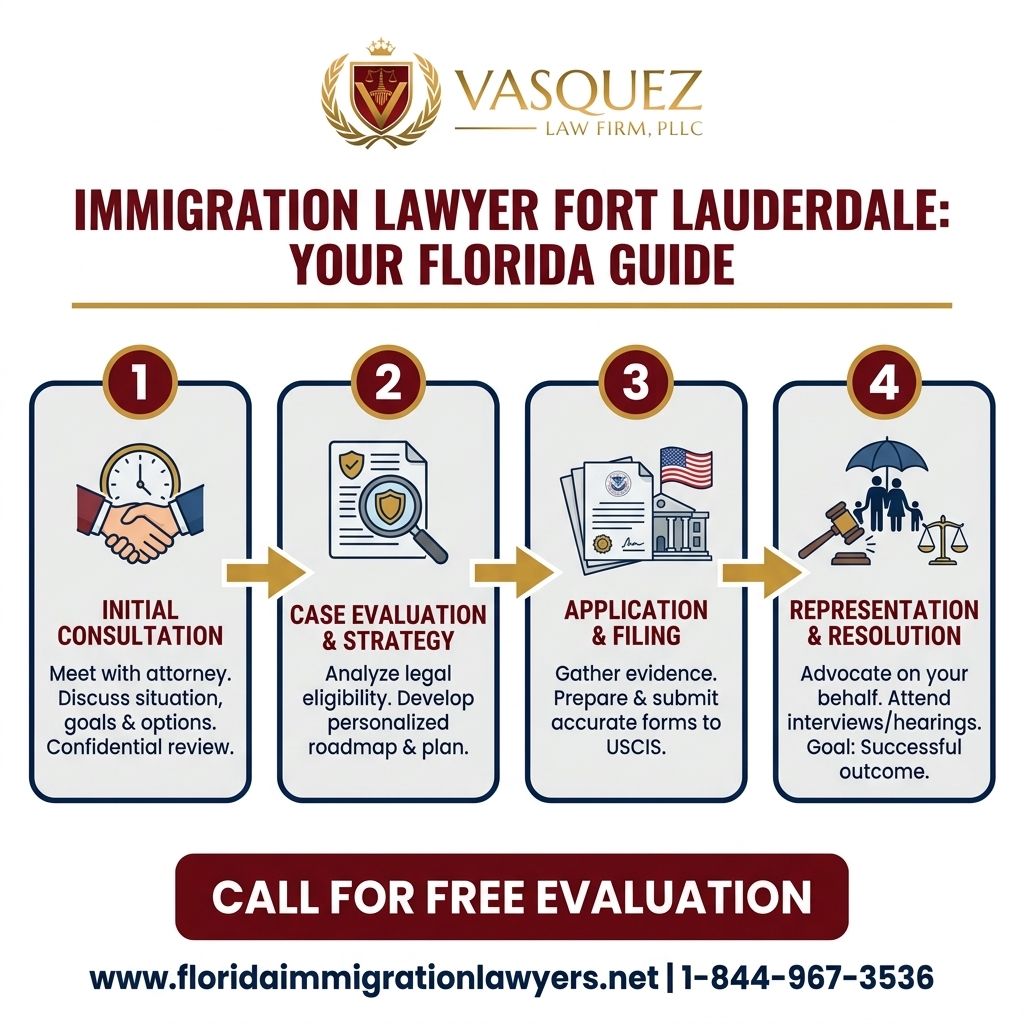
Embarking on an immigration journey requires careful planning and precise execution. While each case is unique, there's a general framework that most immigration processes follow. Understanding these steps can help demystify the journey and prepare you for what lies ahead. Our immigration lawyer Fort Lauderdale team is adept at guiding clients through each stage, providing clarity and support.
-
Initial Consultation and Case Evaluation: The first step is to meet with an immigration attorney. During this consultation, you will discuss your specific situation, immigration goals, and any past immigration history. Your attorney will assess your eligibility for various immigration benefits, identify potential challenges, and outline the most suitable legal strategies. This is a critical phase for setting realistic expectations and understanding the scope of work.
-
Gathering Required Documentation: Once a strategy is established, your attorney will provide a comprehensive list of necessary documents. This often includes personal identification, birth certificates, marriage certificates, financial records, educational transcripts, and evidence of relationships. Accurately collecting and organizing these documents is vital for a strong application.
-
Petition or Application Filing: Your attorney will prepare and submit the appropriate forms and petitions to the U.S. Citizenship and Immigration Services (USCIS) or other relevant government agencies. This could be an I-130 Petition for Alien Relative, an I-485 Application to Register Permanent Residence, or an N-400 Application for Naturalization. Precision in completing these forms is paramount to avoid delays or rejections.
-
Biometrics Appointment: For many applications, USCIS requires applicants to attend a biometrics appointment at an Application Support Center (ASC). Here, fingerprints, photographs, and signatures are collected for background checks. Your lawyer will advise you on what to expect and ensure you are prepared for this step.
-
Interview (if required): Depending on the type of application, you may be called for an interview with a USCIS officer. This often occurs for green card applications (adjustment of status) and naturalization. Your attorney can prepare you thoroughly for the interview, explaining potential questions and ensuring you understand the purpose of the meeting. In many cases, your attorney can attend the interview with you, especially for adjustment of status or naturalization interviews in the Oakland Park Field Office.
-
Decision and Follow-up: After the interview or review of your application, USCIS will issue a decision. If approved, you will receive your immigration benefit (e.g., green card, citizenship certificate). If denied, your attorney can help you understand the reasons for denial and explore options for appeal or refiling, possibly to the Administrative Appeals Office (AAO) or through a motion to reopen/reconsider.
Essential Documents for Your Immigration Case
Preparing an immigration application requires meticulous attention to detail, especially when it comes to documentation. A missing or incorrectly prepared document can lead to significant delays or even denial of your case. Your immigration lawyer Fort Lauderdale will provide a tailored checklist, but here's a general overview of the types of documents you will typically need to gather for most immigration processes.
- Valid passport and travel history records.
- Birth certificate(s) for all applicants and petitioners.
- Marriage certificate(s) (if applicable) and divorce decrees (if applicable).
- Prior immigration documents (e.g., I-94 arrival/departure record, previous visa stamps, old green cards).
- Police clearance certificates from all countries lived in for more than six months since the age of 16.
- Medical examination results from a USCIS-approved civil surgeon.
- Affidavit of Support (Form I-864) with supporting financial documents (tax returns, W-2s, employment letters).
- Proof of relationship for family-based petitions (e.g., photos, joint bank accounts, lease agreements, birth certificates of shared children).
- Educational degrees, diplomas, and transcripts for employment-based petitions.
- Letters of employment, job offers, and professional licenses for employment-based petitions.
- Evidence of persecution for asylum claims (e.g., police reports, medical records, news articles, personal statements).
Personal Identification Documents
Your identity documents are the foundation of any immigration application. This includes your passport, national identity cards, and birth certificates. Ensure these documents are current and that any names used on them match consistently. If there are discrepancies, your attorney can advise on how to provide supporting affidavits or legal name change documents to resolve them. For individuals from countries where official documents may be difficult to obtain, your lawyer can assist in exploring alternative evidence acceptable to USCIS.
Financial and Sponsorship Evidence
For many immigration categories, particularly family-based visas, demonstrating financial support is a critical component. The Affidavit of Support (Form I-864) legally binds a sponsor to support the immigrant, ensuring they do not become a public charge. This requires detailed financial documentation, including federal income tax returns for the past three years, W-2 forms, 1099 forms, and letters from employers verifying current employment and salary. Your attorney will help ensure the sponsor meets the minimum income requirements, typically 125% of the federal poverty guidelines, as outlined in INA Section 213A.
Timelines and Processing Expectations in Florida
Understanding the potential timelines for your immigration case is crucial for managing expectations and planning your future. Immigration processing times can vary significantly based on the type of petition, the specific USCIS service center handling your case, and current caseloads. While it's impossible to provide exact dates, an experienced immigration lawyer Fort Lauderdale can offer realistic estimates based on current USCIS processing timeframes and their experience with local offices.
For example, family-based petitions for immediate relatives (spouses, minor children, parents of U.S. citizens) generally have shorter processing times for the I-130 petition itself, often ranging from 7 to 15 months. However, the subsequent adjustment of status (I-485) or consular processing can add several more months. For preference categories, where visa numbers are limited, the wait can extend to several years, depending on the applicant's country of origin and priority date.
Deportation defense cases heard at the Miami or Orlando Immigration Courts (part of the Executive Office for Immigration Review) can also vary greatly. A simple master calendar hearing might be scheduled within weeks, but individual merits hearings can take months or even years to be scheduled due to court backlogs. Appeals to the Board of Immigration Appeals (BIA) can add another 1-2 years to the overall process. Your attorney will keep you informed of any changes and advocate for timely processing where possible.
Factors Affecting Processing Delays
- Volume of Applications: High volumes at USCIS service centers or immigration courts can naturally lead to longer wait times.
- Completeness of Application: Any missing documents or errors can result in a Request for Evidence (RFE) or Notice of Intent to Deny (NOID), significantly delaying the process.
- Background Checks: Security checks and biometrics processing must be completed for all applicants, and sometimes these can take longer than expected.
- Policy Changes: New immigration policies or regulations can shift priorities and impact processing queues.
- Country of Origin: Visa bulletin availability for preference categories is heavily dependent on the applicant's country of birth.
Expedited Processing Options
In certain urgent situations, it may be possible to request expedited processing for some USCIS applications. Expedite criteria typically include severe financial loss to a company or individual, urgent humanitarian reasons, or compelling U.S. government interests. While not guaranteed, your attorney can help you prepare a compelling expedite request, providing all necessary evidence to support your claim. This is a complex process and usually reserved for truly exceptional circumstances.
Cost Factors and Legal Fees for Immigration Services
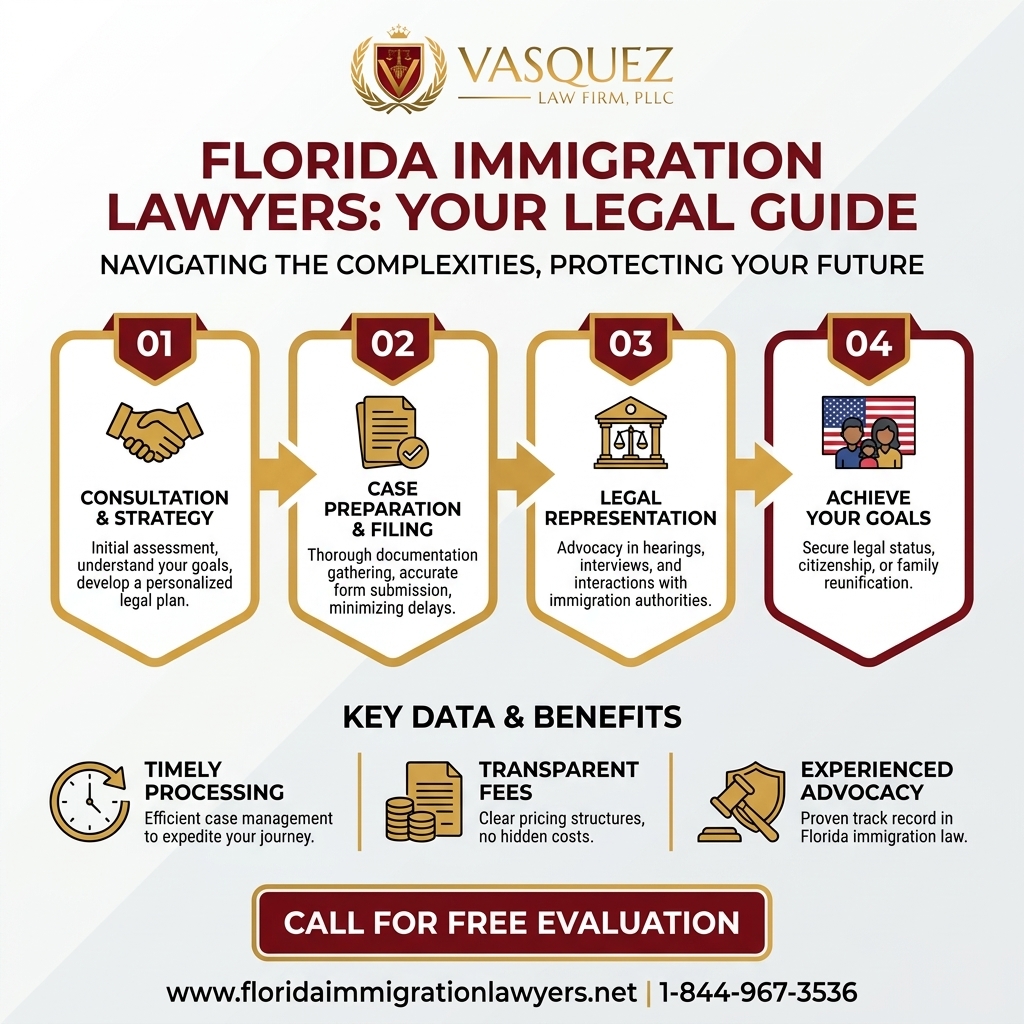
Understanding the financial aspects of your immigration journey is a crucial part of planning. The overall cost of an immigration case typically involves two main components: government filing fees and attorney fees. While government fees are standard for specific forms, attorney fees can vary based on the complexity of the case, the experience of the lawyer, and the services required. Our firm believes in transparency and will provide a clear breakdown of all anticipated costs during your initial consultation.
USCIS Filing Fees and Biometrics
The U.S. Citizenship and Immigration Services (USCIS) charges fees for most applications and petitions. These fees are subject to change and are non-refundable, even if your application is denied. Examples include fees for filing an I-130 Petition for Alien Relative, an I-485 Application to Register Permanent Residence or Adjust Status, or an N-400 Application for Naturalization. Additionally, there is often a separate biometrics fee for fingerprinting and background checks. It is important to check the USCIS website for the most current fee schedule, as these amounts can fluctuate annually. In some limited circumstances, fee waivers may be available for individuals meeting specific poverty guidelines, and your attorney can advise if you qualify.
Attorney Fee Structures
Legal fees for immigration services can be structured in several ways:
- Flat Fees: Many immigration cases, such as visa applications, green card petitions, and naturalization, are handled on a flat-fee basis. This means you pay a single, agreed-upon amount for the entire scope of work, providing predictability in costs.
- Hourly Rates: More complex or unpredictable cases, especially those involving litigation like deportation defense or appeals, may be billed at an hourly rate. Your attorney will track their time and bill you accordingly.
- Retainer Agreements: For hourly cases, a retainer fee is often required upfront, which is then drawn down as work is performed.
During your free consultation with Florida Immigration Lawyers, we will discuss our fee structure for your specific case, ensuring you understand all costs involved before making any commitments. We strive to provide accessible and affordable legal services to the Fort Lauderdale and wider Florida community.
Specific Immigration Challenges in Fort Lauderdale
Fort Lauderdale, located in a major port and tourist region, presents unique immigration challenges. The area is home to a diverse population, including many non-citizens who may encounter specific issues related to their status. Proximity to international airports and seaports means that individuals may face immigration inspections, parole issues, or even detention upon arrival or attempted re-entry. These situations often require immediate and specialized legal intervention from an immigration lawyer Fort Lauderdale.
Moreover, Broward County's large immigrant population means a higher incidence of mixed-status families, where some members are U.S. citizens or permanent residents, while others may be undocumented or in various stages of their immigration process. This can create complex legal scenarios, particularly when navigating family-based petitions or dealing with the potential for separation due to enforcement actions. Understanding the intersection of federal immigration law and local community dynamics is vital for effective legal representation.
Dealing with Removal Proceedings in Miami/Orlando EOIR
Individuals in Fort Lauderdale who are placed in removal proceedings will typically have their cases heard at the Miami Immigration Court or, less commonly, the Orlando Immigration Court. These are administrative courts under the Executive Office for Immigration Review (EOIR). Being placed in removal proceedings is a serious matter that can lead to deportation. It is imperative to secure legal representation immediately.
An experienced attorney can appear with you at Master Calendar Hearings, file necessary applications for relief (such as asylum, cancellation of removal, or adjustment of status), and represent you during Individual Merits Hearings. They can also appeal adverse decisions to the Board of Immigration Appeals. The legal arguments and evidence required in these courts are highly specific, and self-representation is rarely advisable due to the profound consequences involved.
Asylum Seekers and Humanitarian Relief
Given Florida's geographical location, many individuals arrive seeking asylum or other forms of humanitarian relief. Fort Lauderdale sees its share of asylum seekers, particularly those arriving from Caribbean and Latin American countries. The process for claiming asylum, whether affirmatively with USCIS or defensively in immigration court, is complex and requires meticulous preparation and presentation of evidence of persecution or fear of persecution.
An immigration lawyer Fort Lauderdale specializing in asylum cases can help gather crucial evidence, prepare a detailed personal statement, and represent you during your asylum interview or court hearing. They understand the legal standards for asylum, withholding of removal, and protection under the Convention Against Torture, as outlined in INA Section 208 and 8 CFR Part 208. The urgency and life-altering nature of asylum claims necessitate expert legal guidance.
Common Mistakes to Avoid in Your Immigration Journey
Navigating the U.S. immigration system is fraught with potential pitfalls. Even minor errors can lead to significant delays, rejections, or even jeopardize your ability to remain in the country. Being aware of these common mistakes can help you avoid unnecessary complications. An immigration lawyer Fort Lauderdale can help you sidestep these issues entirely.
-
Filing Incomplete or Incorrect Applications: Submitting forms with missing information, incorrect answers, or insufficient supporting documentation is a primary cause of delays and denials. USCIS will issue a Request for Evidence (RFE) or even deny the case outright, requiring you to start over or appeal.
-
Missing Deadlines: Immigration cases have strict deadlines for filing applications, responding to RFEs, or appearing in court. Missing a deadline can lead to automatic denials, orders of removal, or loss of critical legal opportunities without recourse.
-
Misrepresenting Information: Providing false information, even unintentionally, on immigration forms or during interviews can lead to accusations of fraud or misrepresentation. This can result in a permanent bar from the U.S. under INA Section 212(a)(6)(C)(i).
-
Failing to Disclose Criminal History: Attempting to hide arrests, charges, or convictions, no matter how minor, will almost certainly be discovered during background checks. Non-disclosure can lead to severe penalties, including inadmissibility or deportation.
-
Traveling Without Proper Authorization: Leaving the U.S. while an application is pending, especially an adjustment of status, without obtaining advance parole can result in abandonment of your application and inadmissibility upon re-entry.
-
Not Updating USCIS of Address Changes: All non-citizens are required to inform USCIS of any address change within 10 days of moving by filing Form AR-11. Failure to do so can result in missed notices, court dates, and even removal orders issued in absentia.
-
Attending Interviews Unprepared or Alone: Interviews with USCIS or immigration judges are critical. Attending without proper preparation or legal representation can lead to misunderstandings, providing unhelpful information, or failing to present your case effectively.
-
Assuming All Advice is Accurate: Relying on advice from non-attorneys (notarios, friends, family) who are not qualified to practice immigration law can lead to severe legal consequences. Always seek advice from a licensed immigration attorney.
-
Failing to Understand Inadmissibility Grounds: Many individuals unknowingly have factors that make them inadmissible to the U.S. (e.g., certain health issues, criminal records, prior immigration violations). An attorney can identify these and advise on potential waivers.
-
Not Keeping Copies of Everything: Maintaining personal copies of all submitted applications, supporting documents, and communications with immigration authorities is crucial for your records and for any future legal needs.
When to Call an Immigration Lawyer in Fort Lauderdale
While some immigration processes may seem straightforward, the reality is that the U.S. immigration system is incredibly complex and constantly changing. Knowing when to seek professional legal assistance can make all the difference in the success of your case and the protection of your rights. Here are specific scenarios where contacting an immigration lawyer Fort Lauderdale is not just recommended, but often essential:
- Facing Deportation or Removal Proceedings: This is arguably the most critical time to secure legal counsel. An attorney can file motions, present defenses, and appeal decisions, potentially saving you from being removed from the country.
- Previous Denials or Complex Immigration History: If you have had a past visa denial, an overstay, or any other immigration violation, your case is inherently complex and requires expert navigation.
- Criminal History: Any criminal record, even minor offenses, can have severe immigration consequences. An attorney can assess the impact and explore waivers or defenses.
- Seeking Asylum or Humanitarian Relief: These cases are highly sensitive and require strong evidence and legal arguments to demonstrate a well-founded fear of persecution.
- Employer-Sponsored Visas: Businesses and individuals pursuing employment-based immigration face stringent requirements. An attorney ensures compliance and smooth processing.
- Long Delays in Your Case: If your application is taking an unusually long time, an attorney can inquire with USCIS or pursue other remedies like a Writ of Mandamus.
- Marriage-Based Green Cards with Red Flags: Cases involving significant age differences, cultural differences, or a short relationship history may draw extra scrutiny from USCIS, requiring careful preparation.
- Unsure About Eligibility: Before investing time and money, consult an attorney to confirm your eligibility for a specific immigration benefit and identify the best pathway.
At Florida Immigration Lawyers, we specialize in helping individuals and families throughout Fort Lauderdale, Broward County, and all of Florida navigate these intricate situations. Our dedicated team is committed to providing compassionate, effective, and personalized legal services.
About Florida Immigration Lawyers
Florida Immigration Lawyers is a leading immigration law firm dedicated to serving individuals, families, and businesses across the entire state of Florida. With a deep understanding of federal immigration laws and their specific application within Florida's diverse communities, we provide comprehensive legal solutions tailored to your unique needs. Our firm is committed to upholding the rights of immigrants and helping them achieve their American dream.
Our experienced attorneys handle a broad spectrum of immigration matters, including family-based petitions, employment visas, green card applications, naturalization, asylum claims, and aggressive deportation defense. We pride ourselves on clear communication, meticulous preparation, and unwavering advocacy for our clients. We understand the emotional and practical challenges involved in immigration cases and approach every client with empathy and professionalism.
Choosing Florida Immigration Lawyers means partnering with a team that is available 24/7, offers free consultations, and is deeply invested in your success. We serve clients in Fort Lauderdale, Miami, Tampa, Orlando, and every community in between. Your future is our priority. Call us today at 1-844-967-3536 or visit https://www.floridaimmigrationlawyers.net to learn more about how we can help you.
Sources and References
- U.S. Citizenship and Immigration Services (USCIS)
- Executive Office for Immigration Review (EOIR)
- U.S. Department of State - Bureau of Consular Affairs
- 8 U.S.C. Chapter 12 - Immigration and Nationality Act (INA)
- INA Section 201-204 - Family-sponsored Immigration
- INA Section 208 - Asylum
- INA Section 212(a)(6)(C)(i) - Misrepresentation for Immigration Benefit
- INA Section 213A - Affidavits of Support
- 8 CFR Part 208 - Asylum and Withholding of Removal
Related services: immigration practice areas.
This article provides general legal information and is not intended as legal advice. Every case is unique, and outcomes depend on specific facts and circumstances. Contact an attorney for advice about your particular situation. Immigration laws are subject to change.
Don't face the complexities of immigration law alone. Whether you are in Fort Lauderdale, Broward County, or anywhere in Florida, our dedicated team is ready to provide the expert legal support you need. Call Florida Immigration Lawyers at 1-844-967-3536 for a free, confidential consultation today. Se Habla Espanol - Estamos aqui para ayudarle.
If you need legal assistance, learn more about experienced immigration attorneys in Orlando, or call us at 1-844-967-3536 for a free consultation.
Do Not Navigate This Process Alone
Our experienced immigration attorneys are ready to fight for you. Get a free, confidential consultation today.
Se Habla Español
Frequently Asked Questions
Florida Immigration Lawyers
Immigration Attorney | Founder, Vasquez Law Firm
U.S. Air Force veteran and immigration attorney with thousands of cases resolved. J.D., NCCU School of Law. AILA member. Admitted to the 4th, 5th, and 11th Circuit Courts.
Available 24/7 - Free Evaluations
Related Legal Services
Our Florida immigration attorneys can help you with citizenship and naturalization, family immigration services and immigration practice areas. Call today at 1-844-967-3536 for a free consultation.
Related Links
Related Topics
Free Legal Consultation
Discuss your case with our experienced attorneys. We're available 24/7.
Se Habla Español - Estamos aquí para ayudarle.
Related Articles
U Visa for Crime Victims: Florida Immigration Relief
Learn about U visas for crime victims in Florida and how they provide relief to those who assist law enforcement. Discover eligibility requirements, application steps, and the benefits of the U visa. Call Florida Immigration Lawyers for expert guidance.
Motion to Reopen Immigration Case in Florida | VLF Florida
Learn how to file a motion to reopen your immigration case in Florida. Discover eligibility, steps, and common mistakes. Call us for a free consultation.
Immigration Attorney in Gainesville: Your North Florida Guide
Finding an immigration attorney in Gainesville, North Florida, can be crucial for your immigration journey. Learn how experienced lawyers can guide you through complex processes and help you avoid common pitfalls. Call Florida Immigration Lawyers at 1-844-967-3536 for expert assistance.
E-2 Visa Guide for Investors in Florida | VLF Florida
Discover how to obtain an E-2 investor visa for your business in St. Petersburg, Florida. Learn the steps, requirements, and how Florida Immigration Lawyers can assist you.