Dual Citizenship Florida: Navigating Immigration in 2026
Dual citizenship in Florida offers significant benefits, allowing individuals to hold citizenship in both the U.S. and another country. This status is particularly relevant in Florida due to its diverse population and international ties. While the U.S. generally permits dual nationality, navigating the naturalization process, understanding eligibility requirements, and avoiding common pitfalls requires expert legal guidance. This comprehensive guide from Florida Immigration Lawyers explores the intricacies of dual citizenship, including the U.S. naturalization process, essential documentation, and the advantages and challenges of holding two passports. Learn how to successfully pursue dual nationality and when to seek professional legal assistance to protect your rights and ensure a smooth process in 2026.

Dual citizenship in Florida allows individuals to hold citizenship in both the United States and another country simultaneously. The U.S. generally permits dual nationality, meaning you can retain your original citizenship while becoming a U.S. citizen through naturalization, provided your home country also allows it. This status offers numerous benefits, including enhanced travel freedom, property rights, and the ability to live and work in two nations. Navigating the complex legal requirements and potential implications requires careful planning and often the guidance of experienced immigration attorneys, especially in a diverse state like Florida.
- The U.S. generally permits dual nationality, but does not actively promote it.
- Acquiring U.S. citizenship through naturalization does not typically require renouncing prior citizenship unless explicitly stated by the other country.
- Dual citizenship offers benefits like increased travel and property rights in both nations.
- Understanding the laws of both countries is crucial for maintaining dual status.
- Consulting an immigration lawyer is highly recommended for complex cases in Florida.
Are you an immigrant in Florida considering the path to dual citizenship? Perhaps you are a U.S. citizen with strong ties to another country, wondering if you can hold two passports. The concept of dual nationality can seem intricate, but it offers significant advantages for individuals living in a globally connected state like Florida. With its vibrant international communities and diverse population, Florida is often home to many individuals who can benefit from maintaining ties to both the United States and their country of origin.
Understanding the legal framework surrounding dual citizenship, the naturalization process, and the potential implications is vital. This comprehensive guide from Florida Immigration Lawyers will demystify dual citizenship, focusing on the unique aspects relevant to residents of Miami and across the Sunshine State. We will cover eligibility, the application process, common pitfalls, and how expert legal guidance can protect your interests.
Do not navigate this complex immigration journey alone. For personalized advice and a clear understanding of your options, call Florida Immigration Lawyers at 1-844-967-3536 for a free consultation. Our experienced team is ready to assist you.
Understanding Dual Citizenship in Florida
Dual citizenship, also known as dual nationality, occurs when a person is a citizen of two countries simultaneously. The United States generally permits dual nationality, a stance that differs from some other nations. This means that if you become a U.S. citizen through naturalization, you are typically not required to renounce your previous citizenship, provided your country of origin also permits you to hold multiple citizenships. Many countries, particularly in Latin America and Europe, have long embraced policies that allow their citizens to also hold U.S. citizenship.
For individuals in Florida, a state with a rich tapestry of international residents and strong ties to the Caribbean, Central, and South America, dual citizenship is a common and often advantageous status. It allows residents of Miami, Orlando, and Tampa, for example, to maintain their cultural heritage, economic interests, and family connections abroad while fully participating in American society. The U.S. government views a dual national as a U.S. citizen first and foremost while within U.S. borders, and expects adherence to U.S. laws and duties, including using a U.S. passport for entry and exit.
It is important to note that while the U.S. generally tolerates dual nationality, it does not actively encourage it. The Immigration and Nationality Act (INA) does not expressly prohibit dual citizenship. Section 349(a) of the INA (8 U.S.C. § 1481(a)) outlines specific actions that could lead to loss of U.S. citizenship, but acquiring foreign citizenship is not an automatic renunciation of U.S. citizenship unless there is an express intent to renounce. Our firm helps clients understand these nuances to ensure their rights are protected.
Eligibility and Paths to Dual Citizenship for Florida Residents
The path to dual citizenship typically involves acquiring citizenship in one country while already holding it in another. For many Florida residents, this means becoming a naturalized U.S. citizen while retaining their original citizenship. The primary route to U.S. citizenship for most immigrants is through the naturalization process. To be eligible for naturalization, you must generally meet several requirements, including age, residency, good moral character, English language proficiency, and knowledge of U.S. history and government.
Specific eligibility criteria for naturalization include being at least 18 years old, being a lawful permanent resident (green card holder) for a certain period (typically five years, or three years if married to a U.S. citizen), and having continuous residence and physical presence in the U.S. For those living in Florida, this means maintaining your primary home and presence within the state. The process starts with filing Form N-400, Application for Naturalization, with USCIS. Your intent during this process is crucial; you must intend to reside permanently in the U.S. and take an Oath of Allegiance.
Conversely, a U.S. citizen may acquire foreign citizenship without losing U.S. citizenship, provided they do not perform an expatriating act with the intent to relinquish U.S. citizenship. Many countries offer citizenship by descent, through marriage, or through investment programs. For example, a U.S. citizen with Italian heritage might apply for Italian citizenship. These paths allow individuals, particularly those in international hubs like Miami, to strengthen their global ties. Consulting with an attorney is essential to ensure that any steps taken do not inadvertently lead to the loss of U.S. citizenship.
The Naturalization Process: Your Path to U.S. Citizenship
For many aspiring dual citizens in Florida, the journey begins with U.S. naturalization. This multi-step process, overseen by U.S. Citizenship and Immigration Services (USCIS), requires careful attention to detail and adherence to strict guidelines. Understanding each phase can help manage expectations and reduce stress.
- Determine Eligibility: Confirm you meet all requirements, including age, continuous residency, physical presence, good moral character, and English/civics knowledge. Most applicants need to be a lawful permanent resident for at least five years (or three years if married to a U.S. citizen) before applying.
- Prepare and File Form N-400: Complete the Application for Naturalization accurately. Gather all required supporting documents, such as copies of your Green Card, marriage certificates (if applicable), tax returns, and travel records. Ensure all fields are filled truthfully and completely to avoid delays or denials.
- Attend Biometrics Appointment: After filing, USCIS will send you an appointment notice for biometrics collection (fingerprints, photograph, signature). This is used for background checks. For Florida residents, these appointments often take place at USCIS Application Support Centers in cities like Miami, Orlando, or Tampa.
- Undergo Naturalization Interview: You will be interviewed by a USCIS officer who will verify the information on your N-400, test your English proficiency (reading, writing, speaking), and assess your knowledge of U.S. history and government. Be prepared to answer questions about your good moral character and commitment to the U.S. Constitution.
- Receive Decision and Attend Oath Ceremony: If your application is approved, you will receive a notice for the Oath of Allegiance ceremony. This is the final step where you formally become a U.S. citizen and receive your Certificate of Naturalization. It is a momentous occasion that solidifies your new status.
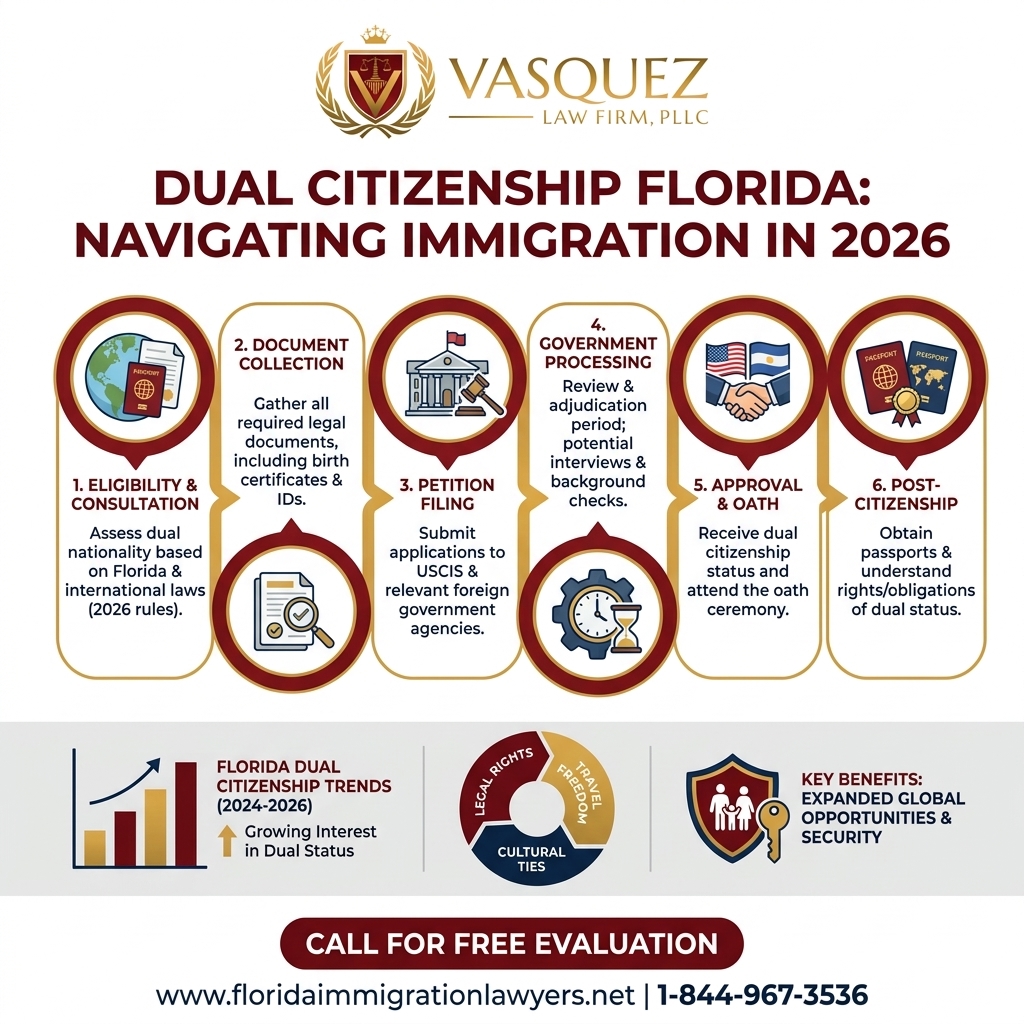
The entire naturalization process can take anywhere from 6 to 18 months, or even longer, depending on the USCIS field office workload and the complexity of your case. For example, the Miami Field Office, serving a large immigrant population, may have different processing times than smaller offices. Staying informed and responding promptly to any USCIS requests is crucial.
Key Documents for Dual Citizenship Applications
Whether you are pursuing U.S. naturalization or asserting foreign citizenship, having the correct documentation is paramount. A missing or incorrect document can lead to significant delays or even denial of your application. Here is a general checklist of documents commonly required for the U.S. naturalization process, which is often the first step towards achieving dual citizenship for many Florida residents:
- Form N-400, Application for Naturalization: The primary application form.
- Copy of Your Permanent Resident Card (Green Card): Front and back.
- Copies of State-Issued Identification: Driver's license or state ID.
- Marriage Certificate and Divorce Decrees (if applicable): If applying based on marriage to a U.S. citizen, or if your marital status has changed.
- Tax Transcripts or Returns: Proof of meeting tax obligations, especially if you have traveled extensively or have a complex financial history.
- Travel Records: Dates of all trips outside the U.S. since becoming a permanent resident.
- Court Dispositions or Police Records: If you have any arrests, citations, or criminal history, even if charges were dismissed or expunged.
- Child Support/Alimony Orders: If applicable, to show compliance with family obligations.
- Selective Service Registration Card: For male applicants between ages 18 and 26.
- Passport-Style Photographs: Two identical photos, meeting USCIS specifications.
- Proof of English Language Proficiency and Civics Knowledge: Although tested during the interview, documentation of relevant schooling or disabilities may be required for waivers.
For asserting foreign citizenship, the documents will vary widely depending on the country. They might include birth certificates, marriage certificates, proof of lineage, or investment records. Always consult the specific country's embassy or consulate, or an attorney specializing in international law, to determine their exact requirements. Our firm can help you navigate the U.S. side of this dual process effectively.
Benefits and Challenges of Holding Two Passports
Holding two passports can open up a world of opportunities, particularly for individuals in a globally-minded state like Florida. However, it also comes with certain responsibilities and potential complexities. Understanding both sides is essential for making an informed decision about pursuing dual citizenship.
Benefits of Dual Citizenship:
- Increased Travel Freedom: Enjoy easier entry and exit from both countries, often without needing visas. This is a significant advantage for Florida residents with business or family abroad.
- Expanded Economic Opportunities: The ability to live, work, and own property in two countries can provide greater career flexibility, investment opportunities, and access to different markets.
- Cultural and Family Ties: Maintain strong connections to your heritage and family abroad without legal barriers, fostering a sense of belonging in both nations.
- Access to Social Services: Potentially access social benefits, healthcare, and education systems in both countries, depending on their respective laws.
- Political Participation: The right to vote and participate in the political processes of both nations, if permitted by both countries' laws.
Challenges and Considerations:
- Tax Obligations: U.S. citizens are subject to worldwide taxation. Dual citizens must comply with tax laws in both countries, which can be complex and may require specialist tax advice.
- Military Service: Some countries may require dual nationals to fulfill military service obligations. It is critical to understand these responsibilities before acquiring a second citizenship.
- Potential for Conflict of Laws: In rare circumstances, conflicts of law or loyalty could arise, particularly in international disputes or during travel to third-party countries.
- Complexity of Renunciation: While the U.S. generally permits dual nationality, renouncing U.S. citizenship is a formal, irreversible process with serious implications, primarily related to tax and future travel to the U.S.
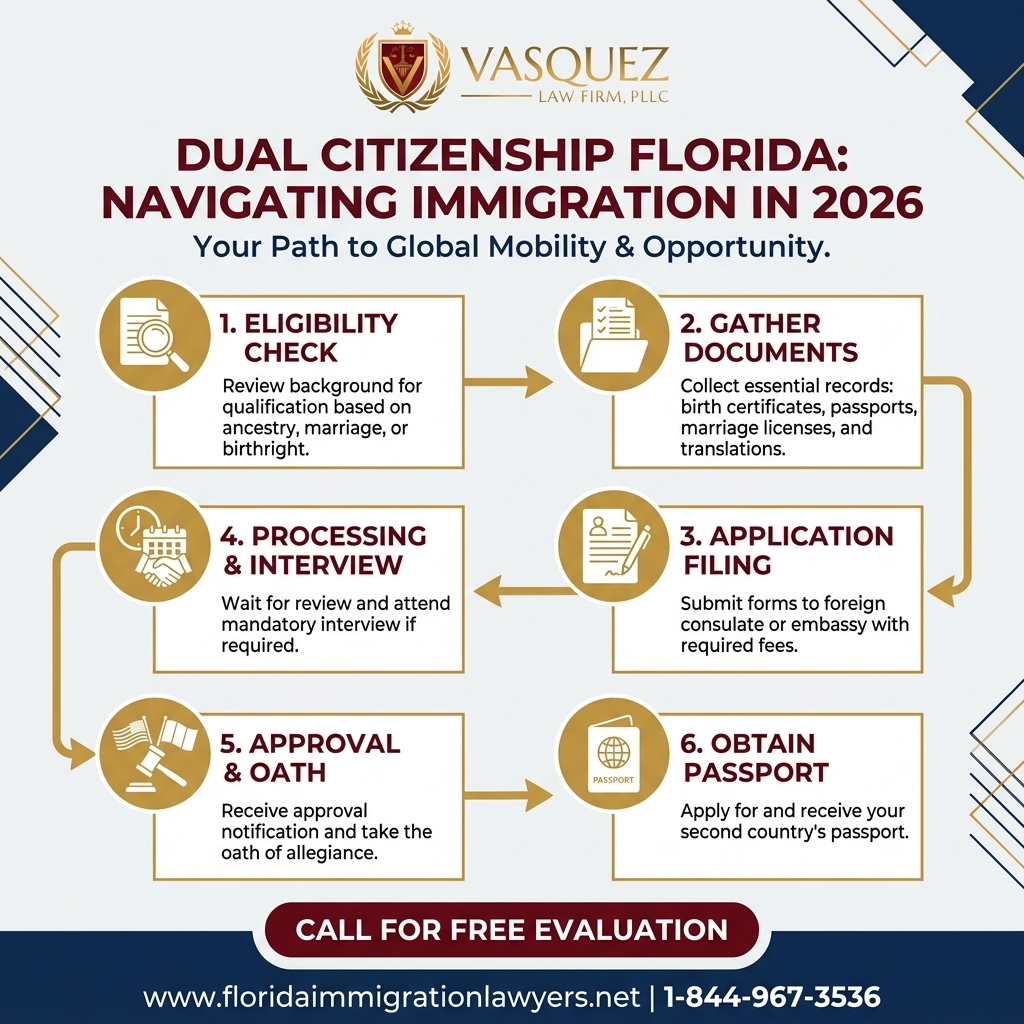
Navigating these benefits and challenges requires a clear understanding of both U.S. law and the laws of the other country involved. Florida Immigration Lawyers can provide comprehensive guidance on the U.S. aspects of your dual citizenship journey, ensuring you are fully prepared.
Navigating Complex Cases: When Florida Immigration Lawyers Can Help
While the concept of dual citizenship is generally permitted, the path to achieving or maintaining it can be fraught with complexities. For Florida residents, particularly those in diverse areas like Miami, specific scenarios can make the process challenging. This is where the expertise of Florida Immigration Lawyers becomes invaluable.
Consider situations where an applicant has a criminal record, even a minor one, which could impact their good moral character requirement for naturalization. Or perhaps there are extensive periods of absence from the U.S., raising questions about continuous residency. Applicants with prior immigration violations, such as overstaying a visa or unlawful entry, face significant hurdles. Our firm specializes in deportation defense and can assess how past issues might affect your naturalization application, helping to mitigate risks.
Furthermore, some individuals may have been U.S. citizens at birth but never formally recognized it, or they might be unsure of their status due to parents' naturalization or birth abroad to U.S. citizen parents. These cases involve intricate legal analysis of the INA and potentially require filing for a Certificate of Citizenship (Form N-600) or a U.S. passport. Understanding how to properly document these claims is essential. We also assist clients with asylum applications and other humanitarian relief, which, if granted, can eventually lead to naturalization and potential dual citizenship.
The laws of the other country also play a significant role. Some countries automatically revoke their citizenship upon naturalization elsewhere, while others require a formal renunciation. Understanding these international legal interactions is critical. Our legal team can guide you through the U.S. requirements and help you understand the broader implications of dual nationality, ensuring a smooth and informed process.
Do not navigate this process alone. The complexities of immigration law, especially concerning dual citizenship and naturalization, require experienced legal insight. Contact Florida Immigration Lawyers today to schedule a free consultation and let us help you achieve your goals with confidence.
Common Mistakes to Avoid in Dual Citizenship and Naturalization
Navigating the complex waters of dual citizenship and naturalization requires precision and careful attention to detail. Even minor errors can lead to significant delays, denials, or unforeseen legal complications. Be aware of these common pitfalls:
- Failing to Disclose All Travel History: Omitting trips outside the U.S. on your N-400 application, even short ones, can be seen as misrepresentation and lead to denial. USCIS has access to comprehensive travel records.
- Lack of Continuous Residency: Spending too much time outside the U.S. during your permanent residency period can break the continuous residency requirement for naturalization. Extended absences require careful legal analysis.
- Not Disclosing Criminal History: Any arrest, citation, or conviction, no matter how minor or old, must be disclosed on your application. Failing to do so is a serious offense that can result in a fraud charge.
- Inadequate Preparation for Interview: Not studying for the English and civics tests, or being unable to articulate answers clearly during the naturalization interview, can lead to a failed interview and retesting or denial.
- Misunderstanding Good Moral Character: Certain actions, such as failure to pay child support, tax evasion, or false statements, can disqualify an applicant based on a lack of good moral character.
- Assuming Your Home Country Permits Dual Nationality: Not all countries allow dual citizenship. Failing to confirm your original country's stance can lead to an unexpected loss of your original citizenship.
- Using Incorrect or Outdated Forms: Immigration forms are regularly updated. Using an old version of Form N-400 can lead to rejection of your application. Always download forms directly from the USCIS website.
- Ignoring USCIS Requests for Evidence (RFE): Failing to respond promptly and completely to an RFE can result in the denial of your application. RFEs are critical opportunities to provide missing information.
- Renouncing U.S. Citizenship Without Full Understanding: Some individuals mistakenly believe they must renounce U.S. citizenship to acquire foreign citizenship. This is rarely the case and should only be done with full legal advice, as it is largely irreversible.
- Not Seeking Legal Counsel for Complex Cases: Trying to handle a naturalization application with prior immigration issues, criminal history, or extensive travel without an attorney significantly increases the risk of denial.
When to Call a Florida Immigration Lawyer
While the idea of two passports is appealing, the journey to dual citizenship, particularly through U.S. naturalization, is rarely straightforward for everyone. Knowing when to seek professional legal assistance can save you time, money, and significant stress. Florida Immigration Lawyers are here to provide the expertise you need.
You should consider contacting our firm if you:
- Have a criminal record, even if charges were dismissed, expunged, or occurred years ago. Any interaction with law enforcement can impact your good moral character assessment.
- Have previously been denied U.S. citizenship or had an immigration application rejected. Understanding the reasons for past denials is crucial for a successful reapplication.
- Have spent significant time outside the U.S. since becoming a permanent resident, potentially impacting your continuous residency or physical presence requirements.
- Are unsure about your eligibility for naturalization, or if you believe you are already a U.S. citizen but lack formal proof.
- Have complex family situations, such as divorce, remarriage, or children born abroad, which might complicate your application.
- Are concerned about how acquiring U.S. citizenship might affect your citizenship in your country of origin, or vice versa.
- Need assistance preparing for the naturalization interview, particularly if English is not your first language or if you have anxieties about the civics test.
- Face any form of legal challenge or receive a Request for Evidence (RFE) or Notice of Intent to Deny (NOID) from USCIS.
Our experienced attorneys at Florida Immigration Lawyers understand the nuances of citizenship and naturalization law. We can assess your specific situation, identify potential challenges, and develop a robust strategy to help you achieve your dual citizenship goals in Florida.
About Florida Immigration Lawyers
Florida Immigration Lawyers is a leading law firm dedicated to providing comprehensive and compassionate immigration legal services across the entire state of Florida. With a deep understanding of both federal immigration law and the unique needs of Florida's diverse communities, we are committed to helping individuals and families navigate the complexities of the U.S. immigration system. Our expertise spans a wide range of practice areas, including naturalization, family-based petitions, deportation defense, asylum, and business immigration.
We pride ourselves on offering personalized attention, strategic advice, and vigorous advocacy for every client. Our team understands the profound impact immigration matters have on people's lives, and we approach each case with empathy and dedication. From our offices, we serve clients in Miami, Orlando, Tampa, Jacksonville, and all other Florida cities. We are available 24/7 to answer your urgent questions and offer free consultations to discuss your case. Call us today at 1-844-967-3536 or visit our website at https://www.floridaimmigrationlawyers.net to learn how we can assist you.
Sources and References
- U.S. Citizenship and Immigration Services (USCIS): Official source for naturalization forms, guides, and policies.
- U.S. Department of State - Dual Nationality: Provides guidance on U.S. policy regarding dual nationality.
- 8 U.S.C. Chapter 12 - Immigration and Nationality Act (INA): The primary body of law governing immigration and nationality in the United States.
- INA Section 316 (8 U.S.C. § 1427): General requirements for naturalization.
- INA Section 349 (8 U.S.C. § 1481): Loss of nationality.
- Code of Federal Regulations (CFR) Title 8: Aliens and Nationality.
Related services: citizenship test preparation, dual citizenship guidance, family-based immigration.
This article provides general legal information and is not intended as legal advice. Every case is unique, and outcomes depend on specific facts and circumstances. Contact an attorney for advice about your particular situation.
Embarking on the journey toward dual citizenship is a significant decision with lasting implications. With Florida Immigration Lawyers, you gain a trusted partner committed to guiding you through every step. Our goal is to make your path to holding two passports as clear and stress-free as possible. Do not leave your future to chance.
Take the first step towards securing your future and exploring the benefits of dual citizenship. Contact Florida Immigration Lawyers today for a free consultation. Call 1-844-967-3536. Se Habla Espanol - Estamos aqui para ayudarle.
Do Not Navigate This Process Alone
Our experienced immigration attorneys are ready to fight for you. Get a free, confidential consultation today.
Se Habla Español
Frequently Asked Questions
Florida Immigration Lawyers
Immigration Attorney | Founder, Vasquez Law Firm
U.S. Air Force veteran and immigration attorney with thousands of cases resolved. J.D., NCCU School of Law. AILA member. Admitted to the 4th, 5th, and 11th Circuit Courts.
Available 24/7 - Free Evaluations
Related Legal Services
Our Florida immigration attorneys can help you with free immigration consultation, experienced immigration attorneys and business immigration. Call today at 1-844-967-3536 for a free consultation.
Related Links
Related Topics
Free Legal Consultation
Discuss your case with our experienced attorneys. We're available 24/7.
Se Habla Español - Estamos aquí para ayudarle.
Related Articles
Understanding the Diversity Visa Lottery in Florida
Discover how the Diversity Visa Lottery can open doors to the American Dream from Pembroke Pines, Florida. Learn the steps, avoid common mistakes, and understand when to call a lawyer for assistance.
U Visa Certification: Guide for Florida Crime Victims
For non-citizen crime victims in Florida, the U visa offers a vital pathway to protection and legal status, but it hinges on obtaining U visa certification from law enforcement. This certification, typically Form I-918 Supplement B, confirms your helpfulness in the investigation or prosecution of a qualifying crime. Navigating the varied policies of Florida law enforcement agencies, understanding eligibility criteria, and preparing a compelling request requires specialized legal knowledge. This comprehensive guide from Florida Immigration Lawyers explains the entire process, from identifying the right certifying agency in Orlando and across Florida to understanding USCIS processing times and potential costs. We also highlight common pitfalls to avoid and emphasize when legal counsel is crucial for ensuring a strong U visa petition. If you are a crime victim in Florida, learn how to secure your future and call us for a free consultation.
Florida PERM Labor Certification: Your Employer Green Card Guide
Navigating PERM Labor Certification in Florida? Get our expert guide on employer-sponsored green card steps, requirements, and strategies for success. Secure
VAWA Self-Petition: Abused Spouse Immigration in Florida
For an abused spouse in Florida, the VAWA self-petition offers a confidential and independent path to a green card, allowing them to escape domestic violence without the abuser's involvement. This crucial provision of the Violence Against Women Act (VAWA) enables eligible individuals to file Form I-360, Petition for Amerasian, Widow(er), or Special Immigrant, based on battery or extreme cruelty by a U.S. citizen or lawful permanent resident spouse. Understanding the eligibility requirements, the detailed step-by-step process, essential documentation, and potential timelines is vital. Florida Immigration Lawyers provides expert legal guidance to help survivors in West Palm Beach, Miami, Orlando, and across the state navigate this sensitive journey, ensuring their safety and securing their immigration future. Learn how to protect yourself and build a new life in Florida.
