Protecting Against Immigration Scams in Florida | VLF Florid
Learn how to protect yourself from immigration scams in Florida, including notario fraud. Discover actionable steps and legal resources. Call Florida Immigration Lawyers at 1-844-967-3536.

- Verify the credentials of anyone offering immigration services.
- Avoid offers that seem too good to be true.
- Consult with a licensed immigration attorney.
- Report scams to the authorities.
- Understand your rights as an immigrant.
Introduction
Imagine moving to Coral Springs, Florida, hoping for a new beginning, only to fall victim to an immigration scam. Unfortunately, this is a reality for many immigrants in Florida. With the rise of notario fraud and other deceptive practices, it's essential to stay informed and vigilant. This article will guide you on how to protect yourself from these scams, outline the steps to take if you suspect fraud, and provide resources for legal help. Call Florida Immigration Lawyers at 1-844-967-3536 for a free consultation today.
The journey to a new life in the United States, particularly in a vibrant community like Coral Springs, is often filled with hope and significant investment. However, this vulnerable period can be exploited by unscrupulous individuals who prey on the dreams of immigrants. These scams not only cost victims their hard-earned money but can also jeopardize their immigration status, leading to severe legal consequences and immense emotional distress. Understanding the landscape of these deceptive practices is the first critical step toward safeguarding your future.
Florida, with its large and diverse immigrant population, has unfortunately become a hotspot for various immigration-related frauds. From promises of quick green cards to fake offers of legal assistance, the methods used by scammers are constantly evolving. This guide aims to empower you with the knowledge and tools necessary to identify, avoid, and report these scams. Remember, you don't have to face these challenges alone; reliable legal assistance from firms like Florida Immigration Lawyers is readily available to support you through every stage of your immigration journey.
Understanding Immigration Scams
Immigration scams are fraudulent activities designed to deceive individuals seeking immigration assistance. These scams can range from fake legal advice to promises of expedited citizenship processes. Notario fraud is particularly common in Florida, where unlicensed individuals pose as legal experts, offering false hope to vulnerable immigrants. Coral Springs, with its diverse immigrant population, is not exempt from these dangers.
Beyond the notorious "notario fraud," which involves individuals falsely claiming to be attorneys or legal experts, immigrants face a spectrum of other deceptive schemes. These can include marriage fraud, where scammers solicit money for sham marriages to obtain legal status; fake job offers that demand upfront payments for non-existent positions; and document fraud, where individuals are sold counterfeit immigration documents or advised to submit fraudulent information. Each of these scams carries severe penalties, not only for the perpetrators but also for the victims who may unknowingly participate in illegal activities.
The vulnerability of immigrants often stems from language barriers, a lack of familiarity with the U.S. legal system, and a deep-seated desire for a better life. Scammers skillfully exploit these factors, often targeting specific communities with culturally resonant but deceptive promises. For instance, a common scenario involves an individual, often from the same cultural background as the victim, claiming to have "special connections" or "inside information" that can fast-track an immigration application for a hefty fee. These promises are always false and designed to exploit trust.
Staying informed about these varied tactics is paramount. It’s crucial to understand that legitimate immigration processes are governed by strict laws and procedures, and there are no shortcuts or guaranteed outcomes. Any offer that seems too good to be true, or any individual who pressures you for immediate cash payments without proper documentation, should raise an immediate red flag. Consulting with a trusted legal professional, such as the team at Florida Immigration Lawyers, can provide a vital layer of protection against these predatory practices.
Step-by-Step Guide to Protect Yourself
Protecting yourself from immigration scams requires proactive vigilance and informed decision-making. By following a clear set of guidelines, you can significantly reduce your risk of falling victim to fraud and ensure your immigration journey is handled legitimately and professionally.
- **Verify Credentials:** Always check the credentials of any individual offering immigration services. Use the USCIS website to confirm that they are authorized to provide legal advice. Furthermore, for attorneys, verify their licensure through the Florida Bar Association's website. A legitimate attorney will have an active bar number and no disciplinary actions. Paralegals and consultants cannot provide legal advice; they can only assist attorneys. If someone claims to be an attorney but isn't listed, they are likely a scammer.
- **Be Skeptical of Guarantees:** Be cautious of anyone who guarantees success in immigration processes. Legal outcomes can never be guaranteed due to the complex and discretionary nature of immigration law. Any professional who promises a "sure thing" or "expedited approval" for an extra fee is almost certainly engaging in fraudulent behavior. A reputable attorney will explain the process, potential challenges, and realistic probabilities, but will never make false promises.
- **Consult a Licensed Attorney:** Seek advice from a licensed immigration attorney in Florida. Avoid notarios and unlicensed practitioners. In many Latin American countries, a "notario público" is a highly trained legal professional. However, in the U.S., a "notary public" merely certifies signatures and cannot offer legal advice. This cultural misunderstanding is a primary tool for fraudsters. Always consult with a U.S.-licensed attorney, like those at Florida Immigration Lawyers, who are qualified to provide legal guidance and representation.
- **Report Suspicious Activity:** If you suspect fraud, report it to the Executive Office for Immigration Review or local authorities. You should also consider reporting to the Federal Trade Commission (FTC), your state's Attorney General, and the American Immigration Lawyers Association (AILA). When reporting, gather as much evidence as possible, including names, contact information, copies of documents, receipts, and details of any promises made. Your report can help protect other vulnerable individuals.
Beyond these steps, always insist on a written contract for any services, detailing the scope of work and all fees. Keep copies of everything – every document you submit, every form you sign, and all correspondence. This meticulous record-keeping is invaluable for your case and as evidence if fraud occurs. Understanding your rights as an immigrant, including the right to legal representation and protection from exploitation, is also crucial. If you ever feel pressured or confused, do not hesitate to reach out to Florida Immigration Lawyers at 1-844-967-3536 for clarification and trusted advice.
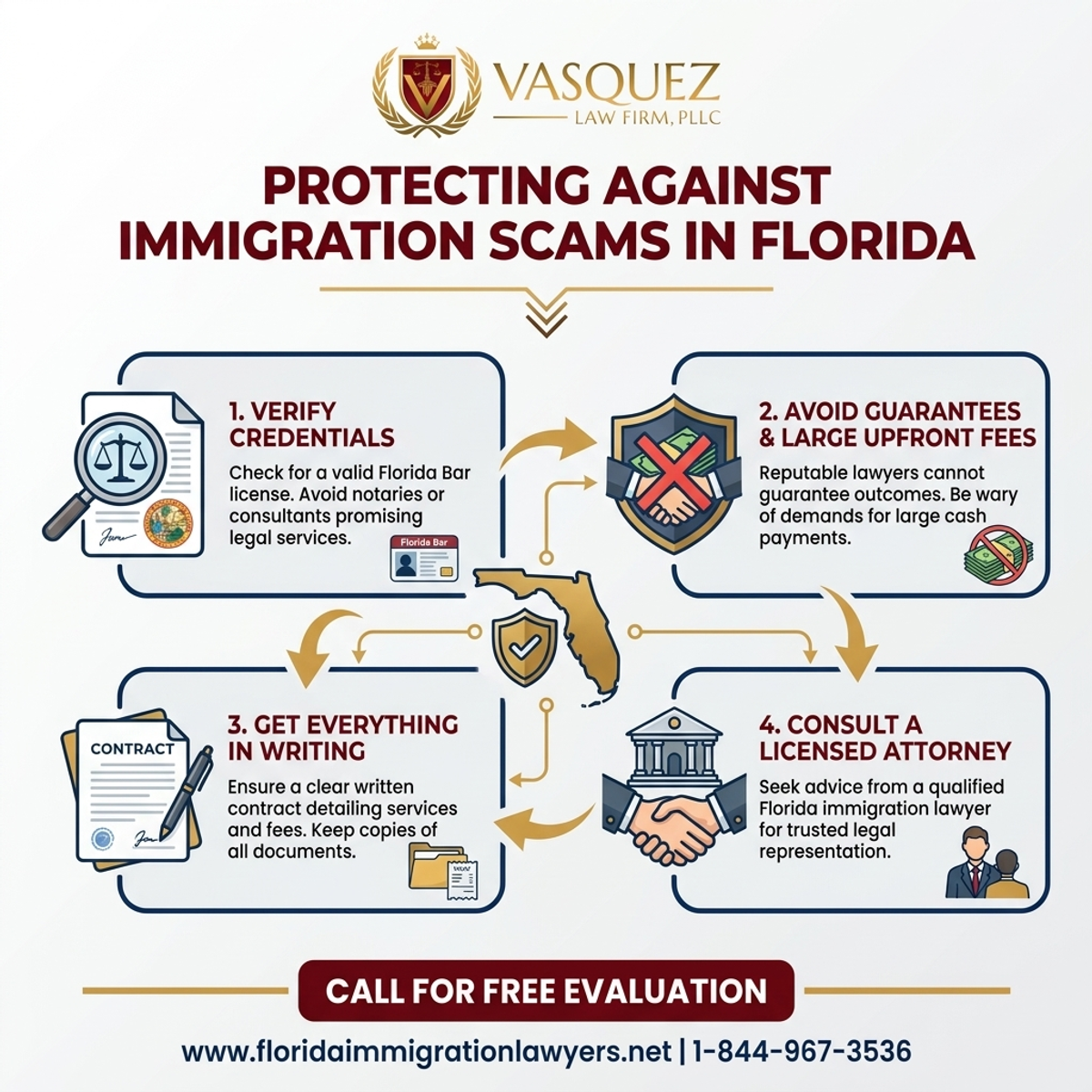
Step-by-Step Process — Protecting Against Immigration Scams in Florida
Document Checklist for Legal Immigration Assistance
A well-organized set of documents is the cornerstone of any successful immigration application and a crucial defense against potential scams. Scammers often exploit disorganization or a lack of understanding regarding required paperwork. Ensuring you have all necessary documents and understand their purpose will not only streamline your legal process but also empower you to identify any suspicious requests for unnecessary or fraudulent paperwork.
When preparing for legal immigration assistance, compile the following:
- **Valid identification (passport, driver’s license):** These are fundamental for proving your identity and nationality. Ensure all identification documents are current and match the information on your immigration forms.
- **All immigration-related documents (visas, applications):** This includes copies of every immigration form you've ever filed, approval notices, denial letters, entry stamps, and any previous visas. These documents provide a comprehensive history of your immigration journey and are vital for your attorney to understand your specific situation.
- **Proof of residency in Coral Springs or surrounding areas:** Utility bills, lease agreements, bank statements, or official mail showing your address are important for establishing your ties to the community, especially for certain applications or local benefits.
- **Receipts and correspondence related to immigration services:** Keep detailed records of all payments made to attorneys, USCIS, or other entities, along with copies of all emails, letters, and agreements. This paper trail is invaluable for financial transparency and as evidence in case of a dispute or fraud.
- **Birth certificates, marriage certificates, and divorce decrees:** These civil documents are often required to establish family relationships for family-based petitions. Ensure they are certified copies and translated if not in English.
- **Police clearance certificates and court records:** Depending on your immigration history and the type of application, you may need to provide records from any arrests or convictions, both in the U.S. and abroad. Honesty about these records is critical, as concealing them can lead to serious consequences.
- **Educational and employment history documents:** Diplomas, transcripts, resumes, and letters of employment can be necessary for employment-based visas or to demonstrate your qualifications and contributions.
Organize these documents meticulously in a binder or digital folder, making sure to keep original documents in a safe place and providing only copies to your legal representative. A reputable firm like Florida Immigration Lawyers will guide you through this checklist, ensuring you gather everything needed without requesting unnecessary or strange documents that could be a sign of a scam. Always question any request for documents that seem irrelevant or overly personal.
Timeline and Processing Expectations
Understanding the timeline of your immigration process is crucial. Generally, applications processed through the USCIS can take several months to years, depending on the complexity and category. Always be wary of anyone promising unusually fast processing times, as this may indicate fraudulent activity.
The U.S. immigration system is known for its intricate processes and varying timelines, which can be a source of frustration and anxiety for applicants. These processing times are influenced by numerous factors, including the specific type of visa or benefit sought, the volume of applications USCIS receives, the complexity of individual cases, and whether additional evidence (Request for Evidence, RFE) is required. For instance, a family-based green card petition can take anywhere from one to several years, while naturalization applications typically range from 6 to 18 months. These are general estimates, and actual times can fluctuate significantly.
Scammers frequently exploit the natural impatience and desire for quick results among immigrants by promising "expedited" processing for an additional, often exorbitant, fee. It is vital to understand that there are very limited and specific circumstances under which USCIS truly expedites a case, usually involving severe emergencies, humanitarian reasons, or significant government interest, and these requests must be formally submitted and justified. No individual or firm can simply pay to jump the queue. Any claim to bypass standard processing times through unofficial channels is a clear indicator of fraud.
To stay informed about legitimate processing times, always refer to the official USCIS website, which provides current estimates for different forms and service centers. A licensed immigration attorney, such as those at Florida Immigration Lawyers, will provide you with realistic expectations based on current trends and your specific case details. They will also guide you on how to properly track your case status through official channels, ensuring you are never left in the dark or misled by false promises of speed that only lead to disappointment and financial loss.
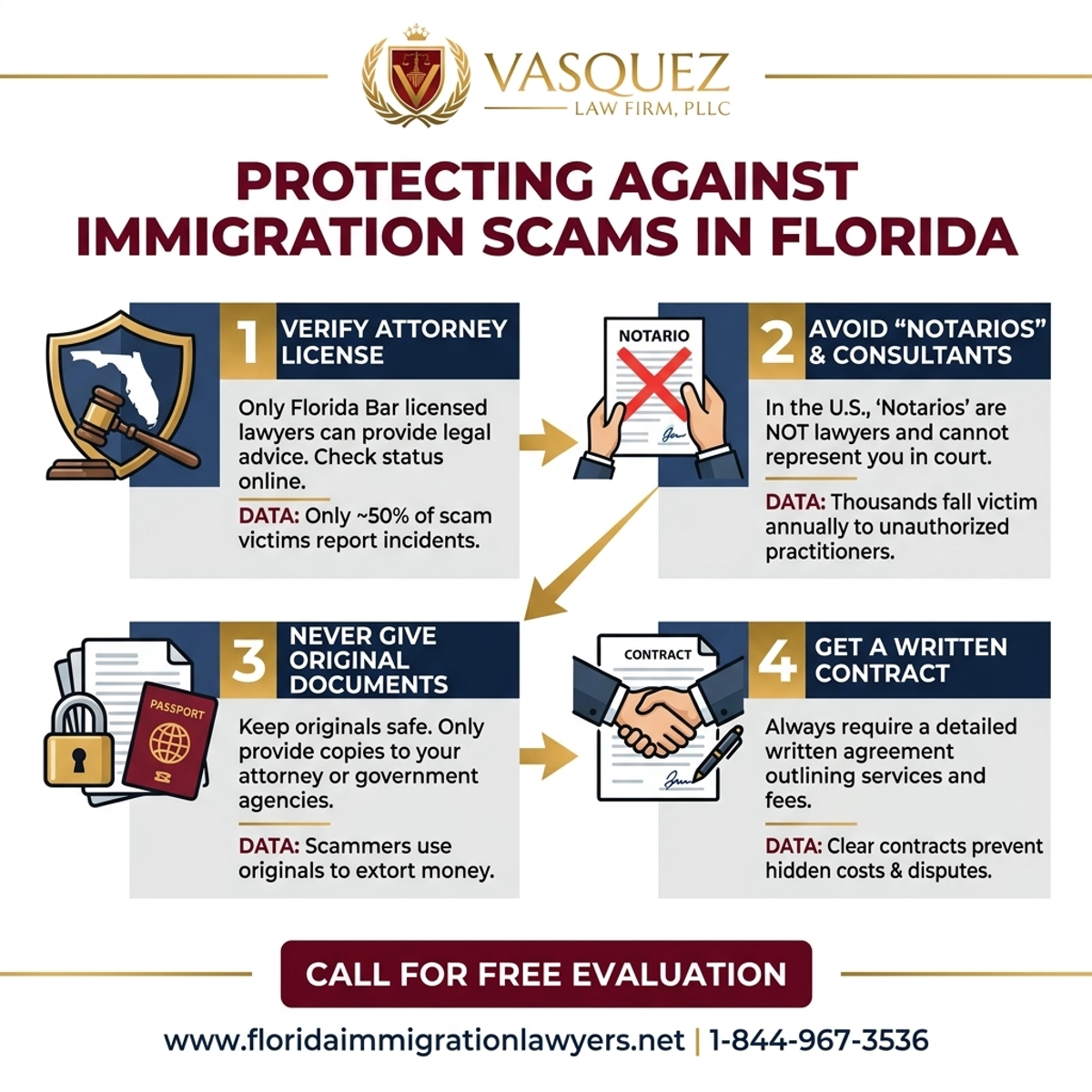
Key Statistics — Protecting Against Immigration Scams in Florida
Cost Factors and Fee Breakdown
Legal immigration services come with various costs, including filing fees, attorney fees, and other associated expenses. It's important to understand these costs upfront and avoid any hidden fees that scammers may impose. A reputable attorney will provide a clear fee breakdown and explain any potential additional costs.
Transparency in fees is a hallmark of a legitimate legal service. When engaging with an immigration attorney, you should expect a clear, itemized breakdown of all anticipated costs. These typically include government filing fees, which are non-negotiable and paid directly to USCIS or other government agencies, and attorney fees, which compensate your legal representative for their expertise and time. Be aware that government filing fees can vary significantly depending on the application type and number of applicants, and they are subject to change by federal authorities.
Attorney fees can be structured in several ways: a flat fee for specific services (e.g., preparing a visa petition), hourly rates for more complex or ongoing cases, or a combination. A trustworthy attorney will discuss these options with you and present a written fee agreement outlining all charges before any work begins. This agreement should clearly state what services are covered, what additional expenses (like translation costs, travel, or expert witness fees) might arise, and the payment schedule. Any request for large cash payments without a receipt, or demands for fees that seem disproportionately high for the service offered, should immediately raise suspicions.
Scammers often use vague fee structures, demand payment in unconventional ways (like gift cards or wire transfers to personal accounts), or add hidden charges throughout the process. They might also pressure you into paying upfront for services that are never rendered. By choosing a reputable firm like Florida Immigration Lawyers, you ensure that you receive a transparent fee structure and a comprehensive understanding of all costs involved. We believe in clear communication regarding our fees and are committed to providing value and peace of mind, ensuring your financial investment is protected and your immigration goals are pursued ethically.
Do not navigate this process alone. Contact Florida Immigration Lawyers today.
Common Mistakes to Avoid
Navigating the U.S. immigration system is complex, and even well-intentioned individuals can make errors that jeopardize their case or expose them to fraud. Avoiding common pitfalls is just as important as understanding the correct procedures. Be proactive in educating yourself and seeking legitimate guidance to ensure your journey is secure and successful.
- Not verifying the credentials of an immigration advisor.
- Trusting promises of guaranteed outcomes.
- Paying for services without a written contract.
- Ignoring communication from official immigration sources.
- Failing to report suspected scams to authorities.
- Assuming notarios are legal professionals.
- Skipping consultations with licensed attorneys.
- Overlooking the importance of keeping copies of all documents.
- Accepting unsolicited offers of immigration assistance.
- Not staying informed about changes in immigration law.
Each of these mistakes can have significant repercussions, from financial losses to deportation. By being aware of these common errors and actively working to avoid them, you can build a stronger, more secure foundation for your immigration case. When in doubt, always err on the side of caution and consult with a trusted legal expert like Florida Immigration Lawyers, who can provide clarity and steer you away from potential dangers.
Frequently Asked Questions (FAQs)
What is "notario fraud" and why is it dangerous?Notario fraud occurs when individuals, often called "notarios," falsely claim to be licensed attorneys or immigration experts in the U.S., leveraging a linguistic misunderstanding where "notario público" in some Latin American countries refers to a legal professional. In the U.S., a notary public merely certifies signatures and cannot provide legal advice. This deception is dangerous because these unlicensed individuals often offer incorrect legal guidance, file fraudulent documents, or charge exorbitant fees, leading to severe consequences like deportation, loss of money, and permanent bars from immigration benefits. Always seek a U.Do Not Navigate This Process Alone
Our experienced immigration attorneys are ready to fight for you. Get a free, confidential consultation today.
Se Habla Español
Frequently Asked Questions
Florida Immigration Lawyers
Immigration Attorney | Founder, Vasquez Law Firm
U.S. Air Force veteran and immigration attorney with thousands of cases resolved. J.D., NCCU School of Law. AILA member. Admitted to the 4th, 5th, and 11th Circuit Courts.
Available 24/7 - Free Evaluations
Related Legal Services
Our Florida immigration attorneys can help you with business immigration, asylum protection and deportation defense. Call today at 1-844-967-3536 for a free consultation.
Related Links
Related Topics
Free Legal Consultation
Discuss your case with our experienced attorneys. We're available 24/7.
Se Habla Español - Estamos aquí para ayudarle.
Related Articles
L-1 Visa Transfer for Florida Companies | VLF Florida
Learn about L-1 visa intracompany transfers for Florida companies. Ensure a smooth transition for your employees to Tampa. Call 1-844-967-3536 for expert advice.
H-2A Visa Opportunities for Florida Agricultural Workers
Explore opportunities for Florida agricultural workers under the H-2A visa program. Learn about application steps, costs, and common mistakes.
Derived Citizenship Through Parents in Florida | VLF Florida
Discover how children born abroad can gain U.S. citizenship through their parents in Florida. Learn about eligibility, the application process, and common pitfalls. Contact Florida Immigration Lawyers at 1-844-967-3536 for expert assistance.
Understanding Immigration Bond Hearings in Florida
Navigating an immigration bond hearing in Florida can be complex. Learn about the process, necessary documents, and common mistakes. Call Florida Immigration Lawyers for assistance.
