Understanding Immigration Bond Hearings in Florida
Navigating an immigration bond hearing in Florida can be complex. Learn about the process, necessary documents, and common mistakes. Call Florida Immigration Lawyers for assistance.

Immigration bond hearings in Florida are critical for detained immigrants seeking release. These hearings determine whether an individual can be released from ICE detention by paying a bond. Success requires demonstrating that the detainee is not a flight risk or a danger to the community. Key takeaways include:
- Understanding the bond hearing process is crucial.
- Legal representation can significantly impact outcomes.
- Preparation with proper documentation is essential.
Introduction
Facing an immigration bond hearing in Florida can be a daunting experience, especially for those unfamiliar with the process. For immigrants detained by ICE, securing a bond is often the first step toward regaining freedom. This post will guide you through everything you need to know about immigration bond hearings, focusing on the Tampa area and Florida's unique legal landscape. Call Florida Immigration Lawyers at 1-844-967-3536 for a free consultation.
The journey through the U.S. immigration system can be complex and emotionally taxing. When a loved one is detained by Immigration and Customs Enforcement (ICE), the immediate priority becomes their release. An immigration bond hearing is the primary avenue for achieving this release, offering a ray of hope amidst uncertainty. Understanding the nuances of this process, from initial detention to the judge's final decision, is paramount for a successful outcome.
Beyond merely outlining the steps, this guide aims to equip you with practical insights, documentation requirements, and a clear understanding of what to expect. We will delve into the factors that influence a judge's decision, the importance of strong community ties, and how legal representation from experienced professionals like Florida Immigration Lawyers can make a profound difference in securing a favorable bond determination. Our goal is to demystify the process and provide a comprehensive resource for those navigating these challenging circumstances.
Understanding Immigration Bonds
An immigration bond is a sum of money paid to secure the release of a detainee from ICE custody. The bond ensures that the detainee will appear for future immigration proceedings. In Florida, especially in cities like Tampa, the bond amount can vary based on several factors, including the individual's criminal history and community ties. According to 8 U.S.C. § 1226(a), the bond must be set at a reasonable amount considering these factors.
The concept of a 'reasonable amount' is central to bond determinations. Immigration judges consider a multitude of factors to assess both flight risk and danger to the community. These include the length of time the individual has resided in the U.S., their family ties here (especially U.S. citizen or lawful permanent resident spouses, children, or parents), employment history, property ownership, and any prior immigration violations or criminal convictions. A strong showing of deep community integration and a clean record significantly increases the likelihood of a lower bond or even release without bond.
It's important to understand that an immigration bond is not a penalty; rather, it's a guarantee. It serves as an assurance to the government that the individual will comply with all future court dates and orders. If the individual attends all their scheduled hearings and complies with the terms of their release, the bond amount is typically returned at the conclusion of their immigration case, regardless of the final outcome. This makes securing a bond a crucial investment in a detainee's ability to fight their case from outside detention.
Types of Immigration Bonds
There are two primary types of immigration bonds: delivery bonds and voluntary departure bonds. A delivery bond allows the detainee to be released while awaiting court appearances, while a voluntary departure bond requires the detainee to leave the U.S. voluntarily within a specified time frame.
Delivery bonds are the most common type and are typically sought when an individual intends to fight their immigration case or pursue a form of relief. The bond amount is determined by an immigration judge, and once paid, the individual is released with the condition that they attend all future immigration court hearings. Failure to appear can result in the forfeiture of the bond and potentially an order of deportation in absentia. These bonds are essential for allowing individuals to prepare their defense effectively with their families and legal counsel.
Voluntary departure bonds, on the other hand, are less common and are typically offered when an individual has agreed to leave the U.S. voluntarily. This bond ensures that they will depart within a specified period, usually 30-120 days. If the individual fails to depart, the bond is forfeited, and they may become subject to a formal order of removal, which can carry more severe consequences, including bars to future re-entry. It's crucial to consult with Florida Immigration Lawyers to understand the implications of each type of bond and which option best suits your specific situation.
Step-by-Step Guide to the Bond Hearing Process
- Initial Detention: After arrest by ICE, individuals are typically held in a detention center.
- Request a Bond Hearing: The detainee or their attorney must request a bond hearing with an immigration judge.
- Prepare for the Hearing: Gather evidence to demonstrate the detainee's ties to the community, employment, and family in the U.S.
- Attend the Hearing: During the hearing, the judge will assess whether the detainee poses a flight risk or danger to the community.
- Judge’s Decision: If granted, the judge will set the bond amount, which must be paid for the detainee's release.
1. Initial Detention: The period immediately following an ICE arrest can be disorienting. Individuals are processed and transferred to an immigration detention facility, often in a different county or even state. During this time, it's crucial to exercise your right to remain silent and your right to speak with an attorney. ICE agents may attempt to question you, but any statements made without legal counsel present can be used against you in court. Contacting Florida Immigration Lawyers promptly is vital to protect your rights from the outset.
2. Request a Bond Hearing: Not all detained immigrants are automatically eligible for a bond hearing. Eligibility depends on factors such as criminal history and the basis of detention. If eligible, a bond hearing must be actively requested. This request can be made verbally by the detainee during an initial master calendar hearing, or more effectively, by an attorney filing a formal motion with the Executive Office for Immigration Review (EOIR). Timeliness is key, as delays can prolong detention.
3. Prepare for the Hearing: This is arguably the most critical stage. Your attorney will work diligently to compile a comprehensive package of evidence. This includes not just documents but also identifying potential witnesses, such as family members, employers, or community leaders, who can testify to the detainee's good character, strong ties, and lack of flight risk or danger. A well-prepared legal strategy, meticulously crafted by Florida Immigration Lawyers, can significantly influence the judge's perception and decision.
4. Attend the Hearing: The bond hearing itself is a formal proceeding where both the detainee's attorney and the ICE attorney present their arguments to the immigration judge. The detainee will typically be present via video conference from the detention center. The judge will hear testimony, review submitted evidence, and question both sides. The focus remains on two key factors: whether the individual is a flight risk and whether they pose a danger to the community. Your attorney will advocate strongly on your behalf, highlighting all mitigating factors.
5. Judge’s Decision: Following the arguments, the immigration judge will issue a decision, which can be immediate or reserved for a later date. The judge may grant bond, deny bond, or release the individual on their own recognizance (without bond). If bond is granted, the judge will specify the amount. Once the bond is paid, the detention facility will process the release, which can take several hours to a few days. If bond is denied, your attorney can discuss options for appeal or filing a new motion to reconsider if circumstances change.
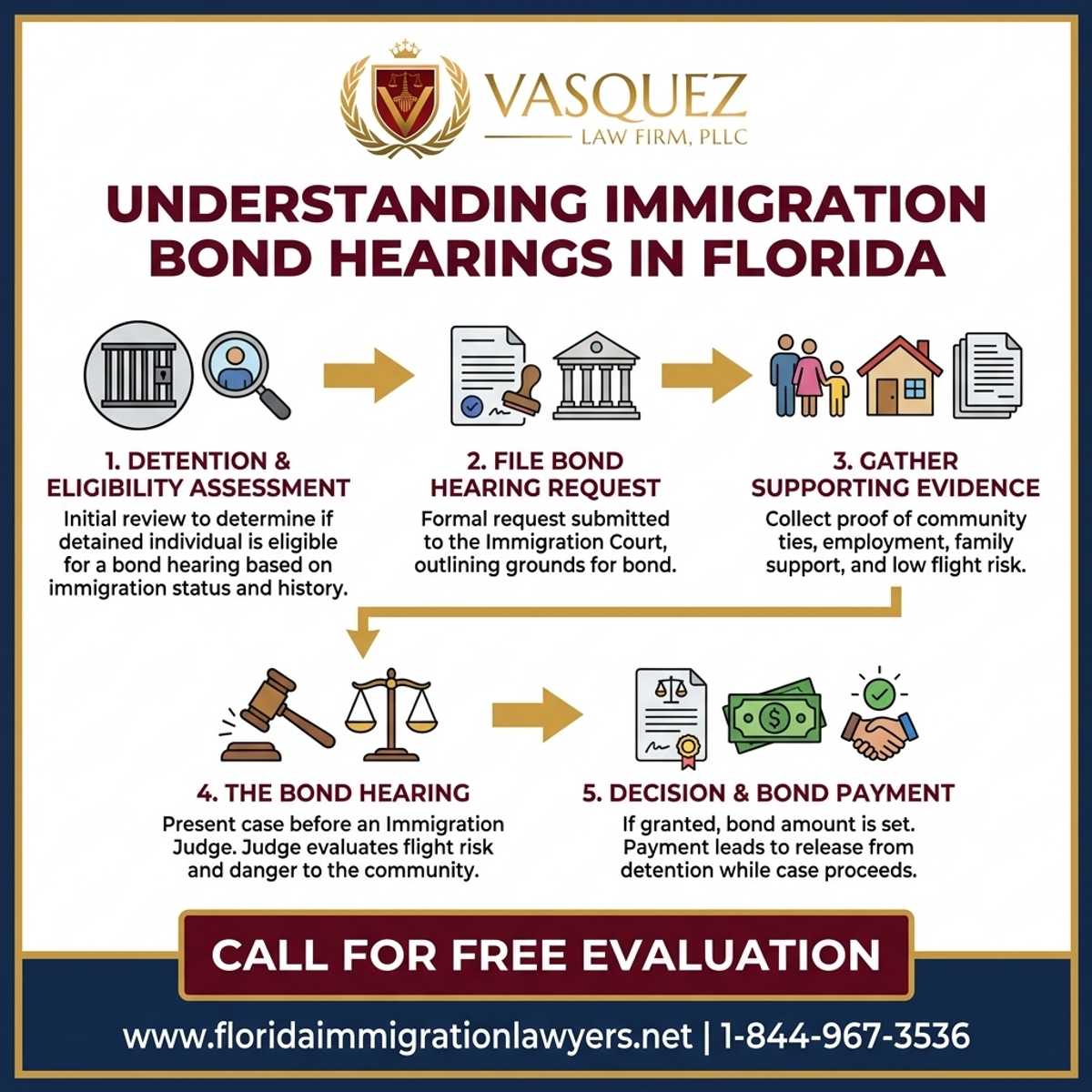
Step-by-Step Process — Understanding Immigration Bond Hearings in Florida
Document Checklist for Bond Hearings
Having the correct documents is essential for a successful bond hearing. These may include:
- Proof of identity and immigration status
- Proof of residence in the U.S.
- Evidence of family ties, such as birth certificates or marriage licenses
- Employment verification documents
- Letters of support from community members
Beyond these core documents, a comprehensive package can include tax returns (proving consistent employment and financial responsibility), utility bills or lease agreements (demonstrating stable residence), and school records for children (highlighting family integration into the community). Any evidence of medical conditions requiring ongoing treatment, especially if not available in detention, can also be a compelling factor for release.
Letters of support are particularly impactful. These should come from credible individuals—employers, religious leaders, community organizers, or long-term friends—who can attest to the detainee's good character, strong moral fiber, and commitment to their family and community. Each letter should be signed, dated, and ideally notarized, detailing the relationship to the detainee and why they believe the individual is not a flight risk or danger. Florida Immigration Lawyers can guide you on how to solicit and prepare these crucial testimonials effectively.
Remember, the goal is to present a holistic picture of the detainee as a responsible individual deeply rooted in the community, with every incentive to appear for future court dates. The more compelling and well-organized the documentation, the stronger the case for a favorable bond decision. Your legal team will meticulously review all potential evidence to ensure the strongest possible presentation to the immigration judge.
Timeline and Processing Expectations
The timeline for bond hearings can vary. Once a request is made, the hearing is usually scheduled within a few weeks. After the bond is set, payment can be made immediately, allowing for prompt release.
While a few weeks is a general estimate, the actual waiting period can be influenced by the specific immigration court's caseload, the availability of judges, and the complexity of the individual's case. In high-volume courts like the one in Tampa, located at 5524 West Cypress Street, scheduling can sometimes be longer. However, an experienced attorney from Florida Immigration Lawyers understands how to navigate these systems and can often expedite the filing process, pushing for the earliest possible hearing date.
Once a bond is granted and the amount is set, the payment process involves specific procedures. Bonds are typically paid at an ICE ERO field office, not at the courthouse. The person paying the bond (the obligor) must be a U.S. citizen or lawful permanent resident and will need to provide identification. After payment, it usually takes several hours, and sometimes up to 24-72 hours, for the detention facility to process the release. Understanding these logistical steps is crucial, and your legal team can provide precise guidance to ensure a smooth and timely release process.
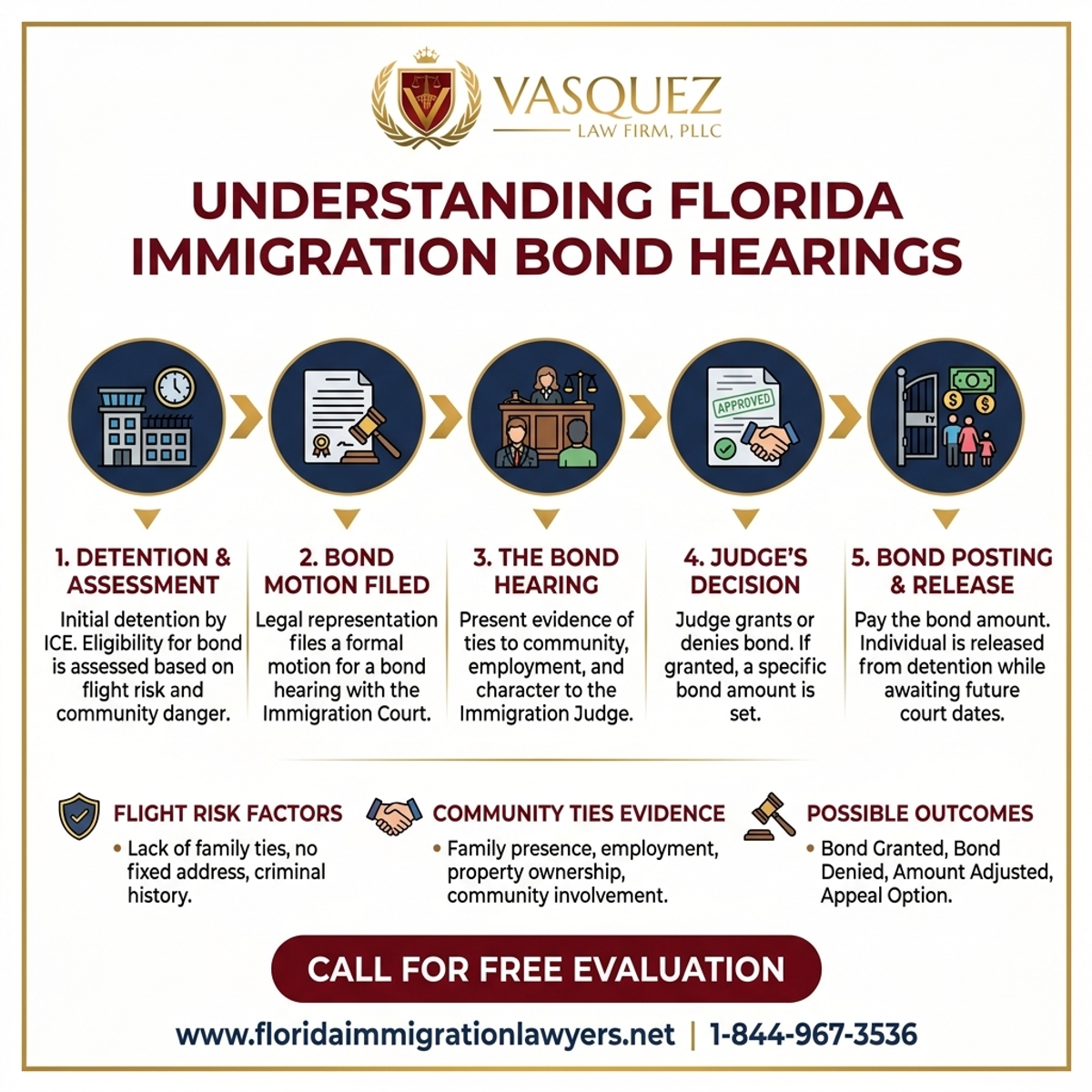
Key Statistics — Understanding Immigration Bond Hearings in Florida
Cost Factors and Fee Breakdown
Costs associated with immigration bonds can vary significantly. Factors influencing the bond amount include the detainee's criminal history, risk of absconding, and ties to the community. Legal representation fees can also vary, but investing in an experienced immigration attorney can improve the chances of a favorable outcome.
The bond amount itself is determined by the immigration judge, with a statutory minimum of $1,500, though amounts can range from this minimum to tens of thousands of dollars, or even higher in complex cases. Factors such as the severity and recency of any criminal offenses, prior immigration violations (e.g., previous deportations or unlawful entries), the length and stability of U.S. residence, and the strength of family and employment ties all play a role. The judge's discretion is considerable, making a strong presentation by your attorney absolutely vital.
In addition to the bond amount, you must consider legal fees. These fees cover the attorney's time for consultations, case preparation, document gathering, court appearances, and ongoing communication. While legal fees are an investment, they are often critical to securing a lower bond amount or even a release without bond. An attorney from Florida Immigration Lawyers can help you understand the potential costs, work to present the strongest possible case, and often save you money in the long run by securing a more favorable bond or a quicker release. Don't hesitate to call 1-844-967-3536 for a free consultation to discuss your specific situation and potential costs.
Common Mistakes to Avoid
- Not Requesting a Bond Hearing: Failing to request a bond hearing can prolong detention unnecessarily.
- Lack of Legal Representation: Navigating the process without an attorney can lead to unfavorable outcomes.
- Insufficient Documentation: Failing to provide adequate evidence of community ties can result in bond denial.
- Missing Hearing Dates: Not appearing for scheduled hearings can result in forfeiture of bond and continued detention.
- Providing Inaccurate Information: Misrepresentation can negatively affect the judge's decision.
- Ignoring Legal Advice: Failing to follow the guidance of legal counsel can jeopardize the case.
- Delaying Payment: Not paying the bond promptly can delay release.
When to Call a Lawyer
Engaging an attorney is crucial when facing detention and a bond hearing. Legal counsel can provide invaluable assistance in navigating the complex immigration system. If you or a loved one is detained, contact Florida Immigration Lawyers for expert guidance through the bond hearing process. Our team is here to help you every step of the way.
The moment an individual is detained by ICE, the clock starts ticking. Seeking legal counsel immediately is not just advisable, it's often critical. An experienced immigration attorney can quickly ascertain bond eligibility, gather necessary documentation, and prepare compelling arguments to present to the immigration judge. Attempting to navigate the system alone, especially when detained, can lead to missed opportunities, procedural errors, and prolonged detention.
Furthermore, an attorney provides more than just legal expertise; they offer advocacy and support during an incredibly stressful time. They can communicate with family members, explain complex legal terms, and ensure that the detainee's rights are protected. Whether it's a first-time detention or a case with a complex criminal history, the nuanced understanding of immigration law that Florida Immigration Lawyers possess can significantly improve the chances of a successful bond hearing. Call us at 1-844-967-3536 for immediate assistance and a free consultation.
About Florida Immigration Lawyers
Florida Immigration Lawyers is dedicated to providing comprehensive legal support to immigrants across Florida. Our experienced attorneys specialize in all areas of immigration law, including bond hearings, deportation defense, and family immigration. Call us at 1-844-967-3536 or visit our website for more information. We offer free consultations and are available 24/7 to assist you.
Our firm prides itself on a client-centric approach, understanding that each immigration case is unique and deeply personal. We are committed to fighting tirelessly for the rights and freedom of our clients, leveraging our extensive knowledge of U.S. immigration law and our proven track record in immigration courts throughout Florida. From the initial consultation to the final resolution, we stand by our clients, offering clear communication, strategic advice, and compassionate representation.
Beyond bond hearings, our expertise extends to complex deportation defense cases, family petitions, asylum claims, and visa applications, ensuring a full spectrum of immigration services. When you choose Florida Immigration Lawyers, you're choosing a team that is not only highly skilled but also deeply empathetic to the challenges immigrants face. We are ready to provide the dedicated legal support you need, whenever you need it. Contact us today at 1-844-967-3536 to begin your journey towards a brighter future.
Sources and References
- U.S. Citizenship and Immigration Services (USCIS)
- Executive Office for Immigration Review (EOIR)
- 8 U.S.C. Chapter 12 - Immigration and Nationality Act
Related services: asylum and refugee protection, immigration waivers, humanitarian protection programs, DACA renewal and applications.
This article provides general legal information and is not intended as legal advice. Every case is unique, and outcomes depend on specific facts and circumstances. Contact an attorney for advice about your particular situation.
Contact Florida Immigration Lawyers at 1-844-967-3536 for a free consultation. Se Habla Espanol - Estamos aqui para ayudarle.
If you need legal assistance, learn more about deportation defense lawyers in Florida, or call us at 1-844-967-3536 for a free consultation.
Do Not Navigate This Process Alone
Our experienced immigration attorneys are ready to fight for you. Get a free, confidential consultation today.
Se Habla Español
Frequently Asked Questions
Florida Immigration Lawyers
Immigration Attorney | Founder, Vasquez Law Firm
U.S. Air Force veteran and immigration attorney with thousands of cases resolved. J.D., NCCU School of Law. AILA member. Admitted to the 4th, 5th, and 11th Circuit Courts.
Available 24/7 - Free Evaluations
Related Legal Services
Our Florida immigration attorneys can help you with asylum protection, deportation defense and citizenship and naturalization. Call today at 1-844-967-3536 for a free consultation.
Related Links
Related Topics
Free Legal Consultation
Discuss your case with our experienced attorneys. We're available 24/7.
Se Habla Español - Estamos aquí para ayudarle.
Related Articles
Find a Spanish-Speaking Immigration Lawyer in Hialeah
Navigating immigration matters in Hialeah, Florida, requires expert legal guidance. A local, Spanish-speaking immigration lawyer understands the unique challenges faced by residents in Miami-Dade County. Learn why hiring a qualified attorney is crucial for your immigration needs.
Immigration Lawyer Hialeah Florida: Your Guide to Legal Help
For residents of Hialeah, Florida, navigating U.S. immigration law can be complex. Whether you seek a visa, green card, or need deportation defense, a skilled immigration lawyer in Hialeah, Florida, is crucial. This guide from Florida Immigration Lawyers covers essential steps, document requirements, timelines, and cost factors. We emphasize avoiding common mistakes and knowing when to seek legal counsel for intricate cases like asylum or family petitions. Our firm provides comprehensive, bilingual support for Miami-Dade County and all Florida residents, ensuring empathetic and effective representation. Contact us for a free consultation to protect your rights and future.
DACA Renewal Guide for Florida Dreamers 2026 | VLF Florida
Renew your DACA status in Florida for 2026 with our comprehensive guide. Learn key steps, document requirements, and common mistakes to avoid. Call Florida Immigration Lawyers at 1-844-967-3536 for a free consultation today.
Special Immigrant Juvenile Status in Florida | VLF Florida
SIJS offers a pathway to legal residency for minors in Florida who have faced abuse, abandonment, or neglect. Learn how SIJS can provide legal protection and a brighter future. Call us for a free consultation.