Immigration Policy News Florida: What You Need to Know...
Stay ahead of the curve with our comprehensive guide to immigration policy news Florida for 2026. This article breaks down anticipated federal and state changes, offering a step-by-step approach for Florida residents, including those in St. Petersburg. Learn about essential documents, processing timelines, and cost factors. Discover common mistakes to avoid and when to seek professional legal help. Florida Immigration Lawyers is your trusted resource for navigating complex immigration laws, providing expert guidance and support to protect your future. Contact us for a free consultation to discuss your specific situation.

Staying current with immigration policy news Florida for 2026 is vital for immigrants and their families across the state, including St. Petersburg. New federal and state laws can significantly impact visa applications, green card processes, and even deportation defense strategies. Understanding these changes ensures you navigate the legal landscape effectively and protect your rights.
- Florida's immigration laws are dynamic, requiring constant vigilance.
- Federal policies often interact with state regulations, creating complex scenarios.
- Proactive legal consultation is essential to adapt to new requirements.
- Misinformation can lead to severe consequences for your immigration status.
- Early preparation and accurate documentation are key to successful applications.
Florida, a vibrant hub of diverse communities, is frequently at the forefront of national discussions regarding immigration. For individuals and families residing in St. Petersburg and across the Sunshine State, staying informed about immigration policy news Florida is not just important-it's essential. As we look towards 2026, potential shifts in both federal and state laws could significantly impact your immigration journey, from visa applications to permanent residency and even deportation defense.
The landscape of immigration law is ever-evolving. New legislative initiatives, court rulings, and administrative changes by agencies like USCIS can alter eligibility requirements, processing times, and even the very pathways available to immigrants. Our firm, Florida Immigration Lawyers, understands the anxiety and uncertainty these changes can bring. We are dedicated to providing clear, compassionate guidance to help you navigate these complexities.
This comprehensive guide will explore the anticipated immigration policy news Florida for 2026, breaking down what these changes could mean for you. We will cover federal and state-level updates, provide a step-by-step approach to understanding new regulations, outline essential documentation, and discuss crucial cost factors. Our goal is to empower you with the knowledge needed to protect your future in Florida.
If you are concerned about how upcoming changes might affect your status or need personalized advice, do not hesitate to reach out. Call Florida Immigration Lawyers at 1-844-967-3536 for a free consultation. Our team is ready to assist you.
Understanding Florida's Evolving Immigration Landscape in 2026
Florida's unique geopolitical position and significant immigrant population mean that immigration policies often have a direct and profound impact on its residents. In 2026, we anticipate continued discussions and potential legislative actions that could reshape the lives of many throughout the state, including those in St. Petersburg, Tampa, and Orlando.
The interplay between federal and state authority in immigration matters creates a complex legal environment. While federal law, primarily the Immigration and Nationality Act (INA), governs most aspects of immigration, state laws can influence areas like employment, public benefits, and local law enforcement cooperation with federal agencies. Understanding this dynamic is crucial for anyone living in Florida.
Recent Legislative Changes Affecting Florida Immigrants
Over recent years, Florida has seen various state-level legislative efforts concerning immigration. These have often focused on issues such as E-Verify mandates for employers, restrictions on certain public services for undocumented individuals, and enhanced penalties related to human smuggling. While specific laws are subject to change, the trend indicates a proactive stance by the state legislature on immigration issues.
For example, some laws have aimed to increase collaboration between local law enforcement and federal immigration authorities, such as ICE. This can create heightened concerns for individuals without lawful status, even for minor infractions. It is vital to understand your rights and the potential implications of any interaction with law enforcement.
Federal vs. State Immigration Authority in Florida
Federal immigration law, enforced by agencies like USCIS, ICE, and Customs and Border Protection (CBP), dictates who can enter, reside, and work in the U.S. State laws, however, can indirectly affect immigrants by regulating areas within state jurisdiction. For instance, a state might pass laws concerning professional licensing or access to state-funded programs, which could impact immigrants.
This dual layer of governance means that even if federal policy remains stable, changes at the state level in Florida can still create new challenges or opportunities for immigrant communities. Our team closely monitors both federal and state legislative developments to provide the most current advice to our clients.
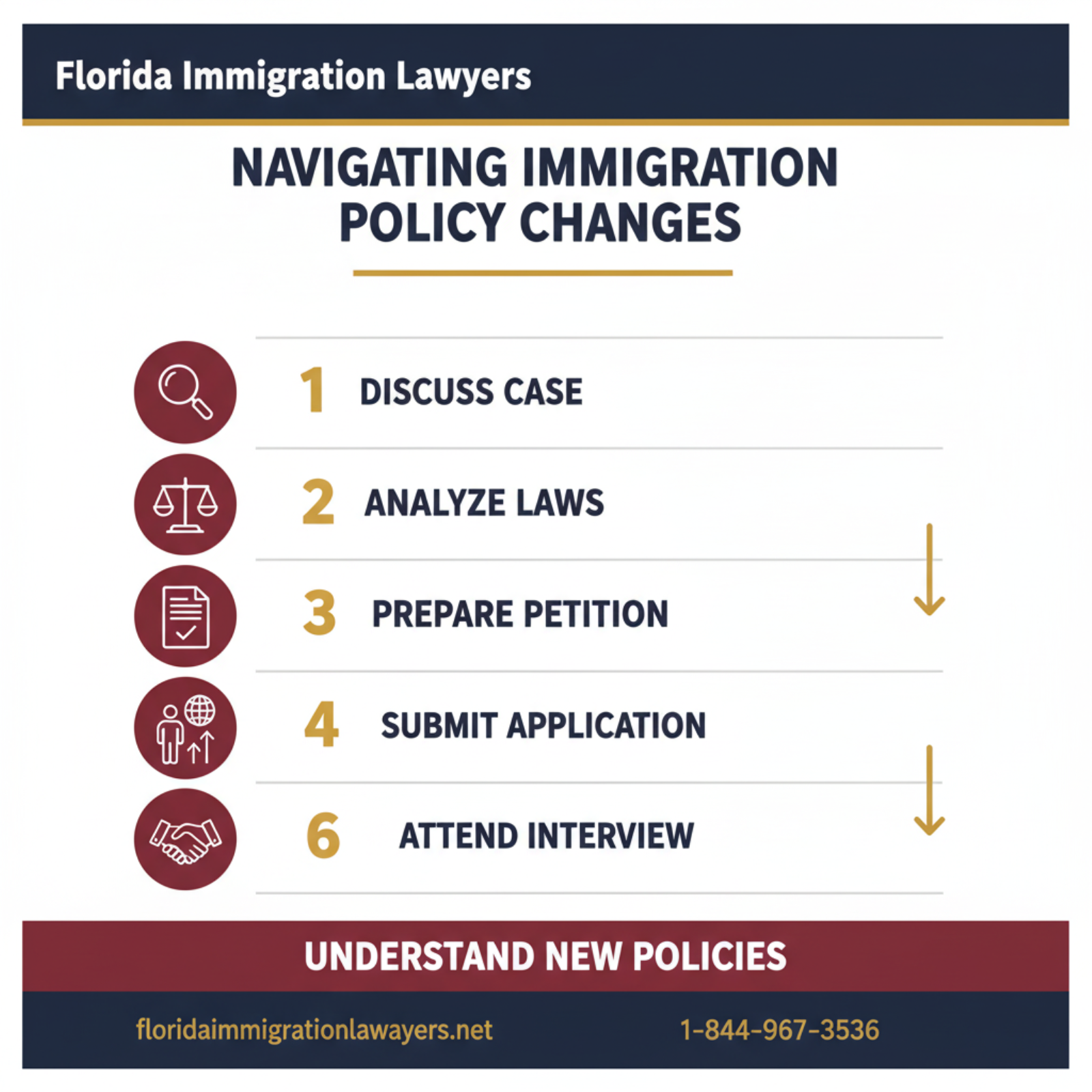
Navigating Immigration Policy Changes: A Step-by-Step Guide for Florida Residents
Adapting to new immigration policies requires a systematic approach. Whether you are applying for a visa, seeking a green card, or defending against deportation, these steps can help you prepare for the immigration policy news Florida may bring in 2026.
-
Stay Informed on USCIS Updates: The U.S. Citizenship and Immigration Services (USCIS) is the primary agency responsible for administering immigration benefits. Their official website is the most reliable source for updates on forms, fees, processing times, and policy changes. Regularly check their 'News' and 'Alerts' sections. While the U.S. is not currently suspending immigrant visas broadly, policies can shift, and specific categories might face temporary restrictions or backlogs. Always consult official sources.
-
Assess Your Current Immigration Status: Understand your current legal standing in the U.S. Do you have a valid visa, a green card, or are you seeking asylum? Knowing your exact status is the foundation for evaluating how new policies might affect you. This includes understanding any conditions on your status, such as those for conditional permanent residents.
-
Understand New Application Requirements: Policy changes often come with revised forms, additional documentation requirements, or new eligibility criteria. Before filing any application, ensure you are using the most current version of forms and adhering to all updated instructions. An outdated form or missing document can lead to delays or even denial of your application.
-
Prepare for Potential Interview Changes: USCIS and other agencies may introduce new protocols for interviews, including additional questions or stricter evidentiary standards. If your application requires an interview, such as for naturalization or a green card, be prepared for thorough scrutiny. Practicing common interview questions and having all original documents ready is always a good strategy.
-
Seek Legal Counsel Early: The most proactive step you can take is to consult with an experienced Florida immigration lawyer. An attorney can analyze your specific situation, interpret complex new policies, and advise you on the best course of action. This early intervention can prevent costly mistakes and significantly improve your chances of success. Our firm offers free consultations to discuss your needs.
Essential Documents for Immigration Applications in 2026
Regardless of specific policy changes, certain foundational documents are almost always required for immigration applications. Gathering these documents early and ensuring their accuracy can streamline your process. This list is general; your specific case may require additional items.
- Valid Passports and Visas (for all applicants)
- Birth Certificates (original or certified copies, with certified translations if not in English)
- Marriage Certificates (if applicable, with certified translations)
- Divorce Decrees or Death Certificates (for prior marriages, if applicable)
- Police Clearances/Criminal Records (from all countries of residence since age 16)
- Medical Examination Records (completed by a USCIS-approved civil surgeon)
- Affidavits of Support (Form I-864) and supporting financial documents (tax returns, employment letters, pay stubs)
- Photographs (passport-style, adhering to USCIS specifications)
- Proof of Relationship (e.g., photos, correspondence, joint bank accounts for family-based petitions)
- Educational and Work Experience Documents (for employment-based visas)
- Proof of Residency in Florida (utility bills, lease agreements, etc.)
Immigration Processing Timelines and Expectations in St. Petersburg and Beyond
Processing times for immigration applications can vary significantly based on the type of petition, the USCIS service center handling your case, and current agency backlogs. For residents of St. Petersburg and surrounding areas, your case will typically be processed by the USCIS Tampa Field Office for interviews, while initial applications are sent to regional service centers.
It is important to manage your expectations regarding timelines. While USCIS provides estimated processing times on their website, these are subject to change and can often be longer than anticipated. Factors like requests for evidence (RFEs), unforeseen policy shifts, or increased application volumes can all contribute to delays.
You can generally check the status of your case online using the receipt number provided by USCIS. Our firm also assists clients in monitoring their application progress and responding to any communications from the agency promptly. Patience is often a virtue in immigration processes, but vigilance is also key.
Understanding Immigration Application Costs and Fees for Florida Applicants
The financial aspect of immigration can be a significant concern for many applicants. Costs typically include government filing fees, biometric service fees, and potentially legal fees if you retain an attorney. It is crucial to understand that these fees are subject to change by USCIS and are non-refundable, even if your application is denied.
USCIS periodically updates its fee schedule. Therefore, it is essential to check the most current fees on the official USCIS website before submitting any application. While we cannot provide specific fee amounts here, be prepared for separate fees for each form you file, as well as for biometrics appointments.
In some cases, applicants may be eligible for a fee waiver if they meet specific poverty guidelines or receive certain public benefits. Discussing your financial situation with an experienced immigration lawyer can help determine if you qualify for such waivers, potentially reducing your overall costs. An attorney can also help you understand the full scope of potential expenses.
Do not navigate this complex process alone. The stakes are too high. Contact Florida Immigration Lawyers today for expert guidance and support. We serve all of Florida, including St. Petersburg, and are ready to help you.
Common Mistakes to Avoid in Immigration Applications
Navigating U.S. immigration laws, especially with ongoing immigration policy news Florida, is fraught with potential pitfalls. Even minor errors can lead to significant delays, denials, or even more severe consequences like deportation. Here are some common mistakes we see and their potential repercussions:
-
Filing Incomplete or Inaccurate Applications: Submitting forms with missing information or incorrect details is a primary cause of delays and rejections. USCIS will issue a Request for Evidence (RFE) or even deny the application outright. This prolongs your process and can cost additional filing fees.
-
Missing Deadlines: Immigration processes are strict about deadlines for filing, responding to RFEs, or appearing for interviews. Missing a deadline can result in the automatic denial of your application or even the initiation of deportation proceedings. Always mark important dates and respond promptly.
-
Providing False Information or Misrepresentation: Intentionally providing false information on an immigration application is a serious offense. This can lead to a permanent bar from receiving immigration benefits and may have criminal implications. Always be truthful and accurate in all submissions.
-
Ignoring Requests for Evidence (RFEs) or Notices of Intent to Deny (NOIDs): These notices from USCIS require a timely and comprehensive response. Failing to address an RFE or NOID adequately will almost certainly lead to the denial of your petition. It is crucial to understand exactly what information USCIS is requesting.
-
Traveling Without Proper Authorization: Leaving the U.S. or re-entering without appropriate advance parole or a valid visa can jeopardize your pending application or even lead to inadmissibility. Always consult with an attorney before making international travel plans while an immigration application is pending.
-
Not Updating Your Address with USCIS: If you move, you are legally required to notify USCIS of your new address within 10 days. Failing to do so can result in missed notices, interview appointments, or RFEs, leading to application abandonment or denial. This is a common mistake that can have serious consequences.
-
Assuming Old Laws Still Apply: Immigration law is constantly changing. What was true last year, or even last month, may no longer be applicable. Relying on outdated information or advice can lead to critical errors. Always verify current laws and policies, especially with the frequent immigration policy news Florida generates.
-
Attempting Self-Representation for Complex Cases: While some simple forms might seem manageable, complex immigration cases, especially those involving waivers, criminal history, or asylum claims, often require professional legal expertise. Attempting to navigate these alone can lead to irreversible mistakes.
-
Failing to Disclose Criminal History: Even minor arrests or convictions that seem irrelevant can have significant immigration consequences. Failing to disclose these can be seen as misrepresentation. It is critical to be transparent with your attorney, as they can advise on the best way to address such issues.
-
Overstaying a Visa: Remaining in the U.S. beyond your authorized period of stay can trigger bars to re-entry and make you ineligible for future immigration benefits. It is a serious violation of immigration law that can have long-term consequences, even for green card holders who might face deportation for certain offenses under INA § 237.
-
Not Understanding Grounds of Inadmissibility or Deportability: The INA outlines specific reasons why an individual may be denied entry (inadmissible under INA § 212) or removed from the U.S. (deportable under INA § 237). These grounds include criminal offenses, health issues, and prior immigration violations. Ignorance of these can lead to unexpected denials or even detention. New laws for green card holders often focus on enhancing these grounds or their enforcement.
-
Engaging with Unauthorized Legal Service Providers: Seek advice only from licensed attorneys or accredited representatives. Notarios or immigration consultants who are not attorneys cannot provide legal advice and often lead clients astray, resulting in severe negative outcomes.
When to Call a Florida Immigration Lawyer
While this guide provides general information on immigration policy news Florida, every immigration case is unique. There are specific scenarios where professional legal assistance is not just helpful, but absolutely critical to protecting your future. Florida Immigration Lawyers are here to help you through these complex situations.
You should contact an attorney immediately if you receive a Notice to Appear (NTA) for deportation proceedings, or if you have any past criminal history, no matter how minor. These situations require expert legal defense to prevent removal from the U.S. Our experienced lawyers can represent you in immigration courts, including those in Orlando or Miami.
If your application has been denied, if you receive a Request for Evidence (RFE) that you do not understand, or if you believe you may be inadmissible to the U.S., legal counsel is essential. We can help you understand the reasons for denial, formulate a strong response to RFEs, or explore waivers of inadmissibility. This is particularly important with the constant changes in immigration policy news Florida.
Furthermore, if you are applying for complex visas, such as employment-based visas, or if you have previously been denied entry or deported, an attorney can significantly improve your chances of success. We also assist with naturalization, family-based petitions, and asylum claims, ensuring compliance with all current laws and regulations.
Do not wait for a crisis to seek legal help. Proactive engagement with an attorney can often prevent problems before they arise. Florida Immigration Lawyers offers comprehensive services for all your immigration needs across Florida. Visit our attorneys page to learn more about our dedicated team.
About Florida Immigration Lawyers
Florida Immigration Lawyers is a leading immigration law firm dedicated to serving individuals, families, and businesses throughout Florida. With a deep understanding of both federal and state immigration laws, our experienced attorneys provide compassionate and effective legal representation for a wide range of immigration matters.
We are committed to helping our clients navigate the complexities of the U.S. immigration system, especially in light of ongoing immigration policy news Florida. Our services include visa applications, green card petitions, deportation defense, asylum claims, citizenship, family-based immigration, and business immigration. We pride ourselves on personalized attention and strategic advocacy.
Why choose Florida Immigration Lawyers? Our firm offers 24/7 availability, ensuring you can reach us when you need us most. We provide free, no-obligation consultations to discuss your case and offer clear, upfront advice. Our team is fully bilingual, with services available in English and Spanish, making legal assistance accessible to a broader community. We serve all of Florida, from St. Petersburg to Miami, Orlando, and Jacksonville.
Your immigration journey is important to us. Let us be your trusted legal partners. Contact us today. Phone: 1-844-967-3536. Website: https://www.floridaimmigrationlawyers.net.
Sources and References
- U.S. Citizenship and Immigration Services (USCIS)
- U.S. Department of State - Bureau of Consular Affairs
- Executive Office for Immigration Review (EOIR)
- 8 U.S.C. Chapter 12 - Immigration and Nationality Act (INA)
- INA § 212 - General Classes of Aliens Ineligible for Visas and Admission; Waivers of Inadmissibility
- INA § 237 - Deportable Aliens
- 8 CFR - Code of Federal Regulations, Title 8 (Aliens and Nationality)
This article provides general legal information and is not intended as legal advice. Every case is unique, and outcomes depend on specific facts and circumstances. Contact an attorney for advice about your particular situation.
Navigating the complexities of immigration law, especially with new immigration policy news Florida, requires expertise and dedication. Don't leave your future to chance. Call Florida Immigration Lawyers today at 1-844-967-3536 for a free, confidential consultation. Se Habla Español - Estamos aquí para ayudarle.
Do Not Navigate This Process Alone
Our experienced immigration attorneys are ready to fight for you. Get a free, confidential consultation today.
Se Habla Español
Frequently Asked Questions
Florida Immigration Lawyers
Immigration Attorney | Founder, Vasquez Law Firm
U.S. Air Force veteran and immigration attorney with thousands of cases resolved. J.D., NCCU School of Law. AILA member. Admitted to the 4th, 5th, and 11th Circuit Courts.
Available 24/7 - Free Evaluations
Related Legal Services
Our Florida immigration attorneys can help you with business immigration, asylum protection and deportation defense. Call today at 1-844-967-3536 for a free consultation.
Related Links
Related Topics
Free Legal Consultation
Discuss your case with our experienced attorneys. We're available 24/7.
Se Habla Español - Estamos aquí para ayudarle.
Related Articles
Parole in Place for Military Families in Florida | VLF Florida
Explore Parole in Place for military families in Florida. Learn about eligibility, application steps, and common mistakes to avoid. Contact Florida Immigration Lawyers for a free consultation.
Unlawful Presence Waiver: Florida Guide | VLF Florida
Explore the unlawful presence waiver process in Florida, focusing on the I-601A provisional waiver. This guide helps immigrants in Tampa navigate their path to lawful status. For personalized assistance, contact Florida Immigration Lawyers today.
How to Choose an Immigration Lawyer Florida | VLF Florida
Choosing the right immigration lawyer in Florida is crucial for navigating complex immigration laws and procedures. Learn how to select the best lawyer for your needs with our comprehensive guide. Call Florida Immigration Lawyers at 1-844-967-3536 for a free consultation.
2026 Immigration Policy Changes in Florida | VLF Florida
Explore the 2026 immigration policy changes in Florida, focusing on Miami's unique challenges and opportunities. Learn how to navigate the new rules with expert guidance from Florida Immigration Lawyers.