2026 Immigration Policy Changes in Florida | VLF Florida
Explore the 2026 immigration policy changes in Florida, focusing on Miami's unique challenges and opportunities. Learn how to navigate the new rules with expert guidance from Florida Immigration Lawyers.

- New eligibility criteria for green cards
- Updated processing times
- Revised documentation requirements
Introduction
As we navigate through 2026, the landscape of immigration policy in Florida is undergoing noteworthy changes. These shifts impact not only new immigrants but also those who have been residing in Miami and other parts of Florida for years. Understanding these changes is crucial to ensure compliance and to take advantage of any new opportunities that arise. In this article, we will explore the latest immigration policy changes, their implications, and how you can navigate them effectively. Call Florida Immigration Lawyers at 1-844-967-3536 for a free consultation to discuss your immigration concerns.
Florida, a state with a vibrant and diverse immigrant population, is particularly sensitive to federal and state immigration reforms. The modifications introduced in 2026 are designed to address evolving economic needs, national security concerns, and humanitarian considerations, aiming for a more efficient yet rigorous immigration system. These changes necessitate a proactive approach from individuals and families seeking to establish or maintain their legal status within the state.
For residents of Miami, a global hub known for its rich multicultural tapestry, these policy updates carry profound significance. The city's unique demographics mean that any shift in immigration law can reverberate through communities, affecting everything from family reunification to workforce dynamics. Staying informed and seeking expert advice from professionals like Florida Immigration Lawyers is paramount to successfully adapting to these new realities and safeguarding your future.
Overview of 2026 Immigration Policy Changes
The immigration policies in Florida have been revised to address both economic and social demands. These changes, influenced by both federal and state directives, are designed to enhance efficiency and fairness in the immigration process. For instance, there are new rules surrounding green card eligibility and adjustments to the processing timelines. These reforms are aimed at reducing backlog and expediting lawful immigration.
Beyond green card eligibility and processing times, the 2026 policy changes also introduce nuanced modifications to various visa categories, including employment-based visas, family-sponsored petitions, and asylum claims. Applicants may find that certain criteria have been tightened, requiring more substantial evidence of eligibility, while other pathways might see new opportunities for specific skill sets or humanitarian needs. These adjustments reflect a broader national strategy to align immigration with current socio-economic priorities.
Miami, with its diverse immigrant population, stands at the forefront of these changes. With the city's unique demographic, it's essential to understand how these policies affect local residents. The USCIS and other relevant bodies are working towards a more streamlined process, though challenges remain, particularly concerning documentation and application scrutiny.
These policy shifts are not merely procedural; they represent a significant recalibration of who can immigrate, how they qualify, and the timeline for achieving legal status. For example, some changes might prioritize individuals with specific professional skills deemed critical to the U.S. economy, while others could impact the age or relationship requirements for family reunification. Understanding the specifics of these changes is crucial, and Florida Immigration Lawyers are equipped to provide clarity on how these apply to your unique situation.
Step-by-Step Guide to Navigating New Rules
Navigating the complex landscape of immigration policy changes can be daunting. The 2026 reforms emphasize thoroughness and adherence to updated procedures. Following a structured approach can significantly reduce stress and the likelihood of errors, ensuring your application proceeds as smoothly as possible. This guide provides a roadmap to help you understand and comply with the new requirements.
It's important to remember that while the core principles of immigration law remain, the specifics of eligibility, documentation, and processing can shift considerably. These changes are often driven by legislative updates, presidential directives, and evolving administrative priorities. Therefore, a diligent, step-by-step approach is not just recommended but essential for anyone seeking immigration benefits in Florida.
Always consider consulting with an expert, such as Florida Immigration Lawyers, at any stage if you feel overwhelmed or uncertain. Their deep understanding of the intricacies of the 2026 policies can provide invaluable guidance and prevent costly missteps. A free consultation at 1-844-967-3536 can offer the clarity you need to proceed with confidence.
- Assess Your Eligibility: Review the updated eligibility criteria for your specific immigration needs, whether it's a visa, green card, or citizenship. The new rules might include revised income thresholds, updated family definitions, or specific educational/professional requirements. It's critical to compare your personal circumstances against these new benchmarks to confirm you still qualify.
- Gather Required Documents: Prepare all necessary documents, including new forms introduced in 2026. Check the State Department for specifics. This often involves obtaining new versions of birth certificates, marriage licenses, educational transcripts, or employment verification letters. Ensure all documents are translated by certified translators if not in English and properly authenticated.
- Submit Applications: Ensure your application is complete and accurate before submission to avoid delays. Double-check every field, sign all required sections, and attach all supporting documentation in the specified order. Incomplete applications are a primary cause of rejection or significant processing delays, costing you time and additional fees.
- Attend Interviews: Be ready for any additional interviews required under the new policies. Prepare by reviewing your application and supporting documents, and practice answering common immigration questions clearly and concisely. If possible, bring an attorney from Florida Immigration Lawyers to represent you during the interview, ensuring your rights are protected.
- Follow Up: Regularly check the status of your application and keep in touch with USCIS for updates. Utilize the USCIS online case status tool, and be prepared to respond promptly to any Requests for Evidence (RFEs) or other communications. Maintaining a meticulous record of all correspondence is also a crucial best practice.
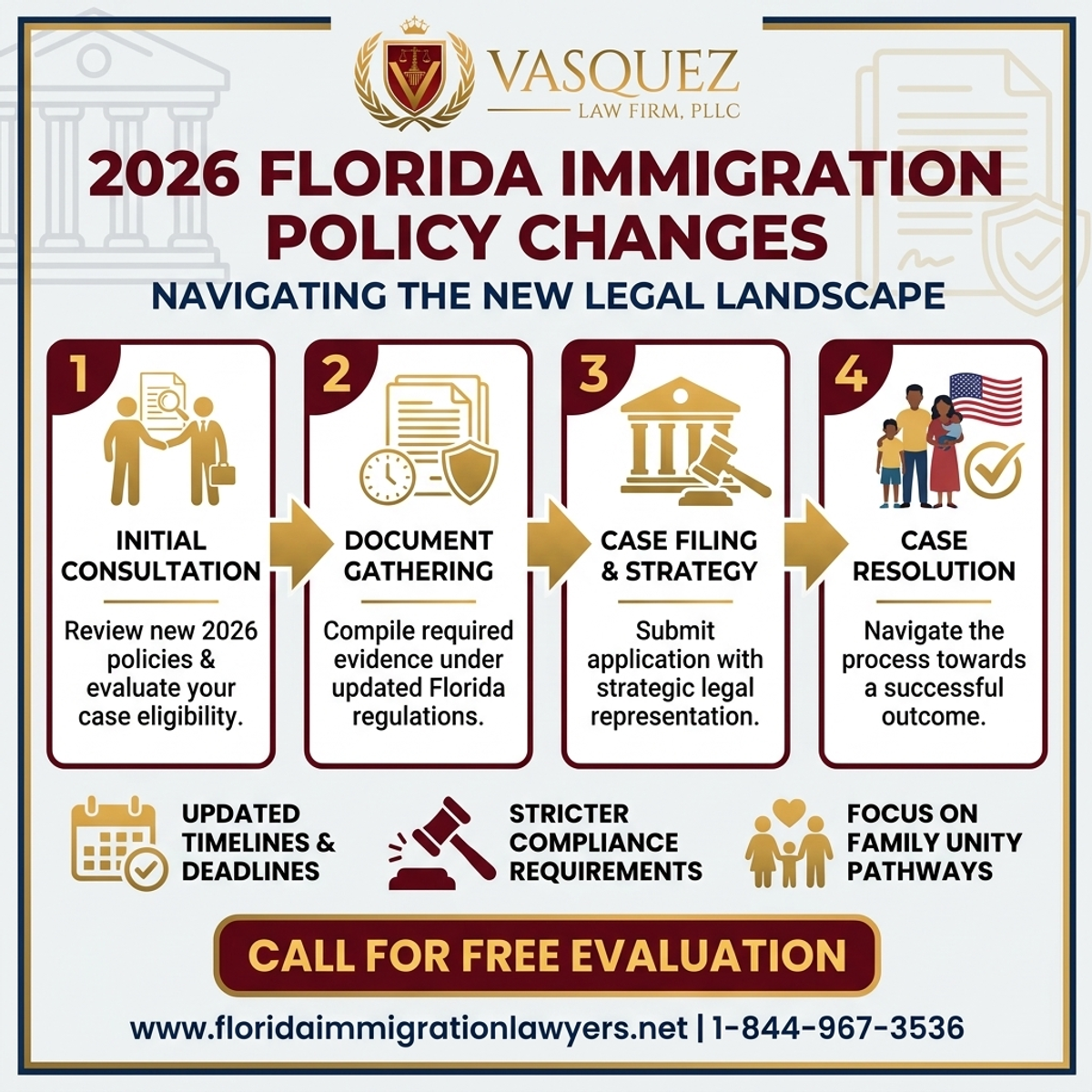
Step-by-Step Process — 2026 Immigration Policy Changes in Florida
Document Checklist for 2026
The 2026 immigration policy changes place a heightened emphasis on comprehensive and accurate documentation. Preparing a thorough document checklist is not just a recommendation; it's a critical step to ensure your application is processed efficiently and without unnecessary delays. Missing or incorrect documents are among the leading causes of application rejections or Requests for Evidence (RFEs), which can significantly prolong your immigration journey.
It is imperative to gather all specified documents well in advance of your application submission. Many documents, such as foreign police clearances or updated birth certificates, can take considerable time to obtain. Furthermore, ensure all non-English documents are accompanied by certified English translations, along with a statement from the translator attesting to their competency and the accuracy of the translation. Always keep original documents safe and submit only copies unless specifically requested otherwise.
- Proof of identity and nationality: This typically includes passports, national ID cards, and birth certificates. For 2026, ensure these documents are valid, unexpired, and meet any new security or formatting requirements.
- Updated financial records: Provide recent bank statements, tax returns, employment verification letters, and affidavits of support (Form I-864) to demonstrate financial stability and that you will not become a public charge. The income thresholds for sponsors may have been adjusted.
- Immigration history documents: Include all previous visa stamps, I-94 records, prior application notices, and any records pertaining to previous immigration attempts or denials. A complete history helps USCIS understand your past interactions with the immigration system.
- New forms as per 2026 requirements: Always download the absolute latest versions of all required forms directly from the USCIS website. Form numbers and content can change frequently, and submitting an outdated form will lead to rejection.
Timeline and Processing Expectations
While the aim of these changes is to streamline processes, applicants should still prepare for potential delays. Typically, green card applications may now take between 6-12 months, depending on the specific category and workload at local USCIS offices. Miami residents should stay updated on local processing times which can vary significantly.
It's important to understand that processing times are estimates and can fluctuate based on several factors. These include the volume of applications received, the complexity of individual cases, the efficiency of the specific USCIS service center or field office handling your case, and any unforeseen policy or operational changes. For instance, a family-based petition might have a different timeline than an employment-based one, and both can be impacted by visa bulletin availability.
To manage expectations effectively, applicants should regularly monitor the USCIS Processing Times page on their website, which provides data based on form type and field office. Additionally, consider signing up for case status updates directly from USCIS. If your application falls outside the normal processing range, or if you receive a Request for Evidence, it's a good time to consult with Florida Immigration Lawyers at 1-844-967-3536 for guidance on potential next steps or inquiries.
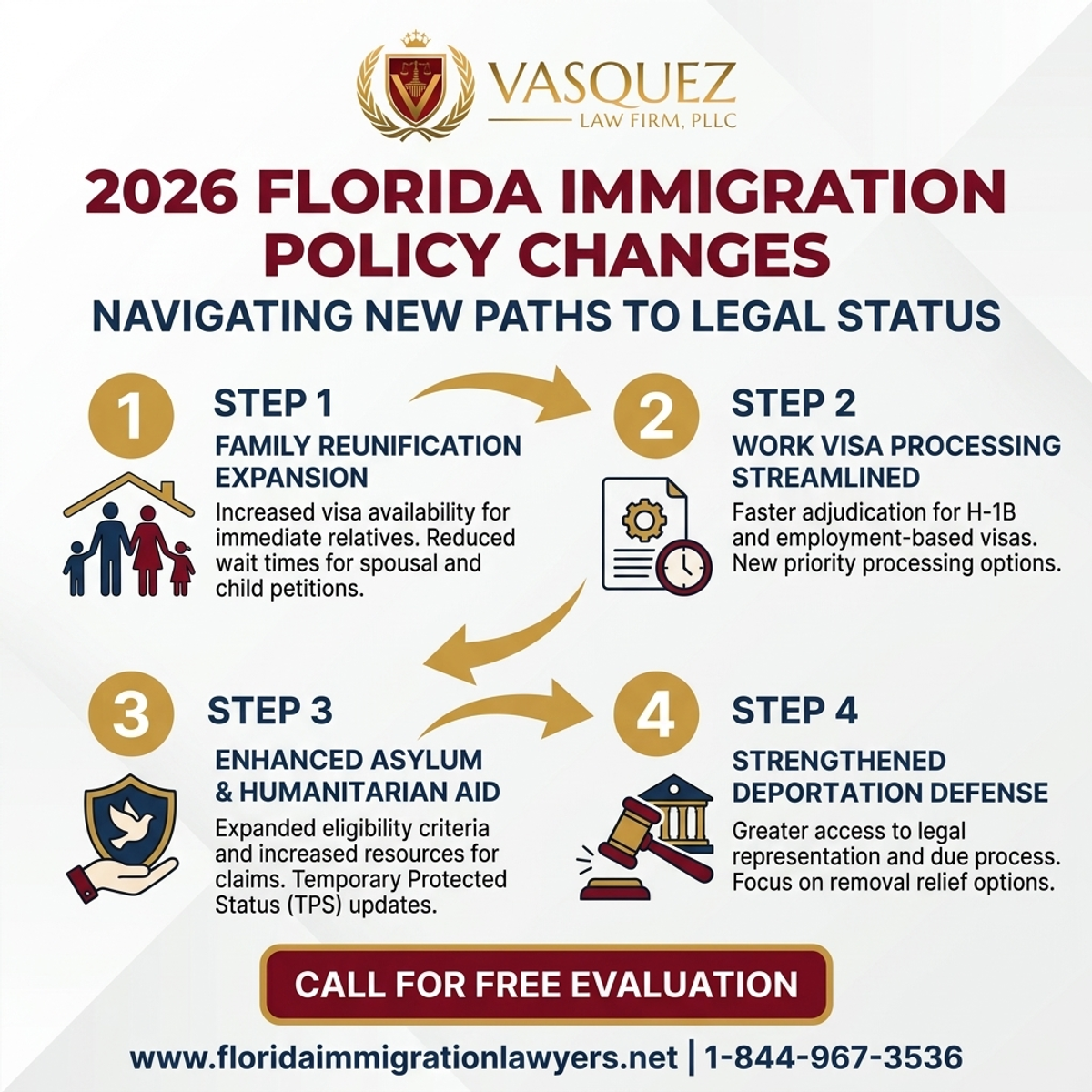
Key Statistics — 2026 Immigration Policy Changes in Florida
Cost Factors and Fee Breakdown
The cost associated with immigration processes in 2026 can vary widely. Applicants should budget for filing fees, potential legal assistance, and any additional documentation costs. It's advisable to consult with a lawyer to get a detailed understanding of all potential expenses.
Beyond the standard filing fees for forms like I-130, I-485, or N-400, applicants might incur costs for biometric services, medical examinations by USCIS-approved physicians, and professional translation services for foreign documents. These ancillary costs can add up significantly, making a comprehensive financial plan essential. Some applicants may also qualify for fee waivers, but strict eligibility criteria apply, which should be explored with legal counsel.
Engaging the services of an experienced immigration attorney, such as Florida Immigration Lawyers, represents an investment in the success and efficiency of your application. While there is a fee for legal representation, it often saves applicants from costly errors, rejections, and prolonged processing times that can ultimately be more expensive than legal fees. A transparent breakdown of all anticipated costs can be provided during your free consultation.
Common Mistakes to Avoid
Navigating the complex and often unforgiving immigration system requires meticulous attention to detail. The 2026 policy changes introduce new layers of scrutiny, making it even more critical to avoid common pitfalls that can lead to significant delays, rejections, or even adverse immigration consequences. Being aware of these mistakes and taking proactive steps to prevent them is key to a successful application.
Many applicants, despite their best intentions, fall prey to errors that could easily be avoided with careful preparation and, often, professional guidance. These mistakes can range from simple oversights to fundamental misunderstandings of legal requirements. Understanding these common errors can empower you to approach your application with greater confidence and precision.
- Incomplete Applications: Ensure all forms are complete to prevent rejection. Even a single unanswered question or missing signature can lead to your application being returned, causing significant delays and requiring you to restart the process.
- Ignoring Deadlines: Missing deadlines can lead to application denial. Immigration processes are time-sensitive; failing to submit documents or respond to RFEs by the specified date can jeopardize your entire case.
- Incorrect Documentation: Submit updated and accurate documents. Always provide copies unless originals are specifically requested, and ensure all translations are certified. Submitting fraudulent or outdated documents can lead to severe penalties.
- Failure to Seek Legal Advice: Legal guidance can prevent costly mistakes. The nuances of immigration law are vast, and an experienced attorney, like those at Florida Immigration Lawyers, can help you understand complex requirements and avoid misinterpretations.
- Not Keeping Copies: Always keep copies of submitted documents. Maintain a complete file of every form, document, and correspondence you send to or receive from USCIS, as this serves as your proof and reference.
- Not Checking Updates: Regularly check for policy updates on EOIR and USCIS websites. Immigration laws and procedures can change without much notice, and staying informed is crucial for compliance.
- Assuming Eligibility: Verify eligibility under new rules before applying. Do not assume that because you qualified under old rules, you still qualify. The 2026 changes may have altered criteria for your specific immigration category.
When to Call a Lawyer
The immigration journey can be fraught with complexities, especially with the 2026 policy changes. While some straightforward cases might be manageable independently, many situations warrant the expertise of an immigration lawyer. Recognizing when professional legal assistance is necessary can save you time, money, and immense stress, ensuring your case is handled correctly from the outset.
An immigration attorney acts as your advocate, navigating the intricate legal framework on your behalf. They can interpret complex regulations, prepare robust applications, represent you in interviews or court, and respond effectively to any challenges that arise. Their expertise is particularly invaluable when facing ambiguous situations or potential adverse outcomes.
If you encounter any of the following issues, it's time to consult an immigration lawyer:
- Complex immigration history: This includes previous denials, deportations, overstays, or criminal records. These factors significantly complicate a case and require expert legal strategy.
- Receiving a notice of deportation: A Notice to Appear (NTA) is a serious matter. Immediate legal intervention is crucial to explore all possible defense strategies and protect your right to remain in the U.S.
- Confusion over new policy requirements: If the 2026 changes leave you uncertain about your eligibility, required documents, or the application process, a lawyer can provide clear, personalized guidance.
- Facing delays without explanation: Unexplained or excessive delays in processing, especially beyond published timelines, can indicate an issue with your application that a lawyer can help investigate and resolve.
- Requests for Evidence (RFEs) or Notices of Intent to Deny (NOIDs): These are critical communications from USCIS that demand a timely and comprehensive legal response to prevent denial.
- Changes in personal circumstances: If you marry, divorce, have a child, or change jobs during the application process, these life events can impact your case and necessitate legal advice.
Florida Immigration Lawyers offer expertise in navigating these challenges. Contact us for assistance by calling 1-844-967-3536 for a free consultation. Se Habla Español.
About Florida Immigration Lawyers
Florida Immigration Lawyers is a leading immigration law firm dedicated to serving residents across Florida. We offer comprehensive legal services, ensuring that you receive personalized and effective representation. Our team is available 24/7, providing free consultations to address your immigration needs. Visit us at our website or call 1-844-967-3536.
Our firm prides itself on a deep understanding of both federal and state immigration laws, staying continuously updated on changes like those introduced in 2026. We handle a wide array of cases, from family-based visas and green card applications to complex deportation defense and naturalization processes. Our commitment is to provide compassionate, client-focused representation, guiding you through every step of your immigration journey with clarity and confidence.
We understand that navigating the immigration system can be a stressful and emotional experience. That's why Florida Immigration Lawyers are dedicated to being accessible and supportive. Our free consultations are designed to provide you with initial guidance, assess your case, and outline potential strategies without any obligation. Don't hesitate to reach out to our experienced team; your path to legal status in Florida starts with informed advice.
Sources and References
- U.S. Citizenship and Immigration Services (USCIS)
- Executive Office for Immigration Review (EOIR)
- State Department
- 8 U.S.C. Chapter 12 - Immigration and Nationality Act
Related services: immigration practice areas, family immigration services, citizenship and naturalization, deportation defense.
This article provides general legal information and is not intended as legal advice. Every case is unique, and outcomes depend on specific facts and circumstances. Contact an attorney for advice about your particular situation.
Final CTA
For personalized assistance with the 2026 immigration policy changes, contact Florida Immigration Lawyers at 1-844-967-3536. Se Habla Español - Estamos aquí para ayudarle.
If you need legal assistance, learn more about our immigration legal services, or call us at 1-844-967-3536 for a free consultation.
Do Not Navigate This Process Alone
Our experienced immigration attorneys are ready to fight for you. Get a free, confidential consultation today.
Se Habla Español
Frequently Asked Questions
Florida Immigration Lawyers
Immigration Attorney | Founder, Vasquez Law Firm
U.S. Air Force veteran and immigration attorney with thousands of cases resolved. J.D., NCCU School of Law. AILA member. Admitted to the 4th, 5th, and 11th Circuit Courts.
Available 24/7 - Free Evaluations
Related Legal Services
Our Florida immigration attorneys can help you with experienced immigration attorneys, business immigration and asylum protection. Call today at 1-844-967-3536 for a free consultation.
Related Links
Related Topics
Free Legal Consultation
Discuss your case with our experienced attorneys. We're available 24/7.
Se Habla Español - Estamos aquí para ayudarle.
Related Articles
Immigration Rights: Know Your Rights in Florida 2026
Understanding your immigration rights in Florida is essential for all non-citizens. This guide from Florida Immigration Lawyers provides crucial information on what to do during ICE encounters, how to assert your legal rights, and proactive steps to protect your family and future. Learn about your constitutional protections, the importance of legal representation in deportation proceedings, and common mistakes to avoid. Whether you're in Coral Springs or elsewhere in Florida, empower yourself with knowledge. We offer free consultations to help you navigate complex immigration challenges and secure your peace of mind. Contact us today for expert legal guidance.
Asylum Interview Preparation in Florida: Key Steps
Navigating an asylum interview in Florida can be challenging but crucial for your case. This guide provides essential tips for preparation, including document checklists and common mistakes to avoid. Contact Florida Immigration Lawyers at 1-844-967-3536 for expert assistance.
Navigating BIA Remands for Immigration Appeals in Florida
Navigating a BIA remand for your immigration appeal in Florida can be complex. Learn the steps involved and how to prepare effectively. Contact us for a free consultation.
L-1 Visa Transfer for Florida Companies | VLF Florida
Explore the L-1 visa process for intracompany transfers to Florida. Learn about eligibility, documentation, and common pitfalls in our comprehensive guide. Contact Florida Immigration Lawyers for expert assistance.
