Immigration Rights: Know Your Rights in Florida 2026
Understanding your immigration rights in Florida is essential for all non-citizens. This guide from Florida Immigration Lawyers provides crucial information on what to do during ICE encounters, how to assert your legal rights, and proactive steps to protect your family and future. Learn about your constitutional protections, the importance of legal representation in deportation proceedings, and common mistakes to avoid. Whether you're in Coral Springs or elsewhere in Florida, empower yourself with knowledge. We offer free consultations to help you navigate complex immigration challenges and secure your peace of mind. Contact us today for expert legal guidance.

Knowing your immigration rights in Florida is crucial for all non-citizens. During an encounter with U.S. Immigration and Customs Enforcement (ICE) or other law enforcement, you have fundamental legal rights, including the right to remain silent, the right to refuse a search without a warrant, and the right to speak with an attorney. It is important not to open your door to ICE without a judicial warrant signed by a judge, and never to sign any document you do not fully understand. Always carry identification and attorney contact information, and seek legal advice promptly if you are detained or facing immigration proceedings in Florida.
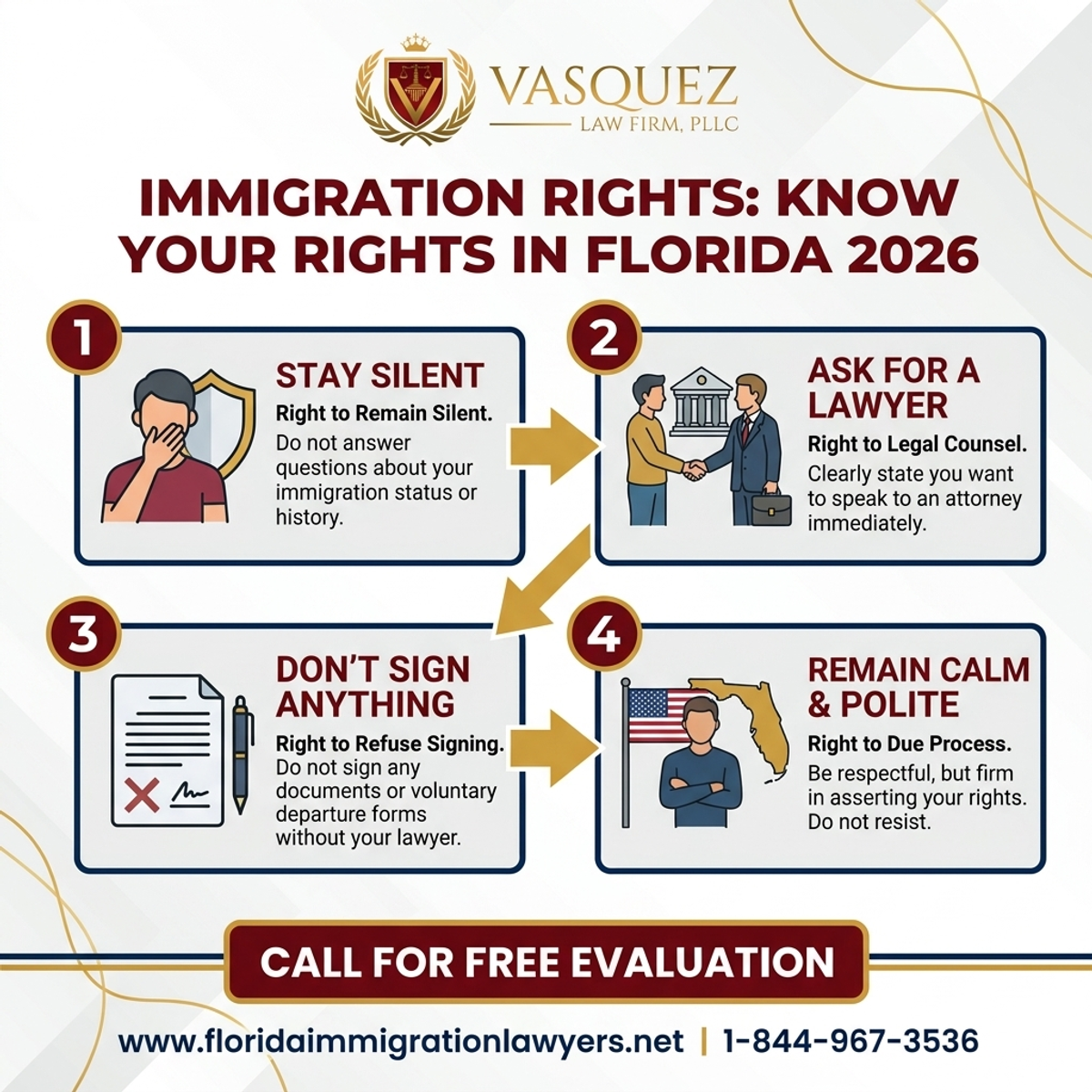
- You have the right to remain silent.
- Do not open your door to ICE without a judicial warrant.
- Do not sign anything you do not understand.
- You have the right to speak with an attorney.
- Always carry your attorney's contact information.
Living in Florida, a vibrant and diverse state, can bring unique challenges for immigrants. The fear of an unexpected encounter with U.S. Immigration and Customs Enforcement (ICE) or other law enforcement agencies is a constant concern for many individuals and families. This uncertainty can be overwhelming, leading to anxiety about one's future and the safety of loved ones. Understanding your fundamental immigration rights is not just a legal concept; it is a vital tool for self-protection and peace of mind.
This comprehensive guide from Florida Immigration Lawyers is designed to empower you with essential knowledge. We will explore your fundamental legal rights, provide actionable steps for navigating encounters with immigration officials, and highlight the importance of proactive legal planning. Whether you reside in Coral Springs, Miami, Orlando, or any other part of the Sunshine State, this information is critical for protecting yourself and your family in 2026 and beyond. Our goal is to ensure you are well-informed and prepared for various situations, helping you safeguard your future in the United States.
Do not face these complex challenges alone. If you have questions about your immigration status or need immediate assistance, call Florida Immigration Lawyers at 1-844-967-3536 for a free consultation. Our experienced team is ready to provide the guidance and support you need to confidently assert your rights.
Understanding Your Fundamental Immigration Rights in Florida
Every individual present in the United States, regardless of immigration status, is afforded certain basic constitutional protections. These foundational immigration rights stem primarily from the Fourth, Fifth, and Sixth Amendments to the U.S. Constitution. While the scope of these rights can vary for non-citizens compared to U.S. citizens, understanding these core principles is your first line of defense during any interaction with law enforcement, including ICE.
The Fourth Amendment protects you from unreasonable searches and seizures. This means that law enforcement officers, including ICE agents, generally cannot search your person, home, or belongings without a warrant signed by a judge, probable cause, or your consent. For your home, this specifically means they cannot enter without a judicial warrant, unless there are exigent circumstances. The Fifth Amendment grants you the right to remain silent, protecting you from self-incrimination, and ensures due process of law. This means you do not have to answer questions about your immigration status, country of origin, or how you entered the U.S. The Sixth Amendment guarantees the right to counsel in criminal proceedings, and while immigration proceedings are civil in nature, you still have the right to an attorney, though the government is not required to provide one at no cost.
In Florida, these federal protections apply uniformly. Whether you are in Coral Springs, Jacksonville, or Tampa, your constitutional rights remain. However, the enforcement landscape can be complex, with federal immigration laws often interacting with local law enforcement policies. It is vital to remember that state and local police generally do not have the authority to enforce federal immigration laws unless they are specifically cross-designated under programs like 287(g) agreements, which empower local officers to act as immigration agents. Even in such cases, your fundamental constitutional rights still apply. For more detailed information on immigration laws, you can refer to the U.S. Citizenship and Immigration Services (USCIS) website.
Your Rights During an Encounter with ICE or Law Enforcement
An encounter with ICE or other law enforcement can be a frightening experience, but knowing how to assert your legal rights can significantly impact the outcome. It is crucial to remain calm and remember these key steps. Your actions during these moments can have long-lasting consequences for your immigration status and future in Florida. This step-by-step guide is designed to help you navigate such situations effectively and protect your interests.
-
Remain Silent: You have the right to remain silent. Do not answer questions about your citizenship, immigration status, or how you entered the U.S. You can simply state, "I wish to remain silent," or "I do not wish to answer any questions." This right is protected by the Fifth Amendment.
-
Do Not Open Your Door Without a Judicial Warrant: If an officer is at your home, do not open the door unless they present a judicial warrant signed by a judge. Ask them to slide the warrant under the door or hold it up to a window. An administrative warrant (Form I-200 or I-205) is not sufficient for them to enter your home without your permission. If they do not have a judicial warrant, you can keep your door closed and do not have to let them in.
-
Ask for a Warrant: If officers claim to have a warrant, ask to see it. Verify it is a judicial warrant (signed by a judge) and that it is for your specific address and name. Understand the difference: a judicial warrant allows entry, an administrative warrant (from ICE) generally does not without consent.
-
Do Not Lie or Present False Documents: While you have the right to remain silent, you should never lie to a federal agent or present false documents. Doing so can lead to criminal charges and severely jeopardize any future immigration relief you might seek.
-
Do Not Sign Anything Without Understanding: Never sign any document presented by an immigration officer without fully understanding its contents and implications. If you are unsure, state that you need to speak with an attorney first. Signing certain documents could waive your rights or lead to voluntary departure.
-
Request to Speak to an Attorney: Clearly state, "I want to speak with my attorney." This is a critical right. If you are detained, officers must cease questioning once you invoke your right to counsel. Provide your attorney's contact information if you have it readily available.
-
Document the Encounter: If possible and safe, try to remember details of the encounter, such as the officers' names or badge numbers, vehicle descriptions, and time/location. Do not interfere with officers, but observing details can be helpful for your attorney.
What Documents Should Immigrants Carry and Protect?
Proper documentation is a cornerstone of protecting your immigration rights in Florida. While it is important to have access to your immigration documents, it is equally important to know which ones to carry versus which ones to keep in a safe, secure location. Mismanaging your documents can lead to unnecessary complications during encounters with law enforcement. Having a clear strategy for your essential papers can provide both protection and peace of mind.
Document Checklist: What to Carry and What to Keep Safe
-
Always Carry (Copies Recommended):
- Valid government-issued identification (e.g., state ID, driver's license).
- A card with your attorney's contact information.
- Emergency contact numbers for family or trusted friends.
- If applicable, a copy of your I-94 Arrival/Departure Record or proof of pending application (e.g., receipt notice for I-485, I-589).
-
Keep Safe at Home (Originals and Copies):
Step-by-Step Process — Immigration Rights: Know Your Rights in Florida 2026
- Original Green Card (Form I-551, Permanent Resident Card). You are required to carry proof of registration, but carrying the original card may not always be advisable due to risk of loss or confiscation. A high-quality photocopy or digital image can suffice for everyday purposes, but be prepared to present the original if specifically requested by an immigration officer.
- Original Employment Authorization Document (EAD, Form I-766).
- Original passport and any valid visas.
- Original birth certificates, marriage certificates, and other vital records.
- Any Notices to Appear (NTAs) or court documents.
- Copies of all immigration applications and petitions filed with USCIS or the Executive Office for Immigration Review (EOIR).
- Power of attorney documents and guardianship papers for children.
It is generally advisable not to carry original sensitive documents like your Green Card or passport on your person unless absolutely necessary. A lost or confiscated original can be difficult and costly to replace. Instead, keep these originals in a secure, fireproof location at home and carry only copies, along with your attorney's contact information. If asked for documents by an officer, you can state that your attorney has your original documents or that they are safely stored, and offer to provide copies later. This approach helps protect your valuable documents while still demonstrating your status if required.
Navigating Immigration Court and Deportation Proceedings in Florida
For immigrants in Florida, facing immigration court or deportation (removal) proceedings can be one of the most stressful experiences imaginable. These proceedings are complex, highly technical, and can have life-altering consequences. Understanding the basics of how these courts operate in Florida and the critical role of legal representation is paramount to protecting your legal rights and pursuing any available relief. Florida hosts several immigration courts, notably in Miami and Orlando, which fall under the jurisdiction of the Executive Office for Immigration Review (EOIR).
When an immigrant is placed into removal proceedings, they typically receive a Notice to Appear (NTA), which outlines the allegations and charges against them. This NTA initiates the formal court process. The process generally involves several hearings, including a master calendar hearing where initial pleas are entered, and individual hearings where evidence is presented, and arguments are made before an Immigration Judge. The stakes are incredibly high, as an adverse decision can lead to deportation from the United States. Many types of relief from removal exist, such as asylum, cancellation of removal for certain non-permanent residents, adjustment of status, or waivers, each with stringent eligibility requirements.
The importance of legal representation in immigration court cannot be overstated. Studies have consistently shown that immigrants represented by an attorney are significantly more likely to succeed in their cases. An experienced immigration lawyer can identify potential forms of relief, prepare compelling arguments, gather necessary evidence, and navigate the intricate procedural rules of the court. For those in Florida facing such daunting challenges, especially concerning deportation defense or seeking asylum, securing qualified legal counsel is the most crucial step. The timeline for these cases can vary widely, from months to several years, depending on court backlogs and case complexity. Having a knowledgeable advocate by your side is essential throughout this arduous journey, providing you with the best chance to remain in the U.S. legally.
Protecting Your Family and Future: Proactive Steps in Florida
Beyond understanding your immediate immigration rights during an encounter, proactive planning is essential for safeguarding your family's future in Florida. The unpredictable nature of immigration enforcement means that having a plan in place can alleviate stress and provide a clear course of action should an unforeseen event occur. This is particularly vital for mixed-status families, where some members are U.S. citizens or lawful permanent residents, and others are undocumented.
Developing a Family Preparedness Plan
-
Emergency Contacts: Create a clear list of emergency contacts, including family members, trusted friends, and your immigration attorney. Ensure everyone in your family, including children if age-appropriate, knows who to call and what information to provide.
-
Care for Minor Children: If you are a parent, designate a legal guardian for your minor children through a power of attorney or other legal document. This ensures that your children will be cared for by someone you trust if you are detained or deported. Consult an attorney to draft these documents correctly, ensuring they are valid under Florida law.
-
Financial Planning: Prepare for potential financial disruptions. Have important financial documents organized, know where bank accounts are held, and consider setting aside emergency funds if possible. Ensure someone you trust has access to critical financial information.
-
Legal Document Location: Keep all original vital documents (passports, birth certificates, marriage certificates, Green Cards, immigration court notices) in a secure, accessible location known to a trusted family member or your attorney. Do not keep them all on your person.
Key Statistics — Immigration Rights: Know Your Rights in Florida 2026
-
Consult an Attorney Proactively: A free consultation with an immigration lawyer at Florida Immigration Lawyers can help you assess your current immigration situation, explore potential avenues for legalization, and create a robust family preparedness plan. This proactive approach can identify potential issues before they become crises and help you understand all your immigration options.
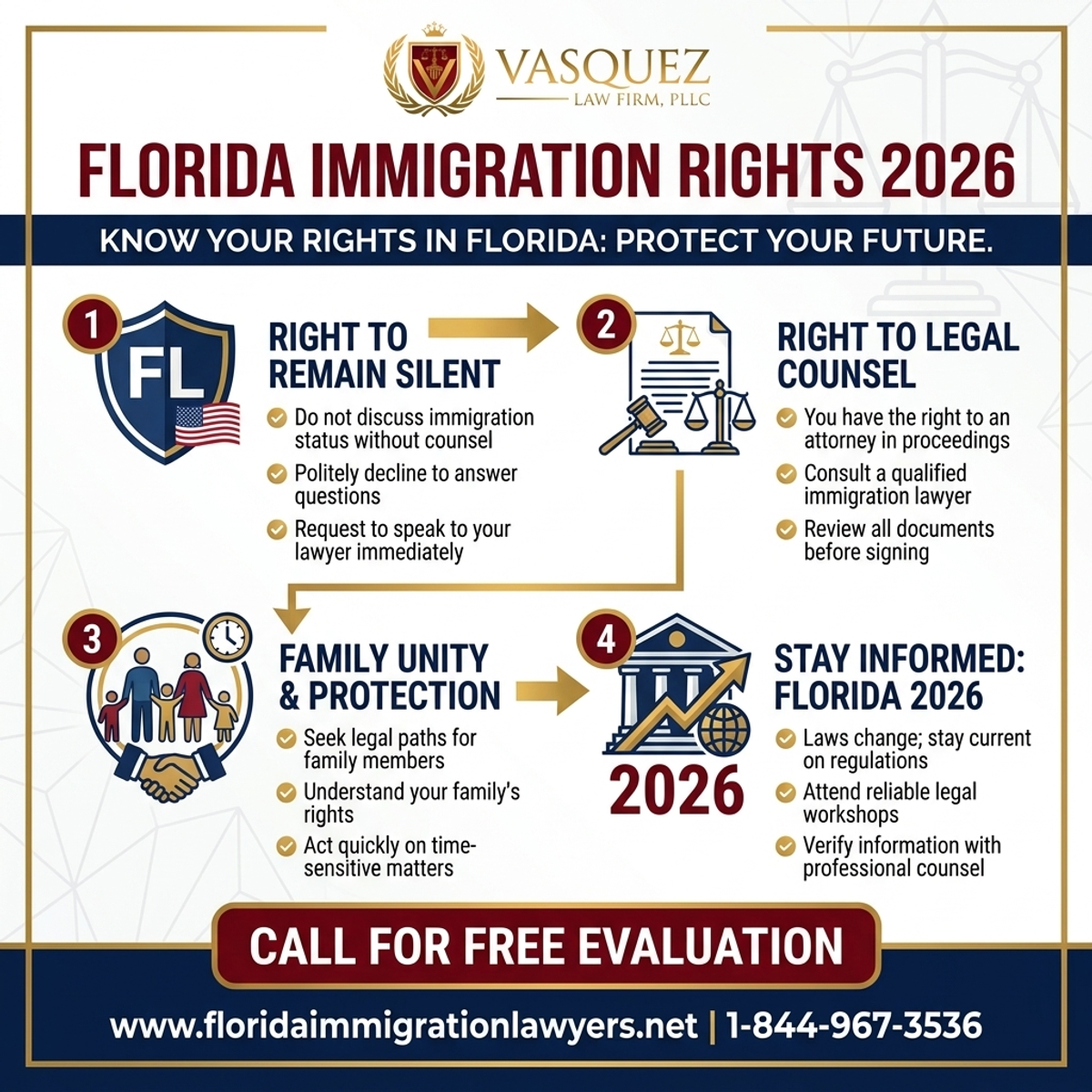
Taking these proactive steps, particularly consulting with an attorney to establish legal guardianship for children or explore family immigration pathways, demonstrates foresight and responsibility. It provides a layer of protection for your loved ones and minimizes disruption during challenging times. Even if you believe your situation is stable, having a plan offers invaluable peace of mind for your family's future in Florida.
Common Mistakes to Avoid Regarding Your Immigration Rights
Protecting your immigration rights requires vigilance and accurate information. Many immigrants, through no fault of their own, make common mistakes that can severely jeopardize their status and future in the U.S. Being aware of these pitfalls is just as important as knowing your rights. Avoiding these errors can save you significant legal trouble, financial burden, and emotional distress.
-
Opening the Door to ICE Without a Judicial Warrant: This is a critical error. An administrative warrant (Form I-200 or I-205) does not grant ICE agents the right to enter your home without your consent. Always ask to see a judicial warrant signed by a judge. Opening the door voluntarily can be considered giving consent, making it much harder to challenge their entry later.
-
Lying to Immigration Officers: While you have the right to remain silent, you should never lie or provide false information to an immigration officer. This can lead to criminal charges, allegations of misrepresentation, and permanent bars to future immigration benefits.
-
Signing Documents Without Understanding Them: Never sign anything an officer hands you without fully understanding its purpose and implications. You might inadvertently waive your rights, agree to voluntary departure, or admit to allegations that could harm your case. Always state that you need to speak with an attorney before signing.
-
Carrying False or Fraudulent Documents: Possessing or presenting false immigration documents is a serious offense that can lead to criminal prosecution, detention, and a permanent bar from receiving immigration benefits.
-
Not Knowing Your Current Immigration Status: Many individuals are unsure of their precise immigration status, which can lead to confusion and incorrect actions during an encounter. Regularly consult with an attorney to confirm your status and understand any limitations or requirements.
-
Traveling Outside the U.S. Without Legal Advice: For non-citizens, especially those with pending applications or certain statuses, traveling internationally without prior legal consultation can trigger inadmissibility issues upon return, or even abandonment of applications.
-
Failing to Update Your Address with USCIS and EOIR: If you move, you are legally required to notify USCIS on Form AR-11 and, if applicable, the immigration court (EOIR) within 10 days. Failure to do so can result in missed notices, court dates, and even a deportation order issued in absentia.
-
Missing Immigration Court Dates: Missing a scheduled court hearing in Florida can lead to an automatic order of removal (deportation) being issued against you by the Immigration Judge. Reopening such an order is extremely difficult and often requires demonstrating exceptional circumstances.
-
Assuming All Law Enforcement Officers Have the Same Authority: While all officers must respect your constitutional rights, local police generally have different authorities than ICE agents regarding immigration enforcement. Do not assume they can all enforce federal immigration law unless specifically cross-designated.
-
Not Seeking Legal Counsel Early Enough: Waiting until a crisis occurs can severely limit your options. Proactive consultation with an experienced immigration attorney can help you prepare, understand your rights, and potentially avoid costly mistakes. This is especially true for complex cases or those involving criminal history.
When to Call a Florida Immigration Lawyer
The complexities of U.S. immigration law, combined with the high stakes involved, mean that legal guidance is not just beneficial, but often essential. Knowing when to reach out to a Florida immigration lawyer can make all the difference in protecting your legal rights and achieving a positive outcome. Florida Immigration Lawyers is dedicated to serving the entire state, from Coral Springs to the Keys, ensuring you have access to expert counsel when you need it most.
You should immediately contact an attorney if you or a loved one are detained by ICE or any law enforcement agency. Do not answer questions or sign documents until you have spoken with your lawyer. Similarly, if you receive a Notice to Appear (NTA) for immigration court, it is imperative to seek legal representation right away. An attorney can help you understand the charges, explore available defenses, and represent you effectively in court proceedings at locations like the Miami or Orlando Immigration Courts. This is particularly crucial for complex cases such as deportation defense, asylum claims, or those involving criminal history.
Beyond crisis situations, proactive legal consultation is invaluable. If you are considering applying for a visa, Green Card, citizenship, or any other immigration benefit, an attorney can guide you through the process, ensure all requirements are met, and prevent common mistakes. This includes navigating family-based immigration petitions or business immigration matters. If you have questions about your immigration status, eligibility for benefits, or need assistance with a family preparedness plan, reaching out to Florida Immigration Lawyers for a free consultation is a wise first step. Our team is here to provide clarity, strategy, and unwavering support, helping you secure your future in Florida. Visit our contact page or learn more about our attorneys.
About Florida Immigration Lawyers
Florida Immigration Lawyers is a premier law firm dedicated to providing exceptional legal representation to immigrants across the entire state of Florida. With a deep understanding of complex U.S. immigration laws and a compassionate approach, our experienced attorneys are committed to protecting your immigration rights and helping you navigate the often-challenging legal landscape. We serve clients in Orlando and all other communities throughout Florida, offering comprehensive legal services tailored to your unique needs.
Our firm specializes in a wide range of immigration matters, including family-based petitions, employment visas, deportation defense, asylum claims, naturalization and citizenship, and appeals. We pride ourselves on offering personalized attention, strategic advice, and aggressive advocacy for every client. We understand the profound impact immigration issues have on individuals and families, and we strive to provide not only legal expertise but also empathetic support during what can be an incredibly stressful time. With Florida Immigration Lawyers, you gain a dedicated partner committed to achieving the best possible outcome for your case. We are available 24/7 to answer your questions, and we offer free consultations to discuss your situation. Call us today at 1-844-967-3536 to learn how we can assist you.
Sources and References
- U.S. Citizenship and Immigration Services (USCIS)
- Executive Office for Immigration Review (EOIR)
- U.S. Department of State (travel.state.gov)
- 8 U.S.C. Chapter 12 - Immigration and Nationality Act (INA)
- 8 CFR (Code of Federal Regulations related to immigration)
- U.S. Constitution, Fourth Amendment (Protection from unreasonable searches and seizures)
- U.S. Constitution, Fifth Amendment (Right to remain silent, due process)
- U.S. Constitution, Sixth Amendment (Right to counsel)
- INA Section 287 (8 U.S.C. § 1357) – Powers of immigration officers and employees
Related services: immigration waivers, humanitarian protection programs, DACA renewal and applications, temporary protected status (TPS).
This article provides general legal information and is not intended as legal advice. Every case is unique, and outcomes depend on specific facts and circumstances. Contact an attorney for advice about your particular situation.
Your immigration rights are fundamental to your safety and future in Florida. Do not hesitate to seek professional legal assistance when faced with complex immigration matters or an encounter with ICE. Florida Immigration Lawyers offers compassionate, expert guidance to protect your interests. Call us for a free consultation today at 1-844-967-3536. Se Habla Espanol - Estamos aqui para ayudarle.
Do Not Navigate This Process Alone
Our experienced immigration attorneys are ready to fight for you. Get a free, confidential case review today.
Se Habla Español
Or leave your details and we’ll call you:
Free Evaluation in 24 Hours
Or talk to us right now

AI voice assistant — available 24/7
FreeFrequently Asked Questions

William J. Vásquez
Founding Attorney · Vasquez Law Firm
U.S. Air Force veteran and immigration attorney with years of hands-on U.S. immigration experience. J.D., NCCU School of Law. AILA member. Admitted to the 4th, 5th, and 11th Circuit Courts.
Available 24/7 - Free Evaluations
Reviewed for legal accuracy by William J. Vásquez
Licensed in North Carolina; U.S. immigration is federal practice.
Related Legal Services
Our Florida immigration attorneys can help you with citizenship and naturalization, immigration practice areas and free immigration consultation. Call today at 1-844-967-3536 for a free case review.
Related Links
Related Topics
Free Legal Case Review
Discuss your case with our experienced attorneys. We're available 24/7.
Se Habla Español - Estamos aquí para ayudarle.
Related Articles
Immigration Lawyer Orlando Free Consultation in Florida
For individuals and families in Orlando, Florida, navigating the complexities of U.S. immigration law requires expert guidance. An immigration lawyer in Orlando offers crucial support for everything from visa applications and green card processes to naturalization and deportation defense. This comprehensive guide details what a free consultation covers, providing a step-by-step overview of immigration pathways, essential document checklists, and expected timelines in 2026. We also highlight common mistakes to avoid, discuss the critical role of legal counsel in deportation and asylum cases, and explain why choosing a local Orlando immigration attorney is beneficial. Florida Immigration Lawyers is dedicated to serving the diverse community of Orlando with compassionate, effective legal solutions, ensuring you receive personalized advice and robust representation for a successful immigration journey.
K-3 Visa Timeline in Florida: What to Expect in 2026
The K-3 visa offers a pathway for spouses of U.S. citizens to enter the United States while their immigrant visa petition is pending. This comprehensive guide, updated for 2026, details the K-3 visa timeline, eligibility requirements, and the step-by-step application process for Florida residents. We cover essential documentation, associated costs, and critical considerations for navigating the K-3 journey, including Florida-specific insights regarding USCIS field offices. Understanding the intricacies of Form I-129F, National Visa Center processing, consular interviews, and the subsequent Adjustment of Status is vital. Learn how to avoid common mistakes and when to seek professional legal assistance to ensure a smooth and successful outcome. Florida Immigration Lawyers provides expert guidance for families across the state.
Biometrics Appointment in Florida 2026: Your USCIS Guide
For many individuals seeking to live, work, or gain permanent residency in Florida, the biometrics appointment is a critical and often misunderstood step. This comprehensive guide, tailored for applicants in Florida, will walk you through everything you need to know about your USCIS biometrics appointment in 2026. Learn its purpose, how to prepare, what to expect at an Application Support Center (ASC), and how long processing typically takes. We also cover common mistakes to avoid and when it's crucial to seek legal counsel from experienced immigration attorneys. Understanding these details is vital for a smooth process, preventing delays, and ensuring your immigration application progresses successfully. Florida Immigration Lawyers are available to provide expert guidance and support.
212(c) Waiver Legacy Relief in Florida 2026 Guide
For long-term lawful permanent residents in Florida, the 212(c) waiver offers crucial legacy relief against deportation, particularly for those whose proceedings began before April 1, 1997. This guide delves into the historical context, strict eligibility criteria, and the detailed application process for this complex discretionary waiver. Learn about the required documentation, potential timelines, and associated costs. We emphasize the vital importance of understanding the precise cutoff dates and demonstrating strong positive equities to an Immigration Judge. In an evolving immigration landscape, this legacy relief remains a powerful defense for eligible individuals seeking to protect their lives and families in the U.S. Discover common pitfalls to avoid and when expert legal counsel is indispensable for navigating Florida's immigration courts.