Motion to Reopen Immigration Case in Florida: 2026 Guide
Filing a motion to reopen an immigration case in Florida can offer a critical opportunity if new circumstances arise. Discover the eligibility criteria, necessary documentation, and steps involved. Learn how to navigate this process effectively, and ensure you have the right legal support.
How to Reopen an Immigration Case in Florida
If you’ve faced a negative decision in your immigration case, filing a motion to reopen may provide a second chance. In 2026, many individuals in Jacksonville and across Florida are navigating this complex process. This guide covers everything from eligibility requirements to the detailed steps involved, focusing on the specific nuances of Florida’s immigration courts.
A negative outcome in an immigration case can feel like the end of the road, especially when it involves the threat of deportation or the denial of a crucial benefit. However, the U.S. immigration system provides mechanisms for reconsideration, and the motion to reopen is one of the most powerful. It offers a lifeline for those whose circumstances have genuinely changed or for whom critical evidence was previously unavailable. Understanding this process is not just about legal technicalities; it's about safeguarding your future and your family's stability in the United States.
Navigating the intricacies of immigration law requires precision and a deep understanding of federal regulations, as well as the specific procedures of the Executive Office for Immigration Review (EOIR) and U.S. Citizenship and Immigration Services (USCIS). For residents in Florida, from Miami to Orlando, and especially in areas served by immigration courts like the one in Orlando, these motions are a frequent and often successful strategy when handled correctly. This comprehensive guide aims to demystify the process, providing actionable insights and emphasizing why expert legal counsel from Florida Immigration Lawyers is indispensable.
Call Florida Immigration Lawyers at 1-844-967-3536 for a free consultation.
What is a Motion to Reopen an Immigration Case?
In the context of U.S. immigration law, a motion to reopen allows a previously decided case to be reconsidered due to new evidence or changes in circumstances. As of 2026, this option is vital for those in Florida facing deportation or wishing to appeal their case.
The motion must present new, previously unavailable evidence that could affect the outcome of the case. It’s crucial to file within the designated time frame, typically within 90 days of the initial decision.
A motion to reopen is distinct from a motion to reconsider. While both seek to challenge a prior decision, a motion to reopen focuses on new facts or evidence that were not available or discoverable at the time of the original hearing. For instance, if a crucial document proving a relationship or a qualification for a benefit only became available after your initial hearing, a motion to reopen would be the appropriate path. Conversely, a motion to reconsider argues that the previous decision was based on an incorrect application of law or a factual error, using the evidence already in the record.
The authority to grant a motion to reopen rests with the same body that issued the original decision. This could be an Immigration Judge (IJ), the Board of Immigration Appeals (BIA), or U.S. Citizenship and Immigration Services (USCIS). For example, if your removal order was issued by an Immigration Judge, your motion to reopen would typically be filed with that court. If the BIA affirmed the IJ's decision, the motion would go to the BIA. Understanding which entity has jurisdiction is a critical first step, as improper filing can lead to immediate dismissal.
The core principle behind a motion to reopen is fairness: to ensure that individuals are not unduly prejudiced by circumstances beyond their control or by evidence that simply wasn't accessible earlier. This means the new evidence must be "material" (relevant and significant enough to potentially change the outcome) and "previously unavailable" (could not have been presented at the original hearing despite diligent efforts). For example, if a petitioner in Florida recently obtained a long-delayed birth certificate from their home country that proves a qualifying relationship, this could be considered new, material evidence. Without such a mechanism, many deserving individuals would have no recourse against decisions made without the full picture.
Eligibility Criteria for Filing a Motion to Reopen
To file a motion to reopen, you must meet specific eligibility criteria. Generally, you must provide new evidence that was not available or could not have been discovered at the time of the original hearing. This evidence must be material and could potentially change the case outcome.
Consulting with an experienced immigration attorney will help determine your eligibility and strengthen your motion with compelling evidence.
Beyond new evidence, other grounds for reopening exist. A common scenario involves an in absentia removal order, where an individual was ordered removed because they failed to appear for a hearing. If the individual can prove they never received proper notice of the hearing, or that their failure to appear was due to exceptional circumstances beyond their control (e.g., serious illness, severe weather, death of a close relative), they may be eligible to file a motion to reopen. This specific type of motion has a longer filing deadline, typically 180 days, but proving lack of notice or exceptional circumstances requires robust documentation.
Another significant ground is ineffective assistance of counsel. If an individual believes their previous attorney's performance fell below professional standards and prejudiced their case, they might be able to reopen their case. This is a complex claim, requiring specific procedures outlined in Matter of Lozada, including notifying the previous attorney of the allegations and allowing them to respond. Such motions are particularly challenging and underscore the importance of securing competent legal representation from firms like Florida Immigration Lawyers from the outset.
Furthermore, changes in law or policy, or the availability of new forms of relief, can sometimes serve as grounds for a motion to reopen, often referred to as a "sua sponte" motion (on the court's own motion) or through specific regulatory provisions. For example, if a new form of humanitarian parole or a specific waiver becomes available that directly applies to your situation, and you were previously ineligible, this could constitute a change in circumstances. However, these are often discretionary and require compelling arguments demonstrating how the new development directly impacts your eligibility for relief. An attorney can help identify if any such changes apply to your specific situation.
Steps to File a Motion to Reopen
- Consult with an immigration attorney to assess your case and gather necessary documentation.
- Prepare your motion, including a detailed explanation and supporting evidence.
- File the motion with the appropriate immigration court or USCIS office, adhering to specific filing deadlines.
- Await a decision, which may require a hearing or further submissions.
- Follow up with any additional requests from the court or USCIS.
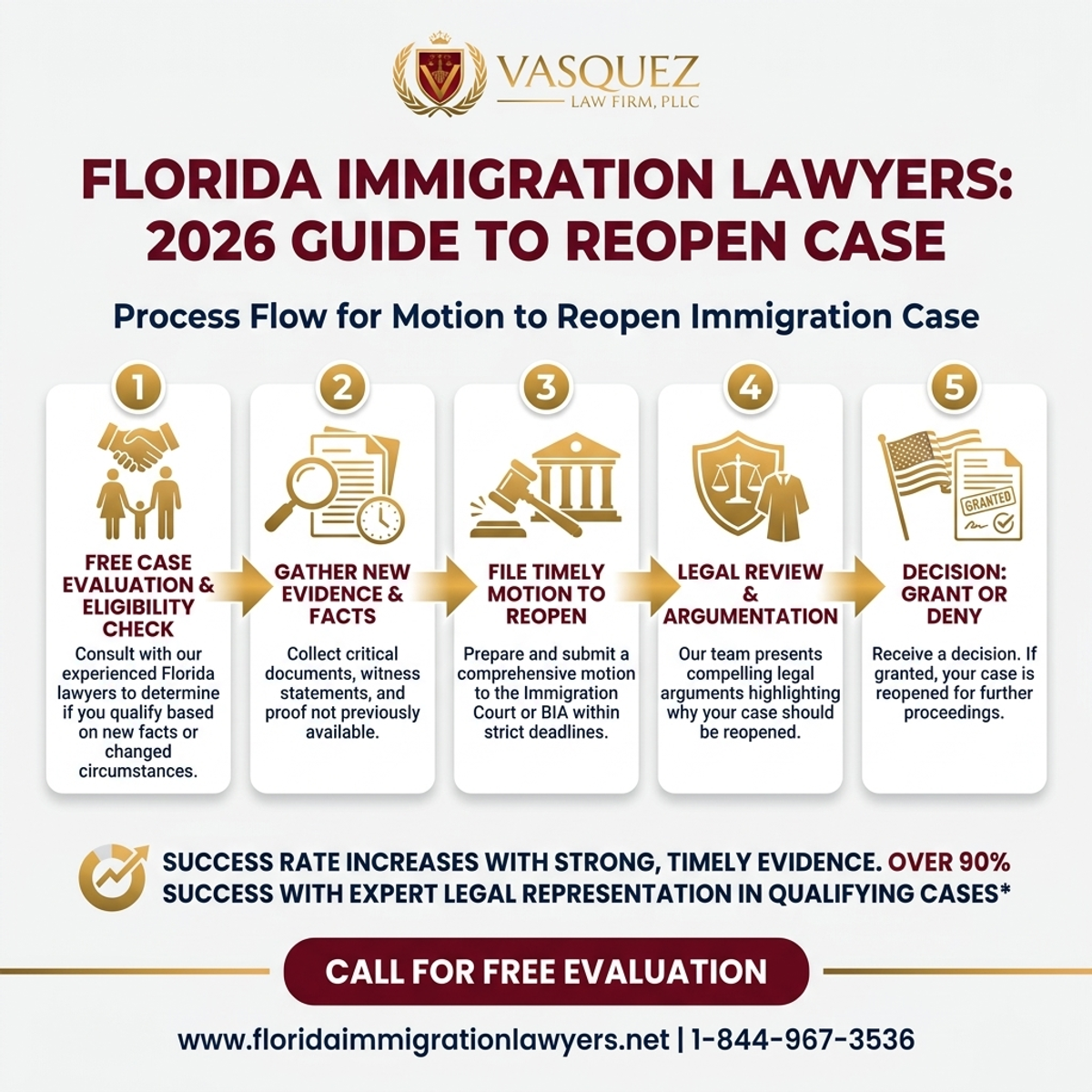
The initial consultation (Step 1) is more than just a chat; it's a deep dive into your immigration history, the details of your previous decision, and any new developments. An experienced attorney from Florida Immigration Lawyers will meticulously review your entire immigration file, known as your A-file, to identify potential errors, missed opportunities, or new avenues for relief. This step is crucial for determining if a motion to reopen is the most appropriate strategy or if other options, such as an appeal or a new application, might be more suitable. They will help you understand the strengths and weaknesses of your potential motion and set realistic expectations for the outcome.
Preparing your motion (Step 2) involves crafting a persuasive legal argument supported by compelling evidence. This isn't just about collecting documents; it's about presenting them in a clear, organized manner that directly addresses the legal requirements for reopening. Your attorney will draft a legal brief, citing relevant statutes, regulations, and case law that support your claim. This brief will explain why the evidence is new and material, or why the circumstances have changed significantly. Affidavits from you and any witnesses must be carefully prepared, ensuring they are consistent, credible, and directly relevant to the grounds for reopening. For example, if you are claiming ineffective assistance of counsel, the brief must meticulously detail how your previous attorney's actions prejudiced your case, backed by evidence such as correspondence, court transcripts, or expert opinions.
Step-by-Step Process — Motion to Reopen Immigration Case in Florida: 2026 Guide
Filing the motion (Step 3) requires strict adherence to procedural rules. This includes using the correct forms (e.g., Form EOIR-42B for the BIA), paying the appropriate filing fee (or submitting a fee waiver request), and ensuring proper service of the motion on all relevant parties, including the opposing counsel (typically the Department of Homeland Security, DHS). Each immigration court and USCIS office may have specific local rules regarding filing, page limits, and formatting, which an experienced attorney will be familiar with. Missing a deadline or failing to serve the motion correctly can result in the motion being rejected without consideration of its merits, making precision paramount. Florida Immigration Lawyers are well-versed in these specific requirements for courts throughout Florida.
After filing, the waiting period (Step 4) can be anxious. The court or USCIS will review your motion, and they may request additional information or schedule a hearing. If a hearing is granted, your attorney will prepare you thoroughly, practicing potential questions and strategizing the best way to present your case. This could involve presenting oral arguments, calling witnesses, or submitting further evidence. The decision on a motion to reopen is often discretionary, meaning the adjudicator has the power to grant or deny it even if all legal requirements are met. A well-prepared and professionally presented motion significantly increases your chances of a favorable outcome.
Document Checklist for a Motion to Reopen
- Completed motion forms
- New evidence documentation
- Affidavits or witness statements
- Legal briefs supporting the motion
- Receipt of previous filings
- Proof of service to relevant parties
When assembling your documentation, ensure that the "Completed motion forms" are the most current versions available from the EOIR or USCIS websites. For motions filed with an Immigration Judge or the BIA, this often includes Form EOIR-42B, Motion to Reopen, or Form EOIR-42A, Motion to Reconsider. Each form has specific instructions that must be followed precisely, including how to list your Alien Registration Number (A-Number) and the basis for your motion. Incomplete or outdated forms are a common reason for rejection.
"New evidence documentation" is the heart of your motion. This can include a wide array of documents such as updated birth certificates, marriage certificates, divorce decrees, medical records demonstrating a new condition or worsening health, police reports, financial records showing changed circumstances, employment letters, school records, or expert psychological evaluations. Crucially, each piece of evidence must be accompanied by an explanation of why it was not available at the time of the original hearing and how it is material to your case. For example, if you are claiming new evidence of persecution in your home country, recent news articles, human rights reports, or affidavits from individuals who can attest to these conditions would be vital.
"Affidavits or witness statements" provide crucial personal testimony. These should be sworn statements, typically notarized, from individuals who have direct knowledge of the facts you are presenting. This could include your own affidavit detailing the new evidence or changed circumstances, affidavits from family members confirming relationships or hardships, or statements from community leaders, employers, or medical professionals. Each affidavit should be specific, credible, and clearly explain how the witness's testimony supports your motion. Florida Immigration Lawyers can assist in drafting these statements to ensure they are legally sound and compelling.
The "Legal briefs supporting the motion" are your attorney's opportunity to explain the legal framework for your request. This brief will lay out the facts, apply the relevant immigration laws and precedents to your specific situation, and argue persuasively why your motion should be granted. It will often cite federal statutes, regulations, and prior court decisions (case law) that support your position. This is where the expertise of an immigration lawyer truly shines, as they can craft sophisticated arguments that maximize your chances of success.
Finally, "Proof of service to relevant parties" is a non-negotiable procedural requirement. You must demonstrate that you have sent a copy of your motion and all supporting documents to the opposing counsel, typically the Department of Homeland Security (DHS) Office of Chief Counsel. This is usually done via certified mail with a return receipt requested, or through other approved methods, and a copy of the proof of delivery must be included with your filing to the court or USCIS. Failure to properly serve DHS can lead to the motion being summarily denied, regardless of its merits. Your Florida Immigration Lawyers team will handle this crucial step with precision.
Timeline and Processing Expectations
| Stage | Typical Timeframe | Notes |
|---|---|---|
| Filing the Motion | Immediate to 90 days post-decision | Strict deadline adherence is crucial |
| Initial Review | 4-6 weeks | USCIS or court processing |
| Decision Issuance | 3-6 months | May vary based on case complexity |
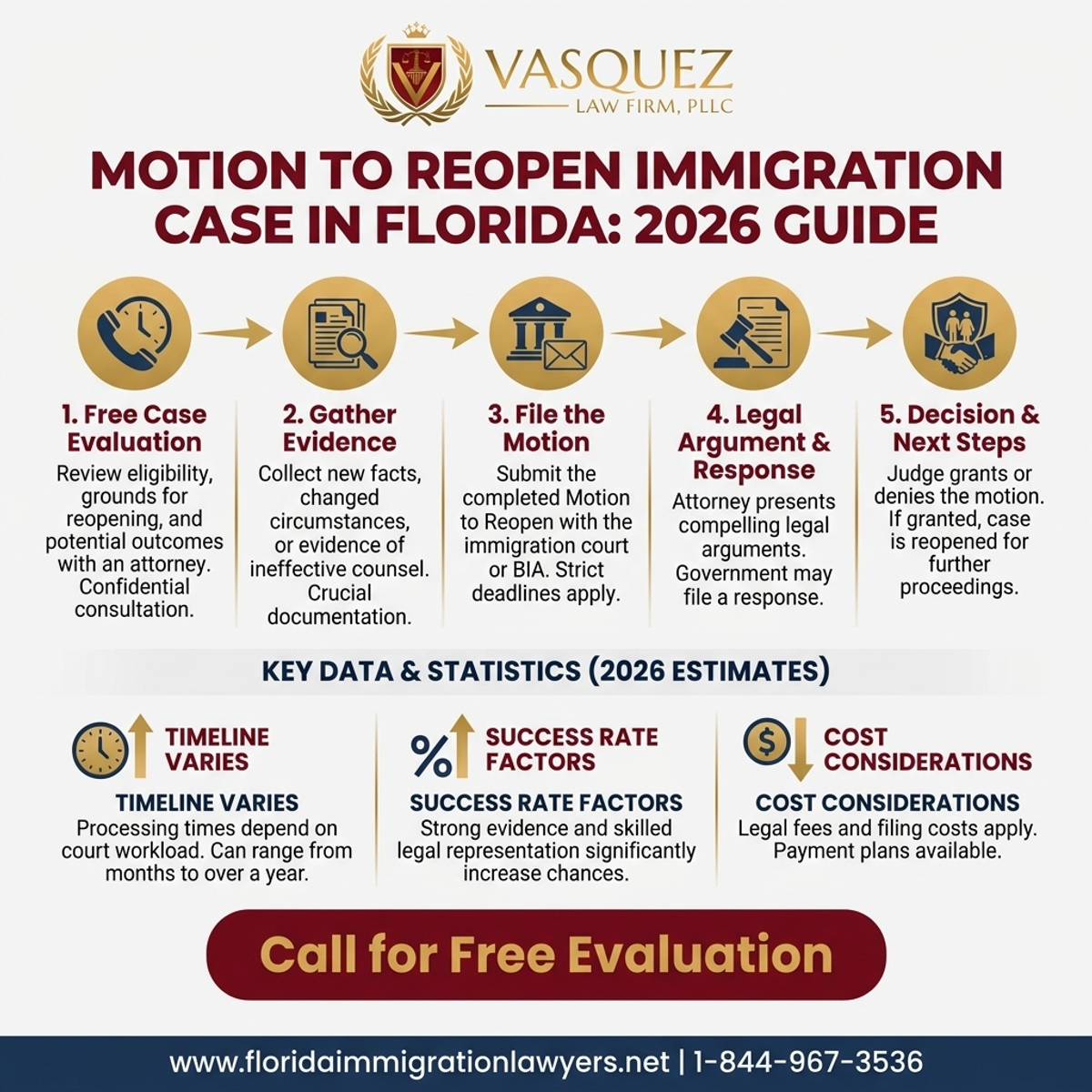
While the table provides typical timeframes, it's important to understand that these can fluctuate significantly based on various factors. The sheer volume of cases handled by immigration courts and USCIS, the complexity of your specific motion, and even the individual adjudicator's caseload can influence processing times. For instance, a motion involving novel legal arguments or extensive new evidence might take longer to review than a more straightforward case based on lack of notice for an in absentia order.
In some urgent situations, such as when a deportation is imminent, it may be possible to request expedited processing for a motion to reopen. However, such requests are rarely granted and require compelling justification, demonstrating irreparable harm if the motion is not considered quickly. This is another area where the strategic advice of an experienced attorney from Florida Immigration Lawyers can be invaluable, as they can help determine if such a request is appropriate and how to best present it.
Key Statistics — Motion to Reopen Immigration Case in Florida: 2026 Guide
It's also crucial to monitor your case status diligently after filing. Both USCIS and the EOIR (for immigration court cases) provide online tools to check case status. However, these tools may not always reflect the most up-to-date information, and direct communication through your attorney is often more reliable. Be prepared for potential requests for additional evidence (RFEs) or even a scheduling of a new hearing. Responding promptly and thoroughly to any such requests is vital to keep your motion on track and avoid further delays or even denial. Patience and persistence, guided by expert legal counsel, are key during this waiting period.
Cost Factors and Fee Breakdown
| Item | Typical Fee | Notes |
|---|---|---|
| Filing Fee | Varies | Depends on case type |
| Attorney Fees | Varies | Consultation can determine costs |
| Additional Documentation | Varies | Costs for gathering new evidence |
The "Filing Fee" for a motion to reopen can vary depending on where it's filed. For motions filed with the Board of Immigration Appeals (BIA), there is a specific fee (e.g., Form EOIR-42B currently has a fee of $110). However, if the motion is filed with USCIS, the fee will depend on the underlying application or petition that is being sought to be reopened. It's important to verify the exact fee with the most current fee schedule from the relevant agency. In certain circumstances, individuals with very low incomes may be eligible for a fee waiver, which requires submitting a separate application and supporting financial documentation. Your attorney can advise on eligibility and assist with this process.
"Attorney Fees" represent a significant portion of the overall cost, but they are an investment in the success of your case. These fees can vary widely based on the complexity of your case, the amount of evidence that needs to be gathered and analyzed, the number of hours the attorney anticipates spending, and the attorney's experience and reputation. Some attorneys may charge a flat fee for a motion to reopen, while others may bill hourly. A free consultation with Florida Immigration Lawyers (call 1-844-967-3536) can provide a clearer understanding of the potential costs involved, allowing you to plan financially for this critical legal process. Remember, attempting to navigate this complex legal landscape without expert guidance often leads to errors that can be far more costly in the long run.
"Additional Documentation" costs can also add up. These might include fees for obtaining certified copies of records (e.g., birth certificates, court documents), translation services for foreign-language documents, expert witness fees (e.g., for psychological evaluations, country conditions reports), and even travel expenses if witnesses need to appear at a hearing. It's essential to factor these potential costs into your budget. Your legal team at Florida Immigration Lawyers will help you anticipate these expenses and guide you on the most cost-effective ways to gather necessary evidence, ensuring that your motion is as robust as possible without unnecessary financial burden.
Do not navigate this process alone. Contact Florida Immigration Lawyers today.
Common Mistakes to Avoid
- Missing the filing deadline, risking case dismissal.
- Failing to provide new, material evidence.
- Submitting incomplete or incorrect forms.
- Lack of legal guidance leading to procedural errors.
- Not addressing all previous case points adequately.
- Ignoring communication from the court or USCIS.
- Attempting to file without understanding immigration laws.
- Underestimating the complexity of the appeal process.
- Incorrectly serving documents to required parties.
- Failing to update the court with new contact information.
Avoiding these common pitfalls is paramount to the success of your motion. Each mistake, from a missed deadline to an incorrectly filled form, can lead to significant delays or outright denial. The immigration system is unforgiving of procedural errors, and even a seemingly minor oversight can have severe consequences, potentially leading to a final order of removal. This is why the expertise of a seasoned immigration attorney is not just beneficial, but often essential. They can meticulously review your application, ensure all deadlines are met, and guarantee proper documentation and service, providing you with the best possible chance for a favorable outcome.
When to Call a Lawyer
Contact an immigration lawyer if you receive a deportation notice or if your case has been denied. An attorney can provide crucial guidance on filing a motion to reopen, especially in complex scenarios or if you face language barriers.
Beyond receiving a denial or deportation notice, there are several other critical junctures when contacting an immigration lawyer becomes imperative. If you discover new evidence that was genuinely unavailable during your previous proceedings, even if you haven't yet received a final decision, discussing it with an attorney can help you strategically plan your next steps. Similarly, if there's a significant change in your personal circumstances—such as marriage to a U.S. citizen, the birth of a U.S. citizen child, or a diagnosis of a serious medical condition—these developments could potentially form the basis for a motion to reopen, and an attorney can assess their relevance.
Furthermore, if you suspect that your previous legal representation was inadequate or made critical errors that harmed your case, you should immediately seek a second opinion. Claims of ineffective assistance of counsel are highly complex and require a specific legal process to pursue, making expert legal guidance indispensable. Even if you simply feel overwhelmed by the complexity of immigration law or are unsure about your options after a negative decision, a consultation with Florida Immigration Lawyers can bring clarity and peace of mind. Their team is equipped to handle the nuances of Florida's immigration courts and provide tailored advice for your unique situation.
Proactive engagement with legal counsel can often prevent issues from escalating. For example, if you missed an immigration court hearing and believe you had a valid reason, contacting an attorney immediately can help you act within the strict deadlines for filing a motion to reopen an in absentia order. Waiting too long can extinguish your opportunity for relief. The sooner you reach out to Florida Immigration Lawyers at 1-844-96
Sources and References
- U.S. Citizenship and Immigration Services (USCIS)
- Executive Office for Immigration Review (EOIR)
- U.S. Department of State - Bureau of Consular Affairs
- Immigration and Nationality Act (INA), 8 U.S.C. Chapter 12
Do Not Navigate This Process Alone
Our experienced immigration attorneys are ready to fight for you. Get a free, confidential case review today.
Se Habla Español
Or leave your details and we’ll call you:
Free Evaluation in 24 Hours
Or talk to us right now

AI voice assistant — available 24/7
FreeFrequently Asked Questions

William J. Vásquez
Founding Attorney · Vasquez Law Firm
U.S. Air Force veteran and immigration attorney with years of hands-on U.S. immigration experience. J.D., NCCU School of Law. AILA member. Admitted to the 4th, 5th, and 11th Circuit Courts.
Available 24/7 - Free Evaluations
Reviewed for legal accuracy by William J. Vásquez
Licensed in North Carolina; U.S. immigration is federal practice.
Related Legal Services
Our Florida immigration attorneys can help you with asylum protection, citizenship and naturalization and immigration practice areas. Call today at 1-844-967-3536 for a free case review.
Related Links
Related Topics
Free Legal Case Review
Discuss your case with our experienced attorneys. We're available 24/7.
Se Habla Español - Estamos aquí para ayudarle.
Related Articles
Immigration Lawyer Orlando Free Consultation in Florida
For individuals and families in Orlando, Florida, navigating the complexities of U.S. immigration law requires expert guidance. An immigration lawyer in Orlando offers crucial support for everything from visa applications and green card processes to naturalization and deportation defense. This comprehensive guide details what a free consultation covers, providing a step-by-step overview of immigration pathways, essential document checklists, and expected timelines in 2026. We also highlight common mistakes to avoid, discuss the critical role of legal counsel in deportation and asylum cases, and explain why choosing a local Orlando immigration attorney is beneficial. Florida Immigration Lawyers is dedicated to serving the diverse community of Orlando with compassionate, effective legal solutions, ensuring you receive personalized advice and robust representation for a successful immigration journey.
RFE Response Alternatives in Florida for 2026
Receiving a Request for Evidence (RFE) from USCIS can be overwhelming, especially if your current firm is unresponsive. Learn how to respond effectively in Florida and explore alternatives to ensure your application is successful. Florida Immigration Lawyers can assist you with timely and comprehensive responses.
K-3 Visa Timeline in Florida: What to Expect in 2026
The K-3 visa offers a pathway for spouses of U.S. citizens to enter the United States while their immigrant visa petition is pending. This comprehensive guide, updated for 2026, details the K-3 visa timeline, eligibility requirements, and the step-by-step application process for Florida residents. We cover essential documentation, associated costs, and critical considerations for navigating the K-3 journey, including Florida-specific insights regarding USCIS field offices. Understanding the intricacies of Form I-129F, National Visa Center processing, consular interviews, and the subsequent Adjustment of Status is vital. Learn how to avoid common mistakes and when to seek professional legal assistance to ensure a smooth and successful outcome. Florida Immigration Lawyers provides expert guidance for families across the state.
Biometrics Appointment in Florida 2026: Your USCIS Guide
For many individuals seeking to live, work, or gain permanent residency in Florida, the biometrics appointment is a critical and often misunderstood step. This comprehensive guide, tailored for applicants in Florida, will walk you through everything you need to know about your USCIS biometrics appointment in 2026. Learn its purpose, how to prepare, what to expect at an Application Support Center (ASC), and how long processing typically takes. We also cover common mistakes to avoid and when it's crucial to seek legal counsel from experienced immigration attorneys. Understanding these details is vital for a smooth process, preventing delays, and ensuring your immigration application progresses successfully. Florida Immigration Lawyers are available to provide expert guidance and support.