L-1 Visa Transfer for Florida Companies | VLF Florida
Explore the L-1 visa process for intracompany transfers to Florida. Learn about eligibility, documentation, and common pitfalls in our comprehensive guide. Contact Florida Immigration Lawyers for expert assistance.

L-1 Visa Transfer for Florida Companies | VLF Florida
Florida, with its vibrant economy, strategic location, and growing international business community, has become a prime destination for multinational corporations. For these companies, the ability to seamlessly transfer key personnel from their foreign operations to their U.S. offices in Florida is paramount. This is where the L-1 intracompany transferee visa plays a critical role. At VLF Florida, we specialize in guiding businesses through the complexities of L-1 visa transfers, ensuring that your most valuable employees can contribute to your success in the Sunshine State.
Understanding the L-1 Intracompany Transferee Visa
The L-1 visa is a non-immigrant visa designed to facilitate the temporary transfer of certain employees within a multinational company from an affiliated foreign office to an office in the United States. It is an invaluable tool for global businesses looking to expand, establish, or maintain operations in the U.S. by leveraging existing talent and institutional knowledge. This visa category allows U.S. employers to bring in executives, managers, or employees with specialized knowledge who have been working for a qualifying organization abroad.
The core purpose of the L-1 visa is to support the continuity and growth of international businesses. It recognizes that certain roles require individuals deeply familiar with the company's unique operations, culture, and strategic objectives. Rather than hiring and training new personnel, the L-1 visa enables companies to transfer experienced staff, ensuring a smoother transition and more efficient integration into the U.S. market, particularly in dynamic environments like Florida.
L-1A vs. L-1B Visas: A Closer Look at Eligibility
The L-1 visa category is divided into two primary classifications, each catering to different types of employees:
- L-1A Visa for Executives and Managers: This subcategory is designated for individuals who will be employed in the U.S. in a managerial or executive capacity. An "executive capacity" generally refers to an employee who directs the management of the organization or a major component or function, establishes goals and policies, exercises wide latitude in discretionary decision-making, and receives only general supervision from higher-level executives, the board of directors, or stockholders. A "managerial capacity" typically involves managing the organization, department, subdivision, function, or component, supervising and controlling the work of other supervisory, professional, or managerial employees, or managing an essential function within the organization, department, or subdivision. The L-1A visa is initially granted for up to three years, with possible extensions up to a maximum total stay of seven years. This path is often favored by companies looking to establish new offices in Florida, as it allows for an initial one-year approval, with extensions contingent on the office becoming fully operational.
- L-1B Visa for Employees with Specialized Knowledge: The L-1B visa is for professionals who possess "specialized knowledge." This means knowledge pertaining to the petitioning organization's product, service, research, equipment, techniques, management, or other interests and its application in international markets, or an advanced level of knowledge or expertise in the organization's processes and procedures. Proving specialized knowledge can be more challenging than proving managerial or executive capacity, as it requires demonstrating that the employee's expertise is not common in the industry and is critical to the U.S. operations. The L-1B visa is initially granted for up to three years, with possible extensions up to a maximum total stay of five years. This category is crucial for companies bringing in highly technical staff, specialized engineers, or unique product developers to their Florida facilities.
Understanding the nuances between L-1A and L-1B is vital, as the requirements and potential length of stay differ significantly. Our experienced immigration attorneys at VLF Florida can help your company determine the most appropriate L-1 category for your transferring employee.
Key Requirements for L-1 Visa Eligibility
Both the U.S. employer (petitioner) and the foreign employee (beneficiary) must meet specific criteria for an L-1 visa petition to be approved. These requirements are stringent and demand meticulous preparation of documentation.
Requirements for the U.S. Employer (Petitioner):
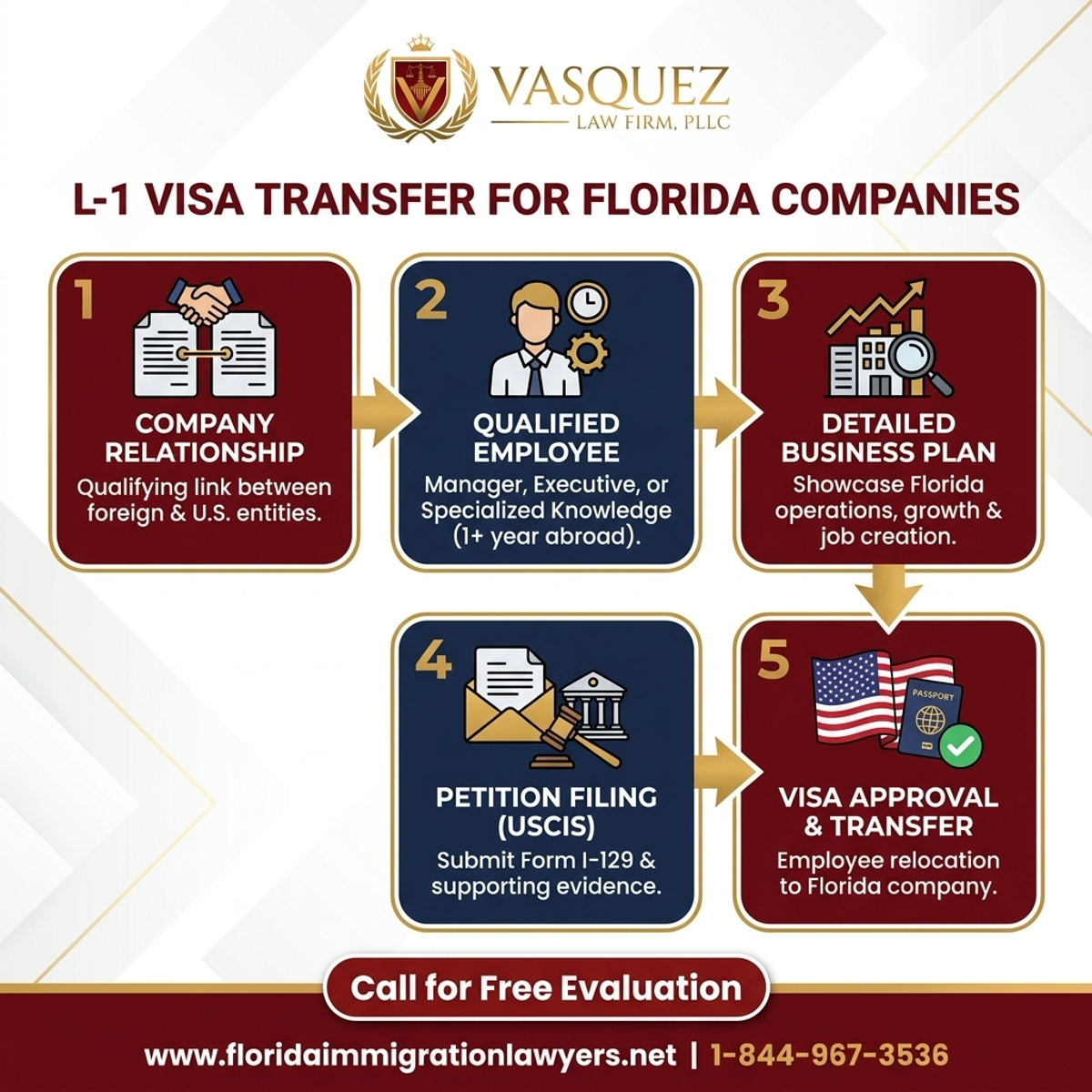
- Qualifying Organization: The U.S. company must be a parent, subsidiary, affiliate, or branch of the foreign company. This means there must be a common ownership and control structure between the U.S. and foreign entities.
- Doing Business: Both the U.S. and foreign entities must be actively "doing business" as employers in at least two countries (U.S. and one foreign country) during the entire period of the beneficiary's stay in the U.S. This typically means providing goods or services regularly and systematically.
- New Office Petitions: For companies establishing a new office in the U.S., specific conditions apply. The U.S. entity must secure sufficient physical premises, demonstrate financial viability to commence business, and show that it will support the managerial or executive position within one year of approval.
Requirements for the Foreign Employee (Beneficiary):
- Qualifying Employment Abroad: The employee must have been employed abroad by a qualifying organization (the foreign parent, subsidiary, affiliate, or branch) for at least one continuous year within the three years immediately preceding their application for admission to the U.S.
- Qualifying Capacity: This one year of employment must have been in an executive, managerial, or specialized knowledge capacity. The U.S. position must also be in a qualifying capacity (executive, managerial, or specialized knowledge).
- Intention to Depart: Although the L-1 visa is a non-immigrant visa, it is considered a "dual intent" visa, meaning the beneficiary can simultaneously intend to apply for permanent residency without jeopardizing their L-1 status.
Meeting these requirements necessitates a thorough understanding of U.S. immigration law and the ability to present compelling evidence to USCIS. Our team is adept at navigating these complex regulations.
Navigating the L-1 Visa Application: A Step-by-Step Guide
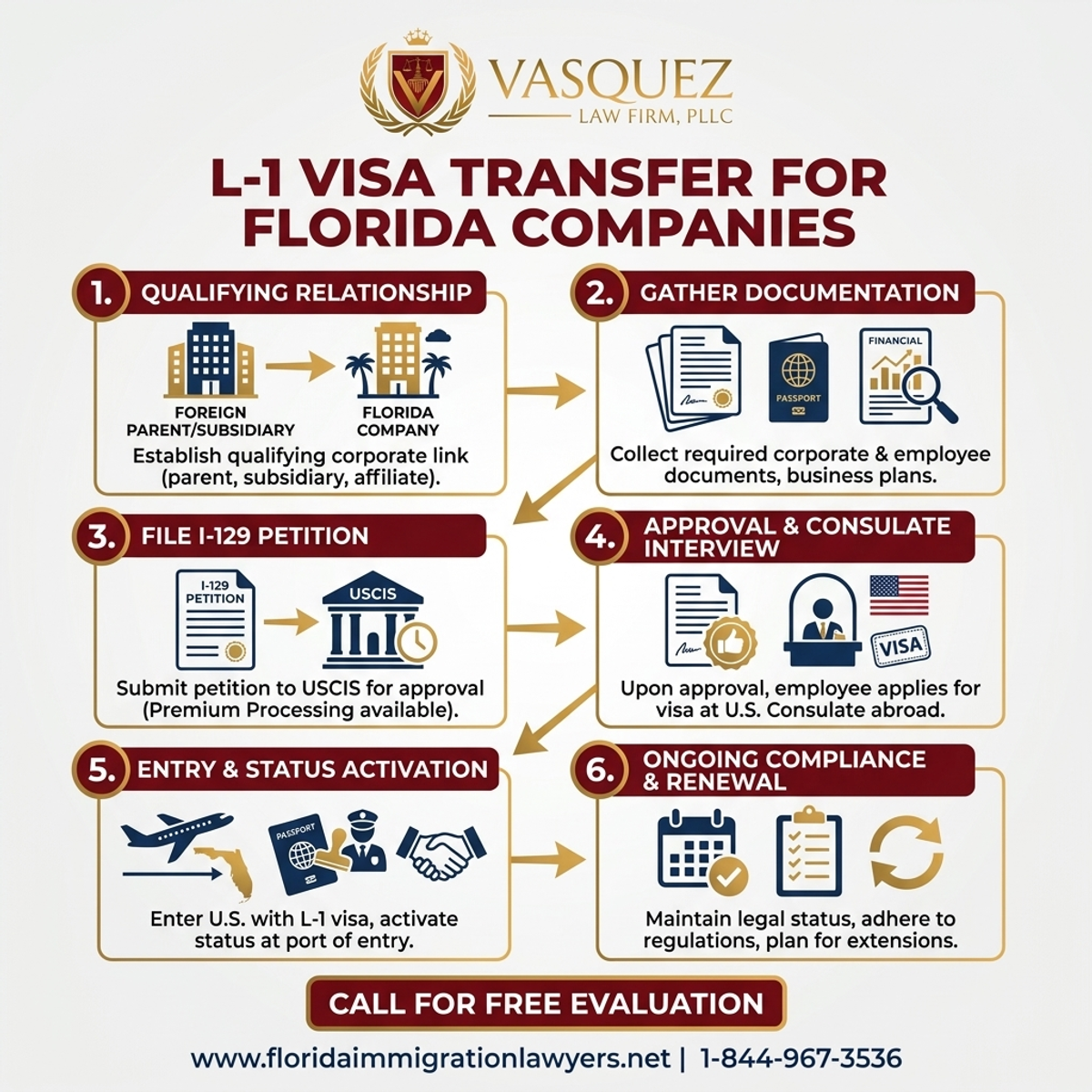
The L-1 visa application process is multi-faceted and requires careful attention to detail. A single error or omission can lead to significant delays or even denial. Here's a general overview of the steps involved:
Step 1: Preparing and Filing Form I-129, Petition for a Nonimmigrant Worker
The U.S. employer initiates the process by filing Form I-129, Petition for a Nonimmigrant Worker, with U.S. Citizenship and Immigration Services (USCIS). This petition must include extensive documentation demonstrating that both the company and the employee meet all L-1 visa requirements. This includes corporate documents proving the qualifying relationship between the U.S. and foreign entities, financial statements, business plans (especially for new offices), organizational charts, and detailed descriptions of the employee's foreign and proposed U.S. job duties. Evidence of the employee's one year of qualifying employment abroad, such as employment verification letters, pay stubs, and tax documents, is also crucial. The petition must clearly articulate how the employee's role in the U.S. qualifies as executive, managerial, or specialized knowledge.
Step 2: Responding to Requests for Evidence (RFEs)
It is common for USCIS to issue a Request for Evidence (RFE) if they require additional information or clarification on any aspect of the petition. An RFE can significantly delay the process if not addressed promptly and thoroughly. Our attorneys are skilled at analyzing RFEs and preparing comprehensive responses that directly address USCIS's concerns, often preventing further delays or denials. This is a critical stage where expert legal guidance can make a substantial difference in the outcome of your petition.
Step 3: USCIS Adjudication and Approval
Once USCIS reviews the petition and any RFE responses, they will issue a decision. If approved, USCIS sends an I-797 Approval Notice. This approval is a prerequisite for the employee to obtain the physical visa stamp.
Step-by-Step Process — L-1 Visa Transfer for Florida Companies | VLF Florida
Step 4: Consular Processing or Adjustment of Status
After the I-129 petition is approved, the next step depends on whether the employee is currently inside or outside the U.S.:
- Consular Processing (for employees outside the U.S.): The employee will apply for an L-1 visa stamp at a U.S. embassy or consulate in their home country. This involves completing Form DS-160, attending a visa interview, and providing biometric data. The consular officer will review the approved petition and conduct an interview to ensure the applicant meets all eligibility criteria.
- Adjustment of Status (for employees already in the U.S.): If the employee is already in the U.S. in a lawful non-immigrant status, they may be eligible to file Form I-485, Application to Adjust Status, concurrently with or after the I-129 approval, to change their status to L-1. This avoids the need to leave the U.S. for consular processing.
Throughout this intricate process, the expertise of a seasoned immigration law firm like VLF Florida is invaluable. We ensure every document is correctly prepared and every step is meticulously followed.
L-1 Visa for New Offices in Florida
Establishing a new office in Florida through an L-1 visa presents unique opportunities and challenges. The L-1 "new office" petition allows a foreign company to send an executive or manager to the U.S. to establish a new U.S. entity. Initially, these visas are granted for one year. To extend the visa beyond the first year, the company must demonstrate that:
- The U.S. office has been doing business for the past year.
- The U.S. office has sufficient staff to support the executive or managerial function.
- The U.S. office has generated enough revenue or secured sufficient investment to sustain operations.
This requires a robust business plan and careful financial projections. VLF Florida assists companies in developing these plans and navigating the specific requirements for new office L-1 petitions, helping them lay a solid foundation for their Florida operations.
Maintaining L-1 Status and Pathways to Permanent Residency
Once an L-1 visa is granted, maintaining compliance with immigration regulations is crucial. This includes adhering to the terms of employment, notifying USCIS of any material changes to the employment or company structure, and filing for extensions before the current status expires. L-1A visa holders, particularly, have a favorable pathway to permanent residency through the EB-1C Multinational Executive and Manager green card category. This category allows eligible L-1A visa holders to apply for a green card without the need for labor certification, significantly streamlining the process. Our firm can advise on the best strategies for L-1 visa extensions and potential transitions to permanent residency, ensuring long-term stability for your key employees in Florida.
Key Statistics — L-1 Visa Transfer for Florida Companies | VLF Florida
Common Challenges and How to Overcome Them
Despite its benefits, the L-1 visa process is not without its hurdles. Common challenges include:
- Proving Managerial/Executive Capacity: USCIS scrutinizes job descriptions to ensure the role truly qualifies as managerial or executive, not merely supervisory or highly skilled. Detailed organizational charts and clear duty descriptions are essential.
- Demonstrating Specialized Knowledge: For L-1B, proving that an employee's knowledge is truly "specialized" and not generally available in the U.S. workforce can be difficult. Strong letters of support, training records, and project descriptions are vital.
- New Office Petitions: Convincing USCIS that a new office will be viable and capable of supporting an executive or manager within one year requires a compelling business plan and financial projections.
- RFEs and Denials: Incomplete petitions or insufficient evidence often lead to RFEs or outright denials. Timely and comprehensive responses are critical.
Overcoming these challenges requires a deep understanding of immigration law and a strategic approach to petition preparation. Our legal team at VLF Florida possesses the experience to anticipate potential issues and build strong, evidence-based cases.
The Strategic Advantage of L-1 Visas for Florida's Economy
The L-1 visa program offers significant strategic advantages for Florida companies and the state's economy as a whole. By facilitating the transfer of international talent, L-1 visas enable Florida businesses to:
- Access Global Expertise: Bring in employees with unique skills, market insights, and cultural understanding that are critical for international expansion and competitiveness.
- Maintain Business Continuity: Ensure that key projects and operations continue smoothly by transferring personnel already familiar with the company's proprietary systems, processes, and corporate culture.
- Foster Innovation: Introduce diverse perspectives and specialized knowledge that can drive innovation and lead to the development of new products and services within Florida.
- Boost Economic Growth: Contribute to job creation, investment, and tax revenues as multinational companies expand their presence and operations in Florida.
The L-1 visa is more than just a work permit; it is a vital instrument for global commerce and a catalyst for economic development in states like Florida.
Why Expert Legal Guidance is Indispensable
The intricacies of U.S. immigration law, particularly regarding business visas like the L-1, can be overwhelming. The requirements are detailed, the documentation extensive, and the potential for errors high. Attempting to navigate this process without experienced legal counsel can lead to costly delays, RFEs, or even denials, jeopardizing your company's strategic objectives and your employee's ability to work in the U.S.
An experienced immigration attorney provides invaluable support by:
- Assessing eligibility and determining the most appropriate L-1 visa category.
- Compiling and organizing all necessary documentation, ensuring compliance with USCIS standards.
- Crafting compelling petition letters that clearly articulate the merits of your case.
- Responding effectively to RFEs and addressing any concerns raised by USCIS.
- Guiding employees through consular processing interviews or adjustment of status procedures.
- Advising on compliance, extensions, and pathways to permanent residency.
Partnering with a knowledgeable legal team ensures that your L-1 visa petition is prepared accurately and strategically, maximizing the chances of a successful outcome. For comprehensive support in all immigration matters, VLF Florida stands ready to assist.
VLF Florida: Your Partner in L-1 Visa Transfers
At VLF Florida, we understand the critical role that L-1 visas play in the global strategies of multinational companies. Our dedicated team of immigration lawyers possesses extensive experience in handling complex L-1A and L-1B petitions for businesses across various industries looking to establish or expand their presence in Florida. We pride ourselves on providing personalized, efficient, and strategic legal services tailored to your company's unique needs.
From the initial assessment of eligibility to the final visa approval, we work closely with your human resources department and the transferring employee to ensure a smooth and successful process. We meticulously prepare all necessary documentation, anticipate potential challenges, and proactively address any concerns from USCIS. Our goal is to minimize stress and maximize the likelihood of a favorable outcome, allowing your key employees to quickly integrate into your Florida operations.
Beyond L-1 visas, VLF Florida offers a full spectrum of immigration services, including assistance with asylum applications, deportation defense, family-based visas, and other employment-based immigration categories. Our comprehensive approach ensures that all your immigration needs are met under one roof.
Contact VLF Florida Today
Don't let the complexities of immigration law hinder your company's growth in Florida. Partner with VLF Florida for expert guidance on L-1 visa transfers and all your immigration needs. Our commitment to excellence and client success makes us the ideal choice for businesses seeking reliable and effective legal solutions.
For a free consultation and to learn how we can assist your Florida company with L-1 visa transfers, please contact us today. Let us help you bring your international talent to Florida with confidence.
FAQs
...
Sources and References
- U.S. Citizenship and Immigration Services (USCIS)
- Executive Office for Immigration Review (EOIR)
- U.S. Department of State - Bureau of Consular Affairs
- Immigration and Nationality Act (INA), 8 U.S.C. Chapter 12
Do Not Navigate This Process Alone
Our experienced immigration attorneys are ready to fight for you. Get a free, confidential consultation today.
Se Habla Español
Frequently Asked Questions
Florida Immigration Lawyers
Immigration Attorney | Founder, Vasquez Law Firm
U.S. Air Force veteran and immigration attorney with thousands of cases resolved. J.D., NCCU School of Law. AILA member. Admitted to the 4th, 5th, and 11th Circuit Courts.
Available 24/7 - Free Evaluations
Related Legal Services
Our Florida immigration attorneys can help you with immigration practice areas, free immigration consultation and experienced immigration attorneys. Call today at 1-844-967-3536 for a free consultation.
Related Links
Related Topics
Free Legal Consultation
Discuss your case with our experienced attorneys. We're available 24/7.
Se Habla Español - Estamos aquí para ayudarle.
Related Articles
Schedule A Nurse Immigration for Florida Hospitals
Explore the benefits and process of Schedule A nurse immigration for filling crucial healthcare positions in Florida hospitals. Contact Florida Immigration Lawyers for expert guidance.
Stokes Interview: Avoiding Marriage Fraud in Florida
Learn how to navigate the Stokes interview process in Florida. Understand the steps, prepare effectively, and avoid common mistakes. Contact Florida Immigration Lawyers for expert guidance.
Protect Yourself from Immigration Scams in Florida
Immigration scams in Florida pose significant risks to immigrants. Learn how to protect yourself from notario fraud and other scams with guidance from Florida Immigration Lawyers. Call 1-844-967-3536 for a free consultation.
J-1 Waiver Physician in Florida: Conrad 30 Program
Explore how the J-1 waiver can help physicians in Florida bypass the home residency requirement through the Conrad 30 program. Learn about eligibility, steps, and common pitfalls to avoid. Contact Florida Immigration Lawyers for expert guidance.