Stokes Interview: Avoiding Marriage Fraud in Florida
Learn how to navigate the Stokes interview process in Florida. Understand the steps, prepare effectively, and avoid common mistakes. Contact Florida Immigration Lawyers for expert guidance.

Stokes Interview: Avoiding Marriage Fraud in Florida
The journey to obtaining a green card through marriage in the United States is often complex, requiring applicants to navigate a labyrinth of regulations and interviews. For many couples, this path includes the daunting prospect of a Stokes interview, a specialized and intense examination conducted by U.S. Citizenship and Immigration Services (USCIS). Particularly in Florida, a state with a diverse population and a high volume of immigration cases, understanding and preparing for a Stokes interview is paramount for couples applying for an I-130 Petition for Alien Relative.
A Stokes interview is not a routine part of every marriage-based green card application. Instead, it's triggered when USCIS officers suspect that a marriage may not be genuine, but rather entered into solely for immigration benefits – a practice known as marriage fraud. If you and your spouse find yourselves facing this rigorous scrutiny, it's crucial to be well-informed, meticulously prepared, and ideally, supported by experienced legal counsel. This comprehensive guide will delve into the intricacies of the Stokes interview process, highlight common red flags, offer essential preparation tips, and underscore the importance of legal representation to help you successfully navigate this challenging phase of your immigration journey in Florida.
What is a Stokes Interview?
A Stokes interview is a secondary, more intensive interview conducted by USCIS when an immigration officer has doubts about the legitimacy of a marriage. Unlike the initial joint interview where both spouses are questioned together, a Stokes interview involves interviewing the spouses separately. The primary goal is to identify inconsistencies in their testimonies that might suggest the marriage is not bona fide. Each spouse is typically asked a series of detailed and often probing questions about their daily lives, their relationship history, shared experiences, and intimate knowledge of one another. These questions can range from the mundane, such as 'What did your spouse eat for breakfast this morning?' or 'What color is your spouse's toothbrush?', to more personal inquiries about their living arrangements, finances, and relationship milestones. The questions are designed to be specific enough that only a couple genuinely sharing a life together would know the consistent answers. The officer will meticulously compare the answers given by each spouse, looking for discrepancies, contradictions, or signs of memorized responses rather than genuine recollection. The pressure of this interview can be immense, and even minor inconsistencies, if not properly explained, can raise further suspicion and jeopardize the application.
Why USCIS Conducts Stokes Interviews: Unmasking Marriage Fraud
USCIS takes marriage fraud very seriously. It is considered a federal crime, carrying severe penalties for all parties involved, including imprisonment, hefty fines, and permanent bars from future immigration benefits. The agency's mandate is to protect the integrity of the U.S. immigration system, and identifying fraudulent marriages is a key part of that mission. A Stokes interview is one of the most powerful tools at their disposal for this purpose. Officers are trained to spot various 'red flags' during the initial application review or the first interview that might indicate a marriage of convenience. These red flags are not necessarily proof of fraud, but they are indicators that warrant further investigation through a Stokes interview. The underlying principle is that genuine couples, who share a life, home, and intimate relationship, will possess a deep and consistent knowledge of each other's lives, habits, and shared experiences. Conversely, couples in fraudulent marriages often lack this intimate knowledge, leading to conflicting answers when questioned separately and in detail. The Stokes interview provides a controlled environment to test the depth and authenticity of the couple's relationship by exposing potential inconsistencies that might otherwise go unnoticed.
Common Red Flags That Trigger a Stokes Interview
While every case is unique, certain circumstances or characteristics often raise suspicion and can lead to a Stokes interview. Being aware of these can help couples proactively address potential concerns and prepare thoroughly. Some common red flags include:
- Significant Age Disparity: A large age difference between spouses, particularly if one spouse is significantly older, can sometimes raise questions, especially if not accompanied by a compelling shared history.
- Cultural or Linguistic Barriers: While love transcends all boundaries, a substantial language barrier or vastly different cultural backgrounds without evidence of genuine integration can sometimes be scrutinized.
- Short Courtship Period: Marrying very quickly after meeting, especially if the foreign national is out of status or facing deportation, can be a red flag.
- Lack of Shared History or Evidence: If the couple struggles to provide sufficient documentary evidence of a shared life (joint leases, bank accounts, photos, utility bills, etc.), it can trigger suspicion.
- Inconsistent Information: Discrepancies in information provided on different forms or during the initial interview can lead to further investigation.
- Previous Immigration History: If the foreign national has a history of previous marriage-based petitions, prior denials, or overstaying visas, USCIS may be more vigilant.
- Third-Party Tips: Sometimes, anonymous tips or information from disgruntled family members or acquaintances can prompt USCIS to investigate further.
- Failure to Reside Together: If the couple claims to be married but lives apart, or if there's insufficient evidence of cohabitation, it will certainly raise red flags.
Preparing for Your Stokes Interview: Essential Steps
Preparation is the cornerstone of successfully navigating a Stokes interview. It's not just about memorizing facts, but about being able to articulate the genuine nature of your relationship under pressure. Here are essential steps:
- Gather Comprehensive Documentation: This is your opportunity to present undeniable proof of your bona fide marriage. Collect every piece of evidence showing your shared life: joint bank statements, utility bills, lease agreements or mortgage documents, insurance policies, tax returns filed jointly, photographs from various stages of your relationship (dating, engagement, wedding, holidays, family events), affidavits from friends and family, travel itineraries, and correspondence (emails, texts, social media). Organize these documents meticulously.
- Review Your Application and Previous Statements: Go over your I-130 petition, adjustment of status application, and any previous interview notes. Ensure you are familiar with all the information you've provided to USCIS. Consistency is key.
- Discuss Your Relationship History Openly: While you shouldn't rehearse answers, you and your spouse should openly discuss your relationship's timeline, key milestones, daily routines, and personal details. This isn't about creating a false narrative, but about ensuring you both have a clear and consistent understanding of your shared life.
- Anticipate Difficult Questions: Practice answering hypothetical questions that are similar to those asked in a Stokes interview. Focus on providing detailed, honest, and spontaneous answers. Discuss how you would handle questions about disagreements, finances, or intimate aspects of your relationship.
- Maintain Composure: The interview is designed to be stressful. Practice remaining calm and thoughtful in your responses. If you don't know an answer, it's better to honestly state that you don't recall rather than guess or fabricate information.
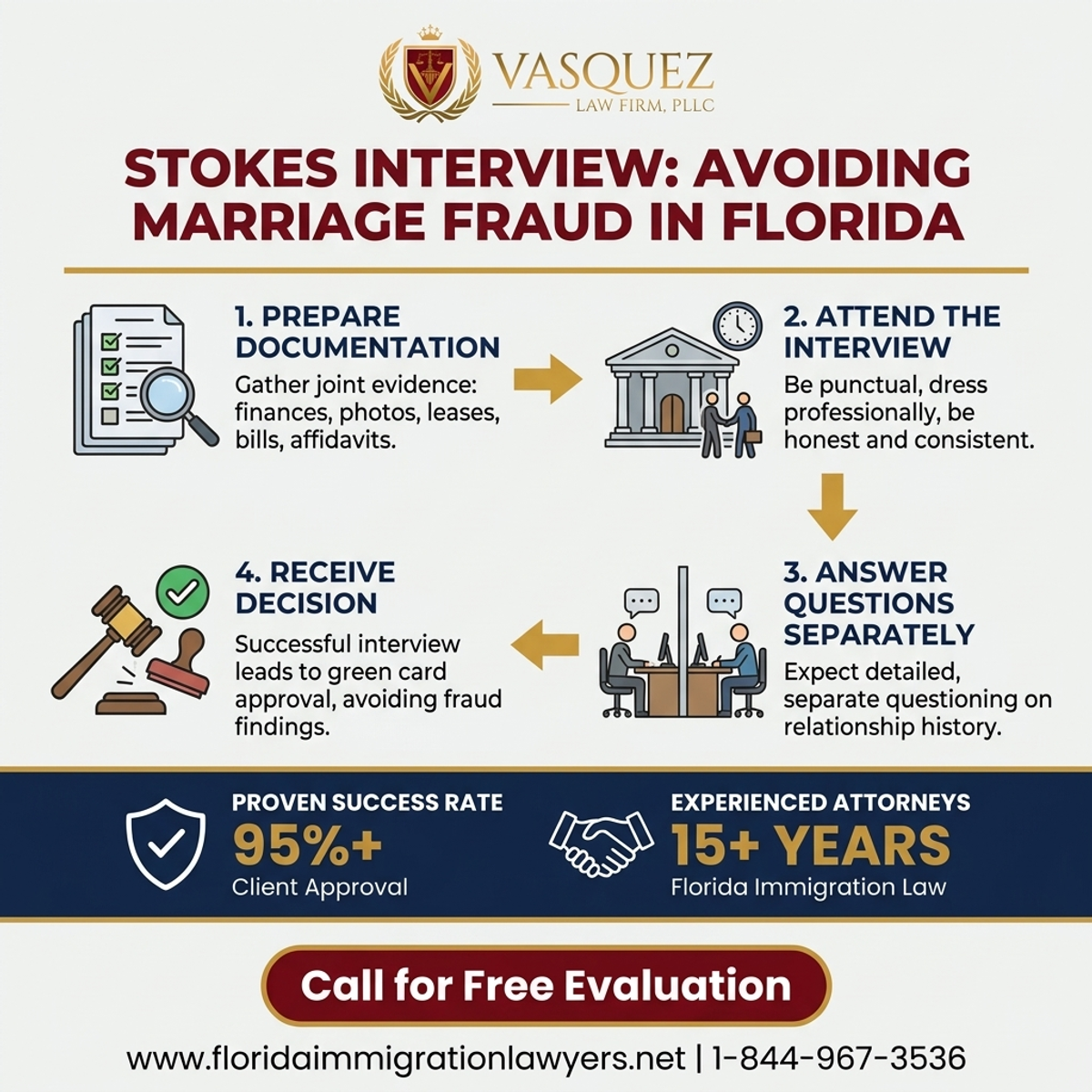
Step-by-Step Process — Stokes Interview: Avoiding Marriage Fraud in Florida
The Critical Role of an Immigration Attorney in a Stokes Interview
Facing a Stokes interview without legal representation can significantly increase the stress and risk involved. An experienced immigration attorney acts as your advocate and guide throughout this challenging process. Here's how they can help:
- Thorough Preparation: An attorney will conduct mock Stokes interviews with you and your spouse, asking the types of questions USCIS officers typically pose. This practice helps you become comfortable with the format and pressure, identify potential inconsistencies in your stories, and refine your ability to articulate the truth of your relationship.
- Document Organization: They will help you identify, gather, and organize all necessary evidence to prove a bona fide marriage, ensuring no critical document is overlooked.
- Legal Guidance: Your attorney can explain the legal standards USCIS uses to evaluate marriage fraud, advise you on your rights, and clarify what to expect during the interview.
- Presence at the Interview: While your attorney cannot answer questions for you during the Stokes interview, their presence is invaluable. They can object to improper questioning, ensure your rights are protected, and provide a sense of calm and confidence. Their presence signals to the USCIS officer that you are taking the process seriously and have professional representation.
- Post-Interview Strategy: If the interview raises further concerns or if USCIS issues a Request for Evidence (RFE), your attorney will help you formulate a strategy to respond effectively and address any lingering doubts.
Don't face this critical interview alone. Contact us today for a consultation to discuss your specific situation and how we can support you.
Proving a Bona Fide Marriage: What Evidence Do You Need?
Beyond the interview, documentary evidence is crucial for proving a bona fide marriage. USCIS looks for evidence that demonstrates a commingling of lives and resources, indicative of a genuine marital relationship. This includes:
- Financial Intermingling: Joint bank accounts (checking, savings), joint credit cards, joint tax returns, joint investments, life insurance policies with each other as beneficiaries, and shared utility bills (electricity, water, internet) at the same address.
- Shared Living Arrangements: Joint lease agreements or mortgage documents, property deeds, mail addressed to both spouses at the same address, and affidavits from landlords or neighbors confirming cohabitation.
- Children of the Marriage: Birth certificates of children born to the marriage, school records, and medical records listing both parents.
- Affidavits from Third Parties: Sworn statements from friends, family members, or employers who know the couple and can attest to the legitimacy of their marriage. These should include details about how they know the couple and observations of their relationship.
- Photographic Evidence: A collection of photographs spanning the entire relationship, including dating, engagement, wedding, holidays, family gatherings, and travel. These should ideally include other people (friends, family) to demonstrate social integration.
- Other Evidence: Joint memberships (gym, clubs), shared travel itineraries, wills designating each other as beneficiaries, and any other documentation that shows a shared life and commitment.
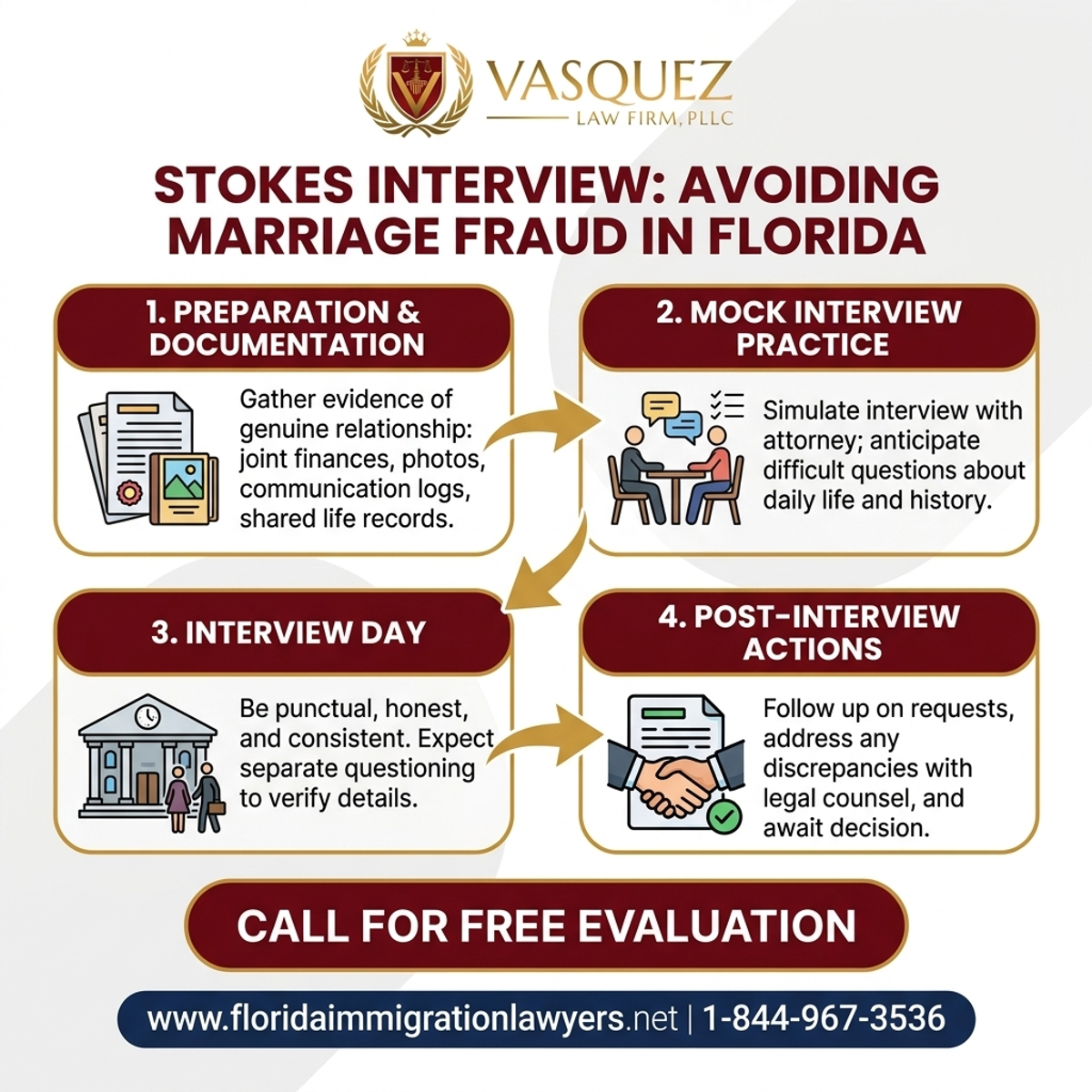
Key Statistics — Stokes Interview: Avoiding Marriage Fraud in Florida
Navigating the Broader Immigration Landscape in Florida
The Stokes interview, while a critical hurdle for some, is just one facet of the vast and often intricate U.S. immigration system. In Florida, a state with a significant immigrant population, individuals and families frequently encounter a diverse array of immigration challenges beyond marriage-based petitions. Our firm is dedicated to assisting clients with a wide spectrum of immigration matters, understanding that each case is unique and requires personalized attention. From family-based visas and employment-based green cards to naturalization and citizenship applications, the path to legal status can be fraught with complexities and potential pitfalls. The stakes are always high, whether you are seeking to unite with family, pursue career opportunities, or establish a new life in the United States.
Beyond the realm of family petitions, many individuals arrive in the U.S. seeking refuge from persecution in their home countries. For these vulnerable populations, pursuing asylum is a critical pathway to safety and stability. Asylum cases are notoriously challenging, requiring compelling evidence and skilled advocacy to demonstrate a well-founded fear of persecution. Similarly, for those who find themselves facing the threat of removal from the country, robust deportation defense becomes an urgent necessity. Whether due to visa violations, criminal charges, or other immigration infractions, the prospect of deportation can be devastating. Our legal team is equipped to handle these high-pressure situations, fighting tirelessly to protect our clients' rights and their ability to remain in the U.S. Understanding how these various immigration processes interconnect and the potential impact they have on an individual's future is paramount. Expert legal guidance is not just beneficial; it is often indispensable for successfully navigating these complex legal waters and achieving a favorable outcome.
Consequences of Marriage Fraud: A Warning
It is imperative to reiterate the severe consequences associated with marriage fraud. Engaging in a fraudulent marriage for immigration benefits is a federal felony. Individuals found guilty face up to five years in federal prison, fines of up to $250,000, and permanent bars from receiving any future U.S. immigration benefits. This means that even if a fraudulent marriage is discovered years later, the foreign national could be deported and prohibited from ever legally returning to the United States. Furthermore, the U.S. citizen spouse could also face criminal charges, including conspiracy, visa fraud, and harboring an alien, leading to their own legal troubles and potential imprisonment. The long-term repercussions far outweigh any perceived short-term benefits, making it a risk that no individual should ever consider taking. USCIS is highly vigilant, and their investigative tools, including the Stokes interview, are effective in uncovering deceit.
Life After the Stokes Interview: What to Expect Next
The period following a Stokes interview can be anxiety-inducing. USCIS does not typically provide an immediate decision. Instead, the officer will review the interview notes, compare testimonies, and evaluate all submitted evidence. Possible outcomes include:
- Approval: If USCIS is satisfied that your marriage is bona fide, your I-130 petition will be approved, and your green card application will proceed.
- Request for Evidence (RFE): If the officer still has doubts but believes more evidence could resolve them, they may issue an RFE, asking for additional documents or information.
- Notice of Intent to Deny (NOID): A NOID indicates that USCIS intends to deny your petition and provides you with an opportunity to submit a rebuttal and additional evidence.
- Denial: If USCIS concludes that the marriage is fraudulent, your petition will be denied, potentially leading to deportation proceedings for the foreign national.
It's crucial to continue working with your attorney during this waiting period to prepare for any potential follow-up actions or adverse decisions.
Conclusion
The Stokes interview is a challenging but navigable part of the marriage-based green card process for couples in Florida who face heightened scrutiny from USCIS. While the experience can be stressful, thorough preparation, honesty, and a clear understanding of your shared life are your strongest assets. By meticulously gathering evidence, discussing your relationship openly with your spouse, and anticipating the types of questions you might face, you can significantly improve your chances of a successful outcome. Most importantly, securing the guidance and representation of an experienced immigration attorney is invaluable. They can provide the expert counsel, preparation, and advocacy needed to protect your rights and ensure your genuine marriage is recognized. If you are facing a Stokes interview or have concerns about your marriage-based immigration application, do not hesitate to seek professional legal assistance. Contact us today for a free consultation to discuss your case and let us help you navigate this critical process with confidence.
Sources and References
- U.S. Citizenship and Immigration Services (USCIS)
- Executive Office for Immigration Review (EOIR)
- U.S. Department of State - Bureau of Consular Affairs
- Immigration and Nationality Act (INA), 8 U.S.C. Chapter 12
Do Not Navigate This Process Alone
Our experienced immigration attorneys are ready to fight for you. Get a free, confidential consultation today.
Se Habla Español
Frequently Asked Questions
Florida Immigration Lawyers
Immigration Attorney | Founder, Vasquez Law Firm
U.S. Air Force veteran and immigration attorney with thousands of cases resolved. J.D., NCCU School of Law. AILA member. Admitted to the 4th, 5th, and 11th Circuit Courts.
Available 24/7 - Free Evaluations
Related Legal Services
Our Florida immigration attorneys can help you with experienced immigration attorneys, business immigration and asylum protection. Call today at 1-844-967-3536 for a free consultation.
Related Links
Related Topics
Free Legal Consultation
Discuss your case with our experienced attorneys. We're available 24/7.
Se Habla Español - Estamos aquí para ayudarle.
Related Articles
Schedule A Nurse Immigration for Florida Hospitals
Explore the benefits and process of Schedule A nurse immigration for filling crucial healthcare positions in Florida hospitals. Contact Florida Immigration Lawyers for expert guidance.
Protect Yourself from Immigration Scams in Florida
Immigration scams in Florida pose significant risks to immigrants. Learn how to protect yourself from notario fraud and other scams with guidance from Florida Immigration Lawyers. Call 1-844-967-3536 for a free consultation.
J-1 Waiver Physician in Florida: Conrad 30 Program
Explore how the J-1 waiver can help physicians in Florida bypass the home residency requirement through the Conrad 30 program. Learn about eligibility, steps, and common pitfalls to avoid. Contact Florida Immigration Lawyers for expert guidance.
T Visa for Trafficking Victims in Florida: A Guide
Discover how the T visa can provide critical support to human trafficking victims in Florida. Learn about eligibility, application processes, and how Florida Immigration Lawyers can assist you. Call 1-844-967-3536 for a free consultation.