Parole in Place for Military Families in Florida | VLF Flori
Explore Parole in Place for military families in Florida. Learn about eligibility, application steps, and common mistakes to avoid. Contact Florida Immigration Lawyers for a free consultation.

Parole in Place for Military Families in Florida | VLF Florida
For the brave men and women serving in the U.S. Armed Forces, the stability and well-being of their families are paramount. Many military families, however, face unique challenges when a spouse or child is not a U.S. citizen and entered the country without inspection. This is where Parole in Place (PIP) becomes a critical lifeline. Specifically designed to support military families, PIP offers a pathway to lawful status and, ultimately, a green card, providing much-needed security and peace of mind. In Florida, home to numerous military bases and a large veteran population, understanding and utilizing PIP is essential for ensuring family unity and supporting our service members. At VLF Florida, we are dedicated to helping military families navigate the complexities of immigration law, ensuring they receive the benefits they deserve. Contact us today for a free consultation to discuss your family's specific situation.
Understanding Parole in Place (PIP): A Vital Pathway for Military Spouses and Children
Parole in Place is a discretionary immigration benefit granted by U.S. Citizenship and Immigration Services (USCIS) to certain non-citizen spouses, children, and parents of active duty service members, veterans, and members of the Ready Reserve or Selected Reserve. Its primary purpose is to allow these family members, who might otherwise be inadmissible to the U.S. due to their manner of entry (e.g., entering without inspection), to apply for adjustment of status to lawful permanent resident (green card holder) from within the United States.
The term "parole" in this context does not grant permanent legal status directly. Instead, it temporarily allows an individual who is physically present in the U.S. without formal admission to be "paroled" into the country. This parole effectively cures the inadmissibility issue related to unlawful entry, making the individual eligible to apply for a green card through a family-based petition (Form I-130) if one already exists or is filed concurrently. Without PIP, many of these individuals would be required to leave the U.S. to process their green card applications abroad, triggering a 3-year or 10-year bar from re-entry due to their unlawful presence, leading to heartbreaking family separation.
Eligibility Criteria: Who is considered a "military family member"?
- Service Member: The U.S. citizen or lawful permanent resident spouse, child, or parent must be an active duty member of the U.S. Armed Forces, a veteran who served honorably, or a member of the Ready Reserve or Selected Reserve.
- Family Relationship: The applicant for PIP must be the spouse, child (under 21 and unmarried), or parent of the qualifying service member.
- Physical Presence: The applicant must be physically present in the United States.
- No Criminal Record: Generally, applicants should not have a significant criminal history or other serious adverse factors that would weigh against a favorable exercise of discretion.
It's crucial to understand that PIP is a discretionary benefit. USCIS reviews each case individually, considering all circumstances. While the military connection is a strong factor, it does not guarantee approval. This is why professional legal guidance is invaluable.
The Profound Benefits of Parole in Place for Florida's Military Community
The impact of Parole in Place extends far beyond a legal designation; it provides fundamental stability and security for military families, directly contributing to the morale and readiness of our service members. For families in Florida, a state with a significant military presence, these benefits are particularly resonant.
- Providing Stability and Security: PIP offers a pathway to a green card, which means long-term stability. This eliminates the constant fear of deportation and allows families to plan for their future together in the U.S. without the looming threat of separation. This stability is crucial for the mental health and well-being of both the service member and their family.
- Work Authorization and Economic Contribution: Once paroled, individuals typically become eligible to apply for an Employment Authorization Document (EAD), allowing them to legally work in the United States. This not only provides financial stability for the family but also allows the paroled individual to contribute to the local economy and pursue their professional aspirations.
- Protection from Deportation and Family Separation: Perhaps one of the most significant benefits, PIP protects eligible family members from removal proceedings. Without PIP, an individual who entered without inspection could be placed in deportation defense proceedings, leading to immense stress and the potential for forced family separation. PIP provides a legal shield, allowing families to remain united.
- Eligibility for Adjustment of Status: The core benefit of PIP is that it allows an otherwise inadmissible individual to adjust their status to a lawful permanent resident from within the U.S. This avoids the need for consular processing abroad, which, as mentioned, could trigger a re-entry bar and prolonged separation. It streamlines the path to a green card, making the process more humane and efficient for military families.
- Access to Education and Social Services: With legal status, family members gain better access to educational opportunities, healthcare, and other social services, further integrating them into American society and enhancing their quality of life.
These benefits collectively strengthen military families, allowing service members to focus on their duties with the assurance that their loved ones are safe and secure at home.
Navigating the PIP Application Process: A Step-by-Step Guide
The application for Parole in Place, while seemingly straightforward, requires meticulous attention to detail and a thorough understanding of immigration procedures. Any errors or omissions can lead to delays or even denial. Here’s a general overview of the process:
- Gathering Essential Documents: This is the foundational step. You will need to compile a comprehensive set of documents, including proof of the qualifying military relationship (e.g., marriage certificates, birth certificates), evidence of the service member's status (e.g., military ID, DD-214, enlistment contract), proof of the applicant's identity and presence in the U.S., and any other supporting evidence that demonstrates the need for PIP.
- Preparing Form I-131, Application for Travel Document: Although PIP is not a travel document, USCIS uses Form I-131 for this application. It must be completed accurately and thoroughly, providing all requested information about the applicant and the qualifying service member.
- Submitting Your Application: The completed Form I-131, along with all supporting documentation and a cover letter explaining the request for Parole in Place, is filed with the appropriate USCIS Lockbox facility. There is typically no filing fee for PIP applications for military families.
- Biometrics Appointment: After filing, USCIS will send a notice for a biometrics appointment, where the applicant will have their fingerprints, photograph, and signature taken. This is used for background checks.
- Interview Process (if applicable): While not all PIP applicants are interviewed, USCIS may request an interview to clarify information or address any concerns. If an interview is scheduled, it's crucial to be well-prepared and, ideally, accompanied by legal counsel.
- Decision: USCIS will issue a decision on the PIP application. If approved, the applicant will receive an I-94 document indicating their paroled status. This I-94 is critical for the next step: applying for adjustment of status.
- Adjustment of Status: Once PIP is granted, the paroled individual can then file Form I-485, Application to Register Permanent Residence or Adjust Status, along with Form I-130 (if not already filed) and supporting documents, to apply for their green card.
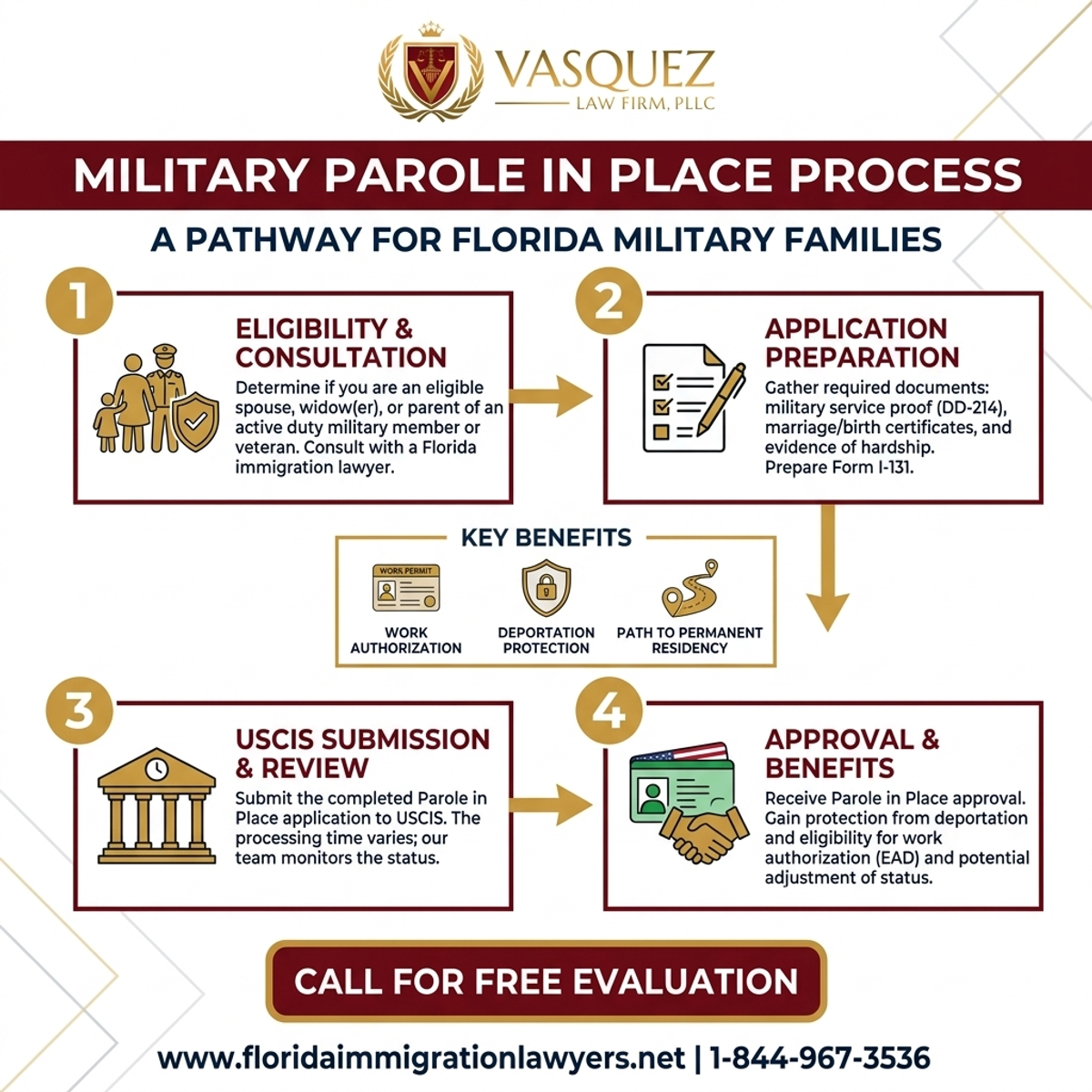
Step-by-Step Process — Parole in Place for Military Families in Florida | VLF Florida
The entire process can be lengthy, and navigating it without legal assistance can be daunting. The experienced attorneys at VLF Florida can guide you through each step, ensuring your application is strong and complete.
Specific Considerations for Military Families in Florida
Florida boasts a robust military presence, with numerous bases such as MacDill Air Force Base, Naval Air Station Jacksonville, Eglin Air Force Base, and many others. This means a significant number of military families reside in the state, potentially facing immigration challenges. Florida's diverse population and unique legal landscape can present specific considerations for PIP applicants.
For instance, Florida has a large immigrant community, which means USCIS field offices in the state are often busy. Understanding local processing times and specific requirements of the Florida USCIS offices can be beneficial. Additionally, Florida's proximity to international borders means that immigration enforcement can be a prominent concern, making the security offered by PIP even more critical for families living here.
VLF Florida is deeply familiar with both federal immigration law and the local context in Florida. Our firm understands the unique pressures faced by military families in the state and is committed to providing tailored legal support that addresses their specific needs, whether they are stationed in Pensacola, Tampa, Jacksonville, or anywhere else in Florida.
Navigating the Complexities of Immigration Law in Florida for Military Families
Florida is a diverse state with a significant immigrant population and a large military presence. While Parole in Place offers a crucial lifeline for many military families, it's essential to understand that immigration law is vast and intricate. Military families often face a unique set of challenges that extend beyond the scope of PIP, requiring specialized legal guidance. For instance, some family members might have complex immigration histories, previous deportation orders, or may be seeking other forms of relief. Our firm specializes in comprehensive immigration law services, understanding the nuances that can impact military families.
Beyond PIP, family members might explore other avenues for legal status. This could include family-based petitions for relatives who don't qualify for PIP, or even humanitarian relief options. For those who have suffered persecution or fear returning to their home countries, asylum might be a viable path, though distinct from PIP. Moreover, the threat of deportation is a constant concern for undocumented individuals. Our dedicated deportation defense team works tirelessly to protect families from removal, navigating complex court proceedings and advocating for their right to remain in the U.S. Understanding the interplay between these different legal areas is crucial, and a misstep in one can have severe consequences for another. This is why having experienced legal counsel is not just beneficial, but often indispensable for military families seeking to secure their future in Florida.
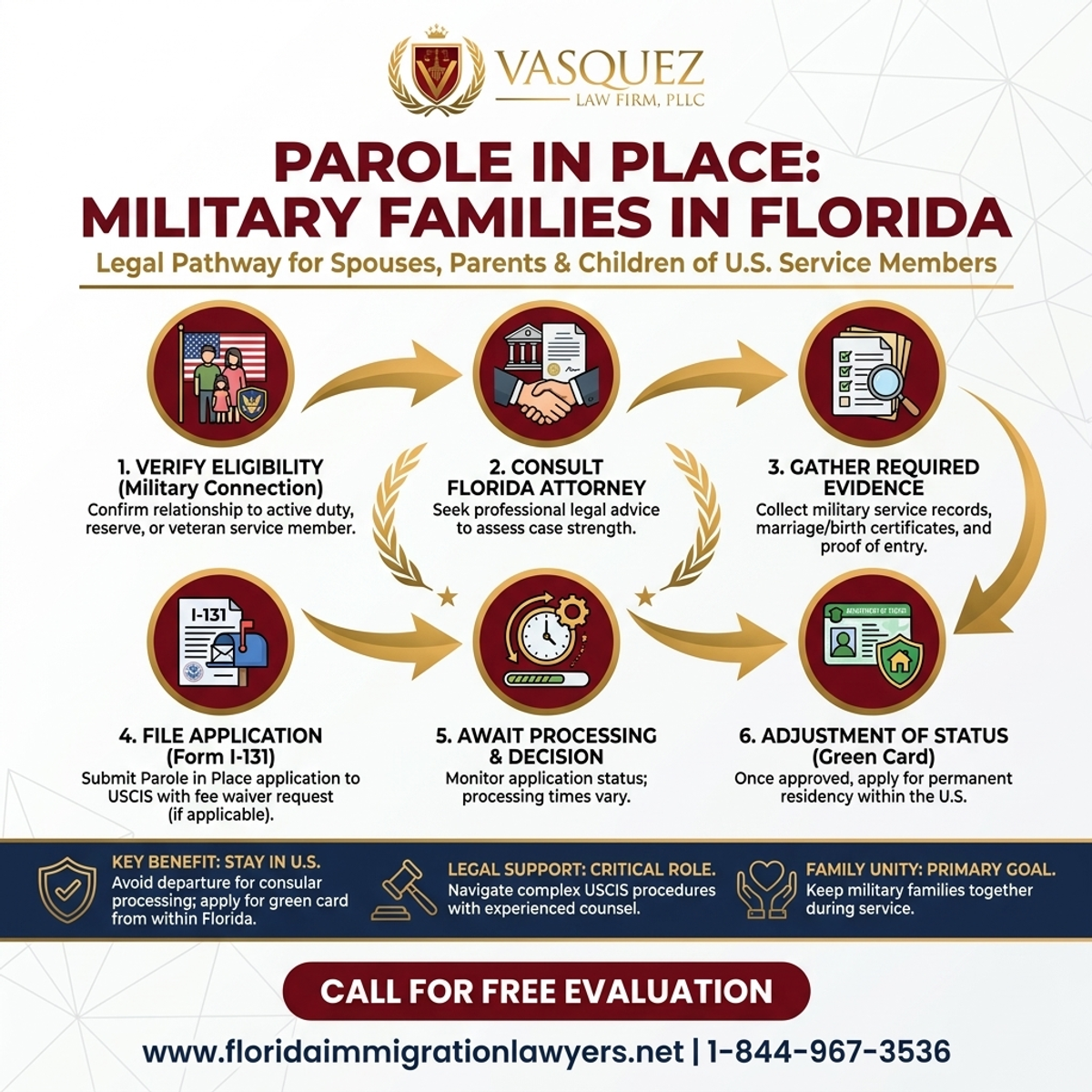
Key Statistics — Parole in Place for Military Families in Florida | VLF Florida
We understand the sacrifices made by service members and their families. Our commitment is to provide clear, compassionate, and effective legal representation across the full spectrum of immigration challenges. Whether it's securing a green card through PIP, fighting a deportation order, or exploring other pathways to legal status, our goal is to ensure that military families can live together, securely, in the United States.
Common Questions and Further Insights on Parole in Place
Many military families have questions about the nuances of PIP. Here are some additional insights:
- Can I apply for PIP if my military family member is a veteran? Yes, veterans who served honorably are eligible to sponsor family members for PIP. The service member's discharge paperwork (DD-214) will be crucial evidence.
- What if my family member has a minor criminal record? While serious criminal offenses can disqualify an applicant, minor infractions might be considered on a case-by-case basis. It's vital to disclose all criminal history to your attorney, as non-disclosure can lead to severe penalties.
- How long does the PIP process take? Processing times vary depending on the USCIS service center and the complexity of the case. It can range from several months to over a year. Patience and consistent follow-up, often managed by your legal team, are key.
- Can I travel outside the U.S. after being granted PIP? Once paroled, you typically receive an I-94 document. To travel internationally and re-enter the U.S. without issues, you would generally need to apply for and receive an Advance Parole document (also Form I-131) before departing. Traveling without it could jeopardize your ability to adjust status.
- What happens if the military member is deployed during the application process? The deployment of the service member does not typically halt the PIP process. However, ensuring all necessary documentation and communication channels are in place before deployment is crucial.
- Is PIP the only option for military families? While PIP is a powerful tool, it's not the only pathway. Depending on the specific circumstances, other options like family-based visas, U visas, or VAWA petitions might be applicable. A thorough consultation with an immigration attorney can help identify all potential avenues.
Understanding these aspects can help families prepare for the journey ahead and manage expectations.
Why Choose VLF Florida for Your PIP Application?
Navigating the complex landscape of immigration law, especially when it intersects with military service, requires specialized knowledge and a compassionate approach. At VLF Florida, we pride ourselves on being a trusted resource for military families across the state.
- Experienced Immigration Attorneys: Our team of dedicated immigration lawyers possesses extensive experience in handling Parole in Place applications and a broad spectrum of other immigration cases. We stay updated on the latest immigration policies and procedures to provide accurate and effective representation.
- Client-Centered Approach: We understand the unique stresses and sacrifices faced by military families. We offer personalized attention, clear communication, and unwavering support throughout the entire legal process, ensuring you feel heard and understood.
- Deep Understanding of Military Family Needs: Our commitment to military families goes beyond legal expertise. We appreciate the profound impact of immigration issues on service members' readiness and family well-being, and we tailor our strategies to achieve the best possible outcomes for your family's stability.
- Florida Focus: With a strong presence and understanding of the local nuances in Florida, we are well-positioned to assist military families residing in any part of the state.
Ready to Secure Your Family's Future? Contact Us Today.
The decision to pursue Parole in Place is a significant step towards securing your family's future in the United States. Don't navigate this complex process alone. The experienced immigration attorneys at VLF Florida are here to provide the guidance, support, and representation you need to achieve a positive outcome.
We offer free consultations to discuss your specific situation, assess your eligibility, and outline the best path forward. Let us help you ensure that your family remains united and secure, allowing your service member to focus on their vital duties.
For a free consultation, call (844) 967-3536 or visit our contact page to schedule an appointment. Your family's stability is our priority.
Sources and References
- U.S. Citizenship and Immigration Services (USCIS)
- Executive Office for Immigration Review (EOIR)
- U.S. Department of State - Bureau of Consular Affairs
- Immigration and Nationality Act (INA), 8 U.S.C. Chapter 12
Do Not Navigate This Process Alone
Our experienced immigration attorneys are ready to fight for you. Get a free, confidential consultation today.
Se Habla Español
Frequently Asked Questions
Florida Immigration Lawyers
Immigration Attorney | Founder, Vasquez Law Firm
U.S. Air Force veteran and immigration attorney with thousands of cases resolved. J.D., NCCU School of Law. AILA member. Admitted to the 4th, 5th, and 11th Circuit Courts.
Available 24/7 - Free Evaluations
Related Legal Services
Our Florida immigration attorneys can help you with experienced immigration attorneys, business immigration and asylum protection. Call today at 1-844-967-3536 for a free consultation.
Related Links
Related Topics
Free Legal Consultation
Discuss your case with our experienced attorneys. We're available 24/7.
Se Habla Español - Estamos aquí para ayudarle.
Related Articles
Unlawful Presence Waiver: Florida Guide | VLF Florida
Explore the unlawful presence waiver process in Florida, focusing on the I-601A provisional waiver. This guide helps immigrants in Tampa navigate their path to lawful status. For personalized assistance, contact Florida Immigration Lawyers today.
How to Choose an Immigration Lawyer Florida | VLF Florida
Choosing the right immigration lawyer in Florida is crucial for navigating complex immigration laws and procedures. Learn how to select the best lawyer for your needs with our comprehensive guide. Call Florida Immigration Lawyers at 1-844-967-3536 for a free consultation.
2026 Immigration Policy Changes in Florida | VLF Florida
Explore the 2026 immigration policy changes in Florida, focusing on Miami's unique challenges and opportunities. Learn how to navigate the new rules with expert guidance from Florida Immigration Lawyers.
Immigration Rights: Know Your Rights in Florida 2026
Understanding your immigration rights in Florida is essential for all non-citizens. This guide from Florida Immigration Lawyers provides crucial information on what to do during ICE encounters, how to assert your legal rights, and proactive steps to protect your family and future. Learn about your constitutional protections, the importance of legal representation in deportation proceedings, and common mistakes to avoid. Whether you're in Coral Springs or elsewhere in Florida, empower yourself with knowledge. We offer free consultations to help you navigate complex immigration challenges and secure your peace of mind. Contact us today for expert legal guidance.
