Unlawful Presence Waiver: Florida Guide | VLF Florida
Explore the unlawful presence waiver process in Florida, focusing on the I-601A provisional waiver. This guide helps immigrants in Tampa navigate their path to lawful status. For personalized assistance, contact Florida Immigration Lawyers today.

The unlawful presence waiver, particularly the I-601A provisional waiver, allows certain immigrants in Florida to seek legal status without leaving the U.S. This process is crucial for those with unlawful presence in the country, especially in areas like Tampa. Key takeaways include:
- Eligibility depends on specific criteria.
- Requires detailed documentation.
- Impacts families seeking stability.
- Legal guidance is highly recommended.
Introduction
Imagine living in Tampa, Florida, surrounded by opportunities, yet unable to fully seize them due to your immigration status. The unlawful presence waiver offers hope to many immigrants in this situation. This article covers the essentials of the I-601A provisional waiver, its process, and how it can impact your life in Florida. For personalized guidance, call Florida Immigration Lawyers at 1-844-967-3536 for a free consultation.
For countless families in Florida, the dream of a stable future is often complicated by immigration challenges. Unlawful presence can create significant barriers, leading to anxiety and limiting access to essential services and opportunities. The I-601A provisional waiver serves as a vital pathway, allowing individuals to address these issues and pursue lawful permanent residency without enduring prolonged separation from their loved ones.
Navigating the complexities of immigration law requires a deep understanding of specific regulations and meticulous attention to detail. This waiver is particularly impactful in communities like Tampa, Orlando, and Miami, where diverse populations often face similar hurdles. By understanding the I-601A process, you can take a significant step towards achieving long-term security and peace of mind for yourself and your family in the Sunshine State.
Understanding Unlawful Presence and Waivers
Unlawful presence refers to the time an immigrant spends in the U.S. without lawful status. Accumulating unlawful presence can lead to potential bars on re-entry if you leave the U.S. The I-601A provisional waiver helps mitigate this by allowing eligible individuals to remain in the country while applying for a waiver, significantly reducing the time spent away from family.
This process is especially relevant in Florida, where diverse communities like Tampa rely on such waivers to maintain family unity and pursue lawful status. The waiver is typically available to immediate relatives of U.S. citizens and lawful permanent residents, provided they meet certain criteria.
The critical distinction with the I-601A provisional waiver, compared to the traditional I-601 waiver, is that it allows applicants to apply for and receive a decision on their waiver application while still in the United States. This prevents the lengthy and often uncertain period of waiting abroad, which historically caused immense stress and separation for families. The I-601A specifically addresses the 3-year and 10-year bars to re-entry that are triggered by unlawful presence, making it a game-changer for many.
For instance, consider Maria, a mother living in Orlando with her U.S. citizen children and husband. She entered the U.S. without inspection many years ago. Without the I-601A, she would have to leave the country for her immigrant visa interview, triggering a 10-year bar and forcing her to wait abroad for a waiver decision. The provisional waiver allows her to apply for the waiver from Florida, and once approved, she only needs to depart for a brief consular interview, minimizing family separation and uncertainty. Florida Immigration Lawyers are adept at explaining these nuances and guiding clients through the most suitable waiver process.
Eligibility Criteria
Eligibility for the I-601A waiver includes having an approved immigrant petition, demonstrating extreme hardship to a qualifying relative, and meeting other specific requirements. It's crucial to have accurate documentation and legal guidance to navigate these requirements effectively.
To delve deeper into eligibility, applicants must first be the beneficiary of an approved Form I-130 Petition for Alien Relative, filed by a U.S. citizen spouse, parent, or an unmarried child under 21. This establishes the foundational relationship for immigration. Furthermore, the applicant must be physically present in the United States at the time of filing the I-601A and intend to depart the U.S. solely for the purpose of obtaining an immigrant visa at a U.S. embassy or consulate abroad.
The most challenging aspect of eligibility often revolves around proving "extreme hardship" to a "qualifying relative." A qualifying relative for the I-601A waiver is limited to a U.S. citizen or lawful permanent resident spouse or parent. Hardship to the applicant themselves or to U.S. citizen children, while compelling, is only considered indirectly as it pertains to the qualifying relative's suffering. Demonstrating extreme hardship requires comprehensive evidence of significant medical, financial, psychological, or educational burdens that the qualifying relative would endure if the applicant were forced to remain outside the U.S. for an extended period. This is where the expertise of Florida Immigration Lawyers becomes invaluable, helping to build a robust case.
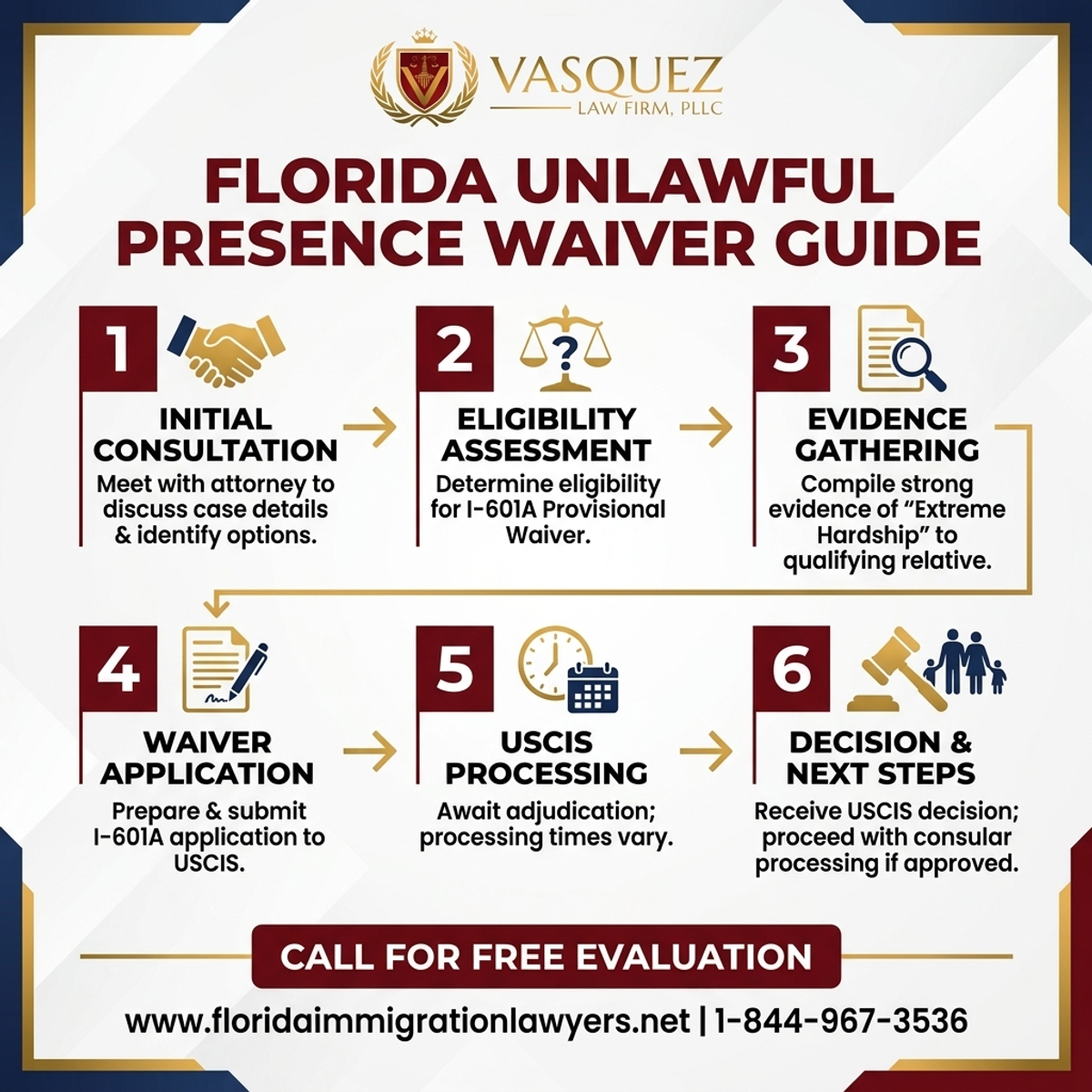
Step-by-Step Guide to Filing the I-601A Waiver
- Determine Eligibility: Assess whether you meet the criteria, including any past immigration violations.
- Gather Documentation: Collect necessary documents such as proof of relationship and evidence of hardship.
- File Form I-601A: Submit the provisional waiver application to USCIS, including all required fees.
- Attend Biometrics Appointment: Participate in a biometrics appointment for background checks.
- Receive Decision: USCIS will provide a decision on your waiver application. If approved, further instructions for visa processing will follow.
Each step requires careful attention to detail to avoid delays or denials.
Expanding on the initial steps, determining eligibility often involves a thorough review of your entire immigration history. Any prior deportations, criminal convictions, or other inadmissibility grounds beyond unlawful presence could complicate or even disqualify you from the I-601A waiver. This initial assessment is critical and best performed by an experienced attorney who can identify potential pitfalls. Florida Immigration Lawyers can conduct a comprehensive eligibility review, ensuring you don't proceed with an application that is likely to be denied due to unforeseen issues.
Once eligibility is confirmed, the documentation phase is paramount. This isn't just about collecting papers; it's about building a compelling narrative of extreme hardship. For example, if a qualifying relative has a serious medical condition, you would need detailed medical records, doctor's letters explaining the need for your care, and evidence of the financial burden of their treatment. Similarly, psychological evaluations, financial statements, and letters from community leaders can bolster your claim. The goal is to paint a clear picture of the profound impact your absence would have on your U.S. citizen or LPR spouse or parent.
After receiving an approval, the final stage involves attending an immigrant visa interview at a U.S. embassy or consulate abroad. While the waiver approval significantly de-risks this step, it's still crucial to be well-prepared. The consular officer will review your case to ensure all conditions are met and that no new inadmissibility grounds have arisen. This brief trip outside the U.S., often to a consulate in your home country, is the culmination of the entire process, leading to the issuance of your immigrant visa and, ultimately, your green card upon re-entry. Preparing for this interview with the guidance of Florida Immigration Lawyers can help ensure a smooth conclusion.
Step-by-Step Process — Unlawful Presence Waiver: Florida Guide
Document Checklist for I-601A Waiver
- Approved immigrant petition
- Proof of relationship to U.S. citizen or lawful permanent resident
- Evidence of hardship to the qualifying relative
- Biographical information
- Financial records
- Previous immigration documentation
Ensure all documents are current and authentic to avoid complications.
A comprehensive document checklist is the backbone of a successful I-601A application. Beyond the basic requirements, applicants should consider including affidavits from friends, family, and community members who can attest to the qualifying relative's dependence on the applicant and the hardship they would face. These personal statements can add a human element to the legal arguments, making the case more compelling to USCIS adjudicators.
Specifically for evidence of hardship, think broadly about all aspects of your qualifying relative's life. This could include medical records detailing chronic conditions or mental health struggles, psychological evaluations from licensed professionals explaining emotional dependence, financial statements demonstrating reliance on your income, property deeds or rental agreements showing shared housing, and school records of children who would be impacted. Even country condition reports for your home country can be relevant if they highlight specific dangers or lack of resources that would exacerbate the qualifying relative's hardship if they were forced to relocate or visit frequently. Remember, the more detailed and diverse your evidence, the stronger your case for extreme hardship.
For example, if your U.S. citizen spouse suffers from a severe anxiety disorder, a letter from their therapist detailing how your potential absence would trigger a relapse, along with medication records and a personal statement from your spouse, would be crucial. Similarly, if your LPR parent relies on you for daily care due to a physical disability, medical reports, a caregiving log, and financial statements showing how your income supports their care would be essential. Florida Immigration Lawyers excel at helping clients compile and organize these vital documents, ensuring nothing is overlooked when preparing your waiver application.
Timeline and Processing Expectations
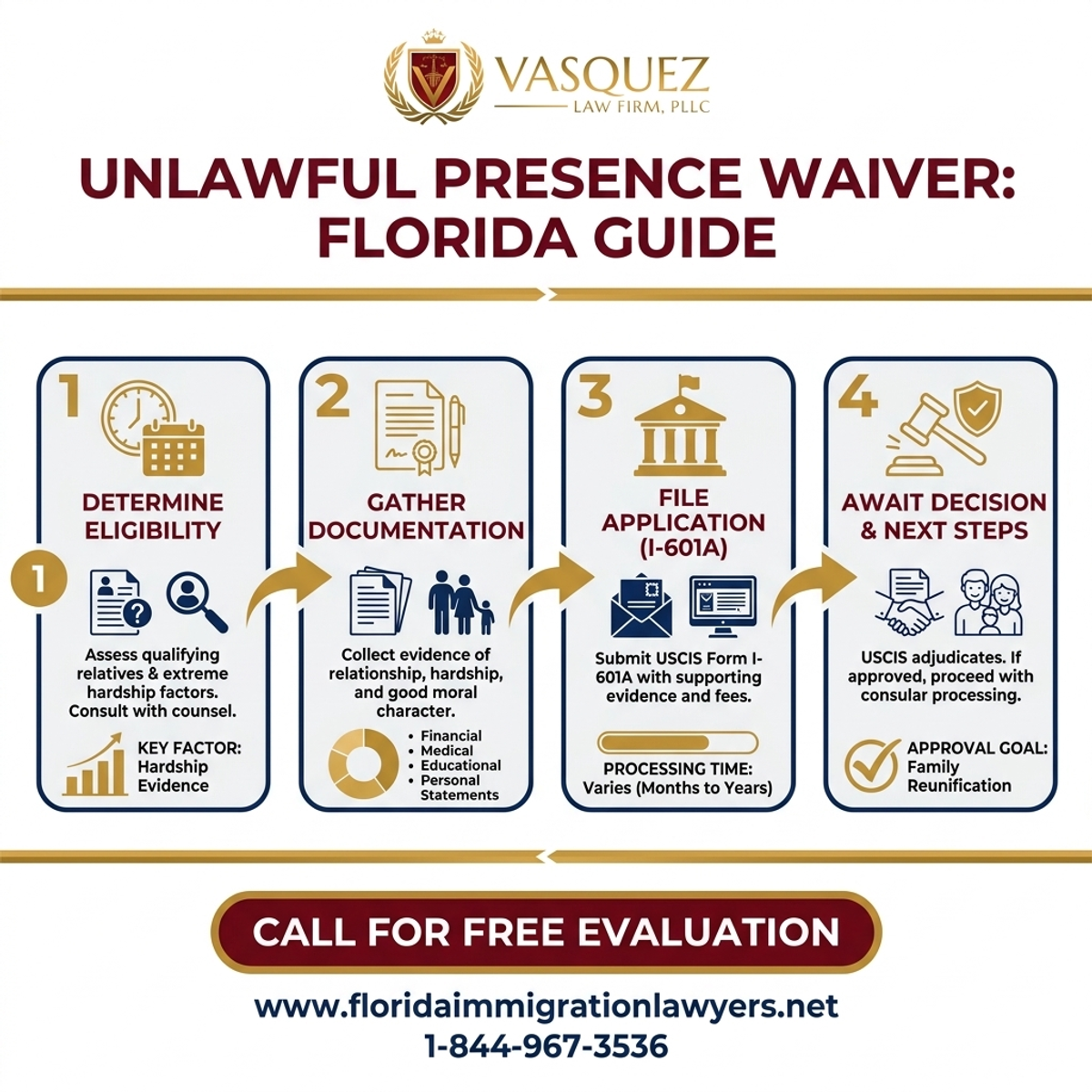
The processing time for the I-601A waiver can vary, typically taking several months. Applicants should anticipate a wait time and prepare accordingly. In Florida, the demand for these waivers can impact timelines, especially in busy areas like Tampa. It's advisable to start the process early and stay informed about any updates from USCIS.
Several factors can influence the processing timeline, including the current USCIS workload, the complexity of your individual case, and whether additional evidence (Request for Evidence, RFE) is requested. While USCIS provides estimated processing times on its website, these are subject to change and should be viewed as general guidelines. It's not uncommon for provisional waiver applications to take anywhere from 6 to 18 months, and sometimes even longer, from the date of filing until a decision is rendered.
During this waiting period, it's crucial for applicants to maintain their legal status if they have any, or to avoid any actions that could create new grounds of inadmissibility. Staying informed about your case status through the USCIS online tool and responding promptly to any requests for information are key. Having legal counsel from Florida Immigration Lawyers means you have an advocate monitoring your case, interpreting USCIS communications, and advising you on how to proceed, minimizing anxiety and ensuring compliance with all requirements throughout the extended processing period.
Key Statistics — Unlawful Presence Waiver: Florida Guide
Cost Factors and Fee Breakdown
While specific filing fees are subject to change, applicants should budget for application fees, legal assistance, and potential travel expenses. Understanding these costs upfront can help manage financial expectations and ensure all necessary steps are completed without interruption.
Beyond the mandatory USCIS filing fee for Form I-601A, which typically changes every few years, several other costs contribute to the overall expense of the waiver process. Legal fees for an experienced immigration attorney are a significant component, but they represent an investment in expertise that can dramatically increase your chances of success. These fees cover the attorney's time for eligibility assessment, document preparation, drafting the hardship argument, and communication with USCIS. While it might seem like an added expense, attempting to navigate the complexities of the I-601A waiver without legal guidance can lead to costly errors, delays, or even denial, making the initial investment in legal representation a wise decision.
Other potential costs include fees for obtaining certified translations of foreign documents, psychological evaluations, medical records, and other supporting evidence. If your case requires expert testimony or detailed reports, these can incur additional charges. Finally, once the waiver is approved, you will need to pay immigrant visa processing fees to the Department of State and budget for travel expenses to your consular interview abroad. These costs, while varied, are all part of the journey toward lawful status. Florida Immigration Lawyers can provide a clear breakdown of anticipated expenses during your free consultation, helping you plan financially for this crucial process.
Do not navigate this process alone. Contact Florida Immigration Lawyers today.
Common Mistakes to Avoid
- Incomplete Applications: Missing documents can lead to delays or denials.
- Inaccurate Information: Providing incorrect details can jeopardize your application.
- Ignoring Deadlines: Failing to meet submission deadlines may result in application rejection.
- Overlooking Eligibility Criteria: Ensure all criteria are met before applying.
- Insufficient Evidence of Hardship: Failing to demonstrate hardship can weaken your case.
- Not Consulting an Attorney: Legal guidance can prevent costly mistakes.
- Misunderstanding the Process: Lack of understanding can lead to unnecessary complications.
- Neglecting Updates: Stay informed of any changes in immigration law.
To elaborate on these common pitfalls, an incomplete application isn't just about missing a single document; it could be a lack of sufficient evidence to substantiate a claim, especially regarding extreme hardship. For instance, merely stating your spouse would miss you isn't enough; you need medical reports, financial statements, and expert opinions to demonstrate the "extreme" nature of the hardship. USCIS is very particular, and even minor omissions can trigger a Request for Evidence (RFE), prolonging the process significantly.
Furthermore, misunderstanding the precise definition of a "qualifying relative" or the scope of "extreme hardship" is a frequent error. Many applicants mistakenly believe hardship to their U.S. citizen children is directly considered, when in fact, it's the hardship to the U.S. citizen or LPR spouse or parent that is paramount. This nuance can make or break a case. Similarly, failing to disclose past immigration violations or criminal history, even minor ones, can lead to a denial for misrepresentation, which carries severe consequences. Always be transparent and seek legal advice to understand the implications of your history.
Lastly, ignoring the dynamic nature of immigration law can be detrimental. Policies and interpretations can change, impacting eligibility or processing. Relying on outdated information or advice from non-professionals is a significant risk. Engaging with Florida Immigration Lawyers ensures you receive up-to-date guidance and that your application adheres to the latest legal standards, safeguarding your path to lawful status.
When to Call a Lawyer
Consider legal assistance if you're unsure about your eligibility, need help gathering documentation, or face complex immigration issues. Warning signs include previous immigration violations, difficulty proving hardship, or receiving a waiver denial. Florida Immigration Lawyers offer comprehensive services to navigate these challenges effectively.
The decision to consult an immigration lawyer is not a sign of weakness but a strategic move to protect your future. You should absolutely call Florida Immigration Lawyers if you have a criminal record, even a minor one, as this can introduce additional grounds of inadmissibility that the I-601A waiver may not cover. Similarly, if you have ever been deported, removed, or ordered to leave the U.S., your case will be exceptionally complex and requires expert legal analysis to determine if any pathway to a waiver exists.
Even in seemingly straightforward cases, the nuanced interpretation of "extreme hardship" can be daunting. An attorney can help you identify and articulate all potential hardship factors, gather the most impactful evidence, and present your case in the most persuasive manner. If you've previously had an immigration application denied, or if English is not your first language and you struggle with legal terminology, professional legal assistance from Florida Immigration Lawyers is not just recommended, it's essential. Don't risk your family's future by navigating this intricate process alone; call 1-844-967-3536 for a free consultation.
About Florida Immigration Lawyers
Florida Immigration Lawyers are dedicated to assisting clients across Florida, including Tampa, with all aspects of immigration law. Our experienced attorneys provide personalized service, ensuring you understand your options and next steps. Contact us at 1-844-967-3536 or visit our website at floridaimmigrationlawyers.net. We are available 24/7, offering free consultations in English and Spanish.
Our team at Florida Immigration Lawyers understands the profound impact immigration issues have on individuals and families. We are committed to providing compassionate, client-centered representation, guiding you through every stage of the I-601A provisional waiver process. From the initial eligibility assessment to preparing your hardship brief and advising on the consular interview, our attorneys leverage their extensive knowledge and experience to advocate fiercely on your behalf.
We pride ourselves on our accessibility and dedication to the diverse communities throughout Florida. Whether you are in Tampa, Miami, Orlando, or any other part of the state, our firm is equipped to handle your case with the utmost professionalism and care. Our bilingual staff ensures that language is never a barrier to receiving top-tier legal advice. Choosing Florida Immigration Lawyers means choosing a partner who will stand with you, fighting for your right to a stable and secure future in the U.S. Reach out today for your free consultation and let us help you achieve your immigration goals.
Sources and References
- U.S. Citizenship and Immigration Services (USCIS)
- Executive Office for Immigration Review (EOIR)
- 8 U.S.C. Chapter 12 - Immigration and Nationality Act
Related services: immigration practice areas, family immigration services, citizenship and naturalization, deportation defense.
This article provides general legal information and is not intended as legal advice. Every case is unique, and outcomes depend on specific facts and circumstances. Contact an attorney for advice about your particular situation.
Frequently Asked Questions About the I-601A Waiver
Here are some common questions regarding the I-601A provisional waiver process:
Do Not Navigate This Process Alone
Our experienced immigration attorneys are ready to fight for you. Get a free, confidential consultation today.
Se Habla Español
Frequently Asked Questions
Florida Immigration Lawyers
Immigration Attorney | Founder, Vasquez Law Firm
U.S. Air Force veteran and immigration attorney with thousands of cases resolved. J.D., NCCU School of Law. AILA member. Admitted to the 4th, 5th, and 11th Circuit Courts.
Available 24/7 - Free Evaluations
Related Legal Services
Our Florida immigration attorneys can help you with asylum protection, deportation defense and citizenship and naturalization. Call today at 1-844-967-3536 for a free consultation.
Related Links
Related Topics
Free Legal Consultation
Discuss your case with our experienced attorneys. We're available 24/7.
Se Habla Español - Estamos aquí para ayudarle.
Related Articles
How to Choose an Immigration Lawyer Florida | VLF Florida
Choosing the right immigration lawyer in Florida is crucial for navigating complex immigration laws and procedures. Learn how to select the best lawyer for your needs with our comprehensive guide. Call Florida Immigration Lawyers at 1-844-967-3536 for a free consultation.
2026 Immigration Policy Changes in Florida | VLF Florida
Explore the 2026 immigration policy changes in Florida, focusing on Miami's unique challenges and opportunities. Learn how to navigate the new rules with expert guidance from Florida Immigration Lawyers.
Immigration Rights: Know Your Rights in Florida 2026
Understanding your immigration rights in Florida is essential for all non-citizens. This guide from Florida Immigration Lawyers provides crucial information on what to do during ICE encounters, how to assert your legal rights, and proactive steps to protect your family and future. Learn about your constitutional protections, the importance of legal representation in deportation proceedings, and common mistakes to avoid. Whether you're in Coral Springs or elsewhere in Florida, empower yourself with knowledge. We offer free consultations to help you navigate complex immigration challenges and secure your peace of mind. Contact us today for expert legal guidance.
Asylum Interview Preparation in Florida: Key Steps
Navigating an asylum interview in Florida can be challenging but crucial for your case. This guide provides essential tips for preparation, including document checklists and common mistakes to avoid. Contact Florida Immigration Lawyers at 1-844-967-3536 for expert assistance.