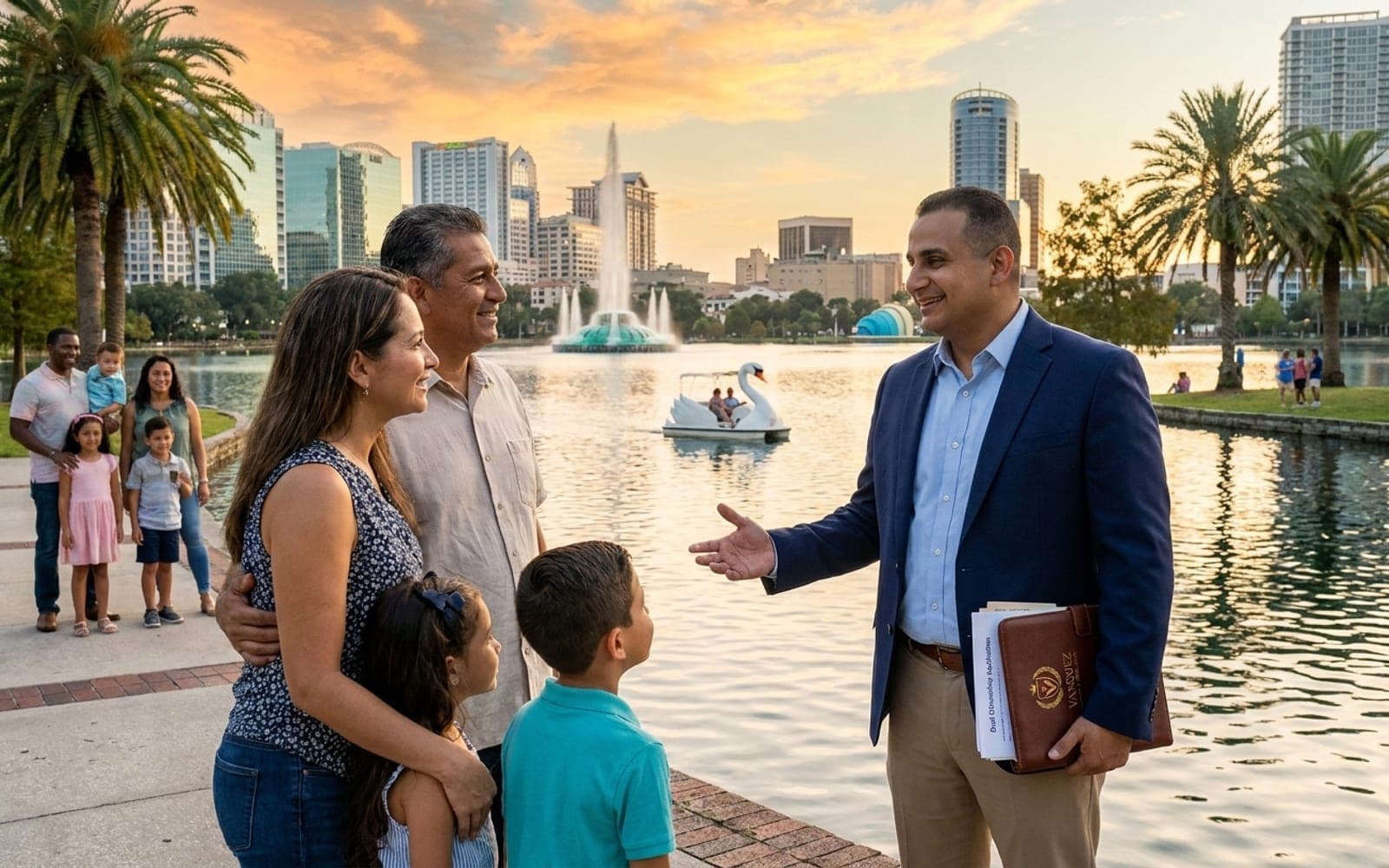
You do not have to drive across the state to get immigration help in Pensacola, Panama City or another Panhandle town. Vasquez Law Firm serves the Panhandle from its single office at 1111 E Amelia Street in Orlando, with secure video and phone consultations in English and Spanish and in-person meetings in Orlando. The guide covers matters in Escambia, Santa Rosa, Okaloosa and Bay counties, how USCIS appointments and court work, military family scheduling and how to compare lawyers without relying on a ranking.
- Panhandle clients can consult by video or phone in English and Spanish.
- The guide covers Escambia, Santa Rosa, Okaloosa and Bay counties.
- It explains USCIS appointments and immigration court for western Florida.
- Military families and their scheduling questions are addressed in a dedicated section.
- It suggests comparing lawyers without relying on rankings.
Introduction
If you need an immigration lawyer in Pensacola, Panama City or another Panhandle town, you do not have to drive across the state to get help. Vasquez Law Firm serves Panhandle residents from our single office at 1111 E Amelia Street in Orlando, with secure video and phone consultations in English and Spanish and in-person meetings in Orlando when you prefer them. To start, call 1-844-YO-PELEO or contact us.
This page covers the immigration matters that come up in Escambia, Santa Rosa, Okaloosa and Bay counties, how USCIS appointments and immigration court work for people in the western end of the state, and how to compare lawyers without relying on a ranking.
The page is general information, not legal advice. Military and humanitarian programs change over time, and every case depends on its own facts, so confirm current rules with a lawyer before you rely on any of them.
Immigration Help for Pensacola and Panhandle Residents
The western end of Florida has its own mix of immigration questions. Escambia, Santa Rosa, Okaloosa and Bay counties are home to large military communities, a busy coastal hospitality industry and many families who have lived in the area for years under different immigration statuses. The issues we see most often include the following.
- Family-based green cards. A U.S. citizen or permanent resident can petition for a spouse, child, parent or sibling, depending on the relationship and the petitioner's status. Marriage cases are common in military towns, where couples often meet while one partner is stationed nearby.
- Military family questions. Service members and their relatives sometimes qualify for special naturalization provisions or discretionary programs. Those programs change over time, so a lawyer should check current policy before you rely on one.
- Seasonal and employment-based work. Restaurants, hotels and marinas along the coast may sponsor workers through employer-filed visa categories. The employer usually starts that process, but the worker still benefits from understanding it.
- Naturalization. Long-time permanent residents often want to become citizens and want to know whether old arrests, long trips abroad or tax issues could create problems on Form N-400.
- Removal defense. When someone receives a Notice to Appear or is detained, time matters, and the family needs a plan right away.
You can read more about these case types on our immigration law practice page.
Pensacola and Escambia County
People who search for an immigration lawyer in Pensacola, FL or an immigration attorney in Pensacola are usually facing one of a few situations: a spouse's green card interview is coming up, a relative has been detained, or a permanent resident is ready to apply for citizenship. Each of those needs a different kind of preparation. A marriage interview depends on documents that show a real shared life. A detention case depends on how fast the family can gather identity papers and evidence of ties to the community. A citizenship application depends on a careful review of travel history and any past contact with police.
Whether you search online or ask friends and coworkers for a name, the goal is the same: a lawyer who reviews the whole file before anything is filed with the government.
Panama City and Bay County
Bay County residents searching for an immigration lawyer in Panama City, FL often have employment or family questions tied to the coastal economy. Workers on temporary visas want to know what happens if a job ends early. Families who have been in the area for many years want to know whether any path to permanent residence exists for them. A conversation with a Panama City immigration lawyer usually starts with your complete immigration history, because entries, departures, prior applications and any immigration court orders all affect which options are available.
Towns between Pensacola and Panama City, such as Fort Walton Beach, Destin, Crestview and Niceville, raise the same kinds of questions, and we handle them the same way: by reviewing documents remotely, meeting by video and preparing you for each step.
How We Work With Panhandle Clients From Orlando
Panhandle clients often ask what working with an Orlando firm looks like day to day. We do not have an office in the Panhandle; our only office is in Orlando. For clients in Pensacola, Panama City and the surrounding counties, we use secure video meetings, phone calls and electronic document sharing so most of the work can happen without travel. When a meeting in person makes sense, you are welcome at our Orlando office.
- Request a video or phone consultation through the contact page.
- Send your notices and records through a secure upload.
- Meet with the lawyer to go over your history and the options.
- Sign a written agreement describing the work if you hire the firm.
- Prepare and file the forms and evidence with your review of each answer.
- Prepare for biometrics, interviews or hearings as the notices arrive.
Consultations are available in English and Spanish, and attorney William J. Vásquez oversees the firm's immigration practice.
Document Checklist for Your First Consultation
- Passports, visas, I-94 records and any border or entry documents
- Every notice you have received from USCIS, the immigration court or ICE
- Copies of past applications, approvals or denials
- Marriage, birth and divorce certificates for you and your family members
- Any arrest records or court dispositions, even for old or dismissed matters
- Proof of residence and employment in Florida
- Military or service records for a spouse or relative, if the case involves them
If you do not have some of these papers, tell us. Missing documents can often be requested from the government, and knowing what is missing early helps avoid delays.
Timeline and Processing Expectations for Pensacola clients
Immigration timelines are not the same for every case, and they change as agency workloads change. USCIS and the immigration courts publish their current processing information, and the right way to estimate a wait is to check those sources for your form, your office and your category. We do not quote fixed timelines on a general page, because an answer that was accurate last month may not be accurate today.
The table below shows the usual stages of a case and who acts at each one. Some stages overlap, and some cases skip steps. A request for more evidence, a rescheduled interview or a court continuance can add time, while a well-organized filing tends to avoid avoidable delays. Your lawyer should tell you what the notices in your own file mean and what comes next.
| Stage | What happens | Who acts |
|---|
| Consultation and case review | We go over your history, notices and goals and explain which options may fit. | Client and attorney |
| Document gathering | Identity papers, civil records, prior filings and evidence are collected and checked for gaps. | Client, with attorney guidance |
| Filing | Forms and supporting evidence are prepared, reviewed with you and submitted to the right agency or court. | Attorney prepares; client signs |
| Receipt, biometrics and notices | The agency acknowledges the filing, may schedule fingerprints and may ask for more evidence. | USCIS, State Department or court |
| Interview or hearing | An officer or judge asks questions about the case and the evidence. | Applicant, with attorney preparation |
| Decision and next steps | The case is approved, denied or sent for further action, and options are reviewed. | Agency or court; attorney advises |
How USCIS Appointments and Immigration Court Work for Panhandle Residents
Most applications for green cards, work permits and citizenship are filed with U.S. Citizenship and Immigration Services. After filing, applicants usually receive a biometrics appointment and, for many case types, an interview at the USCIS field office that serves their county. The notice you receive will name the office and the time, and travel planning is part of the preparation for Panhandle residents, since the distances can be long.
Removal cases are different. They are heard by the immigration court assigned to your case, which is part of the Executive Office for Immigration Review, not USCIS. Hearings may be in person or by video depending on the court and the type of hearing. Your hearing notice controls where and when you must appear, and missing a hearing can lead to an order of removal, so it is important to keep your address updated with the court and with USCIS.
Military Families and Scheduling Questions
Military families face particular timing questions, such as a service member who is transferred before an interview or a spouse who needs to understand work authorization while a case is pending. Tell your lawyer about orders and deployments early, since the interview or hearing schedule may need to be coordinated.
Some programs for military families are discretionary and change with policy, and they are not available in every situation. A lawyer should confirm the current rules and tell you plainly if a program does not fit.
How to Compare Pensacola Immigration Lawyers
Many people start by searching for a well-known name, but a search ranking tells you little about how a lawyer will handle your case. When comparing Pensacola immigration lawyers or other Florida immigration lawyers, ask practical questions.
- Does the lawyer practice immigration law full time?
- Who will prepare your forms and who will attend your interview or hearing?
- How will you receive updates?
- Will the lawyer explain the risks in your case honestly, including the risk of filing nothing at all?
You should also make sure the lawyer is a licensed attorney in good standing. Notarios and immigration consultants are not lawyers and cannot give legal advice or represent you before immigration authorities.
Cost Factors and Fee Breakdown for Pensacola clients
The table lists the main items that make up the cost of an immigration case, and none of the amounts below are quoted from memory.
| Item | Amount | Notes |
|---|
| Government filing fees | Check USCIS for the current fee | Each form has its own fee, and fees change. The form page and fee schedule on the agency website are the source of truth. |
| Biometrics or other agency charges | Check USCIS for the current fee | Some filings include fingerprinting costs in the main fee and some list them separately. Read the current form instructions. |
| Immigration court or appeal fees | Check the court or agency for current fees | Court motions and appeals have their own filing rules and fees, which the court or the Board of Immigration Appeals publishes. |
| Attorney fees | Varies by case | Depends on the type of case, the work involved and the written fee agreement you sign. |
| Translations and records requests | Varies by case | Documents in another language need a full English translation, and records from other countries or agencies can carry their own charges. |
| Medical examination, when required | Varies by case | Some applications need an exam by an authorized physician. Fees are set by the physician, not by the government. |
The total cost of an immigration case has two parts: what the government charges and what a lawyer charges for the work. Government fees are set by the agency and can change, so look at the current form page before you budget. We do not list amounts here because an outdated figure can mislead you.
A written fee agreement should tell you what the legal fee covers and what it does not, such as appeals, responses to later notices or a second application. Ask for it in writing, read it before you pay, and ask questions about anything unclear. A consultation is the right time to learn what your particular case is likely to involve.
Common Mistakes to Avoid for Pensacola clients
- Filing a form without first confirming that you qualify, which can create a denial record or draw attention to a problem.
- Ignoring a notice, a Request for Evidence or a hearing date. Deadlines in immigration cases are strict.
- Leaving out an arrest, a prior application or a past entry because it seems unimportant. Officers can see government records, and an inconsistency can hurt credibility.
- Using a notario, a form preparer or an online service as a substitute for a licensed lawyer. In Florida a notary public cannot give immigration legal advice.
- Signing blank forms or forms you do not understand, or letting someone keep your original documents.
- Traveling outside the United States while a case is pending without first asking whether the trip could affect it.
- Failing to update your address with the agency or court, which can cause you to miss a notice.
When to Call a Lawyer for Pensacola clients
Call a lawyer before you file, and call right away if you receive a Notice to Appear, a Request for Evidence, a notice of intent to deny or a denial. You should also speak with a lawyer if you have any arrest or charge, even a dismissed one, if you ever overstayed or entered without inspection, or if a family member has been detained. A short consultation can tell you whether you can handle the matter yourself, whether you need representation or whether waiting is safer than filing. If you are unsure whether your situation is simple, that uncertainty is a good reason to ask.
Related guides for a different focus: Panama City immigration lawyer.
About Vasquez Law Firm
Vasquez Law Firm practices immigration law only. Our only office is at 1111 E Amelia Street in Orlando. We serve Pensacola, Panama City and the rest of the Panhandle by phone and secure video, with in-person meetings in Orlando. We have no office in the Panhandle. William J. Vásquez is the founding attorney, and consultations are available in English and Spanish. To talk about your situation, call 1-844-YO-PELEO or contact us.
Sources and References
Related services: immigration services, immigration lawyers in Florida
Other ways people search for this
Related searches include immigration lawyer pensacola; immigration lawyer pensacola fl; immigration attorney pensacola; immigration lawyer panama city; immigration attorney pensacola fl; pensacola immigration lawyer; immigration lawyer panama city fl; immigration attorney pensacola florida; pensacola florida immigration lawyers; best pensacola immigration lawyer.
This article is general information, not legal advice. Every case is different; speak with an immigration lawyer about your situation.