Immigration Lawyer Hialeah: Expert Help in Florida
Looking for an immigration lawyer in Hialeah, Florida? Our guide provides essential insights on navigating the complex legal landscape in Miami-Dade County. Discover how our expert attorneys can assist you with various immigration needs, from visa applications to deportation defense. Call Florida Immigration Lawyers at 1-844-967-3536 for a free consultation.

Finding the right immigration lawyer in Hialeah, Florida, is crucial for navigating complex immigration laws. With significant Spanish-speaking communities in Miami-Dade, having a local expert can make a difference. Here are key takeaways:
- Hialeah's diverse community offers unique legal challenges.
- Spanish-speaking lawyers provide essential support.
- Local expertise in Florida's immigration courts is invaluable.
- Timely legal advice can prevent application denials.
Immigrating to the United States is a journey filled with opportunities and challenges. In Hialeah, Florida, the need for skilled immigration lawyers is more important than ever, especially with recent policy changes affecting visa applications and detention practices. For those in Naples or anywhere in Miami-Dade County, understanding the legal landscape is crucial. Call Florida Immigration Lawyers at 1-844-967-3536 for a free consultation and ensure your immigration journey is on the right path.
Understanding Immigration Challenges in Hialeah and Miami-Dade
Hialeah, part of the vibrant Miami-Dade County, is home to a large immigrant population, predominantly Spanish-speaking. This area, rich in cultural diversity, faces unique immigration challenges that require local expertise. From business immigration to family reunification, navigating these processes demands a deep understanding of both federal and state laws. Recent news highlights stricter visa rules and potential indefinite detentions, underscoring the need for professional guidance.
Local courts and USCIS offices in Florida play a significant role in processing applications. The Miami Immigration Court and the USCIS Field Office in Miami are crucial for residents in Hialeah and surrounding areas. Understanding the nuances of these local institutions can impact the outcome of immigration cases significantly.
The challenges in Hialeah are often compounded by language barriers and cultural differences, which can make understanding complex legal jargon nearly impossible without expert assistance. Many residents come from backgrounds where legal systems operate differently, leading to misunderstandings about U.S. immigration procedures. This is where a Spanish-speaking immigration lawyer, deeply familiar with both the law and the community's specific needs, becomes an indispensable asset. They bridge the communication gap and provide culturally sensitive guidance, ensuring clients feel understood and empowered throughout their legal journey.
Furthermore, the dynamic nature of federal immigration policies means that rules can change rapidly, affecting everything from visa eligibility to deportation defense strategies. For instance, shifts in asylum policy or DACA regulations can have immediate and profound impacts on families and individuals in Hialeah. An experienced attorney from Florida Immigration Lawyers stays abreast of these changes, offering timely and accurate advice to protect clients' interests. This proactive approach is vital in a region where a significant portion of the population is directly impacted by immigration policies, making expert legal counsel not just beneficial, but essential.
Navigating the local ecosystem of immigration services, including the Miami Immigration Court and the USCIS Field Office, requires specific knowledge that only a local expert possesses. These institutions have their own procedures, preferences, and backlogs. An attorney well-versed in these local nuances can anticipate potential issues, prepare clients thoroughly for interviews or hearings, and submit applications correctly the first time, significantly improving the chances of a favorable outcome. This local insight can be the deciding factor in complex cases, from family-based petitions to adjustment of status applications, ensuring that Hialeah residents receive the specialized support they deserve.
Step-by-Step Guide to Hiring an Immigration Lawyer in Hialeah
Choosing the right immigration lawyer is a critical decision that can significantly impact the outcome of your case. In a diverse community like Hialeah, where unique challenges and language preferences are common, a methodical approach to selecting legal representation is paramount. This guide outlines essential steps to ensure you find an attorney who not only understands the complexities of immigration law but also empathizes with your personal circumstances.
- Identify Your Needs: Determine the specific immigration service you require, whether it's obtaining a visa, applying for asylum, or securing citizenship.
- Research Local Expertise: Look for attorneys familiar with the Miami-Dade area, particularly those who speak Spanish, to ensure clear communication.
- Check Credentials: Verify the lawyer's qualifications and experience with the Florida Bar Association.
- Schedule Consultations: Arrange meetings with potential lawyers to discuss your case and evaluate their approach.
- Evaluate Costs: Understand the fee structure and ensure it fits your budget.
When you identify your needs, consider the specific category of immigration you're pursuing. Are you seeking a family-based visa to bring relatives to the U.S., or perhaps an employment-based visa for a new job opportunity? Each category has distinct requirements and legal pathways. For instance, asylum seekers face different legal hurdles than those applying for naturalization. Clearly defining your needs will help you find a lawyer with specialized experience in your particular situation, ensuring they can provide targeted and effective legal strategies.
The importance of local expertise, especially a Spanish-speaking lawyer in Hialeah, cannot be overstated. Miami-Dade County has its own specific legal environment, and an attorney familiar with the local courts and USCIS offices can offer invaluable insights. They understand the local judges, prosecutors, and administrative staff, which can be a significant advantage. Furthermore, clear communication in your native language eliminates misunderstandings and allows you to fully comprehend the legal process, ensuring you are always informed and comfortable with the advice you receive from Florida Immigration Lawyers.
Beyond checking credentials with the Florida Bar Association, delve into a lawyer's track record and client testimonials. Look for attorneys with a proven history of success in cases similar to yours. During consultations, pay attention to how they explain complex legal concepts—do they make it easy to understand? This initial meeting is also an opportunity to assess their communication style and responsiveness, which are crucial for a smooth attorney-client relationship. Don't hesitate to ask about their experience with specific challenges faced by immigrants in Hialeah, such as navigating the Miami Immigration Court system.
Document Checklist for Immigration Applications
Having the right documents is crucial for any immigration process. Here's a checklist to help you gather what you need:
- Valid passport and identification documents
- Previous immigration documentation (visas, permits)
- Proof of residence in the U.S.
- Employment letters or contracts
- Financial statements
- Marriage or birth certificates, if applicable
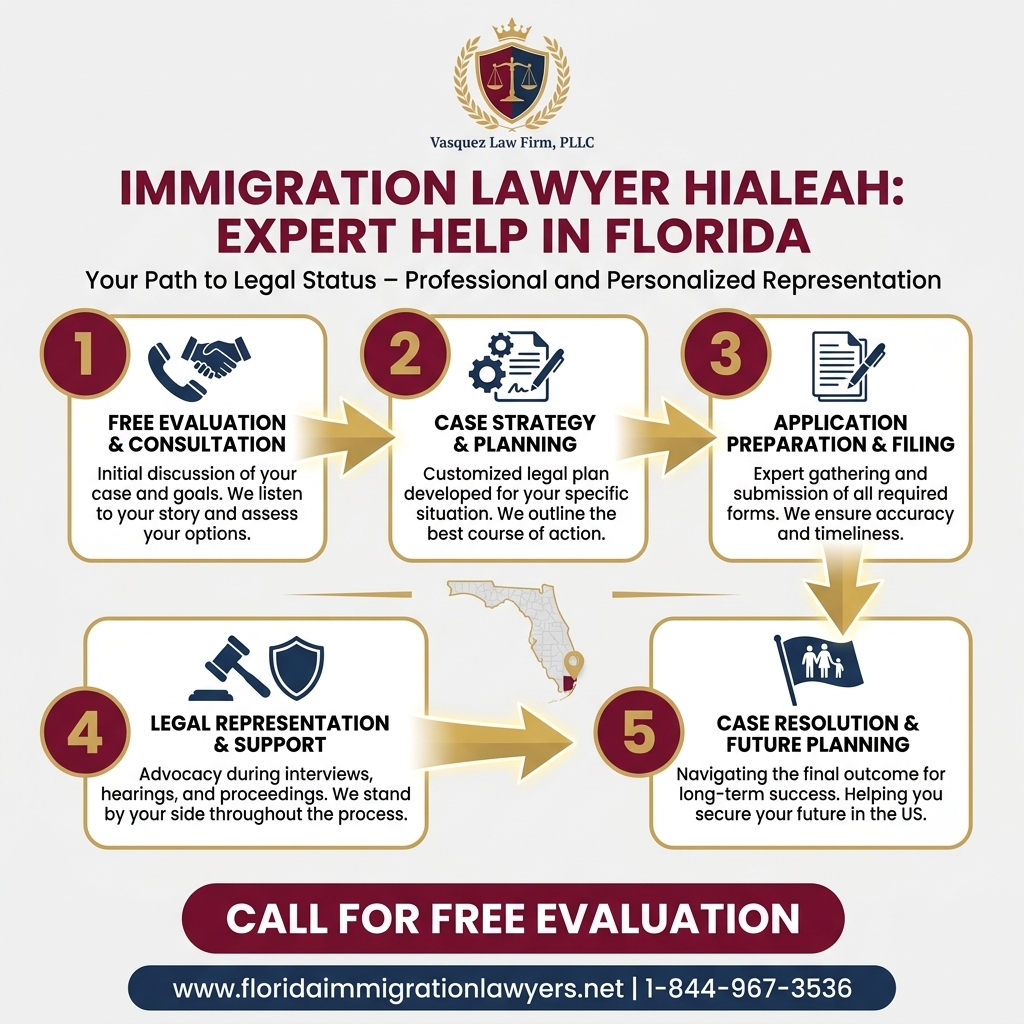
Gathering and organizing the correct documentation is often the most time-consuming yet critical part of any immigration application. A single missing or incorrect document can lead to significant delays, requests for evidence (RFEs), or even outright denial of your application. Therefore, approaching this stage with meticulous attention to detail is paramount. This comprehensive checklist aims to simplify the process, but remember that specific cases may require additional, unique documents.
Beyond the basic checklist, it's vital to understand the nuances of each document. For example, a valid passport must not be expired, and all identification documents should clearly reflect your current legal name. For previous immigration documentation, ensure you have copies of all past visas, entry stamps, and any notices from USCIS or immigration courts. Proof of residence in the U.S. can include utility bills, lease agreements, or bank statements, all demonstrating a consistent presence in Florida.
When it comes to employment letters or contracts, these should clearly state your position, salary, and the nature of your employment, especially for employment-based visas. Financial statements are crucial to demonstrate self-sufficiency or the ability of a sponsor to support you, preventing you from becoming a public charge. Lastly, marriage and birth certificates must be official, certified copies, and for any documents not in English, certified translations are an absolute necessity. Florida Immigration Lawyers can guide you through gathering and verifying these documents, ensuring everything is in perfect order before submission.
Processing Expectations and Timelines
Understanding the timeline for immigration processes can help set realistic expectations. Generally, visa applications can take several months to process, while citizenship applications may take longer due to background checks and interviews. The USCIS provides estimated processing times on their website, which can vary based on the type of application and the workload of local offices.
Immigration processing times are notoriously variable and can be a source of significant anxiety for applicants. Several factors influence these timelines, including the specific type of application (e.g., family petition, employment visa, asylum), the volume of applications currently being processed by USCIS or the Executive Office for Immigration Review (EOIR), and even global events or policy shifts. For residents of Hialeah, the workload at the Miami Field Office and Immigration Court can directly impact how quickly their cases move forward. It's crucial to understand that the estimated times provided by USCIS are just that—estimates—and actual processing can sometimes take longer or, in rare cases, be quicker.
For instance, a simple adjustment of status for an immediate relative of a U.S. citizen might take 10-18 months, while a family preference visa for a sibling of a U.S. citizen could take many years, depending on the visa bulletin. Naturalization applications, after fulfilling the residency requirements, typically involve extensive background checks and an interview, often spanning 8-12 months. Understanding these broad categories helps in setting realistic personal and family plans. Florida Immigration Lawyers are adept at helping clients interpret these timelines, offering clarity and managing expectations throughout the often lengthy process.
While applicants can track their case status online via the USCIS website, having a knowledgeable attorney from Florida Immigration Lawyers can provide an added layer of support. They can identify when a case might be experiencing unusual delays, inquire with the relevant agencies on your behalf, and advise on potential strategies if a case is stalled. This proactive management can be invaluable, especially when critical deadlines or life events depend on the timely resolution of an immigration matter. Don't hesitate to call 1-844-967-3536 for insights into current processing trends and how they might affect your specific case.
Cost Factors and Fee Breakdown
Immigration services come with various costs, including legal fees, application fees, and potential travel expenses for interviews. It's important to discuss these with your lawyer to understand what to expect. While legal fees can vary, many lawyers offer payment plans or flat fees for specific services, which can make managing costs easier.
Understanding the financial aspects of your immigration journey is as crucial as understanding the legal steps. The total cost typically comprises two main components: government filing fees and legal representation fees. Government fees are set by agencies like USCIS and are non-negotiable, varying significantly depending on the type of application (e.g., Form I-485 for adjustment of status is considerably more expensive than a Form I-130 for a family petition). These fees must be paid directly to the government and are subject to change, so it’s important to verify current amounts on the USCIS website or with your attorney.
Legal fees, on the other hand, cover the attorney's expertise, time, and resources spent on preparing your case, attending interviews, and representing you in court. These fees can be structured in several ways: a flat fee for a specific service (e.g., a green card application), an hourly rate for more complex or unpredictable cases (like deportation defense), or a retainer fee that is drawn down as work is performed. At Florida Immigration Lawyers, transparency is key, and we strive to provide a clear breakdown of all anticipated costs upfront, ensuring you understand exactly what you're paying for and avoiding any surprises.
While the initial cost of legal representation might seem significant, consider it an investment in the success and efficiency of your immigration process. Attempting to navigate the complex legal landscape alone can lead to costly mistakes, delays, or even denials that might require more expensive legal intervention down the line. A skilled immigration lawyer can prevent these pitfalls, saving you time, stress, and potentially more money in the long run. We also understand financial constraints and offer flexible payment plans to make quality legal assistance accessible to the Hialeah community. Call 1-844-967-3536 for a free consultation to discuss your specific case and our fee structures.
Do not navigate this process alone. Contact Florida Immigration Lawyers today for expert assistance.
Common Mistakes to Avoid
The path to legal immigration in the United States is fraught with potential missteps that can derail an application, lead to severe delays, or even result in deportation. Many of these errors stem from a lack of understanding of the intricate legal requirements and procedures. Being aware of these common pitfalls is the first step toward a successful outcome. Here are some of the most frequently encountered mistakes and how to avoid them with professional guidance.
- Incomplete Applications: Missing documents can lead to delays or denials.
- Ignoring Deadlines: Late submissions can jeopardize your application.
- Incorrect Information: Providing false or inconsistent information can lead to rejections or bans.
- Not Seeking Legal Advice: Attempting to handle complex cases without a lawyer can result in costly mistakes.
- Overlooking Local Regulations: Failing to understand local immigration policies in Florida can affect outcomes.
- Ignoring Policy Changes: Recent rule changes can impact your case; stay informed.
- Not Preparing for Interviews: Being unprepared can negatively affect your application.
One of the most critical errors is submitting an incomplete application. USCIS is very strict about requiring all necessary forms, supporting documents, and fees to be submitted together. Missing a single signature, a required translation, or a piece of evidence can lead to a Request for Evidence (RFE) or, worse, an outright denial. Similarly, ignoring deadlines for responses or appearances in court can have dire consequences, including automatic denial or even an order of removal. It's crucial to meticulously review all instructions and adhere to every deadline, a task an experienced attorney from Florida Immigration Lawyers can help manage.
Providing incorrect or inconsistent information, whether intentionally or unintentionally, can lead to accusations of misrepresentation, which carries severe penalties, including long-term bans from the U.S. It is imperative that all information provided across different forms and during interviews is truthful and consistent. Furthermore, attempting to handle complex cases, especially those involving criminal history, previous deportations, or asylum claims, without legal counsel is a significant risk. These cases often involve nuanced legal arguments and require deep knowledge of immigration law that only a qualified lawyer possesses. Florida Immigration Lawyers are here to ensure you avoid these pitfalls and navigate your case successfully. Call us at 1-844-967-3536 for expert guidance.
Finally, overlooking local regulations or failing to stay informed about policy changes can also jeopardize your case. Immigration law is federal, but its application can have local variations, especially concerning court procedures in places like the Miami Immigration Court. Policies can change with new administrations or legislative updates, directly impacting eligibility or processes. An immigration lawyer specializing in the Hialeah area will be up-to-date on both federal and local changes, preparing you thoroughly for interviews and ensuring your application aligns with current legal requirements, thereby maximizing your chances of success.
When to Call a Lawyer
Engaging a lawyer is essential when facing complex immigration issues, such as deportation proceedings or asylum applications. If you're
Sources and References
- U.S. Citizenship and Immigration Services (USCIS)
- Executive Office for Immigration Review (EOIR)
- U.S. Department of State - Bureau of Consular Affairs
- Immigration and Nationality Act (INA), 8 U.S.C. Chapter 12
Do Not Navigate This Process Alone
Our experienced immigration attorneys are ready to fight for you. Get a free, confidential consultation today.
Se Habla Español
Frequently Asked Questions

William J. Vásquez
Founding Attorney · Vasquez Law Firm
U.S. Air Force veteran and immigration attorney with thousands of cases resolved. J.D., NCCU School of Law. AILA member. Admitted to the 4th, 5th, and 11th Circuit Courts.
Available 24/7 - Free Evaluations
Related Legal Services
Our Florida immigration attorneys can help you with deportation defense, citizenship and naturalization and family immigration services. Call today at 1-844-967-3536 for a free consultation.
Related Links
Related Topics
Free Legal Consultation
Discuss your case with our experienced attorneys. We're available 24/7.
Se Habla Español - Estamos aquí para ayudarle.
Related Articles
J-1 Waiver for Physicians in Florida: A 2026 Guide
Navigating the J-1 waiver process in Florida can be challenging for foreign physicians. Learn how the Conrad 30 program facilitates placements in underserved areas like Homestead, ensuring a successful application. Call Florida Immigration Lawyers today for expert guidance.
Naturalization Process Florida Timeline 2026 Guide
The naturalization process in Florida, culminating in U.S. citizenship, involves several key stages including eligibility assessment, filing Form N-400, biometrics, an interview, and the Oath of Allegiance. As of 2026, the typical timeline for this process in Florida ranges from 18 to 24 months, though individual experiences can vary. This guide from Florida Immigration Lawyers provides a comprehensive overview, covering requirements, step-by-step procedures, potential costs, and common pitfalls. We emphasize the importance of understanding Florida-specific nuances and the benefits of legal counsel to navigate this complex journey effectively. Contact us for a free consultation.
H-2B Visa for Florida Hospitality Seasonal Workers
Explore the H-2B visa process for seasonal workers in Florida's hospitality industry. Learn about costs, timelines, and common mistakes. Contact Florida Immigration Lawyers for expert assistance.
Military Naturalization Expedited at Florida Bases
Explore expedited military naturalization for service members stationed in Florida, including MacDill Air Force Base. Learn about eligibility, application steps, and how Florida Immigration Lawyers can assist you.
