Navigating Immigration Court Proceedings in Florida
Facing immigration court in Florida can be daunting. Learn to navigate proceedings, understand the role of EOIR, and when to seek legal help. Call us for a free consultation.

Navigating Immigration Court Proceedings in Florida
The journey through immigration court can be one of the most daunting experiences for individuals and families in Florida. Facing potential deportation or removal from the United States, understanding the complex legal framework of the Executive Office for Immigration Review (EOIR) and the role of an immigration judge is paramount. This comprehensive guide aims to demystify the process, from initial proceedings to potential forms of relief, emphasizing the critical need for expert legal counsel. Whether you're navigating a visa overstay, criminal conviction, or seeking asylum, knowing your rights and the procedural intricacies is the first step toward a successful outcome. Our firm specializes in various aspects of immigration law, providing robust defense and strategic guidance to those in peril.
What are Immigration Court Proceedings?
Immigration court proceedings, often referred to as "removal proceedings," are administrative hearings designed to determine whether a non-citizen should be allowed to remain in the United States or be ordered removed. These proceedings are distinct from criminal court and are overseen by an immigration judge (IJ) under the Department of Justice's Executive Office for Immigration Review (EOIR). The Department of Homeland Security (DHS), specifically its component U.S. Immigration and Customs Enforcement (ICE), acts as the prosecutor, seeking to establish removability.
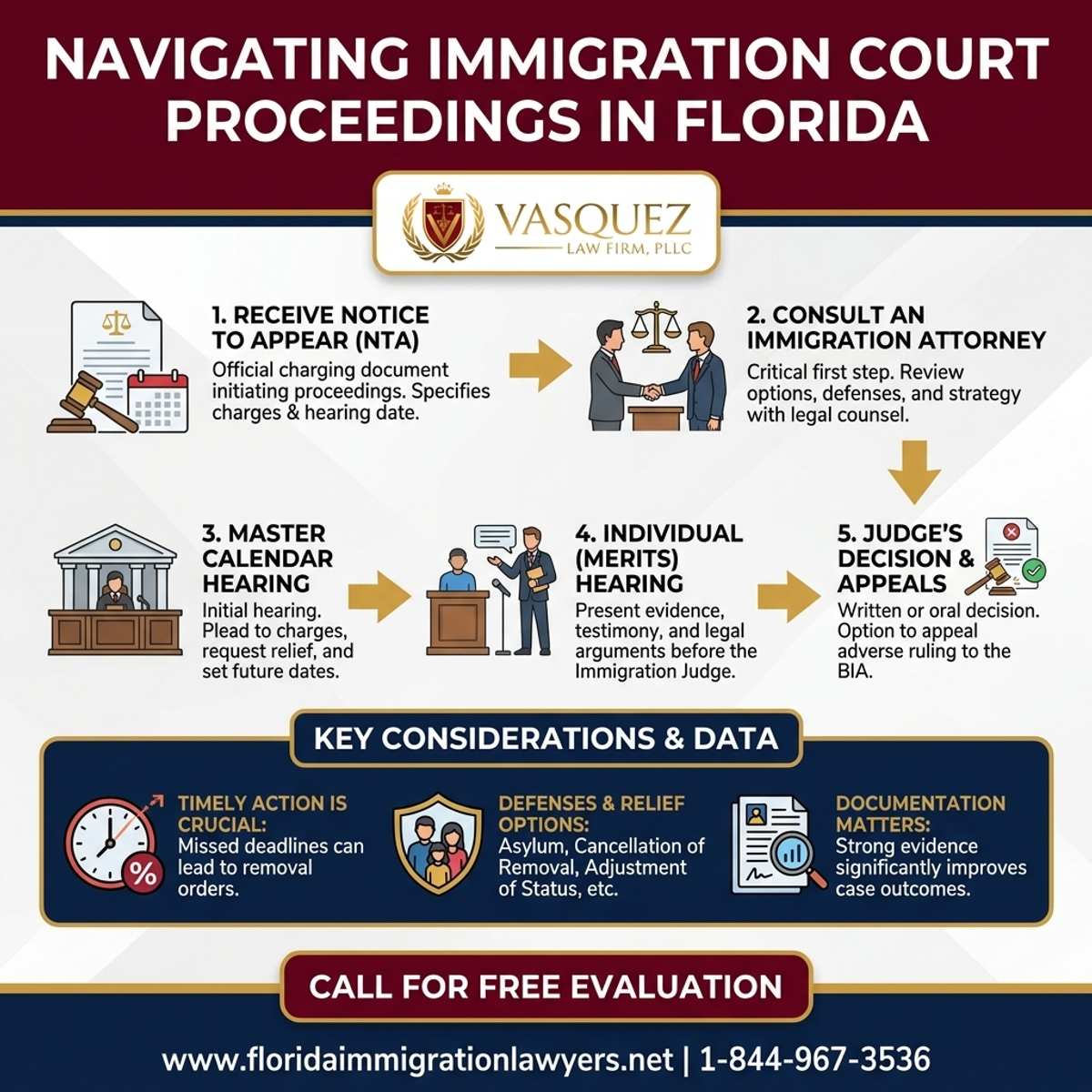
The process typically begins when DHS issues a Notice to Appear (NTA) to an individual, charging them with being removable from the U.S. The NTA outlines the alleged violations of immigration law and schedules the initial Master Calendar Hearing.
The Stages of Removal Proceedings
Understanding the different stages is crucial for anyone facing immigration court.
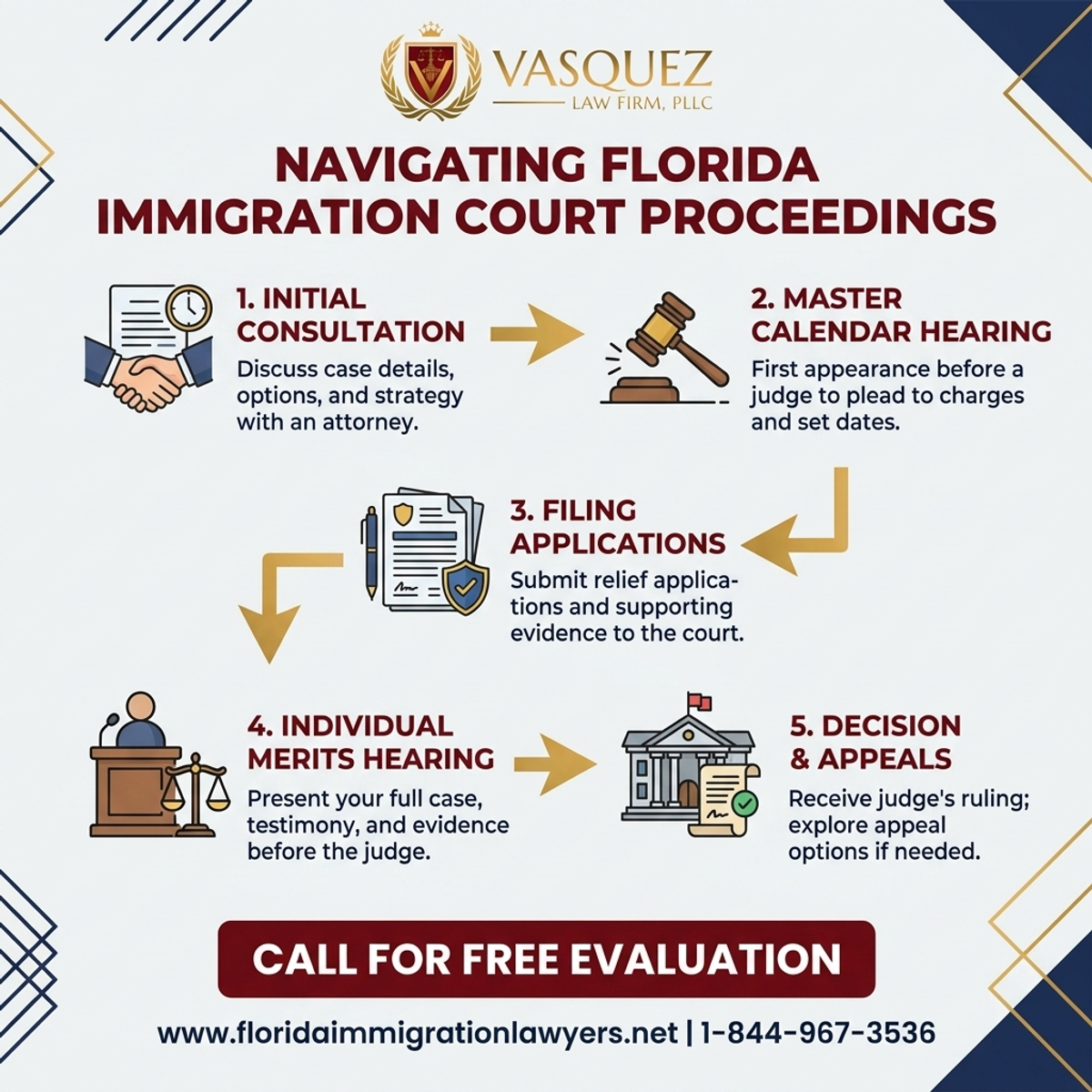
Master Calendar Hearings (MCH): These are preliminary hearings where the immigration judge addresses administrative matters. During an MCH, the respondent (the individual in proceedings) acknowledges receipt of the NTA, states whether they admit or deny the allegations and charges of removability, and identifies any forms of relief from removal they intend to pursue. It's also where future hearing dates are set, and the judge ensures the respondent has legal representation or understands their right to obtain it. Multiple MCHs may be scheduled to allow time for document filing, attorney retention, or further preparation.
Individual Hearings (IH): Also known as merits hearings, these are the core of the removal proceedings. During an IH, the respondent presents their case for relief from removal. This involves testifying, presenting evidence (documents, affidavits, expert reports), and calling witnesses. The DHS attorney also presents their arguments and evidence, and cross-examines the respondent and their witnesses. The immigration judge presides over the hearing, rules on objections, and ultimately makes a decision on the respondent's eligibility for relief and whether they should be removed from the U.S. These hearings can be lengthy and complex, often spanning several hours or even multiple days.
Decision and Appeal: After the Individual Hearing, the immigration judge issues a decision, either granting relief and terminating proceedings, or ordering the respondent removed. If the judge orders removal, the respondent generally has the right to appeal the decision to the Board of Immigration Appeals (BIA). The BIA is the highest administrative body for interpreting and applying immigration laws. Further appeals can be made to the federal circuit courts, though these are limited to questions of law and constitutional issues.
Common Grounds for Removal and How to Address Them
Individuals can find themselves in removal proceedings for a variety of reasons, each requiring a tailored deportation defense strategy.
Visa Overstays: One of the most common reasons is remaining in the U.S. beyond the authorized period of stay indicated on your I-94 record or visa stamp. Even a single day overstay can trigger removal proceedings. Defenses might include proving you did not overstay, or seeking a form of relief like adjustment of status if eligible through a qualifying family member or employment petition.
Criminal Convictions: Certain criminal convictions, particularly those classified as "crimes involving moral turpitude" (CIMT) or "aggravated felonies," can make a non-citizen deportable. The specific immigration consequences depend heavily on the nature of the crime, the sentence imposed, and the exact wording of the statute. Navigating this requires a deep understanding of both criminal and immigration law, often involving post-conviction relief or waivers.
Entry Without Inspection (EWI): Individuals who entered the U.S. without being inspected and admitted by an immigration officer are generally considered removable. While this is a serious charge, pathways to relief may exist, such as asylum, withholding of removal, or, in very specific circumstances, cancellation of removal for non-LPRs.
Step-by-Step Process — Navigating Immigration Court Proceedings in Florida
Violations of Immigration Status: This can include working without authorization, failing to maintain student status, or marriage fraud. Each violation carries its own set of challenges and potential defenses or forms of relief.
Misrepresentation or Fraud: Providing false information or engaging in fraud to obtain an immigration benefit can lead to removal proceedings. Waivers may be available for certain types of misrepresentation, but these are often difficult to obtain and require compelling evidence.
Understanding Different Forms of Relief and Defenses in Immigration Court
For individuals facing removal, understanding the available forms of relief is paramount. These are legal arguments or applications that, if granted, allow a person to remain in the U.S.
Asylum and Withholding of Removal: If you fear persecution in your home country based on race, religion, nationality, political opinion, or membership in a particular social group, you may be eligible for asylum. Asylum seekers must generally apply within one year of their last arrival in the U.S. Withholding of Removal offers similar protection but has a higher burden of proof and does not lead to permanent residency. Both are critical forms of protection for those fleeing danger.
Cancellation of Removal: This form of relief is available in two categories:
- Cancellation of Removal for Lawful Permanent Residents (LPRs): Requires the LPR to have been admitted for permanent residence for at least five years, resided continuously in the U.S. for seven years after admission, and not have been convicted of an aggravated felony.
- Cancellation of Removal for Non-Lawful Permanent Residents: A more difficult form of relief, requiring ten years of continuous physical presence in the U.S., good moral character, no disqualifying criminal convictions, and proving that removal would cause "exceptional and extremely unusual hardship" to a qualifying U.S. citizen or LPR spouse, parent, or child.
Adjustment of Status: If you are eligible for a green card through a family petition (e.g., spouse, parent, or adult child who is a U.S. citizen or LPR) or an employment-based petition, you may be able to "adjust your status" to that of a lawful permanent resident while in removal proceedings. This typically requires an approved I-130 or I-140 petition and an available visa number.
Waivers of Inadmissibility or Deportability: Various waivers exist to excuse certain grounds of inadmissibility (preventing entry or adjustment) or deportability (leading to removal). Common waivers include I-601 (Application for Waiver of Grounds of Inadmissibility) for certain misrepresentations or criminal grounds, and I-212 (Application for Permission to Reapply for Admission into the United States After Deportation or Removal) for those previously removed. Each waiver has specific eligibility criteria and requires compelling evidence of hardship.
Voluntary Departure: In some cases, an individual may request voluntary departure, which allows them to leave the U.S. at their own expense by a specific date, avoiding a formal order of removal. This can be beneficial as it generally avoids the bars to re-entry that come with a removal order, though it still requires a departure bond and can have future immigration implications.
The Critical Role of Legal Representation in Immigration Court
Navigating the complexities of immigration court without legal counsel is akin to sailing uncharted waters without a compass. The stakes are incredibly high, often involving the right to live and work in the U.S., and the potential for family separation. An experienced immigration attorney serves as an indispensable advocate, guide, and protector of your rights throughout the entire process.
Firstly, immigration law is notoriously intricate and constantly evolving. Statutes, regulations, and case law are voluminous and subject to frequent changes. A skilled attorney possesses the in-depth knowledge required to interpret these laws, identify all potential forms of relief applicable to your unique situation, and anticipate challenges from the DHS prosecutor. They can spot nuances that a layperson would undoubtedly miss, significantly enhancing your chances of success.
Secondly, an attorney ensures procedural compliance. Immigration court has strict deadlines for filing applications, submitting evidence, and responding to motions. Missing a single deadline can have catastrophic consequences, potentially leading to a denial of relief or even an order of removal. Your legal representative will manage these critical timelines, prepare and file all necessary documentation accurately, and represent you effectively in hearings.
Key Statistics — Navigating Immigration Court Proceedings in Florida
Furthermore, an attorney helps you gather and present compelling evidence. Building a strong case for relief, whether it's for asylum, cancellation of removal, or a waiver, requires meticulous evidence collection and strategic presentation. This often involves obtaining police reports, medical records, expert affidavits, witness testimonies, and personal declarations. An attorney knows what evidence is persuasive to an immigration judge and how to present it in the most favorable light.
Finally, your attorney acts as a crucial buffer between you and the court system. They can cross-examine witnesses, object to improper questions or evidence, and advocate forcefully on your behalf. They provide emotional support and clarity during what is often a highly stressful period. Engaging with an attorney from our firm means you gain a dedicated partner committed to achieving the best possible outcome for your immigration case. Don't face these life-altering proceedings alone; reach out to our team today for a consultation to discuss your specific needs. Contact us now to secure experienced legal representation.
The Appeals Process: What Happens After a Judge's Decision?
If an immigration judge denies your application for relief and orders your removal, the fight is not necessarily over. You typically have the right to appeal the decision to the Board of Immigration Appeals (BIA).
Board of Immigration Appeals (BIA): The BIA is the highest administrative body for interpreting and applying immigration laws. It reviews decisions made by immigration judges. An appeal to the BIA must be filed within 30 days of the IJ's decision. The BIA primarily reviews the record of proceedings from the immigration court, including transcripts and submitted evidence, to determine if the IJ made any errors of law or fact. It generally does not conduct new hearings or accept new evidence, except in very limited circumstances. The BIA can affirm the IJ's decision, reverse it, or remand the case back to the IJ for further proceedings.
Federal Circuit Courts: If the BIA upholds the immigration judge's decision, the next step is to appeal to a U.S. Court of Appeals (a federal circuit court). This is a judicial review process, and the federal courts have limited jurisdiction over immigration cases. Generally, federal courts can review questions of law and constitutional issues, but they often cannot review discretionary decisions made by immigration judges or the BIA, or factual findings. Appealing to a federal court is a complex and expensive process that requires specialized legal expertise.
Preparing for Your Immigration Court Hearing in Florida
Preparation is key to a successful outcome in immigration court.
Gathering Documents: This includes all personal identification documents, birth certificates, marriage certificates, evidence of continuous presence in the U.S., tax records, employment history, medical records (if applicable for hardship claims), police clearance certificates, and any evidence supporting your claim for relief (e.g., asylum declarations, evidence of persecution, hardship to qualifying relatives). Organize everything meticulously.
Understanding Your Case: Work closely with your attorney to fully understand the allegations against you, the specific charges of removability, and the legal requirements for any relief you are seeking. Be prepared to testify truthfully and consistently about your life history, your fears, and your connections to the U.S.
Practice Your Testimony: While you must always be truthful, practicing your testimony with your attorney can help you articulate your story clearly and confidently. Your attorney will prepare you for potential questions from the DHS attorney and the immigration judge.
Dress Appropriately: Always dress in professional attire for court hearings. This shows respect for the court and the judge.
Arrive Early: Plan to arrive at the immigration court well in advance of your scheduled hearing time to allow for security checks and to settle in.
Navigating immigration court proceedings in Florida is undeniably challenging, fraught with legal complexities and emotional stress. The path to remaining in the U.S. or securing protection requires a thorough understanding of the law, meticulous preparation, and strategic advocacy. From the initial Notice to Appear to potential appeals, every step is critical. Do not attempt to face these proceedings alone. The expertise of a dedicated Florida immigration lawyer is not just beneficial—it's often essential for a favorable outcome. Our firm is committed to providing comprehensive deportation defense, guiding you through every stage, and fighting tirelessly to protect your
Sources and References
- U.S. Citizenship and Immigration Services (USCIS)
- Executive Office for Immigration Review (EOIR)
- U.S. Department of State - Bureau of Consular Affairs
- Immigration and Nationality Act (INA), 8 U.S.C. Chapter 12
Do Not Navigate This Process Alone
Our experienced immigration attorneys are ready to fight for you. Get a free, confidential consultation today.
Se Habla Español
Frequently Asked Questions
Florida Immigration Lawyers
Immigration Attorney | Founder, Vasquez Law Firm
U.S. Air Force veteran and immigration attorney with thousands of cases resolved. J.D., NCCU School of Law. AILA member. Admitted to the 4th, 5th, and 11th Circuit Courts.
Available 24/7 - Free Evaluations
Related Legal Services
Our Florida immigration attorneys can help you with business immigration, asylum protection and deportation defense. Call today at 1-844-967-3536 for a free consultation.
Related Links
Related Topics
Free Legal Consultation
Discuss your case with our experienced attorneys. We're available 24/7.
Se Habla Español - Estamos aquí para ayudarle.
Related Articles
USCIS Processing Times in Florida: What to Expect in 2026
Explore USCIS processing times in Florida for 2026, including detailed timelines, common mistakes, and when to seek legal assistance. Contact Florida Immigration Lawyers for a free consultation.
Dual Citizenship Florida: A Guide for Immigrants | VLF Florida
Explore the ins and outs of dual citizenship in Florida, including the naturalization process, benefits of holding two passports, and what to expect. For personalized assistance, contact Florida Immigration Lawyers at 1-844-967-3536.
BIA Remand in Florida: What Happens After Your Immigration
A BIA remand in Florida sends your immigration case back to the Immigration Court for further review, often due to a legal error or the need for more evidence. This crucial stage requires careful attention to the Board of Immigration Appeals' instructions and a strategic approach to new hearings before an Immigration Judge. For individuals in Kissimmee, Orlando, and across Florida, understanding this process is vital. Florida Immigration Lawyers offers expert guidance to navigate the complexities of BIA remands, helping you prepare documentation, present compelling arguments, and avoid common mistakes. Don't face this critical second chance alone; learn how to effectively manage your remand case and protect your future in the U.S.
Immigration Documents Checklist Florida 2026 Guide
Navigating the intricate world of immigration in Florida requires a precise understanding of essential documents and USCIS forms. This 2026 guide provides a comprehensive checklist for your immigration paperwork, helping you avoid common pitfalls and ensure your application is complete and accurate. From identity and financial records to medical exams and specific USCIS forms like I-130 or N-400, we cover what you need to know. Learn about processing timelines, cost factors, and Florida-specific considerations, including local USCIS offices in Tampa, Orlando, and Miami. Don't risk delays or denials due to missing paperwork. Contact Florida Immigration Lawyers for expert guidance and a free consultation to confidently pursue your immigration goals in the Sunshine State.