Dual Citizenship Florida: A Guide for Immigrants | VLF Flori
Explore the ins and outs of dual citizenship in Florida, including the naturalization process, benefits of holding two passports, and what to expect. For personalized assistance, contact Florida Immigration Lawyers at 1-844-967-3536.

Dual citizenship allows an individual to be a citizen of two countries simultaneously. In Florida, this status can provide numerous benefits, including the ability to live and work freely in both nations. However, it also requires careful navigation of both countries' legal requirements. Key points to consider include:
- Understanding the naturalization process in the U.S.
- Benefits of holding two passports
- Potential legal obligations
- Consulting with immigration experts
Introduction
Imagine living in Coral Springs, Florida, and having the ability to travel freely between two countries with the rights and privileges of citizenship in both. Dual citizenship offers this opportunity but comes with its own set of challenges and legal complexities. This guide explores the process of obtaining dual citizenship, focusing on naturalization, the benefits of having two passports, and the immigration implications for residents of Florida. For personalized guidance, call Florida Immigration Lawyers at 1-844-967-3536 for a free consultation.
Understanding Dual Citizenship
Dual citizenship refers to the status of an individual who is a citizen of two countries. This can occur in various ways, such as through birth in a foreign country, marriage, or naturalization. In the U.S., dual citizenship is permitted but not explicitly encouraged. The process involves understanding both U.S. laws and the laws of the other country involved.
Florida, with its diverse population and large immigrant community, is home to many dual citizens. Coral Springs, in particular, has seen a growth in residents seeking dual citizenship as a means to maintain close ties with their country of origin while enjoying the benefits of U.S. citizenship.
Legal Framework
The U.S. does not require individuals to choose one citizenship over another, allowing for dual citizenship. However, certain obligations, such as taxes and military service, may arise from holding citizenship in two countries. It is crucial to consult legal resources such as the USCIS website and the Immigration and Nationality Act (INA) for guidance.
Naturalization Process
The naturalization process is a critical step for immigrants seeking U.S. citizenship. This process involves several stages, including filing an application, attending a biometrics appointment, and passing the citizenship test. Here is a step-by-step guide:
- Eligibility: Determine if you meet the eligibility requirements, such as age, residency, and language proficiency.
- Application: Complete and submit Form N-400, Application for Naturalization, along with required documents.
- Biometrics Appointment: Attend an appointment for fingerprinting and background checks.
- Interview and Test: Attend an interview and pass the English and civics tests.
- Oath Ceremony: If approved, attend a ceremony to take the Oath of Allegiance.
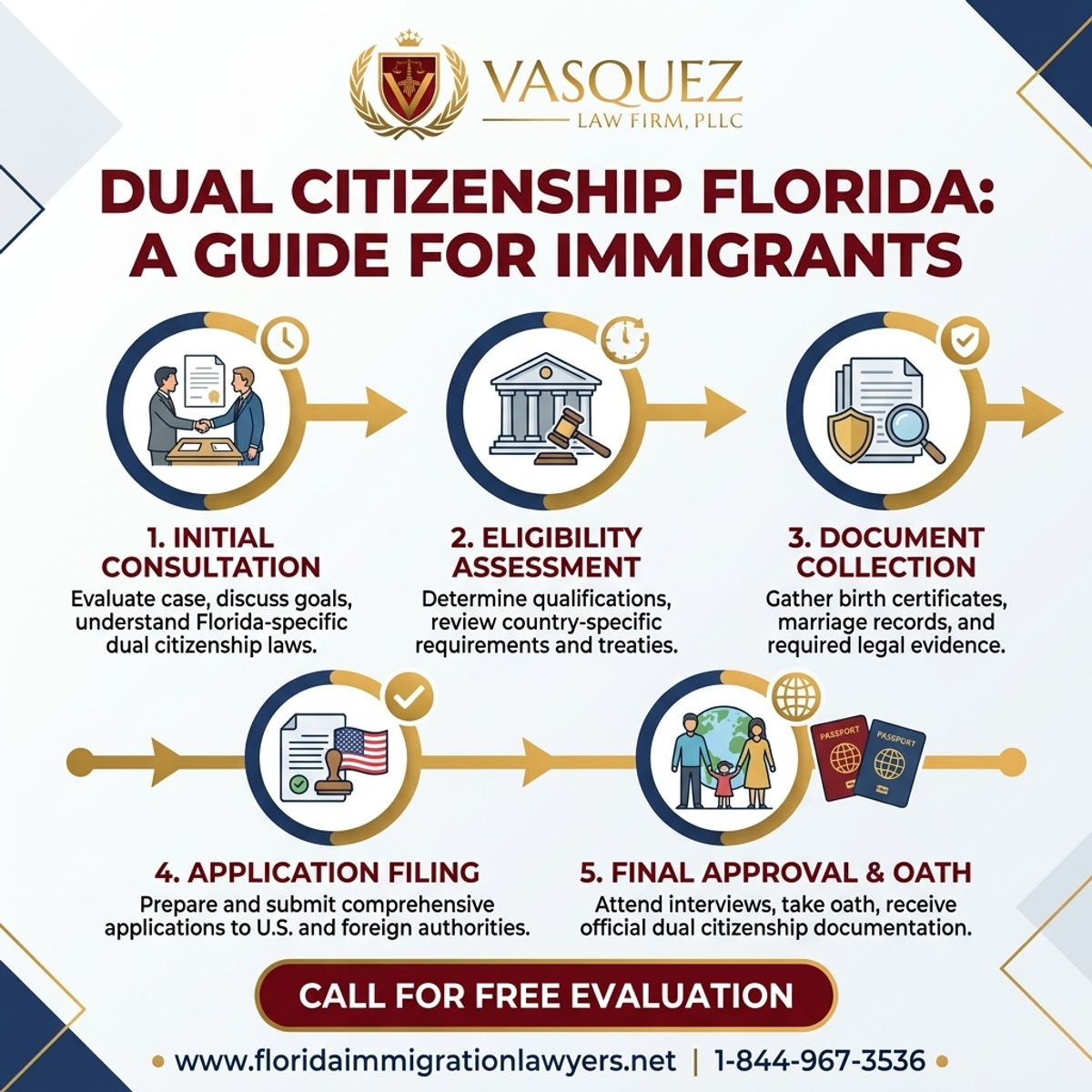
Step-by-Step Process — Dual Citizenship Florida: A Guide for Immigrants
Common Challenges
Applicants often face challenges such as language barriers and complex legal requirements. Seeking advice from immigration attorneys can help navigate these issues effectively.
Benefits of Two Passports
Holding two passports provides significant advantages, including ease of travel and expanded rights in both countries. For residents of Coral Springs, this means traveling between the U.S. and another country with minimal restrictions.
- Travel: Enjoy visa-free travel to more countries.
- Residency: Live and work freely in both countries.
- Property Ownership: Own property in both nations without restrictions.
Global Mobility
Dual citizenship enhances global mobility, allowing individuals to pursue business opportunities and cultural experiences across borders. This is particularly beneficial for those with family ties in multiple countries.
Document Checklist for Dual Citizenship
Gathering the correct documentation is crucial when applying for dual citizenship. Here is a checklist to help you prepare:
- Birth certificates from both countries
- Current passports
- Marriage certificates (if applicable)
- Naturalization certificates
- Proof of residency
- Tax records
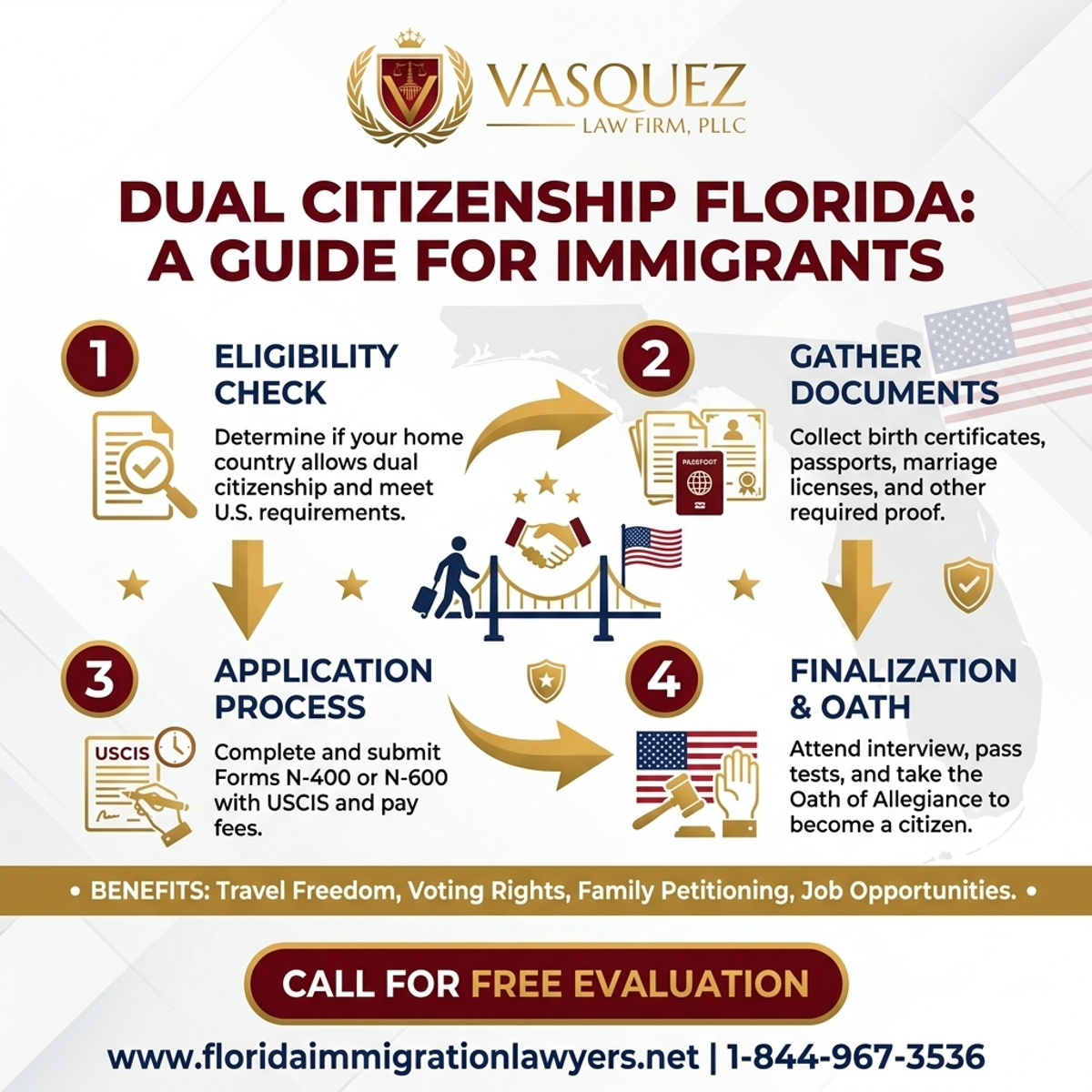
Key Statistics — Dual Citizenship Florida: A Guide for Immigrants
Ensure that all documents are up-to-date and certified copies are provided where necessary.
Timeline and Processing Expectations
The timeline for obtaining dual citizenship can vary based on the country and specific circumstances. Generally, the process involves:
- Initial Application: Submission and approval of initial applications can take several months.
- Background Checks: These may extend the process by additional weeks or months.
- Approval and Oath Ceremony: Once approved, the oath ceremony can be scheduled within a few weeks.
It is important to stay informed about processing times by checking updates on the USCIS website.
Common Mistakes to Avoid
- Missing Documents: Failing to provide complete documentation can delay the application process.
- Misunderstanding Eligibility: Not fully understanding eligibility requirements can lead to application denial.
- Ignoring Tax Obligations: Dual citizens must comply with tax laws in both countries, which can be complex.
- Overlooking Dual Nationality Laws: Not researching the other country’s laws can result in unintended legal issues.
- Incorrect Form Submission: Submitting outdated or incorrect forms can cause delays.
- Language Barriers: Not addressing language requirements can lead to test failures.
- Procrastination: Delaying application submission can result in missed deadlines.
When to Call a Lawyer
Legal assistance is crucial in navigating the complexities of dual citizenship. Contact an immigration lawyer if you:
- Face legal challenges or have a criminal record
- Need help understanding complex tax obligations
- Require assistance with document preparation
- Have questions about the naturalization process
Florida Immigration Lawyers offers expert guidance to ensure a smooth application process. Call us at 1-844-967-3536 for a consultation.
About Florida Immigration Lawyers
Florida Immigration Lawyers is a dedicated team of immigration professionals providing comprehensive legal services across Florida. Our experienced attorneys specialize in areas such as naturalization, deportation defense, and family immigration. We offer 24/7 support, free consultations, and bilingual services to meet your needs. Visit our website at floridaimmigrationlawyers.net or call us at 1-844-967-3536.
Sources and References
- U.S. Citizenship and Immigration Services (USCIS)
- Executive Office for Immigration Review (EOIR)
- 8 U.S.C. Chapter 12 - Immigration and Nationality Act
Related services: citizenship test preparation, dual citizenship guidance, family-based immigration.
This article provides general legal information and is not intended as legal advice. Every case is unique, and outcomes depend on specific facts and circumstances. Contact an attorney for advice about your particular situation.
If you are considering dual citizenship, do not navigate this process alone. Contact Florida Immigration Lawyers today. Se Habla Espanol - Estamos aqui para ayudarle.
If you need legal assistance, learn more about get citizenship help today, or call us at 1-844-967-3536 for a free consultation.
Do Not Navigate This Process Alone
Our experienced immigration attorneys are ready to fight for you. Get a free, confidential consultation today.
Se Habla Español
Frequently Asked Questions
Florida Immigration Lawyers
Immigration Attorney | Founder, Vasquez Law Firm
U.S. Air Force veteran and immigration attorney with thousands of cases resolved. J.D., NCCU School of Law. AILA member. Admitted to the 4th, 5th, and 11th Circuit Courts.
Available 24/7 - Free Evaluations
Related Legal Services
Our Florida immigration attorneys can help you with free immigration consultation, experienced immigration attorneys and business immigration. Call today at 1-844-967-3536 for a free consultation.
Related Links
Related Topics
Free Legal Consultation
Discuss your case with our experienced attorneys. We're available 24/7.
Se Habla Español - Estamos aquí para ayudarle.
Related Articles
Navigating Immigration Court Proceedings in Florida
Facing immigration court in Florida can be daunting. Learn to navigate proceedings, understand the role of EOIR, and when to seek legal help. Call us for a free consultation.
BIA Remand in Florida: What Happens After Your Immigration
A BIA remand in Florida sends your immigration case back to the Immigration Court for further review, often due to a legal error or the need for more evidence. This crucial stage requires careful attention to the Board of Immigration Appeals' instructions and a strategic approach to new hearings before an Immigration Judge. For individuals in Kissimmee, Orlando, and across Florida, understanding this process is vital. Florida Immigration Lawyers offers expert guidance to navigate the complexities of BIA remands, helping you prepare documentation, present compelling arguments, and avoid common mistakes. Don't face this critical second chance alone; learn how to effectively manage your remand case and protect your future in the U.S.
Immigration Documents Checklist Florida 2026 Guide
Navigating the intricate world of immigration in Florida requires a precise understanding of essential documents and USCIS forms. This 2026 guide provides a comprehensive checklist for your immigration paperwork, helping you avoid common pitfalls and ensure your application is complete and accurate. From identity and financial records to medical exams and specific USCIS forms like I-130 or N-400, we cover what you need to know. Learn about processing timelines, cost factors, and Florida-specific considerations, including local USCIS offices in Tampa, Orlando, and Miami. Don't risk delays or denials due to missing paperwork. Contact Florida Immigration Lawyers for expert guidance and a free consultation to confidently pursue your immigration goals in the Sunshine State.
Immigration Services in Port St Lucie and Treasure Coast
Explore immigration services in Port St Lucie and the Treasure Coast. Learn about local options for visas, asylum, and citizenship. Contact Florida Immigration Lawyers for expert guidance at 1-844-967-3536.