USCIS Processing Times in Florida 2026: Current Waits
Explore USCIS processing times in Florida for 2026, including detailed timelines, common mistakes, and when to seek legal assistance. Contact Florida Immigration Lawyers for a free consultation.
Navigating the complex world of U.S. immigration can be a daunting experience, especially when faced with the uncertainty of processing times. For individuals and families in Florida, understanding what to expect from U.S. Citizenship and Immigration Services (USCIS) is crucial for planning their futures. As we look ahead to 2026, various factors will continue to shape how quickly applications are processed, from policy shifts and administrative backlogs to the sheer volume of new filings.
This comprehensive guide aims to shed light on USCIS processing times specifically for Florida residents in 2026. We'll explore the elements that influence these timelines, delve into common application types, discuss strategies for managing potential delays, and highlight how experienced immigration lawyers can provide invaluable assistance. While predicting exact future timelines is challenging, understanding the underlying mechanisms and historical trends can help you prepare for your immigration journey.
Understanding USCIS Processing Times
USCIS processing times represent the duration it takes for the agency to make a decision on a particular case or application. These times are not static; they fluctuate based on several variables. USCIS publishes estimated processing times on its website, typically showing the time it takes to process 80% of cases for a specific form type at a particular service center or field office. It's important to remember that these are estimates, and individual cases can fall outside these ranges due to unique circumstances.
Several factors contribute to these fluctuating timelines. The volume of applications received by USCIS plays a significant role; a surge in filings for a specific visa category or benefit can quickly overwhelm resources, leading to increased wait times. Staffing levels at service centers and field offices also directly impact processing capacity. Furthermore, policy changes, such as new requirements for interviews or evidence, can introduce additional steps and extend the overall timeline. Understanding these dynamics is the first step in managing expectations for your case.
Key Factors Influencing Processing Delays in Florida
While some factors affecting USCIS processing are national, others have a distinct impact on Florida residents. The state's large immigrant population and its strategic location mean that Florida's USCIS field offices (Miami, Orlando, Tampa, Jacksonville) often experience high volumes of applications. Here are some key factors that will likely continue to influence processing delays in 2026:
- Application Volume: Florida consistently ranks among the top states for new immigration filings. High demand for services like family petitions, naturalization, and work permits naturally leads to longer queues.
- Staffing and Resources: The availability of immigration officers, adjudicators, and support staff at Florida's field offices and relevant service centers directly correlates with processing speed. Budget constraints or hiring freezes can exacerbate backlogs.
- Policy Changes and Administrative Priorities: Shifting immigration policies, new security protocols, or changes in how certain case types are prioritized can significantly alter processing times. For instance, increased scrutiny on specific visa categories or enhanced background checks can add months to a case.
- Case Complexity: Straightforward applications generally move faster. Cases involving complex legal issues, extensive evidence, criminal history, or previous immigration violations will almost always require more time for review and adjudication.
- Requests for Evidence (RFEs) and Notices of Intent to Deny (NOIDs): If USCIS determines an application is incomplete or lacks sufficient evidence, they will issue an RFE or NOID. Responding to these requests takes time, and the clock essentially pauses until USCIS receives and reviews the additional information.
- Background Checks and Security Clearances: All applicants undergo security checks. While most are routine, some can be delayed due to name commonality, international travel, or other factors, holding up an entire case.
Common Application Types and Their Processing Trends in Florida
Different types of immigration applications have distinct processing pathways and typical wait times. Here's a look at some of the most common forms and what Florida applicants might expect in 2026:
Family-Based Petitions (Forms I-130, I-485)
Family reunification is a cornerstone of U.S. immigration law. Petitions for alien relatives (Form I-130) and applications for adjustment of status (Form I-485) are among the most frequently filed. Processing times for I-130s can vary significantly based on the petitioner's citizenship status and the beneficiary's relationship to them (e.g., immediate relatives vs. preference categories). Once an I-130 is approved and a visa becomes available, the I-485 (if filed concurrently or subsequently) can take anywhere from 10 months to several years, depending on the specific USCIS field office in Florida and the service center handling the initial petition. Miami, with its high volume, often sees longer waits.
Employment-Based Petitions (Various Forms)
For professionals and skilled workers seeking to live and work in Florida, employment-based green cards involve forms like I-140 (Immigrant Petition for Alien Worker) and I-485. Processing times are heavily influenced by the visa category (EB-1, EB-2, EB-3, etc.), the applicant's country of origin (due to per-country caps), and whether premium processing is utilized for the I-140. While premium processing can expedite the I-140 to a matter of weeks, the I-485 still follows standard processing at the local field office, which can range from one to three years or more.
Naturalization (Form N-400)
Becoming a U.S. citizen is the final step for many immigrants. The application for naturalization (Form N-400) typically involves an interview at a local USCIS field office in Florida. Processing times for N-400s have historically fluctuated, ranging from 6 months to over 2 years. Factors include the applicant's eligibility, the complexity of their background, and the specific field office's workload. Applicants in Florida should prepare for an interview covering their eligibility, English proficiency, and knowledge of U.S. civics.
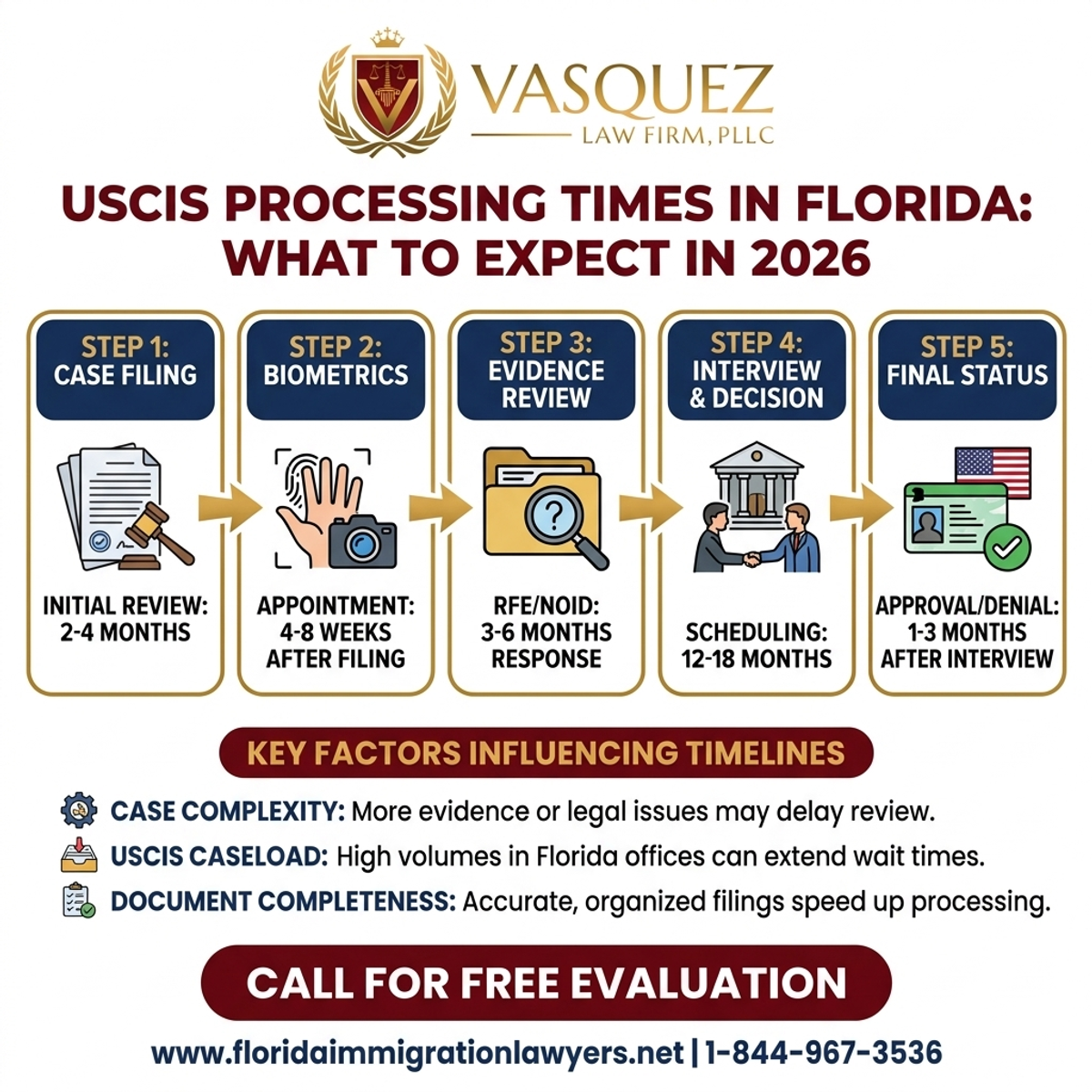
Step-by-Step Process — USCIS Processing Times in Florida: What to Expect in 2026
Asylum Applications (Form I-589)
Asylum applications (Form I-589) are particularly sensitive and often subject to different processing priorities. While USCIS aims to process asylum cases quickly, especially those filed recently, backlogs can still lead to significant delays. The "last in, first out" policy for affirmative asylum interviews was previously in effect but has been subject to change. For those seeking asylum in Florida, especially those with pending cases, wait times can extend for years, making legal representation crucial. This is particularly true for individuals facing potential deportation defense proceedings.
Other Common Forms (I-765, I-131)
Applications for Employment Authorization Documents (EADs, Form I-765) and Travel Documents (Advance Parole, Form I-131) are often filed concurrently with other primary applications (like I-485). While these are generally processed faster than green card applications, delays are still common. EADs can take 3-10 months, and I-131s can take 5-12 months. Timely filing and careful preparation are essential to avoid gaps in work authorization or travel ability.
Navigating USCIS Field Offices in Florida
Florida is home to several key USCIS field offices, each serving specific geographical areas and handling different types of applications, primarily interviews for adjustment of status, naturalization, and asylum. The main offices include:
- Miami Field Office: Covers South Florida, including Miami-Dade, Broward, and Palm Beach counties. It is one of the busiest offices in the country.
- Orlando Field Office: Serves Central Florida, including Orange, Seminole, Osceola, and surrounding counties.
- Tampa Field Office: Handles cases for the Tampa Bay area and surrounding Gulf Coast regions.
- Jacksonville Field Office: Covers Northeast Florida.
The specific field office with jurisdiction over your case can significantly impact your processing time, as each office has its own unique workload and staffing levels. It's not uncommon for processing times to vary by several months between different Florida offices for the same application type. Understanding which office will handle your interview is important for setting realistic expectations.
Strategies for Managing Long Wait Times
While you cannot directly control USCIS processing times, there are proactive steps you can take to manage your case and potentially mitigate delays:
- File a Complete and Accurate Application: The most critical step. Errors or omissions are the leading cause of RFEs and delays. Double-check every form and ensure all required supporting documents are included.
- Check Your Case Status Online: Regularly monitor your case status using the receipt number provided by USCIS. This is the primary way to track progress.
- Submit an e-Request or Service Request: If your case is outside the normal processing times listed on the USCIS website, you can submit an online e-Request or call the USCIS Contact Center to open a service request.
- Request an Expedite: In certain urgent circumstances (e.g., severe financial loss, urgent humanitarian reasons, national interest), you may be able to request an expedite. These requests are granted at USCIS's discretion and require compelling evidence.
- Seek Congressional Assistance: If your case is significantly delayed without apparent reason, contacting your U.S. Representative or Senator's office can sometimes help. Their constituent services staff can inquire with USCIS on your behalf.
- Consider a Mandamus Lawsuit: In extreme cases of unreasonable delay, and after exhausting all other administrative remedies, a lawsuit known as a "Writ of Mandamus" can be filed in federal court to compel USCIS to make a decision. This is a complex legal strategy and should only be pursued with experienced legal counsel.
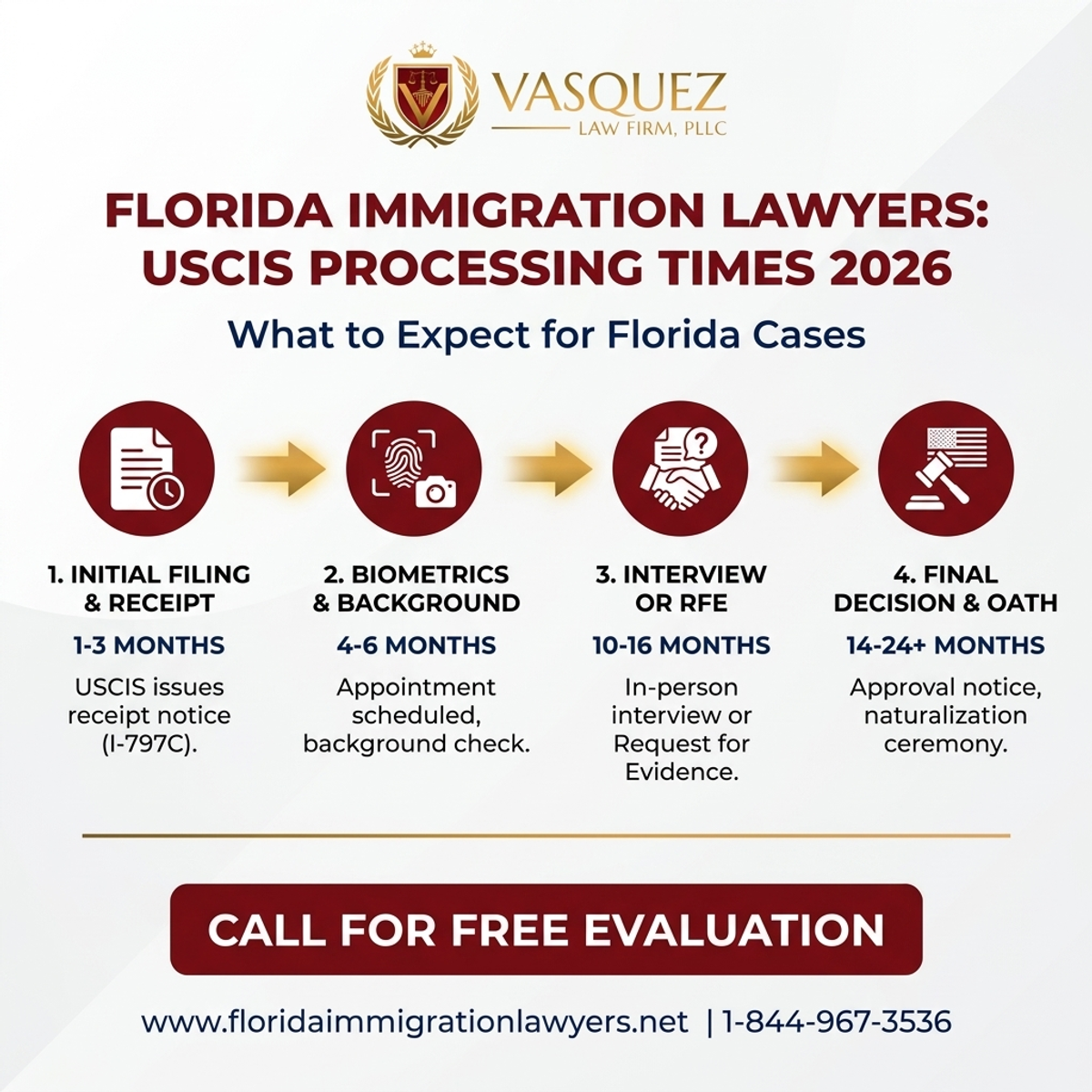
Key Statistics — USCIS Processing Times in Florida: What to Expect in 2026
The Indispensable Role of a Florida Immigration Lawyer in Navigating USCIS Delays
Given the complexities and potential for significant delays in USCIS processing, the guidance of an experienced immigration lawyer in Florida becomes not just beneficial, but often indispensable. An attorney can provide strategic advice and hands-on assistance throughout your immigration journey, helping to minimize wait times and address issues proactively. Our team of dedicated attorneys understands the nuances of immigration law and the specific challenges faced by applicants in Florida.
One of the primary ways a lawyer helps is by ensuring your application is meticulously prepared and comprehensive from the outset. This significantly reduces the likelihood of Requests for Evidence (RFEs) or Notices of Intent to Deny (NOIDs), which are major contributors to processing delays. We meticulously review all forms and supporting documentation, ensuring compliance with the latest USCIS regulations and guidelines. For complex cases, such as those involving criminal history, previous immigration violations, or specific humanitarian concerns like asylum, an attorney can craft a compelling legal argument and present your case in the strongest possible light.
Furthermore, when delays do occur, a lawyer acts as your advocate. We can communicate directly with USCIS on your behalf, follow up on service requests, and interpret complex USCIS notices. If your case falls outside normal processing times, we can assess the best course of action, whether it's submitting an expedite request with robust supporting evidence or exploring more advanced legal remedies like a Mandamus action. For individuals facing the threat of deportation defense due to prolonged processing or other issues, immediate legal intervention is critical. Our firm is equipped to handle such urgent situations, providing aggressive representation to protect your rights and your future in the U.S. Don't navigate these waters alone; a knowledgeable legal partner can make all the difference in achieving a successful outcome. Contact us today for a consultation.
Preparing for 2026: Projections and Advice
While precise predictions for 2026 are impossible, several trends suggest that USCIS processing times will likely remain a significant concern for applicants. The agency continues to grapple with backlogs accumulated over recent years, and any new policy changes or increases in application volume could further strain resources. However, there's also potential for administrative improvements and increased efficiency. Applicants should prepare for a landscape where diligence, accuracy, and patience are paramount.
Our advice for 2026 remains consistent: file your application as early as possible, ensure every detail is accurate, and gather all necessary supporting documentation. Stay informed about current processing times and any policy updates from USCIS. Most importantly, consider partnering with an experienced immigration law firm. A lawyer can help you anticipate potential challenges, respond effectively to USCIS inquiries, and advocate for your case, providing peace of mind throughout what can be a lengthy and stressful process.
Conclusion
USCIS processing times in Florida for 2026, like in any year, will be influenced by a multitude of factors. While delays can be frustrating, understanding the process and taking proactive steps can empower you. Whether you're applying for a family-based visa, naturalization, or seeking asylum, careful preparation and professional legal guidance are your strongest assets. Don't leave your future to chance. Contact our Florida immigration lawyers today for a free consultation to discuss your specific situation and how we can help you navigate the path to a successful outcome.
Sources and References
- U.S. Citizenship and Immigration Services (USCIS)
- Executive Office for Immigration Review (EOIR)
- U.S. Department of State - Bureau of Consular Affairs
- Immigration and Nationality Act (INA), 8 U.S.C. Chapter 12
Do Not Navigate This Process Alone
Our experienced immigration attorneys are ready to fight for you. Get a free, confidential case review today.
Se Habla Español
Or leave your details and we’ll call you:
Free Evaluation in 24 Hours
Or talk to us right now
AI voice assistant — available 24/7
FreeFrequently Asked Questions

William J. Vásquez
Founding Attorney · Vasquez Law Firm
U.S. Air Force veteran and immigration attorney with years of hands-on U.S. immigration experience. J.D., NCCU School of Law. AILA member. Admitted to the 4th, 5th, and 11th Circuit Courts.
Available 24/7 - Free Evaluations
Reviewed for legal accuracy by William J. Vásquez
Licensed in North Carolina; U.S. immigration is federal practice.
Related Legal Services
Our Florida immigration attorneys can help you with free immigration consultation, business immigration and deportation defense. Call today at 1-844-YO-PELEO for a free case review.
Related Links
Related Topics
Free Legal Case Review
Discuss your case with our experienced attorneys. We're available 24/7.
Se Habla Español - Estamos aquí para ayudarle.
Related Articles
EAD Advance Parole Combo Card in Florida 2026
For individuals with a pending Form I-485, Application to Register Permanent Residence or Adjust Status, the EAD Advance Parole Combo Card is an essential document. This single card combines the authorization to work legally in the U.S. (Employment Authorization Document - EAD) with permission to travel internationally and re-enter without abandoning your green card application (Advance Parole). This guide from Florida Immigration Lawyers provides a comprehensive overview for applicants in Florida in 2026, covering eligibility, the step-by-step application process, required documents, expected processing times, and associated costs. We also highlight common mistakes to avoid and when to seek legal counsel to ensure a smooth and successful immigration journey. Understanding this vital card is key to maintaining stability while awaiting your permanent residency approval.
Immigration Lawyer Orlando Free Consultation in Florida
For individuals and families in Orlando, Florida, navigating the complexities of U.S. immigration law requires expert guidance. An immigration lawyer in Orlando offers crucial support for everything from visa applications and green card processes to naturalization and deportation defense. This comprehensive guide details what a free consultation covers, providing a step-by-step overview of immigration pathways, essential document checklists, and expected timelines in 2026. We also highlight common mistakes to avoid, discuss the critical role of legal counsel in deportation and asylum cases, and explain why choosing a local Orlando immigration attorney is beneficial. Florida Immigration Lawyers is dedicated to serving the diverse community of Orlando with compassionate, effective legal solutions, ensuring you receive personalized advice and robust representation for a successful immigration journey.
Best Immigration Firm for L-1 Transfers in Florida
Navigating the L-1 visa process for intracompany transfers in Florida can be complex. Learn how Florida Immigration Lawyers can assist with your application, ensuring compliance and a smooth transition for your business.
USCIS Oath Ceremony Schedule 2026: Your Guide to Citizenship
Achieving U.S. citizenship culminates in the naturalization oath ceremony, a pivotal moment for immigrants in Florida. This comprehensive guide from Florida Immigration Lawyers details the USCIS oath ceremony schedule for 2026, outlining what to expect from your Form N-445 notice to the final pledge of allegiance. We cover the entire naturalization process, including eligibility requirements, the step-by-step application (Form N-400), necessary documents, typical timelines for Florida field offices like Orlando, Miami, and Tampa, and associated costs. Learn how to prepare for your ceremony, avoid common mistakes that could delay your path, and understand when legal counsel becomes indispensable. Our firm is dedicated to providing expert guidance, ensuring a smooth and successful journey to becoming a U.S. citizen. Get a free case review from our bilingual team today.