Navigating Immigration Court Proceedings in Florida
Facing immigration court proceedings in Florida can be overwhelming. Learn what to expect, how to prepare, and the importance of legal representation. Contact Florida Immigration Lawyers for a free consultation.

Navigating Immigration Court Proceedings in Florida: A Comprehensive Guide
Facing immigration court proceedings in Florida can be an incredibly daunting and stressful experience. The complexities of immigration law, coupled with the high stakes involved, often leave individuals feeling overwhelmed and uncertain about their future. Whether you've received a Notice to Appear (NTA) or are exploring options to remain in the U.S., understanding the process is the first crucial step. This comprehensive guide aims to demystify immigration court in Florida, providing clarity on the procedures, potential outcomes, and the indispensable role of skilled legal representation.
Understanding Immigration Court Proceedings in Florida
Immigration court, formally known as the Executive Office for Immigration Review (EOIR), is an administrative court system within the U.S. Department of Justice. Unlike federal criminal or civil courts, immigration courts deal exclusively with matters related to the immigration status of non-citizens. In Florida, individuals typically attend hearings at immigration courts located in cities like Miami and Orlando, each with its unique nuances and judicial preferences. The primary goal of these proceedings is to determine whether a non-citizen should be allowed to remain in the United States or be ordered removed (deported).
The proceedings involve several key players. The Immigration Judge (IJ) presides over the hearings, making decisions based on evidence and legal arguments. The DHS Counsel (Department of Homeland Security, often represented by ICE attorneys) acts as the prosecutor, arguing for the government's position, usually seeking removal. The Respondent is the non-citizen facing removal proceedings. An Interpreter is provided if the respondent does not speak English, ensuring due process. Crucially, Legal Counsel, an experienced immigration attorney, represents the respondent, advocating on their behalf and navigating the intricate legal landscape. Understanding these roles is vital for anyone involved in the process.
The Journey Begins: Receiving a Notice to Appear (NTA)
The official start of removal proceedings is marked by the issuance of a Notice to Appear (NTA). This document, issued by the Department of Homeland Security (DHS), formally charges an individual with being removable from the United States and orders them to appear before an Immigration Judge. Reasons for receiving an NTA vary widely and can include:
- Overstaying a visa or entering the U.S. without inspection.
- Committing certain criminal offenses.
- Violating the terms of a visa or immigration status.
- Having an asylum claim referred to court after a negative credible fear finding.
- Being apprehended at the border.
Upon receiving an NTA, it is paramount to take immediate action. The document will specify the charges against you and the date and time of your first court appearance, known as a Master Calendar Hearing. Missing this hearing can lead to an in absentia removal order, making it much harder to fight your case later. Consulting with an attorney as soon as you receive an NTA is highly recommended to understand the allegations and begin preparing your defense.
The Master Calendar Hearing: Your First Appearance
The Master Calendar Hearing (MCH) is typically the first time a respondent appears before an Immigration Judge. This hearing is generally brief and serves several administrative purposes:
- Pleading to the Allegations: The judge will ask the respondent to admit or deny the factual allegations and the charges of removability listed in the NTA.
- Identifying Relief: The respondent, often through their attorney, will inform the judge of any forms of relief from removal they intend to pursue (e.g., asylum, cancellation of removal, adjustment of status).
- Scheduling: The judge will set deadlines for filing applications for relief and schedule the next hearing, which could be another Master Calendar Hearing or an Individual Hearing (merits hearing).
- Designation of Country: The respondent will be asked to designate a country for deportation if they are ordered removed.
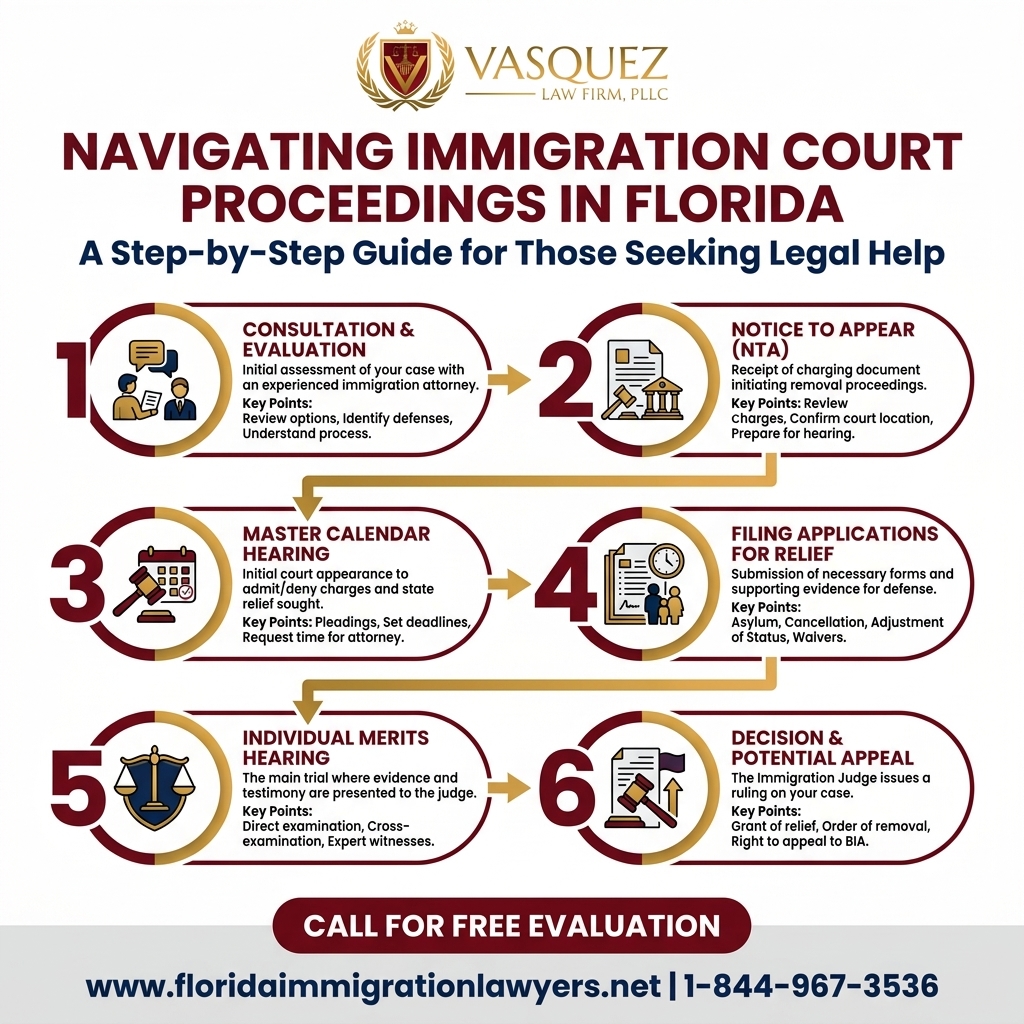
While an MCH may seem procedural, it is a critical stage. Statements made here can impact the entire case. Having legal representation at this initial stage ensures that your rights are protected, appropriate pleas are entered, and all potential avenues for relief are identified and preserved. An experienced attorney will help you understand the charges, advise you on how to plead, and lay the groundwork for a strong defense.
Exploring Avenues for Relief: Defending Against Removal
One of the most crucial aspects of immigration court proceedings is identifying and applying for forms of relief that could allow you to remain in the United States. The availability of these options depends heavily on your specific circumstances, immigration history, and the charges against you. Navigating these complex legal pathways requires a deep understanding of immigration law, which is where an experienced attorney becomes invaluable. Here are some of the most common forms of relief pursued in Florida immigration courts:
Asylum and Withholding of Removal
For individuals who have fled their home countries due to persecution or a well-founded fear of persecution on account of race, religion, nationality, membership in a particular social group, or political opinion, asylum may be an option. If granted, asylum provides protection and a pathway to lawful permanent residency. A related form of relief, Withholding of Removal, offers protection from deportation to a specific country but does not lead to permanent residency. To qualify for asylum, you must demonstrate a credible fear and apply within one year of your last arrival in the U.S., though exceptions exist. The process involves detailed testimony, extensive documentation, and often, expert witness statements to corroborate your claims of persecution. It is a highly complex area of law that demands meticulous preparation and presentation.
Cancellation of Removal
Cancellation of Removal is a discretionary form of relief available to certain non-permanent residents (non-LPR) and lawful permanent residents (LPRs) who are facing deportation. The criteria for each category are distinct and stringent:
- For Non-LPRs: You must demonstrate continuous physical presence in the U.S. for at least 10 years prior to the NTA, show good moral character during that period, have no disqualifying criminal convictions, and prove that your removal would result in "exceptional and extremely unusual hardship" to a qualifying U.S. citizen or LPR spouse, parent, or child. This is a very high bar to meet.
- For LPRs: You must have been a lawful permanent resident for at least 5 years, continuously resided in the U.S. for 7 years after admission in any status, and have no aggravated felony convictions.
Both forms of cancellation are highly competitive, with a limited number of grants available each year for non-LPRs. A compelling case must be built, often involving extensive documentation of family ties, community involvement, employment history, and the severe impact your removal would have on your qualifying relatives.
Adjustment of Status
In some cases, individuals in removal proceedings may be eligible to adjust their status to that of a lawful permanent resident while in court. This typically occurs if they have an approved family-based petition (e.g., from a U.S. citizen spouse or parent) or an employment-based petition, and an immigrant visa is immediately available. Certain bars to adjustment, such as unlawful entry or prior deportation orders, can make this challenging, often requiring waivers. An attorney can assess your eligibility and help you file the necessary petitions and applications with USCIS and the Immigration Court.
Voluntary Departure
Voluntary departure allows an individual to leave the United States at their own expense within a specified timeframe, typically 60 to 120 days, without an order of removal. The primary benefit is avoiding the serious consequences of a formal deportation order, which can include bars to future admissibility to the U.S. for many years. To be eligible, you must admit removability, waive certain appeal rights, and demonstrate the financial means to depart. While it means leaving the U.S., it can be a strategic option for those who do not qualify for other forms of relief but wish to preserve their ability to return legally in the future.
Other Forms of Relief
Beyond these common options, other forms of relief may be available depending on unique circumstances, such as U-Visas for victims of certain crimes, T-Visas for victims of human trafficking, VAWA (Violence Against Women Act) petitions for abused spouses or children of U.S. citizens or LPRs, and NACARA (Nicaraguan Adjustment and Central American Relief Act). Each of these has specific eligibility requirements and application processes that an experienced immigration attorney can help you navigate.
The Individual Hearing: Presenting Your Case
If you are pursuing a form of relief, your case will eventually proceed to an Individual Hearing, also known as a merits hearing. This is essentially a trial where you present your case to the Immigration Judge. The Individual Hearing is far more extensive and formal than a Master Calendar Hearing and typically involves:
- Testimony: You will testify under oath, explaining your eligibility for the relief you seek. This often includes detailed personal narratives, especially in asylum cases.
- Cross-Examination: The DHS Counsel will have the opportunity to cross-examine you, challenging your testimony and evidence.
- Witness Testimony: Your attorney may call other witnesses (e.g., family members, expert witnesses, character witnesses) to testify on your behalf.
- Evidence Submission: Documentary evidence, such as birth certificates, marriage certificates, police reports, medical records, country conditions reports, and affidavits, will be submitted and formally entered into the record.
- Legal Arguments: Both your attorney and the DHS Counsel will present legal arguments to the judge based on the evidence and applicable law.
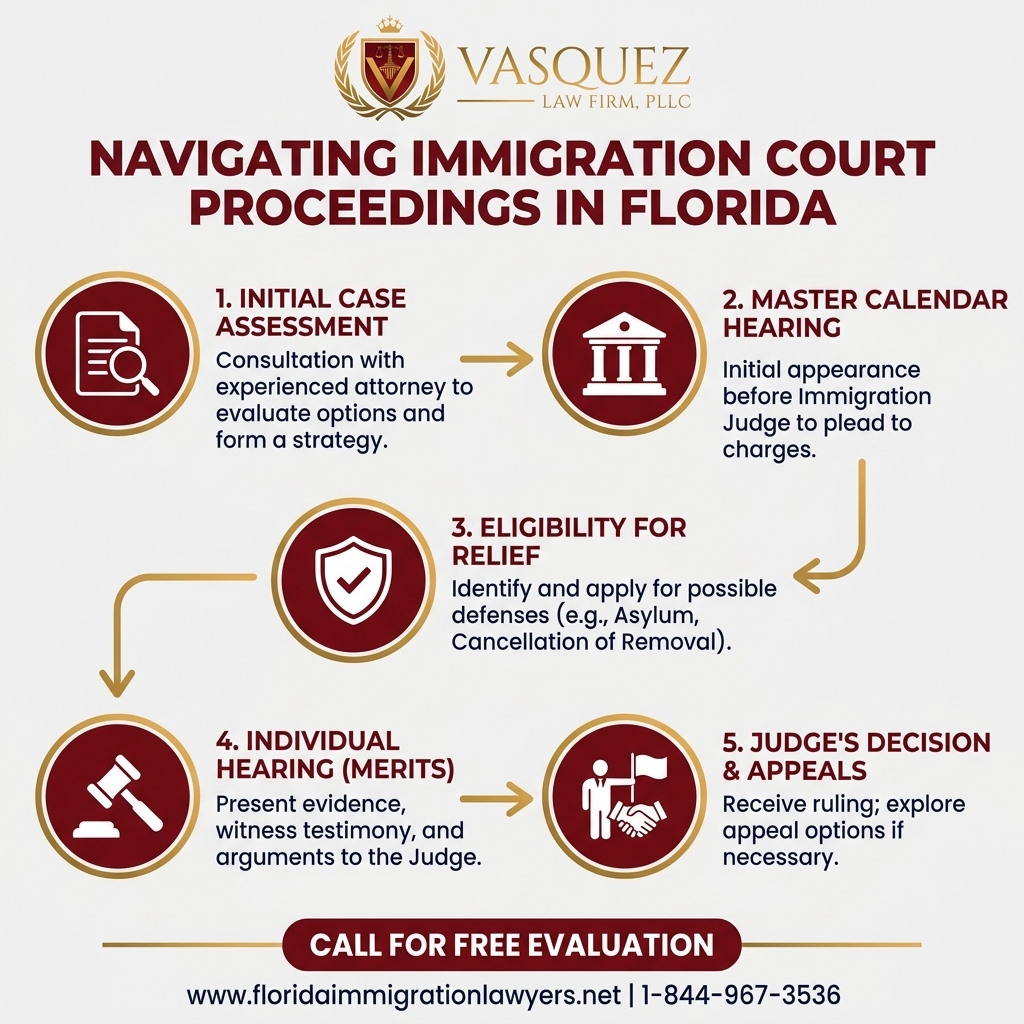
Preparation for an Individual Hearing is paramount. It involves extensive document gathering, witness preparation, and thorough review of your testimony. Your attorney will work closely with you to ensure you are ready to present the strongest possible case, anticipating potential challenges and strategically addressing them.
Potential Outcomes and Post-Decision Procedures
After the Individual Hearing, the Immigration Judge will issue a decision. The possible outcomes include:
- Grant of Relief: If the judge finds you eligible and deserving of the relief sought (e.g., asylum, cancellation of removal, adjustment of status), your application will be granted, allowing you to remain in the U.S. and potentially obtain lawful permanent residency.
- Voluntary Departure: If granted, you will be given a specific period to leave the U.S. voluntarily.
- Order of Removal/Deportation: If the judge denies your application for relief and finds you removable, an order of deportation will be issued. This is a serious outcome with significant consequences, including bars to future re-entry.
Appeals to the Board of Immigration Appeals (BIA)
If you receive an unfavorable decision, you generally have the right to appeal to the Board of Immigration Appeals (BIA), which is the highest administrative body for interpreting and applying immigration laws. An appeal must be filed within 30 days of the Immigration Judge's decision. The BIA reviews the judge's decision for legal errors or abuses of discretion. This is not a new trial; no new evidence or testimony is typically presented. The BIA's decision can affirm, reverse, or remand the case back to the Immigration Judge. If the BIA affirms the removal order, further appeals may be possible to a U.S. Circuit Court of Appeals.
Motions to Reopen or Reconsider
Sources and References
- U.S. Citizenship and Immigration Services (USCIS)
- Executive Office for Immigration Review (EOIR)
- U.S. Department of State - Bureau of Consular Affairs
- Immigration and Nationality Act (INA), 8 U.S.C. Chapter 12
Sources and References
- U.S. Citizenship and Immigration Services (USCIS)
- Executive Office for Immigration Review (EOIR)
- U.S. Department of State - Bureau of Consular Affairs
- Immigration and Nationality Act (INA), 8 U.S.C. Chapter 12
Do Not Navigate This Process Alone
Our experienced immigration attorneys are ready to fight for you. Get a free, confidential consultation today.
Se Habla Español
Frequently Asked Questions

William J. Vásquez
Founding Attorney · Vasquez Law Firm
U.S. Air Force veteran and immigration attorney with thousands of cases resolved. J.D., NCCU School of Law. AILA member. Admitted to the 4th, 5th, and 11th Circuit Courts.
Available 24/7 - Free Evaluations
Related Legal Services
Our Florida immigration attorneys can help you with experienced immigration attorneys, business immigration and asylum protection. Call today at 1-844-967-3536 for a free consultation.
Related Links
Related Topics
Free Legal Consultation
Discuss your case with our experienced attorneys. We're available 24/7.
Se Habla Español - Estamos aquí para ayudarle.
Related Articles
J-1 Waiver for Physicians in Florida: A 2026 Guide
Navigating the J-1 waiver process in Florida can be challenging for foreign physicians. Learn how the Conrad 30 program facilitates placements in underserved areas like Homestead, ensuring a successful application. Call Florida Immigration Lawyers today for expert guidance.
Naturalization Process Florida Timeline 2026 Guide
The naturalization process in Florida, culminating in U.S. citizenship, involves several key stages including eligibility assessment, filing Form N-400, biometrics, an interview, and the Oath of Allegiance. As of 2026, the typical timeline for this process in Florida ranges from 18 to 24 months, though individual experiences can vary. This guide from Florida Immigration Lawyers provides a comprehensive overview, covering requirements, step-by-step procedures, potential costs, and common pitfalls. We emphasize the importance of understanding Florida-specific nuances and the benefits of legal counsel to navigate this complex journey effectively. Contact us for a free consultation.
H-2B Visa for Florida Hospitality Seasonal Workers
Explore the H-2B visa process for seasonal workers in Florida's hospitality industry. Learn about costs, timelines, and common mistakes. Contact Florida Immigration Lawyers for expert assistance.
Military Naturalization Expedited at Florida Bases
Explore expedited military naturalization for service members stationed in Florida, including MacDill Air Force Base. Learn about eligibility, application steps, and how Florida Immigration Lawyers can assist you.