Understanding Immigration Appeals with BIA in Florida
Navigating an immigration appeal with the Board of Immigration Appeals (BIA) in Florida requires understanding specific legal processes and requirements. This comprehensive guide covers everything from filing deadlines to common mistakes. Contact Florida Immigration Lawyers for expert legal assistance.

- The BIA is the highest administrative body for interpreting immigration laws.
- Appeals must be filed within 30 days of the decision.
- Legal representation is highly recommended.
Introduction
Facing an immigration appeal in Florida can be daunting, especially if you are unfamiliar with the Board of Immigration Appeals (BIA). Located in Fort Lauderdale and other parts of Florida, individuals often find themselves navigating complex legal waters. This article provides a comprehensive guide to understanding the BIA appeal process, offering insight into timelines, necessary documentation, and other essential details. Call Florida Immigration Lawyers at 1-844-967-3536 for a free consultation to ensure you have the support you need.
The journey through immigration appeals can be emotionally taxing and legally intricate. For many in Florida, a BIA appeal represents a critical last chance to remain in the U.S., reunite with family, or secure asylum. The stakes are incredibly high, making meticulous preparation and expert legal guidance not just beneficial, but often indispensable.
Given the diverse population and dynamic immigration landscape in Florida, understanding the nuances of BIA appeals is paramount. Whether you are in Miami, Orlando, or Fort Lauderdale, the principles remain the same, but local legal counsel can provide tailored advice specific to your situation. Florida Immigration Lawyers are well-versed in these challenges and committed to guiding you every step of the way.
What is the Board of Immigration Appeals (BIA)?
The Board of Immigration Appeals (BIA) is the highest administrative body for interpreting and applying immigration laws in the United States. As of 2026, it is responsible for reviewing decisions made by immigration judges and certain decisions of the Department of Homeland Security (DHS). Located within the Department of Justice, the BIA handles appeals related to deportation orders, asylum applications, and more.
For immigrants in Florida, particularly in bustling areas like Fort Lauderdale, understanding the role of the BIA is crucial. The BIA does not conduct trials but reviews the records of lower court decisions. Their decisions are binding unless overturned by the Attorney General or a federal court.
The BIA consists of Board Members who are administrative judges appointed by the Attorney General. They review cases to ensure that immigration laws are applied consistently and fairly across the country. Their jurisdiction extends to various types of appeals, including decisions on removal (deportation) proceedings, denials of asylum or withholding of removal, waivers of inadmissibility, and certain family-based visa petitions. Understanding the specific grounds for appeal and how the BIA interprets relevant statutes and precedents is a cornerstone of a successful appeal.
Unlike an immigration court, which hears testimony and reviews evidence firsthand, the BIA primarily reviews the written record of the proceedings, including transcripts, exhibits, and legal briefs submitted by both parties. This makes the quality of the initial hearing and the subsequent legal arguments presented to the BIA incredibly important. A favorable decision from the BIA can lead to a reversal of an immigration judge's order, a remand for further proceedings, or even the termination of removal proceedings, offering a path forward for individuals and families.
How to File an Immigration Appeal with the BIA?
To file an immigration appeal with the BIA, you must submit a Notice of Appeal within 30 days of the immigration judge's decision. This notice is filed using Form EOIR-26 and must be accompanied by the requisite filing fee or a fee waiver request.
- File the Notice of Appeal: Fill out and submit Form EOIR-26. Ensure all details are correct to avoid delays. This form is your formal notification to the BIA that you intend to challenge the immigration judge's decision. It is critical to specify the exact findings of fact or conclusions of law that you believe were erroneous. Missing the 30-day deadline is one of the most common reasons for an appeal's dismissal, so prompt action is essential.
- Include Required Documents: Attach any supporting documents that justify your appeal. This typically includes a copy of the immigration judge's decision and, if available, the hearing transcript. If you plan to submit a legal brief, it's often filed after the initial notice, but ensure you understand the deadlines for all submissions. New evidence is generally not permitted on appeal unless specific criteria are met, such as the evidence being unavailable at the time of the original hearing.
- Pay the Filing Fee: Submit the fee with your notice or apply for a fee waiver if necessary. The filing fee is currently $110, but it is subject to change. If you cannot afford the fee, you must submit Form EOIR-22, Motion to Waive Filing Fee, along with documentation demonstrating your inability to pay. A properly filed fee waiver request is crucial to prevent your appeal from being rejected due to non-payment.
- Prepare Legal Arguments: Draft a detailed brief outlining why the decision should be reconsidered. This legal brief is arguably the most critical component of your appeal. It must clearly articulate the errors made by the immigration judge, citing relevant statutes, regulations, and case law. A well-structured brief will present a compelling narrative, supported by legal precedent, explaining why the BIA should reverse or remand the decision.
- Await BIA Decision: After submission, the BIA will review your case and issue a decision. This process can take several months to over a year, depending on the complexity of your case and the BIA's caseload. The BIA may affirm the immigration judge's decision, reverse it, or remand the case back to the immigration court for further proceedings.
It is also crucial to ensure that all parties, including the Department of Homeland Security (DHS), are properly served with copies of your Notice of Appeal and any subsequent filings. Proper service ensures that the government is aware of your appeal and has an opportunity to respond, maintaining fairness in the legal process. An attorney from Florida Immigration Lawyers can help manage these procedural complexities, ensuring all deadlines are met and documents are correctly filed and served.
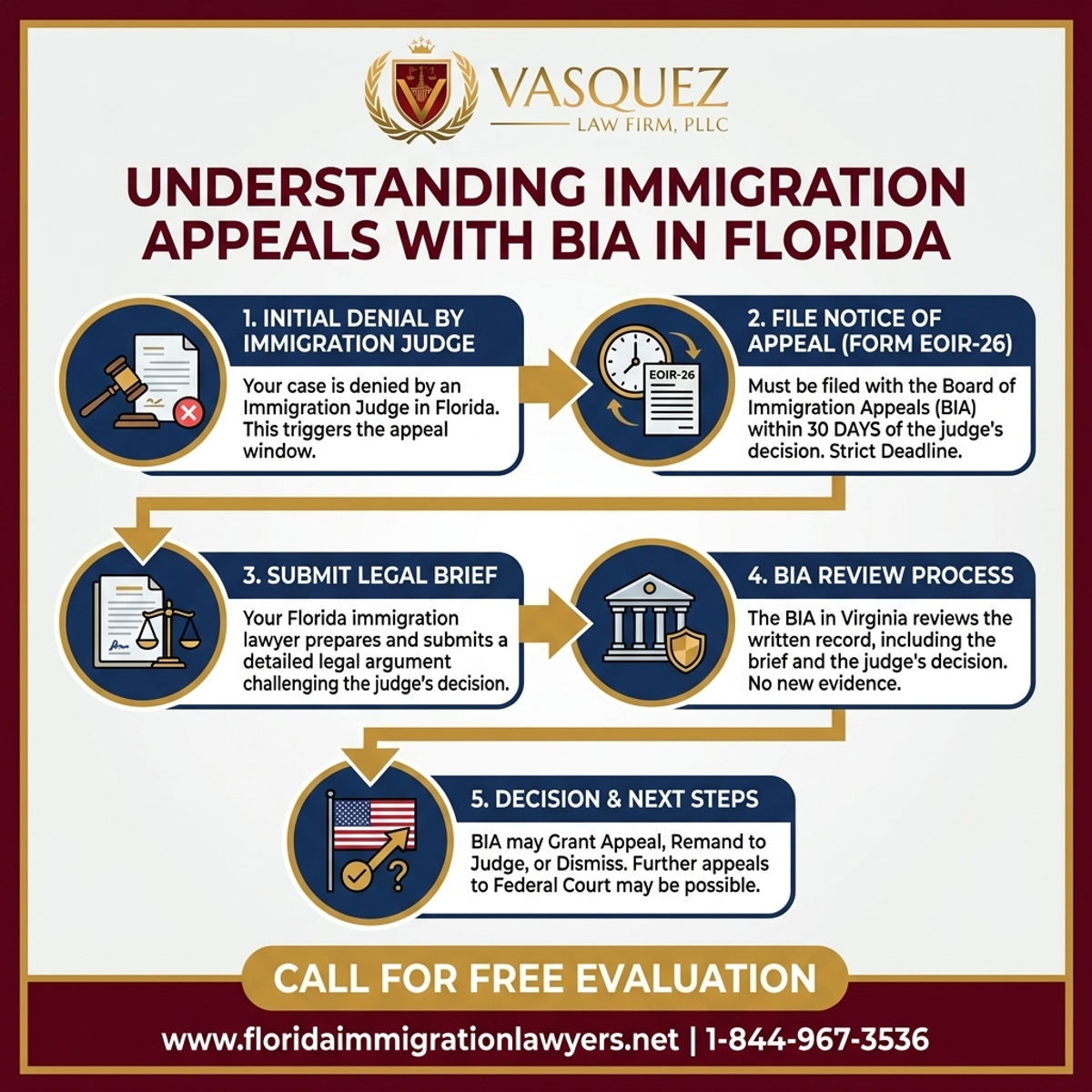
Step-by-Step Process — Understanding Immigration Appeals with BIA in Florida
For more detailed guidance, visiting the EOIR website is recommended.
Document Checklist for BIA Appeals
- Completed Form EOIR-26: This is the official Notice of Appeal and must be filled out accurately, detailing the specific grounds for your appeal.
- Copy of the original immigration judge's decision: This document is essential for the BIA to understand the basis of the appeal and review the specific rulings being challenged.
- Payment for filing fee or fee waiver request form: Ensure the correct fee is submitted or a comprehensive fee waiver application is included to avoid rejection.
- Supporting evidence (if applicable): While new evidence is generally restricted, any evidence from the original hearing that supports your appeal arguments should be referenced and, if necessary, included as part of the record.
- Legal brief detailing appeal arguments: This critical document outlines your legal reasoning, citing relevant laws and precedents to persuade the BIA to rule in your favor.
- Proof of service: Documentation showing that all parties, including DHS counsel, received copies of your appeal documents is vital for procedural compliance.
Timeline and Processing Expectations for BIA Appeals
| Stage | Typical Timeframe | Notes |
|---|---|---|
| Filing Notice of Appeal | 30 days post-decision | Strict deadline |
| BIA Review | 6-12 months | Varies based on case complexity |
| Decision Issuance | Up to 1 year | May extend beyond typical range |
Processing times can vary, so staying informed and regularly checking the case status is advisable.
Several factors can influence the BIA's processing times, including the complexity of the legal issues, whether a full transcript of the immigration court proceedings is required, and the current backlog of cases at the BIA. Cases involving novel legal questions or extensive factual records often take longer to resolve. While the BIA strives for efficiency, ensuring your submission is complete and well-organized can help prevent unnecessary delays.
It's important to prepare for the possibility of delays and to maintain communication with your legal counsel, such as Florida Immigration Lawyers, throughout this period. They can help you monitor your case status through the EOIR automated case status system and advise you on any developments. Patience is key, but proactive monitoring and timely responses to any BIA requests for additional information are crucial for a smooth process.
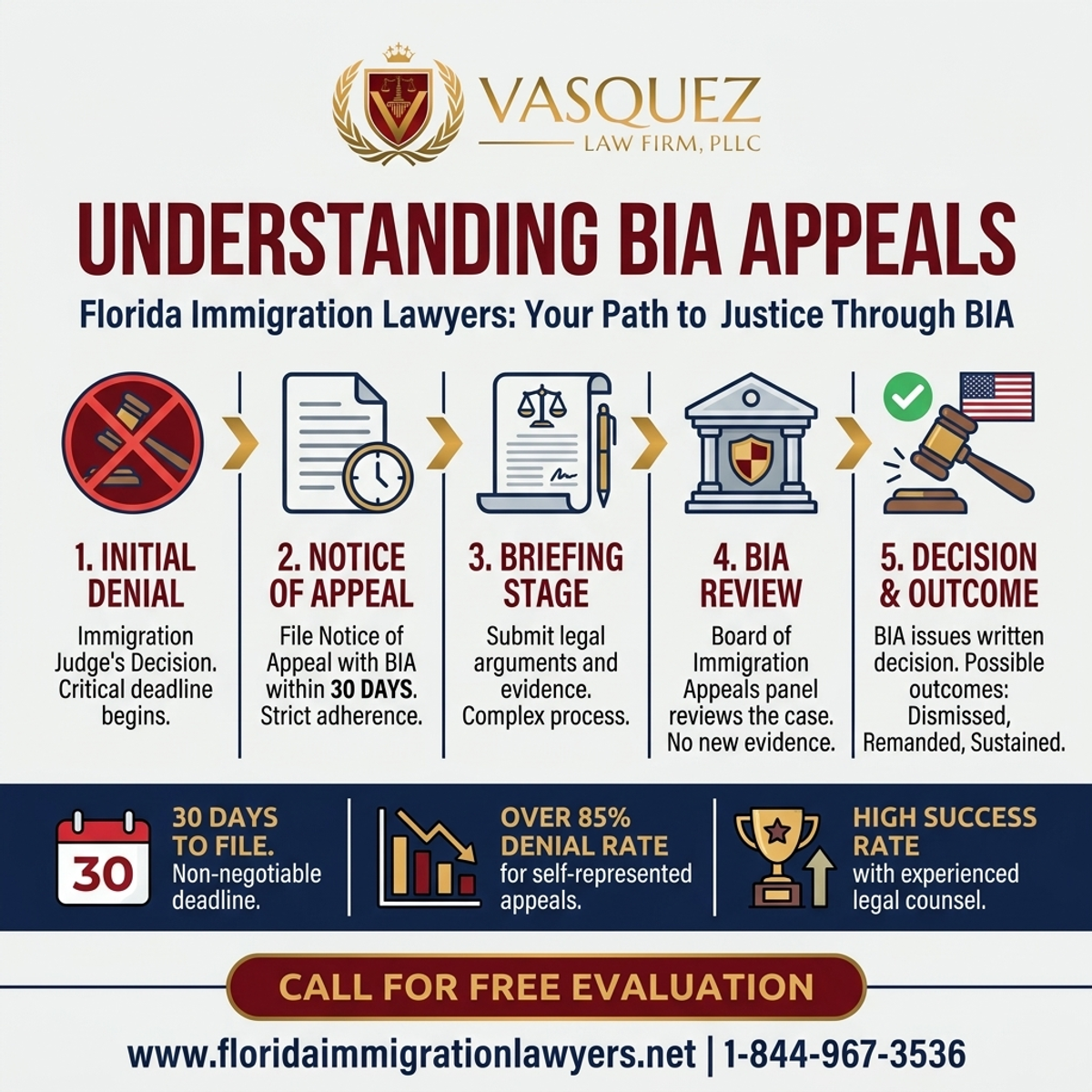
Key Statistics — Understanding Immigration Appeals with BIA in Florida
Cost Factors and Fee Breakdown for BIA Appeals
| Item | Typical Fee | Notes |
|---|---|---|
| Filing Fee | $110 | Subject to change |
| Attorney Fees | Varies | Depends on case complexity |
| Document Preparation | Varies | Optional, but recommended |
For those in Fort Lauderdale, understanding these costs helps in financial planning for an appeal.
Attorney fees can range significantly based on the lawyer's experience, the complexity of your case, and whether they charge an hourly rate or a flat fee for the appeal. While the initial cost of legal representation might seem high, the long-term benefits of a successful appeal – such as avoiding deportation, obtaining a green card, or securing asylum – far outweigh the investment. A skilled attorney can identify the strongest legal arguments, draft a persuasive brief, and navigate procedural hurdles that could otherwise lead to dismissal.
Beyond the mandatory filing fee and attorney fees, other potential costs might include translation services for foreign language documents, expert witness fees if specialized testimony is required, or the cost of obtaining certified copies of documents. It's important to discuss all potential costs upfront with your attorney to ensure transparency and proper financial planning. Florida Immigration Lawyers offers free consultations to discuss your case and provide a clear understanding of the potential costs involved.
Common Mistakes to Avoid in BIA Appeals
- Missing the Filing Deadline: Appeals must be filed within 30 days. Missing this window typically results in dismissal. This is a strict statutory deadline, and even being one day late can cause your appeal to be summarily rejected, effectively ending your chance to challenge the immigration judge's decision. Always prioritize filing on time, ideally with proof of mailing.
- Incomplete Forms: Ensure all forms are filled out completely and accurately to avoid delays. Minor omissions or errors on Form EOIR-26 can lead to the BIA rejecting your appeal, forcing you to refile and potentially risking the 30-day deadline if not caught quickly. Double-check every field before submission.
- Lack of Supporting Evidence: Failing to provide adequate evidence can weaken your case. While new evidence is generally disfavored at the BIA stage, ensuring the existing record from the immigration court hearing fully supports your arguments is crucial. If specific evidence was improperly excluded by the immigration judge, your brief should highlight this error.
- Ignoring Legal Advice: Consulting with an attorney is crucial. Self-representation can lead to unfavorable outcomes. Immigration law is incredibly complex, and without expert guidance, you might overlook critical legal arguments, fail to cite relevant case law, or misunderstand procedural requirements, significantly reducing your chances of success.
- Not Requesting a Fee Waiver: If you can't afford the filing fee, apply for a waiver rather than risking non-submission. If you qualify for a fee waiver based on your income or receipt of public benefits, submitting Form EOIR-22 with proper documentation is essential. Failing to do so will result in your appeal being rejected for non-payment.
- Providing Inconsistent Information: Ensure consistency between your appeal and previous statements. Any discrepancies between what you state in your appeal and what was presented in your immigration court hearing can severely undermine your credibility and lead the BIA to question the veracity of your claims.
- Forgetting to Check Case Status: Regularly monitor the status of your appeal to stay updated on any changes. The BIA may issue requests for additional information or briefs, and failing to respond promptly can lead to dismissal. You can typically check your case status through the EOIR automated system or online portal.
- Failing to Articulate Specific Legal Errors: The BIA is not a second trial. Your appeal brief must clearly identify specific legal or factual errors made by the immigration judge, rather than simply reiterating your story. Broad, unspecific arguments are often ineffective.
When to Call a Lawyer
Engaging an immigration lawyer is advisable if you're facing an appeal with the BIA. Legal expertise can provide valuable insights and guidance on complex cases. Warning signs that require immediate legal consultation include receiving a deportation order or complicated family immigration issues. At Florida Immigration Lawyers, our team is ready to assist with appeals and more. Call us for personalized support.
A lawyer becomes indispensable when your case involves complex legal questions, such as challenging a criminal conviction's impact on your immigration status, navigating intricate asylum law, or seeking specific waivers. For instance, if an immigration judge denied your asylum claim based on a misinterpretation of country conditions, a skilled attorney from Florida Immigration Lawyers would know precisely how to frame this legal error in a BIA brief, citing relevant case law and human rights reports.
Even seemingly straightforward cases can have hidden complexities. Language barriers, cultural nuances, and the sheer volume of legal precedents make self-representation extremely risky. A dedicated attorney acts as your advocate, ensuring your rights are protected and your arguments are presented in the most compelling manner possible. Don't hesitate to reach out to Florida Immigration Lawyers at 1-844-967-3536 for a free consultation to evaluate your situation.
About Florida Immigration Lawyers
Florida Immigration Lawyers is a dedicated law firm serving the entire state. We specialize in immigration appeals, deportation defense, family immigration, and more. Our experienced attorneys are committed to providing compassionate and effective legal support. Contact us at 1-844-967-3536 or visit our website for a free consultation. We are available 24/7 and offer bilingual services.
Our firm has a proven track record of successfully handling complex BIA appeals, including those involving criminal grounds of inadmissibility, challenging adverse credibility findings, and arguing for waivers based on extreme hardship to qualifying relatives. We understand the profound impact that an immigration decision can have on your life and your family, and we approach each case with the diligence and personalized attention it deserves.
At Florida Immigration Lawyers, our commitment goes beyond legal representation; we aim to be a source of support and clarity during what can be a very challenging time. Our bilingual team ensures that language is never a barrier to effective communication, and our 24/7 availability reflects our dedication to being there for our clients when they need us most. Let us put our expertise to work for you and help navigate your BIA appeal with confidence.
Frequently Asked Questions About BIA Appeals
Sources and References
- U.S. Citizenship and Immigration Services (USCIS)
- Executive Office for Immigration Review (EOIR)
- 8 U.S.C. Chapter 12 - Immigration and Nationality Act
- State Department
Related services: deportation defense services, asylum and refugee protection, immigration waivers, humanitarian protection programs.
This article provides general legal information and is not intended as legal advice. Every case is unique, and outcomes depend on specific facts and circumstances. Contact an attorney for advice about your particular situation.
Final CTA
Don't face the BIA appeal process alone. Contact Florida Immigration Lawyers at 1-844-967-3536 for a free consultation. Se Habla Español - Estamos aquí para ayudarle.
If you need legal assistance, learn more about immigration case consultation, or call us at 1-844-967-3536 for a free consultation.
Do Not Navigate This Process Alone
Our experienced immigration attorneys are ready to fight for you. Get a free, confidential consultation today.
Se Habla Español
Frequently Asked Questions
Harold Estrada-Rodriguez
Florida Immigration Attorney · FL Bar No. 1041171
Florida Bar attorney handling Florida-jurisdiction immigration matters. Bilingual representation, free consultations.
Available 24/7 - Free Evaluations
Related Legal Services
Our Florida immigration attorneys can help you with immigration practice areas, free immigration consultation and experienced immigration attorneys. Call today at 1-844-967-3536 for a free consultation.
Related Links
Related Topics
Free Legal Consultation
Discuss your case with our experienced attorneys. We're available 24/7.
Se Habla Español - Estamos aquí para ayudarle.
Related Articles
Fiance Visa Florida: K-1 Process Guide for 2026 | VLF Florida
For U.S. citizens in Florida, bringing a foreign fiance(e) to the U.S. via the K-1 visa involves intricate steps, from USCIS petitions to consular interviews and eventual Adjustment of Status. This comprehensive guide details the 2026 process, eligibility, required documents, timelines, and costs. Learn how to navigate the complexities, avoid common mistakes, and secure your future together in Florida. Florida Immigration Lawyers offers expert guidance, ensuring your application is meticulously prepared and submitted. We provide free consultations to help you understand your options and achieve your immigration goals.
E-2 Visa for Florida Business Investors | VLF Florida
Discover how the E-2 investor visa can help you expand your business into Florida. Learn about requirements, the application process, and why Hialeah is an ideal location for investors. Call Florida Immigration Lawyers for a free consultation today.
Immediate Relative Petition in Florida: Key Insights
Filing an immediate relative petition in Florida can bring your family closer by securing a green card for your loved ones. Learn the steps, requirements, and common pitfalls to avoid. Contact Florida Immigration Lawyers for expert guidance and a free consultation.
Green Card Through Marriage in Florida: A 2026 Guide
Obtaining a green card through marriage in Florida involves several steps, including filing Form I-130 and attending an interview. Learn the process and avoid common pitfalls. Contact Florida Immigration Lawyers for guidance.
