E-2 Visa for Florida Business Investors
Discover how the E-2 investor visa can help you expand your business into Florida. Learn about requirements, the application process, and why Hialeah is an ideal location for investors. Call Florida Immigration Lawyers for a free consultation today.

E-2 Visa for Florida Business Investors | VLF Florida
Florida, with its vibrant economy, diverse culture, and strategic location as a gateway to the Americas, is an increasingly attractive destination for international entrepreneurs looking to establish or acquire businesses. The E-2 Treaty Investor Visa offers a unique and flexible pathway for individuals from treaty countries to live and work in the U.S. by investing a substantial amount of capital into a U.S. enterprise. At VLF Florida, we specialize in guiding investors through the intricate process of securing an E-2 visa, ensuring a smooth transition for you, your family, and your business venture in the Sunshine State.
Understanding the E-2 Treaty Investor Visa
The E-2 visa is a non-immigrant visa category that permits foreign investors from countries with which the United States maintains a treaty of commerce and navigation to enter the U.S. Its primary purpose is to develop and direct the operations of an enterprise in which they have invested a substantial amount of capital. Unlike some other investor visas, the E-2 is not a direct path to a green card, but it offers significant flexibility, allowing for indefinite extensions as long as the business continues to meet the requirements and remains operational. This visa is particularly attractive for those seeking to actively manage their investment, contribute to the U.S. economy, and enjoy the benefits of residing in dynamic states like Florida.
Key E-2 Visa Eligibility Requirements
To qualify for an E-2 visa, applicants must meet several stringent criteria, each requiring detailed documentation and a clear demonstration of intent:
- Treaty Country Nationality: The investor, and in the case of a corporate investor, at least 50% of the company's ownership, must possess the nationality of a country with which the U.S. maintains a treaty of commerce and navigation. Florida attracts investors from a wide range of these countries, including but not limited to Canada, Mexico, the United Kingdom, Germany, France, Japan, and many others. It's crucial to verify your country's eligibility before proceeding.
- Substantial Investment: The investor must have invested, or be actively in the process of investing, a substantial amount of capital in a bona fide enterprise in the U.S. "Substantial" is not defined by a fixed dollar amount but rather relative to the total cost of the enterprise and sufficient to ensure the successful operation of the business. The funds must be irrevocably committed and 'at risk.'
- Bona Fide Enterprise: The investment must be in a real, active commercial or entrepreneurial undertaking that produces goods or services for profit. Speculative or idle investments (e.g., undeveloped land) do not qualify. The business must be more than marginal, meaning it must have the present or future capacity to generate more than enough income to provide a minimal living for the investor and their family. A comprehensive business plan is essential to demonstrate this capacity.
- Managerial/Supervisory or Essential Skills Role: The investor must be coming to the U.S. to develop and direct the enterprise. This typically means holding a managerial or executive position, or possessing highly specialized skills essential to the operation of the business. Passive investment without active involvement is generally not permitted.
- Intent to Depart: Although the E-2 visa can be renewed indefinitely, applicants must demonstrate an intent to depart the U.S. upon the termination of their E-2 status. This is a crucial distinction from immigrant visas that lead to permanent residency.
What Constitutes a "Substantial" Investment?
The concept of a "substantial investment" is often a point of confusion and a critical hurdle for E-2 applicants. It's not about a minimum dollar figure but rather a proportionality test. The amount must be significant in relation to the overall cost of either purchasing an existing enterprise or establishing a new one. For smaller businesses, this often means a higher percentage of the total cost. For example, investing $100,000 into a business valued at $120,000 might be considered substantial, whereas $100,000 into a multi-million dollar corporation might not meet the threshold. The funds must be "at risk," meaning they are irrevocably committed to the enterprise and subject to partial or total loss if the investment fails. This typically excludes unencumbered cash in a bank account not yet deployed into the business. Acceptable forms of investment include cash, equipment, inventory, intellectual property, and other property, all valued at fair market prices. It is vital to document every aspect of the investment clearly, demonstrating its source and its deployment into the business.
The E-2 Visa Application Process
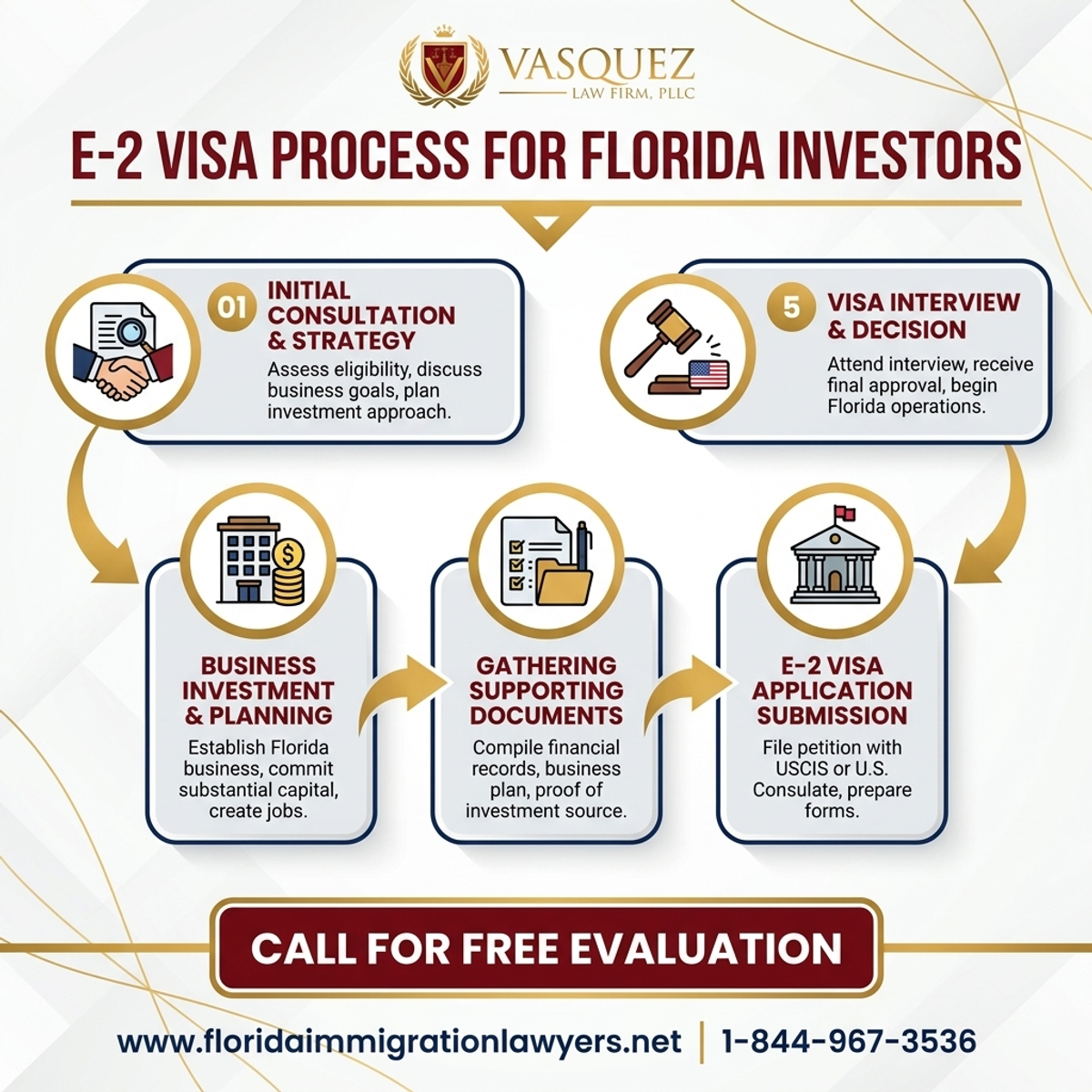
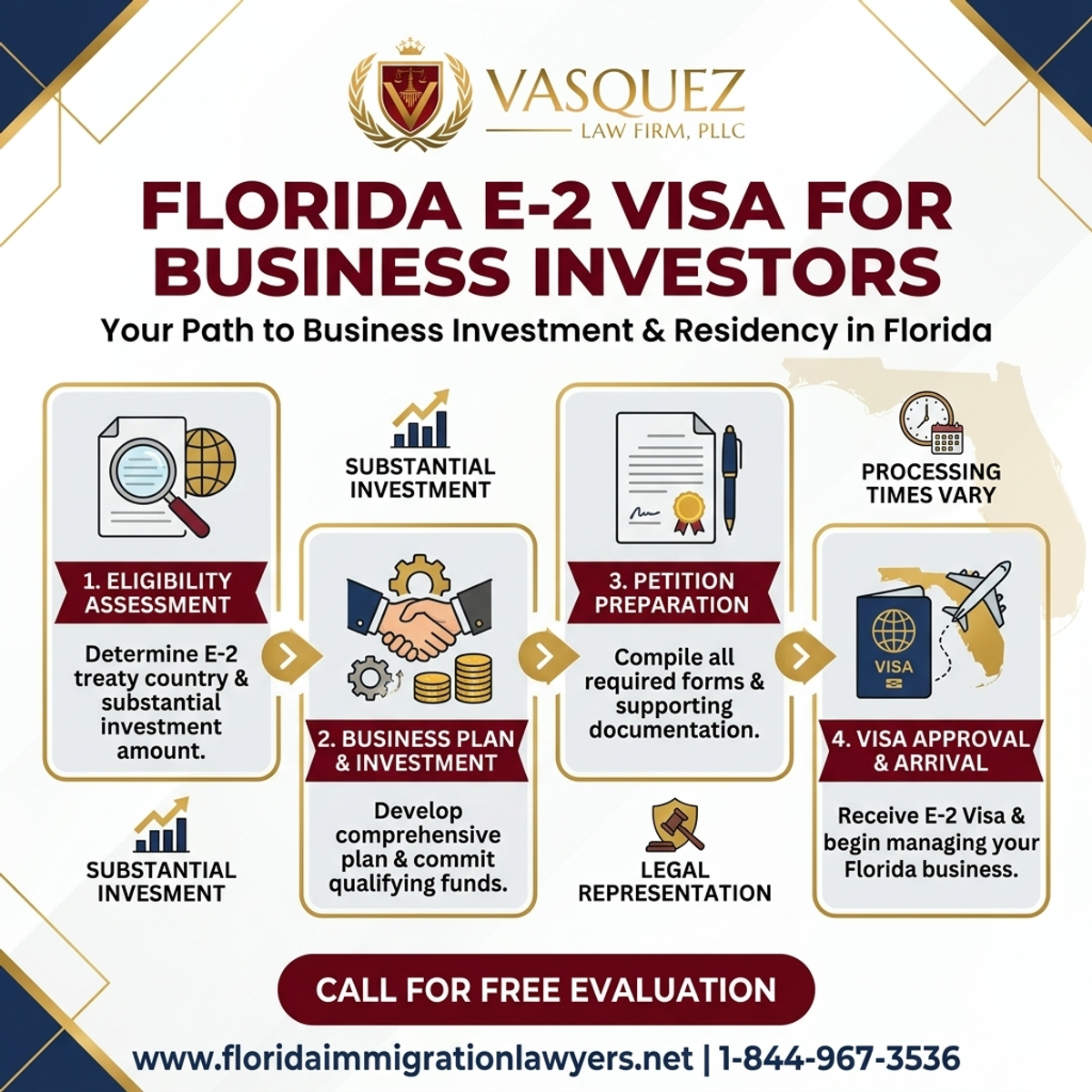
Applying for an E-2 visa involves meticulous preparation and adherence to specific procedural steps, which can vary slightly depending on your current location. The process typically begins with the investor identifying a suitable business opportunity in Florida and making the substantial investment. This might involve purchasing an existing franchise, acquiring a small business, or launching a new startup. Once the investment is made and the business is operational or demonstrably close to it, the extensive application package is prepared. This package is extensive, including detailed financial statements, a comprehensive business plan, evidence of the source of funds, and proof of the applicant's qualifications and role in the business.
Depending on where the applicant is located, the application can be processed either through a U.S. Embassy or Consulate abroad (consular processing) or, if the applicant is already in the U.S. on a different non-immigrant status, through USCIS (change of status). Consular processing is generally faster and often preferred for initial applications. An interview at the consulate is a crucial step where the applicant must clearly articulate their business plan and demonstrate their eligibility and intent. Our experienced attorneys at VLF Florida guide clients through every stage, from initial assessment to document preparation, business plan review, and interview coaching, ensuring the strongest possible case is presented to immigration authorities. We help you anticipate potential questions and present your case with clarity and confidence.
Benefits of the E-2 Visa for Florida Investors
The E-2 visa offers numerous advantages for international investors looking to make Florida their home and business base, making it a highly sought-after option:
- Live and Work in the U.S.: The primary benefit is the ability to legally reside and work in the United States, specifically in vibrant economic hubs like Miami, Orlando, Tampa, or Jacksonville, which offer diverse markets and opportunities.
- Spouse and Children: Spouses of E-2 visa holders can apply for work authorization, offering additional flexibility for families and contributing to household income. Unmarried children under 21 can attend school in the U.S., benefiting from the American education system.
- Indefinite Extensions: While not a direct path to a green card, the E-2 visa can be renewed indefinitely as long as the underlying business continues to operate, meet the E-2 requirements, and remains profitable. Each extension is typically granted for up to five years, providing long-term stability.
- Flexibility: E-2 visa holders can travel in and out of the U.S. freely, facilitating international business and personal travel without significant restrictions.
- Entrepreneurial Control: Unlike some passive investment visas, the E-2 requires the investor to actively develop and direct their enterprise, giving them full control over their business operations and strategic decisions.
Navigating Common Challenges and Pitfalls in E-2 Visa Applications
While the E-2 visa presents an excellent opportunity for foreign investors, the application process is complex and fraught with potential challenges that can lead to delays or even denials. Understanding these common pitfalls is crucial for a successful outcome. One of the most frequent hurdles is demonstrating the "substantiality" of the investment. As discussed, this isn't a fixed dollar amount, making it subjective and requiring a compelling argument supported by detailed financial projections and a robust business plan. Many applicants underestimate the level of detail required to prove that their investment is not marginal and has the capacity to generate significant income beyond merely supporting the investor and their family. A well-articulated business plan, projecting at least five years of growth, job creation, and economic impact, is indispensable. This plan must clearly outline market analysis, operational strategies, financial forecasts, and how the investment funds will be utilized to ensure the business's success and contribution to the U.S. economy, not just the investor's personal income.
Another significant challenge lies in proving the legitimate source of funds. USCIS and consular officers scrutinize the origin of the investment capital to prevent money laundering and other illicit activities. Applicants must provide a clear paper trail demonstrating how the funds were legally acquired, whether through savings, sale of property, inheritance, legitimate business profits, or loans secured by personal assets. This often involves submitting bank statements, tax returns, property deeds, business registration documents, and other financial records from the past several years. Failure to provide transparent and verifiable documentation can lead to immediate denial. Furthermore, ensuring that the funds are "at risk" and irrevocably committed to the enterprise is paramount. Funds held in an escrow account, for example, must be released to the business upon visa approval, and the investment must be genuinely committed, not merely contemplated. It's also vital to ensure the business is truly "active" and not a passive investment. This means demonstrating ongoing operations, employee hires (or clear plans for them), and engagement in commercial activity. Overcoming these complexities often requires the strategic advice of an experienced immigration attorney, who can help structure the investment, prepare the necessary documentation, and anticipate potential questions from immigration authorities. For comprehensive guidance on various immigration matters, including investor visas and other business-related immigration options, our firm offers dedicated support tailored to your unique circumstances.
A less common but equally serious pitfall can arise if an applicant has had previous immigration issues, such as overstaying a prior visa, misrepresenting information, or having a criminal record. Such issues can trigger inadmissibility grounds, making an E-2 visa approval extremely difficult or impossible without proper legal intervention. In such cases, it's critical to disclose all relevant information to your attorney upfront, as there might be waivers available or alternative strategies to pursue. Similarly, understanding the nuances between different visa categories is important; for instance, the E-2 is distinct from asylum claims or deportation defense cases, which fall under entirely different legal frameworks and require specialized legal approaches. While VLF Florida specializes in a broad range of immigration services, knowing the specific requirements for each path is key to avoiding missteps. Finally, administrative processing delays are always a possibility, particularly for certain nationalities or if additional security checks are deemed necessary. Patience and proactive follow-up, guided by legal counsel, are essential during these periods.
Why Choose VLF Florida for Your E-2 Visa?
At VLF Florida, we understand the aspirations of international investors and the complexities of U.S. immigration law. Our dedicated team provides personalized and strategic legal counsel to ensure your E-2 visa application is meticulously prepared and presented. We pride ourselves on our deep knowledge of Florida's dynamic business landscape and the specific requirements for investor visas. From structuring your investment to preparing your comprehensive business plan and representing you during the application process, we are your trusted partner. Our commitment is to facilitate your entrepreneurial journey in the Sunshine State, helping you navigate every legal nuance to achieve your goals. Don't navigate this complex process alone. Contact us today for a free consultation to discuss your E-2 visa eligibility and how we can help you achieve your business immigration goals efficiently and effectively.
Step-by-Step Process — E-2 Visa for Florida Business Investors | VLF Florida
Frequently Asked Questions About the E-2 Visa
Here are answers to some common questions regarding the E-2 Treaty Investor Visa:
- What is the minimum investment amount for an E-2 visa?
There is no statutory minimum investment amount. The investment must be "substantial" relative to the total cost of the enterprise. For a small to medium-sized business, this often means an investment in the range of $80,000 to $200,000 or more, demonstrating a significant commitment to the business's success and its capacity to generate more than a marginal income.
- Can I include my family in my E-2 visa application?
Yes, spouses and unmarried children under 21 years of age can be included in your E-2 visa application. Spouses are eligible to apply for work authorization in the U.S., offering them the flexibility to pursue employment, and children can attend school at any level.
- How long is an E-2 visa valid, and can it be renewed?
An E-2 visa is typically issued for a period of up to five years, though the specific validity period can vary by country of nationality. It can be renewed indefinitely, as long as the underlying business continues to operate, meet all E-2 requirements, and remains profitable, providing long-term residency potential.
- Does the E-2 visa lead to a Green Card?
No, the E-2 visa is a non-immigrant visa and does not directly lead to a Green Card or permanent residency. However, E-2 visa holders may explore other immigration pathways to permanent residency if they qualify for other visa categories or programs during their stay.
- What kind of businesses qualify for an E-2 visa?
A wide range of businesses can qualify, from franchises and existing small businesses (e.g., restaurants, retail stores, service providers, tech startups) to new startups. The key is that the business must be a real, active commercial enterprise that generates goods or services for profit and is not marginal, meaning it must contribute meaningfully to the U.S. economy.
- What does it mean for funds to be "at risk"?
Funds are considered "at risk" when they are irrevocably committed to the enterprise and subject to partial or total loss if the investment fails. This means the funds must be genuinely invested in the business, deployed for operational expenses, inventory, equipment, etc., and not merely held in a personal or business bank account without active use.
- Can I change my business while on an E-2 visa?
Significant changes to your business, such as a change in ownership, substantial restructuring, a major shift in the nature of the business, or a move to a different industry, may require notifying USCIS or applying for a new E-2 visa. It's crucial to consult with an immigration attorney before making such changes to ensure compliance.
- How long does the E-2 visa application process take?
The processing time can vary significantly depending on the consulate or USCIS service center, the completeness of the application, and the complexity of the case. It can range from a few weeks to several months. Premium processing options may be available for certain USCIS filings, which can expedite the decision for an additional
Sources and References
- U.S. Citizenship and Immigration Services (USCIS)
- Executive Office for Immigration Review (EOIR)
- U.S. Department of State - Bureau of Consular Affairs
- Immigration and Nationality Act (INA), 8 U.S.C. Chapter 12
Key Statistics — E-2 Visa for Florida Business Investors | VLF Florida
Do Not Navigate This Process Alone
Our experienced immigration attorneys are ready to fight for you. Get a free, confidential consultation today.
Se Habla Español
Frequently Asked Questions
Harold Estrada-Rodriguez
Florida Immigration Attorney · FL Bar No. 1041171
Florida Bar attorney handling Florida-jurisdiction immigration matters. Bilingual representation, free consultations.
Available 24/7 - Free Evaluations
Related Legal Services
Our Florida immigration attorneys can help you with immigration practice areas, free immigration consultation and experienced immigration attorneys. Call today at 1-844-967-3536 for a free consultation.
Related Links
Related Topics
Free Legal Consultation
Discuss your case with our experienced attorneys. We're available 24/7.
Se Habla Español - Estamos aquí para ayudarle.
Related Articles
Immediate Relative Petition in Florida: Key Insights
Filing an immediate relative petition in Florida can bring your family closer by securing a green card for your loved ones. Learn the steps, requirements, and common pitfalls to avoid. Contact Florida Immigration Lawyers for expert guidance and a free consultation.
Green Card Through Marriage in Florida: A 2026 Guide
Obtaining a green card through marriage in Florida involves several steps, including filing Form I-130 and attending an interview. Learn the process and avoid common pitfalls. Contact Florida Immigration Lawyers for guidance.
Diversity Visa: Green Card Lottery in Florida | VLF Florida
Explore the Diversity Visa Lottery process in Florida, including eligibility, application steps, and common pitfalls. Gain insights and expert advice from Florida Immigration Lawyers to maximize your chances of success.
DACA Work Permit Florida: Renewals & New Applications 2026
Navigating the DACA work permit Florida process in 2026 requires a deep understanding of current eligibility criteria, application steps, and potential legal challenges. This comprehensive guide from Florida Immigration Lawyers provides essential information for DACA recipients seeking to renew their employment authorization (EAD). Learn about the necessary documents, estimated costs, and crucial timelines to ensure a successful application. We cover common mistakes to avoid and highlight when to seek expert legal counsel, especially given the evolving legal landscape surrounding DACA. Our firm is dedicated to helping individuals in Gainesville and across Florida protect their DACA status and secure their ability to work legally.
