ICE Check-In Attorney Florida Representation
ICE check-ins in Florida, especially in cities like Orlando, are crucial for immigrants under supervision. Learn why having an attorney is vital, how ISAP affects you, and how to prepare. Call Florida Immigration Lawyers for guidance.

ICE check-ins are crucial for individuals under supervision in Florida, especially in Orlando. Having an attorney present can provide legal guidance and protection during these interactions. Key points include:
- ICE check-ins are mandatory appointments for individuals under supervision.
- Legal representation can protect your rights during these meetings.
- ISAP is a program that monitors individuals not held in detention.
In recent years, the landscape of immigration enforcement in Florida has evolved significantly. With new regulations and policies, understanding the intricacies of immigration can be daunting. ICE check-ins, especially in cities like Orlando, are a critical aspect of compliance for many immigrants. This article explores the importance of legal representation during these check-ins, the role of ISAP, and what you can do to prepare. Call Florida Immigration Lawyers at 1-844-967-3536 for a free consultation.
What is an ICE Check-In and Why is it Important?
An ICE check-in is a scheduled meeting with Immigration and Customs Enforcement (ICE) for individuals under supervision, like those released on bond or parole. As of 2026, these check-ins are essential to ensure compliance with immigration proceedings.
During an ICE check-in, an officer may review your immigration status, verify your address, and discuss any upcoming court dates. Failing to attend can lead to severe consequences, including deportation. Having a trustworthy attorney can help you understand your rights and responsibilities during these meetings.
These mandatory appointments serve several critical purposes for ICE. They allow the agency to monitor individuals who are not in physical detention, ensuring they are adhering to the terms of their release or supervision. This includes confirming their current address, employment status, and verifying that they are not a flight risk or a danger to the community. For individuals awaiting immigration court hearings, check-ins are a way to ensure they are aware of and attending all scheduled proceedings, which is vital for the integrity of the immigration justice system.
For individuals under supervision, ICE check-ins are not merely administrative formalities; they are pivotal moments that can significantly impact their immigration case. For instance, consider a scenario where an individual, let's call him Ricardo, was released on bond in Orlando while his asylum claim is pending. His regular check-ins are a condition of his release. If Ricardo misses a check-in, ICE could revoke his bond, leading to his re-detention and potentially accelerating his deportation proceedings. This highlights why understanding the process and having legal counsel from Florida Immigration Lawyers can be the difference between maintaining freedom and facing severe penalties.
Beyond verifying basic information, ICE officers may also inquire about changes in personal circumstances, such as marriage, birth of children, or changes in employment. While some questions are routine, others might delve into sensitive areas that could inadvertently harm your case if not handled carefully. An attorney can help you navigate these discussions, advise you on what information you are legally obligated to provide, and protect you from self-incrimination, ensuring that your rights are upheld throughout the interaction.
What is ISAP and How Does it Affect You?
The Intensive Supervision Appearance Program (ISAP) is designed to monitor individuals who are not held in detention. As of 2026, ISAP uses electronic monitoring, check-ins, and home visits to track compliance.
Participation in ISAP often requires regular reporting and may involve wearing an ankle monitor. An attorney can advise you on how to manage your obligations under ISAP and ensure that you remain compliant with all requirements.
ISAP is managed by private contractors on behalf of ICE and aims to ensure that individuals appear for their immigration court hearings and comply with release conditions. The program utilizes various forms of technology, including GPS ankle monitors, telephonic reporting, and smartphone applications with facial recognition features. The specific type of monitoring assigned often depends on an individual's perceived flight risk and other factors determined by ICE. While it allows individuals to remain in their communities, it imposes strict rules and reporting requirements that must be followed diligently.
For those enrolled in ISAP, the impact on daily life can be substantial. For example, wearing an ankle monitor might restrict certain activities or require constant charging, which can be challenging for individuals with demanding jobs or limited access to electricity. Regular check-ins, whether in person, by phone, or via an app, demand punctuality and consistent communication. Failure to comply with any aspect of the ISAP program, even seemingly minor infractions like a missed call or a dead ankle monitor battery, can lead to serious repercussions, including immediate re-detention and potential bond revocation.
Having experienced legal counsel from Florida Immigration Lawyers is invaluable when dealing with ISAP. An attorney can explain the specific terms of your ISAP agreement, help you understand the technology involved, and provide guidance on how to report any issues or technical difficulties promptly. They can also advocate on your behalf if there are misunderstandings or if you believe the conditions of your supervision are overly burdensome or incorrect, helping to prevent missteps that could jeopardize your immigration status. Call 1-844-967-3536 for assistance with ISAP compliance.
How to Prepare for an ICE Check-In?
Preparing for an ICE check-in involves gathering necessary documents and understanding the process. Here’s a detailed guide:
- Gather Documentation: Bring ID, immigration papers, and proof of residence.
- Know Your Rights: Be aware of your legal rights during the check-in.
- Consult an Attorney: Seek legal advice to understand your specific situation.
Thorough preparation is paramount for a successful ICE check-in. It not only demonstrates your compliance but also helps you navigate the interaction confidently. Beyond the basic items, consider bringing any documents that support your current immigration case, such as proof of employment, tax records, school enrollment, medical records, or character letters. These can show your ties to the community and good moral character, which might be beneficial, especially if your case involves discretionary relief. Always organize your documents neatly and keep copies for your records.
When it comes to knowing your rights, remember that you have the right to remain silent and the right to speak with an attorney before answering questions, particularly those that go beyond routine identification and address verification. You are not required to sign anything you don't understand or agree with. If an officer asks you questions about your immigration history, family members, or criminal record, politely state that you wish to speak with your attorney before answering. It's also important to remember that ICE officers generally cannot enter your home without a warrant signed by a judge.
The most critical step in preparation is consulting with an experienced immigration attorney. A lawyer from Florida Immigration Lawyers can review your entire immigration history, identify any potential issues, and advise you on the best course of action. They can explain what to expect during the check-in, prepare you for potential questions, and discuss strategies for addressing any concerns the ICE officer might raise. Having an attorney accompany you to the check-in provides an invaluable layer of protection, as they can intervene if questions become inappropriate or if your rights are being violated. This proactive legal support can significantly reduce stress and improve the outcome of your check-in.
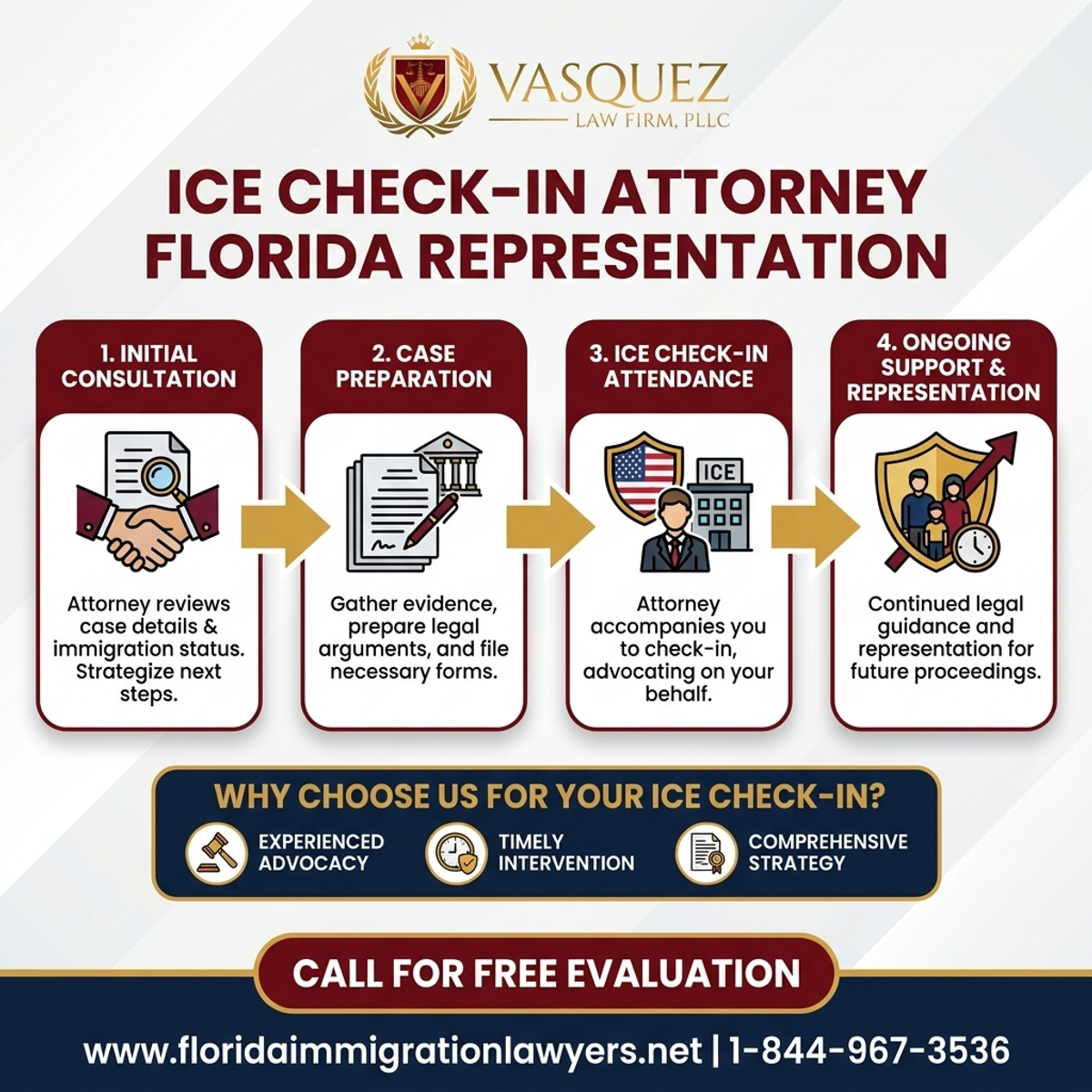
Step-by-Step Process — ICE Check-In Attorney Florida Representation
Florida Immigration Lawyers can assist you in preparing for these meetings and provide the necessary legal support.
Timeline and Processing Expectations
Understanding the timeline for ICE check-ins and related processes is crucial. Here is a typical timeline:
| Stage | Typical Timeframe | Notes |
|---|---|---|
| Notification | 2-4 weeks before check-in | Receive notice from ICE |
| Preparation | 1-2 weeks before | Gather documents and consult attorney |
| Check-In | Day of appointment | Meet with ICE officer |
| Follow-up | 1-2 weeks after | Address any issues that arose |
While the table above provides a general overview, it's important to recognize that actual timelines can vary significantly based on the specific ICE field office, the complexity of your case, and current enforcement priorities. For instance, in high-volume offices like those in Florida, notifications might sometimes be delayed, or follow-up actions could take longer than anticipated. It is always wise to prepare well in advance and not wait until the last minute, especially when gathering documents or seeking legal counsel.
During the follow-up stage, you might receive additional requests for information, new court dates, or even modifications to your supervision conditions. For example, an ICE officer might request updated employment verification or a new address if you've moved. Promptly addressing these follow-up requests is just as important as attending the initial check-in. Any delays or failures to respond can be viewed as non-compliance and could negatively impact your case. Florida Immigration Lawyers can help you manage these post-check-in requirements and ensure all deadlines are met.
Maintaining a personal log of all communications with ICE, including dates, times, names of officers, and a brief summary of discussions, is a practical tip that can prove invaluable. This detailed record can serve as crucial evidence if any discrepancies or disputes arise regarding your compliance or the instructions you received. Always keep copies of every document you submit and every notice you receive from ICE.
Cost Factors and Fee Breakdown
Legal fees for representation during ICE check-ins can vary. Here is a typical breakdown:
| Item | Typical Fee | Notes |
|---|---|---|
| Initial Consultation | Varies | Often free |
| Attorney Representation | Varies | Depends on complexity |
| Additional Services | Varies | May include document preparation |
The cost of legal representation for ICE check-ins is an investment in your future and freedom. Factors influencing fees include the attorney's experience and specialization in immigration law, the complexity of your case (e.g., if there are prior criminal issues or complex immigration history), and the extent of services required, such as whether the attorney merely advises or also attends the check-in with you. While some firms charge hourly rates, others may offer flat fees for specific services, providing more predictability in costs.
It's crucial to discuss fee structures transparently with your attorney during the initial consultation. Many firms, including Florida Immigration Lawyers, offer free initial consultations to assess your situation and provide an estimate of legal costs. This allows you to understand the financial commitment upfront without obligation. Investing in professional legal guidance can prevent costly mistakes, potential detention, and deportation, ultimately saving you significant stress and financial burden in the long run.
Beyond direct attorney fees, additional services might include expedited document preparation, translation services, or expert witness fees if your case requires specialized testimony. Always ask for a clear breakdown of all potential costs and payment options. Some firms may offer payment plans to make legal assistance more accessible. Do not let fear of cost deter you from seeking the essential legal protection you deserve. Contact Florida Immigration Lawyers at 1-844-967-3536 to discuss your options.
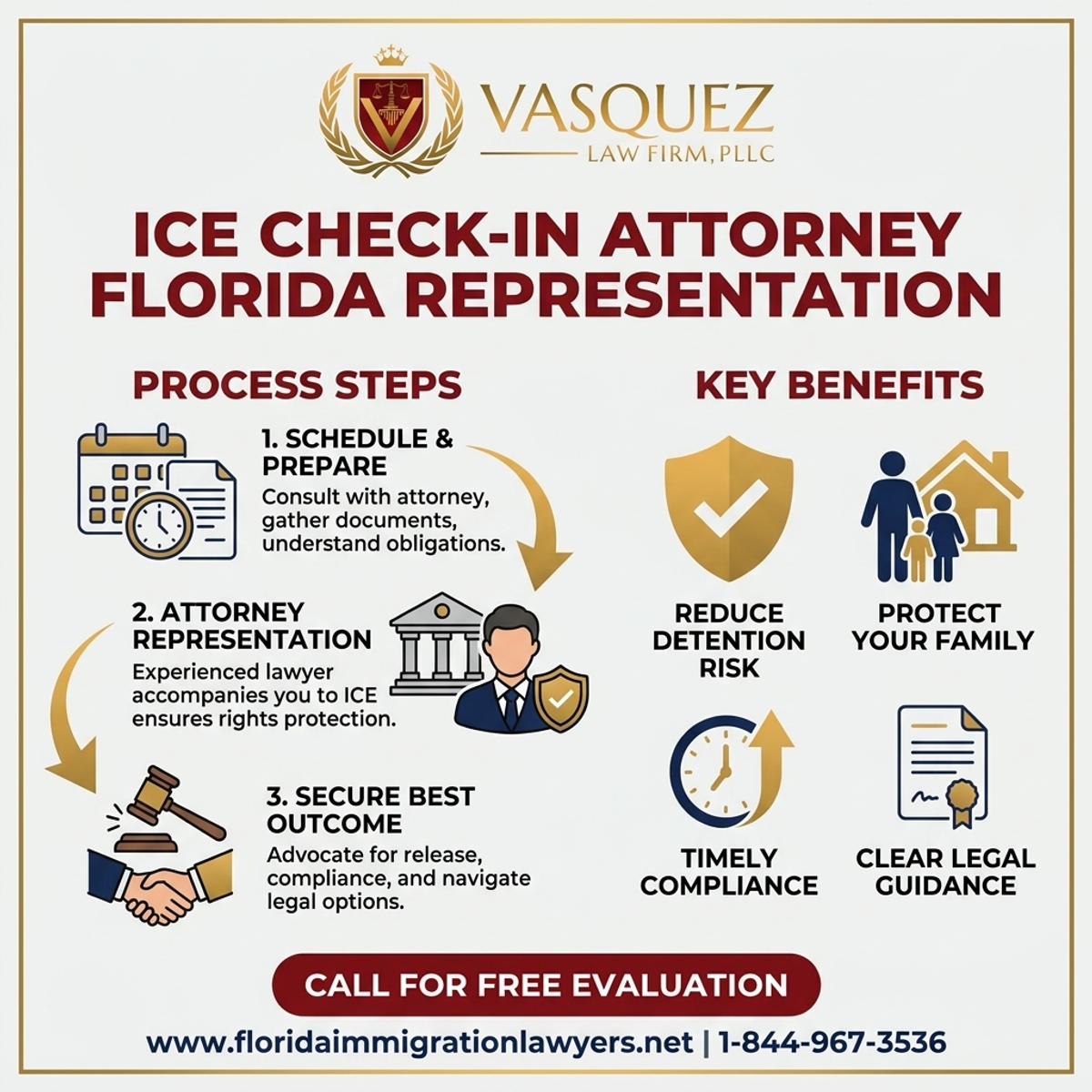
Key Statistics — ICE Check-In Attorney Florida Representation
Do not navigate this process alone. Contact Florida Immigration Lawyers today.
Common Mistakes to Avoid
Navigating the complex world of immigration can be fraught with potential pitfalls. Even seemingly small errors can have significant and long-lasting consequences for your immigration status and future in the United States. Being aware of these common mistakes is the first step toward avoiding them and protecting your rights.
- Missing Check-Ins: Can lead to detention and deportation.
- Inadequate Documentation: Failing to provide necessary documents can delay proceedings.
- Ignoring ISAP Requirements: Non-compliance can result in penalties.
- Not Consulting an Attorney: Lack of legal advice can lead to unfavorable outcomes.
- Providing False Information: Can severely impact your case.
- Missing Legal Deadlines: Can lead to loss of rights.
- Not Understanding Rights: Can lead to exploitation or unfair treatment.
- Relying on Incorrect Advice: Friends or unqualified advisors may give wrong information.
- Overlooking Court Dates: Missing a date can result in a warrant for removal.
Avoiding these critical errors requires diligence and, often, expert guidance. The consequences of these mistakes can range from delays in your case to outright deportation, making it imperative to approach every interaction with ICE and every aspect of your immigration process with utmost care. Florida Immigration Lawyers are here to help you steer clear of these common traps and ensure your journey through the immigration system is as smooth as possible.
When to Call a Lawyer
Legal representation is crucial in navigating immigration challenges. Consider calling a lawyer if:
- You receive a notice for an ICE check-in.
- You are part of the ISAP program.
- There are changes in your immigration status.
- You need to understand your rights better.
Proactive engagement with legal counsel is always recommended, but certain situations particularly demand immediate legal intervention. If you receive any notice from ICE, whether it's for a check-in, a court hearing, or a request for additional information, contacting an attorney should be your first step. These notices often contain critical deadlines and instructions that, if misunderstood or ignored, can have severe repercussions for your case. An attorney can interpret these documents and advise you on the appropriate response.
Furthermore, if you are enrolled in the ISAP program, a lawyer can help you understand the specific monitoring requirements, reporting schedules, and potential pitfalls. They can also assist if you experience technical issues with electronic monitoring devices or if you need to request modifications to your supervision conditions. Any change in your immigration status, such as receiving a Notice to Appear (NTA), an order of deportation, or even a denial of an application, warrants immediate legal review. These changes can trigger new legal processes that require expert navigation.
Beyond these specific triggers, if you simply feel overwhelmed, confused about your rights, or unsure about any aspect of your immigration journey, it's time to consult a lawyer. This includes situations where you have a criminal record, fear persecution in your home country, or have been a victim of a crime. Florida Immigration Lawyers offer comprehensive services to guide you through these situations, ensuring you are fully informed and protected. Don't wait until a crisis point; early legal advice can prevent many problems from escalating. Call us at 1-844-967-3536 for a free consultation.
About Florida Immigration Lawyers
Florida Immigration Lawyers is dedicated to providing expert legal assistance to immigrants across Florida. With a team of experienced attorneys, we offer services in deportation defense, asylum, family immigration, and more. Contact us at 1-844-967-3536 or visit our website for a free consultation.
Frequently Asked Questions (FAQs)
Q: Can ICE officers enter my home without a warrant?
A: Generally, ICE officers cannot enter your home without a warrant signed by a judge, unless they have your consent or there are exigent circumstances. A warrant for your arrest (administrative warrant) is not the same as a judicial search warrant. You have the right to refuse entry and ask them to show a judicial warrant through a closed door or window. Do not open the door unless they present a warrant signed by a judge. If they claim to have one, ask them to slide it under the door or hold it up to a window for review by your attorney. Contact Florida Immigration Lawyers immediately if ICE agents are at your door.
Q: What should I do if an ICE officer tries to question me?
A: You have the right to remain silent. You are not required to answer questions about your immigration status, nationality, or any other personal details. Politely state, "I wish to remain silent." You also have the right to speak with an attorney before answering any questions. Do not lie or present false documents. If you are detained, ask to speak with your attorney immediately and do not sign anything without legal review. Your attorney from Florida Immigration Lawyers can advise you on how to best protect your rights during questioning.
Q: Can I bring a family member or friend to my ICE check-in?
A: While you can bring a family member or friend for moral support, they generally cannot represent you or speak on your behalf during the official check-in meeting. Their presence might be restricted to the waiting area. The most effective support you can bring is an experienced immigration attorney. An attorney has the legal authority to represent you, intervene if necessary, and ensure your rights are protected throughout the entire process. Florida Immigration Lawyers strongly recommends having legal representation present at your ICE check-in.
Q: What if I miss an ISAP appointment or have issues with my monitoring device?
A: Missing an ISAP appointment or failing to maintain your monitoring device can lead to severe consequences, including re-detention. If you anticipate missing an appointment, or if your device malfunctions, contact your ISAP case manager immediately and document all communications. Then, promptly reach out to your immigration attorney. They can help explain the situation to ICE, provide evidence of the issue, and advocate on your behalf to prevent penalties. Do not try to resolve technical issues yourself without guidance. Florida Immigration Lawyers can assist you in addressing these urgent matters.
Q: How often do I need to check in with ICE, and can this change?
A: The frequency of your ICE check-ins is determined by ICE and can vary widely, from once a week to once a year, depending on factors like your immigration status, perceived flight risk, and the specifics of your case. Yes, the frequency can change. ICE may increase or decrease reporting requirements based on new information, progress in your case, or changes in policy. You will typically receive a notice if your reporting schedule changes. Always adhere to the most recent instructions. An attorney can help clarify your reporting schedule and advocate for modifications if appropriate.
Sources and References
- U.S. Citizenship and Immigration Services (USCIS)
- Executive Office for Immigration Review (EOIR)
- 8 U.S.C. Chapter 12 - Immigration and Nationality Act
Related services: asylum and refugee protection, immigration waivers, humanitarian protection programs, DACA renewal and applications.
This article provides general legal information and is not intended as legal advice. Every case is unique, and outcomes depend on specific facts and circumstances. Contact an attorney for advice about your particular situation.
For personalized assistance, call Florida Immigration Lawyers at 1-844-967-3536. Se Habla Español - Estamos aquí para ayudarle.
If you need
Do Not Navigate This Process Alone
Our experienced immigration attorneys are ready to fight for you. Get a free, confidential consultation today.
Se Habla Español
Frequently Asked Questions
Harold Estrada-Rodriguez
Florida Immigration Attorney · FL Bar No. 1041171
Florida Bar attorney handling Florida-jurisdiction immigration matters. Bilingual representation, free consultations.
Available 24/7 - Free Evaluations
Related Legal Services
Our Florida immigration attorneys can help you with deportation defense, citizenship and naturalization and family immigration services. Call today at 1-844-967-3536 for a free consultation.
Related Links
Related Topics
Free Legal Consultation
Discuss your case with our experienced attorneys. We're available 24/7.
Se Habla Español - Estamos aquí para ayudarle.
Related Articles
CR-1 IR-1 Spouse Visa Consular Processing Florida | VLF Florida
For U.S. citizens and green card holders in Florida, sponsoring a foreign national spouse for a CR-1 or IR-1 immigrant visa is a significant step towards family reunification. This comprehensive guide details the entire consular processing journey, from filing the initial I-130 petition with USCIS to navigating the National Visa Center (NVC) and attending the consular interview abroad. We break down the differences between conditional (CR-1) and immediate (IR-1) residency, provide crucial insights into current processing timelines and associated costs as of 2026, and highlight common mistakes to avoid. Florida Immigration Lawyers offers expert guidance to ensure a smooth and successful application process for families across the state, including St. Petersburg, Tampa, and Miami.
Biometrics Appointment Florida USCIS: Your Guide for 2026
Understanding your USCIS biometrics appointment in Florida is a critical step for nearly all immigration applications, from green cards to citizenship. As of 2026, this mandatory visit to an Application Support Center (ASC) like the one in Tampa involves collecting your fingerprints, photograph, and signature for essential background checks and identity verification. This guide provides comprehensive details on how to prepare, what to expect, and common mistakes to avoid, ensuring a smooth process. Missing this appointment or making errors can lead to significant delays or even denial of your case. Florida Immigration Lawyers offers expert guidance to navigate these complexities, providing peace of mind and protecting your immigration journey. Learn more about preparing for your ASC appointment and when to seek legal counsel.
K-3 Visa Timeline Florida: Spousal Immigration in 2026
For U.S. citizens in Florida seeking to bring their foreign spouses to the country, the K-3 visa offers a pathway to reunification while the immigrant visa petition is pending. This nonimmigrant visa aims to reduce the long periods of separation families often face. Our 2026 guide details the K-3 visa timeline, application steps, required documents, and associated costs. We cover everything from filing the I-129F petition to consular processing and eventual Adjustment of Status in Florida. Understanding this complex process, especially for residents of Coral Springs and surrounding areas, is crucial for success. Florida Immigration Lawyers provides expert guidance to navigate these challenges, offering free consultations to help your family reunite sooner.
Refugee Resettlement Florida: Your Guide to Status in 2026
For those seeking safety and a new beginning, understanding refugee status and the resettlement process in Florida is crucial. This comprehensive guide for 2026 details the step-by-step journey, necessary documentation, expected timelines, and associated costs. Florida, particularly the Tampa Bay area, offers robust support networks for refugees, but navigating the legal and practical aspects requires careful attention. Learn about federal oversight, local assistance, and key differences between refugee and asylum status. Discover how to avoid common pitfalls and when legal counsel is essential to ensure a successful transition into your new community. Our firm, Florida Immigration Lawyers, is here to help you every step of the way.
