Florida Car Accident: Navigating the 14-Day PIP Rule
Learn the essentials of navigating Florida's 14-day PIP rule after a car accident. Contact Florida Immigration Lawyers for guidance and a free consultation.

Florida Car Accident: Navigating the 14-Day PIP Rule
Florida, known for its beautiful beaches and vibrant cities, unfortunately also sees a significant number of car accidents each year. When an accident occurs, understanding your rights and the state's specific laws is paramount. One of the most critical aspects for any accident victim in Florida is the Personal Injury Protection (PIP) law, particularly the stringent 14-day rule. Failing to adhere to this deadline can have devastating financial consequences, potentially leaving you responsible for thousands of dollars in medical bills.
Understanding Florida's PIP Law and No-Fault System
Florida operates under a "no-fault" insurance system. This means that regardless of who caused the accident, your own insurance company is generally responsible for paying a portion of your medical expenses and lost wages through your Personal Injury Protection (PIP) coverage. Every driver in Florida is required to carry a minimum of $10,000 in PIP coverage.
PIP coverage is designed to provide quick access to medical care and financial support after an accident, without the need to immediately determine fault. It typically covers 80% of your reasonable and necessary medical expenses and 60% of your lost wages, up to your policy limits. It also includes a $5,000 death benefit. While this system aims to streamline the initial recovery process, it comes with strict requirements that accident victims must meet to access these benefits.
The Critical 14-Day Rule: What You Must Know
The most crucial aspect of Florida's PIP law is the 14-day rule. This rule dictates that if you are involved in a car accident, you must seek initial medical treatment for your injuries within 14 days of the accident date. If you fail to do so, your PIP benefits can be denied entirely, leaving you without coverage for accident-related medical expenses.
What constitutes "initial medical treatment"? This typically means seeing a qualified medical professional, such as a doctor, hospital, urgent care center, or chiropractor. The purpose is to establish a medical record linking your injuries directly to the car accident and to begin a course of treatment. It's not enough to simply feel pain; you must have it documented by a professional.
Furthermore, to receive the full $10,000 in PIP benefits, a medical doctor, osteopathic physician, dentist, physician assistant, or advanced registered nurse practitioner must determine that you suffered an "Emergency Medical Condition" (EMC). If an EMC is not diagnosed, your PIP benefits may be capped at $2,500, regardless of the severity of your injuries. This highlights the importance of seeking comprehensive medical evaluation promptly.
Immediate Steps After a Florida Car Accident
Knowing what to do in the chaotic aftermath of an accident is vital for your safety and your potential legal claim:
- Ensure Safety: Move your vehicle to a safe location if possible, and check for injuries to yourself and others.
- Call 911/Police: Report the accident, even if it seems minor. A police report is crucial documentation for your insurance claim.
- Exchange Information: Get the other driver's name, contact information, insurance details, and license plate number.
- Document the Scene: Take photos and videos of vehicle damage, the accident scene, road conditions, and any visible injuries.
- Seek Medical Attention IMMEDIATELY: This cannot be stressed enough. Even if you feel fine, adrenaline can mask pain. Get checked by a medical professional within the 14-day window to protect your PIP benefits.
- Report to Your Insurance Company: Notify your own insurance company as soon as possible after the accident. Be factual, but avoid admitting fault.
- Do NOT Admit Fault: Never apologize or admit fault at the scene, as this can be used against you later.
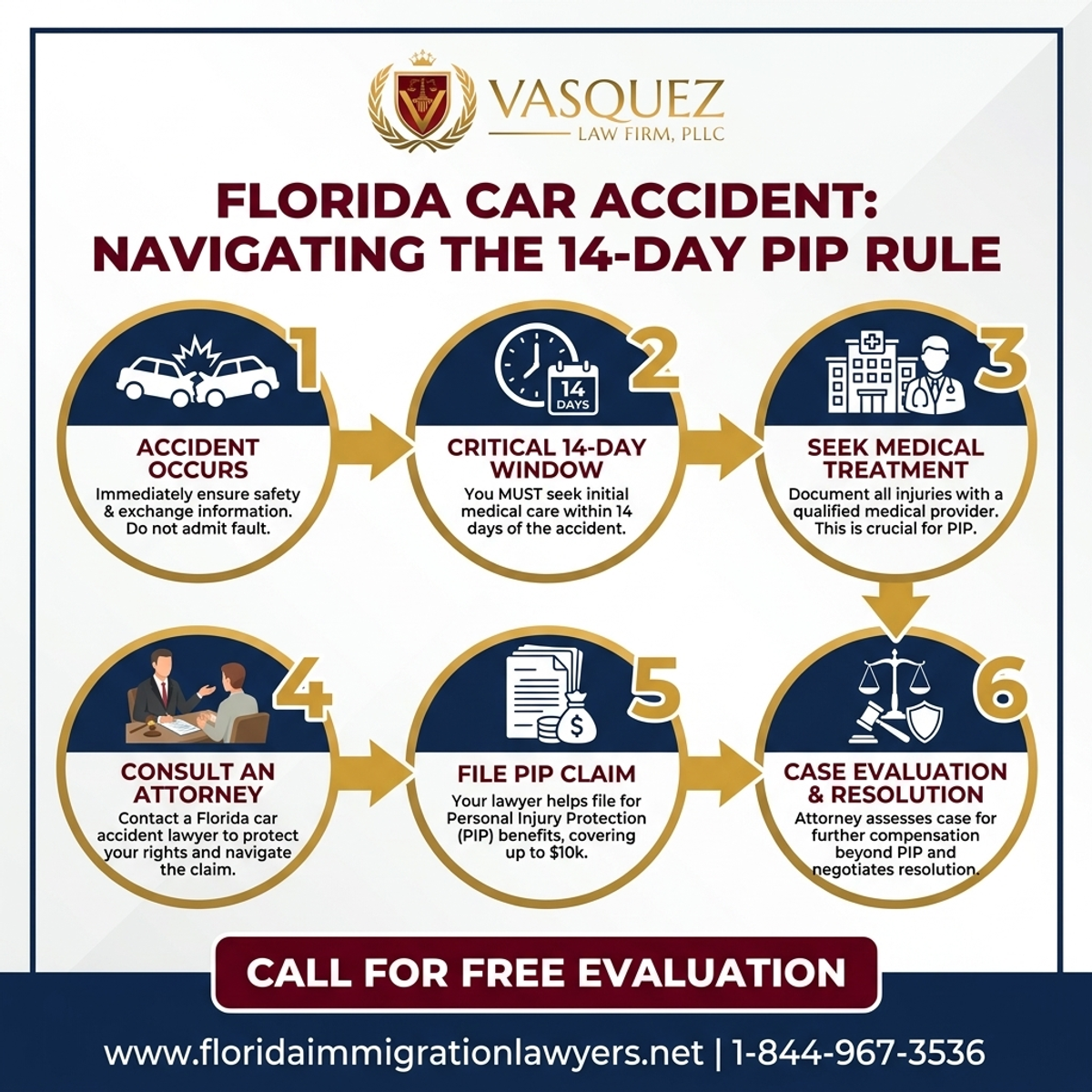
Step-by-Step Process — Florida Car Accident: Navigating the 14-Day PIP Rule
Common Injuries from Car Accidents
Car accidents can result in a wide range of injuries, from minor to life-altering. Prompt diagnosis and treatment are essential for recovery and for establishing a strong personal injury claim. Common injuries include:
- Whiplash and Neck Injuries: Often delayed onset, these can lead to chronic pain and limited mobility.
- Back Injuries: Herniated discs, sprains, and strains can cause severe pain and require extensive treatment.
- Head Injuries: Concussions and traumatic brain injuries (TBIs) can have long-lasting cognitive and physical effects.
- Fractures and Broken Bones: These require immediate medical attention, often surgery, and lengthy recovery periods.
- Soft Tissue Injuries: Sprains, strains, and tears to muscles, ligaments, and tendons.
- Internal Injuries: Less visible but potentially life-threatening, requiring urgent medical assessment.
- Psychological Trauma: Anxiety, PTSD, and depression are common after traumatic accidents.
Each of these injuries can have significant financial implications, underscoring the importance of securing your PIP benefits and potentially pursuing further compensation.
Navigating the Insurance Claim Process
After an accident, you'll inevitably deal with insurance companies – both your own and potentially the at-fault driver's. This process can be complex and intimidating. Insurance adjusters are trained to minimize payouts, and they may try to get you to settle quickly for a low amount or provide statements that could harm your claim. It's crucial to be cautious and informed.
Be aware that your own insurance company might try to deny your PIP claim if you miss the 14-day deadline or if they dispute the necessity of your treatment. The at-fault driver's insurance company, on the other hand, will seek to limit their liability. They may question the extent of your injuries, argue about the cause of the accident, or offer a settlement that doesn't fully cover your damages. Understanding policy limits and the various types of coverage (e.g., bodily injury liability, uninsured/underinsured motorist) is also vital for maximizing your recovery.
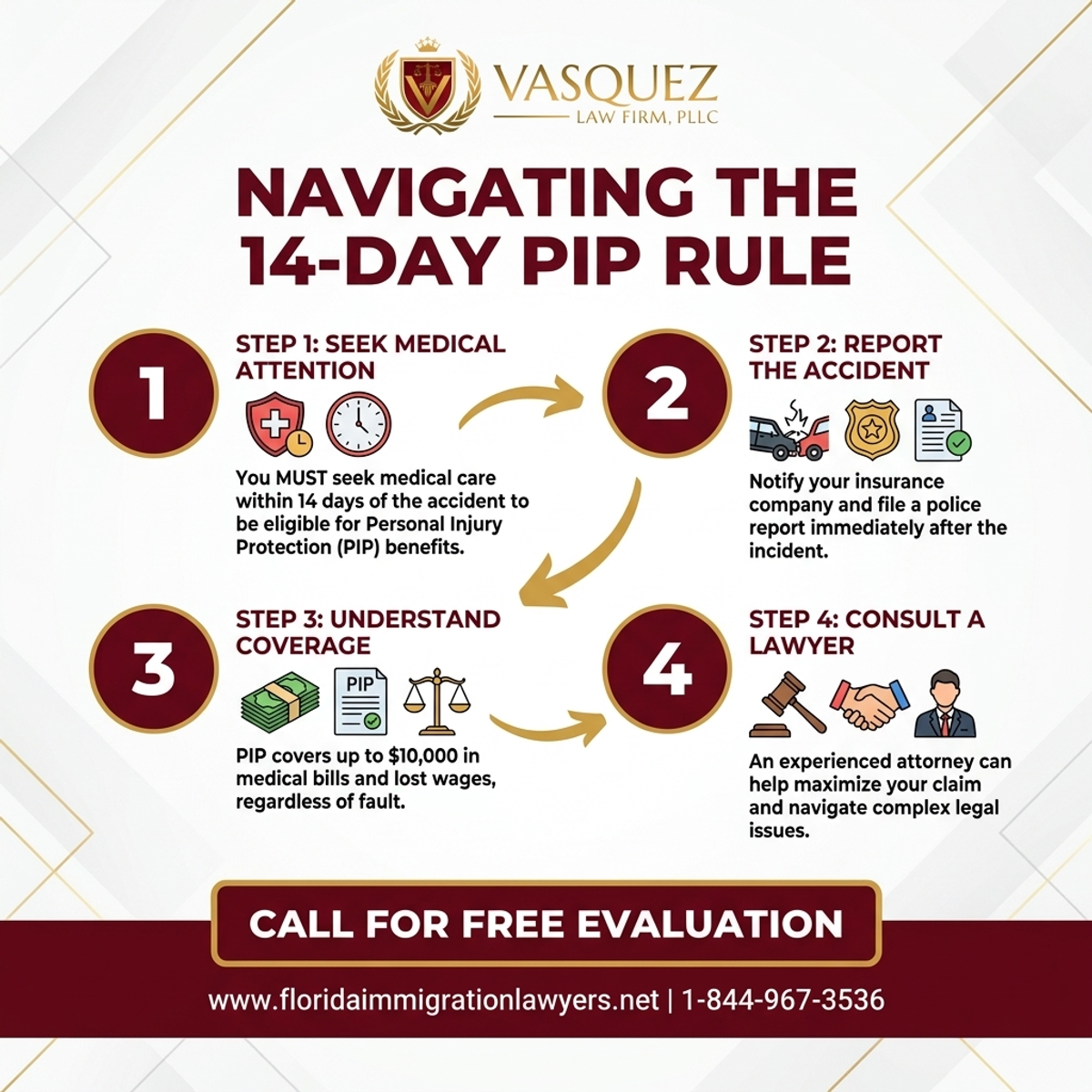
Key Statistics — Florida Car Accident: Navigating the 14-Day PIP Rule
The Indispensable Role of Legal Counsel in Your Florida Car Accident Claim
While Florida's no-fault system is designed to simplify initial medical payments, navigating the aftermath of a car accident, especially when injuries are serious, is rarely simple. This is where an experienced car accident attorney becomes an invaluable asset. An attorney can protect your rights, ensure you meet all deadlines, and fight for the full compensation you deserve.
One of the primary roles of a personal injury lawyer is to conduct a thorough investigation of your accident. This includes gathering evidence such as police reports, witness statements, medical records, surveillance footage, and expert testimony. They will work to establish negligence on the part of the at-fault driver and accurately assess the full extent of your damages, both economic (medical bills, lost wages, property damage) and non-economic (pain and suffering, emotional distress, loss of enjoyment of life).
Dealing with insurance companies can be a daunting task. Attorneys are skilled negotiators who understand insurance tactics and legal precedents. They can handle all communications with adjusters, preventing you from inadvertently making statements that could jeopardize your claim. If a fair settlement cannot be reached through negotiation, your attorney will be prepared to take your case to court, representing your interests vigorously throughout the litigation process. They will ensure all legal filings are accurate and timely, adhering to Florida's strict statute of limitations for personal injury claims. Having a dedicated legal team on your side allows you to focus on your recovery while they handle the complexities of your claim. For more information about our legal team and their experience, please visit our attorneys page.
Special Considerations for Non-Citizens in Florida Accidents
For individuals who are not U.S. citizens, involvement in a car accident can bring additional layers of concern, particularly regarding immigration status. It's a common misconception that one's immigration status might prevent them from seeking medical treatment or pursuing a personal injury claim. This is not true. Regardless of your immigration status, you have the right to seek medical attention and pursue compensation for injuries caused by another's negligence.
However, navigating the legal system while also dealing with potential immigration complexities requires specialized knowledge. Issues such as obtaining proper identification, understanding how a legal claim might intersect with future immigration applications, or even concerns about deportation can arise. It's crucial to consult with legal professionals who understand both personal injury law and immigration law. Our firm, for example, has extensive experience in both areas, ensuring comprehensive support for all our clients. We can provide guidance on various immigration matters, including immigration law, asylum claims, and deportation defense, ensuring that your personal injury claim does not negatively impact your immigration standing.
Beyond PIP: Seeking Additional Damages
While PIP covers initial medical expenses and lost wages, it often isn't enough to cover all damages, especially in cases of serious injury. In Florida, if your injuries meet a certain "serious injury threshold" (e.g., significant and permanent loss of an important bodily function, permanent injury within a reasonable degree of medical probability, significant and permanent scarring or disfigurement, or death), you may be able to step outside the no-fault system and sue the at-fault driver directly for additional damages.
These additional damages can include:
- All Medical Bills: Past and future medical expenses not covered by PIP.
- All Lost Wages: Past and future income loss.
- Pain and Suffering: Compensation for physical pain, emotional distress, and mental anguish.
- Loss of Earning Capacity: If your injuries prevent you from returning to your previous job or earning potential.
- Loss of Consortium: Damages for the negative impact on your relationship with your spouse.
Proving these damages requires meticulous documentation and expert testimony, another area where a skilled attorney proves invaluable.
Statute of Limitations in Florida Car Accident Cases
Beyond the 14-day PIP rule, Florida also has a statute of limitations that dictates the maximum time you have to file a lawsuit after a car accident. For most personal injury claims arising from a car accident, you generally have four (4) years from the date of the accident to file a lawsuit. However, if the accident resulted in a fatality, the statute of limitations for a wrongful death claim is typically two (2) years. Missing these deadlines means you permanently lose your right to pursue compensation in court. An attorney can ensure all necessary legal actions are taken within the prescribed timeframes.
Choosing the Right Attorney for Your Florida Car Accident Claim
When selecting a personal injury attorney, look for someone with specific experience in Florida car accident law. Key qualities include a strong track record of successful settlements and verdicts, clear communication, and a compassionate approach. A good attorney will offer a free consultation, work on a contingency fee basis (meaning you don't pay unless they win), and be transparent about the legal process. They should be accessible and willing to answer all your questions, providing peace of mind during a challenging time. Don't hesitate to research and interview several firms to find the best fit for your unique situation.
Conclusion: Act Swiftly and Seek Expert Guidance
Navigating the aftermath of a Florida car accident, especially with the critical 14-day PIP rule, requires swift action and a clear understanding of your rights. From seeking immediate medical attention to meticulously documenting the scene and dealing with insurance adjusters, every step you take can significantly impact your ability to recover compensation. Do not delay in seeking medical care, and do not underestimate the value of experienced legal representation.
If you or a loved one has been involved in a car accident in Florida, protect your rights and ensure you receive the compensation you deserve. Contact our experienced legal team today for a free consultation. We are here to guide you through every step of the process. Contact us now to discuss your case and learn how we can help.
Sources and References
- U.S. Citizenship and Immigration Services (USCIS)
- Executive Office for Immigration Review (EOIR)
- U.S. Department of State - Bureau of Consular Affairs
- Immigration and Nationality Act (INA), 8 U.S.C. Chapter 12
Do Not Navigate This Process Alone
Our experienced immigration attorneys are ready to fight for you. Get a free, confidential consultation today.
Se Habla Español
Frequently Asked Questions
Florida Immigration Lawyers
Immigration Attorney | Founder, Vasquez Law Firm
U.S. Air Force veteran and immigration attorney with thousands of cases resolved. J.D., NCCU School of Law. AILA member. Admitted to the 4th, 5th, and 11th Circuit Courts.
Available 24/7 - Free Evaluations
Related Legal Services
Our Florida immigration attorneys can help you with Florida wrongful death claims, Florida personal injury attorney Harold Estrada-Rodriguez and free personal injury consultation. Call today at 1-844-967-3536 for a free consultation.
Related Links
Related Topics
Free Legal Consultation
Discuss your case with our experienced attorneys. We're available 24/7.
Se Habla Español - Estamos aquí para ayudarle.
Related Articles
What to Do After a Florida Car Accident: 14-Day PIP Rule
After a car accident in Florida, understanding the 14-day PIP rule is crucial. Learn the steps to take, including seeking medical attention within 14 days, documenting injuries, and consulting a personal injury attorney. Contact Florida Immigration Lawyers at 1-844-967-3536 for a free consultation.
Florida Truck Accident: I-4 Multi-Party Crash Claims
A Florida truck accident on I-4, especially an 18-wheeler crash involving multiple parties, presents unique and complex legal challenges. Victims face severe injuries and a difficult path to compensation due to intricate federal FMCSA regulations and Florida's specific personal injury laws, including modified comparative negligence. This guide explains how multi-party liability works, the critical role of FMCSA rules, essential steps to take after a crash, and the documentation needed for a strong claim. Discover common mistakes to avoid and when to seek immediate legal counsel to protect your rights. Our firm, led by Harold Estrada-Rodriguez, Florida Bar No. 1041171, offers compassionate representation on a no recovery, no fee basis for truck accident victims across Florida, including Orlando, Kissimmee, and Fort Lauderdale areas.
Florida Car Accident: Understand the 14-Day PIP Rule
After a car accident in Florida, understanding the 14-day PIP rule is crucial. Learn what steps to take to ensure you receive the benefits you're entitled to. Call Florida Immigration Lawyers for a free consultation.
Truck Accident on I-4? Florida 18-Wheeler Crash Claims
Injured in a Florida 18-wheeler crash on I-4? Our Orlando & Kissimmee personal injury lawyers handle complex truck accident cases. Learn your rights. Contact
