Florida 18-Wheeler Truck Accident on I-4: Key Insights
In St. Petersburg, Florida, accidents involving 18-wheelers on I-4 are complex and require navigating FMCSA regulations and multi-party liability. Learn how to handle these cases effectively with the help of Florida Immigration Lawyers.

Florida 18-Wheeler Truck Accident on I-4: Key Insights
Florida's Interstate 4 (I-4) is a vital artery, connecting major cities and serving as a critical commercial corridor. Unfortunately, its high traffic volume, combined with the presence of large commercial vehicles, makes it a frequent site for devastating 18-wheeler truck accidents. These collisions are far more complex and catastrophic than typical car accidents, often resulting in severe injuries, extensive property damage, and intricate legal battles. Understanding the unique challenges posed by I-4 truck accidents and the specific legal insights required to navigate them is crucial for victims seeking justice and fair compensation.
The sheer size and weight of an 18-wheeler, which can weigh up to 80,000 pounds, means that even a low-speed impact can have life-altering consequences. Victims of these accidents often face a long road to recovery, accumulating massive medical bills, suffering lost wages, and enduring immense pain and suffering. Furthermore, the involvement of trucking companies, their insurers, and a web of federal and state regulations adds layers of complexity to any claim. This article delves into the critical aspects of Florida 18-wheeler truck accidents on I-4, offering key insights and emphasizing the importance of expert legal representation.
Understanding the Devastating Impact of 18-Wheeler Collisions
The impact of an 18-wheeler collision extends far beyond the immediate scene of the accident. Victims frequently sustain catastrophic injuries that require extensive medical treatment, long-term rehabilitation, and may lead to permanent disability. Common injuries include traumatic brain injuries (TBIs), spinal cord injuries, severe fractures, internal organ damage, extensive burns, and even wrongful death. These physical traumas are often accompanied by profound psychological distress, such as PTSD, anxiety, and depression, which can significantly diminish a victim's quality of life.
Beyond the physical and emotional toll, truck accidents impose a heavy financial burden. Medical expenses can quickly skyrocket, encompassing emergency care, surgeries, medications, physical therapy, and ongoing specialist consultations. Victims often lose their ability to work, leading to substantial lost wages and diminished earning capacity for years to come. Property damage to vehicles is typically severe, often resulting in total loss. An experienced attorney will meticulously calculate both economic damages (medical bills, lost wages, property damage) and non-economic damages (pain and suffering, emotional distress, loss of enjoyment of life, loss of consortium) to ensure all aspects of a victim's losses are accounted for in a claim. The long-term consequences of such accidents necessitate a comprehensive approach to recovery and compensation.
Navigating the Complexities of Truck Accident Investigations
Investigating an 18-wheeler accident is a highly intricate process that demands specialized knowledge and resources. Unlike standard car accidents, truck collisions involve multiple potential at-fault parties and a vast array of evidence that must be secured quickly. The trucking company, the truck driver, the vehicle manufacturer, the cargo loader, or even maintenance providers could all bear some degree of liability.
Crucial evidence in these cases includes the truck's "black box" data (Event Data Recorder), which records speed, braking, and other critical operational information; driver logbooks (now often electronic logging devices or ELDs) detailing hours of service; maintenance records; post-accident drug and alcohol test results; police reports; witness statements; dashcam footage; and even the truck's cargo manifest. Trucking companies are legally obligated to preserve some of this evidence, but they often act quickly to protect their interests, making immediate legal intervention vital. An attorney can issue spoliation letters to ensure evidence is not destroyed and can work with accident reconstructionists, medical experts, and vocational rehabilitation specialists to build a robust case demonstrating negligence and the full extent of damages.
Crucial FMCSA Regulations and Their Role in Liability
The Federal Motor Carrier Safety Administration (FMCSA) establishes stringent regulations governing the operation of commercial motor vehicles (CMVs) across the United States. These federal rules are designed to enhance safety and prevent accidents, and any violation can be a critical factor in establishing liability in an 18-wheeler accident claim. Understanding these regulations is paramount for victims seeking compensation.
Hours of Service (HOS) Rules
One of the most significant FMCSA regulations pertains to Hours of Service (HOS). These rules dictate how long a truck driver can continuously operate a CMV, how much rest they must take, and when they must be off duty. Driver fatigue is a leading cause of truck accidents, and HOS violations—such as driving beyond the 11-hour limit, exceeding the 14-hour on-duty window, or failing to take mandatory breaks—are strong indicators of negligence. Electronic Logging Devices (ELDs) track these hours, providing irrefutable evidence of non-compliance.
Maintenance and Inspection Requirements
FMCSA regulations also mandate rigorous maintenance and inspection protocols for all CMVs. Trucking companies are responsible for ensuring their vehicles are safe to operate, which includes regular inspections of brakes, tires, lights, steering, and other critical components. Pre-trip, en-route, and post-trip inspections are required, and any identified defects must be repaired. Accidents caused by faulty brakes, tire blowouts, or other mechanical failures often point to a violation of these maintenance standards, indicating negligence on the part of the trucking company or the maintenance provider.
Drug and Alcohol Testing
The FMCSA has a strict drug and alcohol testing program for commercial drivers, including pre-employment, random, post-accident, and reasonable suspicion testing. Operating a CMV under the influence of drugs or alcohol is a severe violation that can lead to immediate liability. Post-accident drug and alcohol tests are mandatory in certain circumstances, and their results can be crucial evidence in a personal injury claim.
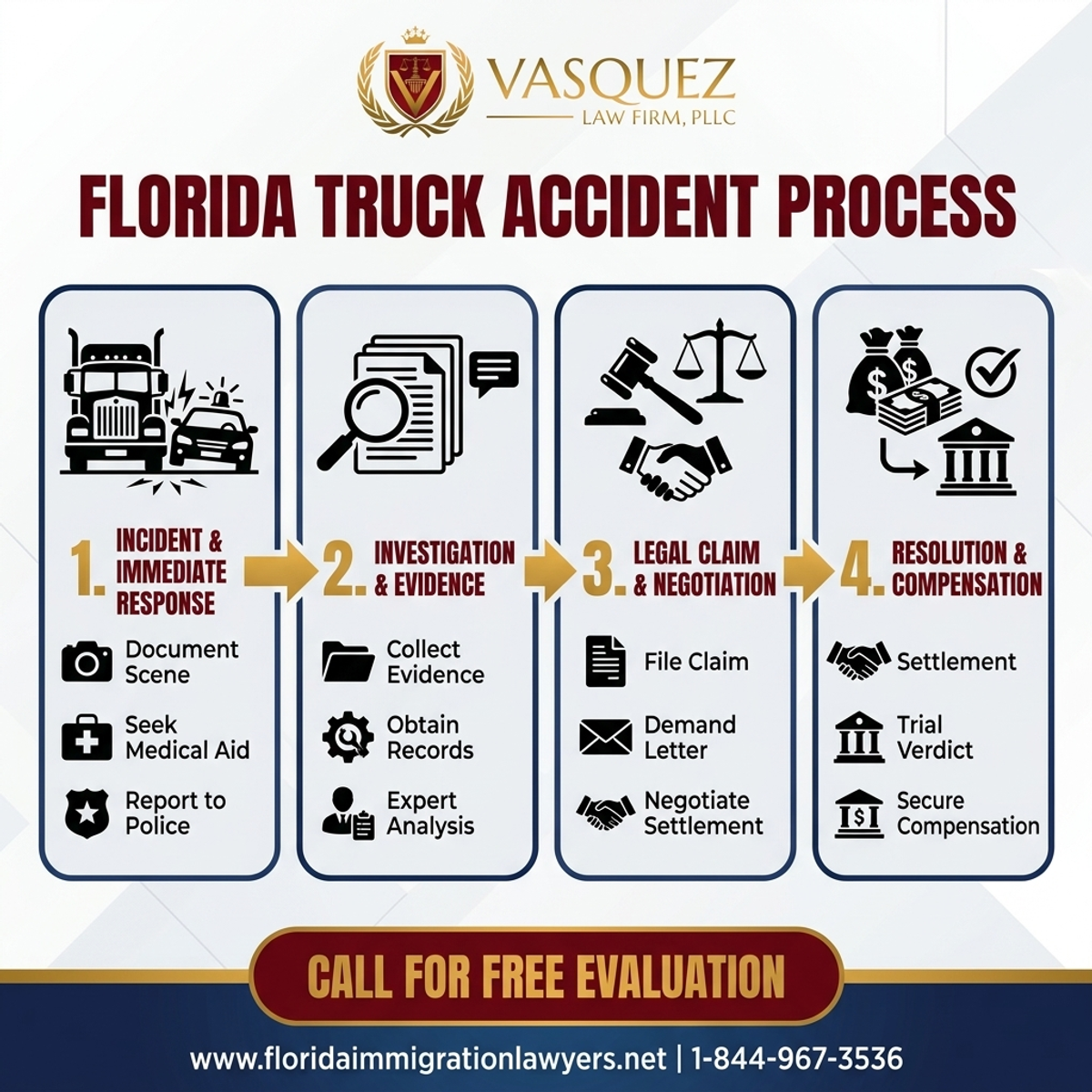
Step-by-Step Process — Florida 18-Wheeler Truck Accident on I-4: Key Insights
Commercial Driver's License (CDL) Requirements
Drivers of 18-wheelers must possess a Commercial Driver's License (CDL) with appropriate endorsements. This requires specialized training and passing rigorous tests. If a driver involved in an accident was operating without the proper CDL or endorsements, or if the trucking company hired an unqualified driver, it could establish a clear case of negligent entrustment.
Cargo Securement
Regulations also govern how cargo must be loaded and secured to prevent shifting or spilling, which can lead to loss of control or road hazards. Violations of cargo securement rules can directly contribute to accidents and establish liability for the trucking company or the party responsible for loading the freight.
By thoroughly investigating these and other FMCSA regulations, an experienced truck accident attorney can uncover violations that directly contributed to the accident, strengthening a victim's claim for compensation and holding all negligent parties accountable.
Steps to Take Immediately After a Florida Truck Accident
The moments immediately following an 18-wheeler accident are critical and can significantly impact the outcome of any future legal claim. Knowing what steps to take can help protect your rights and ensure your safety:
- Prioritize Safety: If possible, move your vehicle to the side of the road to avoid further collisions. Turn on your hazard lights.
- Call 911: Report the accident to law enforcement and request emergency medical services, even if injuries seem minor. A police report is vital documentation.
- Exchange Information: Gather contact and insurance information from the truck driver and the trucking company. Note the truck's license plate, DOT number, and company name.
- Document the Scene: Use your phone to take photos and videos of the accident scene, vehicle damage, road conditions, traffic signs, and any visible injuries. This visual evidence can be invaluable.
- Seek Medical Attention: Even if you feel fine, see a doctor as soon as possible. Some injuries, like whiplash or internal bleeding, may not manifest immediately. Medical records are crucial for your claim.
- Do Not Admit Fault: Avoid discussing the accident in detail with anyone other than the police and your attorney. Do not apologize or admit fault, as this can be used against you.
- Contact an Attorney: Speak with a qualified truck accident lawyer as soon as possible. They can guide you through the process and protect your rights from the outset.
Why You Need an Experienced Florida Truck Accident Attorney
Dealing with the aftermath of an 18-wheeler accident is overwhelming. You're likely facing severe injuries, mounting medical bills, and the stress of lost income. On top of that, you'll be up against large trucking companies and their aggressive insurance adjusters, whose primary goal is to minimize payouts. This is where an experienced Florida truck accident attorney becomes indispensable.
Our legal team possesses a deep understanding of Florida's personal injury laws, federal trucking regulations (FMCSA), and the tactics employed by insurance companies. We will conduct a thorough investigation, gathering critical evidence such as black box data, driver logs, maintenance records, and witness statements. We work with accident reconstructionists and medical experts to build a compelling case that clearly demonstrates negligence and the full extent of your damages. Our attorneys will handle all communications with insurance adjusters, negotiate fiercely on your behalf, and be prepared to take your case to trial if a fair settlement cannot be reached. With a dedicated legal advocate by your side, you can focus on your recovery while we fight to maximize your compensation. Learn more about our commitment to justice by visiting our attorneys page.
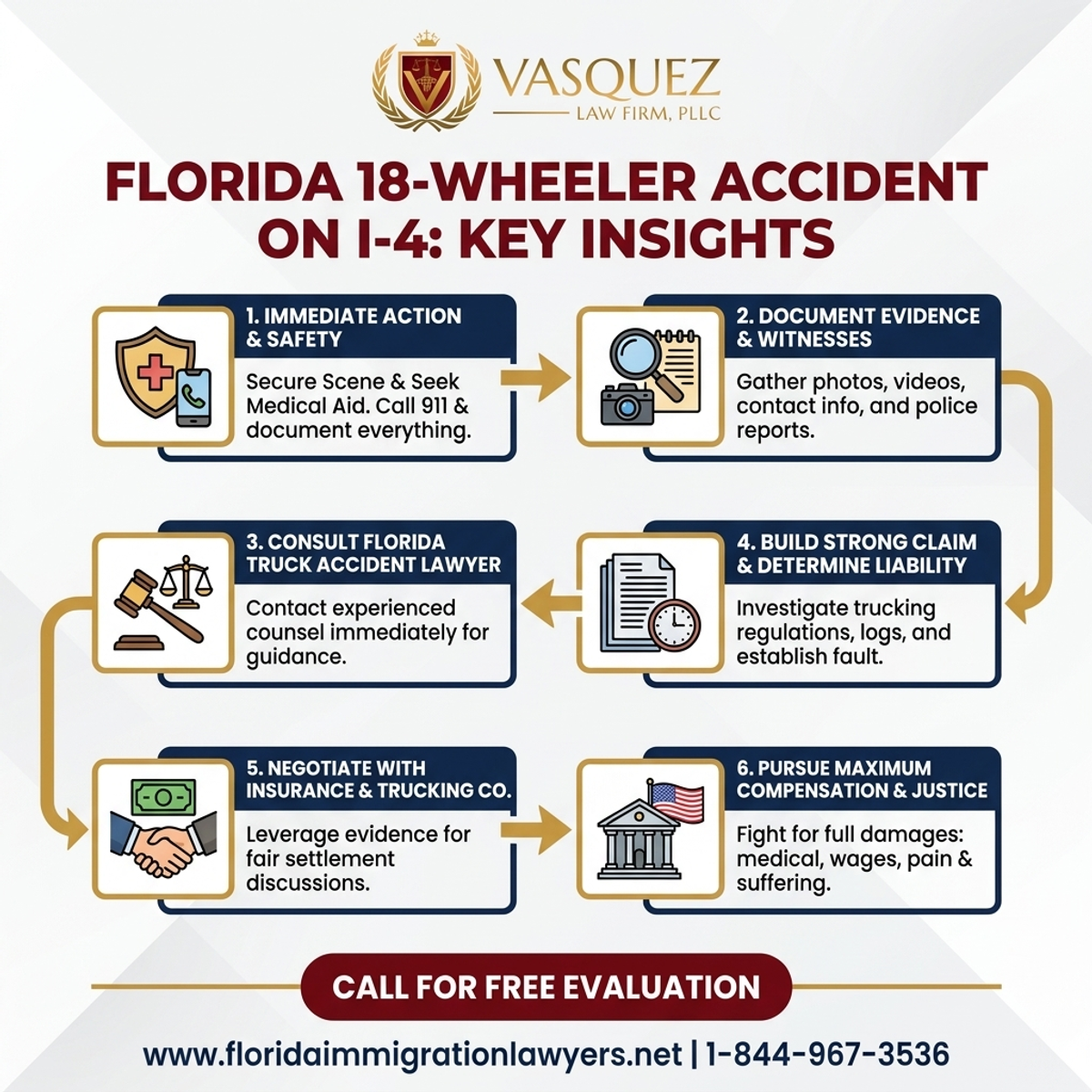
Key Statistics — Florida 18-Wheeler Truck Accident on I-4: Key Insights
Beyond Truck Accidents: Comprehensive Legal Support for Florida Residents
While our primary focus in this article is on the critical area of truck accident litigation, our firm is dedicated to providing a wide range of legal services to the Florida community. We understand that individuals and families often face complex and interconnected legal challenges that extend beyond a single practice area. Our commitment is to offer holistic support, ensuring all your legal needs are met with expertise and compassion.
We recognize that legal needs can be diverse and often overlap. For instance, an individual involved in a truck accident might also have concerns related to their immigration status or other personal legal matters. Whether you require assistance with general immigration matters, navigating the intricate process of asylum claims, or robust deportation defense, our experienced legal team stands ready to help. Our comprehensive approach ensures that clients receive well-rounded legal advice and representation, addressing all facets of their legal journey under one roof.
Seek Justice After Your I-4 Truck Accident
An 18-wheeler truck accident on I-4 or any Florida roadway can irrevocably alter your life. The path to recovery and justice is fraught with challenges, from navigating complex legal regulations to battling powerful insurance companies. Attempting to handle a truck accident claim on your own can lead to significant disadvantages and potentially compromise your ability to receive the full compensation you deserve.
Do not face this daunting challenge alone. Our experienced Florida truck accident attorneys are here to provide the expert legal guidance and tenacious representation you need. We are committed to protecting your rights, investigating every detail of your case, and fighting tirelessly to secure maximum compensation for your injuries and losses. If you or a loved one has been involved in an 18-wheeler accident, take the crucial step towards justice today. Contact us for a free, no-obligation consultation to discuss your case and understand your legal options. Visit our contact page or call us directly to schedule your consultation.
Sources and References
- U.S. Citizenship and Immigration Services (USCIS)
- Executive Office for Immigration Review (EOIR)
- U.S. Department of State - Bureau of Consular Affairs
- Immigration and Nationality Act (INA), 8 U.S.C. Chapter 12
Do Not Navigate This Process Alone
Our experienced immigration attorneys are ready to fight for you. Get a free, confidential consultation today.
Se Habla Español
Frequently Asked Questions
Florida Immigration Lawyers
Immigration Attorney | Founder, Vasquez Law Firm
U.S. Air Force veteran and immigration attorney with thousands of cases resolved. J.D., NCCU School of Law. AILA member. Admitted to the 4th, 5th, and 11th Circuit Courts.
Available 24/7 - Free Evaluations
Related Legal Services
Our Florida immigration attorneys can help you with Florida personal injury representation, Florida car accident claims and slip-and-fall premises liability. Call today at 1-844-967-3536 for a free consultation.
Related Links
Related Topics
Free Legal Consultation
Discuss your case with our experienced attorneys. We're available 24/7.
Se Habla Español - Estamos aquí para ayudarle.
Related Articles
Understanding Uber and Lyft Rideshare Accident Insurance in
Understanding the insurance coverage for rideshare accidents in Florida is crucial for protecting your rights. Learn about the multi-layer insurance system for Uber and Lyft drivers, and discover how to navigate claims effectively.
Florida Drunk Driver Punitive Damages: DUI Accident Guide
Being injured by a drunk driver in Florida can leave you with severe physical, emotional, and financial burdens. Beyond seeking compensation for medical bills and lost wages, victims in Gainesville and across Florida may be eligible for punitive damages. These damages are designed to punish the at-fault drunk driver for their reckless actions and deter similar behavior in the future. Florida law sets specific requirements for proving punitive damages, often necessitating clear and convincing evidence of gross negligence or intentional misconduct. Understanding the interplay between criminal DUI proceedings and your civil personal injury claim is crucial. Florida Immigration Lawyers, led by Harold Estrada-Rodriguez, Florida Bar No. 1041171, specializes in helping victims navigate these complex legal waters, ensuring aggressive representation to pursue maximum compensation, including punitive damages. Contact us for a free consultation to protect your rights.
Florida Truck Driver Fatigue and HOS Violations | VLF Florida
Explore truck driver fatigue and Hours of Service violations in Florida. Learn how these regulations impact safety and compliance. Call Florida Immigration Lawyers for a free consultation.
Florida Wrongful Death Claims: Survivor Damages Explained
Explore how Florida's wrongful death statutes, §§768.16-768.21, provide a pathway for survivors to seek damages. Understand who can file a claim, the types of damages available, and the common pitfalls to avoid. Contact Florida Immigration Lawyers for guidance in Miami and throughout Florida.