Florida Wrongful Death Claims: Survivor Damages Explained
Explore how Florida's wrongful death statutes, §§768.16-768.21, provide a pathway for survivors to seek damages. Understand who can file a claim, the types of damages available, and the common pitfalls to avoid. Contact Florida Immigration Lawyers for guidance in Miami and throughout Florida.

Florida Wrongful Death Claims: Survivor Damages Explained
The sudden and tragic loss of a loved one due to someone else's negligence or wrongful act is an unimaginable ordeal. Beyond the profound emotional grief, families often face severe financial burdens, including medical bills, funeral expenses, and the loss of the deceased's income and support. In Florida, the legal system provides a pathway for justice and compensation through wrongful death claims, specifically outlined in Florida Statutes 768.16-768.21. These statutes are designed to allow surviving family members to recover damages for their losses.
Understanding the intricacies of Florida's Wrongful Death Act, identifying who qualifies as a 'survivor,' and knowing the types of damages that can be recovered are crucial steps for families navigating this difficult time. This comprehensive guide will explain the key aspects of Florida wrongful death claims, focusing on the damages available to survivors and the legal process involved in seeking the justice and financial stability your family deserves.
Understanding Florida's Wrongful Death Act
Florida's Wrongful Death Act (Florida Statutes §§ 768.16-768.21) is a critical piece of legislation designed to provide a legal remedy when a person's death is caused by the wrongful act, negligence, default, or breach of contract or warranty of another. The primary purpose of this act is twofold: to compensate the survivors for their personal losses and to compensate the deceased's estate for certain expenses and losses.
The Act recognizes that a wrongful death inflicts not only a loss upon the deceased's estate but also significant emotional and financial harm upon the surviving family members. It grants the right to bring a lawsuit that did not exist under common law, allowing families to seek accountability and financial relief. Key provisions within these statutes define who can bring a claim, what types of damages are recoverable, and the procedures for doing so.
Specifically, Section 768.17 outlines the legislative intent, emphasizing that the Act is remedial and should be liberally construed to accomplish its purpose. Section 768.18 defines critical terms like 'survivors' and 'minor children,' while Section 768.20 specifies that the action must be brought by the personal representative of the deceased. Section 768.21 details the various types of damages that can be recovered by both the estate and the survivors. This framework ensures that families suffering from such a loss have a structured legal path to pursue compensation, addressing both tangible and intangible harms.
Who Can File a Wrongful Death Claim in Florida?
In Florida, a wrongful death claim is not filed directly by the individual survivors. Instead, the lawsuit must be filed by a 'personal representative' of the deceased's estate. This personal representative is typically appointed by a probate court and acts on behalf of both the estate and the surviving family members.
The personal representative's role is crucial. They are responsible for gathering evidence, filing the lawsuit, negotiating with insurance companies, and if necessary, litigating the case in court. Any damages recovered are then distributed to the eligible survivors and the estate according to Florida law.
Florida Statute 768.18 defines 'survivors' as the deceased's spouse, minor children, parents, and any blood relatives or adoptive siblings who are partly or wholly dependent on the deceased for support or services. The hierarchy of who can recover damages is generally as follows:
- Spouse: The surviving spouse is almost always eligible to recover damages.
- Minor Children: Children under the age of 25 (as defined by Florida law for wrongful death purposes) are eligible.
- Adult Children: If there is no surviving spouse or minor children, adult children may be eligible.
- Parents: Parents of the deceased may recover if there is no surviving spouse or children.
- Other Dependent Relatives: In some cases, other blood relatives or adoptive siblings who were dependent on the deceased for support or services may also be considered survivors.
It's important to note that the specific damages each type of survivor can claim vary, as detailed in Florida Statute 768.21. For instance, only a surviving spouse can claim loss of companionship and protection, and only minor children can claim loss of parental companionship, instruction, and guidance. Understanding these distinctions is vital for properly assessing a claim.
Types of Damages Recoverable by Survivors
Florida law allows for the recovery of various types of damages in a wrongful death claim, designed to compensate survivors for both economic and non-economic losses. These damages are outlined in Florida Statute 768.21 and can include:
Medical and Funeral Expenses
The estate of the deceased can recover medical and funeral expenses. This includes all reasonable medical and funeral expenses that have been paid or are due, which resulted from the injury and death of the deceased. These are often significant costs that can place an immediate financial strain on families.
Loss of Support and Services
Survivors can recover for the loss of the deceased's financial support and the value of services the deceased would have provided. This is a critical component of many wrongful death claims. It considers the deceased's probable net income, including future raises and benefits, and the monetary value of services (e.g., childcare, household chores, maintenance) they would have provided to their family. Expert economists are often employed to calculate these complex projections, taking into account factors like life expectancy, work history, and earning potential.
Loss of Companionship and Protection
The surviving spouse can recover for the loss of the deceased's companionship and protection, as well as for mental pain and suffering from the date of injury. This acknowledges the profound emotional void left by the death of a spouse, encompassing the loss of love, affection, comfort, solace, and sexual relations. Calculating this non-economic damage is subjective but crucial for recognizing the full scope of the spouse's loss.
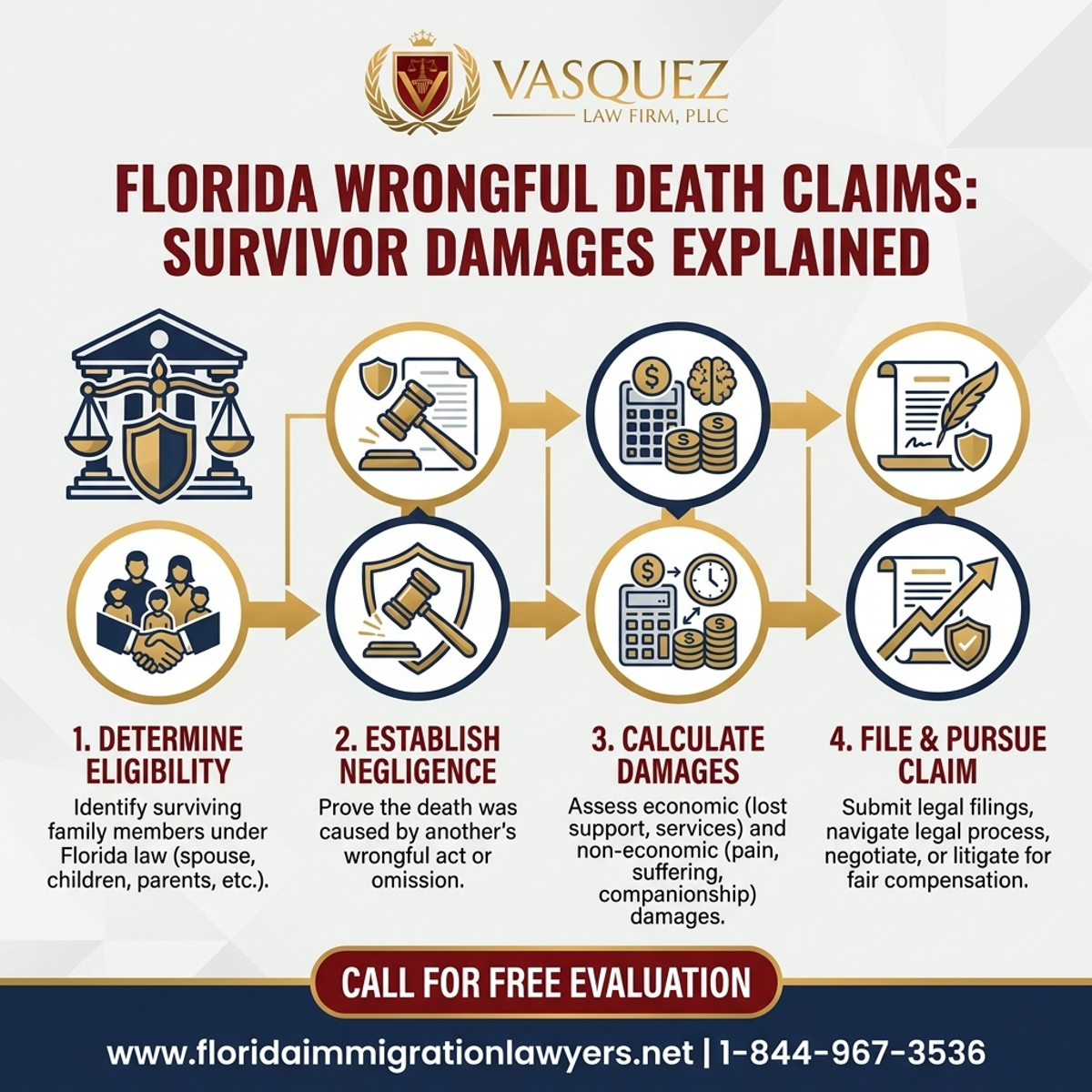
Step-by-Step Process — Florida Wrongful Death Claims: Survivor Damages Explained
Mental Pain and Suffering
Minor children of the deceased, and sometimes adult children if there is no surviving spouse, can recover for mental pain and suffering, as well as for the loss of parental companionship, instruction, and guidance. Parents of a deceased minor child can also recover for mental pain and suffering. This recognizes the deep emotional trauma and ongoing grief experienced by children who lose a parent, and parents who lose a child, covering the emotional distress, sorrow, and anguish caused by the death.
Loss of Prospective Net Accumulations
If the deceased had no surviving spouse or lineal descendants, the estate may be able to recover for the loss of prospective net accumulations of the estate. This refers to the amount of money the deceased would have accumulated during their life expectancy and left to their estate, had they lived. This is a more complex calculation, often requiring detailed financial analysis.
Punitive Damages
In rare cases, if the defendant's conduct was particularly egregious, such as intentional misconduct or gross negligence, punitive damages may be awarded. These damages are not meant to compensate the survivors but rather to punish the wrongdoer and deter similar conduct in the future.
The Role of the Personal Representative
As mentioned, the personal representative is the central figure in a Florida wrongful death claim. This individual, often a spouse, adult child, or other close family member, is appointed by the probate court to manage the deceased's estate and pursue the wrongful death action. Their responsibilities are extensive and include:
- Initiating the Lawsuit: Filing the wrongful death complaint on behalf of all statutory survivors and the estate.
- Investigation and Evidence Collection: Working with attorneys to gather all necessary evidence, including accident reports, medical records, witness statements, and expert testimony.
- Identifying Survivors: Determining all individuals who qualify as statutory survivors under Florida law and ensuring their interests are represented.
- Negotiation and Settlement: Engaging with insurance companies and defense attorneys to negotiate a fair settlement that adequately compensates all parties.
- Litigation: If a settlement cannot be reached, the personal representative, guided by their attorney, will take the case to trial.
- Distribution of Funds: Once a settlement or judgment is obtained, the personal representative is responsible for distributing the funds to the eligible survivors and the estate according to court orders and Florida law. This often involves complex calculations to ensure each survivor receives their rightful share of economic and non-economic damages.
Given the significant legal and fiduciary duties involved, the personal representative typically works closely with an experienced wrongful death attorney to navigate the complexities of the legal system and ensure all actions are taken in the best interest of the deceased's estate and survivors.
Statute of Limitations for Wrongful Death Claims
Time is of the essence in wrongful death cases. Florida law imposes a strict statute of limitations for filing a wrongful death lawsuit. Generally, a wrongful death action must be filed within two years from the date of the deceased's death. This two-year period is crucial, and failing to file within this timeframe can result in the permanent loss of the right to pursue a claim, regardless of the merits of the case.
While there are very limited exceptions to this rule, such as cases involving intentional acts that also constitute murder, these are rare. It is imperative for families to consult with a wrongful death attorney as soon as possible after a loved one's death to ensure that all legal deadlines are met and that their rights are protected. An attorney can quickly assess the situation, initiate investigations, and begin the necessary legal proceedings to preserve the claim.
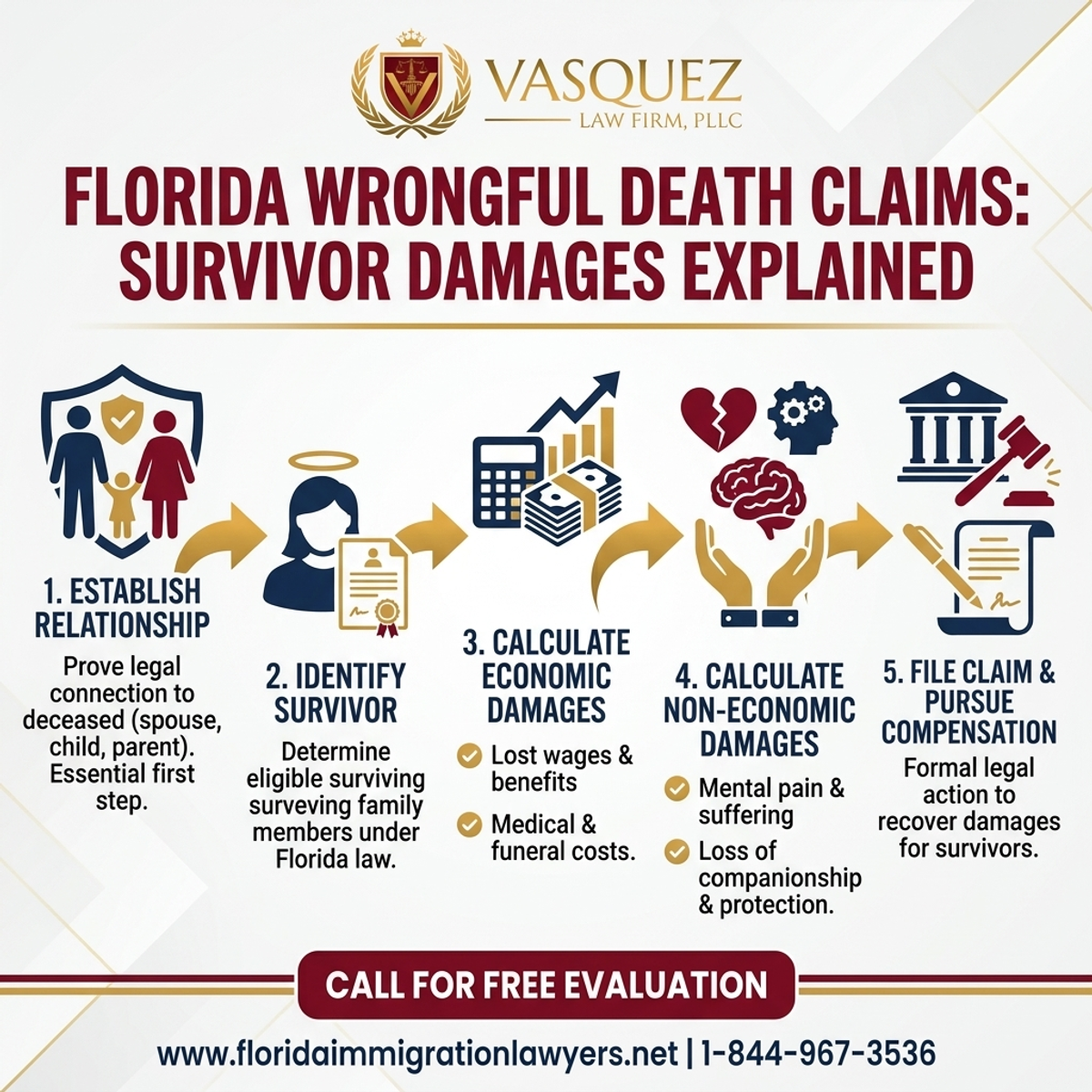
Key Statistics — Florida Wrongful Death Claims: Survivor Damages Explained
Navigating Complexities: Wrongful Death and Diverse Family Structures
In today's diverse society, families come in many forms, and a wrongful death can introduce unique complexities, particularly for those with varying legal statuses or international ties. While Florida's Wrongful Death Act aims to provide broad protection, certain situations demand specialized legal insight to ensure all survivors receive fair consideration.
For immigrant families, the loss of a loved one can be particularly devastating, impacting not only emotional and financial stability but also immigration status. For instance, if the deceased was a primary petitioner or sponsor for family members' immigration processes, their death can halt or complicate these proceedings. Surviving family members might suddenly find their path to legal residency or citizenship jeopardized. An attorney with expertise in both wrongful death and immigration law can be critical in such scenarios, helping to navigate the intersection of these two complex legal areas to protect the family's future.
Similarly, if the deceased was an asylum seeker or had a pending asylum claim, their death could leave dependents in a precarious legal position, potentially affecting their own claims or status. Understanding how a wrongful death impacts these sensitive cases requires a nuanced approach that considers both the personal losses and the specific legal vulnerabilities of the survivors.
Furthermore, in situations where a wrongful death results in the loss of a family's primary breadwinner or legal anchor, surviving family members might face increased risks of deportation defense issues if their own status was dependent on the deceased. The sudden absence of a sponsor or a change in family circumstances can trigger immigration challenges that require immediate and knowledgeable legal intervention. These cases highlight the importance of choosing legal representation that understands the full spectrum of challenges faced by diverse families, ensuring that all aspects of their well-being are considered in a wrongful death claim.
How a Wrongful Death Attorney Can Help
Navigating a wrongful death claim in Florida is a complex and emotionally taxing process. An experienced wrongful death attorney serves as an invaluable advocate, guiding families through every step of the legal journey. Here’s how a dedicated legal team can assist:
- Case Evaluation and Investigation: Attorneys will thoroughly investigate the circumstances of the death, gather evidence, identify all liable parties, and assess the potential value of the claim. This includes obtaining police reports, medical records, witness statements, and consulting with accident reconstructionists or medical experts.
- Understanding Legal Rights: They will explain Florida's Wrongful Death Act in detail, clarifying who qualifies as a survivor and what types of damages each survivor can claim.
- Calculating Damages: Attorneys work with financial experts, economists, and life care planners to accurately calculate both economic (e.g., lost wages, medical bills) and non-economic damages (e.g., pain and suffering, loss of companionship), ensuring that all potential losses are accounted for.
- Dealing with Insurance Companies: Insurance companies often attempt to minimize payouts. An attorney will handle all communications and negotiations with insurers, protecting your family from unfair settlement offers and aggressive tactics.
- Court Representation: If a fair settlement cannot be reached, your attorney will be prepared to take the case to trial, presenting a compelling argument on your family's behalf.
- Probate Court Navigation: They will assist the personal representative in navigating the probate court process to ensure proper appointment and legal authority to file the claim.
- Compassionate Support: Beyond legal expertise, a compassionate attorney provides support and guidance during one of the most challenging times a family can face.
Choosing the right legal representation is paramount. Our team of experienced attorneys is committed to providing compassionate and effective legal services to families suffering from wrongful death. We understand the profound impact of such a loss and are dedicated to fighting for the justice and compensation you deserve.
Conclusion
Losing a loved one due to someone else's negligence is an unbearable tragedy. While no amount of money can ever replace a life, Florida's Wrongful Death Act provides a crucial mechanism for surviving family members to seek accountability and financial stability in the wake of such a loss. Understanding the specific statutes, identifying eligible survivors, and accurately calculating damages are all critical components of a successful claim.
The complexities of these cases, coupled with the emotional distress involved, make experienced legal representation indispensable. An attorney can navigate the legal labyrinth, protect your rights, and tirelessly advocate for the maximum compensation possible for your family. If you have lost a loved one due to wrongful death, do not hesitate to seek legal counsel. Time limits apply, and prompt action is essential to preserve your claim and begin the journey toward healing and justice.
For a free consultation and to learn how we can help your family, please contact us today. We are here to provide the compassionate and skilled legal support you need during this difficult time.
Sources and References
- U.S. Citizenship and Immigration Services (USCIS)
- Executive Office for Immigration Review (EOIR)
- U.S. Department of State - Bureau of Consular Affairs
- Immigration and Nationality Act (INA), 8 U.S.C. Chapter 12
Do Not Navigate This Process Alone
Our experienced immigration attorneys are ready to fight for you. Get a free, confidential consultation today.
Se Habla Español
Frequently Asked Questions
Florida Immigration Lawyers
Immigration Attorney | Founder, Vasquez Law Firm
U.S. Air Force veteran and immigration attorney with thousands of cases resolved. J.D., NCCU School of Law. AILA member. Admitted to the 4th, 5th, and 11th Circuit Courts.
Available 24/7 - Free Evaluations
Related Legal Services
Our Florida immigration attorneys can help you with Florida personal injury representation, Florida car accident claims and slip-and-fall premises liability. Call today at 1-844-967-3536 for a free consultation.
Related Links
Related Topics
Free Legal Consultation
Discuss your case with our experienced attorneys. We're available 24/7.
Se Habla Español - Estamos aquí para ayudarle.
Related Articles
Bicycle Accident Liability in Orlando: Key Florida Laws
In Orlando, understanding bicycle accident liability and helmet laws is crucial. Learn about driver responsibility, legal steps, and when to consult a lawyer. For a free consultation, contact Florida Immigration Lawyers.
Florida Pedestrian Accident Crosswalk Rights Explained
Understanding your rights after a pedestrian crosswalk accident in Florida is crucial. Learn what to do, common mistakes to avoid, and how Florida Immigration Lawyers can help you claim the compensation you deserve.
Florida Pedestrian Accident: Crosswalk Rights and Damages
If you're a pedestrian in Florida, understanding your rights after a crosswalk accident is crucial. Learn about your rights, driver fault, and damages in this comprehensive guide. Contact Florida Immigration Lawyers for a free consultation.
Slip and Fall Claims in Publix: Proving a Wet Floor Hazard
Learn how to navigate slip and fall claims in Florida, focusing on wet floor incidents at Publix. Our guide covers legal requirements, common pitfalls, and the importance of evidence. Call Florida Immigration Lawyers at 1-844-967-3536 for a free consultation.