Understanding Uber and Lyft Rideshare Accident Insurance in
Understanding the insurance coverage for rideshare accidents in Florida is crucial for protecting your rights. Learn about the multi-layer insurance system for Uber and Lyft drivers, and discover how to navigate claims effectively.

- Florida law §627.748 mandates specific insurance coverage for rideshare drivers.
- Insurance policies vary based on driver status: waiting, en route, or engaged in a ride.
- Understanding coverage limits helps protect your rights after an accident.
- Consulting a lawyer can aid in navigating insurance claims and legal complexities.
Introduction
Imagine you're commuting in Gainesville, Florida, using a rideshare service like Uber or Lyft. Suddenly, you're involved in an accident. Navigating the aftermath requires understanding the complex insurance landscape specific to rideshare services. This article will cover the insurance requirements under Florida law, how they apply in different scenarios, and what steps you should take if you're involved in a rideshare accident. Call Florida Immigration Lawyers at 1-844-967-3536 for a free consultation.
Rideshare services have revolutionized transportation, offering convenience and accessibility across Florida cities like Gainesville. However, with their growing popularity comes an increased risk of accidents. Unlike traditional car accidents, incidents involving Uber or Lyft introduce a unique layer of complexity due to the involvement of a third-party company and a multi-tiered insurance system. This often leaves passengers, drivers, and other motorists confused about where to turn for compensation and support.
The goal of this guide is to demystify the process, providing a clear roadmap for anyone affected by a rideshare accident in Florida. We'll delve into the intricacies of state laws, explain how insurance coverage shifts based on the driver's status, and equip you with practical steps to take immediately after an incident. Understanding these nuances is crucial for protecting your rights and ensuring you receive the compensation you deserve. Remember, navigating these waters alone can be daunting, but help is available.
Understanding Florida's Rideshare Insurance Requirements
In Florida, rideshare companies like Uber and Lyft must comply with the insurance requirements outlined in §627.748. This law mandates that rideshare drivers maintain specific levels of insurance coverage, which vary depending on the driver's status at the time of an accident.
Florida Statute §627.748 was enacted to address the significant insurance gaps that existed when rideshare services first emerged. Traditional personal auto insurance policies typically exclude coverage for commercial activities, leaving a void when a driver was operating for a rideshare company. This specific legislation ensures that there is always a layer of insurance coverage, whether through the driver's personal policy or the rideshare company's commercial policy, thereby protecting all parties involved in an accident.
The law essentially creates a safety net, recognizing that rideshare drivers operate in a unique grey area between personal and commercial driving. It clarifies the responsibilities of both the individual driver and the rideshare platform, ensuring that victims of rideshare accidents are not left without recourse. Understanding these precise requirements is the first critical step in pursuing a successful claim after an accident.
Driver Status and Insurance Coverage
Insurance coverage is determined by the driver's activity status:
- App On, No Passenger: When a driver is available for hire but not carrying a passenger, they must have coverage for bodily injury and property damage.
- En Route to Pick Up: Once a driver accepts a ride request and is en route to pick up a passenger, a higher coverage level is required.
- Passenger On Board: Full coverage applies when a passenger is in the vehicle.
Let's break down these crucial phases with more detail, as the specific coverage amounts are vital for understanding your potential claim. When a rideshare driver has their app on and is waiting for a request (Phase 1), Florida law mandates that the rideshare company's contingent liability coverage kicks in if the driver's personal insurance denies the claim. This typically includes at least $50,000 for bodily injury per person, $100,000 for bodily injury per accident, and $25,000 for property damage. This coverage is designed to bridge the gap between a personal policy (which might exclude commercial use) and the higher-tier commercial policy.
The coverage significantly increases once a driver accepts a ride request and is en route to pick up a passenger (Phase 2) or has a passenger in the vehicle (Phase 3). During these active phases, the rideshare company's primary commercial insurance policy provides substantial coverage: typically $1 million in combined bodily injury and property damage liability. This robust coverage is critical because it acknowledges the increased risk and responsibility when a driver is actively engaged in transporting or picking up a passenger. Knowing which phase the driver was in at the time of the accident is paramount for determining which insurance policy will be primary and what the available coverage limits are.
Step-by-Step Guide: What to Do After a Rideshare Accident
- Ensure Safety: Move to a safe area if possible and check for injuries.
- Call 911: Report the accident to law enforcement and obtain a police report.
- Document the Scene: Take photos and gather contact information from all parties involved, including witnesses.
- Notify Uber or Lyft: Use the app to report the accident to the rideshare company.
- Seek Medical Attention: Even if injuries seem minor, consult a healthcare professional.
- Consult an Attorney: Contact Florida Immigration Lawyers to discuss your case and explore your legal options.
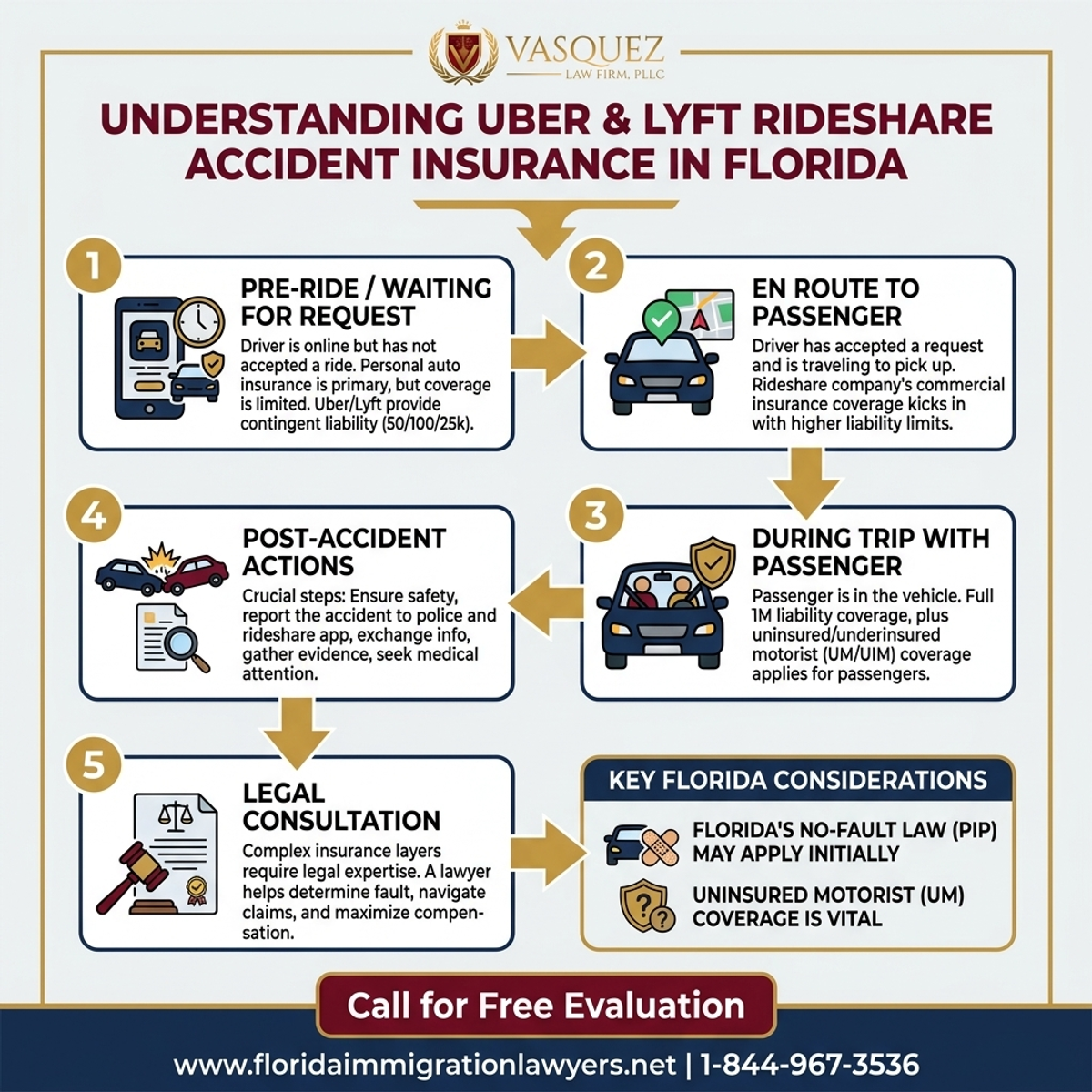
Step-by-Step Process — Understanding Uber and Lyft Rideshare Accident Insurance in Florida
Immediately after an accident, your safety and well-being are the top priority. After moving to a safe location, take a moment to assess yourself and any passengers for injuries. Even if you feel fine, adrenaline can mask pain, so a thorough check is always recommended. If anyone is injured, or if the vehicles are obstructing traffic, calling 911 is imperative. When reporting the accident, provide clear details about your location, the number of vehicles involved, and any apparent injuries. A police report serves as an official, unbiased account of the incident, which will be invaluable for your insurance claim.
Documentation is key to building a strong case. Use your smartphone to take comprehensive photos and videos of the accident scene, including vehicle damage from multiple angles, road conditions, traffic signals, skid marks, and any visible injuries. Collect contact and insurance information from all involved drivers, including their names, phone numbers, license plate numbers, and insurance policy details. If there are any witnesses, ask for their names and contact information, as their statements can corroborate your account of events. Do not admit fault or discuss liability at the scene.
Following these initial steps, ensure you promptly notify the rideshare company through their app's accident reporting feature. This initiates their internal process and can trigger their insurance coverage. Even if you feel only minor discomfort, seeing a doctor is crucial. Some serious injuries, like whiplash or concussions, may not present symptoms immediately. Medical records not only ensure you receive proper treatment but also provide crucial evidence linking your injuries to the accident. Finally, contacting Florida Immigration Lawyers at 1-844-967-3536 for a free consultation can provide immediate legal guidance, helping you navigate the complexities of insurance claims and protect your rights from the outset.
Document Checklist for Rideshare Accident Claims
- Police report
- Photos of the accident scene
- Insurance information from all involved parties
- Medical records and bills
- Witness statements
- Correspondence with Uber or Lyft
A comprehensive document checklist is essential for a successful rideshare accident claim. The police report is fundamental, as it provides an official record of the incident, including details of who was involved, the conditions at the time, and any citations issued. Ensure you obtain the report number and the investigating officer's contact information. Photos and videos of the accident scene are visual evidence that can clearly depict vehicle damage, road hazards, traffic conditions, and the extent of any injuries, offering undeniable support for your claim.
Beyond the initial scene documentation, meticulously gather all insurance information from every party involved, including policy numbers and contact details for their respective insurance providers. Medical records and bills are critical for demonstrating the nature and severity of your injuries, the treatments you've undergone, and the financial impact on your health. This includes emergency room visits, follow-up appointments, therapy records, and prescription costs. Witness statements, if available, can provide objective accounts of the accident, strengthening your narrative and countering any conflicting claims.
Finally, keep a detailed log of all correspondence with Uber or Lyft, including in-app messages, emails, and phone call summaries. This documentation proves your proactive communication and can be vital if disputes arise regarding reporting timelines or information provided. Additionally, collect any documents related to lost wages, such as pay stubs or employer statements, if your injuries prevented you from working. Florida Immigration Lawyers can help you organize this crucial evidence and ensure nothing is overlooked, maximizing the strength of your claim.
Timeline and Processing Expectations
After a rideshare accident, the timeline for resolving insurance claims can vary. Generally, you should report the accident to Uber or Lyft immediately and file an insurance claim within days. The insurance company will investigate, which can take several weeks. Legal proceedings, if necessary, can extend timelines significantly.
The initial phase of a rideshare accident claim involves immediate reporting and investigation. After you've reported the accident to both law enforcement and the rideshare company, their respective insurance providers will launch their own investigations. This typically involves reviewing police reports, examining photographs, interviewing witnesses, and assessing vehicle damage. This investigative period can range from a few weeks to several months, depending on the complexity of the accident, the number of parties involved, and the responsiveness of all individuals to requests for information. During this time, it's crucial to continue your medical treatment and meticulously document all related expenses and impacts on your life.
Once the investigation is complete, the insurance companies will typically make a settlement offer. This is often where the negotiation phase begins. If the initial offer is insufficient to cover your damages – including medical bills, lost wages, pain and suffering, and future care – your attorney will negotiate on your behalf. This back-and-forth can take additional weeks or months. Should negotiations fail to reach a fair resolution, the case may proceed to litigation, involving filing a lawsuit, discovery (exchanging information), and potentially a trial. Litigation can significantly prolong the timeline, often extending the process for a year or more. However, having experienced legal counsel from Florida Immigration Lawyers can help streamline this process, ensuring deadlines are met and your case is diligently pursued.
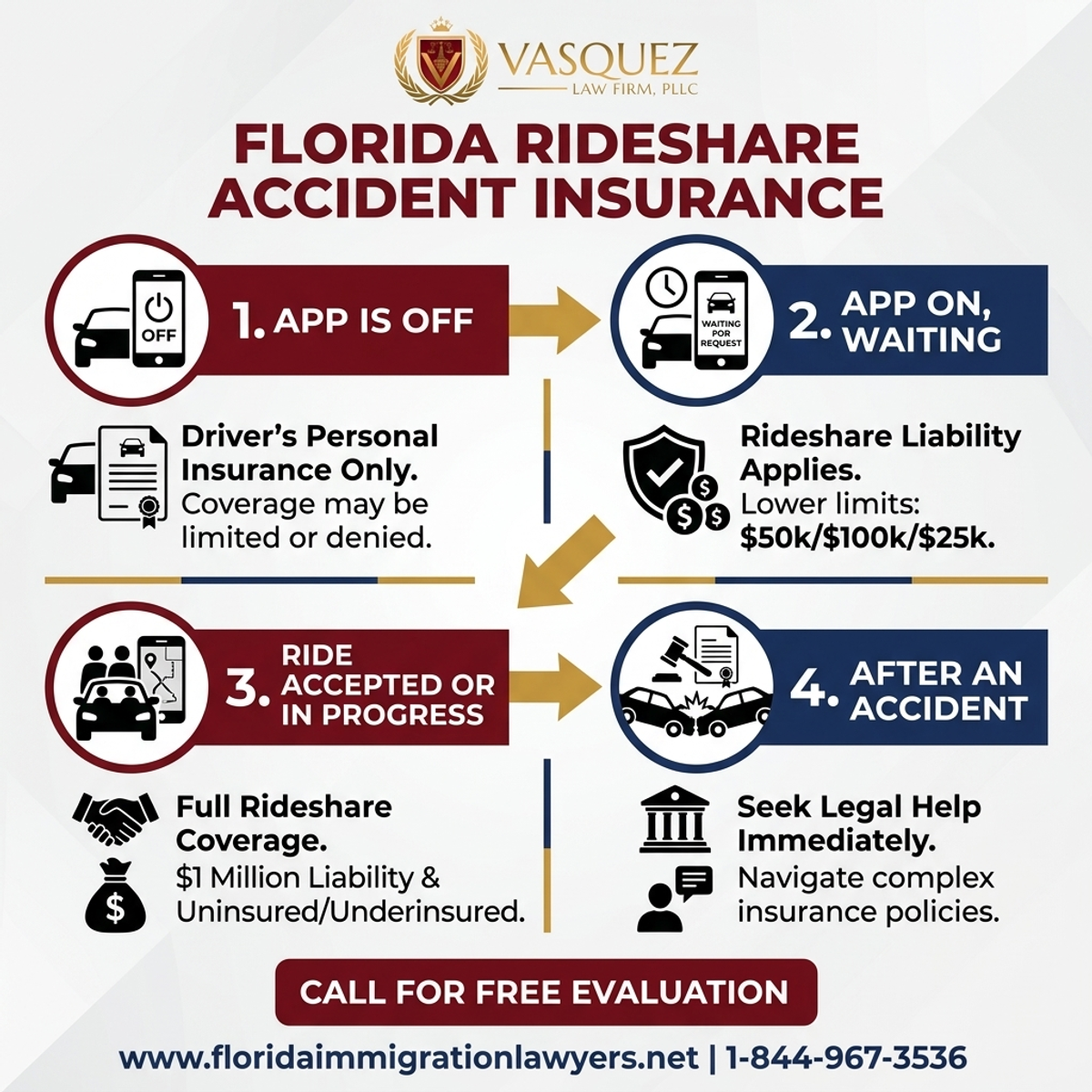
Key Statistics — Understanding Uber and Lyft Rideshare Accident Insurance in Florida
Cost Factors and Fee Breakdown
Legal representation in rideshare accident cases typically operates on a contingency fee basis—meaning no recovery, no fee. Costs may include medical expenses, property damage, and lost wages. An attorney can help quantify these expenses and negotiate with insurance companies.
The contingency fee arrangement is particularly beneficial for accident victims, as it removes the upfront financial burden of hiring a lawyer. Under this structure, your attorney's fees are a percentage of the final settlement or court award. This means that if your case does not result in compensation, you generally owe no attorney fees. This model aligns your attorney's interests directly with yours: they are motivated to secure the maximum possible recovery for your damages. It allows individuals, regardless of their financial situation, to access high-quality legal representation against large insurance companies and corporations.
Beyond attorney fees, other potential costs in a rideshare accident claim can include court filing fees, costs for obtaining medical records and expert witness testimonies, deposition expenses, and private investigator fees if necessary. A skilled attorney from Florida Immigration Lawyers will meticulously track all these expenses and ensure they are factored into your overall claim. They will also work diligently to quantify all your damages, which extend beyond immediate medical bills and lost wages to include future medical care, rehabilitation costs, pain and suffering, emotional distress, and loss of enjoyment of life. Accurately assessing these long-term and intangible damages is crucial for securing a truly comprehensive settlement.
Common Mistakes to Avoid
- Not Reporting the Accident: Failing to notify the police and the rideshare company can complicate claims.
- Admitting Fault: Avoid making statements that could be interpreted as admitting fault.
- Delaying Medical Treatment: Prompt medical evaluation is crucial for health and for documenting injuries.
- Not Consulting an Attorney: Legal guidance can significantly impact the outcome of your case.
- Ignoring Insurance Deadlines: Missing claim filing deadlines can result in denial of benefits.
- Settling Too Early: Early settlements may not cover long-term expenses.
- Inadequate Documentation: Thorough documentation supports your claim.
- Relying Solely on Rideshare Insurance: Explore all insurance options available.
When to Call a Lawyer
Contact a lawyer if you're injured in a rideshare accident, facing insurance claim denials, or unsure about your rights. Legal expertise is crucial when navigating complex insurance policies and multi-party litigation.
You should consider calling a lawyer immediately if you've sustained any injuries, even seemingly minor ones, as their full extent may not be apparent right away. Furthermore, if the rideshare company's insurance or the driver's personal insurance is attempting to deny your claim, delay communication, or offer a lowball settlement that doesn't adequately cover your expenses, legal intervention becomes critical. These tactics are common, and an experienced attorney can recognize them and protect your interests. Dealing with multiple insurance companies—the rideshare company's, the driver's personal policy, and potentially your own—can be overwhelming, and a lawyer can manage these complex interactions on your behalf.
Additionally, if there's any dispute over who was at fault for the accident, or if the accident involved multiple vehicles, the legal complexities escalate quickly. A seasoned personal injury attorney understands Florida's comparative negligence laws and can gather the necessary evidence to establish liability. Don't hesitate to reach out to Florida Immigration Lawyers at 1-844-967-3536 for a free consultation. Their team can provide clarity on your specific situation, explain your legal options, and help you understand the true value of your claim, ensuring you don't settle for less than you deserve.
About Florida Immigration Lawyers
Florida Immigration Lawyers, available 24/7, offers comprehensive legal services in personal injury and immigration law. Serving Gainesville and the broader Florida area, we provide free consultations and bilingual support. Call 1-844-967-3536 or visit our website for more information.
Our firm is deeply committed to advocating for the rights of accident victims across Florida. With extensive experience in personal injury law, specifically involving rideshare accidents, we possess the knowledge and resources to tackle the unique challenges presented by Uber and Lyft insurance policies. We understand the physical, emotional, and financial toll an accident can take, and our dedicated team works tirelessly to alleviate your burden and secure the justice and compensation you are entitled to.
At Florida Immigration Lawyers, we pride ourselves on providing personalized attention and compassionate support to every client. From the moment you contact us for your free consultation, you'll experience a commitment to clear communication and strategic legal planning. Our bilingual staff ensures that language is never a barrier to receiving top-tier legal advice. We are available 24/7 because we know accidents don't adhere to business hours, and prompt legal action can be crucial for the success of your claim. Let us put our expertise to work for you.
Sources and References
- U.S. Citizenship and Immigration Services (USCIS)
- Executive Office for Immigration Review (EOIR)
- 8 U.S.C. Chapter 12 - Immigration and Nationality Act
- Florida Statute §627.748
- Florida Statute §95.11(4)(a)
Related services: Florida car accident attorney, commercial truck accident claims, motorcycle accident representation, Florida bicycle accident attorney.
Frequently Asked Questions About Rideshare Accidents in Florida
Navigating the aftermath of a rideshare accident can raise many questions. Here are answers to some common inquiries to help you understand your situation better:
What if the rideshare driver was off-duty or not logged into the app?
If the rideshare driver was completely off-duty and not logged into the app, their personal auto insurance policy would typically be the primary coverage for any accident. Uber or Lyft's commercial insurance would not apply in this scenario. This highlights the importance of gathering all driver information at the scene and contacting Florida Immigration Lawyers to determine the correct insurance pathway for your claim.
Can I sue Uber or Lyft directly after an accident?
Suing Uber or Lyft directly can be complex due to their classification of drivers as independent contractors, not employees. Generally, you'd file a claim against the driver's personal insurance or the rideshare company's commercial policy, depending on the driver's status at the time of the accident. A lawyer can help determine if direct litigation against the company is viable based on the specifics of your case.
What kind of damages can I claim after a rideshare accident?
You can claim various damages, including medical expenses (past and future), lost wages, loss of earning capacity, property damage, and non-economic damages like pain and suffering, emotional distress, and loss of enjoyment of life. Documenting all these impacts is crucial for a comprehensive claim. Florida Immigration Lawyers can help quantify these damages to ensure you seek full and fair compensation.
How long do I have to file a personal injury claim in Florida?
In Florida, the statute of limitations for most personal injury claims, including those from rideshare accidents, is generally two years from the date of the accident. It's crucial not to delay, as missing this deadline can result in losing your right to seek compensation entirely. Prompt action allows for thorough investigation and preservation of evidence, so contact Florida Immigration Lawyers at 1-844-967-3536 without delay.
What if the accident was partially my fault?
Florida operates under a pure comparative negligence system. This means that even if you are partially at fault for an accident, you can still recover damages, but your compensation will be reduced by your percentage of fault. For example, if you are found 20% at fault, your recoverable damages will be reduced by 20%. An attorney can help minimize your assigned fault and maximize your recovery.
This article provides general legal information and is not intended as legal advice. Every case is unique, and outcomes depend on specific facts and circumstances. Contact an attorney for advice about your particular situation.
Reviewed By
This article was reviewed for Florida legal accuracy by Harold Estrada-Rodriguez, Florida Bar No. 1041171, the attorney responsible for personal injury matters at Vasquez Law Firm. Personal injury representation in Florida only. No recovery, no fee.
If you need legal assistance, learn more about learn about Florida personal injury claims, or call us at 1-844-967-3536 for a free consultation.
Do Not Navigate This Process Alone
Our experienced immigration attorneys are ready to fight for you. Get a free, confidential consultation today.
Se Habla Español
Frequently Asked Questions
Florida Immigration Lawyers
Immigration Attorney | Founder, Vasquez Law Firm
U.S. Air Force veteran and immigration attorney with thousands of cases resolved. J.D., NCCU School of Law. AILA member. Admitted to the 4th, 5th, and 11th Circuit Courts.
Available 24/7 - Free Evaluations
Related Legal Services
Our Florida immigration attorneys can help you with Florida wrongful death claims, Florida personal injury attorney Harold Estrada-Rodriguez and free personal injury consultation. Call today at 1-844-967-3536 for a free consultation.
Related Links
Related Topics
Free Legal Consultation
Discuss your case with our experienced attorneys. We're available 24/7.
Se Habla Español - Estamos aquí para ayudarle.
Related Articles
Florida Drunk Driver Punitive Damages: DUI Accident Guide
Being injured by a drunk driver in Florida can leave you with severe physical, emotional, and financial burdens. Beyond seeking compensation for medical bills and lost wages, victims in Gainesville and across Florida may be eligible for punitive damages. These damages are designed to punish the at-fault drunk driver for their reckless actions and deter similar behavior in the future. Florida law sets specific requirements for proving punitive damages, often necessitating clear and convincing evidence of gross negligence or intentional misconduct. Understanding the interplay between criminal DUI proceedings and your civil personal injury claim is crucial. Florida Immigration Lawyers, led by Harold Estrada-Rodriguez, Florida Bar No. 1041171, specializes in helping victims navigate these complex legal waters, ensuring aggressive representation to pursue maximum compensation, including punitive damages. Contact us for a free consultation to protect your rights.
Florida Truck Driver Fatigue and HOS Violations | VLF Florida
Explore truck driver fatigue and Hours of Service violations in Florida. Learn how these regulations impact safety and compliance. Call Florida Immigration Lawyers for a free consultation.
Florida Wrongful Death Claims: Survivor Damages Explained
Explore how Florida's wrongful death statutes, §§768.16-768.21, provide a pathway for survivors to seek damages. Understand who can file a claim, the types of damages available, and the common pitfalls to avoid. Contact Florida Immigration Lawyers for guidance in Miami and throughout Florida.
Bicycle Accident Liability in Orlando: Key Florida Laws
In Orlando, understanding bicycle accident liability and helmet laws is crucial. Learn about driver responsibility, legal steps, and when to consult a lawyer. For a free consultation, contact Florida Immigration Lawyers.
