Fiance Visa Process in Florida 2026: A Comprehensive Guide
Navigating the fiance visa process in Florida can be complex. Learn about the steps involved, required documents, and how Florida Immigration Lawyers can assist you.
Fiance Visa Process in Florida 2026
Navigating the U.S. immigration system can be a daunting task, especially when it involves bringing a loved one to the country. For U.S. citizens in Florida looking to marry their foreign national partner, the K-1 Fiance Visa is often the most direct path. This visa allows the foreign fiancé(e) to enter the United States for the express purpose of marrying their U.S. citizen petitioner within 90 days of arrival. Understanding each step of the process, from initial petition to adjustment of status, is crucial for a successful outcome. This comprehensive guide will walk you through the intricacies of the K-1 Fiance Visa process in Florida for 2026, highlighting key requirements, potential challenges, and the importance of legal guidance.
Understanding the K-1 Fiance Visa
The K-1 Fiance Visa, often referred to as a non-immigrant visa, is specifically designed for foreign citizens who intend to marry a U.S. citizen. The primary goal is to facilitate the marriage and subsequent application for permanent residency (Green Card) within the United States. Unlike other visas, the K-1 visa is unique because it anticipates an immigrant intent – the foreign national intends to become a permanent resident after marriage.
Who is Eligible for a K-1 Visa?
To be eligible for a K-1 Fiance Visa, both the U.S. citizen petitioner and the foreign national beneficiary must meet specific criteria set by U.S. Citizenship and Immigration Services (USCIS) and the Department of State:
- U.S. Citizen Petitioner: Only a U.S. citizen can file a K-1 visa petition. Lawful Permanent Residents (Green Card holders) are not eligible to petition for a K-1 visa.
- Foreign National Beneficiary: The foreign national must be legally free to marry and intend to marry the U.S. citizen petitioner within 90 days of entering the U.S.
- Bona Fide Relationship: There must be a genuine, good-faith relationship between the petitioner and beneficiary. This means the relationship is not solely for immigration purposes.
- Meeting Requirement: The U.S. citizen and foreign national must have met in person at least once within the two years immediately preceding the filing of the petition. There are very limited exceptions to this rule, such as extreme hardship to the petitioner or if meeting would violate strict cultural or religious customs.
- Legal Capacity to Marry: Both individuals must be legally able to marry, meaning any previous marriages must have been legally terminated (e.g., divorce, annulment, death of a spouse).
Meeting these initial eligibility requirements is the first critical step. Any discrepancies or lack of sufficient evidence can lead to delays or even denial of the petition. For complex cases or if you have questions about your specific eligibility, consulting with an experienced immigration attorney is highly recommended.
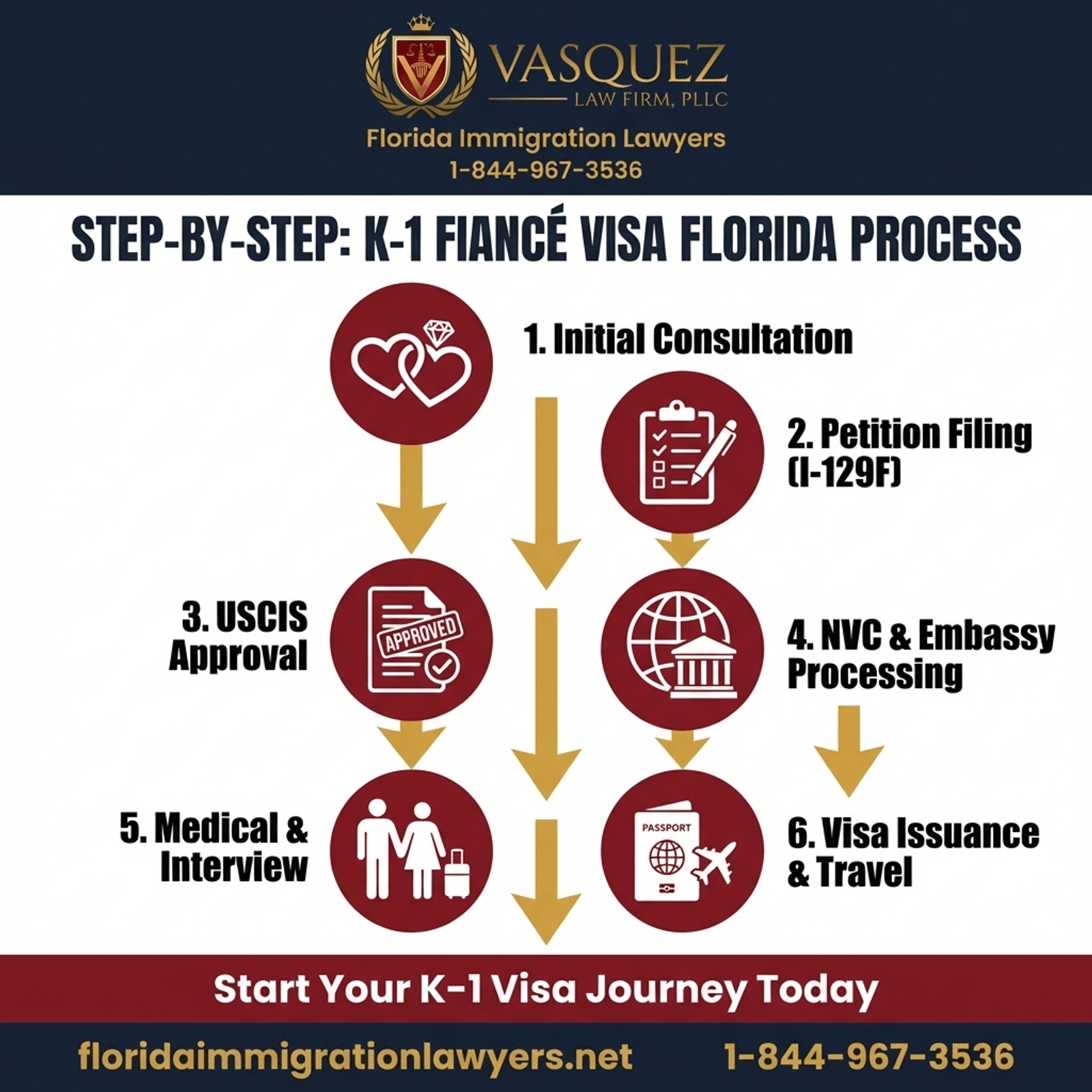
The Step-by-Step K-1 Visa Process
The K-1 visa process involves multiple stages, beginning with USCIS and moving through the National Visa Center (NVC) and a U.S. Embassy or Consulate abroad. Each stage has its own requirements and potential pitfalls.
Step 1: Filing Form I-129F, Petition for Alien Fiance(e)
The U.S. citizen petitioner initiates the process by filing Form I-129F, Petition for Alien Fiance(e), with USCIS. This form establishes the eligibility of both parties and the bona fides of their relationship. Along with the form, extensive supporting documentation is required, including:
- Proof of U.S. citizenship for the petitioner (e.g., birth certificate, passport).
- Proof of legal termination of any prior marriages for both parties.
- Evidence of a bona fide relationship (e.g., photos together, communication records, affidavits from friends/family, travel itineraries).
- Proof of having met in person within the last two years.
- G-325A Biographic Information for both petitioner and beneficiary.
- Passport-style photos for both.
The petition is filed with the USCIS service center that has jurisdiction over the petitioner's residence. Processing times for Form I-129F can vary significantly, often taking several months to over a year. Once approved, USCIS sends an approval notice (Form I-797) and forwards the petition to the National Visa Center (NVC).
Step 2: NVC Processing
After USCIS approves the I-129F petition, it is sent to the NVC. The NVC assigns a case number and then forwards the approved petition to the U.S. Embassy or Consulate in the foreign national's country of residence where the interview will take place. During this stage, the foreign national will typically receive instructions to complete the online Nonimmigrant Visa Application, Form DS-160, and gather necessary civil documents.
Step 3: Consular Interview at the U.S. Embassy/Consulate
Once the embassy receives the petition, the foreign national fiancé(e) will be scheduled for an interview. Before the interview, the beneficiary must undergo a medical examination by an authorized physician and obtain police certificates from all countries where they have lived for certain periods. The interview is a critical step where a consular officer will assess the legitimacy of the relationship and the beneficiary's admissibility to the U.S. Required documents for the interview typically include:
- Valid passport.
- Birth certificate.
- Medical examination results.
- Police certificates.
- Evidence of financial support (Form I-134, Affidavit of Support) from the U.S. citizen petitioner.
- Additional evidence of the relationship (e.g., recent photos, ongoing communication).
The consular officer will ask questions to determine if the relationship is genuine and if the foreign national meets all eligibility requirements. If the interview is successful, the K-1 visa will be issued.
Step 4: Entry into the U.S. and Marriage
Upon receiving the K-1 visa, the foreign fiancé(e) can travel to the United States. The K-1 visa is typically valid for six months, allowing a single entry. Crucially, the marriage to the U.S. citizen petitioner must take place within 90 days of the foreign national's entry into the U.S. Failure to marry within this timeframe will result in the foreign national being out of status and potentially subject to removal proceedings. It's important to note that a K-1 visa holder cannot marry anyone other than the U.S. citizen who petitioned for them.
Step 5: Adjusting Status (Form I-485)
After the marriage, the foreign national becomes an immediate relative of the U.S. citizen spouse. The next step is to apply for Adjustment of Status to become a Lawful Permanent Resident (Green Card holder). This involves filing Form I-485, Application to Register Permanent Residence or Adjust Status, along with several other forms and supporting documents, including:
- Form I-864, Affidavit of Support (new financial sponsorship form).
- Form I-765, Application for Employment Authorization (optional).
- Form I-131, Application for Travel Document (optional).
- Medical examination results (if not already submitted or if expired).
- Proof of marriage (marriage certificate).
- Birth certificate, passport, and other identity documents.
USCIS will likely schedule an interview for the adjustment of status application. Both spouses typically attend this interview, where an officer will again verify the bona fides of the marriage. If the marriage is less than two years old at the time of adjustment of status approval, the foreign national will receive a conditional Green Card, valid for two years. Before the conditional Green Card expires, the couple must file Form I-751, Petition to Remove Conditions on Residence, to obtain a 10-year permanent Green Card. This entire process, from initial petition to permanent Green Card, can take several years.
Navigating Common Challenges and Pitfalls in the K-1 Process
While the K-1 visa process seems straightforward on paper, many applicants encounter significant challenges that can delay or even jeopardize their case. Understanding these common pitfalls can help you prepare and mitigate risks, especially with the complexities of immigration law.
Delays and Requests for Evidence (RFEs)
One of the most frequent challenges is the unpredictable nature of processing times. USCIS and consular processing can experience significant backlogs, leading to lengthy waits. Furthermore, if USCIS determines that your initial petition lacks sufficient evidence or contains discrepancies, they will issue a Request for Evidence (RFE). An RFE requires a timely and thorough response with additional documentation. Failing to respond adequately or on time can lead to a denial. Common reasons for RFEs include insufficient proof of a bona fide relationship, incomplete financial documentation, or missing civil documents. Proactively gathering comprehensive evidence from the outset can help reduce the likelihood of an RFE.
Proving a "Bona Fide" Relationship
The U.S. government is vigilant against marriage fraud. Therefore, demonstrating a genuine, good-faith relationship is paramount at every stage. This goes beyond just having met in person. You must provide compelling evidence that your relationship is real and not entered into solely for immigration benefits. This includes shared experiences, ongoing communication, joint financial commitments (if applicable), and plans for the future. Consular officers and USCIS adjudicators are trained to identify inconsistencies or red flags. Weak or fabricated evidence can lead to intense scrutiny, interview denials, or even accusations of fraud, which can have severe long-term immigration consequences. Maintaining detailed records of your relationship from its inception is crucial.
Financial Sponsorship (Form I-134 and I-864)
The U.S. citizen petitioner must demonstrate the financial ability to support their foreign fiancé(e) and prevent them from becoming a public charge. For the K-1 visa stage, this involves Form I-134, Affidavit of Support. However, for the Adjustment of Status stage, a more stringent Form I-864, Affidavit of Support, is required. This form is a legally binding contract where the petitioner agrees to support the immigrant at 125% of the federal poverty guidelines. If the petitioner's income is insufficient, a joint sponsor may be required. Failing to meet the financial requirements is a common reason for delays or denials. It's essential to understand the specific income thresholds and provide robust financial documentation, including tax returns, pay stubs, and employment verification letters.
Previous Immigration Violations or Criminal History
Any prior immigration violations by the foreign national, such as overstaying a previous visa, illegal entry, or previous deportations, can significantly complicate the K-1 process. Similarly, a criminal record for either the petitioner or the beneficiary can lead to inadmissibility. Depending on the nature and severity of the offense, waivers might be available, but these are complex and require strong legal arguments. In such cases, seeking advice from an attorney specializing in deportation defense or asylum, who understands the nuances of waivers and inadmissibility, is critical. These issues can lead to lengthy delays and a higher risk of denial without proper legal intervention.
Importance of Legal Counsel
Given the complexity and potential pitfalls, navigating the K-1 visa process without experienced legal counsel can be risky. An immigration lawyer can help you:
- Ensure all forms are correctly filled out and submitted.
- Identify and gather all necessary supporting documentation.
- Prepare for interviews at USCIS and the consulate.
- Respond effectively to RFEs.
- Address any potential issues like criminal history or previous immigration violations.
- Guide you through the adjustment of status process after marriage.
Having a legal professional by your side can significantly increase your chances of a smooth and successful process, minimizing stress and avoiding costly mistakes.
Why Choose a Florida Immigration Lawyer?
When dealing with a process as significant as the K-1 Fiance Visa, having local legal representation offers distinct advantages. A Florida immigration lawyer understands the specific requirements and nuances of filing petitions from within the state, as well as the local USCIS field offices and their procedures. While immigration law is federal, local attorneys often have practical experience with regional processing centers and can provide tailored advice based on the jurisdiction.
Our team of dedicated Florida Immigration Lawyers is committed to assisting individuals and families through every stage of the K-1 visa process. We provide personalized guidance, ensuring that your petition is meticulously prepared and that you are thoroughly prepared for interviews. We can help you navigate complex documentation, respond to Requests for Evidence, and address any unique challenges that may arise in your case. Our goal is to make your journey to uniting with your fiancé(e) in Florida as seamless as possible, from the initial I-129F filing to the final adjustment of status.
Conclusion
The K-1 Fiance Visa process in Florida for 2026 is a multi-stage journey that requires careful attention to detail, extensive documentation, and a thorough understanding of U.S. immigration law. From the initial petition to the final adjustment of status, each step is critical to ensuring your foreign fiancé(e) can legally enter the U.S., marry you, and ultimately obtain a Green Card. While challenging, with proper preparation and professional legal guidance, a successful outcome is well within reach.
Don't leave your family's future to chance. If you are a U.S. citizen in Florida considering bringing your foreign fiancé(e) to the country, we invite you to reach out for assistance. Contact Florida Immigration Lawyers today for a free consultation to discuss your specific situation and learn how we can help you navigate the K-1 Fiance Visa process with confidence and peace of mind.
Do Not Navigate This Process Alone
Our experienced immigration attorneys are ready to fight for you. Get a free, confidential case review today.
Se Habla Español
Or leave your details and we’ll call you:
Free Evaluation in 24 Hours
Or talk to us right now

AI voice assistant — available 24/7
FreeFrequently Asked Questions

William J. Vásquez
Founding Attorney · Vasquez Law Firm
U.S. Air Force veteran and immigration attorney with years of hands-on U.S. immigration experience. J.D., NCCU School of Law. AILA member. Admitted to the 4th, 5th, and 11th Circuit Courts.
Available 24/7 - Free Evaluations
Reviewed for legal accuracy by William J. Vásquez
Licensed in North Carolina; U.S. immigration is federal practice.
Related Legal Services
Our Florida immigration attorneys can help you with deportation defense, family immigration services and immigration lawyer cost in Florida. Call today at 1-844-YO-PELEO for a free case review.
Related Links
Related Topics
Free Legal Case Review
Discuss your case with our experienced attorneys. We're available 24/7.
Se Habla Español - Estamos aquí para ayudarle.
Related Articles
DUI Immigration Consequences in Florida 2026
A DUI conviction in Florida can have severe immigration consequences, potentially leading to inadmissibility, deportation, or denial of immigration benefits. For non-citizens, a DUI is not just a traffic offense but a serious criminal matter that federal immigration law scrutinizes closely. Factors like multiple offenses, injury, or property damage can escalate a simple DUI to a Crime Involving Moral Turpitude (CIMT) or even an aggravated felony, triggering mandatory detention and removal proceedings. Understanding the specific nature of your Florida conviction and its interpretation under the Immigration and Nationality Act (INA) is crucial. This article outlines how DUIs impact immigration status, the grounds for inadmissibility and deportation, a step-by-step guide to navigating the process, essential documentation, and expected timelines for 2026. We also highlight common mistakes to avoid and when to seek legal counsel from an experienced immigration attorney. Florida Immigration Lawyers offers comprehensive support for individuals facing these challenging situations, providing expert guidance through complex legal landscapes.
Immigration Lawyer Orlando Free Consultation in Florida
For individuals and families in Orlando, Florida, navigating the complexities of U.S. immigration law requires expert guidance. An immigration lawyer in Orlando offers crucial support for everything from visa applications and green card processes to naturalization and deportation defense. This comprehensive guide details what a free consultation covers, providing a step-by-step overview of immigration pathways, essential document checklists, and expected timelines in 2026. We also highlight common mistakes to avoid, discuss the critical role of legal counsel in deportation and asylum cases, and explain why choosing a local Orlando immigration attorney is beneficial. Florida Immigration Lawyers is dedicated to serving the diverse community of Orlando with compassionate, effective legal solutions, ensuring you receive personalized advice and robust representation for a successful immigration journey.
EAD Advance Parole Combo Card in Florida 2026
For individuals with a pending Form I-485, Application to Register Permanent Residence or Adjust Status, the EAD Advance Parole Combo Card is an essential document. This single card combines the authorization to work legally in the U.S. (Employment Authorization Document - EAD) with permission to travel internationally and re-enter without abandoning your green card application (Advance Parole). This guide from Florida Immigration Lawyers provides a comprehensive overview for applicants in Florida in 2026, covering eligibility, the step-by-step application process, required documents, expected processing times, and associated costs. We also highlight common mistakes to avoid and when to seek legal counsel to ensure a smooth and successful immigration journey. Understanding this vital card is key to maintaining stability while awaiting your permanent residency approval.
EAD Advance Parole Combo Card in Florida: What You Need
An EAD advance parole combo card allows individuals with pending adjustment applications to both work and travel abroad without jeopardizing their green card application. Learn how to apply in Florida, what documents you need, and common mistakes to avoid.