Dual Citizenship Florida: Navigating Your Immigration Path
For Florida residents, understanding dual citizenship offers the unique advantage of maintaining ties with two nations. This comprehensive guide from Florida Immigration Lawyers explains U.S. policy on dual nationality, the naturalization process, and the benefits of holding two passports. Learn about eligibility, required documents, timelines, and common pitfalls to avoid. Whether you're in Hollywood, Miami, or Orlando, navigating the complexities of dual citizenship requires careful planning and expert legal advice. We provide insights into U.S. laws and how your country of origin's policies can impact your status. Contact us for a free consultation to ensure a smooth and successful journey to becoming a dual citizen.

Quick Answer: Dual Citizenship in Florida
Dual citizenship in Florida is generally permitted under U.S. law, meaning an individual can be a citizen of both the United States and another country simultaneously. The U.S. does not require naturalizing citizens to renounce their prior citizenship, though some other countries may have such requirements. For Florida residents, especially in diverse areas like Hollywood, understanding the nuances of maintaining two passports involves navigating complex immigration, tax, and international laws. Seeking guidance from a qualified immigration attorney is crucial to ensure compliance and to fully understand the benefits and obligations of dual nationality.
- The U.S. generally permits dual citizenship, though it does not actively endorse it.
- Dual nationality can be acquired through birth, naturalization, or parentage.
- Florida residents benefit from dual citizenship for travel, property, and cultural ties.
- Understanding the laws of both countries is essential to avoid complications.
- Consulting an immigration lawyer is recommended for navigating the process effectively.
Dual Citizenship Florida: Navigating Your Immigration Path
Are you a Florida resident dreaming of the freedom and flexibility that comes with holding two passports? The concept of dual citizenship Florida offers a unique opportunity for many individuals to maintain deep ties with their country of origin while fully embracing life in the United States. For immigrants in Hollywood and across the Sunshine State, understanding how to navigate the complexities of dual nationality is a common, yet often intricate, journey.
While the United States generally permits its citizens to hold citizenship in another country, the path to achieving this status, especially through naturalization, involves specific legal requirements and considerations. This comprehensive guide from Florida Immigration Lawyers will demystify the process, explain the benefits and challenges, and provide actionable insights for those seeking to become dual citizens. We understand the hopes and concerns that accompany such significant decisions, and our goal is to empower you with clear, reliable information.
From understanding U.S. policy on two passports to detailing the naturalization steps and common pitfalls, we cover everything you need to know. Do not navigate this complex process alone. Call Florida Immigration Lawyers at 1-844-967-3536 for a free consultation to discuss your specific situation and explore your options for dual citizenship.
Understanding Dual Citizenship in the U.S. and Florida
Dual citizenship, also known as dual nationality, means a person is a citizen of two countries at the same time. The United States does not have a specific law or treaty that prohibits dual nationality. Instead, U.S. law generally tolerates it. This means that when a foreign national undergoes the U.S. naturalization process to become a U.S. citizen, they are typically not required to formally renounce their prior citizenship. However, the oath of allegiance taken during naturalization does include a phrase about renouncing allegiance to foreign states, which can cause confusion. This renunciation is primarily an expression of loyalty to the U.S. and does not, in most cases, automatically revoke citizenship in another country.
For individuals residing in Florida, particularly in diverse areas like Hollywood, Miami, and Orlando, dual citizenship is a common status. Florida is home to a vast immigrant population from various countries, many of which also permit their citizens to hold another nationality. For example, many Latin American and European countries allow dual citizenship, enabling individuals to maintain strong cultural, economic, and familial ties with their homelands. The key is to understand not only U.S. law but also the laws of your other country of citizenship, as some nations may have different rules regarding dual nationality or automatic loss of citizenship upon acquiring another.
The U.S. Department of State provides guidance on dual nationality, affirming that U.S. citizens may possess dual nationality. However, it also clarifies that a person who is a dual national owes allegiance to both the United States and the foreign country. Each country has a claim on the person, and each country may impose duties on the person, such as military service or tax obligations. Understanding these reciprocal obligations is a vital aspect of embracing dual citizenship in Florida. This status can offer significant advantages, but it also comes with responsibilities that require careful consideration and planning.
Pathways to Dual Citizenship: Naturalization and Beyond
There are several primary ways an individual can acquire dual citizenship Florida. The most common pathway for immigrants is through the U.S. naturalization process. When a lawful permanent resident (green card holder) meets specific eligibility requirements, they can apply to become a U.S. citizen. If their country of origin also permits dual nationality, they will effectively become a dual citizen upon taking the Oath of Allegiance to the United States. This is a deliberate process initiated by the individual.
Another common pathway to dual nationality is through birth. A person born in the United States is automatically a U.S. citizen under the 14th Amendment, regardless of their parents' nationality. If one or both of their parents are citizens of another country that confers citizenship by descent (jus sanguinis), the child may also be a citizen of that country. Similarly, a child born abroad to U.S. citizen parents may acquire U.S. citizenship at birth, and if the country of birth also grants citizenship (jus soli), they may automatically be a dual citizen. These scenarios often involve less direct action from the individual to acquire the dual status.
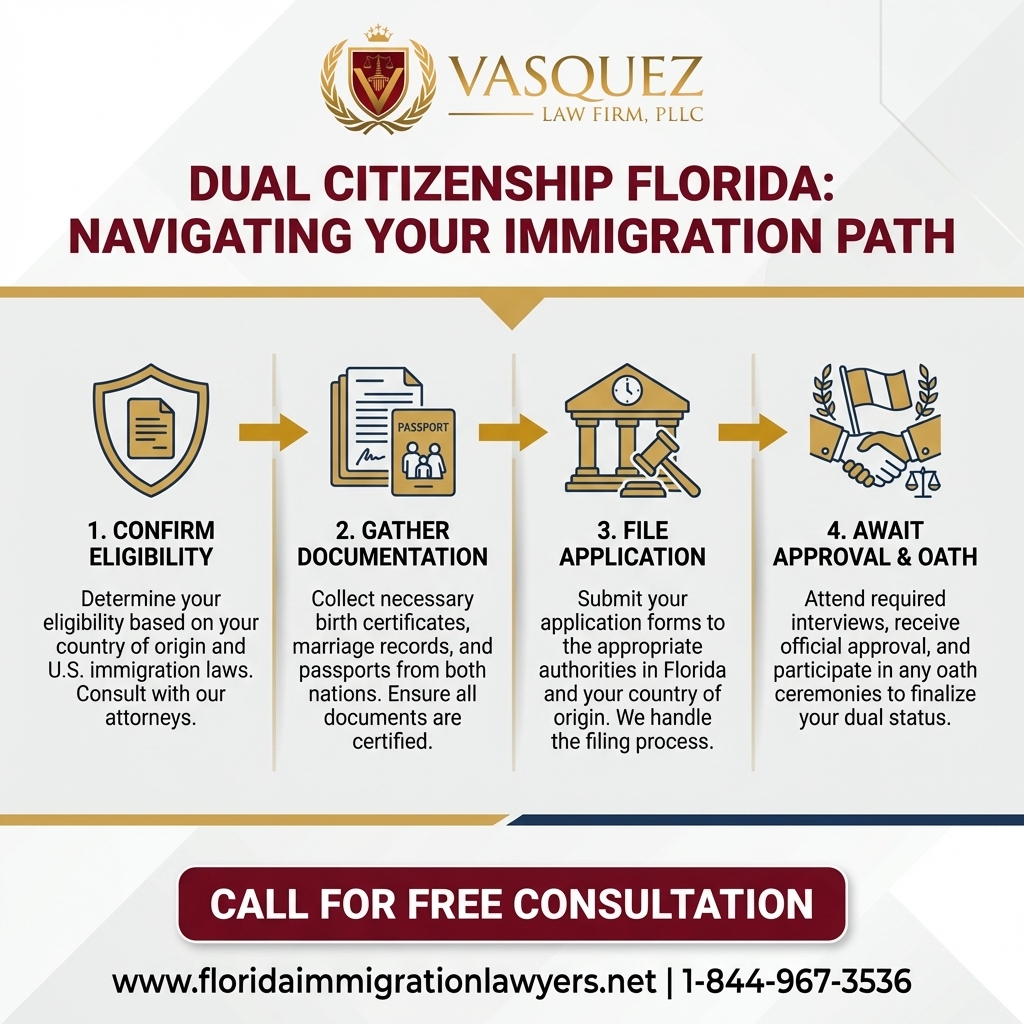
For individuals in Florida, especially those with international family ties, understanding these different pathways is crucial. For example, a child born in Miami to Venezuelan parents may be a U.S. citizen by birth and potentially a Venezuelan citizen by descent. The U.S. government recognizes these situations and generally does not interfere with a person's foreign citizenship. However, it is always advisable to consult with an attorney to confirm the specific laws of both countries involved and to ensure all legal requirements are met. The process of naturalization, especially, demands meticulous attention to detail and adherence to USCIS regulations (8 U.S.C. § 1427, INA § 316).
Benefits and Challenges of Holding Two Passports
Holding two passports as a dual citizen in Florida offers a wealth of benefits. One of the most significant advantages is enhanced travel flexibility. Dual citizens can travel more freely between their two countries without needing visas, simplifying visits to family and friends, or conducting business. This can be particularly beneficial for Florida residents with strong international connections, allowing them to navigate global travel with greater ease. Additionally, dual citizens often have the right to live and work in both countries, opening up broader professional and personal opportunities.
Beyond travel and residency, dual nationality confers a range of civic and economic rights. You may have the right to vote in elections in both countries, own property without restrictions that might apply to foreign nationals, and access social services or benefits available to citizens in both nations. For many, it also means maintaining a deeper cultural identity and connection to their heritage, which is a profound personal benefit. In a diverse state like Florida, these connections are highly valued, allowing individuals to bridge cultures and communities effectively.
However, dual citizenship also comes with potential challenges. One major consideration is tax obligations. U.S. citizens, including dual citizens, are generally subject to U.S. taxation on their worldwide income, regardless of where they reside. This can lead to complex tax reporting requirements with the IRS. Military service obligations can also arise in both countries, although specific agreements or laws often prevent individuals from serving in two militaries simultaneously. There can also be potential conflicts of law, particularly if you are in a third country and only one of your citizenships is recognized. Finally, some countries may require you to enter and exit using their passport, adding a layer of complexity to international travel. It is vital to understand these implications, and legal counsel can help you prepare for and manage them effectively.
The Naturalization Process: A Step-by-Step Guide for Florida Residents
For most Florida residents seeking dual citizenship through naturalization, the process involves several distinct steps. Understanding each stage is crucial for a successful application. Here is a simplified guide:
- Determine Eligibility: Before applying, ensure you meet all requirements. Generally, you must be 18 years old, a lawful permanent resident for at least five years (or three years if married to a U.S. citizen), have continuous residence and physical presence in the U.S., demonstrate good moral character, be able to read, write, and speak basic English, and have a knowledge of U.S. history and government. You must also be a resident of the state or USCIS district where you apply for at least three months. For Florida residents, this means residing in areas like Hollywood, Miami, or Orlando for the required period.
- Prepare and File Form N-400, Application for Naturalization: This is the primary application form. It requires detailed personal information, residency history, employment, travel, and criminal record disclosures. Accuracy is paramount. All supporting documents, such as your Green Card, marriage certificate (if applicable), and tax documents, must be submitted with the form.
- Attend Biometrics Appointment: After filing, USCIS will send you an appointment notice for a biometrics (fingerprints, photograph, and signature) appointment at a local Application Support Center (ASC). For Floridians, these centers are located in cities such as Miami, Orlando, and Tampa. These biometrics are used for background checks.
- Complete the Naturalization Interview: A USCIS officer will interview you to verify the information on your N-400, assess your English language abilities, and test your knowledge of U.S. civics. Be prepared to answer questions about your application, U.S. history, and government.
- Receive a Decision: After the interview, USCIS will issue a decision: granted, continued (if more information is needed), or denied. If continued, you may be asked to provide additional documents or re-take the English/civics test.
- Take the Oath of Allegiance: If your application is approved, you will receive a notice for the Oath of Allegiance ceremony. This is the final step where you officially become a U.S. citizen and receive your Certificate of Naturalization. This ceremony is often held at a USCIS field office or a local courthouse in Florida.
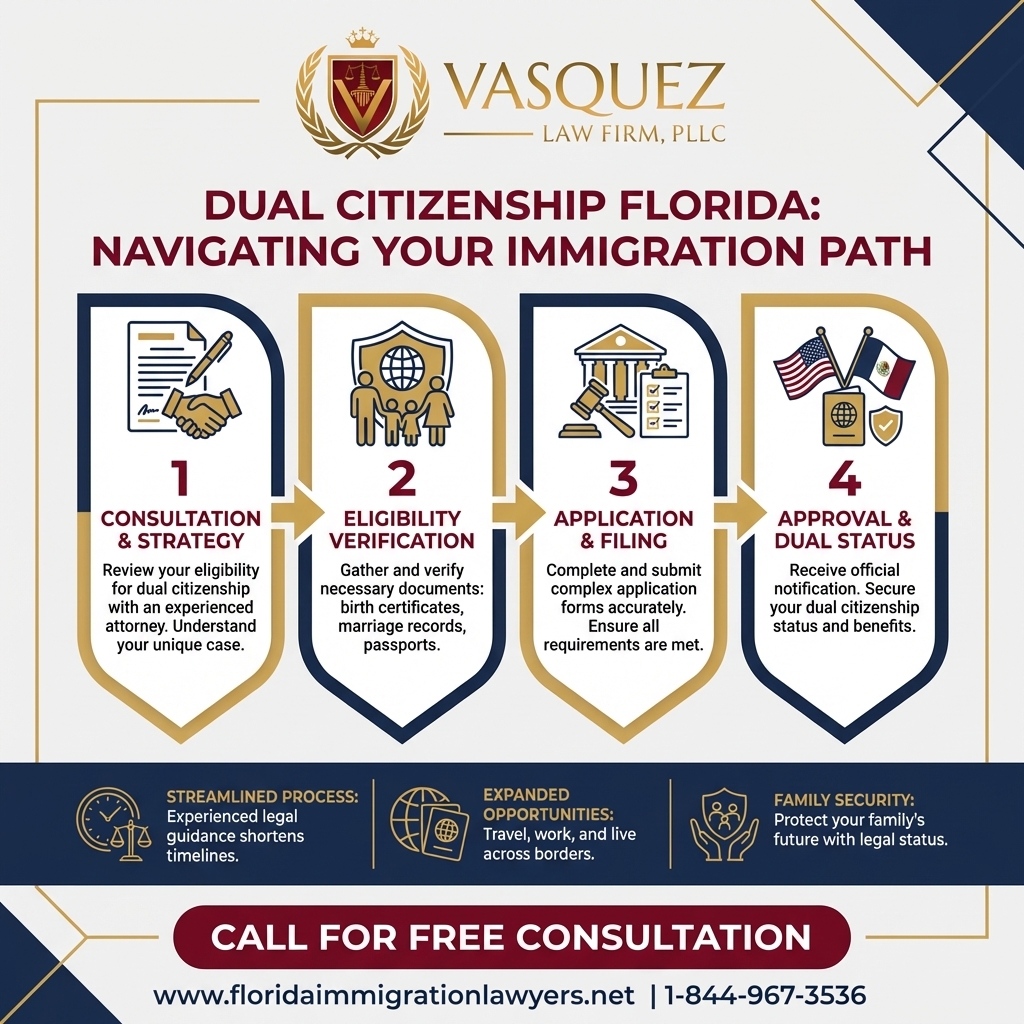
The entire process can take several months to over a year, depending on the USCIS field office workload (e.g., Miami Field Office vs. Tampa Field Office) and the complexity of your case. Throughout this journey, maintaining legal counsel can significantly streamline the process and mitigate potential issues.
Required Documents for Naturalization and Dual Citizenship
To successfully apply for naturalization and pursue dual citizenship Florida, gathering a comprehensive set of documents is essential. Missing or incorrect documentation can lead to delays or even denial of your application. While the specific list can vary based on individual circumstances, here is a general checklist of commonly required documents:
- Form N-400, Application for Naturalization: The completed and signed application form.
- Photocopy of your Permanent Resident Card (Green Card): Both front and back.
- Two Passport-Style Photos: Taken within 30 days of filing.
- Copy of your State-Issued Identification: Such as a Florida driver's license or ID card.
- Tax Transcripts or Returns for the Past 5 Years (or 3 years if married to a U.S. citizen): To prove good moral character and financial responsibility.
- Proof of Continuous Residency: Such as utility bills, lease agreements, or mortgage statements covering the required period of residency in Florida.
- Travel Records: A list of all trips outside the U.S. since becoming a permanent resident, including dates of departure and return.
- Marriage Certificate (if applicable): If you are applying based on marriage to a U.S. citizen, along with your spouse's birth certificate or naturalization certificate.
- Birth Certificates of all Children (if applicable): For both U.S.-born and foreign-born children.
- Court Disposition Records (if applicable): For any arrests, citations, or criminal charges, even if expunged. This is critical for demonstrating good moral character.
- Proof of Selective Service Registration (for males 18-26): If applicable.
- Certified English Translations: For any documents not in English.
It is important to provide true and accurate copies of all documents requested. USCIS may also request original documents at your interview. Organizing these documents meticulously before filing can significantly ease the application process. For Florida residents, especially in areas like Hollywood, who may have complex international backgrounds, ensuring all foreign documents are correctly translated and authenticated is a crucial step that an experienced immigration attorney can assist with.
Timeline, Processing Expectations, and Cost Factors
The timeline for achieving dual citizenship Florida through naturalization can vary significantly. Generally, the entire process, from filing Form N-400 to taking the Oath of Allegiance, can take anywhere from 8 months to over 2 years. Several factors influence this duration:
- USCIS Field Office Workload: Processing times differ by location. For example, the USCIS Miami Field Office or the Orlando Field Office might have different backlogs and processing speeds compared to smaller offices. You can check current processing times on the USCIS website.
- Completeness of Application: A thoroughly prepared application with all required documents submitted correctly will typically be processed faster than one with errors or missing information. Requests for Evidence (RFEs) can significantly prolong the timeline.
- Complexity of Your Case: Factors such as a criminal history, extensive international travel, or a complex marital history can lead to additional scrutiny and extended processing times.
- Interview Performance: Being well-prepared for your interview and clearly answering all questions can help avoid continuances or requests for further information.
Cost Factors and Fee Breakdown
The costs associated with acquiring dual citizenship primarily stem from the U.S. naturalization process. These typically include:
- USCIS Filing Fee for Form N-400: This fee is subject to change, so it is crucial to check the most current fee on the USCIS website or consult with an attorney.
- Biometrics Services Fee: This is generally included with the N-400 filing fee, but verify current policies.
- Attorney Fees: Legal fees for professional assistance from immigration lawyers like Florida Immigration Lawyers can vary based on the complexity of your case and the services provided. While not mandatory, legal representation can be invaluable for navigating the process efficiently and avoiding common mistakes.
- Translation Costs: If any of your supporting documents are not in English, you will incur costs for certified translations.
- Travel Expenses: Costs associated with traveling to USCIS appointments (biometrics, interview, oath ceremony) within Florida.
It is important to budget for these expenses and to understand that fees are generally non-refundable, even if an application is denied. Financial planning is an integral part of your dual citizenship journey, and our firm can help you understand the potential costs involved.
Navigating Complexities: When Your Original Country Matters
While the U.S. generally permits dual citizenship, the laws of your country of origin play a significant role in whether you can truly hold two passports without complications. Not all countries recognize or allow dual nationality. Some nations have strict laws that automatically revoke a person's citizenship if they acquire citizenship in another country. For Florida residents with diverse backgrounds, this is a critical aspect to investigate thoroughly before proceeding with U.S. naturalization.
For example, countries like India and China generally do not permit dual citizenship, meaning that acquiring U.S. citizenship would typically lead to the loss of your original citizenship. On the other hand, many countries in Latin America, Europe, and Canada readily allow dual nationality, making the process much smoother for their citizens who naturalize in the U.S. It is essential to research the specific laws of your country of origin or consult with their embassy or consulate in the U.S. to understand their stance on dual nationality. Relying on outdated information or assumptions can lead to unexpected loss of citizenship in your home country.
Furthermore, even if your original country allows dual citizenship, there might be specific requirements or procedures you need to follow to maintain both citizenships. Some countries may require you to register your foreign citizenship or regularly renew your passport from that country to affirm your continued allegiance. Ignoring these requirements could lead to administrative hurdles or even unintended loss of citizenship. For individuals in Hollywood and other parts of Florida who maintain strong ties with countries like Brazil, Colombia, or Haiti, understanding these nuances is paramount. Our team at Florida Immigration Lawyers can help you navigate these international legal intricacies, working to ensure that your pursuit of dual citizenship aligns with both U.S. and foreign laws, providing you with peace of mind and clarity.
Common Mistakes to Avoid in Your Dual Citizenship Journey
The path to dual citizenship Florida can be complex, and even minor errors can lead to significant delays or denials. Being aware of common mistakes can help you navigate the process more smoothly:
- Failing to Meet Residency Requirements: Not accurately calculating continuous residency or physical presence in the U.S. before applying for naturalization (8 CFR Part 316). Extended trips outside the U.S. can break continuous residency, requiring you to restart the clock or wait longer.
- Incomplete or Inaccurate Form N-400: Submitting an application with missing information, incorrect dates, or unanswered questions. This will almost certainly lead to a Request for Evidence (RFE) or a denial.
- Not Disclosing All Travel History: Omitting any trips outside the U.S., no matter how short. USCIS has access to travel records and any discrepancies can raise flags about your honesty and good moral character.
- Failing to Disclose Criminal History: Not reporting all arrests, charges, or convictions, even if they were minor, expunged, or occurred long ago. Even minor infractions can affect your good moral character determination for naturalization.
- Poor Preparation for the Interview: Not studying U.S. civics and history or practicing English. Failing the English or civics test will require a second interview, delaying the process.
- Assuming Your Home Country Allows Dual Citizenship: Not verifying the dual nationality laws of your country of origin. Some countries automatically revoke citizenship upon naturalization in another country.
- Not Updating Your Address with USCIS: Moving without informing USCIS can result in missed notices, appointments, or even a denial due to failure to appear.
- Long Absences from the U.S. After Filing: While your application is pending, prolonged travel outside the U.S. can raise questions about your intent to reside permanently in the U.S. and potentially impact your continuous residency.
- Misunderstanding Financial Obligations: Not realizing that U.S. citizens are taxed on worldwide income, which can create complex tax reporting requirements.
- Ignoring Selective Service Registration: Male applicants between 18 and 26 years old must register for Selective Service. Failure to do so can lead to naturalization denial.
- Providing Incorrect Supporting Documents: Submitting uncertified translations, photocopies instead of certified copies when originals are required, or irrelevant documents.
- Waiting Too Long to Seek Legal Advice: Attempting to navigate complex legal issues without professional guidance, leading to preventable mistakes or missed opportunities.
When to Call a Lawyer for Dual Citizenship Florida Immigration
While the prospect of dual citizenship Florida is exciting, the process can be fraught with legal complexities. Knowing when to seek professional legal assistance can make a significant difference in the outcome of your application. Florida Immigration Lawyers are here to provide expert guidance in various challenging scenarios.
You should strongly consider contacting an immigration attorney if you encounter any of the following situations:
- Complex Eligibility Issues: If you have questions about continuous residency, physical presence, or good moral character, especially if you have had long absences from the U.S. or minor legal infractions.
- Criminal History: Even a seemingly minor arrest or conviction can jeopardize your naturalization. An attorney can assess the impact and advise on the best course of action.
- Previous Denials or Immigration Issues: If you have had previous immigration applications denied or have been involved in removal proceedings, legal counsel is essential.
- Concerns About Your Home Country's Laws: If you are unsure whether your country of origin permits dual citizenship or has specific requirements for maintaining it.
- Language Barriers or Learning Disabilities: If you struggle with English or have a medical condition that might exempt you from the English or civics test requirements.
- Difficulty Gathering Documents: If you are having trouble obtaining necessary documents, especially from foreign countries, or need certified translations.
- USCIS Requests for Evidence (RFEs) or Notices of Intent to Deny (NOIDs): These indicate a problem with your application, and an attorney can help you respond effectively.
- Unusual Travel Patterns: If your travel history is extensive or includes long stays abroad that could affect your continuous residency.
Our experienced team at Florida Immigration Lawyers specializes in naturalization and citizenship cases for residents throughout Florida, including Hollywood, Miami, and Orlando. We can help you prepare a strong application, represent you during interviews, and navigate any challenges that arise. We are committed to protecting your rights and ensuring the best possible outcome for your dual citizenship journey.
About Florida Immigration Lawyers
Florida Immigration Lawyers is a leading immigration law firm dedicated to serving individuals and families across the entire state of Florida. With a deep understanding of U.S. immigration law and a compassionate approach, we provide comprehensive legal services to guide our clients through every step of their immigration journey. We are proud to assist residents from Hollywood, Miami, Orlando, and all other Florida communities.
Our expertise spans a wide range of immigration matters, including general immigration, naturalization, family-based visas, business immigration, asylum, and deportation defense. We understand that each case is unique and often deeply personal, which is why we offer personalized attention and strategic advocacy tailored to your specific needs. Our team of dedicated attorneys is committed to achieving the best possible outcomes for our clients, upholding the highest standards of legal excellence and ethical practice.
Choosing Florida Immigration Lawyers means partnering with a firm that genuinely cares about your future. We are available 24/7 to answer your questions and provide support. We offer free, no-obligation consultations to discuss your case and explain how we can help. Your journey to U.S. citizenship and dual nationality deserves experienced, reliable legal representation. Visit our website at floridaimmigrationlawyers.net or call us today at 1-844-967-3536 to schedule your free consultation.
Sources and References
- U.S. Citizenship and Immigration Services (USCIS)
- USCIS - Path to U.S. Citizenship
- U.S. Department of State - Dual Nationality
- Executive Office for Immigration Review (EOIR) - Immigration Court Locations
- 8 U.S.C. Chapter 12 - Immigration and Nationality Act (INA)
- INA Section 316 (8 U.S.C. § 1427) - Requirements for Naturalization
- INA Section 301 (8 U.S.C. § 1401) - Persons born in the U.S. and subject to its jurisdiction
- 8 CFR Part 316 - General Requirements for Naturalization
Related services: citizenship test preparation, dual citizenship guidance, citizenship test resources.
This article provides general legal information and is not intended as legal advice. Every case is unique, and outcomes depend on specific facts and circumstances. Contact an attorney for advice about your particular situation. Immigration laws are subject to change.
Embark on your journey to dual citizenship Florida with confidence. Our firm is dedicated to providing the highest quality legal representation and support. Do not hesitate to reach out for expert guidance. Call Florida Immigration Lawyers today at 1-844-967-3536 for a free consultation. Se Habla Espanol - Estamos aqui para ayudarle.
If you need legal assistance, learn more about speak with a citizenship lawyer, or call us at 1-844-967-3536 for a free consultation.
Do Not Navigate This Process Alone
Our experienced immigration attorneys are ready to fight for you. Get a free, confidential consultation today.
Se Habla Español
Frequently Asked Questions

William J. Vásquez
Founding Attorney · Vasquez Law Firm
U.S. Air Force veteran and immigration attorney with thousands of cases resolved. J.D., NCCU School of Law. AILA member. Admitted to the 4th, 5th, and 11th Circuit Courts.
Available 24/7 - Free Evaluations
Related Legal Services
Our Florida immigration attorneys can help you with experienced immigration attorneys, business immigration and asylum protection. Call today at 1-844-967-3536 for a free consultation.
Related Links
Related Topics
Free Legal Consultation
Discuss your case with our experienced attorneys. We're available 24/7.
Se Habla Español - Estamos aquí para ayudarle.
Related Articles
Fiance Visa Florida: K-1 Process Guide for 2026 | VLF Florida
For U.S. citizens in Florida, bringing a foreign fiance(e) to the U.S. via the K-1 visa involves intricate steps, from USCIS petitions to consular interviews and eventual Adjustment of Status. This comprehensive guide details the 2026 process, eligibility, required documents, timelines, and costs. Learn how to navigate the complexities, avoid common mistakes, and secure your future together in Florida. Florida Immigration Lawyers offers expert guidance, ensuring your application is meticulously prepared and submitted. We provide free consultations to help you understand your options and achieve your immigration goals.
Understanding Immigration Appeals with BIA in Florida
Navigating an immigration appeal with the Board of Immigration Appeals (BIA) in Florida requires understanding specific legal processes and requirements. This comprehensive guide covers everything from filing deadlines to common mistakes. Contact Florida Immigration Lawyers for expert legal assistance.
E-2 Visa for Florida Business Investors | VLF Florida
Discover how the E-2 investor visa can help you expand your business into Florida. Learn about requirements, the application process, and why Hialeah is an ideal location for investors. Call Florida Immigration Lawyers for a free consultation today.
Immediate Relative Petition in Florida: Key Insights
Filing an immediate relative petition in Florida can bring your family closer by securing a green card for your loved ones. Learn the steps, requirements, and common pitfalls to avoid. Contact Florida Immigration Lawyers for expert guidance and a free consultation.