TPS Eligible Countries in Florida 2026
Explore TPS eligibility for 2026 in Florida, focusing on Gainesville. Learn about eligible countries, application steps, and common mistakes. Call for a free consultation!

- TPS eligibility is country-specific.
- Current TPS countries may change.
- Gainesville has specific resources for TPS applicants.
Introduction
As the year 2026 unfolds, many immigrants in Gainesville, Florida, are seeking clarity on Temporary Protected Status (TPS) eligibility. This article provides a comprehensive guide on TPS, focusing on eligible countries and how Florida residents can navigate the application process. For personalized assistance, call Florida Immigration Lawyers at 1-844-967-3536 for a free consultation.
Florida, with its diverse population and position as a gateway to the Americas, is home to a significant number of individuals who may benefit from TPS. The humanitarian protection offered by TPS allows eligible individuals to live and work legally in the U.S., providing a crucial lifeline during periods of instability in their home countries. For those in Gainesville and across the Sunshine State, understanding the nuances of TPS in 2026 is paramount.
The landscape of international relations and environmental challenges is constantly shifting, which directly impacts TPS designations. Keeping abreast of these changes can be daunting, but it is essential for anyone considering applying or re-registering for TPS. This guide aims to demystify the process, offering clear, actionable advice for Florida residents. Remember, securing your status is a critical step towards stability, and professional legal counsel from Florida Immigration Lawyers can make all the difference. Reach out for a free consultation at 1-844-967-3536.
Understanding Temporary Protected Status (TPS)
Temporary Protected Status, or TPS, is a form of humanitarian relief granted by the United States government to eligible nationals of certain countries. These designations are typically made when conditions in a country temporarily prevent the country's nationals from returning safely or when the country is unable to handle the return of its nationals adequately.
In 2026, TPS continues to be a vital protection for many individuals in Florida, allowing them to live and work legally without fear of deportation. The eligibility criteria and designated countries can change, so it is crucial to stay informed about the current status.
The conditions that lead to a TPS designation are typically severe and widespread, making it unsafe for a country's nationals to return. These can include ongoing armed conflict, such as civil war or widespread violence; environmental disasters like earthquakes, hurricanes, or tsunamis that cause substantial, temporary disruption of living conditions; or other extraordinary and temporary conditions that prevent safe return. The Secretary of Homeland Security makes these determinations based on input from various government agencies and international organizations.
Beyond protection from deportation, TPS provides several critical benefits. Recipients are eligible for an Employment Authorization Document (EAD), allowing them to work legally in the United States. They can also apply for a travel authorization, which may permit them to travel outside the U.S. and return, though this must be carefully considered with legal advice. These provisions enable individuals to rebuild their lives, support their families, and contribute to the U.S. economy without the constant threat of removal, offering a sense of stability that is otherwise unattainable.
It's important to understand that TPS is a temporary status, granted for a specific period, typically 6, 12, or 18 months. However, designations can be extended multiple times if the conditions in the home country do not improve. While TPS does not directly lead to permanent residency or a green card, it can serve as a crucial stepping stone for some individuals who may later become eligible for other forms of immigration relief. Navigating these pathways requires careful planning and expert guidance, which Florida Immigration Lawyers are uniquely equipped to provide.
Countries Eligible for TPS in 2026
The list of TPS-eligible countries is subject to change based on the evolving conditions in those countries. As of now, the U.S. Department of Homeland Security maintains a list of countries whose nationals can apply for TPS. Notable countries that have been included in recent years are El Salvador, Honduras, Haiti, and Syria, among others. Applicants from Gainesville and surrounding areas can check the USCIS website for the most current information.
The decision to designate a country for TPS, or to extend or terminate an existing designation, is made by the Secretary of Homeland Security. This decision is based on a thorough review of country conditions, often involving consultation with the Department of State and other government agencies. For instance, a country might be designated due to a recent devastating earthquake, ongoing civil strife, or a widespread humanitarian crisis. These designations are not static; they are regularly reviewed and can be extended if the conditions persist, or terminated if conditions are deemed to have improved sufficiently for safe return.
For Floridians, particularly those in vibrant communities like Gainesville, these designations hold immense personal significance. Florida is home to large populations from many TPS-designated countries, including significant communities from Central American and Caribbean nations. The continuity or termination of TPS can profoundly impact families, livelihoods, and community stability. Therefore, staying informed directly through the USCIS website or through trusted legal counsel, like Florida Immigration Lawyers, is not just recommended but essential for planning your future.
A real-world example might involve nationals from Haiti, who have seen multiple TPS designations and extensions due to ongoing political instability, natural disasters, and economic hardship. Similarly, individuals from Venezuela have recently received TPS due to the severe humanitarian crisis in their homeland. These examples underscore the dynamic nature of TPS and the critical need for applicants to verify their country's current status and the specific registration period. Missing a re-registration deadline, even by a day, can jeopardize an individual's protected status.
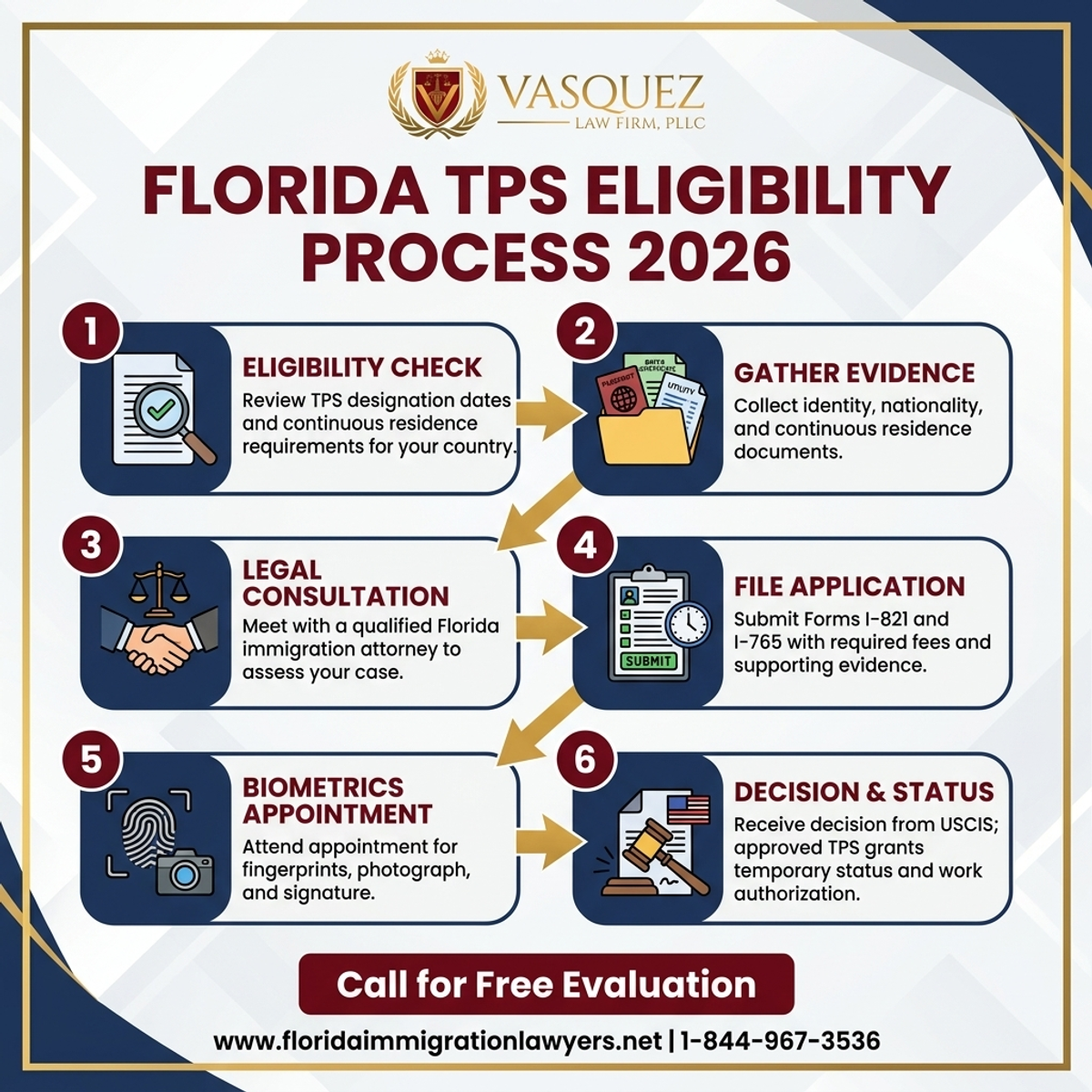
Step-by-Step Process — TPS Eligible Countries in Florida 2026
Applying for TPS in Florida: A Step-by-Step Guide
The TPS application process, while seemingly straightforward, requires meticulous attention to detail. Any error or omission can lead to delays, requests for evidence (RFEs), or even denial. It is highly recommended to seek legal assistance from experienced immigration attorneys who can guide you through each step, ensuring accuracy and completeness. Florida Immigration Lawyers are well-versed in these procedures and can provide invaluable support.
- Determine Eligibility: Confirm that your country is designated for TPS and you meet the residence requirements.
- Gather Necessary Documents: Collect proof of identity, nationality, and continuous residence in the U.S.
- Complete Form I-821: Fill out the Application for Temporary Protected Status.
- Submit Biometrics: Attend a biometrics appointment if required.
- Pay Fees: Submit the appropriate filing fees, which can vary.
- Await Decision: USCIS will notify you of their decision via mail.
Upon receiving your application, USCIS will send you a receipt notice. This notice is important as it confirms your application has been received and provides a tracking number. It's crucial to keep this and all subsequent correspondence from USCIS in a safe place. Should you have any questions or encounter challenges during this process, do not hesitate to contact Florida Immigration Lawyers at 1-844-967-3536 for expert advice.
Document Checklist for TPS Application
Compiling the correct documentation is arguably one of the most critical phases of the TPS application. USCIS requires specific proofs to establish identity, nationality, and continuous residence in the U.S. Failure to provide adequate documentation or submitting uncertified translations can significantly delay your application or lead to rejection. It is always wise to make multiple copies of all documents submitted.
- Valid passport or national ID card
- Birth certificate with translation
- Proof of residence in the U.S. (e.g., utility bills, school records)
- Employment authorization documents, if applicable
Beyond these core documents, applicants might also need to provide marriage certificates, divorce decrees, or birth certificates for dependents if applying as a family unit. Any document not in English must be accompanied by a complete and certified English translation. A certified translator must attest in writing that they are competent to translate and that the translation is accurate. This level of detail underscores why legal assistance from Florida Immigration Lawyers can be so beneficial, ensuring all documentary requirements are met precisely.
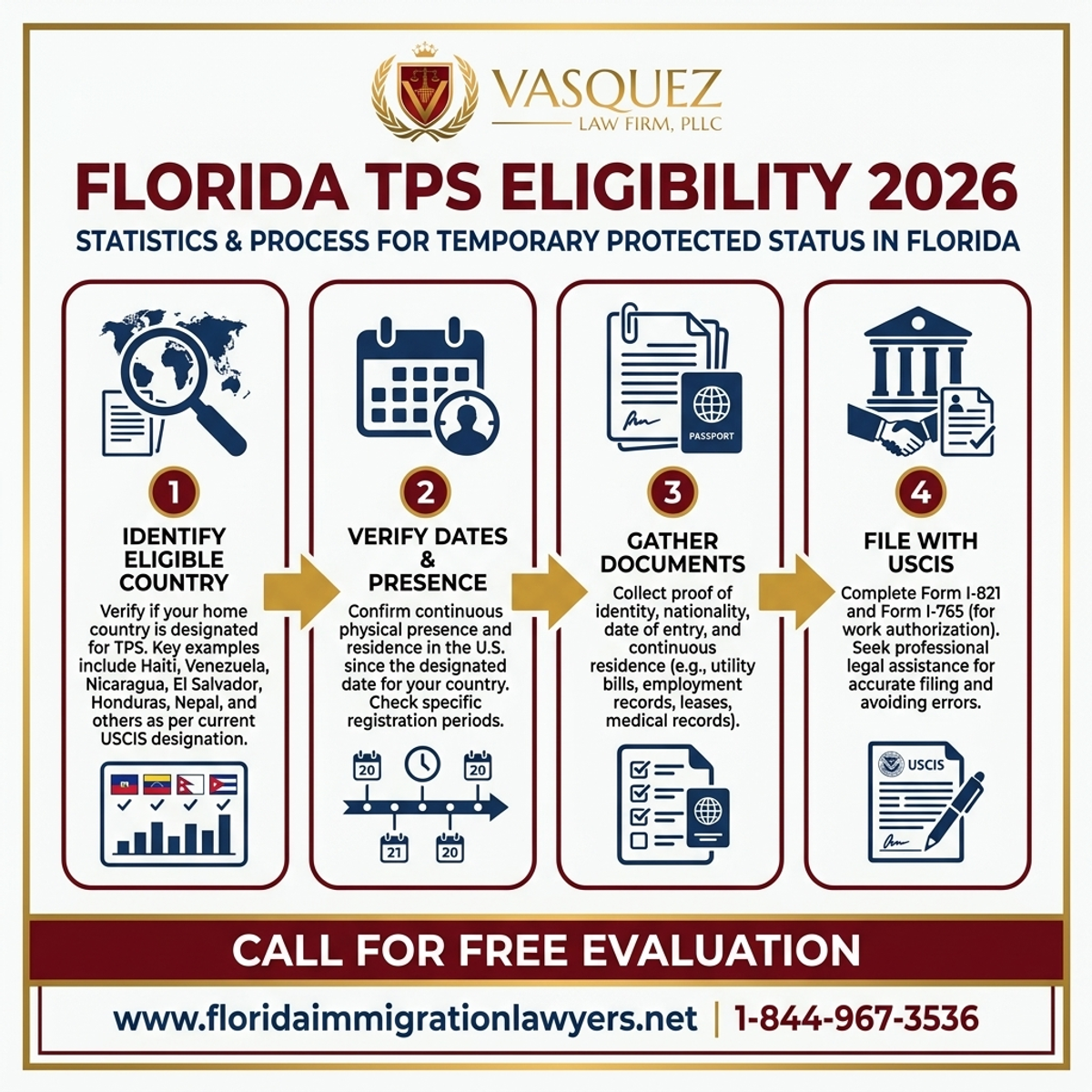
Key Statistics — TPS Eligible Countries in Florida 2026
Timeline and Processing Expectations
The processing time for TPS applications can vary significantly. On average, applicants might expect a decision within six to nine months. However, delays can occur due to high application volumes or changes in USCIS policy. It's important to apply as early as possible and maintain all documentation in case of requests for evidence.
Several factors can influence the processing timeline for TPS applications. These include the volume of applications USCIS is currently handling, the complexity of individual cases (e.g., if there are criminal history issues or prior immigration violations), and any changes in immigration policy or procedures. For instance, during periods of new TPS designations or major extensions, application volumes can surge, leading to longer wait times. While the average is six to nine months, some cases may take longer, emphasizing the need for patience and proactive follow-up.
To mitigate potential delays, applicants should ensure their application is as complete and accurate as possible from the outset. Responding promptly and thoroughly to any Requests for Evidence (RFEs) from USCIS is also critical. An RFE means USCIS needs more information or clarification to make a decision, and a delayed or inadequate response can lead to denial. Keeping a copy of everything you submit and maintaining an organized file of all correspondence is a practical tip that can save significant stress and time.
Staying informed about your case status can be done through the USCIS online case status tool using your receipt number. However, for nuanced understanding or if your case experiences unexpected delays, consulting with Florida Immigration Lawyers is highly recommended. Our team can help interpret USCIS communications, advise on appropriate actions, and advocate on your behalf to help expedite the process where possible, ensuring your interests are protected throughout the waiting period.
Cost Factors and Fee Breakdown
Applicants should be prepared for various costs associated with applying for TPS. These may include filing fees for Form I-821, biometrics fees, and potential legal fees if seeking professional assistance. While specific fee amounts should be confirmed with USCIS, budgeting for these expenses is crucial.
The fees associated with a TPS application can include several components. The primary fee is for Form I-821, Application for Temporary Protected Status. Additionally, most applicants will also file Form I-765, Application for Employment Authorization, to obtain a work permit, which incurs a separate fee. There is also a biometrics services fee for fingerprinting and background checks. These fees are subject to change, so always check the USCIS website or consult with an attorney for the most current amounts.
For individuals who cannot afford the filing fees, USCIS offers the possibility of a fee waiver by submitting Form I-912, Request for Fee Waiver. Eligibility for a fee waiver is based on specific income guidelines, receipt of means-tested public benefits, or financial hardship. It's crucial to submit compelling evidence to support a fee waiver request, as an improperly filed or denied waiver can delay your entire application. Discussing your financial situation with Florida Immigration Lawyers can help determine if you qualify for a fee waiver and how to best prepare your request.
While the initial fees are a necessary investment, considering legal fees for professional assistance should also be part of your budget. The expertise of an immigration attorney can prevent costly mistakes, ensure timely filing, and significantly increase the likelihood of a successful outcome. The peace of mind and security gained from a properly filed application, guided by experts like Florida Immigration Lawyers, often far outweighs the cost of legal representation. Call 1-844-967-3536 to understand how we can help manage these costs effectively.
Do not navigate this process alone. Contact Florida Immigration Lawyers today.
Common Mistakes to Avoid
Navigating the TPS application process can be fraught with potential pitfalls. Even minor errors can lead to significant delays or even denial of your application, causing immense stress and uncertainty. Understanding and actively avoiding these common mistakes is crucial for a successful outcome.
- Missing Deadlines: TPS applications must be filed during designated registration periods.
- Incomplete Forms: Ensure that all forms are filled out completely and accurately.
- Insufficient Documentation: Failing to provide necessary documents can result in delays or denials.
- Incorrect Fees: Pay the correct filing fees to avoid processing issues.
- Ignoring USCIS Notices: Respond promptly to any requests for additional information.
- Not Updating Address: Keep USCIS informed of your current address to receive all correspondence.
- Relying on Unverified Sources: Always verify information with official sources like USCIS.
The consequences of these mistakes can range from simple delays to outright denial, potentially leading to loss of work authorization or even initiation of removal proceedings. This is why the expertise of an immigration attorney is so vital. Florida Immigration Lawyers are adept at identifying and preventing these common errors, providing a safety net that ensures your application is robust and compliant with all USCIS requirements. Don't let a preventable mistake jeopardize your future; seek professional guidance.
When to Call a Lawyer
Legal assistance can be invaluable when navigating the complexities of TPS. Consider contacting an attorney if you have missed the application deadline, have a criminal record, or need help understanding your eligibility. Florida Immigration Lawyers offer expert guidance and can help ensure that your application is completed correctly.
While some straightforward TPS cases might be manageable for individuals, many situations present complexities that demand professional legal expertise. For example, if you have a criminal record, even a minor one, it could impact your eligibility or require specific waivers. Similarly, if you have previously faced deportation proceedings or have an order of removal, applying for TPS requires careful strategic planning to avoid inadvertently triggering adverse immigration consequences.
Consider a scenario: Maria, a national of a TPS-designated country, initially thought her application was simple. However, she had an old misdemeanor conviction from years ago and was unsure how to disclose it. A consultation with Florida Immigration Lawyers revealed that while the conviction might not disqualify her, it needed proper legal analysis and disclosure to USCIS. Without legal guidance, she might have either failed to disclose it (leading to potential fraud allegations) or incorrectly assumed she was ineligible. An attorney can assess such nuances and advise on the best course of action, including potential waivers if necessary.
Furthermore, if you are also pursuing other immigration pathways, such as asylum or a family-based petition, a lawyer can help you understand how TPS interacts with these processes. They can ensure that your TPS application does not negatively affect your other immigration goals and can help you strategize the most beneficial approach for your long-term residency. For any complex scenario or simply for peace of mind, contacting Florida Immigration Lawyers at 1-844-967-3536 is a proactive step towards securing your immigration future.
Frequently Asked Questions About TPS in Florida
Q: Can I travel outside the U.S. if I have TPS?
A: TPS beneficiaries may apply for a travel authorization document (Form I-131, Application for Travel Document) before departing the U.S. Traveling without this authorization can lead to serious immigration consequences, including denial of re-entry or even termination of your TPS. Always consult with Florida Immigration Lawyers at 1-844-967-3536 before planning any international travel to ensure you meet all requirements and understand potential risks.
Q: Does TPS lead to a Green Card or U.S. Citizenship?
A: TPS itself does not directly provide a pathway to a Green Card or U.S. citizenship. However, holding TPS can make you eligible for other immigration benefits for which you might qualify, such as family-based petitions or asylum, without the immediate fear of deportation. It's crucial to explore all your options with an experienced immigration attorney, as your TPS status can be a stable foundation while pursuing permanent residency.
Q: What happens if my country's TPS designation is terminated?
A: If your country's TPS designation is terminated, your TPS status will end on the effective date of termination. This means you would revert to your previous immigration status, or if you had no lawful status, you would become deportable. It is vital to prepare for this possibility by exploring other immigration options well in advance. Florida Immigration Lawyers can help you assess alternative pathways to maintain legal status.
Q: Can I apply for TPS if I have a criminal record?
A: A criminal record can significantly impact your TPS eligibility. Certain convictions, particularly felonies or multiple misdemeanors, may disqualify you. It's imperative to disclose all criminal history to your attorney, even if expunged or minor. An immigration lawyer from Florida Immigration Lawyers can evaluate your specific situation, determine if any waivers are available, and advise on the best course of action to avoid denial.
Q: How often do I need to re-register for TPS?
A: TPS designations are typically granted for periods of 6, 12, or 18 months and are subject to extension. When a country's designation is extended, USCIS announces a re-registration period, usually 60 days long. It is absolutely critical to re-register during this window to maintain your protected status. Missing the re-registration deadline without good cause can result in the loss of your TPS benefits.
Q: What if I entered the U.S. without inspection? Can I still get TPS?
A: Yes, generally, individuals who entered the U.S. without inspection can still be eligible for TPS, provided they meet all other eligibility criteria, including continuous physical presence and continuous residence. TPS is unique in that it does not typically require a lawful entry. However, specific circumstances can complicate matters, so it's always best to consult with Florida Immigration Lawyers to review your individual entry and residency history.
Q: What if I miss the initial TPS registration deadline for my country?
A: Missing the initial registration deadline is a serious issue, as TPS applications must generally be filed during the designated registration period. However, there are limited exceptions for late initial registration if you meet specific criteria, such as maintaining a nonimmigrant status or having certain conditions. It is crucial to discuss any late registration with Florida Immigration Lawyers immediately to determine if you qualify for an exception.
About Florida Immigration Lawyers
Florida Immigration Lawyers are dedicated to providing compassionate and comprehensive legal services to immigrants in Gainesville and throughout Florida. Our team is available 24/7 to assist with all immigration-related matters, including TPS, asylum, deportation defense, and more. Contact us at 1-844-967-3536 or visit our website at floridaimmigrationlawyers.net for a free consultation.
Sources and References
- U.S. Citizenship and Immigration Services (USCIS)
- Executive Office for Immigration Review (EOIR)
- 8 U.S.C. Chapter 12 - Immigration and Nationality Act
- U.S. Department of State
Related services: immigration practice areas, family immigration services, citizenship and naturalization.
This article provides general legal information and is not intended as legal advice. Every case is unique, and outcomes depend on specific facts and circumstances. Contact an attorney for advice about your particular situation.
Seize the opportunity to protect your status with expert legal guidance. Call Florida Immigration Lawyers at 1-844-967-3536 for a free consultation. Se Habla Español - Estamos aquí para ayudarle.
If you need legal assistance, learn more about our immigration law practice, or call us at 1-844-967-3536 for a free consultation.
Do Not Navigate This Process Alone
Our experienced immigration attorneys are ready to fight for you. Get a free, confidential consultation today.
Se Habla Español
Frequently Asked Questions

William J. Vásquez
Founding Attorney · Vasquez Law Firm
U.S. Air Force veteran and immigration attorney with thousands of cases resolved. J.D., NCCU School of Law. AILA member. Admitted to the 4th, 5th, and 11th Circuit Courts.
Available 24/7 - Free Evaluations
Related Legal Services
Our Florida immigration attorneys can help you with business immigration, asylum protection and deportation defense. Call today at 1-844-967-3536 for a free consultation.
Related Links
Related Topics
Free Legal Consultation
Discuss your case with our experienced attorneys. We're available 24/7.
Se Habla Español - Estamos aquí para ayudarle.
Related Articles
Biometrics Appointment in Florida: What to Expect in 2026
Navigating a biometrics appointment in Florida is crucial for your USCIS process. Learn what to expect, how to prepare, and common pitfalls to avoid. Florida Immigration Lawyers are here to help with personalized guidance and support.
Withholding of Removal Explained: Florida Defense in 2026
For those in Florida facing deportation and fearing persecution or torture in their home country, understanding withholding of removal is critical. This form of protection prevents removal to a dangerous country, though it differs significantly from asylum in its eligibility criteria and benefits. It requires proving a "more likely than not" chance of persecution based on protected grounds or torture, a higher standard than asylum's "well-founded fear." While withholding of removal does not lead to a Green Card, it offers mandatory protection if the stringent criteria are met, even for some individuals barred from asylum. The process involves complex legal proceedings before an immigration judge, often in Miami or Orlando immigration courts. A comprehensive application, detailed testimony, and robust supporting evidence, including country conditions reports and affidavits, are essential. Given the high stakes and intricate legal requirements, securing the expertise of a Florida immigration lawyer is paramount to building a strong defense and navigating the path to safety.
US Visa Policy Changes July 2026: What Students in Florida
As of July 2026, international students in Florida seeking a change of status to an F-1 student visa must prepare for potential adjustments to U.S. visa policies. This comprehensive guide from Florida Immigration Lawyers explores the anticipated policy changes, detailing their potential impact on application requirements, processing times, and eligibility criteria. We provide a step-by-step overview of the change of status process, including a document checklist, expected timelines, and cost considerations. Understanding these complexities and avoiding common mistakes is crucial for a successful application. With potential changes approaching, proactive planning and expert legal guidance are more important than ever. Our firm is dedicated to helping students in Tampa and across Florida navigate these challenges, offering tailored advice and robust representation. Learn how to protect your academic future and ensure a smooth transition to F-1 student status.
Dual Citizenship Lawyer: Your 2026 Guide to Naturalization
Achieving U.S. citizenship is a profound milestone, but the path to naturalization, especially with dual citizenship in mind, is fraught with legal intricacies and a critical interview process. This comprehensive guide from Florida Immigration Lawyers demystifies the journey, offering essential citizenship interview tips and highlighting the invaluable role of a dual citizenship lawyer. We cover eligibility, document preparation, timelines, and common pitfalls, all tailored for Florida residents in areas like Pembroke Pines. Discover how expert legal counsel can prepare you for your naturalization interview, address dual nationality concerns, and ensure a smooth, successful application. From initial assessment to interview representation, we provide the support needed to navigate USCIS requirements confidently. Call Florida Immigration Lawyers for a free consultation to start your journey.
