F-1 Visa Guide for Florida Universities | VLF Florida
Explore the process of obtaining an F-1 visa to study at Florida universities, including those in Gainesville. Learn about eligibility, application steps, and common mistakes to avoid. Contact us for legal assistance.

Your Comprehensive F-1 Visa Guide for Studying in Florida
Florida, with its vibrant culture, world-class universities, and diverse opportunities, is a dream destination for countless international students. Pursuing higher education in the Sunshine State requires careful navigation of the F-1 student visa process. This visa is your essential gateway to academic success in the U.S., allowing you to immerse yourself in a new educational system and experience life in one of America's most dynamic states.
At VLF Florida, we understand the complexities and anxieties that can accompany the F-1 visa application. Our mission is to provide clear, comprehensive guidance, ensuring your journey from application to enrollment is as smooth as possible. From understanding the initial requirements to maintaining your student status, this guide will walk you through every critical step, helping you achieve your educational aspirations in Florida.
Understanding the F-1 Student Visa: Your Gateway to Florida Education
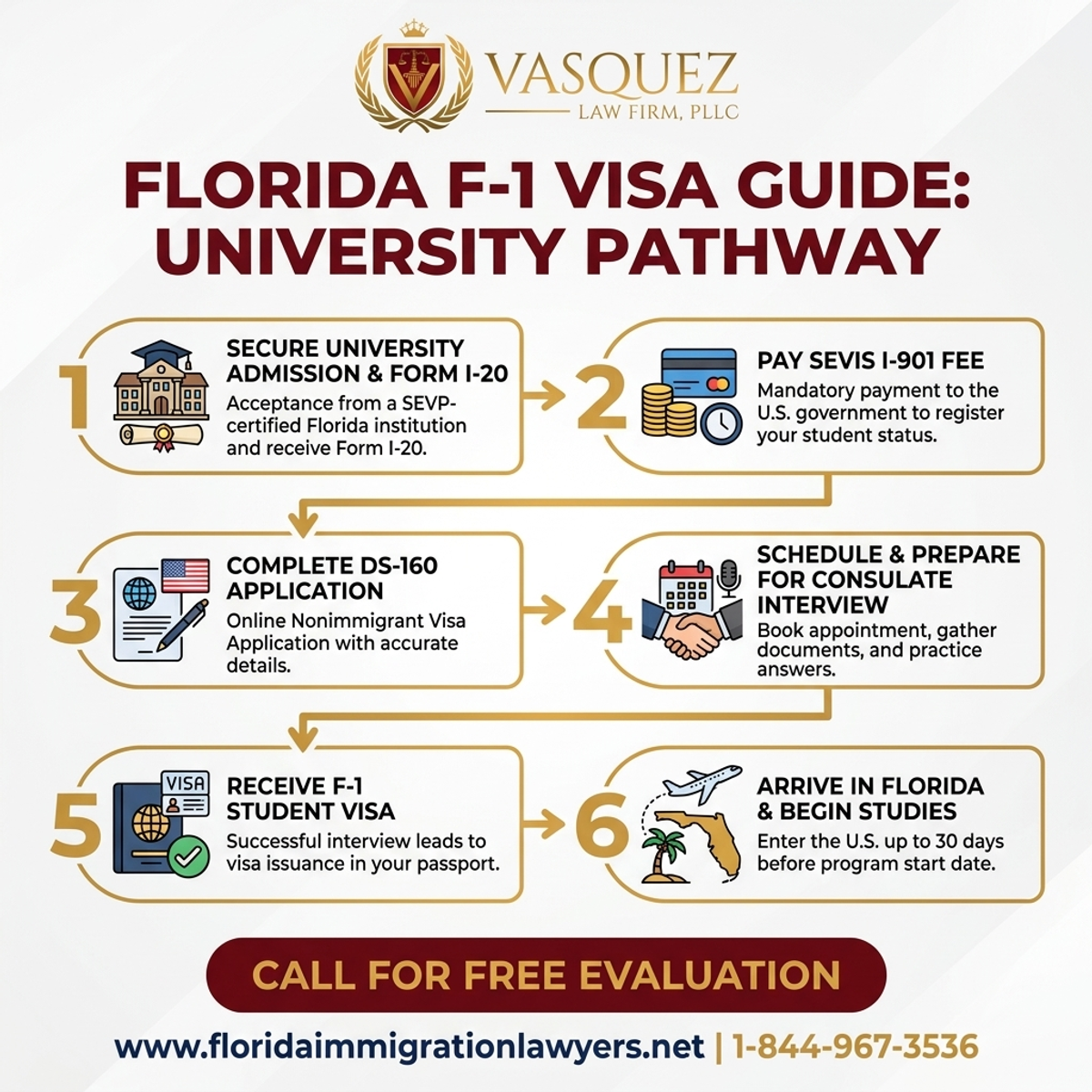
The F-1 visa is a non-immigrant visa specifically designed for international students who wish to pursue a full course of study at an academic institution in the United States. This includes universities, colleges, high schools, private elementary schools, seminaries, conservatories, and language training programs. To qualify for an F-1 visa, you must be enrolled in a program that culminates in a degree, diploma, or certificate, and your institution must be approved by the Student and Exchange Visitor Program (SEVP).
Florida boasts an impressive array of SEVP-approved institutions, from large public universities like the University of Florida in Gainesville, Florida State University in Tallahassee, and the University of Central Florida in Orlando, to specialized private colleges across the state. These institutions offer a wide range of programs, attracting students from every corner of the globe. Choosing Florida means gaining access to a high-quality education, a multicultural environment, and a unique lifestyle filled with sunshine, beaches, and diverse cultural experiences.
Navigating the U.S. immigration system can be daunting, but with the right information and support, it's an achievable goal. Understanding the nuances of the F-1 visa is the first crucial step in your academic journey. For broader insights into U.S. immigration law and how it might impact your educational or personal goals, please visit our immigration practice areas page.
Eligibility Requirements for an F-1 Visa
To be eligible for an F-1 visa, applicants must meet several stringent criteria set forth by U.S. Citizenship and Immigration Services (USCIS) and the Department of State. These requirements are designed to ensure that international students are genuinely committed to their academic pursuits and intend to return to their home country upon completion of their studies.
- Acceptance by an SEVP-Approved Institution: You must be accepted by a school that is approved by the Student and Exchange Visitor Program (SEVP). Once accepted, the school will issue you a Form I-20, Certificate of Eligibility for Nonimmigrant Student Status. This document is paramount to your application.
- Full-Time Enrollment: You must be enrolled in a full-time academic program. The definition of 'full-time' varies by institution and program level but typically involves a minimum number of credit hours per semester.
- Financial Solvency: You must demonstrate that you have sufficient funds to cover your tuition, living expenses, and other associated costs for the entire duration of your stay in the U.S. without resorting to unauthorized employment. This can be proven through bank statements, scholarship letters, or sponsor affidavits.
- English Proficiency: You must be proficient in English or be enrolled in courses specifically designed to teach you English. This is often demonstrated through standardized tests like TOEFL or IELTS, or through the school's own assessment.
- Intent to Depart: You must prove that you intend to return to your home country after completing your studies. This is known as demonstrating 'non-immigrant intent' and can be evidenced by strong ties to your home country, such as family, property, or job prospects.
Meeting these requirements is fundamental to a successful F-1 visa application. Any discrepancies or lack of evidence in these areas can lead to delays or even denial of your visa.
The F-1 Visa Application Process: Step-by-Step
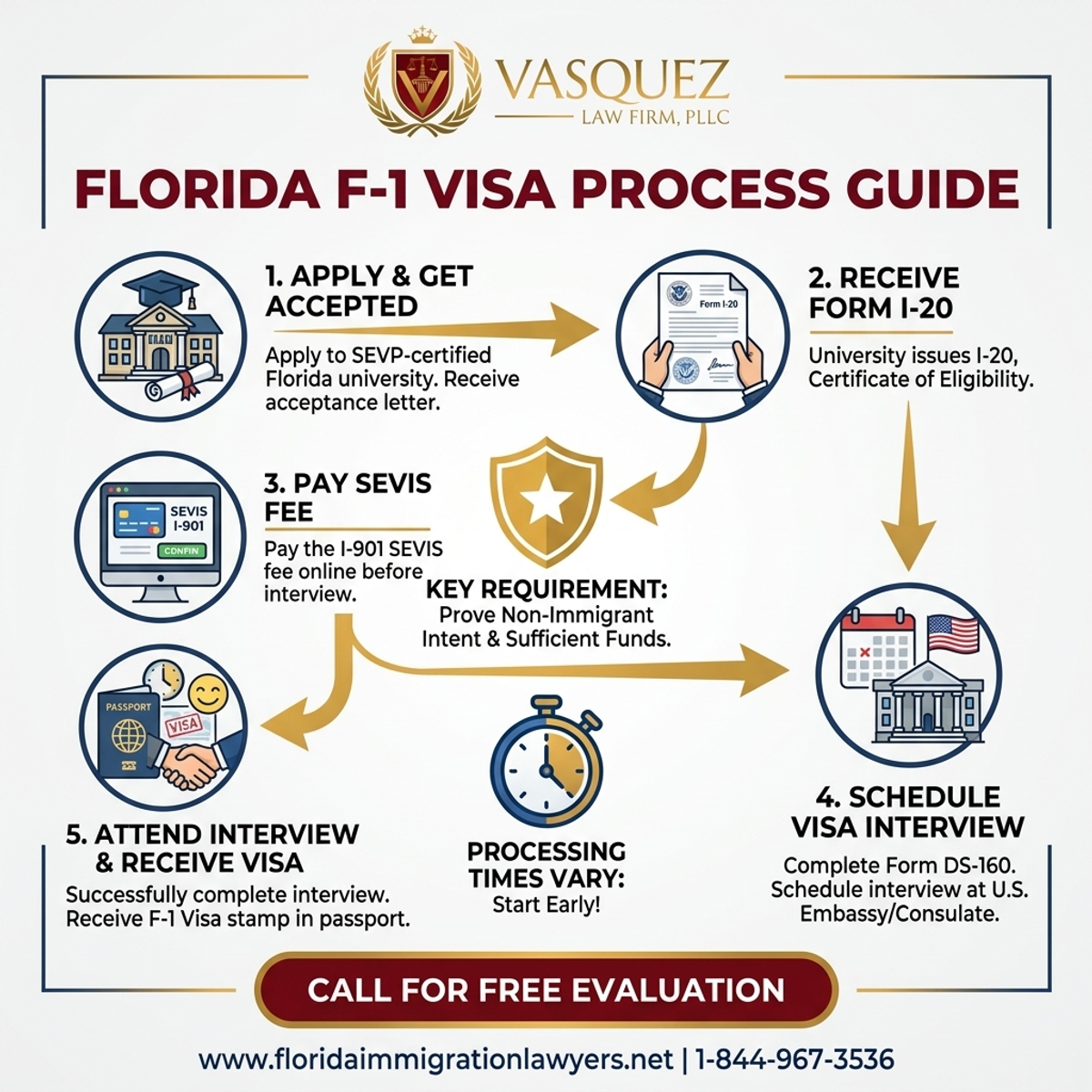
The F-1 visa application process involves several key stages, each requiring meticulous attention to detail. Understanding these steps will help you prepare thoroughly and avoid common pitfalls.
- Receive Form I-20: After being accepted by an SEVP-approved school, the Designated School Official (DSO) will issue you a Form I-20. This document contains vital information about your program, estimated costs, and school details.
- Pay the SEVIS I-901 Fee: The Student and Exchange Visitor Information System (SEVIS) fee is mandatory for all F-1 visa applicants. You must pay this fee online and retain the receipt, as it will be required during your visa interview.
- Complete the DS-160 Form: The Online Nonimmigrant Visa Application (Form DS-160) is a crucial part of your application. You must complete it accurately and truthfully, providing personal information, educational background, and travel history.
- Schedule Your Visa Interview: Once you've completed the DS-160, you'll need to schedule an interview at a U.S. Embassy or Consulate in your home country. Interview wait times can vary significantly, so it's advisable to schedule as early as possible.
- Gather Required Documents: Prepare a comprehensive packet of documents, including your passport (valid for at least six months beyond your intended period of stay), Form I-20, DS-160 confirmation page, SEVIS fee payment receipt, financial evidence, academic transcripts, and any other supporting documents requested by the embassy or consulate.
- Attend the Visa Interview: The interview is a critical step where a consular officer will assess your eligibility and intent. Be prepared to discuss your academic plans, financial resources, and your ties to your home country. Be honest, confident, and clear in your responses.
Step-by-Step Process — F-1 Visa Guide for Florida Universities | VLF Florida
Thorough preparation for each of these steps is essential. Any missing documents or inconsistencies in your application can lead to delays or even a denial of your visa. It's always beneficial to double-check all requirements specific to the U.S. Embassy or Consulate where you will be applying.
Maintaining Your F-1 Status in Florida
Obtaining an F-1 visa is just the beginning; maintaining your legal status throughout your stay in Florida is equally important. Failure to adhere to F-1 visa regulations can lead to severe consequences, including termination of your student status and potential deportation.
- Maintain Full-Time Enrollment: You must remain enrolled full-time in your academic program. Any plans to drop below full-time status must be approved by your DSO in advance, and usually only for specific, limited reasons.
- Report Changes: Promptly report any changes to your DSO, including changes in your major, program of study, address, or financial situation.
- Travel Regulations: If you plan to travel outside the U.S. and re-enter, ensure your Form I-20 is endorsed for travel by your DSO. Your visa must also be valid for re-entry.
- Employment Restrictions: Adhere strictly to F-1 employment regulations. Unauthorized employment is a serious violation.
- Program Completion: Complete your program by the date indicated on your I-20. If you need more time, you must apply for an extension with your DSO before your I-20 expires.
- Grace Period: After completing your program, you typically have a 60-day grace period to depart the U.S., transfer to another school, or change your status.
Violating any of these rules can put your F-1 status at risk. If you find yourself in a situation where your status is in jeopardy, or if you have inadvertently violated a regulation, it is crucial to seek legal advice immediately. Issues such as overstaying your visa, working without authorization, or failing to maintain full-time enrollment can trigger serious immigration consequences. In such challenging times, understanding your rights and options is paramount. Our team is experienced in helping individuals facing such predicaments, including providing robust deportation defense to protect your future in the U.S.
Work Opportunities for F-1 Visa Holders
While the primary purpose of an F-1 visa is academic study, there are limited opportunities for international students to gain work experience in the U.S. These opportunities are strictly regulated and must be authorized to prevent violations of your visa status.
- On-Campus Employment: F-1 students can work on-campus for up to 20 hours per week while school is in session and full-time during breaks. No special authorization from USCIS is required, but you must obtain permission from your DSO.
- Curricular Practical Training (CPT): CPT allows F-1 students to gain practical experience directly related to their major area of study. This can be an internship, co-op, or other work experience. CPT must be an integral part of an established curriculum and is authorized by your DSO.
- Optional Practical Training (OPT): OPT provides F-1 students with an opportunity to gain up to 12 months of temporary employment directly related to their major field of study. This can be taken either pre-completion (during your program) or post-completion (after graduation). STEM (Science, Technology, Engineering, and Mathematics) degree holders may be eligible for a 24-month extension of their post-completion OPT, totaling 36 months. OPT requires authorization from USCIS, usually through an Employment Authorization Document (EAD).
Key Statistics — F-1 Visa Guide for Florida Universities | VLF Florida
It is critical to understand and strictly adhere to the regulations surrounding F-1 employment. Engaging in unauthorized work can lead to serious immigration penalties, including the termination of your F-1 status. Always consult with your DSO before accepting any employment offer to ensure compliance.
Life as an International Student in Florida: Beyond the Classroom
Beyond the rigorous academic pursuits, life as an international student in Florida offers a rich tapestry of experiences, challenges, and opportunities for personal growth. The Sunshine State is not just a place to study; it's a place to live, explore, and immerse yourself in a unique American culture, distinct from other regions of the U.S. Understanding and preparing for life outside the classroom can significantly enhance your overall experience.
Acclimatization and Cultural Adaptation: Florida’s diverse population, ranging from vibrant Hispanic communities in Miami to the laid-back Southern charm of Gainesville, presents a unique cultural mosaic. You'll encounter different customs, social norms, and communication styles. Be open to new experiences, ask questions, and don't be afraid to step out of your comfort zone. The subtropical climate, with its warm temperatures and occasional hurricanes, will also be a new adjustment for many. Learning about local weather patterns and emergency preparedness is crucial.
Community and Support Networks: Most Florida universities have robust international student services offices dedicated to helping you navigate everything from visa issues to cultural adjustment. These offices are invaluable resources, offering orientation programs, workshops, and counseling. Joining student organizations, especially those focused on international students or specific cultural groups, can provide a vital support network and help combat homesickness. Engaging with local community groups or volunteer opportunities can also help you build connections and feel more at home.
Healthcare and Well-being: Understanding the U.S. healthcare system is paramount. Most universities require international students to have health insurance, and it’s essential to comprehend your policy's coverage, deductibles, and co-pays. Familiarize yourself with campus health services and how to access off-campus medical care, including finding a primary care physician or specialists if needed. Prioritizing mental health is equally important; many universities offer counseling services that can help you cope with academic stress, cultural shock, or personal challenges.
Transportation and Mobility: Depending on your university's location, transportation options can vary. Major cities like Miami and Orlando have public transportation systems, but many areas in Florida are car-dependent. Learning about local bus routes, ride-sharing services, or even obtaining a Florida driver's license can significantly impact your independence. Be aware of U.S. driving laws, which may differ from those in your home country.
Financial Management and Budgeting: Managing finances in a new country requires careful planning. Understand the cost of living in your specific Florida city, which can range from relatively affordable in smaller towns to quite expensive in metropolitan areas. Open a U.S. bank account, learn about budgeting, and be mindful of your F-1 visa's strict limitations on employment. Unauthorized work can jeopardize your student status.
Exploring Florida: Beyond academics, Florida offers endless opportunities for exploration. From the world-famous theme parks of Orlando to the pristine beaches of the Gulf Coast, the Everglades National Park, and the historic streets of St. Augustine, there's always something new to discover. Embrace these opportunities for cultural immersion and personal enrichment, which are as much a part of your education as your coursework.
Safety and Legal Awareness: While Florida is generally safe, it's important to be aware of your surroundings, especially in unfamiliar areas. Understand local laws and your rights as an international student. If you ever find yourself in a situation requiring legal advice, remember that resources are available. Being informed and proactive can help you navigate any unforeseen circumstances.
Life as an international student in Florida is an adventure. By proactively addressing these aspects beyond the classroom, you can create a fulfilling and memorable experience that extends far beyond your academic achievements.
When to Seek Legal Assistance for Your F-1 Visa
While many F-1 visa applicants successfully navigate the process independently, there are specific situations where professional legal guidance becomes invaluable. An experienced immigration attorney can provide clarity, resolve complex issues, and advocate on your behalf.
- Complex Application Issues: If your case involves unusual circumstances, such as a prior visa denial, a criminal record, or specific medical conditions, an attorney can help you prepare a stronger application and address potential concerns proactively.
- Visa Denials: If your F-1 visa application has been denied, understanding the reasons for denial and strategizing for a reapplication can be challenging. An attorney can review your case, identify weaknesses, and advise on the best course of action.
- Status Violations: Inadvertent or intentional violations of your F-1 status can have severe consequences. An attorney can assess your situation, explain your options (such as reinstatement or change of status), and help you mitigate potential damage.
- Changes in Circumstances: Significant life changes, such as considering marriage to a U.S. citizen, facing persecution in your home country (which might lead you to explore asylum options), or needing to change your visa status, require expert legal advice to ensure compliance and protect your future.
- Deportation Proceedings: If you receive a Notice to Appear (NTA) in immigration court, it means you are facing deportation. This is a critical situation where immediate legal representation is essential to protect your rights and explore all available defenses.
Seeking timely legal advice can make a significant difference in the outcome of your immigration matters. Our team of dedicated attorneys at VLF Florida specializes in immigration law and is ready to provide the expert guidance you need.
VLF Florida: Your Trusted Partner for F-1 Visa Success
At VLF Florida, we are committed to helping international students achieve their educational dreams in the United States. Our experienced immigration attorneys provide personalized, compassionate, and effective legal services, guiding you through every step of the F-1 visa process.
We offer:
- Expert Guidance: Deep knowledge of U.S. immigration laws and policies, specifically tailored to student visas.
- Personalized Support: We understand that every case is unique. We provide individualized attention to address your specific needs and concerns.
- Comprehensive Assistance: From initial application review to interview preparation and addressing complex issues, we are with you every step of the way.
- Peace of Mind: Let us handle the legal complexities so you can focus on your studies and enjoy your experience in Florida.
Don't let the intricacies of the F-1 visa process deter you from pursuing your academic goals. With VLF Florida by your side, you can navigate the system with confidence and clarity. We offer a free consultation to discuss your specific situation and how we can assist you.
Conclusion
Embarking on an academic journey in Florida as an international student is an exciting prospect filled with immense potential. The F-1 visa is your essential tool to unlock these opportunities, but its application and maintenance demand careful attention to detail and strict adherence to U.S. immigration laws. From securing your I-20 to understanding work regulations and adapting to life in Florida, each step is crucial for a successful and fulfilling experience.
At VLF Florida, we are dedicated to empowering international students with the legal support and guidance necessary to navigate this journey seamlessly. Whether you're just starting your application, facing a challenging situation, or simply need expert advice, our team is here to help. Reach out to us today for a free consultation and let us be your trusted partner in achieving your academic aspirations in the Sunshine State. For direct assistance or to schedule your consultation, please contact us.
Sources and References
- U.S. Citizenship and Immigration Services (USCIS)
- Executive Office for Immigration Review (EOIR)
- U.S. Department of State - Bureau of Consular Affairs
- Immigration and Nationality Act (INA), 8 U.S.C. Chapter 12
Do Not Navigate This Process Alone
Our experienced immigration attorneys are ready to fight for you. Get a free, confidential consultation today.
Se Habla Español
Frequently Asked Questions
Florida Immigration Lawyers
Immigration Attorney | Founder, Vasquez Law Firm
U.S. Air Force veteran and immigration attorney with thousands of cases resolved. J.D., NCCU School of Law. AILA member. Admitted to the 4th, 5th, and 11th Circuit Courts.
Available 24/7 - Free Evaluations
Related Legal Services
Our Florida immigration attorneys can help you with experienced immigration attorneys, business immigration and asylum protection. Call today at 1-844-967-3536 for a free consultation.
Related Links
Related Topics
Free Legal Consultation
Discuss your case with our experienced attorneys. We're available 24/7.
Se Habla Español - Estamos aquí para ayudarle.
Related Articles
Free Immigration Consultation Florida: Expert Legal Help
A free immigration consultation in Florida is your essential first step toward understanding your legal options and navigating the complex U.S. immigration system. At Florida Immigration Lawyers, we offer these no-cost consultations to help you assess your case, identify potential pathways, and receive preliminary legal advice from experienced attorneys. Whether you're in Tampa, Miami, or anywhere in Florida, our dedicated team is ready to provide the clarity and direction you need without any upfront financial commitment. Learn what to expect, how to prepare, and why expert legal guidance is crucial for a successful immigration journey in 2026. Contact us today to secure your future.
Immediate Relative Petition in Florida: What You Need to Know
Learn about the immediate relative petition process in Florida, crucial for family immigration. Discover how to file an I-130 and navigate recent policy changes. For guidance, contact Florida Immigration Lawyers.
T Visa Guide for Trafficking Victims in Florida | VLF Florida
The T visa offers crucial protection to victims of human trafficking in Florida. Learn how to apply, avoid common pitfalls, and seek legal assistance. Contact Florida Immigration Lawyers for a free consultation.
TN Visa for USMCA Professionals in Florida | VLF Florida
Explore the TN visa process for USMCA professionals in Florida. Learn about eligibility, application steps, and common mistakes. Contact Florida Immigration Lawyers for expert assistance.