Florida Immigration Interview Preparation Tips
Preparing for an immigration interview in Florida can be challenging. Our guide offers tips and document checklists to help you succeed. Contact Florida Immigration Lawyers for personalized support.

Navigating the U.S. immigration system can be a complex and often daunting process. For many, the immigration interview is the most critical step, determining the outcome of their application for a green card, visa, or naturalization. At VLF Florida, we understand the stakes involved, and our mission is to equip you with the knowledge and confidence needed to succeed. This comprehensive guide will walk you through essential preparation tips, common challenges, and crucial strategies to ensure you are fully prepared for your USCIS immigration interview in Florida. For more detailed information on various immigration pathways, explore our immigration practice areas.
Understanding Your Immigration Interview: Types and Importance
The immigration interview serves as a crucial opportunity for USCIS officers to verify the information provided in your application, assess your eligibility, and ensure you meet all legal requirements. It's not just a formality; it's a direct interaction that can significantly impact your future in the United States. Understanding the specific type of interview you'll undergo is the first step in effective preparation.
Types of Immigration Interviews You Might Face:
- Family-Based Green Card Interviews: These interviews are common for individuals seeking permanent residency through a family member (e.g., spouse, parent, child). The officer will focus on verifying the bona fides of the relationship, ensuring it is genuine and not entered into solely for immigration purposes. Expect questions about your daily life, shared experiences, and relationship history.
- Employment-Based Green Card Interviews: For those seeking a green card through employment, the interview typically verifies the job offer, the employer's petition, and your qualifications for the position. The officer will ensure the job is legitimate and that you meet the criteria for the specific visa category.
- Naturalization (Citizenship) Interviews: If you're applying to become a U.S. citizen, this interview assesses your understanding of U.S. civics and history, your ability to read, write, and speak English, and your moral character. You'll be tested on specific civics questions and asked about your application and any potential issues.
- Asylum Interviews: These are highly sensitive interviews where applicants must demonstrate a well-founded fear of persecution in their home country. The officer will delve deeply into your personal story, experiences of persecution, and reasons for seeking protection. For specialized guidance on these complex cases, visit our page on asylum law.
- Visa Interviews (Consular Processing): While often conducted at U.S. embassies or consulates abroad, some visa applicants may have interviews within the U.S. for status adjustments. These focus on the intent of your visit, ties to your home country, and eligibility for the specific visa category.
Regardless of the type, the interview is your chance to present yourself clearly, honestly, and confidently. A thorough understanding of your application and the immigration laws relevant to your case is paramount.
Comprehensive Pre-Interview Preparation: Documents, Review, and Practice
Success in your immigration interview hinges on meticulous preparation. This involves more than just gathering documents; it requires a deep understanding of your own application and the ability to articulate your story effectively.
1. Organize and Review Your Documents Thoroughly:
This is arguably the most critical step. USCIS officers rely heavily on documentation to support your claims. Create a well-organized folder with all original documents and copies. This includes:
- Your Original Application (e.g., I-485, N-400, I-589): Bring the exact copy you submitted, along with any supporting evidence.
- Identification: Passport, driver's license, state ID.
- Birth Certificates: For yourself and any family members included in your application.
- Marriage Certificates/Divorce Decrees: If applicable, to prove marital status.
- Financial Documents: Tax returns, pay stubs, bank statements, affidavits of support (I-864).
- Proof of Relationship: For family-based petitions, this includes photos, joint bank accounts, leases, utility bills, insurance policies, and sworn affidavits from friends/family.
- Medical Examination Results (I-693): Ensure it's current and sealed.
- Police Records/Court Dispositions: If you have any arrests or convictions, bring certified copies of all related documents, even if charges were dismissed or expunged.
- Travel History: Old passports, entry/exit stamps, I-94 records.
- Translated Documents: Any document not in English must be accompanied by a certified English translation.
Double-check that all documents are complete, current, and match the information on your application. Missing or inconsistent documents can lead to delays or even denial.
2. Master Your Application and Personal History:
The USCIS officer will refer to your submitted application extensively. You must know every detail within it. Read through your entire application packet multiple times. Understand the questions asked and the answers you provided. Be prepared to explain any discrepancies or updates since the original filing. Review your entire life history, including dates of entry, previous addresses, employment history, and any significant life events. Consistency is key.
3. Practice Answering Potential Questions:
While you can't predict every question, many common themes emerge. Practice articulating your answers clearly, concisely, and truthfully. Some general questions include:
- "Why are you applying for this benefit?"
- "Tell me about your relationship with your spouse/petitioner."
- "What is your current address and employment?"
- "Have you ever been arrested or convicted of a crime?"
- "Have you ever claimed to be a U.S. citizen?"
For naturalization interviews, practice the 100 civics questions and be ready to demonstrate your English reading and writing abilities. Consider mock interviews with a friend, family member, or, ideally, an experienced immigration attorney.
4. Dress Appropriately and Plan Your Logistics:
First impressions matter. Dress in professional or business casual attire, as if you were attending a job interview. Plan your route to the USCIS office in advance, accounting for traffic and parking. Aim to arrive at least 30-45 minutes before your scheduled appointment to allow for security checks and unexpected delays. Being late can result in your interview being rescheduled or even denied.
Mastering the Interview Day: What to Expect and How to Respond
The interview day can be nerve-wracking, but maintaining composure and following key guidelines can significantly improve your experience and outcome.
1. Be Punctual and Prepared:
As mentioned, arrive early. Have all your documents neatly organized and readily accessible. Bring your interview notice, identification, and a pen.
2. Remain Calm and Truthful:
It's natural to be nervous, but try to stay calm. Listen carefully to each question. Answer truthfully and to the best of your knowledge. If you don't understand a question, politely ask the officer to repeat or rephrase it. Do not guess or fabricate answers. If you don't know the answer, simply state that you don't know.
3. Answer Clearly and Concisely:
Provide direct answers to the questions asked. Avoid volunteering unnecessary information, as this can sometimes lead to more questions or confusion. If the officer needs more details, they will ask. Speak clearly and audibly.
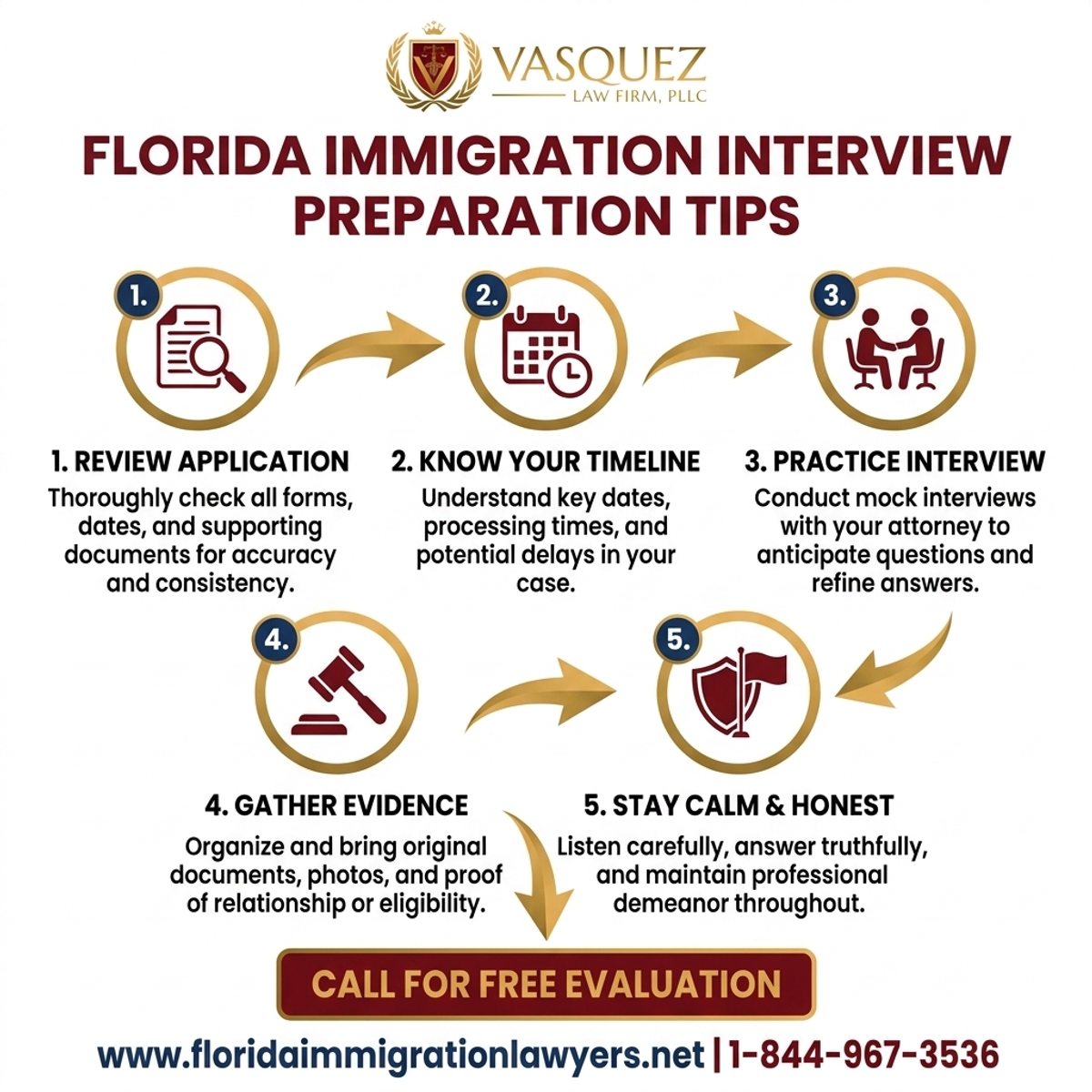
Step-by-Step Process — Florida Immigration Interview Preparation Tips | VLF Florida
4. Use an Interpreter if Needed:
If you are not fluent in English and your interview notice indicates an interpreter is allowed (or if you requested one in advance), ensure your interpreter is present. USCIS provides interpreters for naturalization civics tests, but for other interviews, you may need to bring your own. Ensure your interpreter is impartial and accurately translates both your answers and the officer's questions.
5. Maintain Respectful Demeanor:
Be polite and respectful to the USCIS officer and all staff. Avoid arguing or becoming defensive, even if you disagree with a question or line of questioning. Maintain eye contact and professional body language.
6. Understand Your Rights:
You have the right to have an attorney present at most immigration interviews. While not always mandatory, having legal representation can be invaluable, especially in complex cases. Your attorney can clarify questions, object to inappropriate lines of questioning, and provide support.
Navigating Complex Immigration Scenarios: Asylum, Deportation, and Attorney Support
While many immigration interviews follow a standard format, certain situations present unique challenges that demand specialized preparation and often, the immediate intervention of experienced legal counsel. Understanding these complexities is crucial for anyone facing a high-stakes interview.
Asylum Interviews: A Deep Dive into Your Narrative
Asylum interviews are profoundly personal and require applicants to recount traumatic experiences of persecution. The officer will meticulously assess the credibility of your story, the consistency of your narrative, and whether your fear of persecution is well-founded based on one of the five protected grounds (race, religion, nationality, political opinion, or membership in a particular social group). Preparation involves not only organizing evidence of persecution but also mentally preparing to articulate sensitive details under questioning. It's vital to be consistent with any written statements you've submitted and to be ready to elaborate on specific events, dates, and locations. Given the emotional and legal complexities, having an attorney specializing in asylum law by your side is highly recommended to help you structure your testimony and navigate difficult questions, ensuring your story is presented effectively and legally sound.
Deportation Defense Interviews: Protecting Your Future
If you are facing deportation or removal proceedings, any interview with USCIS or ICE (Immigration and Customs Enforcement) is critically important. These interviews might occur in the context of bond hearings, credible fear interviews, reasonable fear interviews, or applications for relief from removal. The stakes are incredibly high, as the outcome can directly determine your ability to remain in the United States. Questions will often focus on your immigration history, any criminal record, family ties, and eligibility for various forms of relief. In these situations, every word can have significant legal consequences. It is imperative to consult with an attorney experienced in deportation defense before attending any such interview. An attorney can advise you on your rights, prepare you for potential questions, and represent you to protect your interests, potentially preventing self-incrimination or misstatements that could jeopardize your case.
The Indispensable Role of an Immigration Attorney
For any immigration interview, but especially for those involving asylum claims, deportation defense, or complex eligibility issues, the presence and guidance of an immigration attorney are invaluable. An attorney can:
- Thoroughly Prepare You: Conduct mock interviews, review your application for potential issues, and help you gather all necessary documentation.
- Attend the Interview with You: Provide legal advice, clarify questions, object to improper questioning, and ensure your rights are protected.
- Address Issues on the Spot: If the officer raises concerns or requests additional documentation, your attorney can often address these immediately or advise on the best course of action.
- Provide Reassurance: Having a legal expert by your side can significantly reduce stress and allow you to focus on answering questions truthfully.
Choosing the right legal representation can make a profound difference in the outcome of your case. Learn more about our dedicated legal team and how they can assist you by visiting our attorneys page.
Post-Interview Procedures and What Comes Next
The interview doesn't always end with an immediate decision. Understanding the possible outcomes and subsequent steps is crucial.
Possible Outcomes:
- Approval: If everything goes well and the officer has sufficient information, your application may be approved on the spot, or you might receive an approval notice by mail shortly after.
- Request for Evidence (RFE): The officer may issue an RFE if they need additional documents or clarification on certain aspects of your application. Respond promptly and thoroughly to RFEs to avoid delays or denials.
- Notice of Intent to Deny (NOID): A NOID indicates that USCIS intends to deny your application and provides you with an opportunity to submit additional evidence or arguments to overcome the grounds for denial. This is a critical stage where legal counsel is highly advisable.
- Denial: If your application is denied, you will receive a written explanation. Depending on the reason for denial, you may have options to appeal the decision, file a motion to reopen, or reapply. Consult with an attorney to understand your options.
- Further Review: Sometimes, the officer needs more time to review your case, consult with supervisors, or conduct background checks. This can lead to a decision being mailed weeks or months later.
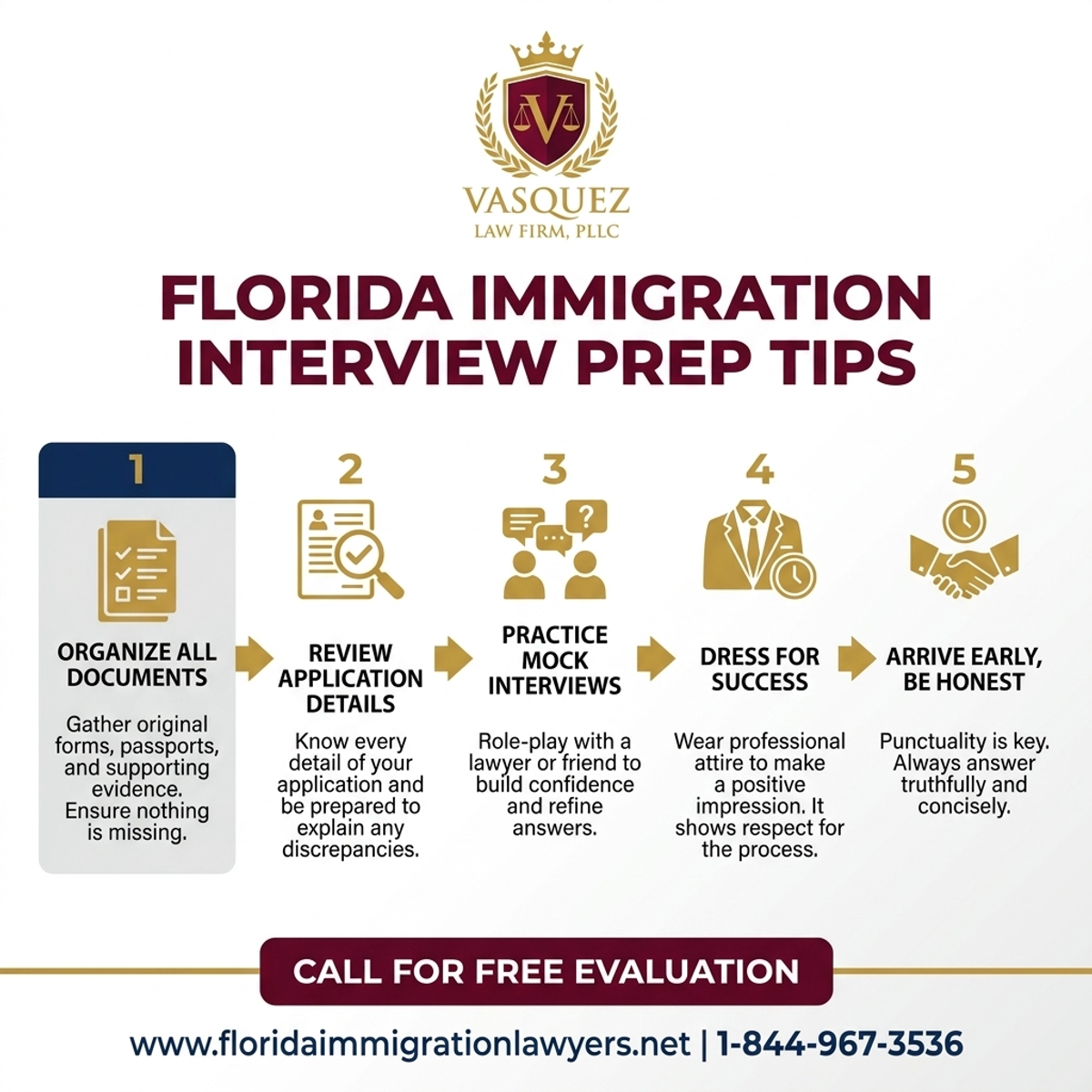
Key Statistics — Florida Immigration Interview Preparation Tips | VLF Florida
Follow-Up Actions:
If you don't hear back within a reasonable timeframe (check USCIS processing times online), you can inquire about your case status through the USCIS website or by calling their customer service line. If you submitted additional documents as requested, keep copies for your records.
Why Legal Guidance is Crucial for Your Immigration Journey
While this guide provides extensive preparation tips, the complexities of immigration law often necessitate professional legal assistance. An experienced immigration attorney can offer personalized advice, identify potential issues in your application before the interview, help you gather and organize documents, and represent you during the interview itself.
At VLF Florida, our dedicated team of immigration attorneys has a deep understanding of USCIS procedures and the nuances of various immigration cases. We are committed to providing comprehensive support, from initial consultation to post-interview follow-up, ensuring your case is handled with the utmost care and experience. Our goal is to alleviate your stress and maximize your chances of a successful outcome.
Don't leave your immigration future to chance. Preparing for your USCIS immigration interview in Florida requires diligence, accuracy, and often, the strategic insight that only an experienced legal professional can provide. We invite you to reach out to VLF Florida for a free consultation to discuss your specific situation and how we can assist you in achieving your immigration goals. Contact us today to schedule your consultation and take the first step towards a successful interview.
Sources and References
- U.S. Citizenship and Immigration Services (USCIS)
- Executive Office for Immigration Review (EOIR)
- U.S. Department of State - Bureau of Consular Affairs
- Immigration and Nationality Act (INA), 8 U.S.C. Chapter 12
Do Not Navigate This Process Alone
Our experienced immigration attorneys are ready to fight for you. Get a free, confidential case review today.
Se Habla Español
Or leave your details and we’ll call you:
Free Evaluation in 24 Hours
Or talk to us right now

AI voice assistant — available 24/7
FreeFrequently Asked Questions

William J. Vásquez
Founding Attorney · Vasquez Law Firm
U.S. Air Force veteran and immigration attorney with years of hands-on U.S. immigration experience. J.D., NCCU School of Law. AILA member. Admitted to the 4th, 5th, and 11th Circuit Courts.
Available 24/7 - Free Evaluations
Reviewed for legal accuracy by William J. Vásquez
Licensed in North Carolina; U.S. immigration is federal practice.
Related Legal Services
Our Florida immigration attorneys can help you with experienced immigration attorneys, asylum protection and citizenship and naturalization. Call today at 1-844-YO-PELEO for a free case review.
Related Links
Related Topics
Free Legal Case Review
Discuss your case with our experienced attorneys. We're available 24/7.
Se Habla Español - Estamos aquí para ayudarle.
Related Articles
EAD Advance Parole Combo Card in Florida: What You Need
An EAD advance parole combo card allows individuals with pending adjustment applications to both work and travel abroad without jeopardizing their green card application. Learn how to apply in Florida, what documents you need, and common mistakes to avoid.
PERM Labor Certification in Florida: A 2026 Guide
Learn all about the PERM labor certification process in Florida, essential for employers sponsoring green card applicants. Understand the steps, document requirements, and common mistakes to avoid in this 2026 guide.
Dual Citizenship Lawyer in Florida: What You Need to Know
For Florida residents, the concept of dual citizenship, or holding two passports, offers a compelling blend of opportunities and challenges. While the U.S. generally permits dual nationality, the path to achieving this status requires a meticulous understanding of both U.S. immigration laws and the citizenship policies of your country of origin. This guide explores the definition of dual citizenship, the detailed step-by-step process for U.S. naturalization, and the significant benefits and potential pitfalls involved. We cover essential documentation, typical timelines, and cost considerations for 2026, providing crucial insights for anyone in Orlando, Miami, or across Florida considering this important legal step. Learn about common mistakes to avoid and understand when to seek professional legal counsel to navigate this complex process successfully. Florida Immigration Lawyers is here to provide expert, bilingual support for your dual citizenship journey.
Immigration Lawyer Orlando Free Consultation in Florida
For individuals and families in Orlando, Florida, navigating the complexities of U.S. immigration law requires expert guidance. An immigration lawyer in Orlando offers crucial support for everything from visa applications and green card processes to naturalization and deportation defense. This comprehensive guide details what a free consultation covers, providing a step-by-step overview of immigration pathways, essential document checklists, and expected timelines in 2026. We also highlight common mistakes to avoid, discuss the critical role of legal counsel in deportation and asylum cases, and explain why choosing a local Orlando immigration attorney is beneficial. Florida Immigration Lawyers is dedicated to serving the diverse community of Orlando with compassionate, effective legal solutions, ensuring you receive personalized advice and robust representation for a successful immigration journey.