USCIS Processing Times in Florida 2026 | VLF Florida
Explore USCIS processing times in Florida for 2026. Discover timelines, costs, and common mistakes. Contact Florida Immigration Lawyers for expert guidance.

USCIS Processing Times in Florida 2026 | VLF Florida
Navigating the U.S. immigration system can be a complex and often lengthy process. For individuals and families residing in Florida, understanding USCIS (U.S. Citizenship and Immigration Services) processing times for 2026 is not just helpful—it's crucial for planning your future, making informed decisions, and managing expectations. At VLF Florida, we understand the anxieties that come with waiting and are dedicated to providing clear insights and robust legal assistance to our community. This comprehensive guide will delve into what to expect regarding processing times, the factors that influence them, and how our experienced immigration attorneys can support you every step of the way.
Understanding USCIS Processing Times: What They Are and Why They Matter
USCIS processing times represent the estimated duration it takes for the agency to review and make a decision on an immigration application or petition. These times are not fixed guarantees but rather estimates based on historical data and current operational workloads. They are published by USCIS for various forms and service centers, providing a general benchmark for applicants. For Florida residents, these times dictate critical life decisions, from employment opportunities and family reunification to travel plans and educational pursuits. A delay can mean missed opportunities, prolonged separation from loved ones, or uncertainty about one's legal status. Therefore, having a realistic understanding of these timelines is paramount to effective planning and emotional preparedness.
It's important to distinguish between "processing times" and "case completion times." Processing times typically refer to the time it takes to process a specific form at a specific service center or field office. Case completion times can be longer, as they might include additional steps like interviews, requests for evidence (RFEs), or background checks. USCIS updates these times regularly, so staying informed is key. Our firm constantly monitors these updates to provide the most current advice to our clients.
Key Factors Influencing USCIS Processing Times in 2026
Several variables can significantly impact how long your USCIS application will take to process. Understanding these factors can help you anticipate potential delays and prepare accordingly:
- Type of Application or Petition: Different forms have vastly different processing complexities. For example, a simple visa extension might be processed quicker than an application for adjustment of status or a complex asylum claim. Family-based petitions often have different timelines than employment-based petitions due to varying legal requirements and quotas.
- Service Center or Field Office Workload: USCIS operates several service centers (e.g., California, Nebraska, Texas, Vermont) and numerous field offices across the country, including many in Florida (e.g., Miami, Orlando, Tampa). Each office handles specific types of cases and experiences fluctuating workloads. A center overwhelmed with a high volume of applications will naturally have longer processing times.
- Completeness and Accuracy of Application: One of the most common reasons for delays is an incomplete or inaccurate application. Missing documents, incorrect information, or unsigned forms can lead to Requests for Evidence (RFEs) or even outright denials, significantly extending the processing period.
- Policy Changes and Administrative Priorities: Immigration policies can shift, leading to changes in processing priorities or increased scrutiny for certain case types. Administrative backlogs, budget constraints, and staffing levels within USCIS also play a crucial role.
- Background Checks and Security Clearances: All applicants undergo thorough background checks. Any issues or complexities discovered during this phase can lead to substantial delays, as agencies coordinate to resolve them.
- Interview Requirements: Many immigration processes, such as adjustment of status or naturalization, require an in-person interview at a local USCIS field office. Scheduling these interviews can add several months to the overall timeline, depending on the office's availability.
How to Check USCIS Processing Times for Florida Residents
USCIS provides an online tool that allows applicants to check the estimated processing times for various forms at different service centers and field offices. Here’s how Florida residents can use it:
- Visit the USCIS Website: Navigate to the “Check Processing Times” section on the official USCIS website.
- Select Your Form: Choose the specific USCIS form number you filed (e.g., I-485 for Adjustment of Status, N-400 for Naturalization).
- Select Your Form Category: This further refines the search, as different categories of the same form might have different processing times.
- Select Your Service Center or Field Office: This is crucial. If your receipt notice indicates a service center (e.g., LIN, WAC, SRC, EAC), select that. If your case is handled by a local field office (common for interviews or naturalization), select the relevant Florida office (e.g., Miami, Orlando, Tampa).
- Review the Estimates: The tool will display a range of estimated processing times. It's important to understand that if your receipt date falls within this range, your case is considered to be within normal processing times.
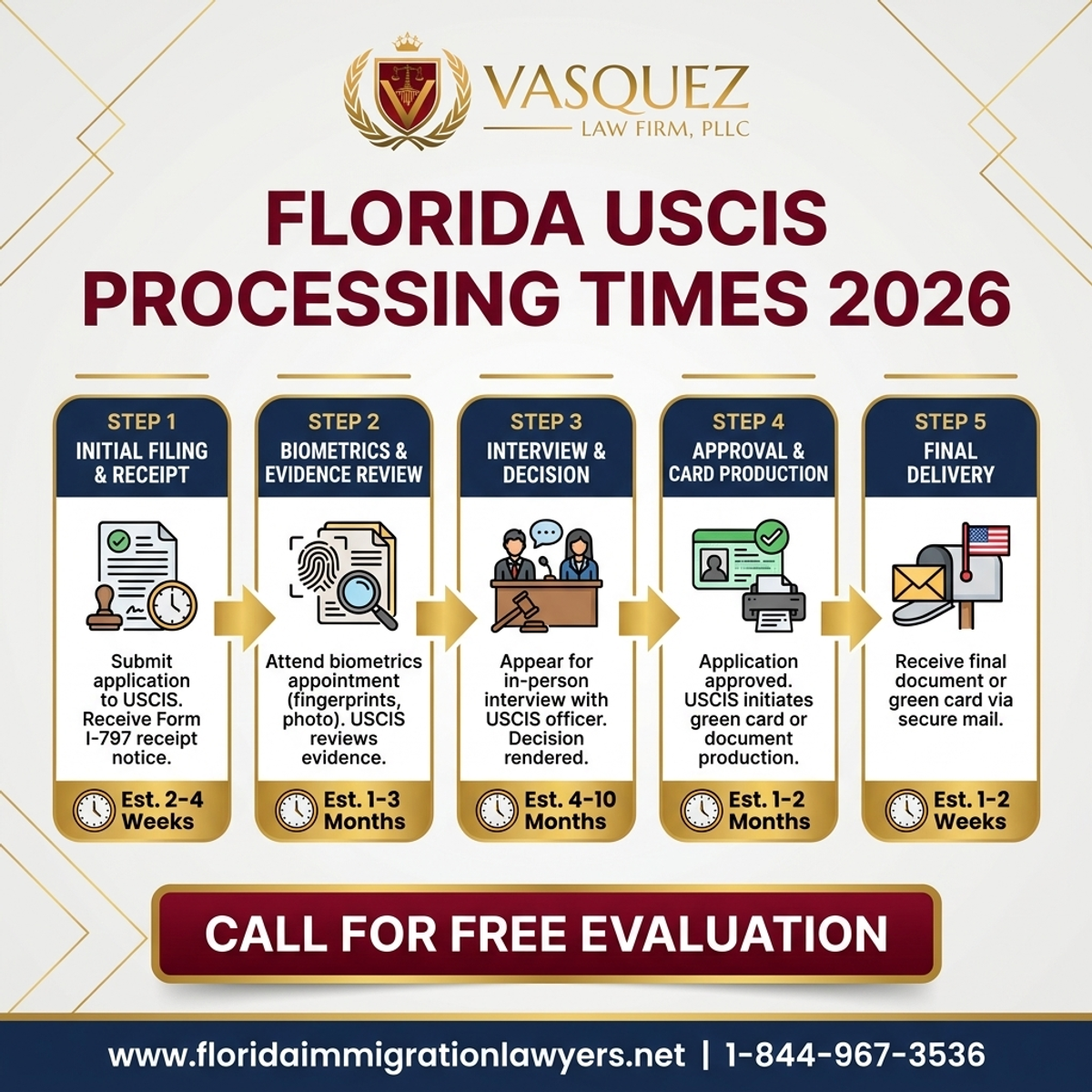
Step-by-Step Process — USCIS Processing Times in Florida 2026 | VLF Florida
Remember that these times are estimates and can fluctuate. It's advisable to check periodically for updates. If your case has been pending longer than the upper end of the displayed range, you may be eligible to submit an “e-request” to USCIS to inquire about your case status.
Navigating Specific USCIS Case Types and Their Processing Realities in Florida
The vast landscape of U.S. immigration law means that processing times vary dramatically depending on the specific type of application. For Florida residents, understanding these nuances is critical for setting realistic expectations and strategizing effectively. Here's a look at some common case types and their processing considerations:
Family-Based Petitions (Forms I-130, I-485)
Family reunification is a cornerstone of U.S. immigration. Petitions for relatives (Form I-130) can take anywhere from several months to many years, largely depending on the relationship to the U.S. citizen or lawful permanent resident, and the applicant's country of origin due to visa bulletin backlogs. Once an immigrant visa number becomes available, the adjustment of status (Form I-485) to obtain a Green Card can take an additional 1-2 years, sometimes more, especially if an interview is required at a Florida field office like Miami or Orlando. Spouses of U.S. citizens generally have shorter wait times, while siblings or adult children of U.S. citizens may face much longer waits due to preference categories and annual caps.
Employment-Based Petitions (Forms I-140, I-485)
For professionals and skilled workers in Florida, employment-based immigration offers pathways to permanent residency. These petitions (Form I-140) can range from 6 months to several years, depending on the visa category (e.g., EB-1, EB-2, EB-3) and the applicant's country of chargeability. The subsequent adjustment of status (Form I-485) also follows similar timelines to family-based cases, often requiring an interview. Premium processing is available for some employment-based petitions, which can significantly expedite the I-140 stage, but not the I-485 or interview components.
Naturalization (Form N-400)
Becoming a U.S. citizen is the final step for many immigrants. The naturalization process (Form N-400) typically involves an application, an interview at a local Florida field office, and a civics and English test. Processing times for naturalization can vary from 6 months to over a year, influenced by the specific field office's workload and the complexity of the applicant's background. Timely submission of all required documents and a clear history are essential to avoid delays.
Asylum Applications (Form I-589)
Individuals seeking protection in the U.S. through asylum face unique processing challenges. Asylum cases are often prioritized based on filing date, but backlogs can still lead to significant waiting periods for an interview. While some cases are processed relatively quickly, others can remain pending for several years. The complexity of the case, the need for interpreters, and the specific asylum office's capacity all play a role. Applicants in Florida often fall under the jurisdiction of the Miami Asylum Office.
Other Common Forms (e.g., I-765, I-131)
Applications for Employment Authorization Documents (EADs, Form I-765) and Advance Parole (Form I-131) are often filed concurrently with adjustment of status applications. Processing times for these can range from a few months to over a year. Delays in receiving these crucial documents can significantly impact an applicant's ability to work or travel internationally while their main petition is pending.
Given the intricate nature of these processes and the potential for long waits, seeking guidance from knowledgeable immigration attorneys at VLF Florida is highly recommended. We can help you understand the specific timelines for your case type and strategize to minimize potential delays.
What Happens If Your Case Is Outside Normal Processing Times?
If you've checked the USCIS online tool and your case has been pending longer than the estimated processing time frame, you have several avenues to explore:
- Submit an e-Request: The first step is usually to submit a service request online through the USCIS website. You'll need your receipt number and the date your case was filed. USCIS aims to respond to these inquiries within a certain timeframe.
- Contact USCIS Directly: You can call the USCIS Contact Center. Be prepared for potentially long wait times and ensure you have all your case information handy.
- Congressional Inquiry: In some instances, contacting your local U.S. Representative or Senator's office can be effective. Their constituent services staff can often make inquiries on your behalf.
- Seek Legal Intervention (Mandamus Action): In extreme cases of unreasonable delay, and after exhausting administrative remedies, an attorney might advise filing a lawsuit in federal court (a Writ of Mandamus) to compel USCIS to make a decision on your case. This is a significant legal step and should only be pursued with experienced legal counsel.
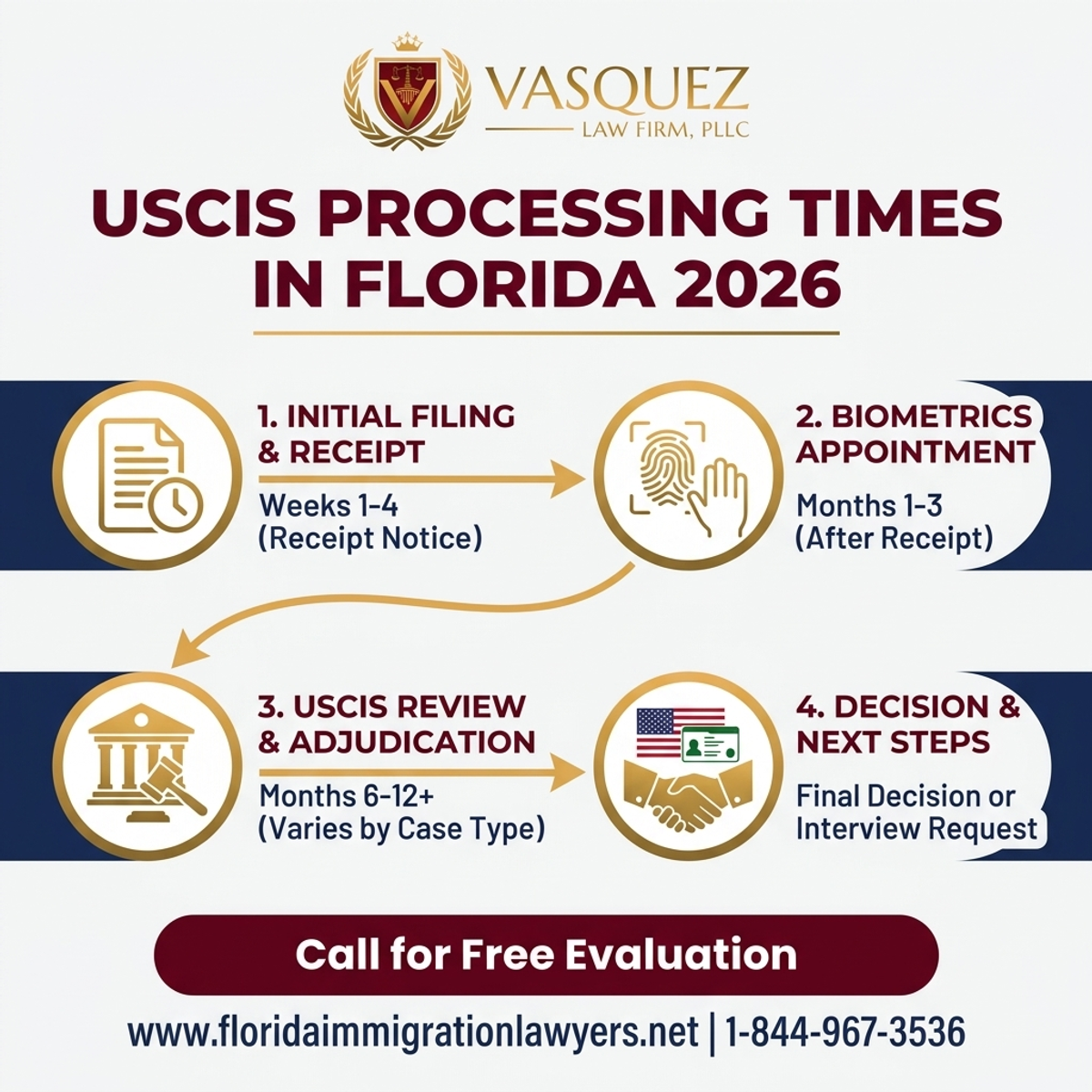
Key Statistics — USCIS Processing Times in Florida 2026 | VLF Florida
It's crucial to document all communication with USCIS and keep meticulous records of your application and any correspondence received. This documentation will be invaluable if you need to escalate your inquiry.
The Critical Role of a Florida Immigration Attorney in Managing Processing Delays
While an immigration attorney cannot magically speed up USCIS processing times, their expertise is invaluable in navigating the system, minimizing delays, and advocating on your behalf. Here's how VLF Florida can assist:
- Thorough Application Preparation: The most significant way to prevent delays is to submit a complete, accurate, and well-organized application package. Our attorneys ensure all forms are correctly filled out, all required supporting documents are included, and evidence is properly presented, reducing the likelihood of RFEs or rejections.
- Monitoring and Follow-Up: We continuously monitor USCIS processing times and your case status. If your case falls outside normal processing times, we proactively submit inquiries and follow up with USCIS on your behalf, saving you time and stress.
- Responding to RFEs and NOIDs: If USCIS issues a Request for Evidence (RFE) or a Notice of Intent to Deny (NOID), our team will help you gather and submit the necessary documentation and legal arguments to address their concerns effectively and within the strict deadlines.
- Strategic Advice: We provide strategic advice on the best course of action, whether it's filing an e-request, pursuing an expedite request (in eligible humanitarian or emergency situations), or exploring other legal remedies.
- Addressing Complex Issues: For cases involving criminal history, previous immigration violations, or other complexities, our attorneys can anticipate potential issues and prepare compelling arguments to mitigate risks, potentially preventing a denial or even deportation proceedings.
- Representation at Interviews: We can prepare you for your USCIS interview and, in many cases, accompany you to ensure your rights are protected and to address any unforeseen issues.
Having a dedicated legal team like VLF Florida on your side provides peace of mind and significantly increases the chances of a smooth and successful immigration journey. Our experienced attorneys are deeply familiar with the nuances of immigration law and the specific procedures of USCIS field offices throughout Florida.
Preparing a Strong Application to Minimize Delays
Proactive preparation is your best defense against processing delays. Here are key steps you can take to ensure your application is as strong as possible:
- Gather All Required Documents Early: Don't wait until the last minute. Collect birth certificates, marriage certificates, passports, financial records, educational transcripts, and any other supporting evidence well in advance. Ensure all foreign documents are translated into English by a certified translator.
- Be Meticulous with Forms: Fill out every section of the application forms completely and accurately. If a section does not apply, mark it as “N/A” (not applicable). Double-check all dates, names, and addresses for consistency.
- Provide Comprehensive Evidence: USCIS requires evidence to support every claim in your application. For example, in marriage-based petitions, provide ample evidence of a bona fide marriage (joint bank accounts, leases, photos, affidavits). The more compelling and organized your evidence, the less likely an RFE will be issued.
- Organize Your Submission: Present your application package in a clear, organized manner. Use tabs, cover sheets, and a table of contents if necessary, especially for voluminous submissions. This helps USCIS officers quickly find the information they need.
- Keep Copies of Everything: Make a complete copy of your entire application package before mailing it. This includes all forms, supporting documents, and the check or money order used for fees.
- Seek Professional Review: Even if you plan to file independently, consider having an experienced immigration attorney review your application before submission. A fresh, expert eye can catch errors or omissions you might have missed. This small investment can save you months of delays and potential heartache.
Policy Changes and Their Potential Impact on 2026 Processing
Immigration policy is dynamic, and changes at the federal level can significantly influence USCIS operations and processing times. As we look towards 2026, potential shifts in administration priorities, legislative reforms, or even global events could impact the flow of applications. For instance, new regulations might introduce additional vetting procedures, increase fees, or alter eligibility criteria for certain benefits. Conversely, efforts to streamline processes or allocate more resources to USCIS could lead to improved efficiency. Florida, with its diverse immigrant population, is particularly sensitive to these changes. Staying informed about the evolving policy landscape is crucial, and our firm remains vigilant in tracking these developments to provide timely advice and adjust strategies for our clients. We anticipate continued focus on border security and potentially new pathways for certain categories of workers, which could affect overall processing volumes and timelines for various forms.
Contact VLF Florida for Expert Immigration Guidance
While USCIS processing times in Florida for 2026 may present uncertainties, you don't have to navigate the immigration system alone. The experienced immigration attorneys at VLF Florida are here to provide the clarity, support, and advocacy you need. We are committed to ensuring your application is meticulously prepared, accurately filed, and diligently monitored. Don't let the complexities of immigration law overwhelm you. Contact us today for a consultation. Call (844) 967-3536 to speak with a Florida immigration lawyer who understands your unique situation and can help you achieve your immigration goals.
Sources and References
- U.S. Citizenship and Immigration Services (USCIS)
- Executive Office for Immigration Review (EOIR)
- U.S. Department of State - Bureau of Consular Affairs
- Immigration and Nationality Act (INA), 8 U.S.C. Chapter 12
Do Not Navigate This Process Alone
Our experienced immigration attorneys are ready to fight for you. Get a free, confidential consultation today.
Se Habla Español
Frequently Asked Questions
Florida Immigration Lawyers
Immigration Attorney | Founder, Vasquez Law Firm
U.S. Air Force veteran and immigration attorney with thousands of cases resolved. J.D., NCCU School of Law. AILA member. Admitted to the 4th, 5th, and 11th Circuit Courts.
Available 24/7 - Free Evaluations
Related Legal Services
Our Florida immigration attorneys can help you with immigration practice areas, free immigration consultation and experienced immigration attorneys. Call today at 1-844-967-3536 for a free consultation.
Related Links
Related Topics
Free Legal Consultation
Discuss your case with our experienced attorneys. We're available 24/7.
Se Habla Español - Estamos aquí para ayudarle.
Related Articles
Free Immigration Consultation Florida: Expert Legal Help
A free immigration consultation in Florida is your essential first step toward understanding your legal options and navigating the complex U.S. immigration system. At Florida Immigration Lawyers, we offer these no-cost consultations to help you assess your case, identify potential pathways, and receive preliminary legal advice from experienced attorneys. Whether you're in Tampa, Miami, or anywhere in Florida, our dedicated team is ready to provide the clarity and direction you need without any upfront financial commitment. Learn what to expect, how to prepare, and why expert legal guidance is crucial for a successful immigration journey in 2026. Contact us today to secure your future.
Immediate Relative Petition in Florida: What You Need to Know
Learn about the immediate relative petition process in Florida, crucial for family immigration. Discover how to file an I-130 and navigate recent policy changes. For guidance, contact Florida Immigration Lawyers.
T Visa Guide for Trafficking Victims in Florida | VLF Florida
The T visa offers crucial protection to victims of human trafficking in Florida. Learn how to apply, avoid common pitfalls, and seek legal assistance. Contact Florida Immigration Lawyers for a free consultation.
TN Visa for USMCA Professionals in Florida | VLF Florida
Explore the TN visa process for USMCA professionals in Florida. Learn about eligibility, application steps, and common mistakes. Contact Florida Immigration Lawyers for expert assistance.
