Kilmar Abrego Garcia Deportation Florida: Expert Legal
Understanding the complexities of deportation in Florida is crucial for non-citizens. High-profile cases, such as the deportation of Kilmar Abrego Garcia Florida, highlight the intense legal challenges and the absolute necessity of legal representation. This comprehensive guide details the step-by-step deportation process, essential documentation, expected timelines, and cost factors specific to Florida. We also outline common mistakes to avoid and provide clear guidance on when to consult a Florida immigration lawyer. Florida Immigration Lawyers offers compassionate, skilled defense throughout the state, available 24/7 for free consultations. Protect your rights and your future.
The deportation of Kilmar Abrego Garcia Florida highlights the profound complexities and critical need for legal defense in U.S. immigration law. Deportation, or removal, is a legal process initiated by the government to remove a non-citizen from the country. Navigating these proceedings, especially in Florida, requires legal guidance to understand rights, explore defenses, and avoid common pitfalls that can lead to severe consequences.
- Deportation proceedings are complex and require immediate legal attention.
- Eligibility for relief from removal varies based on individual circumstances.
- Proper documentation and adherence to court schedules are crucial.
- Seeking a qualified Florida immigration lawyer can significantly impact your case.
- The Kilmar Abrego Garcia case exemplifies the challenges in deportation defense.
Imagine facing the daunting prospect of being removed from the country you call home, separated from your family, and forced to return to a place you may no longer recognize or where you fear persecution. This is the harsh reality for many non-citizens in Florida, a reality underscored by high-profile cases like the deportation of Kilmar Abrego Garcia Florida, which brought national attention to the intricate and often unforgiving nature of immigration law. Understanding your rights and the legal process is paramount if you or a loved one are facing such a challenge.
This comprehensive guide will walk you through the complexities of deportation proceedings in Florida, drawing insights from the broader context illustrated by cases like Kilmar Abrego Garcia's. We will cover the steps involved, essential documents, timelines, costs, and common mistakes to avoid. Our goal is to empower you with knowledge and emphasize the critical role of legal representation. Do not face this alone. Call Florida Immigration Lawyers at 1-844-YO-PELEO for a free consultation to discuss your specific situation.
Understanding Deportation in Florida: The Kilmar Abrego Garcia Context
Deportation, formally known as removal, is the legal process by which the U.S. government orders a non-citizen to leave the country. This process is governed by the Immigration and Nationality Act (INA), specifically sections like INA § 237 (8 U.S.C. § 1227) for deportability and INA § 212 (8 U.S.C. § 1182) for inadmissibility. Florida, with its diverse population and strategic location, is a focal point for immigration enforcement, making understanding these laws crucial for its residents.
The case involving the deportation of Kilmar Abrego Garcia Florida serves as a poignant example of the labyrinthine legal battles immigrants can face. While every case is unique, his experience highlighted the potential for legal errors, the importance of robust defense, and the profound human impact of removal proceedings. It underscored how critical it is for individuals in Florida facing similar circumstances to have knowledgeable legal counsel.
Immigration and Customs Enforcement (ICE) maintains a significant presence across Florida, with detention centers and field offices in areas like Miami, Orlando, and Bradenton. This means that individuals in Kissimmee, Tampa, Jacksonville, and other Florida communities are regularly subject to immigration enforcement actions. Understanding the grounds for deportation, which can range from visa overstays to criminal convictions, is the first step in building a strong defense.
Our firm, Florida Immigration Lawyers, focuses on protecting the rights of immigrants throughout the state. We understand the specific nuances of Florida's immigration courts, including the Orlando Immigration Court and the Miami Immigration Court. Our experience allows us to provide tailored advice and aggressive representation, ensuring that your voice is heard and your legal options are thoroughly explored.
The Deportation Process in Florida: A Step-by-Step Guide
Navigating deportation proceedings can feel overwhelming, but understanding each stage can help you prepare. The process typically begins when the government believes a non-citizen is deportable under U.S. immigration law. Here is a general step-by-step guide to what you can expect in Florida:
-
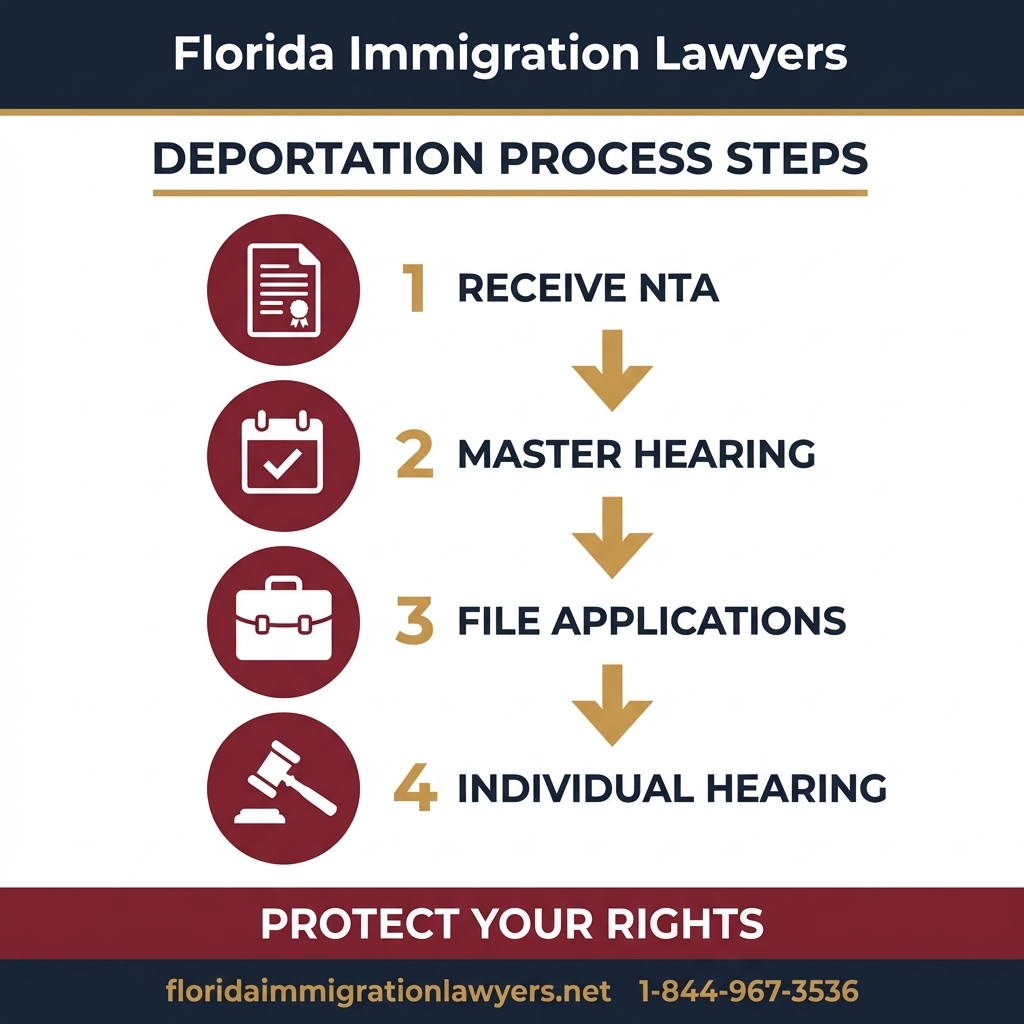
Issuance of a Notice to Appear (NTA): The process officially begins when ICE issues a Form I-862, Notice to Appear. This document outlines the allegations against you and specifies the legal grounds for your removal. It also provides the date and location of your first hearing before an Immigration Judge, often at the Orlando Immigration Court or Miami Immigration Court.
Receiving an NTA is a serious matter. It is your formal notification that the government intends to deport you. Seeking legal counsel immediately upon receiving an NTA is critical to protect your rights and prepare your defense.
-
Master Calendar Hearing (MCH): This is your first appearance before an Immigration Judge. The judge will confirm your identity, ensure you understand the allegations in the NTA, and ask you to admit or deny those allegations. You will also be asked to designate a country for removal if ordered. This is typically a brief hearing where future court dates are set.
During the MCH, your attorney can enter an appearance, request more time to review your case, and identify potential forms of relief from removal. This initial stage is crucial for setting the foundation of your defense strategy.
-
Pleadings and Relief from Removal: Following the MCH, your attorney will typically file pleadings, formally responding to the allegations. If you admit deportability, the focus shifts to identifying and applying for any available forms of relief from removal. These could include asylum (INA § 208, 8 U.S.C. § 1158), cancellation of removal, adjustment of status, or voluntary departure (INA § 240B, 8 U.S.C. § 1229c).
Each form of relief has specific eligibility requirements. For example, asylum requires a well-founded fear of persecution. Your attorney will help determine which defenses apply to your unique situation and prepare the necessary applications and supporting evidence.
-
Individual Hearing (Merits Hearing): If you apply for relief, the judge will schedule an Individual Hearing. This is a longer, more formal hearing where you and your witnesses will testify, and evidence will be presented. The government's attorney will also present their case and cross-examine witnesses.
This hearing is essentially a trial, and it is where the fate of your case is often decided. A skilled attorney will prepare you for testimony, present compelling evidence, and argue your case effectively before the Immigration Judge.
-
Decision and Appeals: After the Individual Hearing, the Immigration Judge will issue a decision. If the judge grants your requested relief, you may be able to remain in the U.S. If the relief is denied and you are ordered removed, you typically have the right to appeal the decision to the Board of Immigration Appeals (BIA).
An appeal must be filed within 30 days of the Immigration Judge's decision. If the BIA denies your appeal, further appeals may be possible in federal circuit courts. This complex appeals process requires specialized legal knowledge.
Essential Documents for Your Deportation Defense
A strong deportation defense relies heavily on comprehensive and well-organized documentation. Gathering these documents early can significantly strengthen your case and streamline the legal process. Your Florida immigration lawyer will guide you on specific documents relevant to your situation, but here is a general checklist:
- Personal Identification: Passport, birth certificate, national ID from your home country, U.S. driver's license or state ID.
- Immigration Documents: Form I-94 (Arrival/Departure Record), visa stamps, previous applications (I-130, I-485, etc.), Notice to Appear (NTA).
- Marriage and Family Records: Marriage certificates, birth certificates of U.S. citizen or lawful permanent resident children/spouses, divorce decrees, evidence of bona fide marriage (photos, joint accounts, utility bills).
- Financial Records: Bank statements, tax returns (Form 1040), pay stubs, employment letters, property deeds, mortgage statements.
- Proof of Residence/Community Ties: Utility bills, lease agreements, property ownership documents, letters from community leaders, school records for children.
- Medical Records: Any medical conditions, especially if seeking relief based on hardship or specific health needs.
- Affidavits: Sworn statements from family members, friends, employers, or community leaders attesting to your good moral character, family ties, or contributions to the community.
- Police Records/Court Dispositions: Certified copies of all criminal charges, arrests, and court dispositions, even if charges were dismissed or expunged. This is crucial for determining eligibility for certain reliefs.
- Evidence of Hardship: If applying for cancellation of removal, documentation demonstrating extreme and unusual hardship to qualifying U.S. citizen or LPR family members.
- Asylum Evidence: If seeking asylum, any documentation supporting your claim of persecution (e.g., news articles, police reports from home country, medical records of harm, letters from human rights organizations).
Timelines and Processing Expectations in Florida Immigration Courts
The speed at which a deportation case progresses in Florida can vary significantly. Factors such as court backlogs, the complexity of your case, the specific Immigration Judge assigned, and the type of relief sought all play a role. While there are no guaranteed timelines, understanding general expectations can help manage stress and prepare for the road ahead.
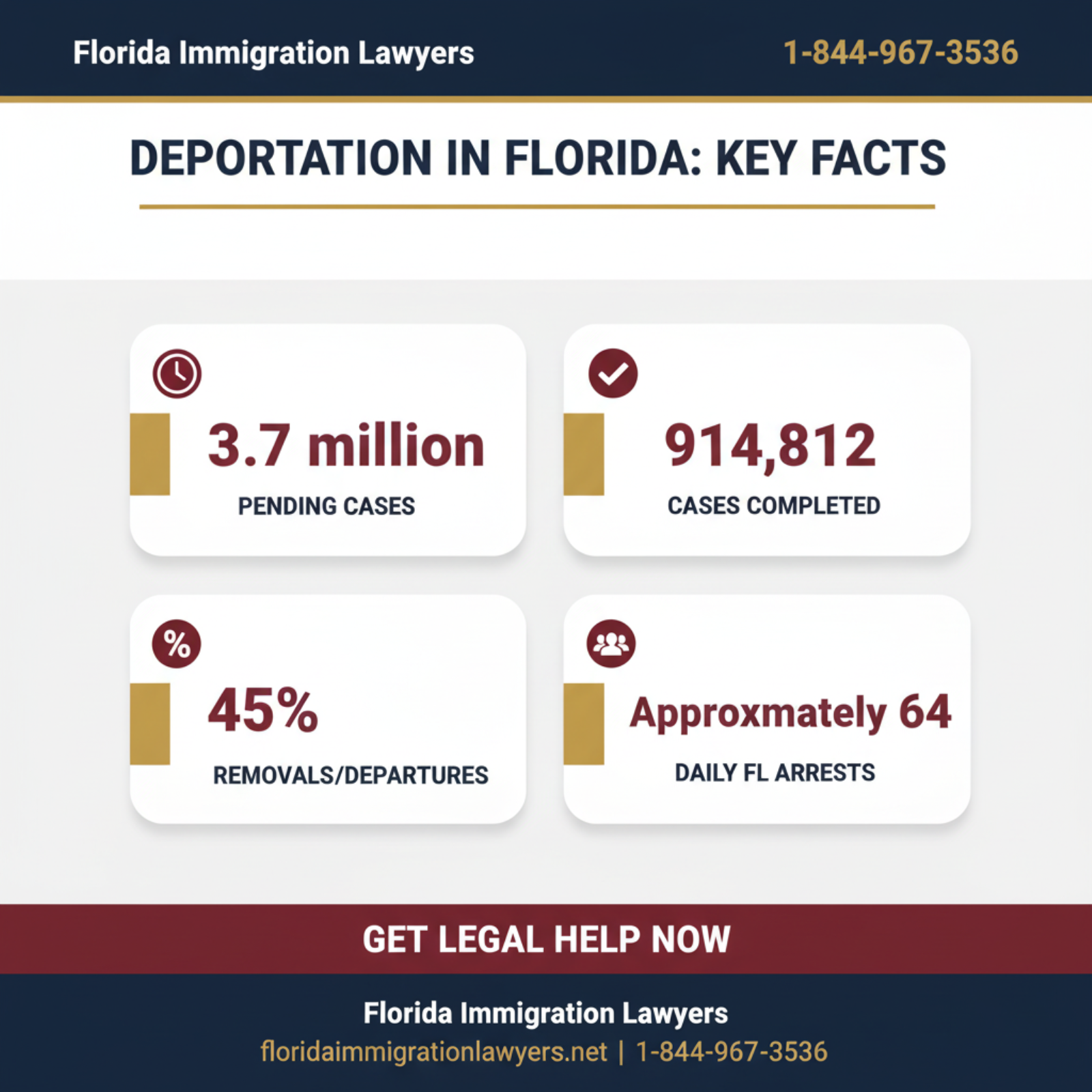
Typically, a deportation case can take anywhere from several months to several years to resolve. Master Calendar Hearings are often scheduled within a few weeks or months of receiving the NTA. However, Individual Hearings, especially for complex cases like asylum or cancellation of removal, might be scheduled a year or more after the initial MCH due to court dockets being full.
Florida's immigration courts, particularly the Orlando Immigration Court and Miami Immigration Court, often face substantial backlogs. This can lead to numerous continuances and delays. Cases that involve appeals to the Board of Immigration Appeals (BIA) or federal courts can add several more years to the overall process. For instance, high-profile cases like the deportation of Kilmar Abrego Garcia Florida often involve extensive legal challenges and can be protracted.
It is important to remember that these are general estimates. Your attorney at Florida Immigration Lawyers will provide a more personalized assessment based on the specifics of your case and the current court environment. Staying informed and prepared for potential delays is part of navigating this challenging journey.
Cost Factors and Legal Fees for Deportation Defense
Understanding the financial aspects of a deportation defense is an important part of planning. Legal fees for immigration cases, especially complex deportation proceedings, can vary widely based on the case's complexity, the amount of time required, and the attorney's experience. It is an investment in your future and freedom.
Typically, legal fees for deportation defense are structured either as a flat fee for specific stages of the process or an hourly rate. A flat fee provides predictability, covering all work related to a particular phase (e.g., bond hearing, Master Calendar Hearing, Individual Hearing). Hourly rates are common for ongoing litigation or cases with unpredictable demands.
Beyond legal fees, you may incur other costs. These can include government filing fees for applications for relief (e.g., I-589 for asylum, I-485 for adjustment of status). While the specific amounts are subject to change by USCIS (U.S. Citizenship and Immigration Services), it's important to budget for them. There may also be costs for obtaining certified court documents, expert witness fees, translation services, and travel expenses if your attorney needs to appear in a distant court.
At Florida Immigration Lawyers, we believe in transparent fee structures. During your free consultation, we will discuss our fees and provide a clear understanding of the potential costs involved in your deportation defense. We are committed to providing exceptional legal representation at a fair value, helping you navigate this financially and emotionally challenging time.
Do not navigate this process alone. Contact Florida Immigration Lawyers today. Our experienced team is ready to provide the dedicated support and legal experience you need to fight for your right to remain in the U.S.
Common Mistakes to Avoid in Deportation Proceedings
Deportation proceedings are fraught with potential pitfalls that can severely jeopardize your case. Avoiding these common mistakes is crucial for a successful defense. The complexities highlighted by cases like the deportation of Kilmar Abrego Garcia Florida emphasize the need for meticulous attention to detail and legal guidance.
-
Missing Court Dates: Failing to appear for any scheduled court hearing, including Master Calendar Hearings or Individual Hearings, can lead to an in absentia removal order. This means the Immigration Judge can order your deportation without you being present, making it extremely difficult to reverse.
-
Not Seeking Legal Counsel Immediately: Attempting to navigate the complex immigration court system without an attorney is a significant risk. An experienced Florida immigration lawyer can identify defenses, prepare applications, and represent your best interests, significantly increasing your chances of a favorable outcome.
-
Lying or Misrepresenting Facts to Immigration Officials: Any false statements or misrepresentations, whether intentional or unintentional, can have severe consequences, including findings of fraud or misrepresentation that can lead to permanent bars from immigration benefits. Always be truthful with your attorney and immigration authorities.
-
Failing to Disclose Criminal History: It is crucial to disclose all arrests, charges, and convictions to your attorney, regardless of how minor they seem or if they were dismissed. Certain criminal offenses can render you deportable or inadmissible, and failing to disclose them can undermine your defense strategy.
-
Not Gathering Sufficient Supporting Evidence: A strong defense requires compelling evidence. Failing to collect necessary documents, affidavits, or other proof for your claims (e.g., hardship, persecution, good moral character) can weaken your case significantly.
-
Overstaying Your Visa Without Legal Advice: While an overstay itself can lead to deportability, remaining in the U.S. without a valid visa or an application for relief can accrue unlawful presence, which can trigger re-entry bars and further complicate your immigration future.
-
Traveling Internationally Without Permission: If you are in removal proceedings, leaving the U.S. without proper authorization (e.g., advance parole) can be considered a self-deportation and prevent your lawful return. Always consult your attorney before making travel plans.
-
Failing to Update Your Address with Immigration Courts: If your address changes while in proceedings, you must notify the Immigration Court and USCIS. Failure to do so can result in missed notices and hearings, potentially leading to an in absentia removal order.
-
Underestimating the Seriousness of Your Case: Deportation is a life-altering event. Taking the process lightly or assuming it will resolve itself can lead to catastrophic outcomes. Treat every stage with the utmost seriousness and professional legal guidance.
-
Discussing Your Case with Others Who Are Not Your Attorney: What you say to friends, family, or even non-attorney immigration consultants can be used against you. Only discuss the specifics of your case with your attorney, who is bound by attorney-client privilege.
When to Call a Florida Immigration Lawyer
The decision to seek legal counsel can be the most critical step in defending against deportation. While this article provides general information, every case is unique, and the stakes are incredibly high. You should contact a knowledgeable Florida immigration lawyer immediately if you encounter any of the following scenarios:
- You Receive a Notice to Appear (NTA): This is the official start of your deportation proceedings. Do not delay in seeking legal advice.
- You or a Loved One is Detained by ICE in Florida: Whether in an ICE detention center in Bradenton, Glades County, or another facility, an attorney can help with bond hearings and ensure your rights are protected.
- You Fear Persecution or Torture in Your Home Country: If you believe you qualify for asylum or withholding of removal, an attorney can help you prepare and present a compelling case.
- You Have a Criminal Record: Even minor offenses can have significant immigration consequences. An attorney can assess the impact of your criminal history on your deportability and eligibility for relief.
- You Believe You Are Eligible for Relief from Removal: Whether it's cancellation of removal, adjustment of status, or another form of relief, an attorney can determine your eligibility and help you apply.
- You Have Been Ordered Removed and Wish to Appeal: The appeals process is complex and time-sensitive. An attorney is essential for navigating the Board of Immigration Appeals (BIA) and federal courts.
- You are in Kissimmee, Orlando, Miami, or anywhere in Florida and have immigration questions: Even if you haven't received an NTA, proactive legal advice can prevent future issues.
Florida Immigration Lawyers has extensive experience in deportation defense, asylum claims, and navigating the complexities of ICE detention and immigration courts throughout Florida. We understand the specific challenges faced by immigrants in our state and are committed to providing compassionate, effective legal representation. Our attorneys are available to discuss your options and fight for your right to remain in the United States.
About Florida Immigration Lawyers
Florida Immigration Lawyers is an immigration law firm dedicated to serving individuals and families across the entire state of Florida. With a deep understanding of U.S. immigration laws and a passion for helping our clients achieve their American dream, we provide legal guidance and representation in a wide range of immigration matters.
Our firm focuses on complex areas such as deportation defense, asylum claims, family-based immigration, business immigration, and citizenship applications. We pride ourselves on offering personalized attention, strategic advocacy, and a compassionate approach to every case. We know that immigration challenges can be incredibly stressful, and we are here to lighten that burden for you.
Why choose Florida Immigration Lawyers? We offer a wealth of experience, a client-focused approach, and experience. Our attorneys are not only highly skilled legal professionals but also empathetic advocates who understand the profound impact immigration issues have on your life. We are committed to achieving the strongest possible outcome for your situation.
We are available 24/7 to answer your questions and provide immediate assistance. We offer free consultations to help you understand your legal options without financial commitment. Serving all of Florida, including Kissimmee, Orlando, Miami, and beyond, we are your trusted partners in navigating the complexities of immigration law. Call us today at 1-844-YO-PELEO or visit our website at Vasquez Law Firm to learn more.
Sources and References
- U.S. Citizenship and Immigration Services (USCIS)
- Executive Office for Immigration Review (EOIR)
- U.S. Immigration and Customs Enforcement (ICE)
- 8 U.S.C. Chapter 12 - Immigration and Nationality Act (INA)
- INA § 212 (8 U.S.C. § 1182) - General Classes of Aliens Ineligible for Visas and Admission; Waivers of Inadmissibility
- INA § 237 (8 U.S.C. § 1227) - Deportable Aliens
- INA § 240 (8 U.S.C. § 1229a) - Removal Proceedings
- INA § 240B (8 U.S.C. § 1229c) - Voluntary Departure
- INA § 208 (8 U.S.C. § 1158) - Asylum
- 8 CFR Part 240 - Proceedings to Determine Deportability of Aliens in the United States
- Immigration Law Practice Area
- Deportation Defense Practice Area
- Asylum Practice Area
- Citizenship Practice Area
This article provides general legal information and is not intended as legal advice. Every case is unique, and outcomes depend on specific facts and circumstances. Contact an attorney for advice about your particular situation.
If you are facing the possibility of deportation, the time to act is now. Do not leave your future to chance. The experienced attorneys at Florida Immigration Lawyers are here to provide the dedicated and compassionate legal representation you deserve. We understand the stakes and are ready to fight tirelessly on your behalf. For a free, confidential consultation, call us today at 1-844-YO-PELEO. Se Habla Español - Estamos aquí para ayudarle.
Do Not Navigate This Process Alone
Our experienced immigration attorneys are ready to fight for you. Get a free, confidential case review today.
Se Habla Español
Or leave your details and we’ll call you:
Free Evaluation in 24 Hours
Or talk to us right now

AI voice assistant — available 24/7
FreeFrequently Asked Questions

William J. Vásquez
Founding Attorney · Vasquez Law Firm
U.S. Air Force veteran and immigration attorney with years of hands-on U.S. immigration experience. J.D., NCCU School of Law. AILA member. Admitted to the 4th, 5th, and 11th Circuit Courts.
Available 24/7 - Free Evaluations
Reviewed for legal accuracy by William J. Vásquez
Licensed in North Carolina; U.S. immigration is federal practice.
Related Legal Services
Our Florida immigration attorneys can help you with immigration practice areas, free immigration consultation and business immigration. Call today at 1-844-YO-PELEO for a free case review.
Related Links
Related Topics
Free Legal Case Review
Discuss your case with our experienced attorneys. We're available 24/7.
Se Habla Español - Estamos aquí para ayudarle.
Related Articles
EAD Advance Parole Combo Card in Florida: What You Need
An EAD advance parole combo card allows individuals with pending adjustment applications to both work and travel abroad without jeopardizing their green card application. Learn how to apply in Florida, what documents you need, and common mistakes to avoid.
PERM Labor Certification in Florida: A 2026 Guide
Learn all about the PERM labor certification process in Florida, essential for employers sponsoring green card applicants. Understand the steps, document requirements, and common mistakes to avoid in this 2026 guide.
Dual Citizenship Lawyer in Florida: What You Need to Know
For Florida residents, the concept of dual citizenship, or holding two passports, offers a compelling blend of opportunities and challenges. While the U.S. generally permits dual nationality, the path to achieving this status requires a meticulous understanding of both U.S. immigration laws and the citizenship policies of your country of origin. This guide explores the definition of dual citizenship, the detailed step-by-step process for U.S. naturalization, and the significant benefits and potential pitfalls involved. We cover essential documentation, typical timelines, and cost considerations for 2026, providing crucial insights for anyone in Orlando, Miami, or across Florida considering this important legal step. Learn about common mistakes to avoid and understand when to seek professional legal counsel to navigate this complex process successfully. Florida Immigration Lawyers is here to provide expert, bilingual support for your dual citizenship journey.
Immigration Lawyer Orlando Free Consultation in Florida
For individuals and families in Orlando, Florida, navigating the complexities of U.S. immigration law requires expert guidance. An immigration lawyer in Orlando offers crucial support for everything from visa applications and green card processes to naturalization and deportation defense. This comprehensive guide details what a free consultation covers, providing a step-by-step overview of immigration pathways, essential document checklists, and expected timelines in 2026. We also highlight common mistakes to avoid, discuss the critical role of legal counsel in deportation and asylum cases, and explain why choosing a local Orlando immigration attorney is beneficial. Florida Immigration Lawyers is dedicated to serving the diverse community of Orlando with compassionate, effective legal solutions, ensuring you receive personalized advice and robust representation for a successful immigration journey.