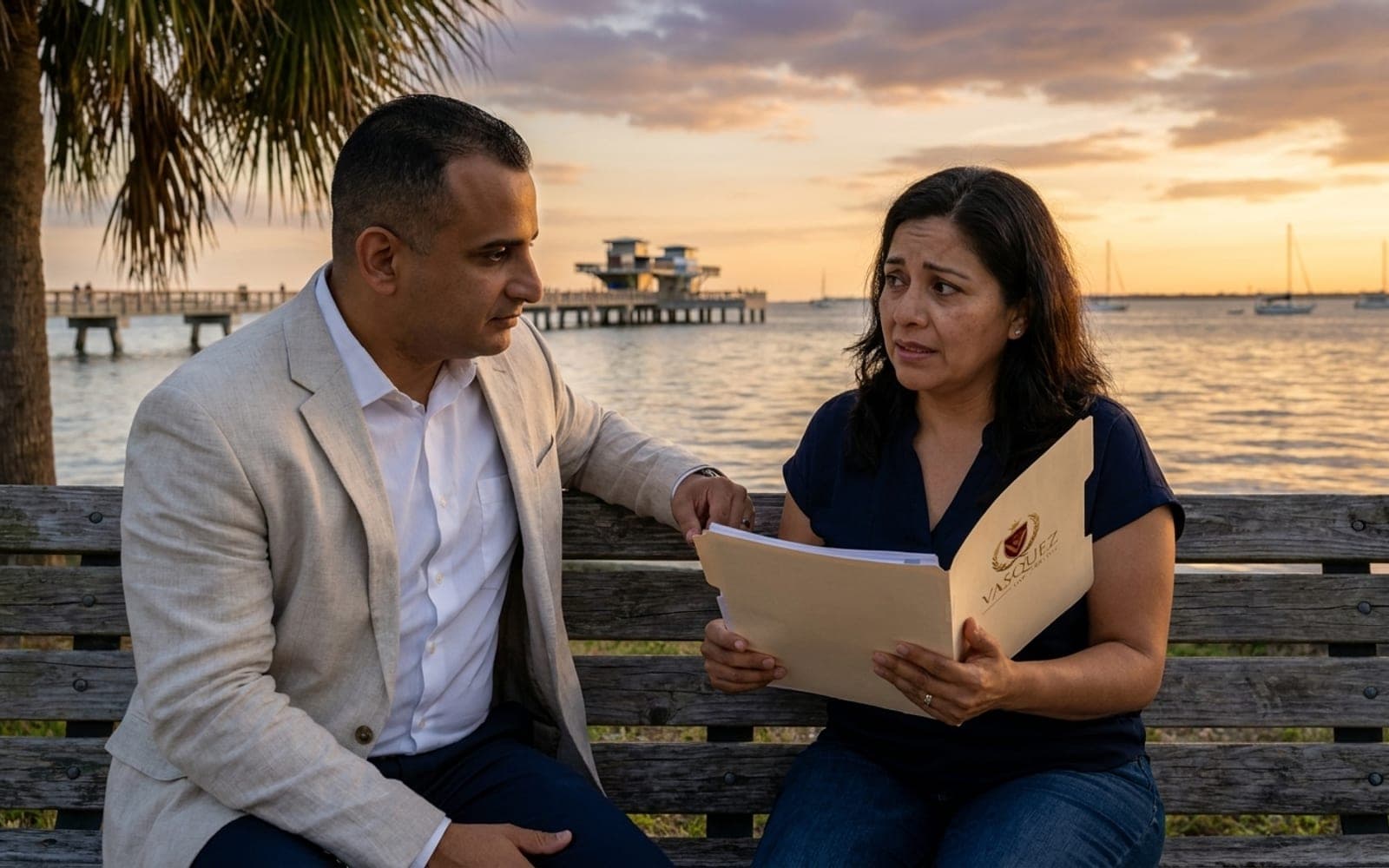
For Fort Myers and Immokalee residents, protection cases tend to be urgent: a work permit about to lapse, fear of returning home, or a court notice in the mail. These areas are connected more often than people expect, since a DACA recipient may also have a pending asylum claim, or a family may face a detained parent while a child's permit expires. Looking at the whole household helps avoid surprises. The guide covers DACA, asylum and deportation defense, with service by video, phone and meetings in Orlando.
- DACA, asylum and removal defense often overlap in one household.
- Topics include DACA renewals, travel, work permits and eligibility questions.
- Asylum, withholding and Convention Against Torture protection are discussed.
- DACA and asylum rules have changed repeatedly, so check the current situation.
Introduction
For people in Fort Myers, Immokalee, and the surrounding communities, protection cases tend to be urgent: a work permit that is about to lapse, a fear of returning to a home country, or a court notice that arrived in the mail. This guide covers DACA, asylum, and deportation defense for Southwest Florida residents and their families, and explains what a DACA attorney in Fort Myers can sort out first. If you want to talk about your own case, call 1-844-YO-PELEO or contact us.
These three areas are connected more often than people expect. A DACA recipient may also have a pending asylum claim, a young adult may learn of a removal case after an arrest, and a family may need to deal with a detained parent while a child's work permit is expiring. Looking at the whole household, instead of one form at a time, helps avoid surprises.
Vasquez Law Firm practices only immigration law. Our one office is in Orlando, and we serve Southwest Florida by video, phone, and in-person meetings in Orlando. This article is general information, not legal advice, and the rules for DACA and asylum have changed repeatedly, so check the current situation before you act.
Immigration Help for Fort Myers Residents
People in Lee and Collier County communities contact us for a mix of reasons. Some have lived here since childhood and want to understand what DACA can and cannot do. Others fled danger and need to know whether asylum is possible and how soon they must apply. Still others have a hearing date, a detained relative, or an old order that nobody has looked at in years.
- DACA renewals and questions about eligibility, travel, and work permits.
- Asylum, withholding of removal, and protection under the Convention Against Torture.
- Notices to Appear, hearings, and defenses in immigration court.
- Detention, bond, and families looking for a relative in custody.
- Family-based options that may lead to a green card.
Our firm has no office in Fort Myers or Immokalee. We say so plainly, and we explain below how the work is done remotely.
DACA Questions We See From Fort Myers Families
DACA is temporary protection from removal, with work authorization, for people who arrived in the United States as children and met specific conditions. It does not create a green card or citizenship. The program has been through court challenges, so the rules about who may submit a request, and which requests USCIS can approve, depend on the status of the litigation when you ask. We confirm the current position before advising anyone.
A DACA lawyer in Fort Myers often begins with a simple list of questions.
- Do you have a current work permit, and when does it expire?
- Have you been arrested or had any contact with immigration officers since your last request?
- Do you have a parent, spouse, or adult child who is a citizen or permanent resident?
- Do you hold any other protection, such as TPS?
The relative question matters a great deal, because a relative's petition can sometimes lead to a green card even when DACA itself cannot. The combination of protections can also change the plan. See our DACA page for an overview.
DACA Renewals and Other Long-Term Options
DACA renewals are filed with Form I-821D, Form I-765, and the I-765 worksheet. USCIS has recommended filing the renewal several months before expiration, within a specific window; filing too early or too late can cause problems. Check the current recommended window on the USCIS website before you send your application.
Renewals are not automatic. If you were arrested since your last approval, traveled outside the country without advance parole, or moved without updating your address, speak with a lawyer before filing. Those facts do not always end eligibility, but they must be handled correctly.
It is also worth asking whether a more stable option exists. For some people, marriage to a citizen, a petition from a parent or child, an employer's offer, or humanitarian protection may open a path to permanent residence. This depends on the manner of entry, the person's background, and other details that only become clear when the full record is reviewed.
Asylum for People Who Fear Returning Home
Asylum is available to people who are in the United States and have suffered persecution or have a well-founded fear of persecution based on race, religion, nationality, political opinion, or membership in a particular social group. A person usually applies on Form I-589. In general, the application must be filed within one year of arriving, unless an exception applies, such as changed conditions or extraordinary circumstances. That deadline is one of the main reasons people contact an asylum lawyer quickly.
A strong asylum case is built on a clear and consistent account, supported by documents, witness statements, and reliable information on country conditions. Gaps and contradictions between what a person said at the border, in a written declaration, and in court are a frequent source of trouble. Preparing the narrative early, in the language the client is most comfortable with, helps avoid those problems.
Related forms of protection, withholding of removal and protection under the Convention Against Torture, have different standards and are sometimes requested together with asylum. Read more on our asylum page.
How the Process Works in Florida for DACA, Asylum, and Removal Cases
Each case has its own path, but most of our work with Southwest Florida clients follows a similar order.
- Confirm what is pending, what has expired, and which notices have arrived.
- Collect identity, entry, and background documents, plus any arrest or court records.
- Decide which application, defense, or motion fits the facts and the current rules.
- Prepare the forms, evidence, and any written statement, and review them with you.
- File with USCIS or the immigration court, and track every deadline and receipt.
- Prepare you for biometrics, an interview, or a hearing, and respond to any request for evidence.
Work Permits, Travel, and Employment With DACA
With DACA, the work permit (EAD) has an expiration date, and that date is the one that matters to your employer. If the permit expires before the renewal is approved, you may not be able to keep working legally until you receive the new document, and your employer may have to reschedule or temporarily suspend you. That is why it is so important to calculate in advance when to file.
Travel is another delicate point. Leaving the United States without advance parole generally ends DACA and can have serious immigration consequences. Advance parole is requested with Form I-131 and has historically been available for travel for humanitarian, educational, or employment purposes, but it does not guarantee reentry, because CBP inspects every traveler at the border. Get advice before you buy a ticket.
If you work in agriculture, construction, tourism, or retail in Southwest Florida, you may also wonder what happens to your job if a problem arises with your permit. Bring your pay stubs and your employer's name to the consultation, so we can explain which documents you can use to show your work authorization while the renewal is resolved.
Document Checklist for DACA, Asylum, and Removal Cases
- Every notice from immigration court, ICE, or USCIS, including the envelope if the date matters.
- Passport, birth certificate, any visa or I-94 record, and any past work permit.
- For asylum: anything that shows what happened, such as threats, police or medical reports, photos, news articles, and membership cards.
- For DACA: past approval notices and proof of continuous presence and residence.
- Any arrest or court records, even if the case was dismissed.
- Copies of previous applications and receipts, even if they were denied.
- Proof of family relationships, especially with U.S. citizens or permanent residents.
If a relative is detained, add the person's full name, date of birth, country of birth, A-number, and the name of the facility.
Timeline and Processing Expectations
Timing differs sharply by case type. A DACA renewal, an asylum application, and a removal case each follow separate schedules, and detained cases tend to move differently from cases for people who are not in custody. USCIS and the immigration courts publish current processing information, and it changes, so we do not predict times here.
What you can control is accuracy and promptness. Keep your address current with the court and with USCIS, track every hearing date, and respond to notices quickly. The table below outlines the main stages.
| Stage | What happens | Who acts |
|---|
| Intake and review | Documents, history, and notices are reviewed | Lawyer, client |
| Filing | DACA request, asylum application, or court motion is submitted | Lawyer, USCIS or court |
| Biometrics or interview | Fingerprints and, for some cases, questions about the application | Applicant, USCIS |
| Master calendar hearing | Judge asks about the charges and the relief requested | Immigration judge, DHS, respondent |
| Individual hearing and decision | Testimony and evidence are presented; a decision follows | Judge, DHS, lawyer |
Deportation Defense for Immokalee and Fort Myers Residents
Deportation, formally called removal, begins when the government files a Notice to Appear with an immigration court. The notice lists the allegations and the charges. The person then appears at a master calendar hearing, where a judge asks whether the allegations are admitted or denied and which relief the person will seek. Later hearings address the evidence. Missing a hearing can lead to an order of removal issued in the person's absence, so keeping a current address on file with the court and tracking every date is essential.
In Immokalee, families looking for a deportation lawyer are often dealing with a detained spouse, a parent with an old order, or a young adult who received a notice after an arrest. A deportation attorney should be asked what the government alleges, whether the person can be released on bond, and which defenses fit the facts. Some people can seek cancellation of removal, adjustment of status, asylum, a waiver, or other relief. Others have a legal argument that the government cannot prove its case. Which of these applies is a case-by-case question.
In the Fort Myers area, the same steps apply. Someone looking for a deportation lawyer will want to know the hearing date, the court location, and whether the person has ever been ordered removed before. An old order can change the strategy entirely, and a motion to reopen may be an option in limited situations. Our deportation defense page gives more detail.
When a Family Member Is Detained
When a family member is detained, speed matters. Searching for deportation attorneys can feel overwhelming, so here is the information we ask for first: the detained person's full name, date of birth, country of birth, and alien registration number (A-number), plus the name of the facility. With that, we can try to learn where the case stands.
Depending on the person's history and the rules in force, an immigration judge may be able to hold a bond hearing. Some people are not eligible for bond at all, and the rules have changed in recent years, so the facts must be reviewed quickly. Letters from family and employers, proof of address, and any court records help show that a person will return to court.
What Families Should Expect From a Removal Defense Lawyer
Some people look for an Immokalee deportation attorney because a friend recommended one. Others want a lawyer who can work in Spanish as well as English. Families sometimes need help for several relatives with separate cases. All of these searches describe the same need: a lawyer who will read the paperwork carefully, explain the charges, and appear with the person in immigration court.
Whichever words you use, ask the lawyer how they will keep you updated and who in the office you can contact with questions. Be cautious about any lawyer who guarantees an outcome. A careful lawyer will explain risks as well as options and will put the scope of the work and the fee in writing.
Records and Evidence That Make a Difference
In almost every protection case, the quality of the paperwork shapes the result. For DACA, that means clear proof of continuous residence and an accurate history of any arrests. For asylum, it means a detailed declaration and documents that support it, such as medical records, police reports, or letters from people who know what happened. For deportation defense, it means official court records, proof of family ties, and evidence of how long a person has lived in the United States.
If documents are in another country, start requesting them early, because obtaining and translating them can take time. If records are lost, a lawyer can often explain how to request replacements while the rest of the case is prepared. Do not alter, backdate, or guess at any document, because inconsistencies are treated seriously in every one of these systems.
Cost Factors and Fee Breakdown
The cost of DACA, asylum, and defense work depends on the type of case and the amount of evidence needed.
| Item | Amount | Notes |
|---|
| Attorney fees for a DACA renewal or review | Varies by case | Depends on history and whether other options are screened |
| USCIS filing and biometric fees | Check USCIS for the current fee | Fee rules change; check the form instructions |
| Asylum application | Check USCIS for the current fee | Fee rules for asylum applications have changed; confirm before filing |
| Immigration court representation | Varies by case | Depends on hearings, evidence, and relief sought |
| Bond | Check the court or agency for current fees | Set by ICE or the immigration judge |
Ask for a written fee agreement that explains which stages are covered and which government fees are paid separately.
Translation of foreign-language records and the collection of evidence from abroad can add time and expense. Raising these items early helps you plan.
Common Mistakes to Avoid
- Letting a DACA work permit expire before asking whether a renewal can still be filed.
- Traveling abroad without checking whether advance parole or any other permission applies.
- Missing the one-year asylum filing deadline without asking about exceptions.
- Telling different versions of an asylum account at the border, in a declaration, and in court.
- Ignoring a hearing notice or failing to update your address with the court.
- Using a notario or a non-lawyer who promises results.
- Waiting until the week of a hearing to look for a lawyer.
When to Call a Lawyer
Call as soon as you receive a Notice to Appear, learn that a relative is detained, or notice that a work permit will expire soon. Call before you file an asylum application if you are unsure of the one-year deadline, and before any trip abroad if you hold DACA. Early advice leaves more options open, including family-based routes that some DACA recipients do not know about.
How We Work With Fort Myers Clients
We do not have an office in Fort Myers or Immokalee. Clients there meet with us on secure video or by phone, and some travel to Orlando for in-person meetings at 1111 E Amelia Street. Consultations are in English and Spanish. When a case needs a court appearance, we explain where the hearing will take place and how the client will be represented, so there are no surprises on the day. To get started, use our contact page.
About Vasquez Law Firm
Vasquez Law Firm practices immigration law only. Our only office is at 1111 E Amelia Street in Orlando. We serve clients across Florida by phone and secure video, and we meet in person at the Orlando office. William J. Vásquez is the founding attorney, and consultations are available in English and Spanish. To talk about your situation, call 1-844-YO-PELEO or contact us.
Sources and References
Related services: DACA legal services, immigration lawyers in Florida
Other ways people search for this
People look for this help under different names. Related searches include deportation defense attorney venice fl; asylum lawyer fort myers; deportation attorney immokalee; deportation attorneys immokalee; deportation lawyer immokalee; deportation lawyers immokalee; immokalee deportation attorneys; immokalee deportation lawyer; immokalee deportation lawyers.
This article is general information, not legal advice. Every case is different; speak with an immigration lawyer about your situation.