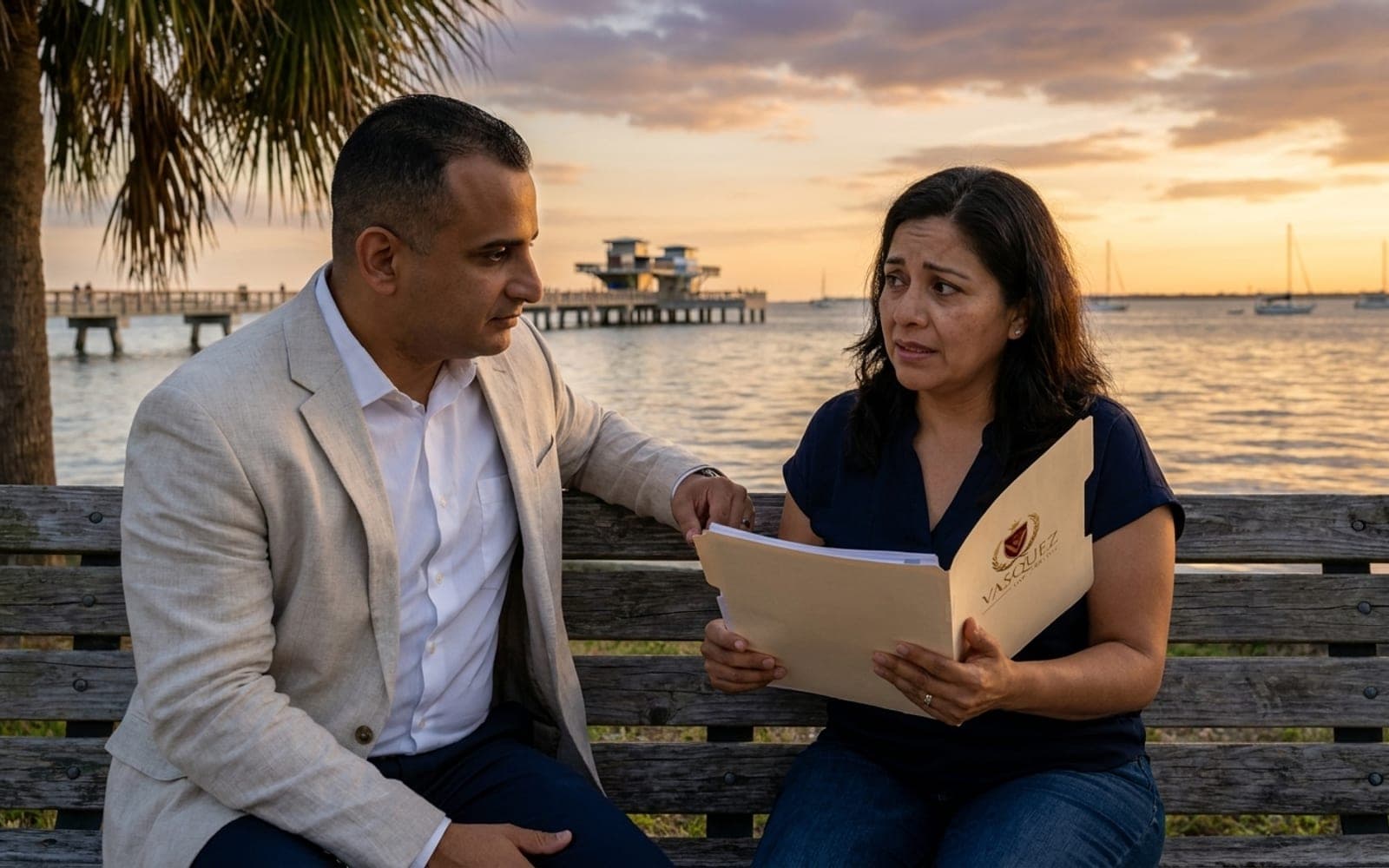
For permanent residents in Miami-Dade, Broward and Palm Beach counties, naturalization is often the final step. The general rule is five years as a green card holder, or three if married to and living with a U.S. citizen, plus continuous residence, physical presence, good moral character and the English and civics tests unless an exception applies. A citizenship attorney focuses on risk points such as long trips, unpaid taxes or child support, arrests and how the green card was obtained. The guide also covers removal proceedings, with service by video and in Orlando.
- Naturalization generally requires five years as a resident, or three if married to a citizen.
- Risk points include long trips, taxes, child support, arrests and green card history.
- Interviews happen at the USCIS field office assigned to your address.
- The guide also explains what to do if removal proceedings begin.
Introduction
Immigration questions in Miami-Dade, Broward, and Palm Beach counties range from "Am I ready to become a citizen?" to "What happens at my first hearing in immigration court?" This guide follows the path many people take, from temporary status to permanent residence to citizenship, and covers what to do if the government starts removal proceedings along the way. To discuss your situation, call 1-844-YO-PELEO or contact us.
Vasquez Law Firm is an immigration-only firm with one office in Orlando. We have no office in South Florida, and we represent South Florida clients by video, by phone, and in person at the Orlando office, in English and Spanish.
This article is general information, not legal advice. Programs such as TPS and parole change frequently, and each case depends on its own facts, so a lawyer should confirm the current rules before you file.
Immigration Help for South Florida Residents
For a permanent resident, naturalization is often the final step. The general rule is five years as a green card holder, or three years for someone married to and living with a U.S. citizen, plus continuous residence, physical presence, good moral character, and passing the English and civics tests unless an exception applies.
A citizenship attorney usually focuses on the risk points: long trips abroad, unpaid taxes or child support, any arrest, and whether the green card was properly obtained in the first place. These questions matter because the N-400 must not open a problem that could put the green card itself at risk. When the history is clean, the case is usually about careful preparation for the interview and test. Read more on our naturalization page.
Naturalization interviews take place at the USCIS field office assigned to your address, and your notice will say where to go. We prepare you before you attend, and we confirm the office and the date from your notice at the start of the case.
How We Work With South Florida Clients
People in South Florida often ask whether they must hire a lawyer close to home. Immigration law is federal, and applications, court cases, and consular matters are decided by federal agencies. Much of the work consists of reviewing documents, preparing evidence, and explaining options, which can be done by phone and video. Our only office is at 1111 E Amelia Street in Orlando.
- You contact us and describe your situation briefly, by phone or through the contact page.
- We schedule a consultation by video or phone, or in Orlando if you prefer to come in, in English or Spanish.
- You share your documents, such as notices, passport, green card, and court records, using a secure method we explain.
- We review the history, explain the options and risks, and discuss what the next deadline is.
- If you decide to hire the firm, we sign a written agreement and begin preparing filings or court documents.
- We keep you informed through filing, any interview or hearing, and the decision.
When a hearing is scheduled, we represent clients in immigration courts around the state, in person or by video as the court allows. Your hearing notice controls where you must appear.
TPS, Parole, and Work Permits
Many South Florida residents hold temporary status. Temporary Protected Status is tied to designations for specific countries, and the government announces extensions, re-registration windows, and terminations in the Federal Register. A lawyer watches those announcements, files re-registration on time, and looks for any longer-term option.
Parole is another form of temporary permission. A lawyer may be asked to request parole for a relative abroad on Form I-131, or to advise someone already here on parole about next steps, such as the Cuban Adjustment Act for eligible Cuban nationals. Parole programs created by policy have changed frequently, so current availability must be checked case by case.
Work authorization usually follows from another filing: a pending asylum case after the waiting period set by regulation, TPS, a pending green card application, or certain parole categories. A lawyer identifies the correct category on Form I-765, because filing under the wrong category leads to denial. See our work permit page for more.
The Cuban Adjustment Act and parole entrants
South Florida has a large Cuban community, and parole questions come up often. Under the Cuban Adjustment Act, a Cuban national who was inspected and admitted or paroled into the United States and has been physically present for at least one year may apply for permanent residence. The exact entry documents matter, because the type of parole and the I-94 record can affect eligibility, and programs created by policy have been paused, changed, or ended at different times. Check current availability before any filing.
Planning the path from temporary status to citizenship
Many clients are not sure which step comes next. A person with TPS may have a family petition available, a person on parole may qualify to adjust, and a person with a pending case may need a work permit while waiting. Each step has requirements, and an action taken in one case can affect another, so a lawyer should look at the whole picture before you file. A well-planned sequence can lead from temporary protection to a green card and eventually to naturalization, while a rushed filing can close a door.
Document Checklist for a South Florida Immigration Consultation
- Your Notice to Appear or any other notices from USCIS or the court.
- Passport, I-94 record, green card, or work permit.
- Court dispositions for any arrest, even if the case was dismissed.
- For TPS or parole: your approval notices, parole document, and entry record.
- For asylum: evidence of threats or harm, membership records, and witness contacts.
- For waivers: records of the qualifying relative's medical and financial situation.
- Marriage, birth, and divorce certificates for the family members involved.
- Tax returns and proof of employment or support.
Bring what you have. A lawyer can help you identify what is missing, and an organized folder saves time at the first meeting.
Timeline and Processing Expectations
Processing times vary by application, by office, and over time. USCIS and the immigration courts publish current information, so check those sources rather than relying on a number from another person. Court schedules in particular depend on the docket, and hearings can be reset.
Because TPS and parole rules can change with little notice, pay special attention to announced dates and deadlines. The table below shows the general stages for a typical matter.
| Stage | What happens | Who acts |
|---|
| Case review | Status, history, and goals are reviewed | You and your lawyer |
| Filing | Application, waiver, or court filing is submitted | You and your lawyer |
| Biometrics or interview | USCIS collects information or interviews you | USCIS and you |
| Hearing, if in court | Master calendar and individual hearings | The judge, the government attorney, and your lawyer |
| Decision | Approval, denial, or relief granted or denied | USCIS or the judge |
Political Asylum
Asylum protects people who were persecuted, or fear persecution, on account of race, religion, nationality, political opinion, or a particular social group. South Florida has long received people fleeing political repression, and claims based on political opinion are common here. A lawyer helps document membership in opposition groups, arrests, threats, and country conditions, and prepares the applicant to testify consistently. Form I-589 generally must be filed within one year of the last arrival, with limited exceptions.
Waivers for Inadmissibility
A green card case can be blocked by a past problem: unlawful presence, a misrepresentation to an immigration officer, or certain criminal history. Waivers exist for some of these. The provisional unlawful presence waiver (Form I-601A) and the general waiver (Form I-601) usually require proof that a qualifying U.S. citizen or permanent resident relative would suffer extreme hardship if the applicant were refused.
A lawyer collects the evidence that shows that hardship in concrete terms: medical records, financial records, psychological evaluations, and country information. A lawyer should also explain which grounds cannot be waived at all, so no one files a waiver that the law does not allow. Our waivers page describes the main types.
Deportation Defense: What Happens in Immigration Court
Removal proceedings start with a Notice to Appear filed with the immigration court. The first hearing is usually a short master calendar hearing, where the judge confirms identity, the respondent responds to the charges, and the parties discuss what relief will be requested. Later, at an individual hearing, the judge hears testimony and evidence and decides the case.
A deportation defense lawyer reviews whether the charges are correct and what relief may exist. Common forms of relief include the following.
- Cancellation of removal for certain permanent residents and for certain long-term residents with qualifying relatives.
- Adjustment of status before the judge, when a visa is available.
- Asylum, withholding of removal, and protection under the Convention Against Torture.
- Voluntary departure, which can avoid some consequences of a removal order.
The lawyer also prepares witnesses, files evidence on the court's deadlines, and preserves issues for appeal. Missing a hearing can lead to a removal order in absentia, so attending every hearing is essential. For more, see our deportation defense page.
Prosecutorial Discretion
The Department of Homeland Security has discretion over whom to prioritize for removal. In some cases, its attorneys agree to dismiss proceedings, to administrative closure, or to other steps. A lawyer prepares a written request showing family ties, length of residence, community contributions, and humanitarian factors. Policies on discretion change between administrations, and a favorable answer is never assured, but it can be worth making when the facts support it.
Choosing a Removal Defense Lawyer
Someone looking for a deportation hearing attorney is often under real time pressure. When comparing firms, ask who will appear in court with me, how we will prepare my testimony, what relief do you see and what are the risks, and will you also handle an appeal if needed. Be cautious about any lawyer who guarantees an outcome.
Make sure the lawyer explains where the office is. Ours is in Orlando, and we represent clients in immigration courts across Florida, in person or by video as the court allows.
If you are detained or a family member is, the first questions are usually where the person is held, whether a bond hearing is possible, and when the next hearing is. Have the full name, date of birth, country of birth, and A-number ready, and bring any notices. Release options depend on the person's history and the current legal rules, which have been changing, so a lawyer should check them for the specific case.
Cost Factors and Fee Breakdown
The cost of a matter depends on the type of case and the stage, as the table below shows.
| Item | Amount | Notes |
|---|
| N-400 naturalization fee | Check USCIS for the current fee | USCIS lists any reduced-fee options on its website |
| TPS, parole, and work permit fees | Check USCIS for the current fee | Fee rules differ by form and category |
| Waiver application fees | Check USCIS for the current fee | Depends on whether the waiver is I-601 or I-601A |
| Immigration court fees | Check the court or agency for current fees | Depends on the application filed in court |
| Attorney fees | Varies by case | Depends on the stage and complexity |
Fees and form editions change, so check the current schedule before you pay. An incorrect fee or an old form can cause a rejection and delay.
Ask any lawyer to explain in writing what the engagement covers and which costs are separate, and keep copies of every payment record.
Keep your records organized throughout. Save every receipt notice, approval, and court paper in one place, and keep a list of the dates of each application and each trip abroad. These records help your lawyer answer agency questions and help you later when you apply for a green card or for citizenship. Update your address with USCIS and with the immigration court whenever you move, because notices are sent to the address on file and missing one can have serious consequences.
Common Mistakes to Avoid
- Missing a TPS re-registration window or a court hearing.
- Filing a work permit application under the wrong category.
- Filing for citizenship without reviewing trips abroad, arrests, and taxes.
- Applying for a waiver for a ground that cannot be waived, or without evidence of hardship.
- Assuming a parole program is still open without checking current availability.
- Waiting until a hearing date is near before getting legal advice.
When to Call a Lawyer
Call a lawyer when you receive a Notice to Appear, when a TPS or parole deadline is approaching, before you file for citizenship with any arrest or long absence in your history, and when a green card case is blocked by a past problem. To schedule a consultation in English or Spanish, call 1-844-YO-PELEO.
About Vasquez Law Firm
Vasquez Law Firm practices immigration law only. Our only office is at 1111 E Amelia Street in Orlando, and we serve clients across Florida, including Miami-Dade, Broward, and Palm Beach counties, by phone and secure video, with in-person meetings in Orlando. William J. Vásquez is the founding attorney, and consultations are available in English and Spanish. Call 1-844-YO-PELEO or contact us.
Sources and References
Related services: naturalization and citizenship lawyers, immigration lawyers in Florida
Other ways people search for this
People look for this help under different names. Related searches include deportation defense attorney venice florida; immigration lawyer for naturalization south florida; tps immigration attorney south florida; humanitarian parole lawyer south florida; political asylum attorney south florida; work permit attorney south florida; immigration waiver attorney south florida; hardship waiver lawyer south florida; south florida deportation defense lawyer; deportation defense attorney south florida; deportation defense lawyer south florida; deportation defense south florida attorney; deportation hearing attorney south florida; prosecutorial discretion immigration lawyer south florida; removal defense law firm south florida.
This article is general information, not legal advice. Every case is different; speak with an immigration lawyer about your situation.