Understanding the Child Status Protection Act in Florida
The Child Status Protection Act helps families in Florida prevent their children from aging out of immigration eligibility. Learn how it works and what steps to take if you're in Miami or elsewhere in Florida.

- CSPA prevents children from losing their immigration status when they turn 21.
- Applies to various visa categories, including family and employment-based visas.
- Critical for families in Miami and throughout Florida.
Introduction
Imagine your family has waited years for an immigration visa, only to face the devastating possibility that your child may no longer qualify because they have turned 21. This is a common scenario for many families navigating the U.S. immigration system. Thankfully, the Child Status Protection Act (CSPA) offers relief by freezing the age of children under certain conditions. This article explores how the CSPA operates in Florida, particularly for families in Miami.
We’ll cover the essentials of the CSPA, including who qualifies, how it affects visa applications, and what specific steps you need to take. If you're dealing with the complexities of immigration law in Florida, call Florida Immigration Lawyers at 1-844-967-3536 for a free consultation.
What is the Child Status Protection Act?
The Child Status Protection Act (CSPA) was enacted to address the issue of children "aging out" of eligibility for certain immigration benefits upon turning 21. Under normal circumstances, once a child turns 21, they are no longer considered a "child" for immigration purposes, which can disqualify them from receiving a visa as a derivative beneficiary.
The CSPA calculates the child's age based on the approval date of the visa petition, minus the time the petition was pending. This calculation helps many children remain eligible despite prolonged visa processing times.
This law is particularly relevant in Florida, where families from diverse backgrounds await visa approvals that can take years. In Miami, where immigration cases are numerous, understanding CSPA is crucial for families.
Step-by-Step Guide to CSPA Eligibility
- Determine if the child is a derivative beneficiary under a valid visa petition, such as family-based or employment-based categories.
- Calculate the child's age according to the CSPA formula: age at the time of visa availability minus the time the petition was pending.
- Ensure the child seeks to acquire lawful permanent residence within one year of visa availability.
- Submit necessary documentation to USCIS or the relevant immigration authority to apply the CSPA.
Following these steps can help protect your child's immigration status and keep your family together in Florida.
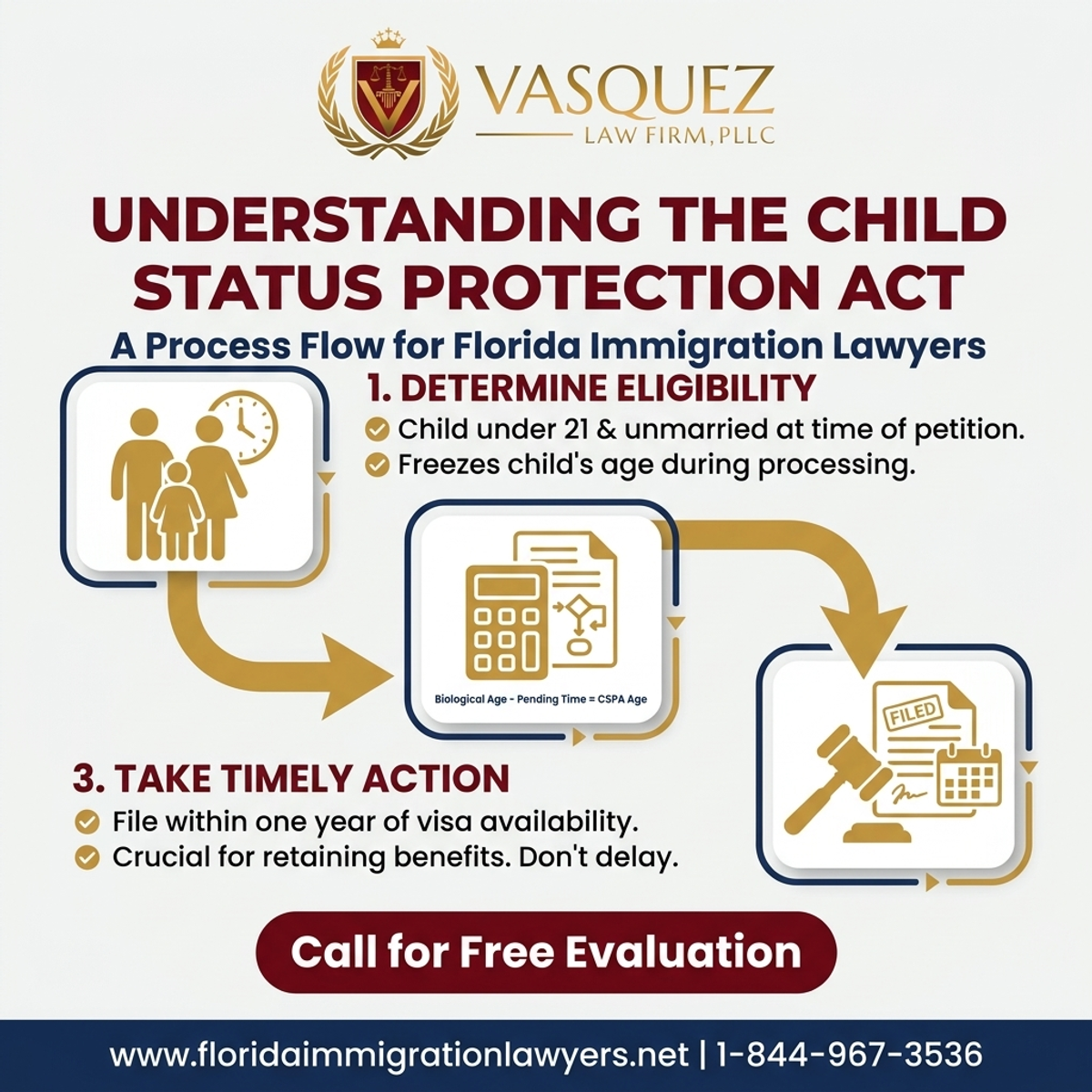
Step-by-Step Process — Understanding the Child Status Protection Act in Florida
Document Checklist for CSPA Applications
- Birth certificate or proof of child’s age
- Copy of the approved visa petition
- Proof of visa availability notice
- Evidence of seeking permanent residence within one year
- Any additional documentation required by USCIS
Having these documents ready can expedite the process and ensure your child's eligibility is preserved under the CSPA.
Timeline and Processing Expectations
The processing times for applying the CSPA protections can vary. Generally, the critical timeline involves calculating the child’s age at the time of visa availability and ensuring they apply for permanent residency within one year. In Miami, processing might be influenced by the volume of cases at local USCIS offices.
Typically, once all documents are submitted correctly, the processing can take several months. It's essential to stay informed about your case status and communicate regularly with immigration authorities.
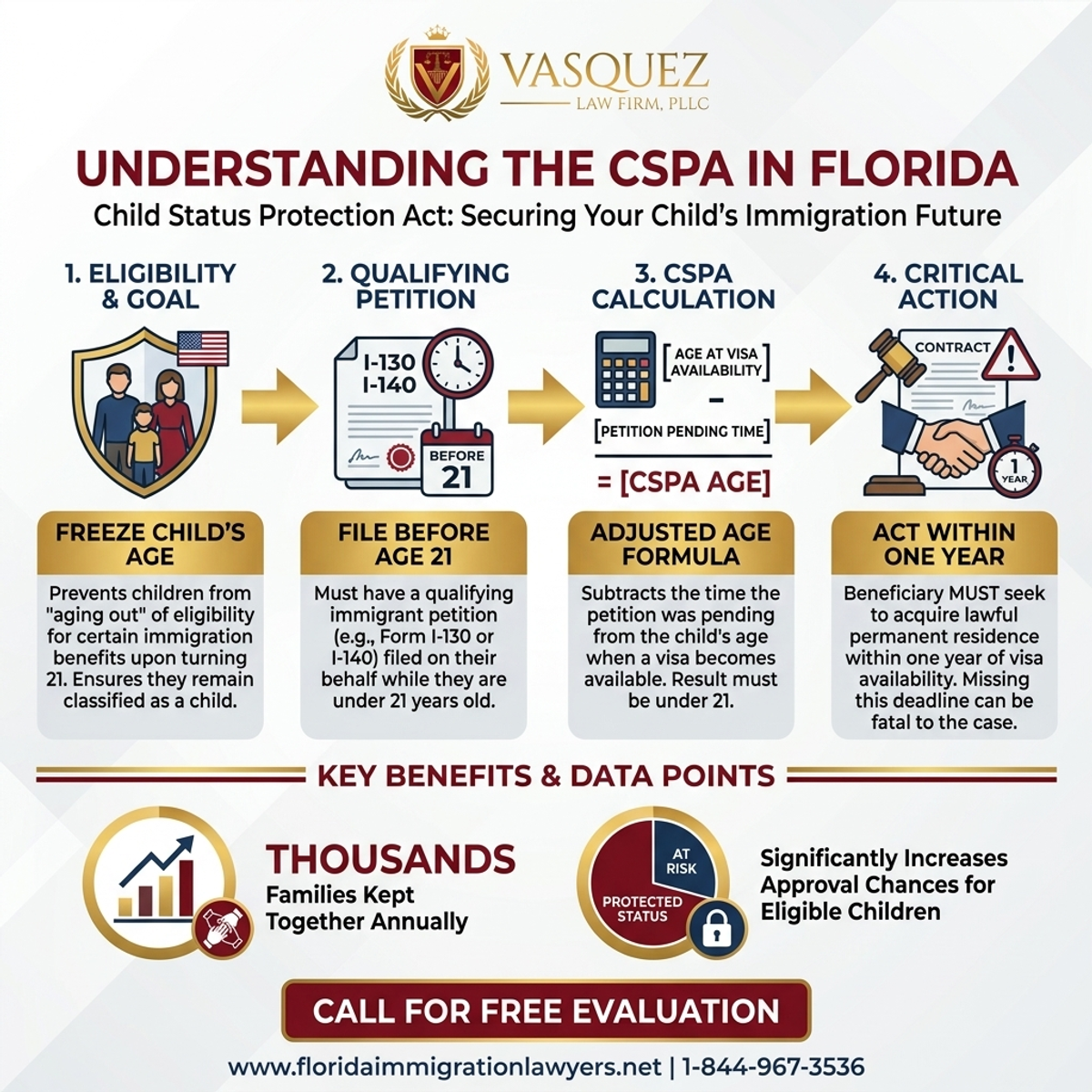
Key Statistics — Understanding the Child Status Protection Act in Florida
Cost Factors and Fee Breakdown
While the CSPA itself does not incur additional fees, there are costs associated with filing for permanent residency and other related applications. These can include form submission fees and potential legal costs. Consulting with Florida Immigration Lawyers can provide clarity on what to expect financially and help manage these expenses efficiently.
Do not navigate this process alone. Contact Florida Immigration Lawyers today.
Common Mistakes to Avoid
- Misunderstanding eligibility criteria, such as the age calculation under CSPA.
- Failing to apply for permanent residency within one year of visa availability.
- Not maintaining updated documentation, leading to delays.
- Incorrectly interpreting visa bulletin dates.
- Overlooking the need for timely responses to USCIS requests.
- Assuming the CSPA automatically applies without submitting proper forms.
- Ignoring changes in immigration law that may affect CSPA protections.
When to Call a Lawyer
If you're facing challenges with your child's immigration status under the CSPA, it's crucial to seek legal advice. Complexities in calculating age, understanding eligibility, and ensuring timely filing can be daunting. Florida Immigration Lawyers specialize in these issues and can provide the guidance you need to navigate successfully.
About Florida Immigration Lawyers
Florida Immigration Lawyers is a leading immigration law firm dedicated to serving clients throughout Florida. Our experienced attorneys are committed to helping families navigate the complexities of immigration law, including the Child Status Protection Act. We offer free consultations and are available 24/7 to assist you in Miami and other Florida locations. Contact us at 1-844-967-3536 or visit our website at https://www.floridaimmigrationlawyers.net.
Sources and References
- U.S. Citizenship and Immigration Services (USCIS)
- Executive Office for Immigration Review (EOIR)
- 8 U.S.C. Chapter 12 - Immigration and Nationality Act
Related services: immigration practice areas, family immigration services, citizenship and naturalization, deportation defense.
This article provides general legal information and is not intended as legal advice. Every case is unique, and outcomes depend on specific facts and circumstances. Contact an attorney for advice about your particular situation.
For personalized assistance and to ensure your family's immigration needs are met, call Florida Immigration Lawyers at 1-844-967-3536. Se Habla Espanol - Estamos aqui para ayudarle.
If you need legal assistance, learn more about how our immigration attorneys can help, or call us at 1-844-967-3536 for a free consultation.
Do Not Navigate This Process Alone
Our experienced immigration attorneys are ready to fight for you. Get a free, confidential consultation today.
Se Habla Español
Frequently Asked Questions
Florida Immigration Lawyers
Immigration Attorney | Founder, Vasquez Law Firm
U.S. Air Force veteran and immigration attorney with thousands of cases resolved. J.D., NCCU School of Law. AILA member. Admitted to the 4th, 5th, and 11th Circuit Courts.
Available 24/7 - Free Evaluations
Related Legal Services
Our Florida immigration attorneys can help you with immigration practice areas, free immigration consultation and experienced immigration attorneys. Call today at 1-844-967-3536 for a free consultation.
Related Links
Related Topics
Free Legal Consultation
Discuss your case with our experienced attorneys. We're available 24/7.
Se Habla Español - Estamos aquí para ayudarle.
Related Articles
Dual Citizenship Guide for Florida Residents | VLF Florida
Explore the essentials of obtaining dual citizenship in Florida. Learn the benefits, challenges, and steps involved. Contact Florida Immigration Lawyers for expert guidance.
Navigating the Stokes Interview in Florida | VLF Florida
Facing a Stokes interview in Florida? Learn how to navigate this critical immigration step. Florida Immigration Lawyers can help. Call 1-844-967-3536 today.
Immigration Lawyer Miami Services in Florida | VLF Florida
Navigating immigration in Miami, Florida requires expert legal guidance. Learn about the services offered by immigration lawyers and how they can assist you in achieving your immigration goals. Call 1-844-967-3536 for a free consultation.
I-601A Provisional Waiver in Florida | VLF Florida
Learn about the I-601A provisional waiver process in Florida and how it can help you avoid separation from your family. Contact us at 1-844-967-3536.