Navigating the Stokes Interview in Florida
Facing a Stokes interview in Florida? Learn how to navigate this critical immigration step. Florida Immigration Lawyers can help. Call 1-844-YO-PELEO today.
Navigating the Stokes Interview in Florida | VLF Florida
The Stokes interview represents a pivotal and often profoundly stressful juncture for couples pursuing a marriage-based green card in the United States. When U.S. Citizenship and Immigration Services (USCIS) harbors suspicions regarding the authenticity of a marriage, this intensive, separate interview becomes a mandatory hurdle. In Florida, much like in other states, successfully navigating this rigorous process demands meticulous preparation, a deep understanding of the procedural intricacies, and often, the strategic guidance of experienced legal counsel. This comprehensive guide from VLF Florida is designed to demystify the Stokes interview, equipping you and your spouse with the knowledge and confidence to approach it effectively and safeguard your immigration journey. Understanding the nuances of immigration law is paramount, especially when facing such scrutiny.
What is a Stokes Interview?
A Stokes interview, colloquially known as a "marriage fraud interview" or "separate interview," is a specialized secondary interview initiated by USCIS when they suspect a marriage may have been entered into primarily for the purpose of circumventing immigration laws and obtaining benefits, rather than for genuine marital reasons. Unlike the standard joint interview where both spouses are questioned together, a Stokes interview mandates that each spouse be interviewed separately, often simultaneously, in different rooms. The core objective is to meticulously compare their individual responses to a highly detailed and often intrusive set of questions concerning their relationship, daily life, and shared history. The presence of significant inconsistencies between spouses' testimonies can serve as a critical indicator of a potentially fraudulent marriage.
This interview is not merely a formality; it is a serious investigatory tool with profound implications for the outcome of an I-130 Petition for Alien Relative and any subsequent adjustment of status application. USCIS officers are extensively trained to identify subtle cues and discrepancies that might suggest deception. The legal precedent for these interviews stems from the agency's mandate to prevent immigration fraud, and the burden of proof rests heavily on the couple to demonstrate the bona fide nature of their union. While daunting, understanding its purpose and structure is the first step toward effective preparation. Engaging with knowledgeable attorneys can provide invaluable insight into the legal framework surrounding these interviews.
Why Does USCIS Conduct Stokes Interviews?
USCIS maintains a vigilant stance against marriage fraud, which constitutes a federal crime carrying severe penalties, including fines, imprisonment, and deportation. Stokes interviews are triggered when specific "red flags" emerge during the review of a marriage-based petition or during an initial joint interview. These red flags are not definitive proof of fraud but rather indicators that warrant further investigation. Common factors that can raise suspicion include:
- Significant Disparity in Age: A substantial age gap between spouses may, in some cases, prompt closer examination.
- Cultural or Language Barriers: While not inherently problematic, significant communication challenges can sometimes be perceived as a barrier to a genuine relationship, especially if not adequately explained.
- Previous Immigration Petitions: If either spouse has a history of multiple marriage-based petitions, particularly if previous marriages ended shortly after obtaining immigration benefits, this will almost certainly trigger scrutiny.
- Inconsistencies in Applications: Discrepancies found between initial application forms, supporting documents, or prior interview statements can be a major red flag.
- Separate Residences: If the couple lists different addresses or there's evidence they are not cohabiting, even if legitimate reasons exist, it will raise suspicion.
- Short Courtship Period: A very brief period between meeting and marriage, especially if followed by a quick petition filing, can be questioned.
- Lack of Joint Documentation: Insufficient evidence of commingled finances, shared assets, or joint responsibilities (e.g., joint bank accounts, leases, utility bills, insurance policies, tax returns) is a primary red flag.
- Tips or Informants: USCIS may receive anonymous tips or information from third parties suggesting a marriage is fraudulent.
- Criminal History or Previous Immigration Violations: A history of legal issues, particularly those related to immigration, can increase scrutiny.
It is crucial to understand that even genuinely married couples can exhibit one or more of these factors. The presence of red flags does not automatically mean a marriage is fraudulent, but it does necessitate an even higher level of preparation and clear articulation of the bona fide nature of the relationship. USCIS officers are trained to look beyond superficial details and delve into the depth and authenticity of the marital bond. They often employ psychological tactics and detailed questioning to uncover inconsistencies, making the interview a high-pressure situation.
Preparing for Your Stokes Interview
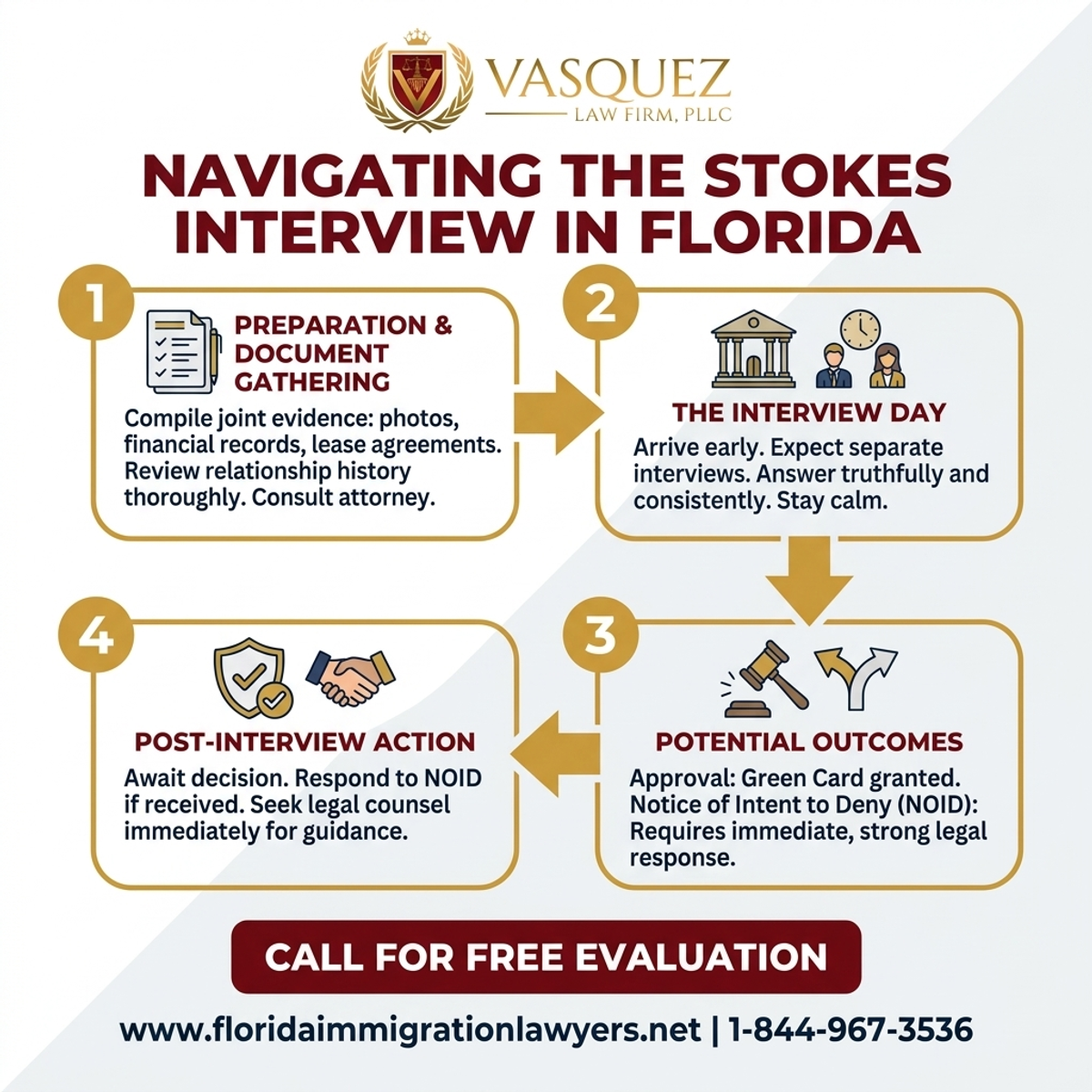
Preparation for a Stokes interview is not merely advisable; it is absolutely paramount. Approach this interview with the same gravity and meticulousness you would a court appearance. Here’s a detailed breakdown of how to prepare effectively:
- Comprehensive Documentation: This is your primary line of defense. Gather every conceivable piece of evidence proving your genuine relationship. This includes, but is not limited to: joint bank statements, utility bills in both names, lease agreements or property deeds, health and life insurance policies, joint tax returns, vehicle titles, credit card statements, and any other financial documents demonstrating commingled lives. Beyond financials, collect a robust collection of photographs together (with dates and people identified), travel itineraries, plane tickets, hotel reservations, social media posts, letters, emails, and text messages exchanged between you. Affidavits from friends, family, and employers who can attest to the legitimacy of your marriage are also highly valuable. Organize these documents meticulously, making them easy to present.
- Thorough Review of Your Petition: Before the interview, meticulously review your I-130 petition and all supporting documents you submitted to USCIS. Ensure you remember every detail, date, and answer provided, as interview questions will frequently refer back to these submissions. Any discrepancy, however minor, between your current testimony and past documentation can be flagged as suspicious.
- Practice Questions and Discussion: Engage in open and honest discussions with your spouse about potential questions. The goal is not to memorize answers verbatim, which can sound rehearsed and artificial, but rather to ensure you both have a consistent and shared understanding of your life together. Focus on the details of your daily routine (who wakes up first, who cooks, what you eat for breakfast), how you met, your courtship, the proposal, your wedding day, interactions with family and friends, shared hobbies, and future plans. Discuss even intimate details in a general sense to ensure alignment.
- Honesty and Consistency are Key: The most fundamental rule during a Stokes interview is to always tell the truth. Even minor inconsistencies, if perceived as intentional deception, can lead to severe consequences. If you don't remember a specific detail, it's better to honestly state that than to fabricate an answer. Officers are trained to detect hesitation and evasiveness.
- Psychological Preparation: Understand that the interview is designed to be stressful. Officers may ask the same question multiple times, rephrase questions, or even try to make you feel uncomfortable. Remain calm, composed, and confident. Take a deep breath before answering, and ask for clarification if you don't understand a question.
- Seek Legal Counsel: An experienced immigration attorney is an indispensable asset. They can provide comprehensive guidance through the preparation process, explain potential pitfalls, help you organize your evidence, and even attend the interview with you. Their presence can offer crucial support, ensure fair treatment, and provide advocacy if procedural issues arise. Don't hesitate to reach out to VLF Florida for a consultation.
Step-by-Step Process — Navigating the Stokes Interview in Florida | VLF Florida
What Happens During the Interview?
On the day of the interview, both spouses will typically report to the USCIS office. After initial check-in procedures and verification of identities, you will almost certainly be separated and interviewed in different rooms. This separation is a deliberate tactic to prevent spouses from influencing each other's answers or fabricating details on the spot. The questions posed will be extraordinarily detailed, highly personal, and designed to cover nearly every conceivable aspect of your shared life. Officers are not merely looking for factual agreement but also for the natural flow and emotional consistency that characterizes a genuine relationship.
Expect questions ranging from the mundane to the intimate:
- How you met and your courtship: Exact dates, locations, who initiated contact, what attracted you to each other.
- Details of your wedding day: Who attended, what you wore, specific events, the officiant.
- Your daily routines: Who wakes up first, who makes coffee, who cooks, what you eat for breakfast/dinner, shared chores.
- Your home environment: Number of rooms, specific furniture, wall decorations, what's in the refrigerator, where you keep your toiletries.
- Family members and friends: Names, relationships, when you last saw them, what you did together.
- Intimate details of your relationship: This can include questions about your sex life, birth control, and personal habits.
- Financial arrangements: Who pays which bills, how you manage joint accounts, financial goals.
- Future plans: Discussions about children, career aspirations, travel plans, retirement.
USCIS officers are extensively trained in interview techniques to detect deception. They will carefully compare your answers, looking for any significant discrepancies, however small. Even seemingly minor inconsistencies can be noted and could lead to further scrutiny, a Request for Evidence (RFE), a Notice of Intent to Deny (NOID), or even an outright denial of your petition. Maintaining composure and providing truthful, consistent answers is paramount.
After the Stokes Interview
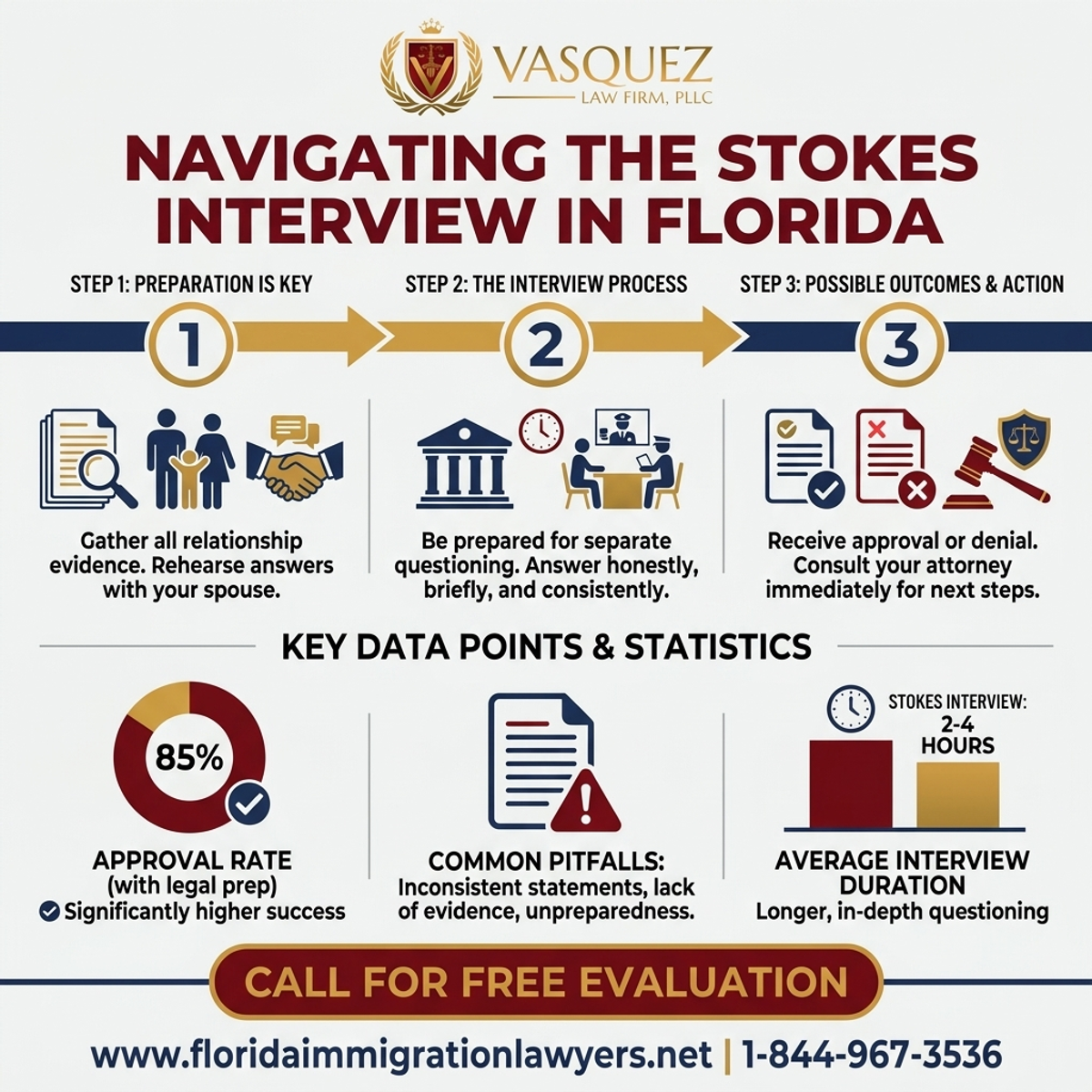
The immediate outcome of a Stokes interview is rarely a definitive approval or denial on the spot. USCIS often needs time to review the interview transcripts, compare answers, and analyze all submitted evidence. The process can be lengthy and nerve-wracking. Here are the potential outcomes:
- Approval of the I-130 Petition: If USCIS is satisfied with the legitimacy of your marriage and finds no significant inconsistencies or evidence of fraud, your I-130 petition may be approved. This is the desired outcome, allowing the foreign spouse to proceed with adjustment of status or consular processing.
- Request for Evidence (RFE): If the officer requires more documentation or clarification on specific points, an RFE will be issued. This provides you with an opportunity to submit additional evidence to bolster your case. Responding comprehensively and promptly to an RFE is critical.
- Schedule a Follow-up Interview: In some cases, USCIS may decide that another interview is necessary, either a joint one or another separate Stokes interview, if they still have lingering doubts or need to clarify further points.
- Notice of Intent to Deny (NOID): If USCIS believes there are strong reasons to deny your petition, they will issue a NOID. This is a formal letter outlining their reasons for potential denial and provides you with a final opportunity to submit evidence and arguments to refute their findings before a final decision is made. A NOID is a serious matter and requires a robust, well-reasoned response, often best prepared with an attorney.
- Denial of the Petition: If USCIS concludes that the marriage is not bona fide, the petition will be denied. A denial based on marriage fraud has severe consequences. Not only will the foreign spouse not receive the green card, but a finding of marriage fraud can lead to a permanent bar from future immigration benefits. Furthermore, it can initiate deportation proceedings for the foreign spouse, making legal representation absolutely critical at this stage.
Key Statistics — Navigating the Stokes Interview in Florida | VLF Florida
The period following the interview can be uncertain, but having an attorney can help you understand the next steps and prepare for any eventuality.
Common Questions Asked During a Stokes Interview
While the specific questions vary greatly depending on the couple and the officer, they generally fall into several categories designed to probe the depth and authenticity of your shared life. Officers are looking for consistency, detail, and a natural narrative that reflects a genuine relationship. Here's an expanded look at the types of detailed inquiries you might face:
- How You Met & Courtship: "Describe the first time you met in detail." "What did your spouse wear on your first date?" "Who proposed, and exactly where and when did it happen?" "What were your initial impressions of each other?" "How long did you date before getting married?"
- Wedding & Honeymoon: "Describe your wedding day from start to finish." "Who attended the wedding?" "What did you do for your honeymoon, and where did you go?" "What gifts did you receive?"
- Daily Life & Routines: "What time do you both wake up?" "Who makes breakfast/dinner?" "What do you typically eat for dinner on a weekday?" "Who does the laundry/dishes?" "What chores do you share or divide?" "What do you do together on weekends?" "What TV shows do you watch together?"
- Home Environment: "How many windows are in your bedroom?" "What color are the walls in your living room?" "Where do you keep the toothbrushes?" "What side of the bed does your spouse sleep on?" "Describe the furniture in your bedroom." "What's in your refrigerator right now?"
- Family & Friends: "When was the last time you saw your spouse's parents/siblings?" "What are their names?" "Do you have any pets? What are their names?" "Who are your spouse's best friends?" "Have you met each other's extended families?"
- Personal Habits & Preferences: "What is your spouse's favorite food/color/movie/music genre?" "Does your spouse have any unique habits or quirks?" "What are your spouse's work hours?" "Does your spouse snore?"
- Financials: "Who pays which bills?" "Do you have joint bank accounts?" "How do you manage your finances?" "Do you have a joint credit card?"
- Intimate Details: "When was the last time you were intimate?" "Do you use birth control?" "How often are you intimate?" (These questions are highly personal and can be uncomfortable, but officers are authorized to ask them.)
The key is to answer truthfully, consistently, and with sufficient detail, demonstrating a shared life experience that only a genuine couple would possess.
Seeking Legal Assistance for Your Stokes Interview
Given the high stakes, the intricate legal landscape, and the intensely personal nature of a Stokes interview, securing the services of an experienced immigration attorney is not just beneficial—it is often invaluable. An attorney from VLF Florida can provide comprehensive support and strategic guidance at every stage:
- Comprehensive Preparation Sessions: Your attorney will conduct mock interviews, walking you through potential questions and scenarios, helping you anticipate the types of inquiries you might face, and ensuring you and your spouse are aligned on the narrative of your relationship without memorizing answers.
- Evidence Organization and Presentation: An attorney will assist you in gathering, organizing, and presenting compelling evidence of your bona fide marriage, ensuring that no critical document is overlooked and that your case is as strong as possible.
- Rights and Advocacy: Your attorney will advise you on your rights during the interview, ensuring fair treatment and intervening if an officer oversteps their bounds or if procedural issues arise. While attorneys cannot answer questions for you, their presence can provide a calming influence and ensure the process is conducted lawfully.
- Responding to Post-Interview Actions: Should USCIS issue an RFE or NOID, your attorney will be instrumental in formulating a robust and persuasive response, gathering additional evidence, and drafting legal arguments to counter any allegations of fraud.
- Deportation Defense: In the unfortunate event that your petition is denied based on a finding of marriage fraud, which can lead to deportation proceedings, an attorney is absolutely critical. They can represent you in immigration court, explore all available defenses, and fight to protect your right to remain in the U.S.
Don't face this challenging and potentially life-altering process alone. Protecting your future and your family requires legal representation. Contact VLF Florida today for a free consultation to discuss your specific situation and learn how we can help.
The Broader Implications of Marriage-Based Immigration and Avoiding Fraud Allegations
Beyond the immediate challenge of the Stokes interview, understanding the broader implications of marriage-based immigration is crucial for any couple. A genuine marriage is a lifelong commitment, and the immigration process is designed to reflect that. The initial conditional green card (valid for two years) requires a subsequent petition (Form I-751, Petition to Remove Conditions on Residence) to prove the marriage is still bona fide and ongoing. This continuous scrutiny underscores the importance of maintaining a genuine relationship and consistently documenting your shared life.
To proactively avoid future fraud allegations, couples should:
- Continuously Document Your Life: Keep records of joint finances, shared property, children's birth certificates, joint insurance, travel together, and social interactions. This ongoing collection of evidence will be vital for the I-751 petition and any future interactions with USCIS.
- Live as a Married Couple: This seems obvious, but it means truly integrating your lives – living together, sharing responsibilities, making joint decisions, and presenting yourselves as a married couple to the community.
- Understand the Long-Term Commitment: The immigration benefit is tied to the marriage. If the marriage genuinely ends before the conditions are removed, there are specific legal avenues to pursue (e.g., a waiver for the I-751), but these are complex and require legal guidance.
- Be Transparent and Honest: Any attempt to deceive USCIS, even on minor points, can have catastrophic long-term consequences, including permanent bars from immigration benefits.
While a Stokes interview focuses on marriage-based petitions, it's crucial to remember the diverse paths to legal residency. For those fleeing persecution, humanitarian avenues like asylum offer a distinct path, separate from family-based petitions. However, the overarching principle across all immigration categories is the need for honesty and robust evidence. If your marriage is genuine, you have nothing to fear but the process itself. With proper preparation and legal support, you can navigate these complexities successfully and secure your future in the United States. Our immigration lawyers are here to guide you through all aspects of this journey.
The Stokes interview is undoubtedly a formidable challenge for any couple seeking a marriage-based green card. However, with thorough preparation, a clear understanding of the process, and the steadfast support of an experienced immigration attorney, you can confidently demonstrate the authenticity of your marriage to USCIS. At VLF Florida,
Sources and References
- U.S. Citizenship and Immigration Services (USCIS)
- Executive Office for Immigration Review (EOIR)
- U.S. Department of State - Bureau of Consular Affairs
- Immigration and Nationality Act (INA), 8 U.S.C. Chapter 12
Do Not Navigate This Process Alone
Our experienced immigration attorneys are ready to fight for you. Get a free, confidential case review today.
Se Habla Español
Or leave your details and we’ll call you:
Free Evaluation in 24 Hours
Or talk to us right now
AI voice assistant — available 24/7
FreeFrequently Asked Questions

William J. Vásquez
Founding Attorney · Vasquez Law Firm
U.S. Air Force veteran and immigration attorney with years of hands-on U.S. immigration experience. J.D., NCCU School of Law. AILA member. Admitted to the 4th, 5th, and 11th Circuit Courts.
Available 24/7 - Free Evaluations
Reviewed for legal accuracy by William J. Vásquez
Licensed in North Carolina; U.S. immigration is federal practice.
Related Legal Services
Our Florida immigration attorneys can help you with family immigration services, immigration lawyer cost in Florida and experienced immigration attorneys. Call today at 1-844-YO-PELEO for a free case review.
Related Links
Related Topics
Free Legal Case Review
Discuss your case with our experienced attorneys. We're available 24/7.
Se Habla Español - Estamos aquí para ayudarle.
Related Articles
Dual Citizenship Lawyer in Florida: What You Need to Know
For Florida residents, the concept of dual citizenship, or holding two passports, offers a compelling blend of opportunities and challenges. While the U.S. generally permits dual nationality, the path to achieving this status requires a meticulous understanding of both U.S. immigration laws and the citizenship policies of your country of origin. This guide explores the definition of dual citizenship, the detailed step-by-step process for U.S. naturalization, and the significant benefits and potential pitfalls involved. We cover essential documentation, typical timelines, and cost considerations for 2026, providing crucial insights for anyone in Orlando, Miami, or across Florida considering this important legal step. Learn about common mistakes to avoid and understand when to seek professional legal counsel to navigate this complex process successfully. Florida Immigration Lawyers is here to provide expert, bilingual support for your dual citizenship journey.
Immigration Lawyer Orlando Free Consultation in Florida
For individuals and families in Orlando, Florida, navigating the complexities of U.S. immigration law requires expert guidance. An immigration lawyer in Orlando offers crucial support for everything from visa applications and green card processes to naturalization and deportation defense. This comprehensive guide details what a free consultation covers, providing a step-by-step overview of immigration pathways, essential document checklists, and expected timelines in 2026. We also highlight common mistakes to avoid, discuss the critical role of legal counsel in deportation and asylum cases, and explain why choosing a local Orlando immigration attorney is beneficial. Florida Immigration Lawyers is dedicated to serving the diverse community of Orlando with compassionate, effective legal solutions, ensuring you receive personalized advice and robust representation for a successful immigration journey.
EAD Advance Parole Combo Card in Florida 2026
For individuals with a pending Form I-485, Application to Register Permanent Residence or Adjust Status, the EAD Advance Parole Combo Card is an essential document. This single card combines the authorization to work legally in the U.S. (Employment Authorization Document - EAD) with permission to travel internationally and re-enter without abandoning your green card application (Advance Parole). This guide from Florida Immigration Lawyers provides a comprehensive overview for applicants in Florida in 2026, covering eligibility, the step-by-step application process, required documents, expected processing times, and associated costs. We also highlight common mistakes to avoid and when to seek legal counsel to ensure a smooth and successful immigration journey. Understanding this vital card is key to maintaining stability while awaiting your permanent residency approval.
Credible Fear Interview Lawyer in Florida
Facing a credible fear interview in Florida can be daunting. Understand the process, prepare effectively, and know when to seek legal help. Florida Immigration Lawyers are here to assist you with expert guidance throughout your asylum process.