"ina § 208(a)(2)" One-Year Filing Deadline: Florida Asylum
Discover the importance of the "ina § 208(a)(2)" one-year filing deadline for asylum seekers in Florida. Learn about the steps, documents needed, and common mistakes to avoid in your asylum application process.

- The deadline is generally one year from your U.S. arrival.
- Exceptions include changed circumstances and extraordinary situations.
- Consulting with a lawyer can help navigate these complexities.
Introduction
Imagine arriving in the United States with hopes of finding safety and freedom, only to discover a critical deadline could jeopardize your future. The "ina § 208(a)(2)" one-year filing deadline for asylum seekers is a pivotal factor in the success of your asylum application. Understanding this deadline, along with the potential exceptions, is vital to ensuring your case is considered. This blog will guide you through the intricacies of filing for asylum in Florida, focusing on Tallahassee and surrounding areas, and provide essential information to help you navigate this complex process. Call Florida Immigration Lawyers at 1-844-967-3536 for a free consultation.
The asylum process, while offering a lifeline to many, is fraught with complex legal requirements and strict timelines. For those seeking refuge in Florida, particularly around Tallahassee, adherence to the one-year filing deadline is paramount. Failure to meet this crucial requirement without a valid exception can lead to the outright denial of an asylum claim, regardless of the merits of the persecution feared. Our goal is to empower you with the knowledge needed to approach this process confidently and strategically.
Navigating U.S. immigration law can be overwhelming, especially when dealing with the emotional weight of seeking asylum. This guide aims to demystify the one-year deadline, clarify the types of exceptions available, and outline the step-by-step process for a successful application. We will also highlight the common pitfalls to avoid and emphasize why securing experienced legal counsel from Florida Immigration Lawyers can make all the difference in your journey toward safety and a new beginning.
What is the "ina § 208(a)(2)" One-Year Filing Deadline?
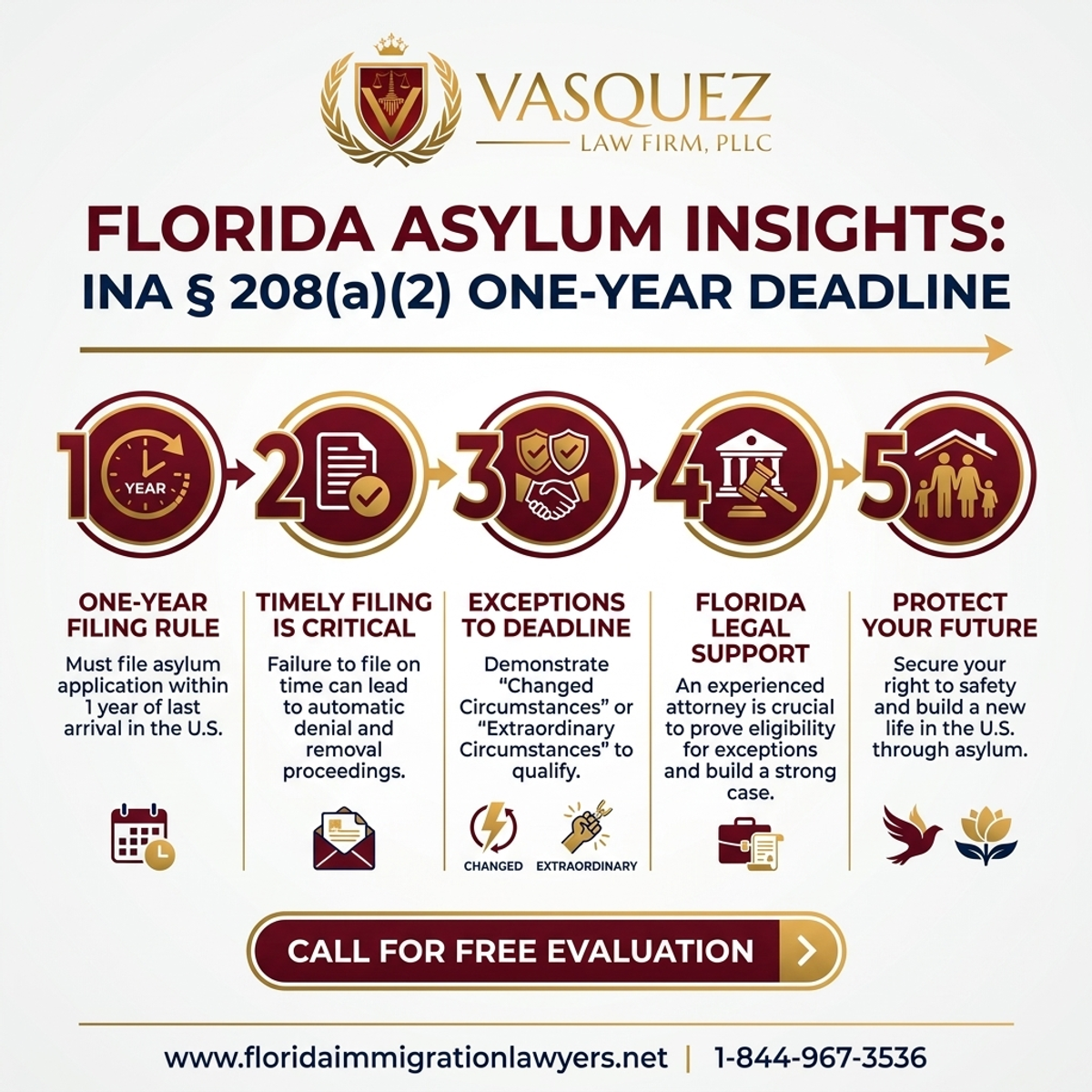
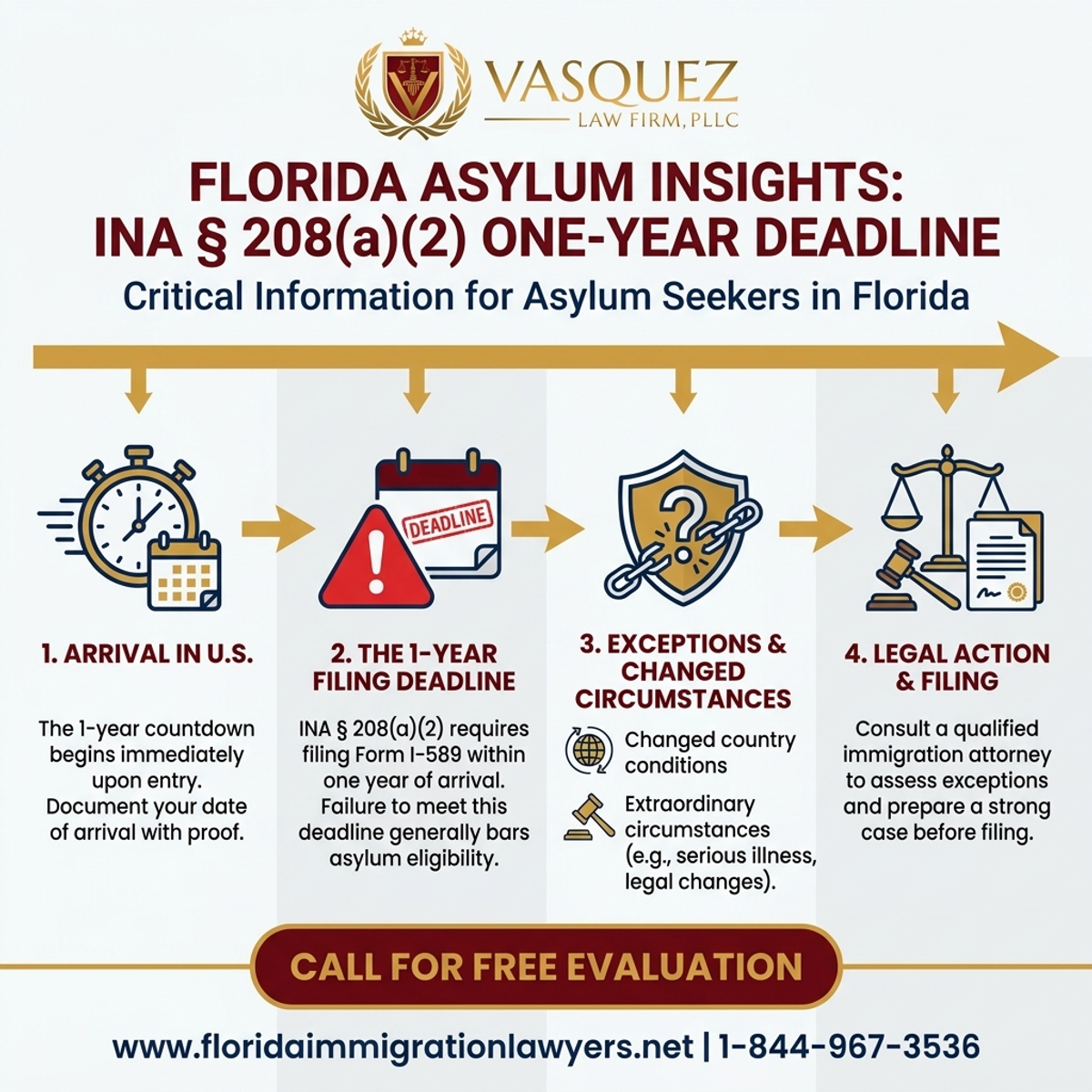
The "ina § 208(a)(2)" one-year filing deadline mandates that asylum seekers file their applications within one year of arriving in the United States. This requirement is a critical aspect of the asylum process and missing it can lead to denial of your application unless certain exceptions apply.
As of 2026, the deadline remains firm, but exceptions such as changed circumstances or extraordinary circumstances may allow for late filing. Understanding these exceptions is crucial to ensuring your application is accepted.
The primary purpose of this one-year deadline, established by Congress, is to promote efficiency in the asylum system, deter fraudulent claims, and ensure that individuals with a genuine fear of persecution seek protection promptly. It places the burden on the applicant to demonstrate not only a credible fear of persecution but also diligence in pursuing their claim within the statutory timeframe. USCIS officers and immigration judges strictly enforce this rule, making it one of the most common reasons for asylum application denials.
"Changed circumstances" refer to developments that materially affect your eligibility for asylum or your ability to file within the one-year period. Examples include new laws or government policies in your home country that create a new basis for persecution, a significant deterioration of human rights conditions in your country, or the emergence of new and compelling evidence that was not available previously. For instance, if you arrived in the U.S. and your country later experienced a coup, leading to widespread persecution of your ethnic group, this could be a changed circumstance. Similarly, if a family member back home is persecuted for reasons directly related to your claim, this new information could qualify.
"Extraordinary circumstances" are events beyond your control that prevented you from filing on time. These can include severe illness or mental impairment, legal disability (such as being a minor without a legal guardian), ineffective assistance of counsel (where a previous lawyer failed to file on time), the death or serious illness of a close family member, or even a natural disaster that prevented access to legal services. It is important to demonstrate a direct causal link between these circumstances and your inability to file within the one-year window. For example, if you were hospitalized for several months immediately after arrival, preventing you from seeking legal counsel, this could be considered an extraordinary circumstance. In all cases, you must file your application within a reasonable period after the changed or extraordinary circumstances ceased to exist.
Steps to File an Asylum Application (Form I-589)
Filing for asylum involves several steps, beginning with the completion of Form I-589. Here’s a step-by-step guide:
- Gather Necessary Documents: Collect all identification documents, proof of entry, and any evidence supporting your asylum claim. Ensure all non-English documents are accurately translated and certified.
- Complete Form I-589: Fill out the Application for Asylum and for Withholding of Removal accurately. Be thorough and consistent with all details, as inconsistencies can raise red flags during your interview.
- Submit the Application: Send your completed form and documents to the appropriate USCIS service center. Always keep a copy for your records and send via certified mail with a return receipt to track delivery.
- Attend Biometrics Appointment: You will be required to attend a biometrics appointment for fingerprinting. This is a crucial step for background and security checks; missing it without a valid reason can lead to delays or even denial.
- Prepare for the Interview: Gather additional evidence and prepare for your asylum interview. This includes reviewing your application, practicing your testimony, and anticipating potential questions from the asylum officer.
- Attend Your Interview: Attend the interview at the scheduled date and location. Be honest, consistent, and respectful. If you require an interpreter, ensure they are fluent in both English and your native language.
Step-by-Step Process — "ina § 208(a)(2)" One-Year Filing Deadline: Florida Asylum Insights
Each step is crucial, and errors can delay the process. For guidance, contact our asylum practice. Remember that the journey doesn't end with the interview; you may need to attend further hearings or provide additional documentation. Maintaining open communication with your legal team, such as Florida Immigration Lawyers, is vital throughout this extended process to ensure you are always prepared for the next phase.
Documents Required for Asylum Application
- Completed Form I-589
- Passport and other identification documents
- Proof of U.S. entry date
- Personal statement detailing persecution
- Supporting evidence (e.g., medical records, police reports)
Having a complete document checklist ensures a smooth application process. Missing documents can lead to delays or rejections.
Beyond the basic list, it's crucial to understand the depth and breadth of documentation required. Your personal statement should be a detailed, coherent narrative of your experiences, explaining why you fear persecution in your home country. It should be consistent with any oral testimony you provide and should clearly articulate the nexus between your protected ground (race, religion, nationality, political opinion, or membership in a particular social group) and the persecution you suffered or fear.
Supporting evidence is the backbone of your asylum claim. This can include affidavits from witnesses, expert opinions on country conditions, human rights reports from reputable organizations (like Amnesty International or the U.S. Department of State), news articles, photos, videos, or even social media posts that corroborate your story. Medical records detailing injuries from persecution, police reports of incidents, or court documents related to your family's experiences can be incredibly powerful. The more comprehensive and credible your evidence, the stronger your case will be. Florida Immigration Lawyers can help you identify and gather the most impactful evidence for your specific situation.
Ensure all documents not in English are accompanied by a certified English translation. A certified translation must include a statement from the translator affirming their competence in both languages and the accuracy of the translation, along with their signature and date. Incorrect or uncertified translations can cause significant delays or even lead to the rejection of your application. Always keep original documents and submit copies, unless USCIS specifically requests originals.
| Stage | Typical Timeframe | Notes |
|---|---|---|
| Initial Filing | 1-3 months | Dependent on applicant preparedness |
| Biometrics Appointment | 1-2 months post-filing | Appointment scheduling varies |
| Asylum Interview | 1-2 years | Backlog may affect wait times |
| Decision | Varies | Dependent on individual case complexity |
Cost Factors and Fee Breakdown
While there is no fee for filing Form I-589, other costs may arise, such as legal fees or costs for obtaining supporting documents.
| Item | Typical Fee | Notes |
|---|---|---|
| Legal Assistance | Varies | Consider consulting with a professional |
| Document Translation | Varies | Necessary for non-English documents |
Key Statistics — "ina § 208(a)(2)" One-Year Filing Deadline: Florida Asylum Insights
Consulting with a lawyer can help manage these costs effectively. Do not navigate this process alone. Contact Florida Immigration Lawyers today.
Legal assistance fees can vary significantly based on the complexity of your case, the attorney's experience, and the services provided. Some attorneys charge a flat fee for the entire asylum application process, while others may charge hourly. It's important to discuss fee structures upfront and understand what services are included, such as preparing the application, gathering evidence, preparing for the interview, and representation at the interview. While it represents an investment, professional legal guidance often increases the likelihood of a successful outcome and can prevent costly mistakes.
Beyond legal and translation fees, applicants should budget for other potential expenses. These might include travel costs to USCIS offices for biometrics appointments or interviews, fees for obtaining official documents from your home country, or costs associated with medical evaluations if your claim involves physical or psychological trauma. In some cases, expert witness fees for country condition reports or psychological evaluations may also arise. Florida Immigration Lawyers offers free consultations to help you understand potential costs and plan accordingly, ensuring transparency throughout your case.
Common Mistakes to Avoid
- Missing the Filing Deadline: Late applications without valid exceptions are generally denied. This is the most critical error and can be avoided by seeking legal counsel immediately upon arrival to assess your eligibility and timeline.
- Incomplete Applications: Missing information can delay or deny your application. Always double-check Form I-589 for completeness and accuracy, using a checklist to ensure all required fields are filled and supporting documents are attached.
- Lack of Supporting Evidence: Failing to provide sufficient evidence can weaken your claim. Gather all available documentation, including personal statements, country condition reports, and medical records, to corroborate your story.
- Ignoring Changed Circumstances: Not updating your application with new information can harm your case. If your situation or country conditions change, inform USCIS promptly and provide updated evidence to strengthen your claim.
- Poor Interview Preparation: Being unprepared can negatively impact your interview outcome. Practice articulating your story clearly and consistently, and be ready to answer detailed questions about your persecution fear.
- Incorrect Contact Details: Ensure all contact information is accurate to receive all communications. Missing notices for appointments or requests for evidence can lead to delays or even denial of your application.
- Failure to Seek Legal Help: Navigating the asylum process without legal assistance can be risky. An experienced immigration attorney can provide invaluable guidance, ensure compliance with complex laws, and represent your best interests.
When to Call a Lawyer
Consider contacting a lawyer if you are approaching the one-year deadline or if you face complex circumstances like changed conditions in your home country. Legal guidance is crucial if your case involves sensitive information or if you experience difficulties during the application process. Florida Immigration Lawyers specialize in such cases and offer free consultations to help you understand your options.
You should absolutely call a lawyer if you have any prior immigration history, such as previous visa applications or interactions with immigration enforcement, as these can significantly impact your asylum claim. Similarly, if you have any criminal record, no matter how minor, it is imperative to seek legal counsel, as certain convictions can bar you from asylum eligibility. A lawyer can assess these complexities and determine the best strategy for your case.
Furthermore, if you are struggling with language barriers, psychological trauma, or simply feel overwhelmed by the sheer volume of paperwork and legal jargon, a lawyer can provide essential support. They can help you articulate your story effectively, ensure all forms are correctly filed, and act as your advocate throughout the entire process, including preparing you for and representing you at your asylum interview. Don't wait until it's too late; proactive legal assistance from Florida Immigration Lawyers can be the key to a successful outcome. Call us at 1-844-967-3536 for immediate assistance.
About Florida Immigration Lawyers
Florida Immigration Lawyers is a leading firm dedicated to assisting individuals with their immigration needs across Florida. Our team offers comprehensive services, including asylum applications, deportation defense, and family immigration support. We are available 24/7 and provide free consultations. Call us at 1-844-967-3536 or visit our website. Se Habla Español.
Sources and References
- U.S. Citizenship and Immigration Services (USCIS)
- Executive Office for Immigration Review (EOIR)
- 8 U.S.C. Chapter 12 - Immigration and Nationality Act
- U.S. Department of State
Related services: asylum application process, refugee status and resettlement.
This article provides general legal information and is not intended as legal advice. Every case is unique, and outcomes depend on specific facts and circumstances. Contact an attorney for advice about your particular situation.
For personalized assistance with your asylum case, call Florida Immigration Lawyers at 1-844-967-3536 for a free consultation. Se Habla Español - Estamos aquí para ayudarle.
Do Not Navigate This Process Alone
Our experienced immigration attorneys are ready to fight for you. Get a free, confidential consultation today.
Se Habla Español
Or leave your details and we’ll call you:
Free Evaluation in 24 Hours
Or talk to us right now

AI voice assistant — available 24/7
FreeFrequently Asked Questions

William J. Vásquez
Founding Attorney · Vasquez Law Firm
U.S. Air Force veteran and immigration attorney with years of hands-on U.S. immigration experience. J.D., NCCU School of Law. AILA member. Admitted to the 4th, 5th, and 11th Circuit Courts.
Available 24/7 - Free Evaluations
Reviewed for legal accuracy by William J. Vásquez
Licensed in North Carolina; U.S. immigration is federal practice.
Related Legal Services
Our Florida immigration attorneys can help you with family immigration services, immigration practice areas and free immigration consultation. Call today at 1-844-967-3536 for a free consultation.
Related Links
Related Topics
Free Legal Consultation
Discuss your case with our experienced attorneys. We're available 24/7.
Se Habla Español - Estamos aquí para ayudarle.
Related Articles
Dual Citizenship Lawyer: Navigating Delays in Florida
Facing citizenship delays in Florida can be challenging, but understanding the process and knowing your options is key. Learn how a dual citizenship lawyer can assist you in navigating N-400 processing and USCIS backlogs in Hialeah.
DV-2027 Registration Period: Your Green Card Lottery Guide
The DV-2027 Diversity Visa (DV) lottery offers a unique pathway to permanent residency for individuals from countries with historically low immigration rates to the U.S. Expected to open in Fall 2025, the registration period requires strict adherence to eligibility criteria, including country of birth and specific education or work experience. This guide from Florida Immigration Lawyers covers the step-by-step application process, essential documents, critical timelines, and associated costs. We highlight common mistakes to avoid and explain when legal counsel is indispensable, especially for residents in Florida. Understanding the nuances of the green card lottery is vital for a successful application. Contact us for expert guidance on your DV-2027 journey.
Blake Doughty: T Visa Eligibility for Florida Trafficking
For victims of human trafficking in Florida, like Blake Doughty, the T visa offers a critical pathway to safety and legal status. This comprehensive guide details the eligibility requirements, including demonstrating severe forms of trafficking, physical presence in the U.S. due to trafficking, and cooperation with law enforcement. Learn about the multi-step application process, the essential documents needed, and the typical timelines and costs involved in 2026. We also highlight common mistakes to avoid and when it's crucial to seek expert legal assistance. Florida Immigration Lawyers provides compassionate and dedicated support for T visa applicants across the state, ensuring victims receive the protection and resources they deserve. Contact us for a free consultation to understand your options and secure your future.
USCIS Oath Ceremony Schedule 2026 in Florida
Navigating the USCIS oath ceremony schedule for 2026 in Florida is crucial for new citizens. This guide provides insights into planning, processing times, and what to expect in Orlando. Call Florida Immigration Lawyers at 1-844-967-3536 for a free consultation.