Dual Citizenship Guide for Florida Residents | VLF Florida
Explore the essentials of obtaining dual citizenship in Florida. Learn the benefits, challenges, and steps involved. Contact Florida Immigration Lawyers for expert guidance.

Florida, a melting pot of cultures and nationalities, is home to many residents who either hold or aspire to hold dual citizenship. Dual citizenship, or multiple nationality, is a legal status in which a person is a citizen of two or more countries simultaneously. This status is recognized by the United States, meaning that a U.S. citizen can also be a citizen of another country without losing their U.S. citizenship. For Florida residents with international ties, understanding the nuances of this status is crucial.
Navigating the complexities of international law and immigration policies can be challenging. Whether you were born a dual citizen, are seeking to naturalize in the U.S. while retaining your original nationality, or are a U.S. citizen looking to acquire citizenship in another country, it's essential to understand the legal framework. This guide aims to demystify dual citizenship for Florida residents, outlining the pathways, benefits, challenges, and the critical role an experienced immigration attorney plays in this process.
What is Dual Citizenship?
Dual citizenship simply means that an individual is recognized as a citizen by two different countries. This status can arise in several ways: by birth, through naturalization, or by marriage. The United States generally permits its citizens to hold citizenship in another country, and it does not require individuals to renounce their foreign citizenship when they become U.S. citizens. However, it's important to note that while the U.S. permits dual nationality, not all countries do. Some nations may require you to renounce your previous citizenship upon acquiring theirs.
Historically, many countries, including the U.S., viewed dual nationality with suspicion, fearing divided loyalties. However, in recent decades, the stance has softened globally, reflecting the realities of an increasingly interconnected world. The U.S. Supreme Court, in cases like Afroyim v. Rusk (1967) and Vance v. Terrazas (1980), affirmed that a U.S. citizen cannot lose their citizenship involuntarily. This means that merely acquiring foreign citizenship does not automatically result in the loss of U.S. citizenship, unless there is a clear intent to renounce it. For Florida residents with ties to countries that also permit dual nationality, this opens up a world of possibilities, allowing them to maintain deep connections to their heritage while fully participating in American society.
Eligibility Requirements for Dual Citizenship in Florida
While dual citizenship itself isn't a separate application process, it's a status that arises from acquiring citizenship in two different nations. For Florida residents, the most common path to becoming a dual citizen (if not already one by birth) involves becoming a U.S. citizen through naturalization while retaining citizenship from their country of origin.
Naturalization Process for Florida Residents
The path to U.S. citizenship through naturalization is a rigorous, multi-step process governed by federal law, applicable uniformly across all states, including Florida. To be eligible, applicants must generally:
- Be at least 18 years old.
- Be a lawful permanent resident (Green Card holder) for at least five years (or three years if married to a U.S. citizen).
- Have resided continuously in the U.S. for at least five years (or three years if married to a U.S. citizen) immediately preceding the filing of the application.
- Have been physically present in the U.S. for at least half of that period.
- Demonstrate good moral character.
- Be able to read, write, and speak basic English.
- Have a basic understanding of U.S. history and government (civics).
- Be willing to take an Oath of Allegiance to the United States.
The naturalization process involves submitting Form N-400, Application for Naturalization, undergoing a biometrics appointment, attending an interview with a USCIS officer, and finally, participating in an Oath of Allegiance ceremony. Throughout this process, it's crucial to ensure all information is accurate and consistent. Any discrepancies or issues can significantly delay or even jeopardize your application. An experienced immigration attorney can provide invaluable assistance, helping you prepare your application, gather necessary documentation, and prepare for your interview, ensuring you meet all requirements.
Dual Citizenship by Birth or Parentage
Many individuals are dual citizens from birth without even realizing it. This can occur in several ways:
- Jus Soli (Right of Soil): A person born in the United States is a U.S. citizen, regardless of the citizenship of their parents, with very limited exceptions. If these parents are citizens of another country that also grants citizenship based on parentage, the child may automatically be a dual citizen.
- Jus Sanguinis (Right of Blood): A person born outside the United States to at least one U.S. citizen parent may acquire U.S. citizenship at birth, provided certain conditions are met (e.g., the U.S. citizen parent resided in the U.S. for a specified period). If the country of birth or the other parent's country of citizenship also grants citizenship based on birth in their territory or parentage, dual citizenship arises.
Understanding whether you or your children qualify for dual citizenship by birthright can be complex, often requiring an analysis of the laws of multiple countries. Consulting with a legal professional specializing in immigration law can help clarify your status and ensure proper documentation.
Navigating the Complexities: Rights, Responsibilities, and Potential Pitfalls
While dual citizenship offers numerous advantages, it also comes with a unique set of rights, responsibilities, and potential complexities that Florida residents should be aware of. Understanding these aspects is key to a smooth experience as a citizen of two nations.
Rights and Privileges
As a dual citizen, you enjoy the full rights and privileges of citizenship in both countries. This typically includes the right to:
- Live and work indefinitely in both countries.
- Vote and participate in the political process of both nations (if allowed by local law).
- Hold passports from both countries, facilitating easier travel.
- Own property, inherit, and conduct business in both countries without needing special visas or permits.
- Receive consular protection from both governments when traveling abroad (though generally not when in the other country of your citizenship).
Responsibilities and Obligations
Along with rights come responsibilities. Dual citizens are typically subject to the laws and obligations of both countries. This can include:
- Tax Obligations: U.S. citizens, regardless of where they live, are generally subject to U.S. income tax on their worldwide income. This means dual citizens may need to file tax returns in both countries, though tax treaties and foreign tax credits often prevent double taxation. The Foreign Account Tax Compliance Act (FATCA) and Foreign Bank Account Report (FBAR) requirements also mandate reporting of foreign financial accounts to the U.S. government.
- Military Service: Some countries have mandatory military service requirements for their citizens. A male dual citizen may be obligated to serve in the military of their other country of citizenship, depending on its laws.
- Travel: When entering and exiting the United States, U.S. citizens (including dual citizens) are required to use their U.S. passport. When traveling to or from their other country of citizenship, they should typically use that country's passport.
- Allegiance: While the U.S. permits dual nationality, it expects its citizens to uphold their allegiance to the United States. In situations of conflict between the two countries, the U.S. government expects primary loyalty.
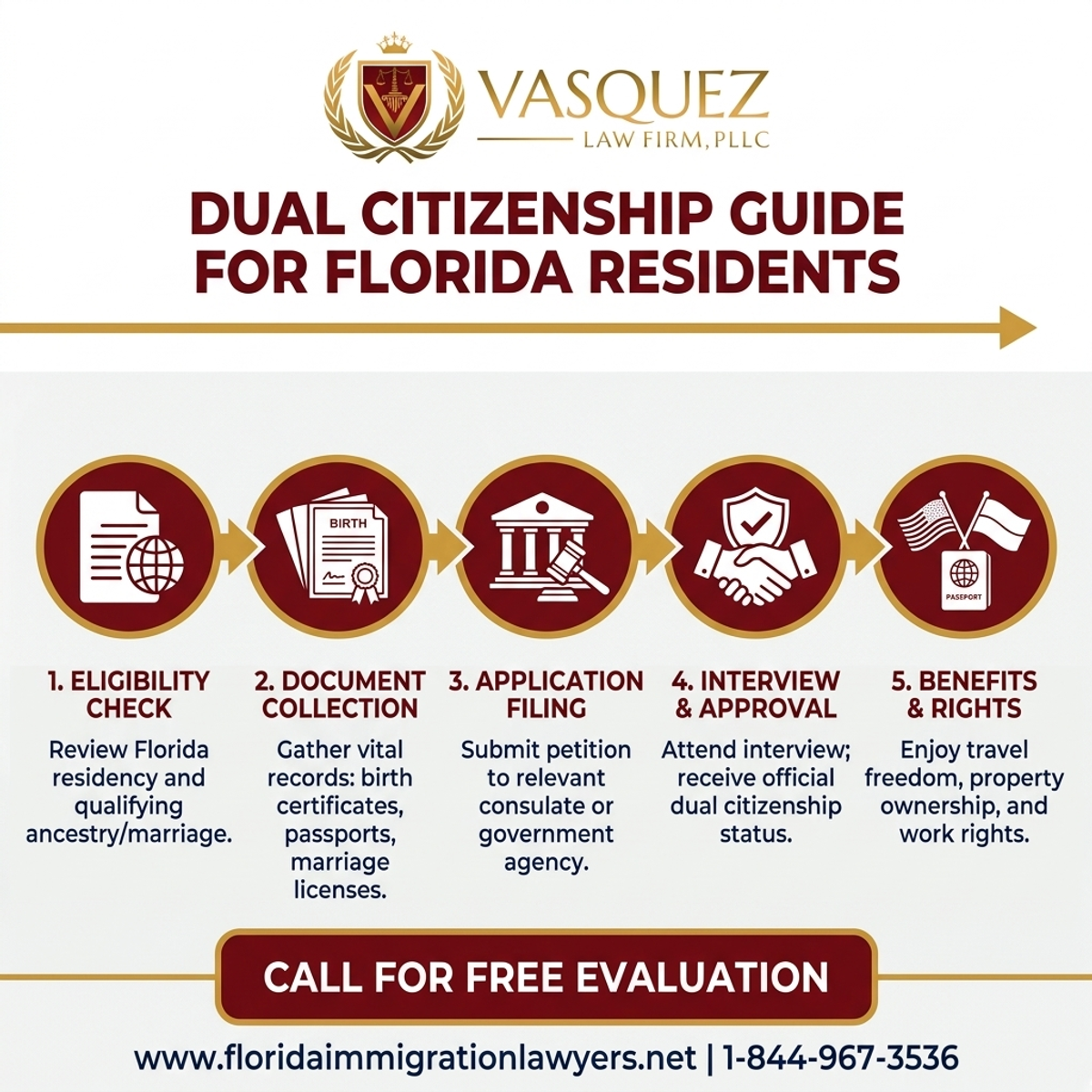
Step-by-Step Process — Dual Citizenship Guide for Florida Residents | VLF Florida
Potential Pitfalls and Considerations
Despite the benefits, dual citizenship can present challenges:
- Conflicting Laws: Laws regarding property, inheritance, marriage, or even criminal justice can differ significantly between countries, potentially creating complex legal situations.
- Security Clearances: For certain government jobs requiring high-level security clearances, dual citizenship can sometimes be a complicating factor, though it does not automatically disqualify an individual.
- Renunciation: While the U.S. does not require renunciation, some countries do. If you acquire citizenship in a country that demands renunciation of previous citizenships, you may face a difficult choice.
- Loss of Citizenship: Although rare and generally requiring intent, actions such as serving in a foreign military at war with the U.S. or formally renouncing U.S. citizenship can lead to its loss. Similarly, foreign citizenships can be revoked under certain circumstances by the respective governments.
Understanding these intricate details is paramount. For Florida residents considering or already holding dual citizenship, comprehensive legal advice is essential to navigate these complexities effectively and avoid unforeseen issues.
Common Misconceptions About Dual Citizenship
Many myths surround dual citizenship, often leading to confusion and apprehension. Let's clarify some of the most common misconceptions:
- Myth: Dual citizens are disloyal to the U.S.
Fact: The U.S. government recognizes that individuals can have ties to more than one country without compromising their loyalty. When taking the Oath of Allegiance, new U.S. citizens pledge their loyalty to the U.S., which is the primary expectation. - Myth: You can only have two citizenships.
Fact: There is no legal limit to the number of citizenships a person can hold under U.S. law. The term 'dual citizenship' is often used broadly to refer to multiple citizenships. - Myth: Dual citizens pay double taxes.
Fact: While U.S. citizens are taxed on worldwide income, tax treaties between the U.S. and many countries, along with mechanisms like the foreign tax credit and foreign earned income exclusion, are designed to prevent double taxation. However, reporting requirements like FATCA and FBAR are mandatory. - Myth: You have to choose one citizenship when you turn 18.
Fact: This is a common misconception, particularly for those born with dual citizenship. Unless a specific foreign country's law requires renunciation at a certain age, U.S. law does not impose such a choice. - Myth: Dual citizenship makes you ineligible for certain jobs.
Fact: While some high-level government positions requiring security clearances may involve a review of dual nationality, it is not an automatic disqualifier. Each case is assessed individually.
Benefits of Dual Citizenship
For many Florida residents, the decision to pursue or maintain dual citizenship is driven by a desire to enjoy a broader range of opportunities and maintain strong cultural ties. The benefits are numerous and impactful:
- Enhanced Travel Freedom: Holding two passports can significantly ease international travel. You can often enter your other country of citizenship without a visa and may have easier access to other nations through visa-waiver programs available to citizens of either country. This can save time and money on visa applications.
- Expanded Work and Business Opportunities: Dual citizenship allows you to legally live and work in both countries without needing work permits or sponsorship. This opens up employment markets, facilitates international business ventures, and provides greater flexibility in career choices.
- Property Ownership and Investment: As a citizen, you typically have the right to own property, invest, and conduct financial transactions in both countries without the restrictions often placed on foreign nationals. This can be particularly beneficial for those looking to invest in real estate or start businesses abroad.
- Family and Cultural Ties: Dual citizenship strengthens connections to your heritage, allowing you to easily visit family, participate in cultural events, and maintain a deeper understanding of your ancestral roots. For families with members in different countries, it simplifies logistics and fosters stronger bonds.
- Educational Opportunities: Access to educational institutions and potentially in-state tuition rates or scholarships in both countries can be a significant advantage for individuals and their children.
- Political Participation: In many cases, dual citizens can vote and participate in the political process of both countries, giving them a voice in two different nations.
- Consular Protection: While traveling in a third country, you can seek consular assistance from either government whose citizenship you hold, offering an additional layer of security.
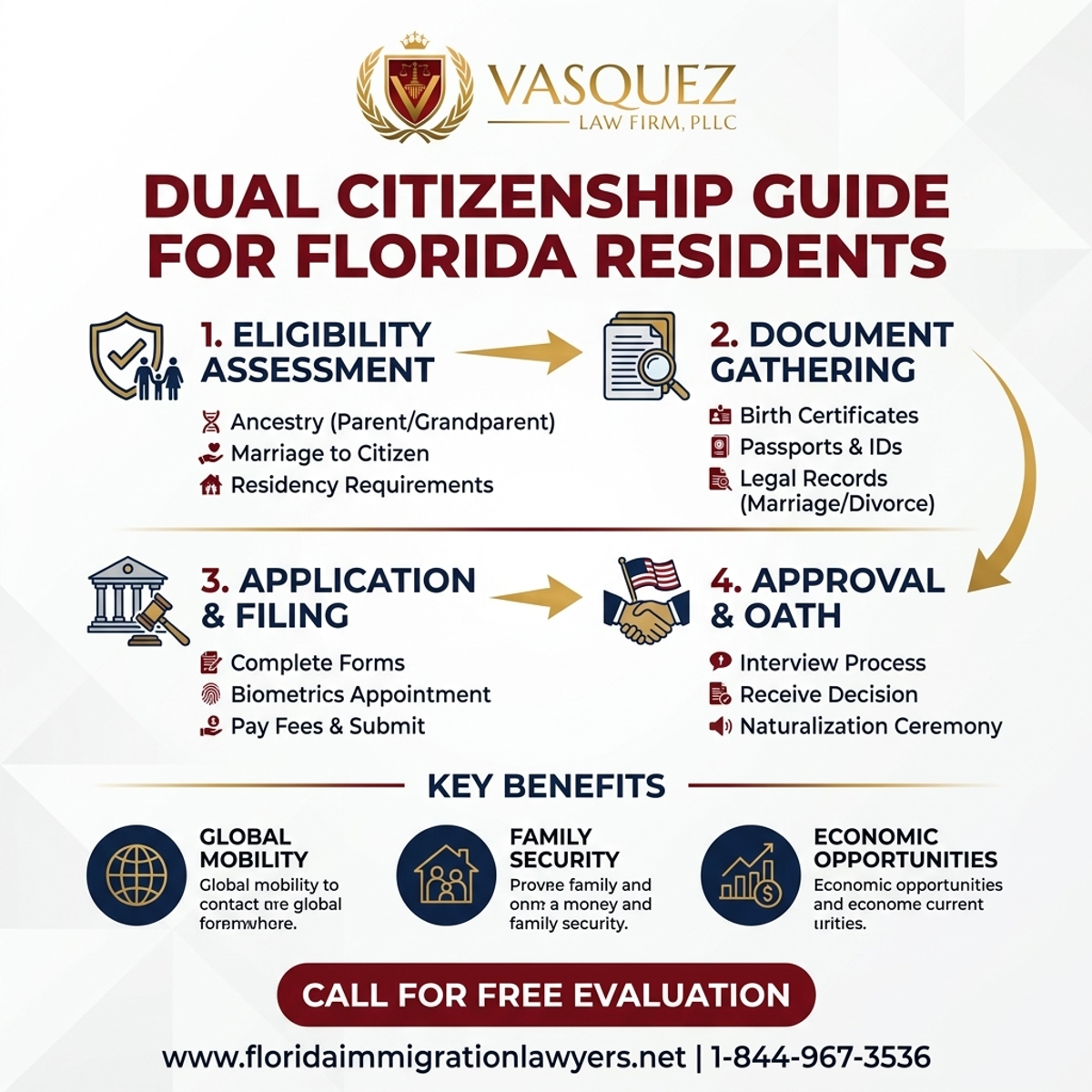
Key Statistics — Dual Citizenship Guide for Florida Residents | VLF Florida
Challenges and Considerations
Despite the many advantages, dual citizenship can present unique challenges. Beyond the tax and military obligations discussed earlier, other considerations include:
- Legal Complexities: Navigating two distinct legal systems can be intricate. Issues related to inheritance, marriage, divorce, or even criminal law can become complicated when two sets of national laws apply.
- Potential for Conflicting Laws: In rare instances, the laws of your two countries of citizenship might conflict, creating dilemmas. For example, some countries may not recognize a marriage or divorce that is valid in the other.
- Government Service Restrictions: While not an absolute bar, holding dual citizenship can sometimes complicate eligibility for certain high-level government positions or roles requiring specific security clearances in the U.S.
- Renunciation Requirements of Other Countries: As mentioned, some countries require you to renounce your previous citizenship when you naturalize. If your country of origin has such a policy, you may be forced to choose, which can be an emotionally and legally significant decision.
- Difficulty in Resolving Disputes: In the event of a legal dispute or issue while in your other country of citizenship, the U.S. government's ability to provide consular protection may be limited, as you are also considered a citizen of that country.
How a Florida Immigration Lawyer Can Help
The journey to understanding and managing dual citizenship can be complex, involving intricate legal requirements and potential pitfalls. For Florida residents, partnering with an experienced immigration lawyer is not just beneficial, but often essential.
Our attorneys at VLF Florida specialize in guiding individuals through every facet of immigration law. We can assist you by:
- Assessing Eligibility: Determining if you are eligible for U.S. citizenship through naturalization or if you already hold dual citizenship by birthright, considering the laws of both countries involved.
- Navigating the Naturalization Process: From preparing and filing your N-400 application to preparing you for the interview and civics test, we ensure all documentation is accurate and complete, minimizing delays and increasing your chances of success.
- Addressing Complex Cases: If you have a criminal record, a history of immigration violations, or other factors that might affect your good moral character assessment, our lawyers can help you understand the implications and develop strategies to address potential issues. This includes providing deportation defense if your status is ever at risk.
- Understanding Tax Implications: While we are not tax advisors, we can provide general guidance on the implications of dual citizenship regarding U.S. tax obligations and direct you to qualified tax professionals who specialize in international taxation.
- Advising on Renunciation: Should you face a situation where one country requires renunciation of another citizenship, we can explain the legal ramifications and help you make an informed decision.
- Protecting Your Rights: In any immigration matter, having legal representation ensures your rights are protected throughout the process. Our team is dedicated to advocating for your best interests.
- Assistance with Asylum-Related Naturalization: For individuals who obtained their green card through asylum, the naturalization process can have specific considerations. Our attorneys are well-versed in these nuances and can provide tailored guidance.
Don't navigate the complexities of dual citizenship alone. Our dedicated attorneys are here to provide personalized legal counsel and support. Whether you're just starting to explore the possibility or need help with a specific challenge, VLF Florida is committed to helping you achieve your immigration goals. Contact us today for a consultation to discuss your unique situation and learn how we can assist you.
Dual citizenship offers a wealth of opportunities for Florida residents with international connections. It allows individuals to maintain strong ties to their heritage while fully embracing life in the United States. However, the path to acquiring and managing dual nationality is paved with legal intricacies that require careful attention. By understanding the requirements, benefits, and potential challenges, and by seeking expert legal guidance from a qualified immigration lawyer, you can confidently navigate this journey and enjoy the advantages of being a citizen of two nations. VLF Florida is your trusted partner in this endeavor, providing the knowledge and support you need every step of the way.
Sources and References
- U.S. Citizenship and Immigration Services (USCIS)
- Executive Office for Immigration Review (EOIR)
- U.S. Department of State - Bureau of Consular Affairs
- Immigration and Nationality Act (INA), 8 U.S.C. Chapter 12
Do Not Navigate This Process Alone
Our experienced immigration attorneys are ready to fight for you. Get a free, confidential consultation today.
Se Habla Español
Frequently Asked Questions
Florida Immigration Lawyers
Immigration Attorney | Founder, Vasquez Law Firm
U.S. Air Force veteran and immigration attorney with thousands of cases resolved. J.D., NCCU School of Law. AILA member. Admitted to the 4th, 5th, and 11th Circuit Courts.
Available 24/7 - Free Evaluations
Related Legal Services
Our Florida immigration attorneys can help you with business immigration, asylum protection and deportation defense. Call today at 1-844-967-3536 for a free consultation.
Related Links
Related Topics
Free Legal Consultation
Discuss your case with our experienced attorneys. We're available 24/7.
Se Habla Español - Estamos aquí para ayudarle.
Related Articles
Navigating the Stokes Interview in Florida | VLF Florida
Facing a Stokes interview in Florida? Learn how to navigate this critical immigration step. Florida Immigration Lawyers can help. Call 1-844-967-3536 today.
Immigration Lawyer Miami Services in Florida | VLF Florida
Navigating immigration in Miami, Florida requires expert legal guidance. Learn about the services offered by immigration lawyers and how they can assist you in achieving your immigration goals. Call 1-844-967-3536 for a free consultation.
I-601A Provisional Waiver in Florida | VLF Florida
Learn about the I-601A provisional waiver process in Florida and how it can help you avoid separation from your family. Contact us at 1-844-967-3536.
I-601 Waiver Guide for Florida Immigrants | VLF Florida
The I-601 waiver offers a solution for immigrants facing inadmissibility in the U.S. due to reasons such as unlawful presence. This guide focuses on the I-601 process in Florida, particularly in Pembroke Pines, and provides a detailed overview of eligibility, application steps, and common pitfalls. Contact Florida Immigration Lawyers for a free consultation.