I-601 Waiver Guide for Florida Immigrants | VLF Florida
The I-601 waiver offers a solution for immigrants facing inadmissibility in the U.S. due to reasons such as unlawful presence. This guide focuses on the I-601 process in Florida, particularly in Pembroke Pines, and provides a detailed overview of eligibility, application steps, and common pitfalls. Contact Florida Immigration Lawyers for a free consultation.

- Eligibility depends on proving extreme hardship.
- Application involves detailed documentation.
- Legal guidance can enhance success rates.
Introduction
Facing inadmissibility can be daunting, especially when it affects your future in the U.S. The I-601 waiver offers a lifeline to those who qualify by allowing them to overcome certain grounds of inadmissibility. This guide focuses on the procedures and requirements specific to Florida, particularly Pembroke Pines and surrounding areas. We will cover eligibility, the application process, and common pitfalls. Call Florida Immigration Lawyers at 1-844-967-3536 for a free consultation.
Understanding the I-601 Waiver
The I-601 waiver, or Application for Waiver of Grounds of Inadmissibility, is a crucial tool for immigrants who wish to remain in the U.S. despite certain barriers. Common reasons for inadmissibility include unlawful presence, certain criminal offenses, and misrepresentation. The waiver is designed to demonstrate that denying entry would cause extreme hardship to a qualifying relative, such as a U.S. citizen or lawful permanent resident.
Eligibility for the I-601 Waiver
Eligibility hinges on proving extreme hardship to a qualifying relative. Hardship can be financial, medical, or emotional, and must be thoroughly documented. It is essential to understand that the burden of proof lies with the applicant. The waiver does not cover all grounds of inadmissibility, so consulting an attorney can clarify your specific circumstances.
Step-by-Step Guide to Applying for an I-601 Waiver
- Determine Eligibility: Assess if your grounds of inadmissibility qualify for a waiver and identify a qualifying relative.
- Gather Documentation: Collect evidence of hardship, including medical records, financial statements, and personal affidavits.
- Complete Form I-601: Accurately fill out the application form, ensuring all sections are completed.
- Submit the Application: Send the completed form and supporting documents to the appropriate USCIS office. In Florida, visit the USCIS website for office locations.
- Attend the Interview: If required, attend an interview at a local USCIS office. Be prepared to discuss your case and present additional evidence if needed.
Document Checklist for I-601 Waiver
- Completed Form I-601
- Proof of relationship to a qualifying relative
- Evidence of hardship (medical records, financial statements)
- Personal affidavits and support letters
- Legal documents related to inadmissibility
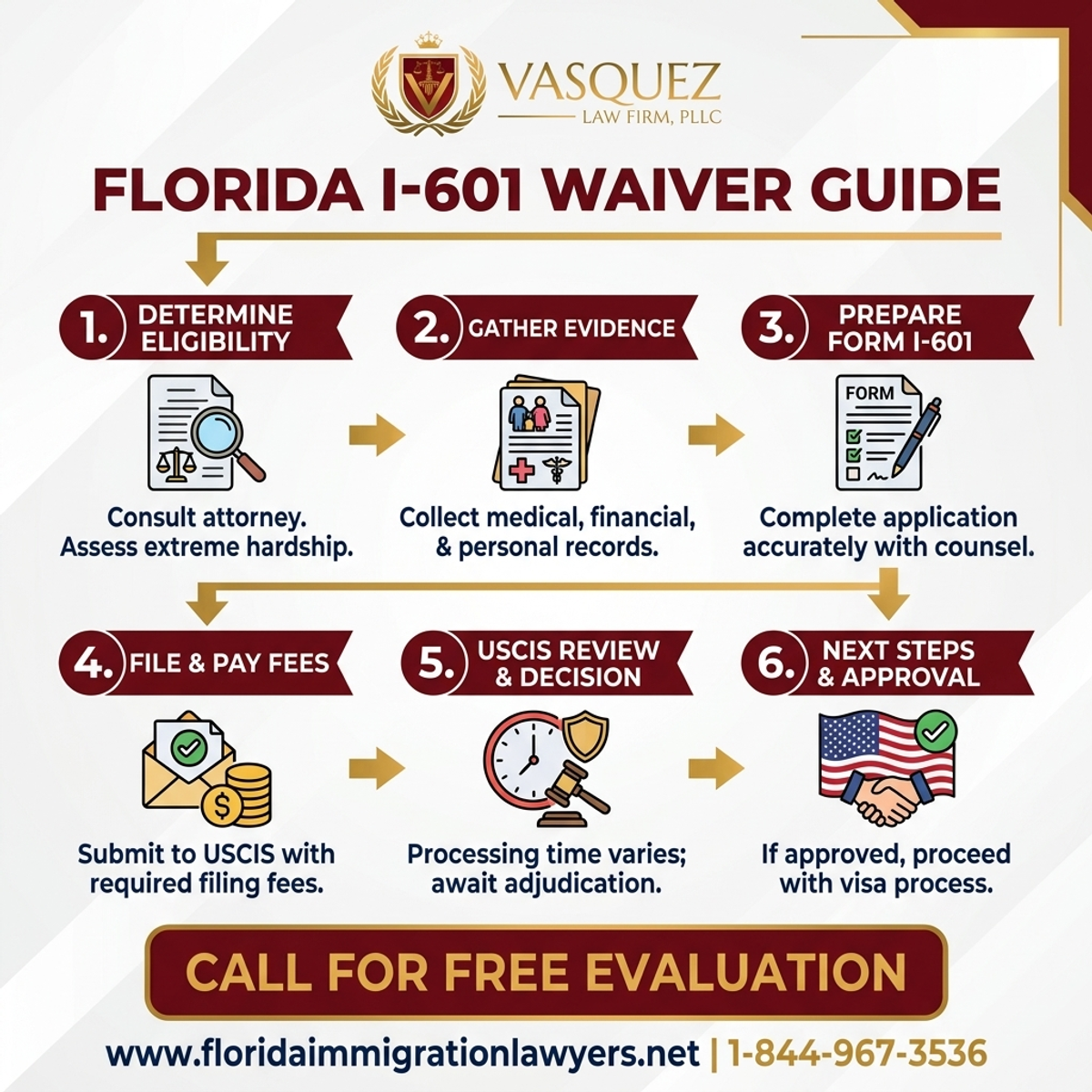
Step-by-Step Process — I-601 Waiver Guide for Florida Immigrants
Timeline and Processing Expectations
Processing times for the I-601 waiver can vary, typically ranging from several months to over a year. Factors influencing this timeline include the complexity of the case and the current backlog at USCIS offices. Applicants should regularly check the status of their application on the USCIS website.
Expectations for Applicants
Applicants should be prepared for a potentially lengthy and detailed process. It's advisable to maintain copies of all submitted documents and keep in regular contact with your legal representative. Considerations such as recent changes in immigration policies, as highlighted by recent Supreme Court rulings, may also impact your case.
Cost Factors and Fee Breakdown
The cost of applying for an I-601 waiver includes government filing fees and potential legal fees. These costs can vary based on the complexity of the case and the need for additional documentation or legal representation. While legal fees may seem daunting, professional guidance can significantly enhance your chances of success.
Investing in Legal Guidance
Legal representation can assist in navigating the complexities of the I-601 waiver process, ensuring that all necessary documentation is complete and compelling. Do not navigate this process alone. Contact Florida Immigration Lawyers today.
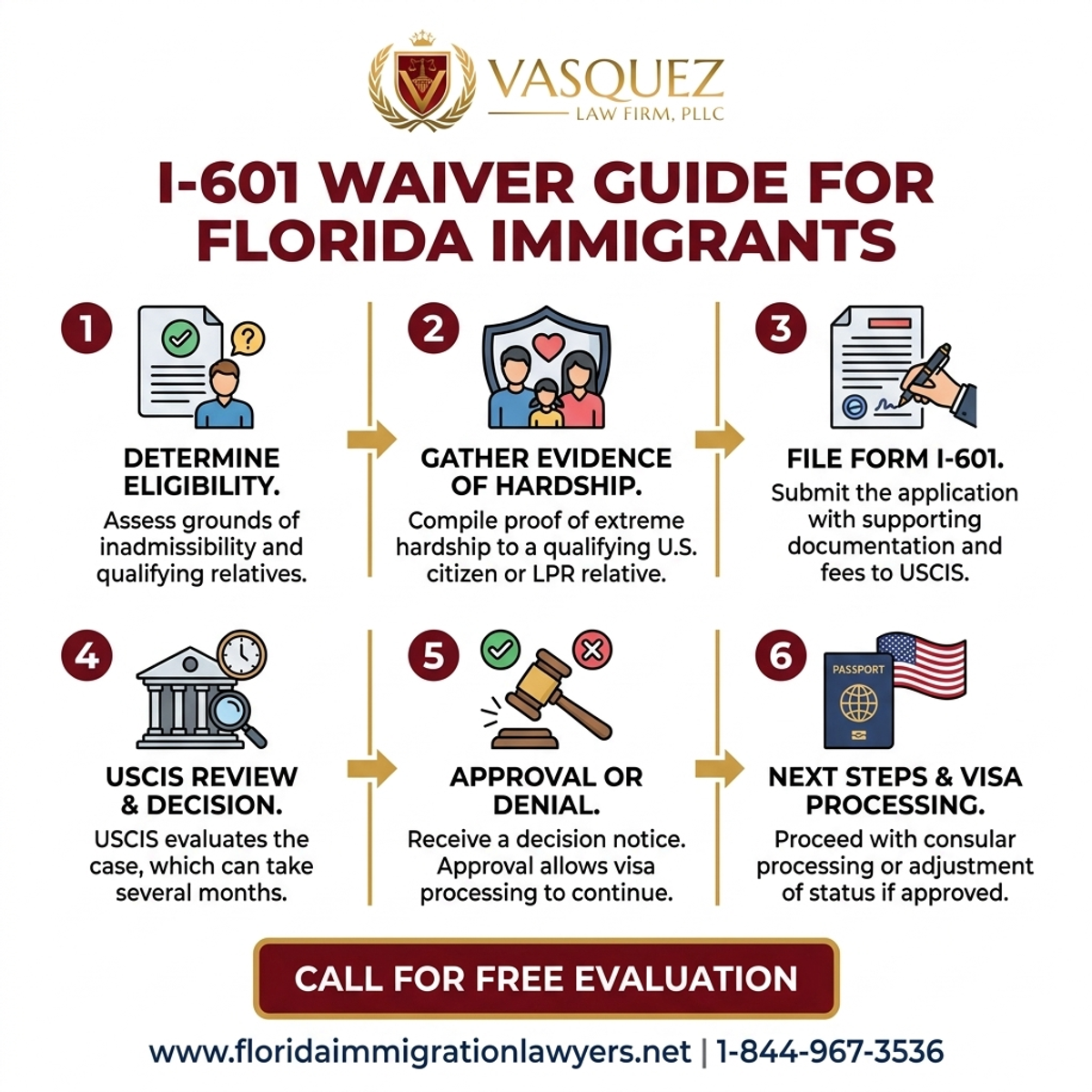
Key Statistics — I-601 Waiver Guide for Florida Immigrants
Common Mistakes to Avoid
- Incomplete Applications: Missing or incorrect information can lead to delays or denials.
- Insufficient Documentation: Failing to provide adequate evidence of hardship can weaken your case.
- Not Consulting an Attorney: Professional guidance can prevent costly mistakes and improve outcomes.
- Ignoring Deadlines: Missing submission deadlines can result in application rejection.
- Inaccurate Information: Providing false or inconsistent information can lead to severe consequences.
- Overlooking Legal Changes: Stay updated on immigration law changes that might affect your application.
- Not Preparing for Interviews: Failing to prepare for potential interviews can adversely affect your case.
When to Call a Lawyer
Engaging a lawyer is crucial when facing complex cases, such as when multiple grounds of inadmissibility are involved or when previous applications have been denied. Signs that you need legal assistance include receiving a Request for Evidence (RFE) or Notice of Intent to Deny (NOID) from USCIS. Florida Immigration Lawyers offer comprehensive services to guide you through every step of the process.
About Florida Immigration Lawyers
Florida Immigration Lawyers are dedicated to providing expert immigration legal services across Florida, including Pembroke Pines. Our team specializes in family immigration, deportation defense, asylum, and more. With 24/7 availability and free consultations, we are here to help you navigate your immigration journey. Call us at 1-844-967-3536 or visit our website today.
Sources and References
- U.S. Citizenship and Immigration Services (USCIS)
- Executive Office for Immigration Review (EOIR)
- 8 U.S.C. Chapter 12 - Immigration and Nationality Act
- State Department
Related services: immigration practice areas, family immigration services, citizenship and naturalization.
This article provides general legal information and is not intended as legal advice. Every case is unique, and outcomes depend on specific facts and circumstances. Contact an attorney for advice about your particular situation.
Contact Florida Immigration Lawyers at 1-844-967-3536 for expert guidance. Se Habla Español - Estamos aquí para ayudarle.
If you need legal assistance, learn more about learn about our immigration practice, or call us at 1-844-967-3536 for a free consultation.
Do Not Navigate This Process Alone
Our experienced immigration attorneys are ready to fight for you. Get a free, confidential consultation today.
Se Habla Español
Frequently Asked Questions
Florida Immigration Lawyers
Immigration Attorney | Founder, Vasquez Law Firm
U.S. Air Force veteran and immigration attorney with thousands of cases resolved. J.D., NCCU School of Law. AILA member. Admitted to the 4th, 5th, and 11th Circuit Courts.
Available 24/7 - Free Evaluations
Related Legal Services
Our Florida immigration attorneys can help you with business immigration, asylum protection and deportation defense. Call today at 1-844-967-3536 for a free consultation.
Related Links
Related Topics
Free Legal Consultation
Discuss your case with our experienced attorneys. We're available 24/7.
Se Habla Español - Estamos aquí para ayudarle.
Related Articles
Find Florida Doctors for Immigration Medical Exam | VLF Florida
Discover how to navigate the immigration medical exam process in Florida. Learn the steps, avoid common mistakes, and find out when to seek legal advice. Contact Florida Immigration Lawyers at 1-844-967-3536 for assistance.
Naturalization Process Florida Timeline: A Guide | VLF Florida
Becoming a U.S. citizen in Florida is a significant milestone. This guide covers the naturalization process, timeline, and key steps for residents in Jacksonville and surrounding areas. For expert guidance, contact Florida Immigration Lawyers at 1-844-967-3536.
Immigration Attorney in Gainesville, North Florida
Navigating immigration law in Gainesville and North Florida can be challenging, especially with recent legal changes. Discover how Florida Immigration Lawyers can assist you. Call 1-844-967-3536 for a free consultation.
Refugee Status Florida Resettlement: Your 2026 Guide
Navigating refugee status and resettlement in Florida requires a thorough understanding of U.S. immigration law and available support systems. This 2026 guide covers eligibility, the step-by-step resettlement process, essential documents, timelines, and financial considerations for refugees seeking to build a new life in Florida, particularly in areas like Homestead. It highlights the critical role of organizations like UNHCR and USCIS, and the importance of avoiding common mistakes. Florida Immigration Lawyers offers expert legal assistance, ensuring a smoother transition and helping refugees adjust status to lawful permanent residents. Learn how to secure your future and access vital resources in the Sunshine State.
