Dual Citizenship in Florida: What You Need to Know
Explore the benefits and legal steps of obtaining dual citizenship in Florida. Understand the process, avoid common mistakes, and learn when to seek legal help. Contact Florida Immigration Lawyers at 1-844-967-3536 for guidance.

Dual Citizenship in Florida: What You Need to Know
Florida, with its diverse population and international connections, is home to many individuals who hold dual citizenship. This status, allowing a person to be a citizen of two countries simultaneously, offers a unique blend of opportunities and responsibilities. If you're considering or already possess dual citizenship while residing in the Sunshine State, understanding the nuances is crucial. This comprehensive guide will explore the intricacies of dual citizenship, the process of naturalization, the benefits and challenges of holding two passports, and how legal expertise can navigate the journey.
Understanding Dual Citizenship
Dual citizenship, also known as multiple nationality, means a person is a citizen of two different countries at the same time. The United States generally permits dual nationality, though it does not actively encourage it. Many other countries also recognize or tolerate dual citizenship. This status can arise in several ways: by birth in one country to parents who are citizens of another, by naturalization in a foreign country, or by marriage. For those in Florida, this often means maintaining ties to their country of origin while fully embracing life in the U.S.
It's important to distinguish dual citizenship from permanent residency. A permanent resident (Green Card holder) has the right to live and work indefinitely in the U.S. but is not a citizen. A dual citizen, however, enjoys the full rights and responsibilities of citizenship in both nations, including the right to vote, hold public office (with some restrictions), and carry passports from both countries.
The Path to Dual Citizenship: Naturalization and Beyond
For many individuals in Florida, obtaining dual citizenship involves becoming a naturalized U.S. citizen while retaining their original citizenship. The U.S. naturalization process is a significant step towards full integration into American society. To qualify, applicants must generally meet specific requirements, including:
- Being at least 18 years old.
- Holding a Green Card for a specified period (usually 5 years, or 3 years if married to a U.S. citizen).
- Demonstrating continuous residence and physical presence in the U.S.
- Having good moral character.
- Passing English and civics tests.
- Taking an Oath of Allegiance to the United States.
Crucially, the U.S. does not require you to renounce your previous citizenship when you naturalize, unless your country of origin explicitly requires it. This is a common misconception. Many countries, particularly in Latin America and Europe, also permit dual nationality, making it possible for individuals to hold two passports without conflict. Understanding the laws of both countries is paramount.
Beyond naturalization, dual citizenship can also be acquired through birth. For example, a child born in Florida to parents who are citizens of another country may automatically be a U.S. citizen (by birthright) and a citizen of their parents' home country (by descent), depending on that country's laws. Navigating these complex legal frameworks often requires the guidance of experienced legal professionals who specialize in immigration law.
Benefits and Advantages of Holding Two Passports
Holding dual citizenship offers a myriad of benefits that can significantly enhance an individual's personal and professional life. These advantages include:
- Increased Travel Freedom: With two passports, dual citizens often enjoy easier entry and exit from both countries, and potentially visa-free travel to a wider range of destinations. This is particularly beneficial for those with family or business interests abroad.
- Expanded Economic Opportunities: Dual citizens may have the right to live, work, and own property in both countries without needing visas or work permits. This opens up broader career paths and investment opportunities.
- Cultural Connection: It allows individuals to maintain strong ties to their heritage and culture, participating fully in the civic and social life of both nations.
- Access to Social Services: Depending on the agreements between the two countries, dual citizens might be eligible for social security, healthcare, and educational benefits in both nations.
- Political Participation: The right to vote and even hold certain public offices in both countries (subject to specific national laws) empowers dual citizens to have a greater voice in their respective societies.
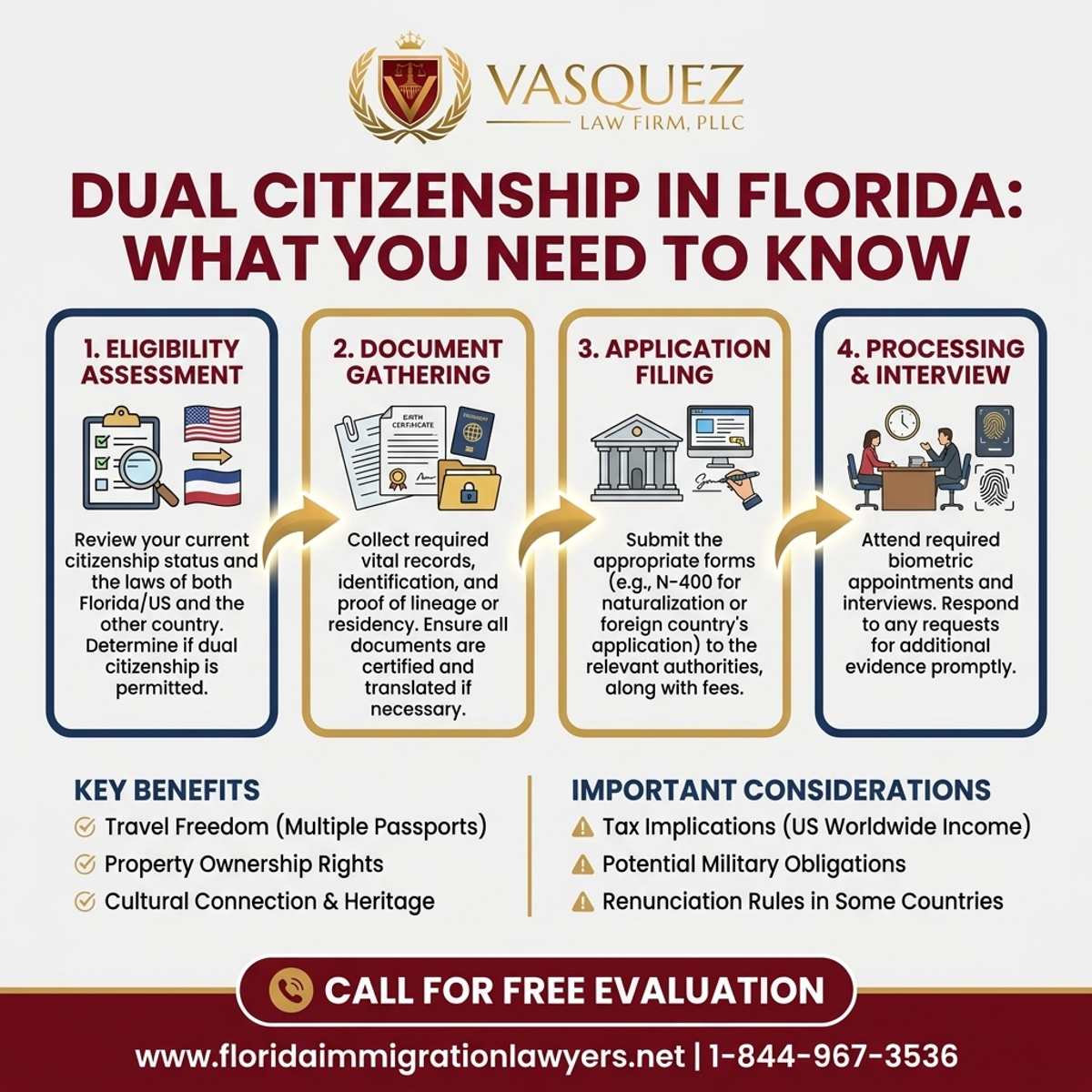
Step-by-Step Process — Dual Citizenship in Florida: What You Need to Know
For Florida residents, many of whom have strong ties to Caribbean, Central, and South American nations, dual citizenship can facilitate family visits, business ventures, and cultural exchanges, making the world feel more accessible and interconnected.
Navigating the Challenges and Responsibilities of Dual Citizenship
While the benefits of dual citizenship are substantial, it's equally important to understand the potential challenges and responsibilities that come with it. This status isn't without its complexities, and being well-informed is key to a smooth experience. One primary consideration is the legal obligations to both countries. This can include military service requirements, particularly for younger individuals, depending on the laws of the other nation. It's crucial to research and understand these obligations thoroughly before or during the process of obtaining dual citizenship. Another significant area is taxation. U.S. citizens, including dual citizens, are generally subject to worldwide taxation, meaning they must report their income to the IRS regardless of where it was earned. This can lead to complex tax planning and reporting requirements, often necessitating the advice of international tax specialists. While tax treaties exist to prevent double taxation, navigating these can be intricate. Furthermore, holding two nationalities can sometimes lead to diplomatic complexities, especially if one country does not recognize the other's citizenship or if a dual citizen faces legal issues in a third country. For instance, if a dual U.S. citizen is arrested in their other country of citizenship, the U.S. government's ability to provide consular assistance may be limited. There can also be potential conflicts of loyalty, particularly in times of international tension or conflict, which, while rare, are important to acknowledge. Security clearances for certain government or high-level positions in the U.S. may also be impacted by dual citizenship. It's vital for individuals to be transparent about their dual status when applying for such roles. Understanding these potential pitfalls and planning accordingly is an essential part of embracing dual citizenship responsibly. Seeking advice from an experienced attorney can help clarify these responsibilities and ensure compliance with the laws of both nations, preventing unforeseen complications down the line. This proactive approach ensures that the advantages of dual citizenship truly outweigh any potential drawbacks, allowing individuals to fully enjoy their unique status.
Dual Citizenship in the Florida Context
Florida's unique demographic landscape and its position as a gateway to Latin America and the Caribbean make dual citizenship a particularly relevant topic for many residents. While the laws governing dual citizenship are federal, Florida's diverse population means a higher prevalence of individuals navigating these international ties. The state's robust international business community also means that many professionals benefit from the ease of travel and work permissions afforded by dual nationality. For example, a business owner in Miami with dual U.S. and Colombian citizenship might find it significantly easier to conduct trade, manage investments, and travel between both countries without visa hurdles, fostering economic growth and cultural exchange. Similarly, families with deep roots in countries like Cuba, Haiti, or Venezuela often find dual citizenship invaluable for maintaining connections, facilitating remittances, and navigating complex political situations in their homelands. The legal framework for dual citizenship remains consistent across the U.S., but the practical implications and the demand for legal guidance are particularly pronounced in states like Florida. This highlights the importance of consulting with legal experts who understand both federal immigration policies and the specific needs of Florida's multicultural communities.
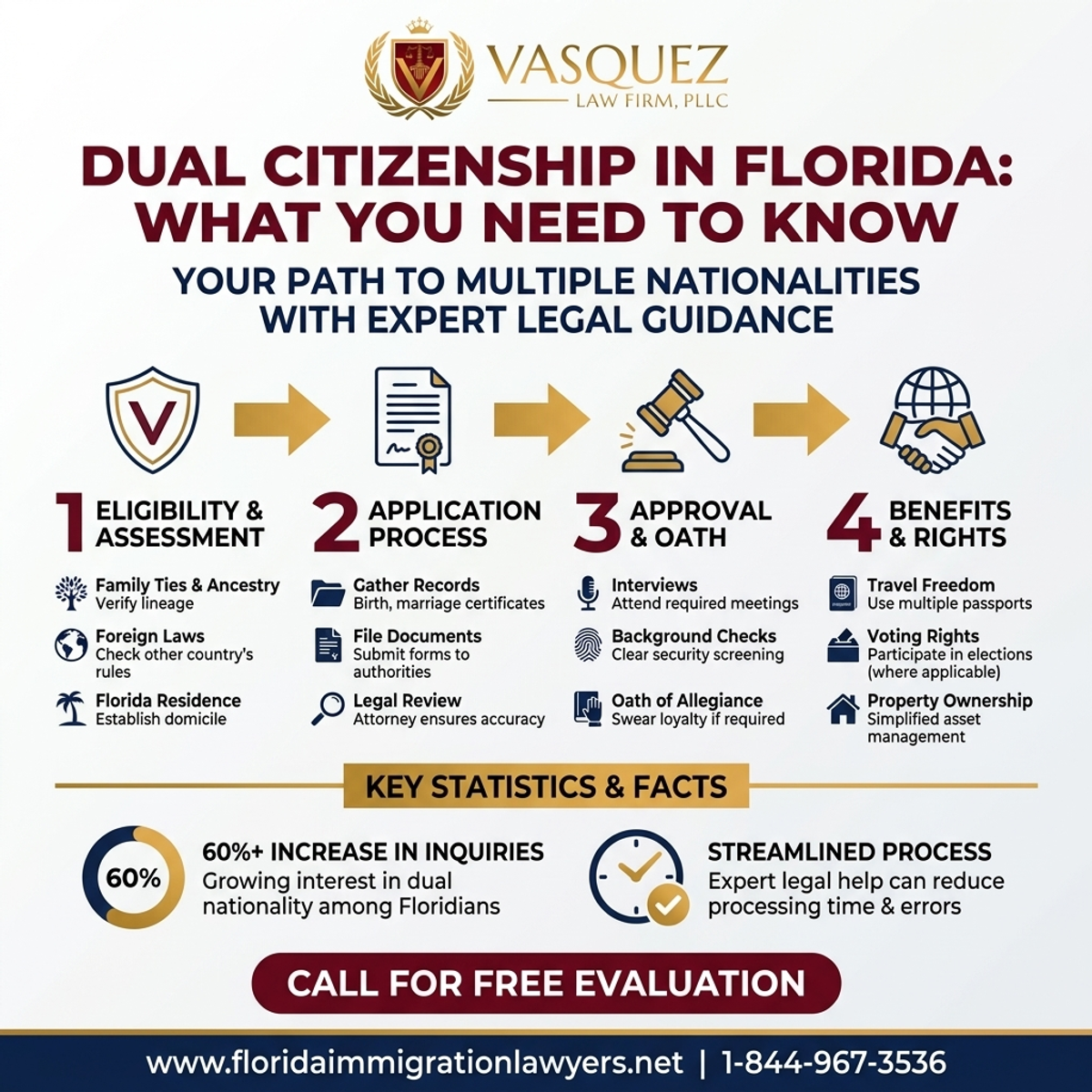
Key Statistics — Dual Citizenship in Florida: What You Need to Know
Tax Implications and Military Service Obligations for Dual Citizens
As touched upon earlier, one of the most significant responsibilities for U.S. dual citizens is understanding their tax obligations. The United States is one of only two countries in the world (the other being Eritrea) that taxes its citizens on their worldwide income, regardless of where they reside. This means that even if you live outside the U.S. and earn all your income abroad, you are still required to file U.S. tax returns annually. While mechanisms like the Foreign Earned Income Exclusion and foreign tax credits exist to prevent double taxation, the reporting requirements can be complex. Failure to comply can lead to severe penalties. It's highly advisable for dual citizens to consult with tax professionals specializing in international taxation to ensure full compliance with both U.S. and foreign tax laws.
Military service is another area that requires careful consideration. While the U.S. does not generally require military service from its citizens unless a draft is instituted, many other countries do. If your other country of citizenship has mandatory military service, you may be obligated to serve, even if you are also a U.S. citizen. This can be a source of conflict and confusion, particularly for younger individuals. It is essential to research the military service laws of your other country of citizenship thoroughly. In some cases, it may be possible to obtain exemptions or deferments, but this varies widely by country. Understanding these potential obligations is a critical part of making an informed decision about dual citizenship.
When Dual Citizenship Isn't an Option: Renunciation and Loss of Citizenship
While the U.S. generally permits dual citizenship, there are circumstances where an individual might choose to renounce one of their citizenships, or where citizenship might be involuntarily lost. Renouncing U.S. citizenship is a formal, voluntary act that involves appearing before a U.S. consular or diplomatic officer in a foreign country and signing an oath of renunciation. This is a serious and irrevocable decision, often made for various personal, political, or financial reasons, such as avoiding U.S. worldwide taxation or to hold a high office in another country that prohibits dual nationality. Similarly, some countries may require you to renounce your original citizenship upon naturalizing in the U.S. It's crucial to understand the implications of such a step, as it means giving up all rights and responsibilities associated with that citizenship.
Involuntary loss of U.S. citizenship, though rare, can occur if a citizen performs certain expatriating acts with the intent to relinquish citizenship. These acts include becoming a naturalized citizen of a foreign country with the intent to give up U.S. citizenship, serving in a foreign army as an officer, or formally renouncing U.S. citizenship. These are complex legal matters, and individuals facing such situations should immediately seek expert legal counsel to protect their rights and understand their options. Such cases often fall under the purview of specialized deportation defense attorneys or those skilled in complex nationality law.
Common Misconceptions About Dual Citizenship
There are several myths surrounding dual citizenship that can lead to confusion. Dispelling these can help individuals make more informed decisions:
- Myth: You must choose one citizenship. While some countries require this, the U.S. generally does not. You can often be a citizen of both.
- Myth: Dual citizens are less loyal. The U.S. government acknowledges that individuals can have loyalties to more than one country. The Oath of Allegiance is a commitment to the U.S., not a renunciation of all ties to another nation.
- Myth: You can't hold a U.S. passport if you have another. U.S. law requires U.S. citizens to enter and exit the U.S. using their U.S. passport. However, you can use your other passport for travel to and from your other country of citizenship or other third countries, as long as it doesn't conflict with U.S. law.
- Myth: Dual citizenship automatically grants you benefits in both countries. While it opens doors, specific benefits like voting rights or social services often require meeting residency or other criteria in each country.
How an Immigration Attorney Can Guide Your Dual Citizenship Journey
Navigating the complex landscape of dual citizenship, naturalization, and international law can be daunting. The requirements, procedures, and implications vary significantly depending on your specific circumstances and the countries involved. This is where the expertise of a dedicated immigration attorney becomes invaluable.
An experienced attorney can:
- Assess Eligibility: Determine if you meet the criteria for U.S. naturalization and if your country of origin permits dual citizenship.
- Prepare Documentation: Assist in gathering and accurately completing all necessary forms and supporting documents, minimizing errors that could lead to delays or denials.
- Provide Guidance Through the Process: From filing your N-400 application to preparing you for the naturalization interview and civics test, an attorney can offer step-by-step support.
- Address Complex Cases: If you have a criminal record, issues with continuous residence, or other complicating factors, an attorney can provide strategic advice and representation. This is especially critical in cases involving deportation defense or if you are seeking asylum, where your citizenship status can have profound implications.
- Clarify Obligations: Help you understand the tax, military, and other legal obligations associated with dual citizenship in both countries.
- Protect Your Rights: Ensure that your rights are protected throughout the process and represent you in any appeals or challenges that may arise.
For those in Florida considering or managing dual citizenship, seeking professional legal advice is not just a recommendation; it's a necessity to ensure a smooth and successful outcome. Our team of attorneys is well-versed in immigration law and can provide the personalized guidance you need. Don't navigate these complex waters alone.
Secure Your Future with Expert Legal Guidance
Dual citizenship offers a world of opportunities, allowing individuals to maintain deep connections to their heritage while fully embracing their life in the United States. While the path to obtaining and managing dual nationality involves intricate legal steps and responsibilities, the benefits often far outweigh the complexities. Whether you are beginning your naturalization journey, seeking to understand the implications of your existing dual status, or facing challenges related to your immigration standing, expert legal assistance is paramount.
Our firm is dedicated to providing comprehensive immigration services to individuals and families in Florida. We understand the unique needs of our diverse community and are committed to helping you achieve your goals. Contact us today for a free consultation to discuss your dual citizenship questions and explore how we can assist you. Your journey to dual citizenship in Florida can be a rewarding one with the right legal support. Visit our contact page to schedule your consultation.
Sources and References
- U.S. Citizenship and Immigration Services (USCIS)
- Executive Office for Immigration Review (EOIR)
- U.S. Department of State - Bureau of Consular Affairs
- Immigration and Nationality Act (INA), 8 U.S.C. Chapter 12
Do Not Navigate This Process Alone
Our experienced immigration attorneys are ready to fight for you. Get a free, confidential consultation today.
Se Habla Español
Frequently Asked Questions
Florida Immigration Lawyers
Immigration Attorney | Founder, Vasquez Law Firm
U.S. Air Force veteran and immigration attorney with thousands of cases resolved. J.D., NCCU School of Law. AILA member. Admitted to the 4th, 5th, and 11th Circuit Courts.
Available 24/7 - Free Evaluations
Related Legal Services
Our Florida immigration attorneys can help you with citizenship and naturalization, family immigration services and immigration practice areas. Call today at 1-844-967-3536 for a free consultation.
Related Links
Related Topics
Free Legal Consultation
Discuss your case with our experienced attorneys. We're available 24/7.
Se Habla Español - Estamos aquí para ayudarle.
Related Articles
Understanding Immigration Bond Hearings in Florida
Immigration bond hearings in Florida are critical for those detained by ICE. Understand the process, avoid common mistakes, and learn when to contact a lawyer for assistance. Call Florida Immigration Lawyers for a free consultation.
Navigating Asylum One-Year Deadline in Florida | VLF Florida
The one-year deadline for asylum applications is crucial for those seeking protection in the U.S. Under U.S. immigration law, filing within one year of arrival is mandatory unless exceptions apply.
USCIS Office Florida Locations: Your Guide to Field Offices
Understanding USCIS office Florida locations is essential for anyone navigating the U.S. immigration system. This guide provides comprehensive information on field offices in Miami, Orlando, and Tampa, and explains how residents of Naples and other Florida cities can prepare for their appointments. Learn about essential services, document checklists, processing timelines, and common mistakes to avoid. Florida Immigration Lawyers offers expert legal assistance, ensuring your applications are accurate and your rights are protected throughout the complex immigration process. Schedule a free consultation to receive personalized guidance for your specific case.
Immigration Attorney Gainesville: Your Guide in North Florida
Navigating U.S. immigration law in Gainesville, North Florida, is challenging. Recent Supreme Court rulings have added complexity. Florida Immigration Lawyers are here to help with a free consultation.