Refugee Status Florida Resettlement: Your 2026 Guide
Navigating refugee status and resettlement in Florida requires a thorough understanding of U.S. immigration law and available support systems. This 2026 guide covers eligibility, the step-by-step resettlement process, essential documents, timelines, and financial considerations for refugees seeking to build a new life in Florida, particularly in areas like Homestead. It highlights the critical role of organizations like UNHCR and USCIS, and the importance of avoiding common mistakes. Florida Immigration Lawyers offers legal assistance, ensuring a smoother transition and helping refugees adjust status to lawful permanent residents. Learn how to secure your future and access vital resources in the Sunshine State.
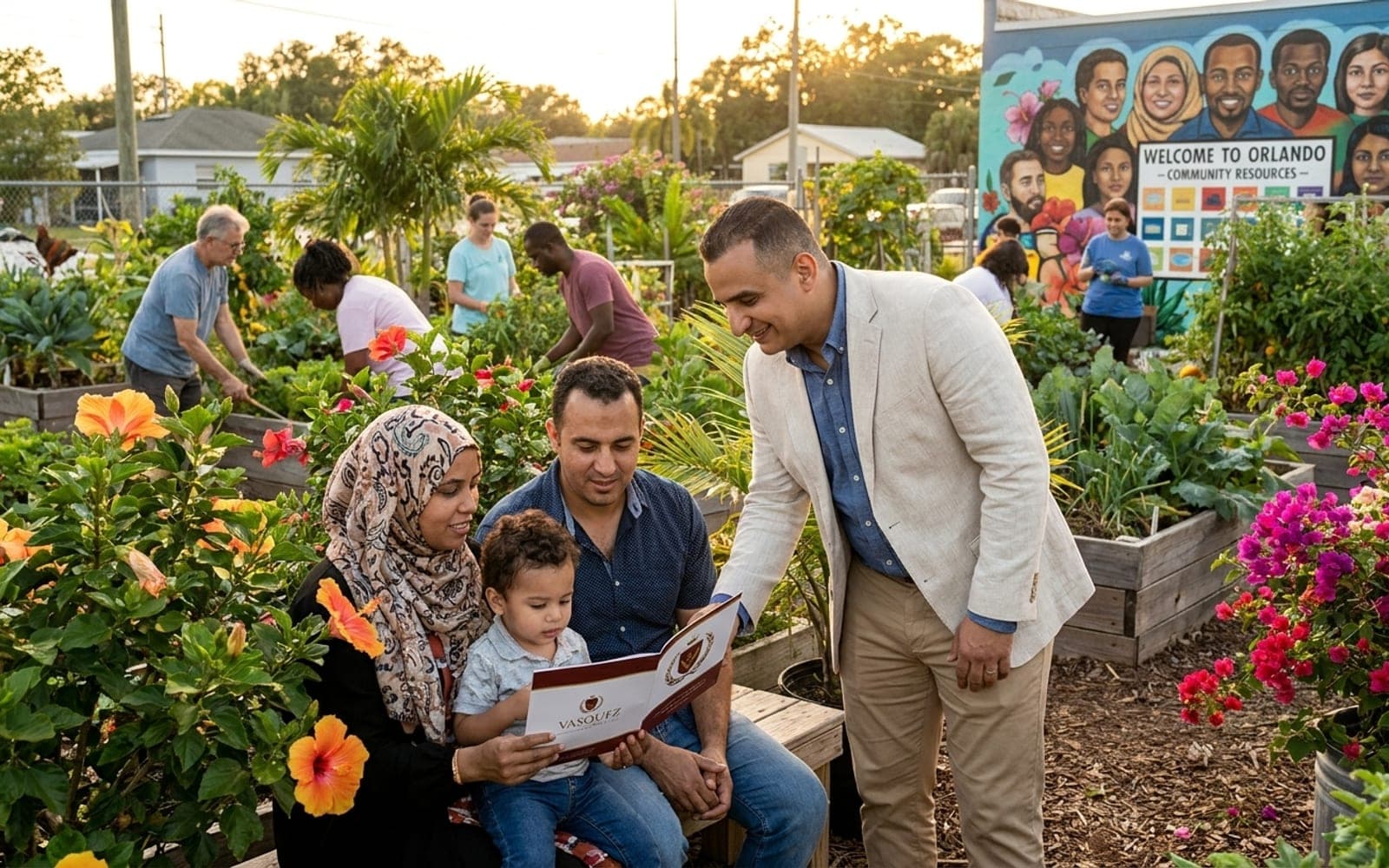
Refugee status in Florida refers to individuals who have been granted protection by the U.S. government because they fear persecution in their home country. Resettlement is the process of helping these individuals integrate into American society, often with assistance from government-funded agencies. In 2026, navigating this complex journey requires understanding eligibility, the multi-stage application process, and available support systems. Florida, particularly regions like Homestead, is a significant hub for refugee resettlement, offering various resources for newcomers. Seeking legal guidance from experienced immigration attorneys is crucial to ensure a smooth and successful transition.
- Refugee status is granted to those fearing persecution abroad.
- Resettlement involves integration into U.S. society with agency support.
- Florida is a key state for refugee resettlement, with resources in areas like Homestead.
- The process includes referral, interviews, medical exams, and cultural orientation.
- Professional legal assistance is highly recommended for successful navigation.
Finding safety and a new beginning in a foreign land can be an overwhelming journey. For individuals seeking refuge, the United States offers a path to protection and resettlement. Florida, with its diverse communities and welcoming spirit, has long been a significant destination for those fleeing persecution.
If you or a loved one are considering or are already navigating refugee status Florida resettlement, understanding the intricate legal framework and practical steps is essential. This comprehensive guide, updated for 2026, aims to demystify the process. It will cover everything from eligibility requirements to the support systems available, helping you build a stable future.
The journey to resettlement is filled with hope, but it also presents significant challenges. Knowing your rights and the procedures involved is your first step towards success. Do not embark on this complex path alone. Call Florida Immigration Lawyers at 1-844-YO-PELEO for a free consultation today.
Understanding Refugee Status and Resettlement in Florida
The terms "refugee" and "resettlement" are often used, but their specific legal meanings are critical. Under U.S. immigration law, a refugee is defined in Section 101(a)(42) of the Immigration and Nationality Act (INA), 8 U.S.C. § 1101(a)(42), as someone who is outside their country of nationality and is unable or unwilling to return to, and unwilling to avail himself or herself of the protection of, that country because of persecution or a well-founded fear of persecution on account of race, religion, nationality, membership in a particular social group, or political opinion. This definition is distinct from an asylum seeker, who applies for protection while already present in the United States or at a port of entry.
Refugee status is typically determined by the United Nations High Commissioner for Refugees (UNHCR) or a U.S. embassy abroad, after which eligible individuals may be referred to the U.S. Refugee Admissions Program (USRAP). This program is a collaborative effort between the U.S. government, international organizations like UNHCR, and non-governmental organizations (NGOs) that facilitate the safe and orderly resettlement of refugees. Florida, particularly the southern regions including Homestead, is a prominent state for refugee resettlement due to its diverse population and established support networks. Organizations throughout Florida play a crucial role in helping refugees transition into their new lives, offering initial aid and resources.
Resettlement is more than just relocation; it is a comprehensive process designed to help refugees become self-sufficient members of their new communities. This includes assistance with housing, employment, education, and cultural orientation. The goal is to provide a foundation for long-term integration and success. Understanding these core concepts is the first step toward navigating the path to a new life in Florida.
The Refugee Resettlement Process: A Step-by-Step Guide
The journey to refugee status Florida resettlement is a multi-stage process, primarily managed by the U.S. Refugee Admissions Program (USRAP). While the exact timeline can vary significantly, the general steps remain consistent. Here is a detailed guide to what you can expect:
-
Referral to the USRAP: The process typically begins with a referral from the UNHCR, a U.S. embassy, or a specially designated NGO to the USRAP. Most refugees referred to the U.S. have been identified by UNHCR as needing resettlement due to their vulnerability and lack of durable solutions in their current location. This initial referral is critical for entering the U.S. system.
-
Security Clearances and USCIS Interview: Once referred, applicants undergo extensive security checks conducted by various U.S. government agencies. Following successful clearances, a U.S. Citizenship and Immigration Services (USCIS) officer conducts an in-person interview abroad. During this interview, the officer determines if the applicant meets the legal definition of a refugee and is admissible to the United States. This is a critical step where the applicant's story and evidence of persecution are thoroughly reviewed. You can find more information on the official USCIS website.
-
Medical Examination: All applicants must undergo a medical examination by an authorized physician. This is to ensure they do not have any inadmissible health conditions that could pose a public health risk to the U.S. or prevent them from becoming self-sufficient. Any medical issues identified may require treatment before travel.
-
Cultural Orientation: Before departing for the U.S., many refugees participate in cultural orientation programs. These sessions provide vital information about life in America, including laws, customs, housing, employment, and the education system. This helps prepare individuals and families for the significant cultural adjustments they will experience upon arrival in Florida.
-
Assignment to a Resettlement Agency: Once approved for resettlement, refugees are assigned to a U.S. resettlement agency. These agencies, located across Florida in cities like Miami, Orlando, and Tampa, and serving regions including Homestead, are responsible for providing initial assistance upon arrival. They coordinate housing, basic necessities, and initial support services.
-
Travel to the United States: With all approvals and preparations complete, travel arrangements are made. Refugees typically travel with assistance from the International Organization for Migration (IOM), which coordinates flights and provides escorts if needed. Upon arrival at a designated port of entry, U.S. Customs and Border Protection (CBP) officers conduct final inspections.
-
Initial Reception and Integration in Florida: Upon arrival in Florida, the assigned resettlement agency meets the refugee(s) and provides immediate support. This includes housing, food, clothing, and assistance with enrolling children in school, applying for social security cards, and accessing medical care. The goal is to facilitate rapid integration and self-sufficiency within the community.
Essential Documents for Refugee Resettlement in Florida
Successful refugee status Florida resettlement hinges on providing a comprehensive set of documents throughout the application and resettlement process. While specific requirements may vary based on individual circumstances and country of origin, a general checklist of essential documents includes:
- Identity Documents: This includes passports (if available), national identity cards, birth certificates, and any other official documents proving your identity and nationality. Even if these documents are expired or difficult to obtain, it is important to provide any evidence you have.
- Proof of Family Ties: Marriage certificates, birth certificates of children, adoption decrees, and other documents establishing family relationships are crucial for family reunification and for ensuring all family members are processed together. This is especially important for family immigration applications later on.
- Proof of Persecution: Any available evidence supporting your claim of persecution or well-founded fear of persecution is vital. This could include police reports, court documents, medical records detailing injuries, letters from human rights organizations, news articles, or affidavits from witnesses. Even if direct evidence is scarce, a detailed personal statement is essential.
- Medical Records: While a new medical examination will be conducted by a U.S.-approved physician, any existing medical records, vaccination records, and prescriptions can be helpful for continuity of care upon arrival.
- Educational and Professional Records: Diplomas, academic transcripts, professional licenses, and employment records can assist resettlement agencies in finding appropriate educational or job opportunities for you in Florida.
- Travel Documents: Any existing travel documents, visas, or previous immigration applications can provide a complete history to USCIS officers.
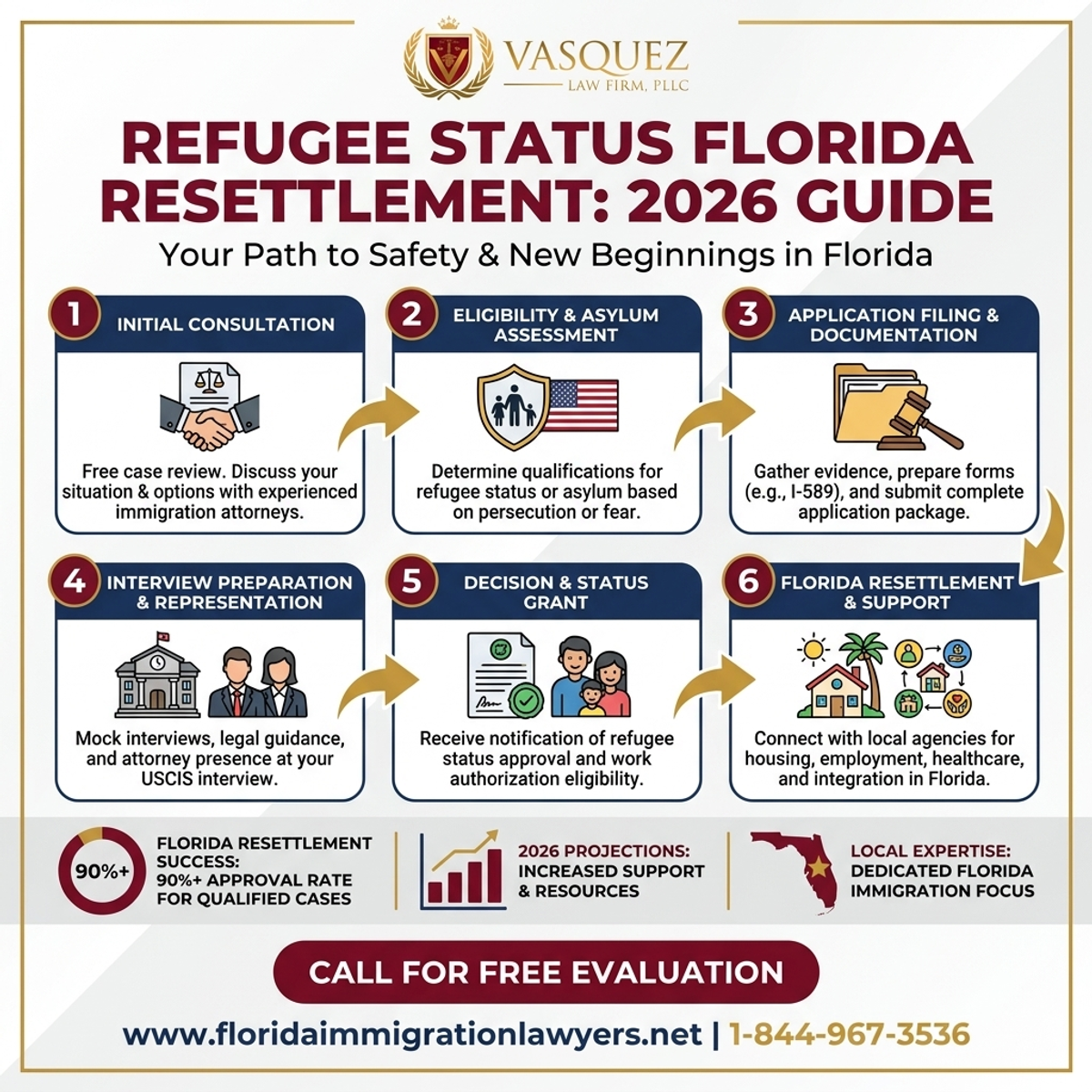
Step-by-Step Process — Refugee Status Florida Resettlement: Your 2026 Guide
It is critical that all non-English documents are accompanied by certified English translations. These translations must be certified by a competent translator as accurate and complete. Organizing these documents meticulously and keeping copies of everything will streamline your resettlement process and help avoid unnecessary delays. Consulting with an immigration attorney can help you identify all necessary documents and ensure they are properly prepared.
Navigating the Timeline and Processing Expectations for Refugees in 2026
The timeline for achieving refugee status Florida resettlement can be a source of significant anxiety for many applicants. It is important to understand that the process is often lengthy and highly variable. From the initial referral to final arrival in the U.S., the entire journey can take anywhere from **one to three years, and sometimes even longer**, depending on numerous factors. These factors include the applicant's country of origin, the volume of applications, the efficiency of security checks, and current U.S. immigration policies.
After arrival in Florida, the immediate focus is on initial resettlement services provided by agencies in areas like Homestead, Miami, or Orlando. However, the legal journey continues. A crucial step for refugees is to apply for Adjustment of Status to Lawful Permanent Resident (a Green Card) one year after their admission to the United States. This application is typically filed using Form I-485 with USCIS. The one-year mark is a statutory requirement under 8 CFR Part 209, and failing to apply within this timeframe can lead to complications. USCIS field offices in Florida, such as those in Miami, Orlando, and Tampa, handle these adjustment of status interviews.
Processing times for Form I-485 can also vary, often taking several months to over a year. During this period, applicants may be required to attend an interview at a local USCIS office and undergo biometric screening. Once approved, the refugee becomes a lawful permanent resident, gaining the ability to travel more freely and having a clearer path to U.S. citizenship after meeting residency requirements, typically five years from the date of admission as a refugee. The current immigration climate, influenced by recent Supreme Court rulings on related humanitarian relief cases, underscores the importance of staying informed and seeking legal counsel, as policy changes can impact processing times and requirements. Patience and diligent follow-up are key throughout this extended process.
Do not navigate this process alone. The complexities of refugee resettlement and adjustment of status require legal guidance. Contact Florida Immigration Lawyers today at 1-844-YO-PELEO for a free consultation and let our experienced team help you every step of the way.
Costs, Benefits, and Support Systems for Refugees in Florida
While the initial processing for refugee status Florida resettlement through the U.S. Refugee Admissions Program (USRAP) does not typically involve application fees for the refugee determination itself, there are subsequent costs and significant benefits and support systems to be aware of. Understanding these financial aspects and available resources is crucial for a successful transition into life in Florida.
Cost Factors and Fee Breakdown
Upon arrival, refugees generally do not bear the costs of their initial travel to the U.S., which are covered by loans from the International Organization for Migration (IOM) that refugees are expected to repay over time. However, there are fees associated with the later stages of the immigration process:
- Adjustment of Status (Form I-485): One year after admission, refugees must apply for a Green Card. The filing fee for Form I-485 (Application to Register Permanent Residence or Adjust Status) is substantial. While fee waiver options may be available for those with limited income, it is an important cost to anticipate.
- Biometrics Fee: A separate fee is typically required for biometric services (fingerprints, photos) associated with the I-485 application.
- Medical Examination: While the initial medical exam abroad is part of the USRAP, any subsequent medical exams required for adjustment of status (if applicable) may incur costs.
- Legal Fees: Hiring an immigration attorney, while not mandatory, is a valuable investment to ensure all applications are correctly filed and to navigate any complexities. Florida Immigration Lawyers offers free consultations to discuss your specific needs.
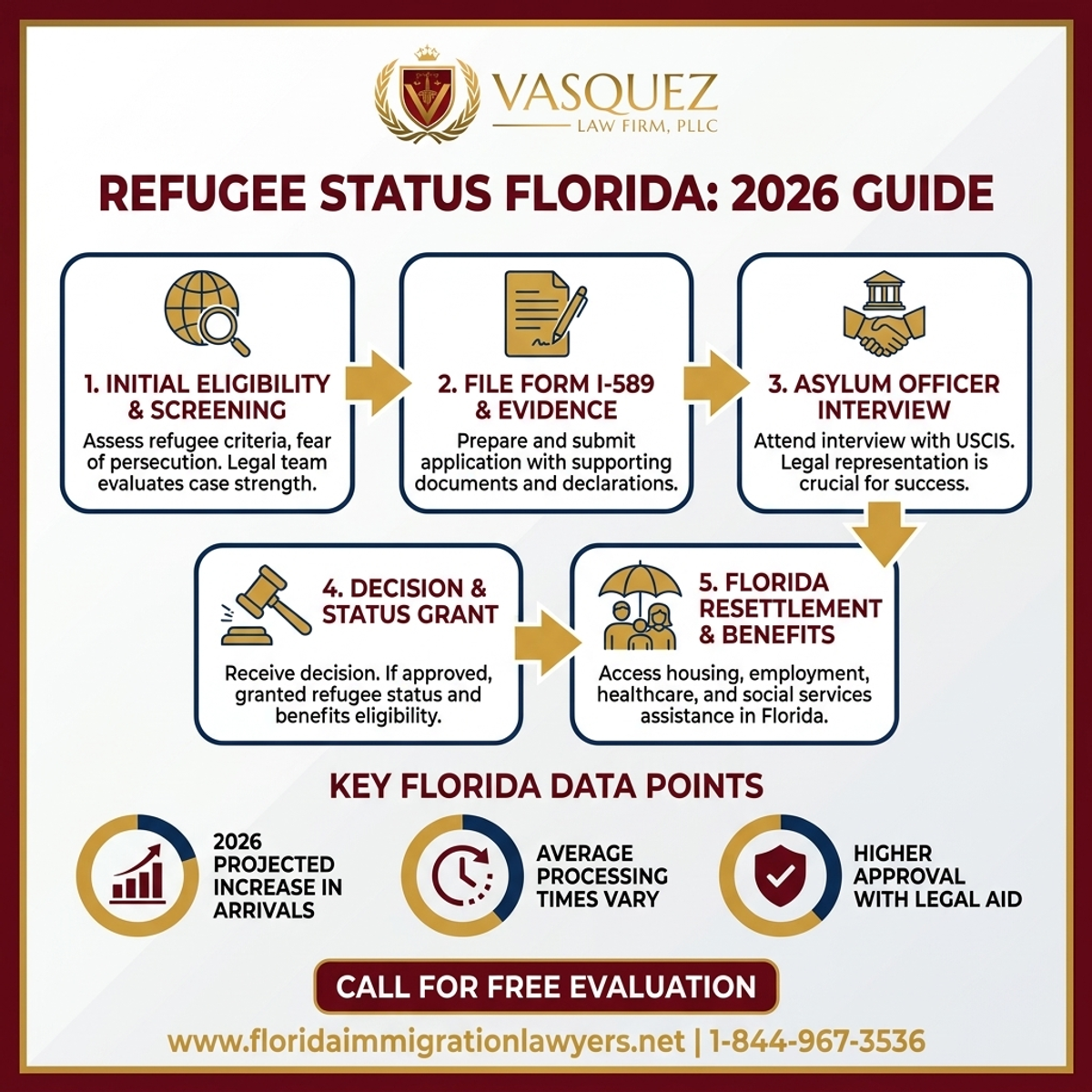
Key Statistics — Refugee Status Florida Resettlement: Your 2026 Guide
Benefits and Support Systems
Refugees in Florida are eligible for a range of critical benefits and support services designed to help them achieve self-sufficiency:
- Resettlement Agencies: Upon arrival, refugees are connected with local resettlement agencies (e.g., Catholic Charities, Church World Service, HIAS, International Rescue Committee, Lutheran Social Services). These agencies provide immediate assistance, including temporary housing, food, clothing, and cultural orientation. They also help with school enrollment for children and initial job searches in communities like Homestead, Miami, and Orlando.
- Refugee Cash Assistance (RCA) and Medical Assistance (RMA): For those not eligible for other federal assistance programs, RCA provides temporary financial support, and RMA offers comprehensive health insurance for a limited period, typically up to eight months.
- Employment Services: Resettlement agencies and state programs offer job placement assistance, resume building, interview skills training, and vocational English language training to help refugees find employment quickly.
- English Language Training (ELT): Access to English classes is crucial for integration and is widely available through resettlement agencies, community colleges, and adult education centers across Florida.
- Social Security Card and Work Authorization: Refugees receive work authorization upon admission, allowing them to legally work in the U.S. Assistance is provided to apply for a Social Security card, which is essential for employment.
- Community Support: Florida boasts a strong network of community organizations, faith-based groups, and volunteers dedicated to supporting refugees. These groups often provide additional aid, mentorship, and opportunities for social integration.
Common Mistakes to Avoid During Refugee Resettlement
Navigating the complex path to refugee status Florida resettlement can be challenging, and even minor errors can lead to significant delays or adverse outcomes. Being aware of common pitfalls can help you avoid them:
-
Providing Inconsistent or False Information: Any discrepancies in your statements or documents, whether intentional or accidental, can raise red flags and jeopardize your application. Always be truthful and consistent.
-
Missing Deadlines: Strict deadlines apply to various stages, especially for filing the Form I-485 for adjustment of status one year after admission. Missing these can result in denial or require complex waivers.
-
Failing to Disclose All Criminal History: Even minor arrests or convictions, regardless of how long ago or whether charges were dropped, must be disclosed. Failure to do so can be considered misrepresentation.
-
Not Updating USCIS with Address Changes: You are legally required to inform USCIS of any change of address within 10 days using Form AR-11. Failing to do so can lead to missed notices and application abandonment.
-
Traveling Internationally Without Advance Parole: After applying for adjustment of status, leaving the U.S. without an approved Advance Parole document can be considered an abandonment of your application.
-
Ignoring Medical Examination Requirements: All required medical exams must be completed by an authorized physician. Delays or incomplete exams will halt your process.
-
Misunderstanding the Difference Between Refugee and Asylum Status: While related, the application processes and legal frameworks for refugees and asylum seekers differ significantly. Confusing them can lead to incorrect filings.
-
Not Keeping Copies of All Submitted Documents: Always retain copies of every document and application you submit to USCIS or other agencies. This is crucial for your records and for responding to requests for evidence.
-
Failing to Prepare for Interviews: Interviews with USCIS or resettlement agencies require careful preparation. Be ready to articulate your story clearly and answer questions about your documents and background.
-
Falling Victim to Notary Fraud or Unlicensed Practitioners: Only licensed attorneys or accredited representatives can provide legal advice. Be wary of individuals offering cheap or quick solutions without proper credentials.
-
Neglecting to Seek Legal Counsel Early: Many issues can be prevented or more easily resolved with early legal intervention. Waiting until a problem arises can make it much harder to fix.
When to Call a Lawyer for Refugee Status in Florida
While the U.S. Refugee Admissions Program provides significant support, the legal intricacies of refugee status Florida resettlement can be overwhelming. There are specific scenarios where the guidance of an experienced immigration attorney becomes not just helpful, but essential. Florida Immigration Lawyers focuses on navigating these complex cases, offering the experience you need.
You should consider contacting an attorney if you encounter any of the following situations:
- Complex Eligibility Issues: If your case involves unique circumstances regarding your persecution claim, specific family situations, or if you are unsure about meeting the refugee definition, legal counsel can help strengthen your case.
- Previous Denials or Difficulties: If a previous application for refugee status or asylum was denied, or if you've faced complications in other immigration processes, an attorney can review your history and advise on the best path forward.
- Criminal History: Any past arrests, charges, or convictions, even minor ones, can have significant implications for your admissibility to the U.S. and your ability to adjust status. An attorney can assess the impact and help prepare necessary waivers or defenses. This is particularly crucial for deportation defense if issues arise.
- Family Reunification: If you are seeking to bring family members to the U.S. or if your family's processing is stalled, an attorney can assist with family immigration petitions and ensure all requirements are met.
- Adjustment of Status Challenges: The application for a Green Card (Form I-485) can be complicated. If you have questions about eligibility, required documents, or potential inadmissibility grounds, legal advice is invaluable.
- Changes in Immigration Law or Policy: Immigration laws are constantly evolving, as seen with recent Supreme Court decisions affecting humanitarian relief. An attorney stays updated on these changes and can advise on how they might impact your case.
- Facing an Interview: Preparing for an interview with USCIS can be daunting. An attorney can help you prepare, review your documents, and even attend the interview with you.
Florida Immigration Lawyers has a dedicated team of experienced attorneys ready to assist refugees and asylum seekers across Florida. We understand the sensitivity and urgency of these matters and are committed to protecting your rights and helping you achieve a secure future. Don't hesitate to reach out for a free consultation.
About Florida Immigration Lawyers
Florida Immigration Lawyers is a leading law firm dedicated to providing comprehensive and compassionate legal services to immigrants across the entire state of Florida. With a deep understanding of U.S. immigration law and a commitment to our clients, we strive to make the complex immigration process as smooth and stress-free as possible. Our firm is proud to serve individuals and families seeking a new life, protection, or opportunities in the United States.
We offer a wide range of immigration services, including assistance with refugee and asylum claims, asylum applications, family-based petitions, deportation defense, naturalization and citizenship, business immigration, and visa applications. Our team of skilled attorneys brings years of experience and a client-focused approach to every case. We understand the unique challenges faced by immigrants and are dedicated to providing personalized legal strategies tailored to your specific needs.
Choosing Florida Immigration Lawyers means partnering with a firm that values integrity, professionalism, and results. We are available 24/7 to address your concerns and offer free consultations to discuss your case. Let us be your trusted legal guide on your journey to a secure future in Florida. Call us today at 1-844-YO-PELEO or visit https://www.floridaimmigrationlawyers.net to learn more.
Sources and References
- U.S. Citizenship and Immigration Services (USCIS) - Refugees and Asylum
- Executive Office for Immigration Review (EOIR)
- 8 U.S.C. § 1101(a)(42) - Definition of Refugee (Immigration and Nationality Act)
- 8 CFR Part 209 - Adjustment of Status of Refugees
- U.S. Department of State - Bureau of Population, Refugees, and Migration
Related services: asylum application process, withholding of removal, humanitarian protection programs.
This article provides general legal information and is not intended as legal advice. Every case is unique, and outcomes depend on specific facts and circumstances. Contact an attorney for advice about your particular situation.
Your journey to a new life in Florida as a refugee is a significant step, and having the right legal support can make all the difference. Florida Immigration Lawyers is here to provide the guidance and compassionate representation you deserve. Don't face the complexities of immigration law alone.
Contact us today for a free, confidential consultation. Call 1-844-YO-PELEO. Se Habla Español - Estamos aquí para ayudarle.
Do Not Navigate This Process Alone
Our experienced immigration attorneys are ready to fight for you. Get a free, confidential case review today.
Se Habla Español
Or leave your details and we’ll call you:
Free Evaluation in 24 Hours
Or talk to us right now

AI voice assistant — available 24/7
FreeFrequently Asked Questions

William J. Vásquez
Founding Attorney · Vasquez Law Firm
U.S. Air Force veteran and immigration attorney with years of hands-on U.S. immigration experience. J.D., NCCU School of Law. AILA member. Admitted to the 4th, 5th, and 11th Circuit Courts.
Available 24/7 - Free Evaluations
Reviewed for legal accuracy by William J. Vásquez
Licensed in North Carolina; U.S. immigration is federal practice.
Related Legal Services
Our Florida immigration attorneys can help you with immigration lawyer cost in Florida, experienced immigration attorneys and asylum protection. Call today at 1-844-YO-PELEO for a free case review.
Related Links
Related Topics
Free Legal Case Review
Discuss your case with our experienced attorneys. We're available 24/7.
Se Habla Español - Estamos aquí para ayudarle.
Related Articles
Dual Citizenship Lawyer in Florida: What You Need to Know
For Florida residents, the concept of dual citizenship, or holding two passports, offers a compelling blend of opportunities and challenges. While the U.S. generally permits dual nationality, the path to achieving this status requires a meticulous understanding of both U.S. immigration laws and the citizenship policies of your country of origin. This guide explores the definition of dual citizenship, the detailed step-by-step process for U.S. naturalization, and the significant benefits and potential pitfalls involved. We cover essential documentation, typical timelines, and cost considerations for 2026, providing crucial insights for anyone in Orlando, Miami, or across Florida considering this important legal step. Learn about common mistakes to avoid and understand when to seek professional legal counsel to navigate this complex process successfully. Florida Immigration Lawyers is here to provide expert, bilingual support for your dual citizenship journey.
Immigration Lawyer Orlando Free Consultation in Florida
For individuals and families in Orlando, Florida, navigating the complexities of U.S. immigration law requires expert guidance. An immigration lawyer in Orlando offers crucial support for everything from visa applications and green card processes to naturalization and deportation defense. This comprehensive guide details what a free consultation covers, providing a step-by-step overview of immigration pathways, essential document checklists, and expected timelines in 2026. We also highlight common mistakes to avoid, discuss the critical role of legal counsel in deportation and asylum cases, and explain why choosing a local Orlando immigration attorney is beneficial. Florida Immigration Lawyers is dedicated to serving the diverse community of Orlando with compassionate, effective legal solutions, ensuring you receive personalized advice and robust representation for a successful immigration journey.
EAD Advance Parole Combo Card in Florida 2026
For individuals with a pending Form I-485, Application to Register Permanent Residence or Adjust Status, the EAD Advance Parole Combo Card is an essential document. This single card combines the authorization to work legally in the U.S. (Employment Authorization Document - EAD) with permission to travel internationally and re-enter without abandoning your green card application (Advance Parole). This guide from Florida Immigration Lawyers provides a comprehensive overview for applicants in Florida in 2026, covering eligibility, the step-by-step application process, required documents, expected processing times, and associated costs. We also highlight common mistakes to avoid and when to seek legal counsel to ensure a smooth and successful immigration journey. Understanding this vital card is key to maintaining stability while awaiting your permanent residency approval.
Immigration Interview Preparation in Florida 2026
For those seeking to live, work, or become citizens in Florida, the immigration interview is a pivotal moment requiring thorough preparation. This comprehensive guide from Florida Immigration Lawyers demystifies the process in 2026, offering actionable insights for applicants. Learn what to expect at your USCIS appointment, common pitfalls to avoid, essential documents for your checklist, and critical timelines. We cover specific interview types, cost factors, and when professional legal assistance becomes invaluable. Our goal is to empower you with the knowledge and confidence needed to present your case effectively and navigate the complex U.S. immigration system. For personalized advice and robust legal representation, contact Florida Immigration Lawyers today for a free case review.