Asylum Application Process in Florida: A Guide | VLF Florida
Explore the asylum application process in Florida with this comprehensive guide. Learn essential steps, common pitfalls, and when to seek legal assistance. Call Florida Immigration Lawyers at 1-844-967-3536 for expert help.

Asylum Application Process in Florida: A Guide | VLF Florida
For individuals fleeing persecution in their home countries, the United States offers a beacon of hope through its asylum program. Navigating the asylum application process in Florida can be complex, demanding a thorough understanding of U.S. immigration law and meticulous preparation. This comprehensive guide from VLF Florida aims to demystify the journey, providing crucial information for those seeking protection within the Sunshine State. Understanding your rights and the intricate steps involved is the first step towards securing a safer future. For general immigration inquiries or assistance, explore our immigration practice areas.
Understanding Asylum in the U.S.: Protecting Those Fleeing Persecution
Asylum is a form of protection granted to individuals who have fled their country and are unable or unwilling to return because of a well-founded fear of persecution. This persecution must be based on one of five protected grounds: race, religion, nationality, membership in a particular social group, or political opinion. The U.S. government, adhering to international and domestic laws, offers this protection to those who can demonstrate a credible fear if they were to return to their homeland.
It's important to distinguish asylum from refugee status. While both offer protection to individuals fleeing persecution, refugee status is typically sought by individuals outside the U.S. who apply for admission to the country, whereas asylum is sought by individuals who are already present in the U.S. or are arriving at a port of entry. The core principle remains the same: providing a safe haven for those whose lives or freedom are threatened. The process is designed to be thorough, ensuring that protection is extended to those genuinely in need while safeguarding national security.
Eligibility Criteria for Asylum: Who Qualifies?
To be eligible for asylum in the United States, an applicant must demonstrate a "well-founded fear" of persecution. This isn't just a subjective feeling; it requires objective evidence that a reasonable person in similar circumstances would fear persecution. The fear must be based on one of the five protected grounds mentioned above. For instance, if you fear persecution because of your political activism against a repressive regime, your claim would likely fall under "political opinion." If your ethnic group is systematically targeted, it would relate to "race" or "nationality."
Defining "persecution" is also critical. It generally refers to harm or suffering inflicted upon an individual in a way that is severe enough to constitute a threat to life or freedom. This can include physical harm, torture, severe economic deprivation, or other forms of severe discrimination. The persecution must be at the hands of the government, or by groups that the government is unwilling or unable to control. Furthermore, there must be a "nexus" – a direct link – between the persecution you fear and one of the five protected grounds. This means proving that you are targeted *because of* your race, religion, etc., not merely coincidentally. Understanding these nuanced criteria is paramount for a successful application. For specialized legal guidance on these criteria, visit our asylum practice area page.
The Affirmative Asylum Process: Applying Proactively
The affirmative asylum process is for individuals who are not currently in removal (deportation) proceedings. This path involves applying directly to U.S. Citizenship and Immigration Services (USCIS). The cornerstone of this application is Form I-589, Application for Asylum and for Withholding of Removal. This form is extensive and requires detailed information about your personal history, the persecution you've faced or fear, and why you believe you qualify for asylum. It must be filed within one year of your last arrival in the U.S., unless you qualify for an exception to this deadline.
Along with Form I-589, you must submit a comprehensive personal declaration detailing your story of persecution, as well as any supporting documentation. This can include police reports, medical records, news articles, affidavits from witnesses, and country conditions reports that corroborate your claims. After filing, you will typically attend a biometrics appointment, where your fingerprints and photographs are taken for background checks. The next critical step is an asylum interview with a USCIS asylum officer. This interview is your opportunity to present your case verbally, answer questions, and clarify any details. Preparing thoroughly for this interview, often with legal counsel, is vital to ensure consistency and credibility in your testimony.
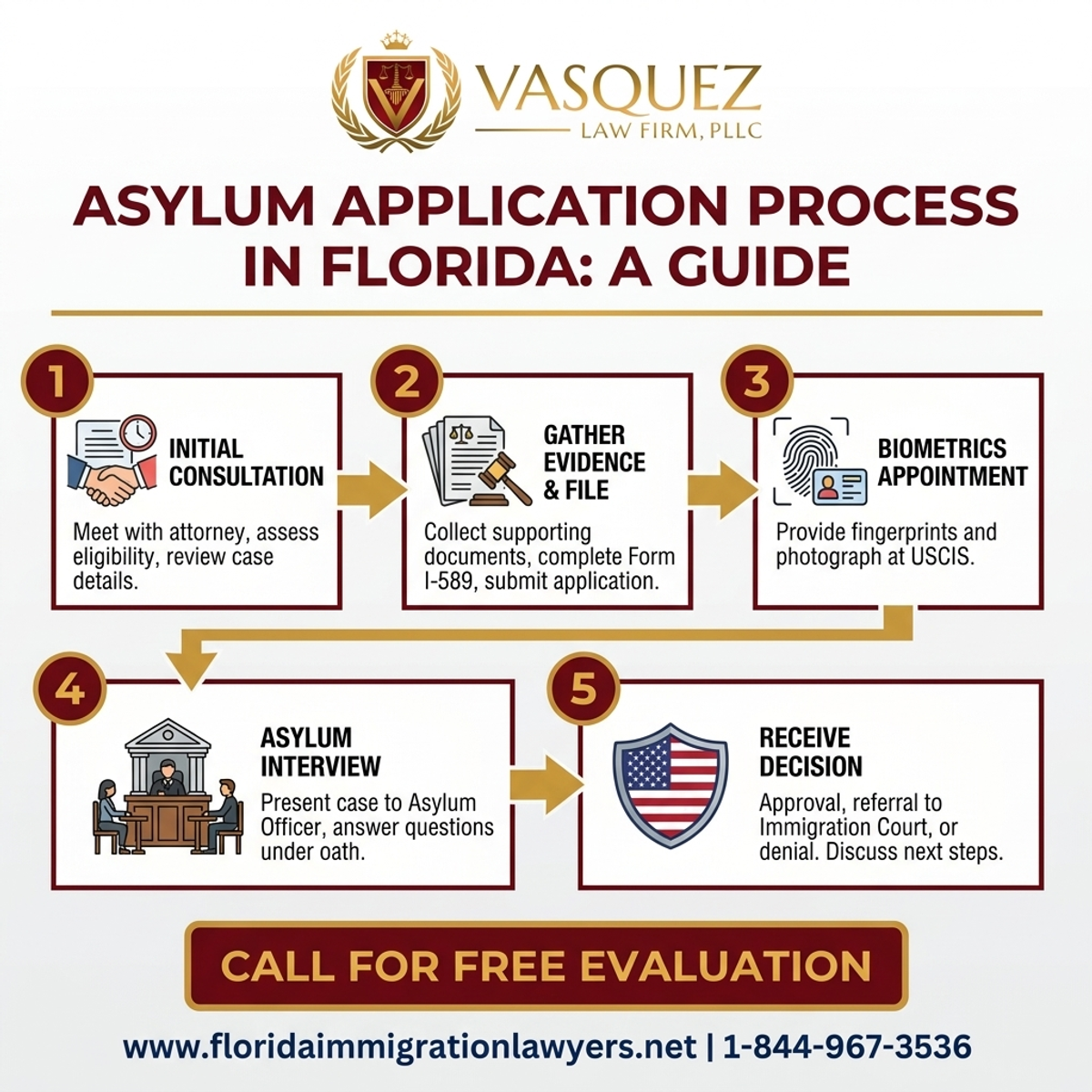
Step-by-Step Process — Asylum Application Process in Florida: A Guide | VLF Florida
The Defensive Asylum Process: In Removal Proceedings
Defensive asylum applies to individuals who are already in removal (deportation) proceedings before an Immigration Judge. This situation typically arises if you were apprehended at the border, overstayed a visa, or violated immigration laws, leading to the issuance of a Notice to Appear (NTA). In this context, asylum is presented as a defense against deportation. Instead of applying to USCIS, you file Form I-589 with the Immigration Court.
The defensive asylum process is often more adversarial than the affirmative process. You will present your case to an Immigration Judge, and a Department of Homeland Security (DHS) attorney will represent the government, often cross-examining you and your witnesses. The judge will make a decision based on the evidence presented and testimony given during court hearings. Given the high stakes and the complex legal environment of immigration court, having experienced legal representation is not just advisable but often critical for a successful outcome. Our firm specializes in deportation defense and can provide robust representation in these challenging circumstances.
Key Steps in the Asylum Application Journey
Regardless of whether you pursue affirmative or defensive asylum, the journey involves several critical stages:
- Filing Form I-589: This is the official application. It must be meticulously completed, providing all necessary personal details, a narrative of your fear of persecution, and information about family members.
- Gathering Supporting Evidence: Compile all available documents that support your claim. This includes personal affidavits, witness statements, medical records, police reports, news articles, and country condition reports from reputable sources.
- Biometrics Appointment: Attend this appointment to provide fingerprints, photographs, and a signature for background and security checks.
- Asylum Interview (Affirmative) or Court Hearings (Defensive): For affirmative cases, you will be interviewed by a USCIS asylum officer. For defensive cases, you will present your case before an Immigration Judge in a series of hearings.
- Decision: After your interview or hearings, a decision will be rendered. This could be a grant of asylum, a referral to immigration court (for affirmative cases), or a denial.
- Appeals (if necessary): If your asylum claim is denied, you may have the option to appeal the decision to a higher authority, such as the Board of Immigration Appeals (BIA) or federal courts.
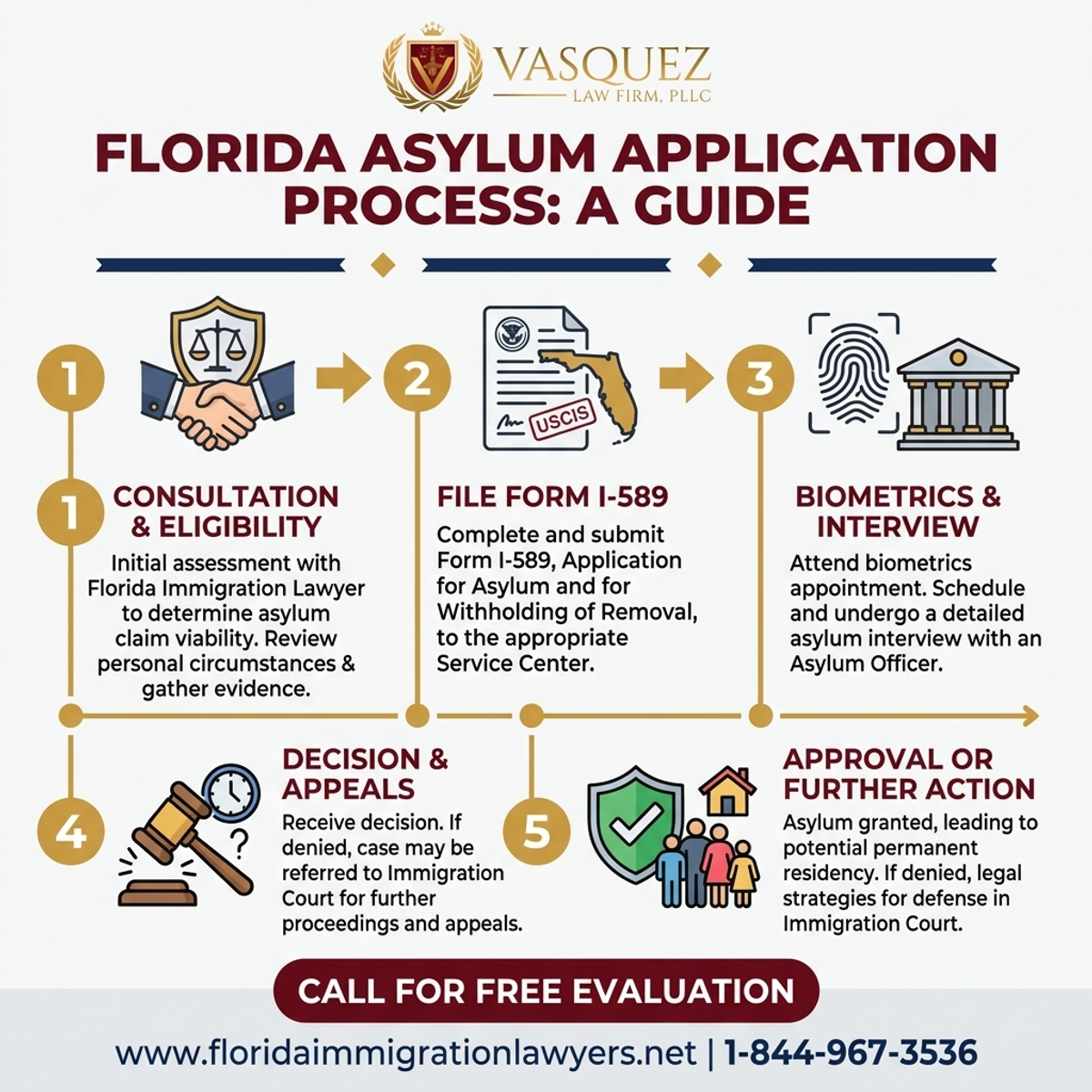
Key Statistics — Asylum Application Process in Florida: A Guide | VLF Florida
Each step requires careful attention to detail and adherence to strict deadlines. Missing a deadline or providing inconsistent information can severely jeopardize your case. The one-year filing deadline for affirmative asylum is particularly stringent, with limited exceptions for changed circumstances or extraordinary situations. Consulting with experienced legal professionals, such as our attorneys at VLF Florida, can help ensure every step is handled correctly.
Navigating Challenges and Common Pitfalls in Asylum Cases
The asylum process, while offering vital protection, is fraught with potential challenges and common pitfalls that can lead to denial. Awareness of these issues and proactive preparation are key to a successful outcome. One of the most significant challenges is establishing credibility. Asylum officers and immigration judges scrutinize every detail of an applicant's testimony. Inconsistencies, omissions, or vague answers can raise doubts about the veracity of your fear of persecution. It is crucial to be consistent in your narrative from the initial application to the interview or court hearings, even when recounting traumatic events.
Another frequent pitfall is the lack of sufficient corroborating evidence. While a credible testimony is paramount, it often needs to be supported by objective evidence. This includes country condition reports from human rights organizations, news articles, medical records of injuries sustained, police reports, or affidavits from witnesses. Without external evidence to back up your personal story, your claim may be seen as less persuasive. Applicants often struggle with the one-year filing deadline; failing to file Form I-589 within one year of your last arrival in the U.S. can lead to ineligibility unless you can demonstrate changed circumstances affecting your eligibility or extraordinary circumstances relating to the delay. These exceptions are narrowly interpreted.
Furthermore, demonstrating a clear nexus between the persecution and one of the five protected grounds can be challenging. It's not enough to simply have experienced harm; you must prove that the harm was inflicted *because of* your race, religion, nationality, political opinion, or membership in a particular social group. Many denials stem from an applicant's inability to clearly articulate this connection. Finally, navigating the complex legal framework and procedural requirements of U.S. immigration law without professional guidance is a significant hurdle. Understanding the burden of proof, the types of evidence admissible, and how to present a compelling case requires specialized knowledge. These complexities underscore why seeking expert legal assistance is often indispensable for applicants seeking immigration relief, particularly in asylum cases.
What Happens After Your Asylum Interview? Understanding the Decision and Appeals
After your asylum interview with USCIS (for affirmative cases), the asylum officer will typically issue a decision within a few weeks to several months. The possible outcomes include:
- Granted Asylum: If your case is approved, you will receive asylum status, allowing you to live and work in the U.S. indefinitely, and eventually apply for a Green Card.
- Referred to Immigration Court: If the asylum officer does not grant your asylum claim, but you are not in lawful status, your case will be referred to an Immigration Judge for defensive asylum proceedings. This is not a denial, but an opportunity to present your case again in a court setting.
- Notice of Intent to Deny (NOID): In some cases, USCIS may issue a NOID, giving you an opportunity to respond to specific concerns or provide additional evidence before a final decision is made.
- Denied: If your case is denied without referral to court (e.g., if you are already in lawful status or have no other basis for removal), you may have options to appeal.
For defensive asylum cases, the Immigration Judge will issue a decision at the end of your hearings. If denied, you generally have the right to appeal to the Board of Immigration Appeals (BIA), and potentially further to the federal circuit courts. The appeals process is highly technical and time-sensitive, requiring a deep understanding of legal arguments and precedents. A denial at any stage can have severe consequences, including deportation, making skilled legal representation crucial throughout the entire process.
Seeking Expert Legal Assistance for Your Florida Asylum Case
The asylum application process in Florida is intricate, demanding meticulous attention to detail, a profound understanding of legal precedents, and the ability to present a compelling and credible case. Attempting to navigate this journey alone can significantly reduce your chances of success, especially given the high stakes involved. An experienced immigration attorney can be an invaluable asset, providing guidance and representation at every stage.
At VLF Florida, our attorneys specialize in asylum law and can assist you by:
- Thoroughly preparing your Form I-589 and all supporting documentation, ensuring accuracy and completeness.
- Crafting a compelling personal declaration that effectively communicates your story of persecution.
- Gathering and organizing crucial corroborating evidence, including country conditions reports and expert testimonies.
- Preparing you extensively for your asylum interview or court hearings, including mock interviews to build confidence and refine your testimony.
- Representing you vigorously before USCIS asylum officers or in Immigration Court.
- Filing appeals to the Board of Immigration Appeals or federal courts if your initial claim is denied.
- Navigating complex legal challenges, such as the one-year filing deadline exceptions or credibility issues.
Our dedicated attorneys understand the emotional and legal complexities of asylum cases and are committed to providing compassionate yet aggressive advocacy for our clients. We work tirelessly to protect your rights and help you secure the safety and stability you deserve.
Frequently Asked Questions About Asylum in Florida
Here are some common questions about the asylum process:
- What is the difference between asylum and refugee status? Asylum is for individuals already in the U.S. or at a port of entry, while refugee status is for those outside the U.S. seeking admission. Both offer protection from persecution.
- How long does the asylum process take in Florida? Processing times can vary significantly, from several months to several years, depending on caseloads, interview backlogs, and whether the case is affirmative or defensive.
- Can I work while my asylum application is pending? Yes, after your asylum application has been pending for at least 150 days, you can apply for an Employment Authorization Document (EAD), commonly known as a work permit.
- What if I missed the one-year filing deadline? You may still be eligible if you can demonstrate changed circumstances that materially affect your eligibility for asylum or extraordinary circumstances relating to the delay in filing.
- Can my family members be included in my asylum application? Yes, your spouse and unmarried children under 21 who are in the U.S. can be included in your application at the time of filing or at any point before a final decision is made.
- What kind of evidence do I need for an asylum case? Evidence can include personal affidavits, witness statements, medical records, police reports, news articles, and country conditions reports from reputable sources.
- What happens if my asylum claim is denied? If denied affirmatively, you may be referred to immigration court. If denied defensively, you may have options to appeal to higher courts.
- Do I need an attorney for my asylum application? While not legally required, having an experienced attorney significantly increases your chances of success due to the complexity of immigration law and the high stakes involved.
Contact VLF Florida Immigration Lawyers Today
If you are considering applying for asylum in Florida or are already in the process, do not face the complexities of the U.S. immigration system alone. The decisions made during this critical time can profoundly impact your future and the future of your family. VLF Florida is here to provide the expert legal guidance and representation you need to navigate this challenging journey successfully. Our compassionate and skilled team is ready to listen to your story and help you build the strongest possible case for protection.
We offer a free, confidential consultation to discuss your specific circumstances and evaluate your eligibility for asylum. Take the first step towards securing your safety and future. Contact VLF Florida Immigration Lawyers today to schedule your free consultation. Your journey to safety starts here.
Conclusion: The path to asylum in Florida is challenging but navigable with the right legal support. VLF Florida is dedicated to helping individuals fleeing persecution find safety and a new beginning in the United States. We stand ready to be your trusted advocates through every step of this vital process.
Sources and References
- U.S. Citizenship and Immigration Services (USCIS)
- Executive Office for Immigration Review (EOIR)
- U.S. Department of State - Bureau of Consular Affairs
- Immigration and Nationality Act (INA), 8 U.S.C. Chapter 12
Do Not Navigate This Process Alone
Our experienced immigration attorneys are ready to fight for you. Get a free, confidential consultation today.
Se Habla Español
Frequently Asked Questions
Florida Immigration Lawyers
Immigration Attorney | Founder, Vasquez Law Firm
U.S. Air Force veteran and immigration attorney with thousands of cases resolved. J.D., NCCU School of Law. AILA member. Admitted to the 4th, 5th, and 11th Circuit Courts.
Available 24/7 - Free Evaluations
Related Legal Services
Our Florida immigration attorneys can help you with free immigration consultation, experienced immigration attorneys and business immigration. Call today at 1-844-967-3536 for a free consultation.
Related Links
Related Topics
Free Legal Consultation
Discuss your case with our experienced attorneys. We're available 24/7.
Se Habla Español - Estamos aquí para ayudarle.
Related Articles
H-2A Visa for Florida Growers: Essential Farm Labor Guide
The H-2A visa program is crucial for Florida's agricultural sector, enabling growers to address temporary labor shortages by bringing in foreign agricultural workers. This guide delves into the step-by-step application process, essential documentation, expected timelines, and associated costs for Florida employers. We highlight the stringent requirements set by the Department of Labor (DOL) and U.S. Citizenship and Immigration Services (USCIS) regarding worker wages, housing, and transportation. Furthermore, we outline common pitfalls to avoid and emphasize when legal counsel from Florida Immigration Lawyers becomes indispensable. Understanding these intricacies is vital for ensuring compliance and the successful operation of your farm in Florida. Contact us today for a free consultation.
Understanding 212(c) Waiver Legacy Relief in Florida
Explore the 212(c) waiver, a crucial form of relief for lawful permanent residents facing deportation in Florida. Learn eligibility criteria, application steps, and common pitfalls. Reach out to Florida Immigration Lawyers for a free consultation.
Immigration Medical Exam: Florida Doctor Guide | VLF Florida
Navigating the immigration medical exam in Florida? This guide provides practical advice on finding a certified civil surgeon in Orlando, costs, and avoiding common mistakes. Contact Florida Immigration Lawyers for expert guidance.
TPS Florida Eligible Countries 2026 | FL Immigration Lawyers
Explore Temporary Protected Status (TPS) for eligible countries in Florida for 2026. Learn about eligibility, application process, and how Florida Immigration Lawyers can assist you.
