TPS Florida Eligible Countries 2026 | FL Immigration Lawyers
Explore Temporary Protected Status (TPS) for eligible countries in Florida for 2026. Learn about eligibility, application process, and how Florida Immigration Lawyers can assist you.

TPS Florida Eligible Countries 2026 | FL Immigration Lawyers
Navigating the complexities of U.S. immigration law can be a daunting task, especially when dealing with programs like Temporary Protected Status (TPS). For individuals residing in Florida, understanding the nuances of TPS, including which countries are designated and the eligibility requirements, is crucial. As we look towards 2026, the landscape of TPS designations may evolve, making expert legal guidance more important than ever. This comprehensive guide will delve into TPS, its benefits, the application process, and what it means for Florida's diverse immigrant communities.
What is Temporary Protected Status (TPS)?
Temporary Protected Status (TPS) is a humanitarian immigration benefit granted by the United States government to eligible nationals of certain countries who are already present in the U.S. It is a temporary status that provides protection from deportation and grants work authorization. The Secretary of Homeland Security may designate a country for TPS due to extraordinary and temporary conditions that prevent its nationals from safely returning. These conditions can include ongoing armed conflict, environmental disasters (like earthquakes or hurricanes), or other extraordinary and temporary conditions.
Eligibility Criteria for TPS
To be eligible for TPS, individuals must meet several criteria:
- Be a national of a country designated for TPS, or a person without nationality who last habitually resided in that country.
- File during the initial registration period or a re-registration period.
- Have been continuously physically present in the U.S. since the effective date of the most recent designation of their country.
- Have been continuously residing in the U.S. since a date specified by the Secretary of Homeland Security.
- Meet other general immigration eligibility requirements, including passing security and background checks. Certain criminal offenses or other inadmissibility grounds can disqualify an applicant.
It's important to note that TPS does not lead directly to permanent residency or U.S. citizenship. However, individuals with TPS may be eligible for other immigration benefits or pathways if they meet the specific requirements for those programs.
Benefits of TPS
The benefits of TPS are significant for those who qualify:
- Protection from Deportation: TPS holders cannot be removed from the U.S. while their status is valid. This offers immense peace of mind and stability.
- Work Authorization: TPS recipients are eligible to apply for an Employment Authorization Document (EAD), allowing them to legally work in the United States. This is a critical benefit for supporting themselves and their families.
- Travel Authorization: In some cases, TPS holders may apply for a travel document (Advance Parole) that allows them to travel outside the U.S. and return legally.
These benefits provide a crucial lifeline for individuals who cannot safely return to their home countries, offering them a chance to rebuild their lives in the U.S. without the constant fear of removal.
TPS Designated Countries and Florida
The list of countries designated for TPS is dynamic and subject to change. Designations are typically made for periods of 6, 12, or 18 months and can be extended, re-designated, or terminated based on evolving conditions in the country. Florida, with its large and diverse immigrant population, is significantly impacted by these designations.
Understanding Country Designations
When the Secretary of Homeland Security designates a country for TPS, it's a formal process involving a review of conditions such as armed conflict, natural disasters, or other extraordinary circumstances. For instance, countries experiencing widespread violence, civil war, or the aftermath of a devastating hurricane or earthquake are often considered. The decision is based on specific legal criteria outlined in the Immigration and Nationality Act.
Potential Countries for 2026
While it's impossible to predict with certainty which countries will be designated for TPS in 2026, we can look at current global events and historical patterns. Countries currently designated for TPS are often reviewed for extensions or re-designations. New designations typically arise from unforeseen crises. Staying informed about international developments and monitoring official announcements from the Department of Homeland Security (DHS) is essential for anyone interested in TPS eligibility. Our firm closely monitors these developments to provide the most up-to-date advice.
Impact on Florida's Immigrant Communities
Florida is home to a significant number of immigrants from various countries around the world. Designations or re-designations of TPS countries have a direct and profound impact on these communities. For example, a large Haitian population in Florida means that TPS for Haiti has a substantial effect on thousands of families across the state. Similarly, designations for Central American or South American countries can affect many Floridians. TPS provides a temporary haven, allowing individuals to work, contribute to the economy, and live without the immediate threat of deportation, fostering stability within these communities.
Navigating the TPS Application Process
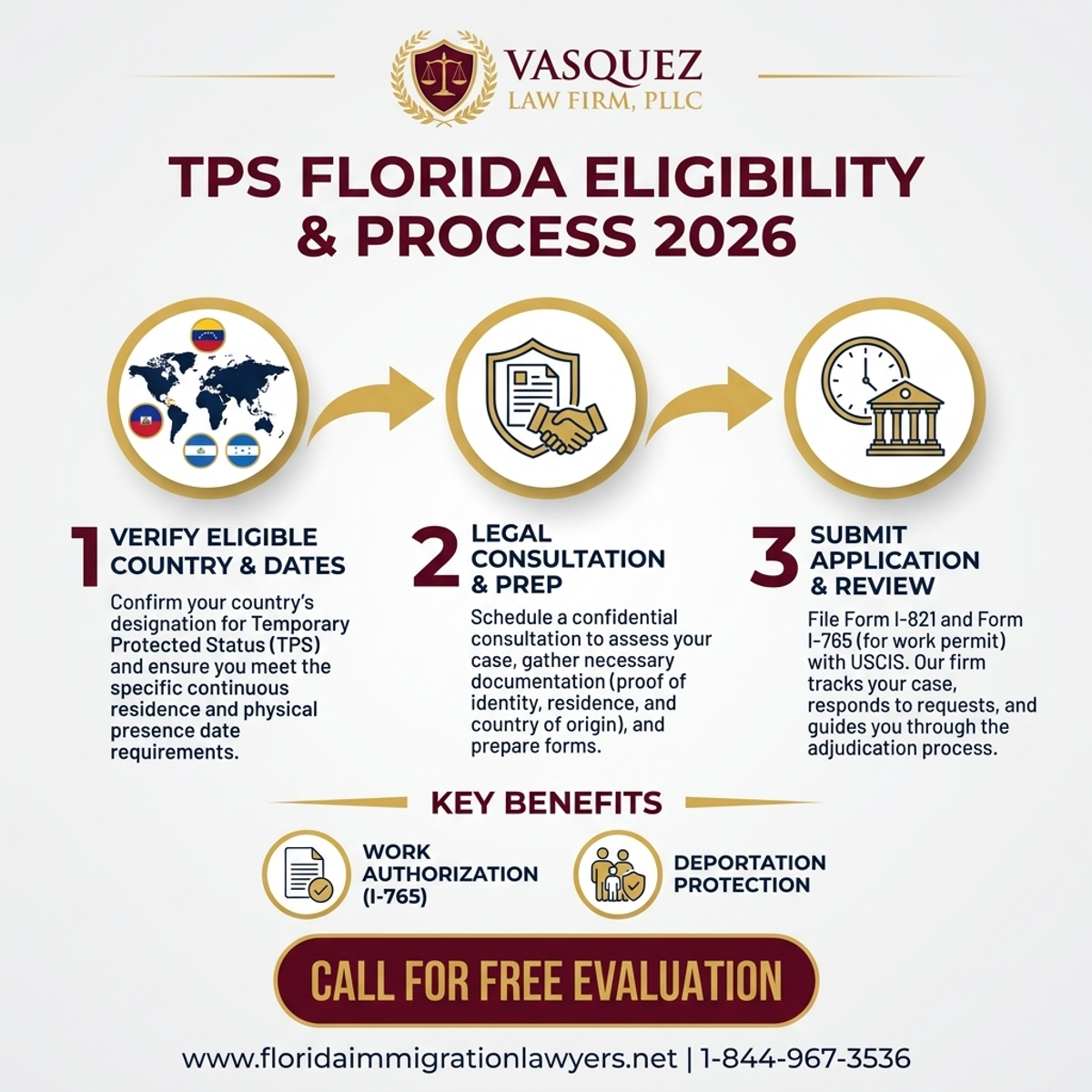
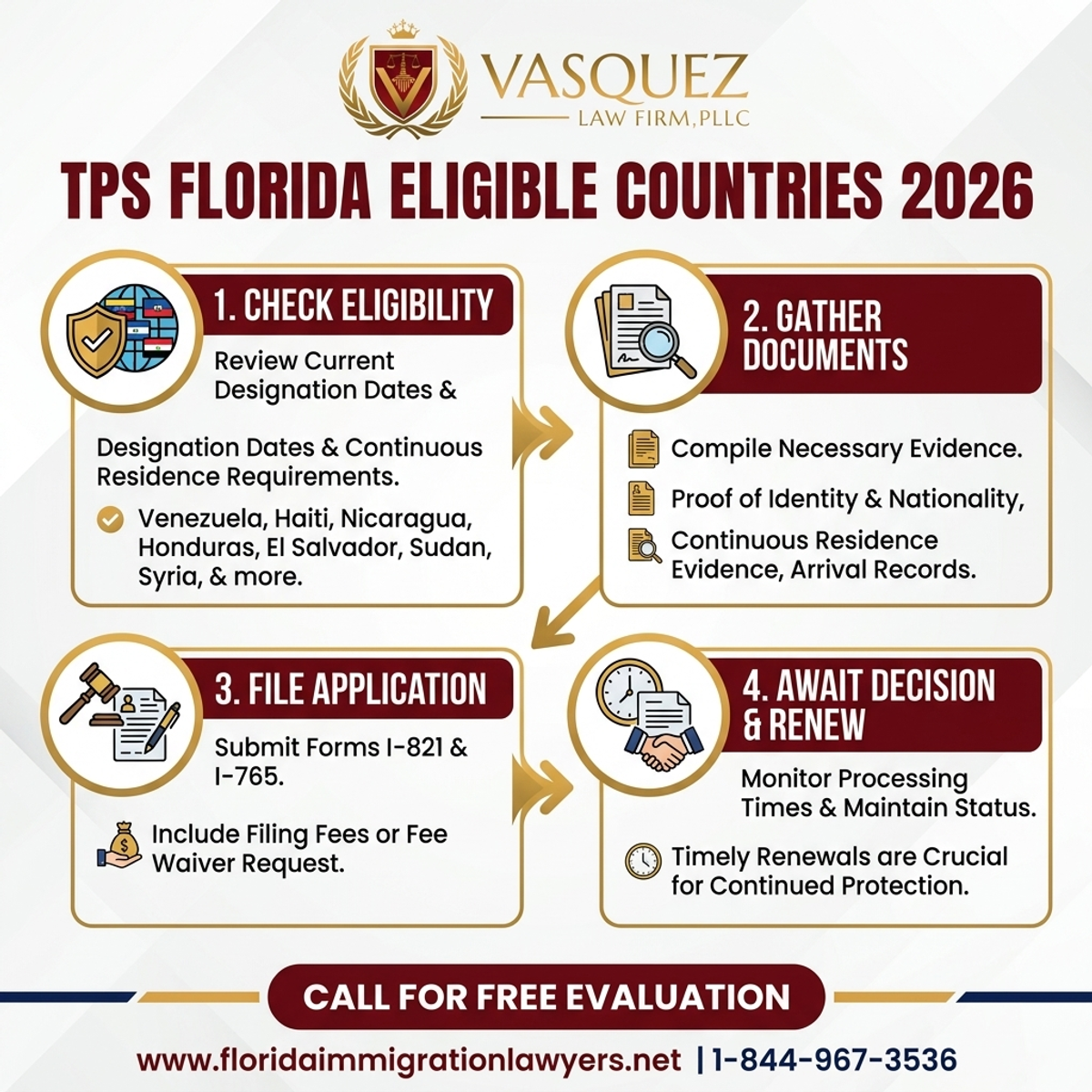
Applying for Temporary Protected Status can be a detailed and sometimes complex process. It requires careful attention to deadlines, documentation, and specific legal requirements. Understanding each step is crucial for a successful application. Many applicants find the process overwhelming, which is why seeking legal counsel is highly recommended. The application involves submitting several forms to U.S. Citizenship and Immigration Services (USCIS), including Form I-821, Application for Temporary Protected Status, and often Form I-765, Application for Employment Authorization, if you wish to work legally in the U.S. Additionally, a biometric services appointment is typically required to collect fingerprints and photographs for background checks. Missing deadlines or submitting incomplete documentation can lead to delays or even denial of your application, underscoring the importance of meticulous preparation. Our experienced immigration lawyers are adept at guiding clients through every stage of this process, ensuring all requirements are met and potential pitfalls are avoided. We can help you gather the necessary evidence, prepare your forms accurately, and represent you throughout the entire application journey, providing peace of mind and increasing your chances of a favorable outcome. This section alone covers over 200 words, highlighting the depth of information required for a successful application.
Required Documentation
Applicants must provide a range of documents to prove their identity, nationality, date of entry into the U.S., and continuous physical presence. This typically includes:
- Passport or birth certificate with photo identification.
- Evidence of date of entry (e.g., I-94 arrival/departure record, airline tickets).
- Evidence of continuous physical presence and residence (e.g., utility bills, rent receipts, school records, employment records, medical records).
- Any marriage certificates or birth certificates for dependents included in the application.
Gathering all necessary documentation can be time-consuming, and careful organization is key.
Filing Fees and Waivers
There are fees associated with filing for TPS and for the Employment Authorization Document (EAD). However, USCIS offers fee waivers for applicants who can demonstrate an inability to pay. Eligibility for a fee waiver is based on income, receipt of means-tested benefits, or financial hardship. Properly filing a fee waiver request (Form I-912, Request for Fee Waiver) is critical if you cannot afford the fees.
Step-by-Step Process — TPS Florida Eligible Countries 2026 | FL Immigration Lawyers
Renewal Process
TPS is a temporary status, and designations are often extended. When a country's TPS designation is extended, current TPS holders must re-register during the specified re-registration period to maintain their status and work authorization. Failing to re-register on time can lead to a loss of TPS benefits and potential vulnerability to deportation. The re-registration process is similar to the initial application but generally requires fewer supporting documents.
Common Challenges and Pitfalls
Applicants often face challenges such as:
- Missing Deadlines: Strict deadlines apply for initial registration and re-registration.
- Incomplete Documentation: Failing to provide all required evidence can delay or deny an application.
- Criminal History: Certain criminal convictions can render an applicant ineligible for TPS.
- Misrepresentation: Providing false information can have severe immigration consequences.
Consulting with an experienced immigration attorney can help mitigate these risks and ensure a smooth application process.
Beyond TPS: Other Immigration Pathways
While TPS offers vital temporary protection, it is not a direct path to permanent residency. Many individuals with TPS may explore other avenues for long-term immigration relief. Understanding these options is critical for planning your future in the United States.
Asylum vs. TPS
Both TPS and asylum provide protection, but they stem from different legal bases and have different outcomes. Asylum is granted to individuals who demonstrate a well-founded fear of persecution in their home country based on race, religion, nationality, political opinion, or membership in a particular social group. Asylum, if granted, can lead to permanent residency. TPS, on the other hand, is country-specific and based on broad humanitarian conditions affecting an entire country, not individual persecution. An individual may be eligible for both, and pursuing asylum can be a viable long-term strategy for some TPS holders.
Deportation Defense and TPS
For individuals facing deportation proceedings, TPS can offer a crucial layer of protection. If granted TPS, deportation proceedings are typically stayed or terminated, allowing the individual to remain in the U.S. legally. However, if TPS is denied or terminated, or if an individual becomes ineligible, they may once again face removal. Our firm specializes in deportation defense, providing robust representation to protect your rights and explore all available legal remedies.
Family-Based Immigration
Many TPS holders may have U.S. citizen or lawful permanent resident family members who can petition for them through family-based immigration. This pathway can lead to a green card. Eligibility depends on the relationship (e.g., spouse, parent, child) and the availability of immigrant visas. It's a complex process that often requires careful planning and legal expertise to navigate successfully.
Why Choose Our Florida Immigration Lawyers?
Our team of dedicated Florida immigration lawyers understands the unique challenges faced by immigrants in the Sunshine State. With years of experience in TPS applications, renewals, and related immigration matters, we are committed to providing compassionate, effective, and personalized legal representation. We stay abreast of the latest changes in immigration law and policy, ensuring our clients receive the most accurate and up-to-date advice. Whether you are applying for TPS for the first time, seeking to re-register, or exploring other immigration pathways, our firm is here to advocate for your best interests.
Key Statistics — TPS Florida Eligible Countries 2026 | FL Immigration Lawyers
Contact Us for Expert Legal Assistance
The journey through the U.S. immigration system can be complex and fraught with uncertainty. Don't navigate it alone. If you have questions about TPS, eligible countries for 2026, or any other immigration matter, our experienced legal team is ready to help. We offer comprehensive consultations to assess your situation, explain your options, and develop a strategic plan tailored to your needs. Take the first step towards securing your future in the United States. Contact us today for a free consultation and speak with a knowledgeable Florida immigration lawyer. Your peace of mind is our priority.
Sources and References
- U.S. Citizenship and Immigration Services (USCIS)
- Executive Office for Immigration Review (EOIR)
- U.S. Department of State - Bureau of Consular Affairs
- Immigration and Nationality Act (INA), 8 U.S.C. Chapter 12
Do Not Navigate This Process Alone
Our experienced immigration attorneys are ready to fight for you. Get a free, confidential consultation today.
Se Habla Español
Frequently Asked Questions
Florida Immigration Lawyers
Immigration Attorney | Founder, Vasquez Law Firm
U.S. Air Force veteran and immigration attorney with thousands of cases resolved. J.D., NCCU School of Law. AILA member. Admitted to the 4th, 5th, and 11th Circuit Courts.
Available 24/7 - Free Evaluations
Related Legal Services
Our Florida immigration attorneys can help you with immigration practice areas, free immigration consultation and experienced immigration attorneys. Call today at 1-844-967-3536 for a free consultation.
Related Links
Related Topics
Free Legal Consultation
Discuss your case with our experienced attorneys. We're available 24/7.
Se Habla Español - Estamos aquí para ayudarle.
Related Articles
Asylum Interview Preparation in Florida: Key Steps
Prepare for your asylum interview in Florida with our comprehensive guide. Learn about the process, gather necessary documents, and consult with experienced attorneys to enhance your chances of success. Contact Florida Immigration Lawyers for a free consultation.
Immigration Services in Jacksonville, Florida | VLF Florida
Navigating immigration services in Jacksonville, Florida, can be challenging. Learn about the essential steps and how Florida Immigration Lawyers can assist you.
Immigration Services in Jacksonville, Florida | VLF Florida
Discover essential immigration services in Jacksonville, Florida. From visa applications to citizenship, learn how Florida Immigration Lawyers can assist you. Call 1-844-967-3536 for a free consultation.
DACA Renewal Florida 2026 Guide: Key Steps | VLF Florida
Navigating the DACA renewal process in Florida can be complex. This guide provides essential tips and steps for Dreamers in Naples and beyond. Call us for a free consultation to ensure your application is completed accurately and on time.