Understanding 212(c) Waiver Legacy Relief in Florida
Explore the 212(c) waiver, a crucial form of relief for lawful permanent residents facing deportation in Florida. Learn eligibility criteria, application steps, and common pitfalls. Reach out to Florida Immigration Lawyers for a free consultation.
Understanding 212(c) Waiver Legacy Relief in Florida
In the complex and often daunting world of U.S. immigration law, the 212(c) waiver stands as a unique and historically significant form of relief. Specifically, "legacy relief" refers to a narrow window of eligibility preserved for certain lawful permanent residents (LPRs) who faced deportation proceedings before critical changes in immigration legislation. For individuals in Florida facing the threat of removal, understanding the intricacies of 212(c) legacy relief can be the key to remaining in the United States. This article delves into the history, eligibility requirements, application process, and critical importance of legal representation for those seeking this vital form of relief within the broader landscape of U.S. immigration law.
What is a 212(c) Waiver?
Section 212(c) of the Immigration and Nationality Act (INA) was a powerful provision that allowed certain lawful permanent residents to waive grounds of inadmissibility or deportability. Before its significant amendment in 1996, it offered a discretionary pathway for LPRs who had committed certain offenses to avoid deportation and retain their green card. The core principle behind 212(c) was to provide a second chance, allowing an immigration judge to balance an applicant's positive equities (such as family ties, employment, and community contributions) against their negative factors (like criminal history).
Eligibility Criteria for Legacy Relief
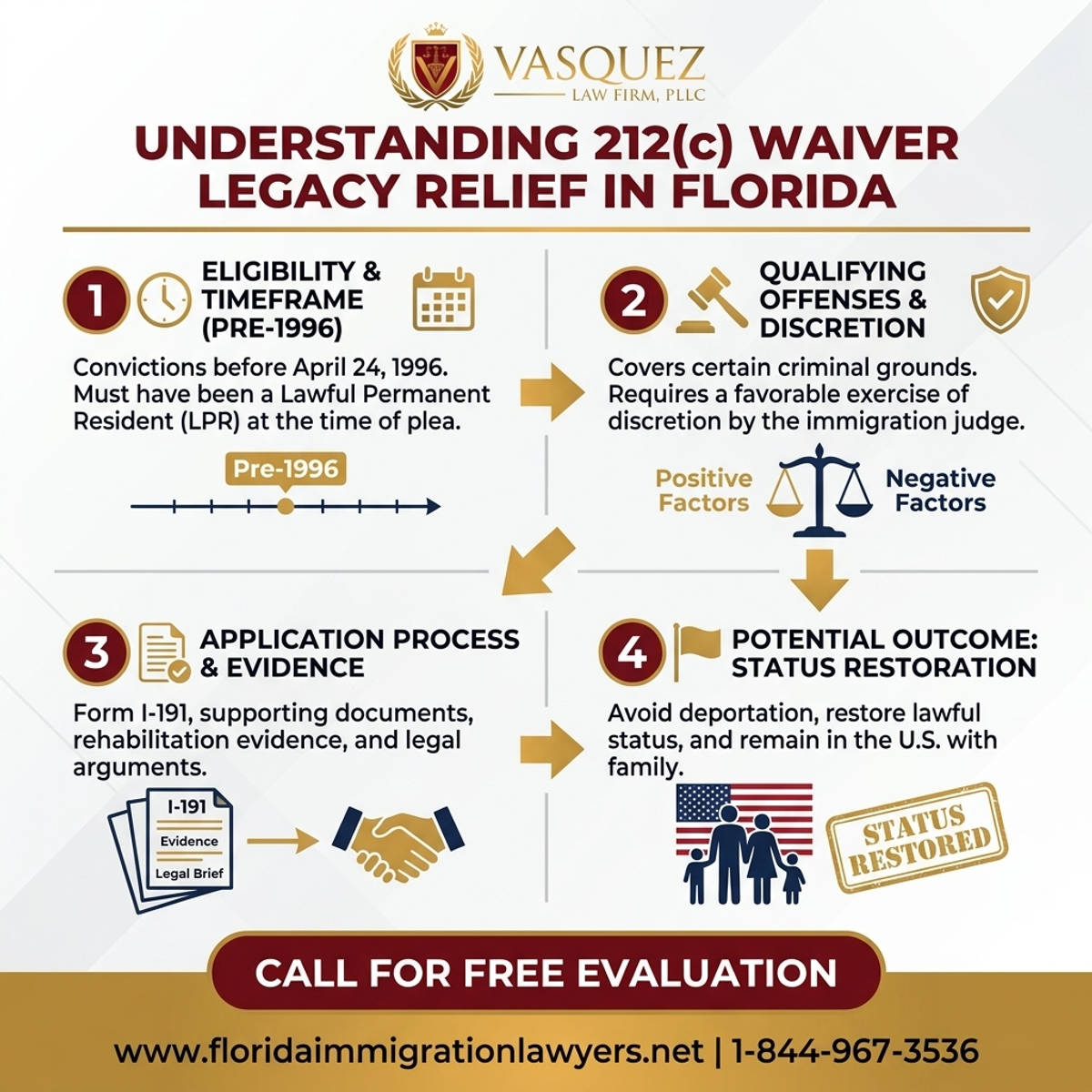
To qualify for 212(c) legacy relief, applicants must meet several stringent criteria:
- Lawful Permanent Resident Status: The applicant must have been a lawful permanent resident of the United States. This is a foundational requirement; temporary visa holders or undocumented individuals are not eligible.
- Seven Years of Lawful Domicile: The applicant must have accrued seven consecutive years of "lawful domicile" in the United States. Lawful domicile means residing in the U.S. with the intent to remain permanently while in a lawful status. This period is typically calculated from the date of admission as an LPR or adjustment to LPR status, and it must have been completed before the issuance of a Notice to Appear (NTA) or Order to Show Cause (OSC) initiating deportation proceedings.
- Comparable Grounds: The ground for which the applicant is deemed deportable must have a "comparable" ground of inadmissibility. This is a highly technical legal requirement that often requires detailed analysis of immigration statutes and case law. It means that the reason for deportation must also be a reason for being denied entry into the U.S.
- Proceedings Initiated Before April 1, 1997: This is the defining characteristic of "legacy relief." The applicant's deportation or exclusion proceedings must have commenced before April 1, 1997. This critical date marks the effective date of the Illegal Immigration Reform and Immigrant Responsibility Act (IIRIRA), which dramatically altered immigration law.
- Plea or Conviction Before April 24, 1996: For those whose deportation was based on a criminal conviction, the plea of guilty or nolo contendere, or the conviction itself, must have occurred before April 24, 1996, the effective date of the Anti-Terrorism and Effective Death Penalty Act (AEDPA). This specific date is crucial for many legacy cases involving criminal offenses.
Meeting these criteria is essential for any individual seeking this vital tool in deportation defense. The interplay of these dates and requirements underscores the complexity of 212(c) legacy cases.
The Evolution of 212(c) Relief: From INA to AEDPA and IIRIRA
To truly grasp the significance of 212(c) legacy relief, it's vital to understand its tumultuous history and the legislative changes that shaped its availability. Originally, Section 212(c) of the INA was a broad form of discretionary relief, allowing eligible lawful permanent residents to waive almost any ground of inadmissibility or deportability, including those related to serious criminal offenses. This meant that even individuals convicted of aggravated felonies could apply for a waiver, provided they met the residency requirements and could demonstrate sufficient positive equities to merit a favorable exercise of discretion by an immigration judge.
The landscape of immigration law underwent a seismic shift in 1996 with the enactment of two landmark pieces of legislation: the Anti-Terrorism and Effective Death Penalty Act (AEDPA) on April 24, 1996, and the Illegal Immigration Reform and Immigrant Responsibility Act (IIRIRA) on April 1, 1997. These acts drastically curtailed the availability of 212(c) relief, particularly for those with aggravated felony convictions. Post-AEDPA and IIRIRA, many LPRs who had previously been eligible for 212(c) found themselves without a viable defense against deportation, even if their crimes were relatively minor or occurred years ago.
However, the story of 212(c) didn't end there. In 2001, the U.S. Supreme Court delivered a pivotal ruling in INS v. St. Cyr. The Court held that AEDPA and IIRIRA could not be applied retroactively to LPRs who pleaded guilty or nolo contendere to a deportable crime before the enactment of AEDPA (April 24, 1996), and whose deportation proceedings commenced before IIRIRA's effective date (April 1, 1997). This landmark decision created what is now known as "212(c) legacy relief," preserving a crucial avenue for deportation defense for those whose cases fall within this specific legacy period. Subsequent decisions, such as the Attorney General's ruling in Matter of Blake, further clarified and sometimes complicated the scope of this relief, emphasizing the need for precise legal interpretation.
Navigating the 212(c) Waiver Application Process
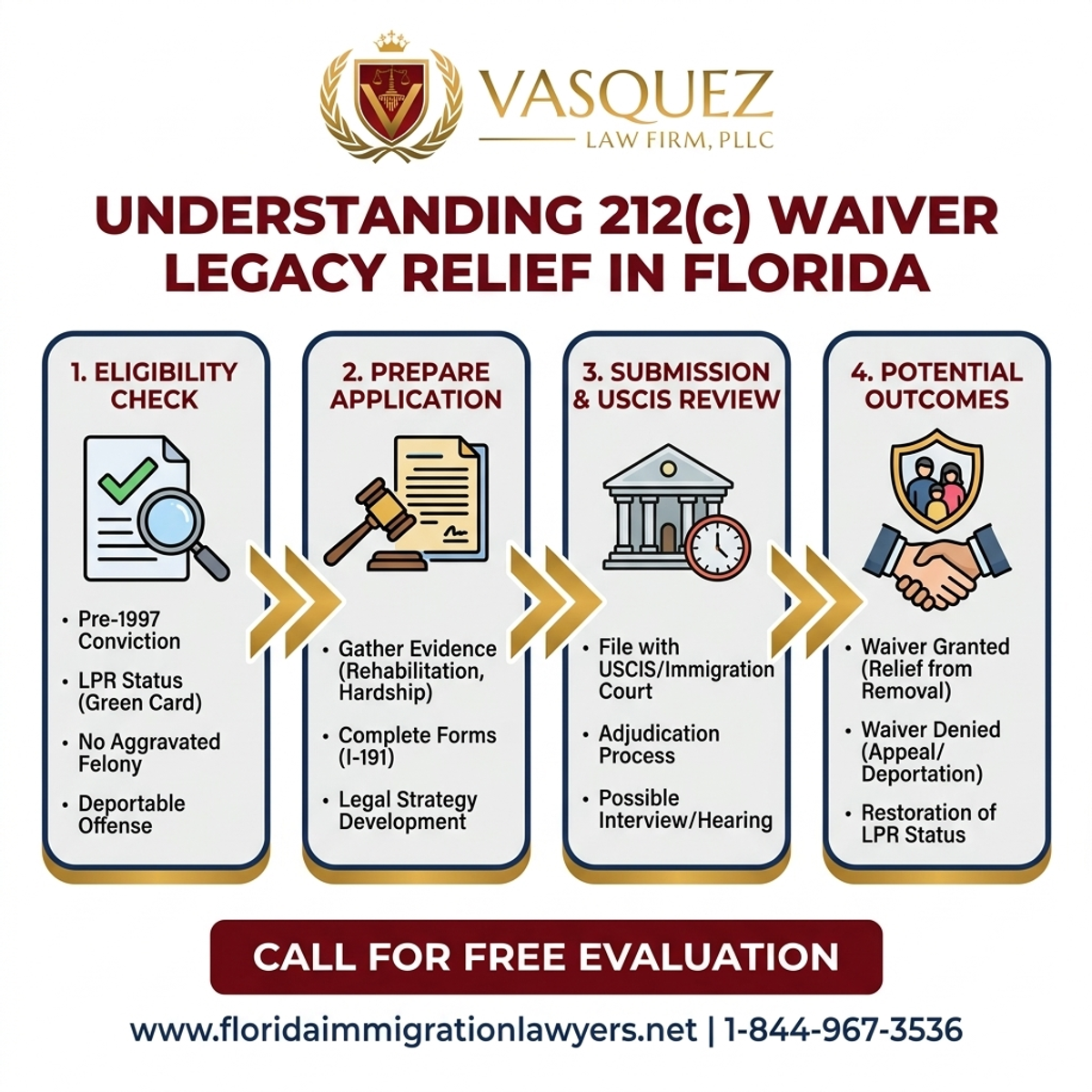
The application process for 212(c) legacy relief is intricate and demands meticulous preparation. It typically involves filing Form I-191, Application for Relief Under Former Section 212(c) of the Immigration and Nationality Act, along with a comprehensive package of supporting documentation.
Gathering Documentation
A strong 212(c) application relies heavily on compelling evidence. Key documents often include:
- Proof of lawful permanent resident status (e.g., green card, I-551 stamp).
- Evidence of seven years of lawful domicile (e.g., tax returns, employment records, school records, utility bills, leases, affidavits).
- Certified copies of all criminal court records, including arrest reports, charging documents, plea agreements, sentencing orders, and proof of completion of probation/parole.
- Evidence of rehabilitation (e.g., therapy records, participation in support groups, letters of recommendation).
- Documentation of family ties in the U.S. (e.g., birth certificates of U.S. citizen children, marriage certificates, affidavits from family members).
- Letters of support from employers, community leaders, and religious figures.
- Evidence of hardship to qualifying relatives if the applicant were to be deported.
Step-by-Step Process — Understanding 212(c) Waiver Legacy Relief in Florida
Filing and Adjudication
The application is filed with the appropriate immigration authority, which could be U.S. Citizenship and Immigration Services (USCIS) or the Executive Office for Immigration Review (EOIR), depending on whether the applicant is in removal proceedings. If the application is filed with USCIS, an interview may be required. If the applicant is in removal proceedings, the application is filed with the Immigration Court, and the Immigration Judge will hear the case.
During the hearing or interview, the applicant must present their case, often testifying about their life in the U.S., their rehabilitation efforts, and the potential hardship their deportation would cause. The goal is to demonstrate that the positive factors in their life outweigh the negative factors that led to the deportation proceedings. To ensure your application is meticulously prepared and filed, we encourage you to contact us for expert guidance.
Key Factors in Adjudication: Discretionary Relief
At its heart, 212(c) relief is discretionary. This means that even if an applicant meets all statutory eligibility requirements, the Immigration Judge or USCIS officer has the ultimate authority to grant or deny the waiver based on a balancing test. This test weighs the applicant's positive equities against their negative factors.
Positive Factors (Equities)
Factors that weigh in favor of granting a 212(c) waiver include:
- Family Ties: Strong family relationships in the U.S., especially with U.S. citizen or LPR spouses, children, or parents.
- Length of Residence: A long period of lawful residence in the United States.
- Employment History: A stable work history, demonstrating economic contribution and self-sufficiency.
- Property Ownership and Business Ties: Evidence of significant investments or contributions to the U.S. economy.
- Community Involvement: Participation in community service, religious organizations, or other civic groups.
- Rehabilitation: Demonstrated remorse for past offenses, completion of rehabilitation programs, and a clear change in behavior.
- Hardship: The extreme hardship that deportation would cause to the applicant and their qualifying U.S. citizen or LPR family members.
- Military Service: Honorable service in the U.S. Armed Forces.
Negative Factors (Adverse Factors)
Factors that weigh against granting a 212(c) waiver include:
- Nature and Severity of the Crime: Particularly violent or serious criminal offenses.
- Criminal History: A lengthy or repeated criminal record.
- Recency of Offense: Recent criminal activity.
- Other Immigration Violations: Any other violations of immigration law.
- Lack of Rehabilitation: Failure to show genuine remorse or efforts towards rehabilitation.
The Immigration Judge or USCIS officer performs a careful balancing act, assessing whether the positive factors sufficiently outweigh the negative ones to warrant a favorable exercise of discretion. While 212(c) addresses specific grounds of inadmissibility and deportability, our firm also provides comprehensive legal services for other forms of protection, such as asylum claims, for individuals fleeing persecution.
Common Challenges and Pitfalls in 212(c) Cases
Despite its potential for relief, pursuing a 212(c) legacy waiver is fraught with challenges. The specific historical context and legal nuances make these cases particularly complex, even for seasoned legal professionals. Understanding these common pitfalls is crucial for anyone considering this path.
Proving Lawful Domicile
One of the most significant hurdles is meticulously proving the seven years of "lawful domicile." This isn't merely about physical presence; it requires demonstrating an intent to reside permanently in the U.S. while maintaining a lawful immigration status. Gaps in lawful status, periods of unauthorized stay, or even extended trips abroad can complicate this calculation. Gathering sufficient documentation from decades past to definitively establish continuous lawful domicile can be a monumental task, often requiring extensive record retrieval and careful assembly of evidence.
Establishing "Comparable Grounds"
The requirement that the ground of deportability must have a "comparable" ground of inadmissibility is a highly technical and frequently litigated aspect of 212(c) cases. This involves a detailed legal analysis comparing specific sections of the INA, often requiring deep knowledge of statutory interpretation and relevant case law. What might seem like a straightforward comparison to a layperson can be a complex legal argument that determines eligibility. Errors in this analysis can lead to immediate denial of the waiver.
The Burden of Proof
The applicant bears the burden of proof for both statutory eligibility and meriting a favorable exercise of discretion. This means it is up to the individual, with their legal counsel, to present a compelling case with robust evidence that clearly demonstrates they meet all requirements and that their positive equities outweigh any negative factors. Failing to provide sufficient evidence or articulate a strong argument can result in the waiver being denied, even if the individual is technically eligible.
Key Statistics — Understanding 212(c) Waiver Legacy Relief in Florida
Changes in Law and Policy
Immigration law is constantly evolving, and even legacy relief can be impacted by new interpretations, policy memos, or court decisions. Staying abreast of these developments is critical, as an understanding of the law at the time of the relevant events (e.g., conviction, initiation of proceedings) is essential, but so is knowledge of current adjudicatory standards. Given the complexities, consulting with experienced immigration attorneys is paramount.
The Importance of Timeliness
While 212(c) legacy relief pertains to older cases, the timeliness of filing and responding to requests for evidence remains crucial. Missing deadlines can lead to procedural denials, regardless of the merits of the case. Navigating these challenges effectively requires not only a deep understanding of immigration law but also meticulous attention to detail and a strategic approach to case presentation.
Why You Need an Experienced Florida Immigration Lawyer
The complexities surrounding 212(c) legacy relief make legal representation not just advisable, but often essential for success. An experienced Florida immigration lawyer can provide invaluable assistance throughout the entire process.
- Expertise in Complex Immigration Law: Immigration law is notoriously intricate, and 212(c) legacy relief is one of its most specialized areas. A knowledgeable attorney understands the historical context, the nuances of the St. Cyr decision, the "comparable grounds" analysis, and the specific evidentiary requirements. They can accurately assess your eligibility and identify potential challenges.
- Case Preparation and Strategy: Lawyers can help you gather and organize the vast amount of documentation required, ensuring that every piece of evidence strengthens your case. They can develop a compelling narrative that highlights your positive equities and addresses any negative factors, crafting a persuasive argument for discretionary relief.
- Representation in Court: If your case is in removal proceedings, an attorney will represent you before the Immigration Judge. They can present your evidence, cross-examine witnesses, object to government arguments, and make legal arguments on your behalf, significantly increasing your chances of a favorable outcome.
- Navigating Bureaucracy: Dealing with USCIS or EOIR can be overwhelming. An attorney can handle all communications, filings, and inquiries, ensuring that all procedures are followed correctly and deadlines are met.
- Peace of Mind: Facing deportation is incredibly stressful. Having an experienced legal team by your side provides peace of mind, allowing you to focus on your family and future while your legal matters are expertly handled.
If you or a loved one are facing deportation and believe you might be eligible for 212(c) legacy relief, do not hesitate to contact our experienced Florida immigration lawyers. Reach out to us today for a confidential consultation by calling (844) 967-3536 or by visiting our contact page.
Frequently Asked Questions About 212(c) Waiver Legacy Relief
- What is a 212(c) waiver?
A 212(c) waiver was a form of discretionary relief that allowed certain lawful permanent residents (green card holders) to waive grounds of inadmissibility or deportability, essentially allowing them to remain in the U.S. despite having committed certain offenses.
- What does "legacy relief" mean in the context of 212(c)?
"Legacy relief" refers to the availability of 212(c) waivers for individuals whose deportation proceedings began before April 1, 1997, and, for criminal convictions, if their plea or conviction occurred before April 24, 1996. This eligibility was preserved by a Supreme Court decision after the law was largely repealed.
- Who is eligible for 212(c) legacy relief?
Eligibility is highly specific: you must have been a lawful permanent resident, accrued seven consecutive years of lawful domicile, have deportation proceedings initiated before April 1, 1997, and for criminal grounds, your plea/conviction must be before April 24, 1996. The ground for deportation must also have a "comparable" ground of inadmissibility.
- What is "lawful domicile" and why is it important?
Lawful domicile means residing in the U.S. with the intent to remain permanently, while in a lawful status. You must prove seven consecutive years of lawful domicile to be eligible for 212(c) legacy relief. This period is typically calculated from the date you became an LPR.
- Can I apply for 212(c) relief if I have an aggravated felony conviction?
Under legacy relief rules, certain individuals with aggravated felony convictions may still be eligible if their plea or conviction occurred before April 24, 1996, and their proceedings started before April 1, 1997. This is a complex area requiring expert legal analysis.
- What kind of evidence do I need for a 212(c) waiver application?
You'll need extensive documentation, including proof of LPR status, evidence of lawful domicile (tax returns, employment records, etc.), certified criminal records, evidence of rehabilitation, letters of support, and proof of family ties and hardship.
- Is 212(c) relief guaranteed if I meet the eligibility criteria?
No. 212(c) is a form of discretionary relief. Even if you meet all statutory eligibility requirements, an Immigration Judge or USCIS officer must weigh your positive equities (e.g., family ties, rehabilitation) against any negative factors (e.g., criminal history) to decide whether to grant the waiver.
- Why do I need an immigration lawyer for a 212(c) legacy waiver?
The legal and factual complexities of 212(c) legacy cases are immense. An experienced immigration lawyer can assess your eligibility, gather crucial evidence, prepare a compelling legal argument, represent you in court, and navigate the intricate procedural requirements, significantly increasing your chances of success.
Conclusion
212(c) waiver legacy relief represents a critical lifeline for certain lawful permanent residents in Florida facing deportation. Its historical context, stringent eligibility requirements, and discretionary nature make it one of the most challenging but potentially rewarding forms of immigration relief. Navigating this complex legal landscape without expert guidance can lead to missed opportunities and adverse outcomes. If you believe you may qualify for this critical form of relief, we urge you to contact our firm immediately for a comprehensive evaluation of your case. Our experienced Florida immigration lawyers are dedicated to providing the skilled representation you need to protect your future in the United States.
Sources and References
- U.S. Citizenship and Immigration Services (USCIS)
- Executive Office for Immigration Review (EOIR)
- U.S. Department of State - Bureau of Consular Affairs
- Immigration and Nationality Act (INA), 8 U.S.C. Chapter 12
Do Not Navigate This Process Alone
Our experienced immigration attorneys are ready to fight for you. Get a free, confidential case review today.
Se Habla Español
Or leave your details and we’ll call you:
Free Evaluation in 24 Hours
Or talk to us right now

AI voice assistant — available 24/7
FreeFrequently Asked Questions

William J. Vásquez
Founding Attorney · Vasquez Law Firm
U.S. Air Force veteran and immigration attorney with years of hands-on U.S. immigration experience. J.D., NCCU School of Law. AILA member. Admitted to the 4th, 5th, and 11th Circuit Courts.
Available 24/7 - Free Evaluations
Reviewed for legal accuracy by William J. Vásquez
Licensed in North Carolina; U.S. immigration is federal practice.
Related Legal Services
Our Florida immigration attorneys can help you with free immigration consultation, business immigration and deportation defense. Call today at 1-844-YO-PELEO for a free case review.
Related Links
Related Topics
Free Legal Case Review
Discuss your case with our experienced attorneys. We're available 24/7.
Se Habla Español - Estamos aquí para ayudarle.
Related Articles
Immigration Lawyer Orlando Free Consultation in Florida
For individuals and families in Orlando, Florida, navigating the complexities of U.S. immigration law requires expert guidance. An immigration lawyer in Orlando offers crucial support for everything from visa applications and green card processes to naturalization and deportation defense. This comprehensive guide details what a free consultation covers, providing a step-by-step overview of immigration pathways, essential document checklists, and expected timelines in 2026. We also highlight common mistakes to avoid, discuss the critical role of legal counsel in deportation and asylum cases, and explain why choosing a local Orlando immigration attorney is beneficial. Florida Immigration Lawyers is dedicated to serving the diverse community of Orlando with compassionate, effective legal solutions, ensuring you receive personalized advice and robust representation for a successful immigration journey.
EAD Advance Parole Combo Card in Florida 2026
For individuals with a pending Form I-485, Application to Register Permanent Residence or Adjust Status, the EAD Advance Parole Combo Card is an essential document. This single card combines the authorization to work legally in the U.S. (Employment Authorization Document - EAD) with permission to travel internationally and re-enter without abandoning your green card application (Advance Parole). This guide from Florida Immigration Lawyers provides a comprehensive overview for applicants in Florida in 2026, covering eligibility, the step-by-step application process, required documents, expected processing times, and associated costs. We also highlight common mistakes to avoid and when to seek legal counsel to ensure a smooth and successful immigration journey. Understanding this vital card is key to maintaining stability while awaiting your permanent residency approval.
I-601 Waiver Lawyer Florida: Your Guide
Facing inadmissibility issues in Florida? Learn how an I-601 waiver can help you overcome these challenges with the guidance of an experienced lawyer. This guide provides a detailed overview of the process, eligibility requirements, and common pitfalls to avoid. Call Florida Immigration Lawyers at 1-844-YO-PELEO for expert assistance today.
O-1 Visa Extraordinary Ability in Florida: What You Need
Explore the O-1 visa for extraordinary ability in Florida. Learn about eligibility, application process, and common mistakes to avoid. Contact Florida Immigration Lawyers for expert assistance.