Immigration Lawyer Orlando Free Consultation in 2026
Discover how to find an immigration lawyer in Orlando offering a free consultation in 2026. This guide from Florida Immigration Lawyers covers essential services, the Green Card application process, typical timelines, and cost factors in Central Florida. Learn about critical documents, common mistakes to avoid, and when expert legal counsel is indispensable for your immigration case. We serve clients across Florida, including Lakeland, Polk County, and Coral Springs, providing compassionate and effective representation for family visas, deportation defense, and naturalization. Get started with a free consultation today.

Quick Answer: Immigration Lawyer Orlando Free Consultation
Yes, many immigration law firms, including Florida Immigration Lawyers, offer free initial consultations in Orlando and across Florida. This allows you to discuss your immigration needs, understand potential legal pathways, and assess the complexity of your case without an upfront financial commitment. During this consultation, an experienced attorney can evaluate your specific situation, explain relevant immigration laws, and outline the steps required for your case, whether it involves family visas, employment-based petitions, deportation defense, or naturalization. It's a crucial first step to navigating the often-complex U.S. immigration system effectively.
- Free consultations provide a no-cost initial case evaluation.
- Discuss various immigration matters, from visas to deportation.
- Understand legal options and potential next steps with an expert.
- Available for residents in Orlando, Lakeland, Polk County, and broader Florida.
- Helps determine if legal representation is necessary for your specific case.
Navigating the intricate landscape of U.S. immigration law can feel overwhelming, especially when your future, or the future of your loved ones, hangs in the balance. Whether you're seeking to unite with family, pursue new opportunities, or defend against deportation, understanding your legal options is paramount. For many in Orlando, Lakeland, Polk County, and throughout Central Florida, the first crucial step is often finding reliable legal guidance.
This comprehensive guide from Florida Immigration Lawyers is designed to demystify the process of finding an immigration lawyer in Orlando who offers a free consultation. We'll cover everything from what to expect during your initial meeting to the diverse services provided by experienced attorneys, common pitfalls to avoid, and how to prepare for your immigration journey in 2026. Our goal is to empower you with the knowledge needed to make informed decisions about your immigration case.
Do not face the complexities of immigration law alone. Take advantage of a free consultation to understand your rights and options. Call Florida Immigration Lawyers at 1-844-967-3536 for a free consultation today. Our dedicated team is ready to assist you across all of Florida, including Coral Springs, Orlando, Lakeland, and Polk County.
What Services Does an Immigration Lawyer Orlando Offer in 2026?
An immigration lawyer in Orlando, like those at Florida Immigration Lawyers, offers a broad spectrum of services designed to address nearly every aspect of U.S. immigration law. As of 2026, the legal landscape continues to evolve, making expert guidance more critical than ever. These services typically encompass family-based immigration, employment-based visas, naturalization and citizenship, deportation defense, and humanitarian relief. Each area requires a deep understanding of federal statutes, regulations, and evolving policies.
For individuals and families, attorneys assist with family-based petitions, including I-130 petitions for relatives, adjustment of status applications (I-485), and consular processing. This includes helping spouses, children, parents, and siblings navigate the path to permanent residency. They ensure all required documentation is meticulously prepared and filed correctly, which is vital for avoiding delays or denials. Furthermore, they can provide crucial support for K-1 fiancé visas and other family reunification processes, guiding clients through interviews and complex evidentiary requirements.
Businesses and professionals often seek assistance with employment-based visas, such as H-1B, L-1, O-1, and various EB-category green cards. This involves navigating PERM labor certification, preparing detailed petitions, and responding to Requests for Evidence (RFEs) from USCIS. Attorneys also advise on compliance issues and help employers understand their obligations under immigration law. Given the competitive nature of these visas, strategic planning and precise execution are essential for success, especially for those looking to contribute to Florida's economy in cities like Orlando and Lakeland.
Attorneys also specialize in naturalization and citizenship applications, helping eligible permanent residents become U.S. citizens. This process involves preparing Form N-400, guiding applicants through the civics and English tests, and representing them at interviews. For those facing complex issues such as criminal records or periods of absence from the U.S., legal counsel can be indispensable in demonstrating good moral character and continuous residency. Moreover, they provide critical support for individuals seeking asylum or other forms of humanitarian relief, including Temporary Protected Status (TPS) or U visas, ensuring vulnerable populations receive the protection they deserve. Recent shifts in policy, as highlighted by news regarding Haitian TPS, underscore the need for up-to-date legal advice in these areas.
How Do I Get a Free Consultation with an Immigration Lawyer in Orlando?
Obtaining a free consultation with an immigration lawyer in Orlando is a straightforward process designed to provide accessible initial legal guidance. Most reputable firms, including Florida Immigration Lawyers, offer this service to help potential clients understand their options without financial pressure. This initial meeting serves as a vital first step, allowing you to gauge the firm's expertise and determine if their approach aligns with your needs.
To schedule your free consultation, you typically need to contact the law firm directly. This can be done via phone, email, or through an online contact form on their website. When reaching out to Florida Immigration Lawyers, for instance, you can simply call our dedicated helpline at 1-844-967-3536. Our intake team will gather some basic information about your situation to help pair you with the most appropriate attorney for your specific immigration concern, whether you are in Orlando, Lakeland, or elsewhere in Polk County.
During the scheduling process, be prepared to briefly describe the nature of your immigration issue. This initial screening helps the legal team understand if your case falls within their practice areas and if a free consultation is appropriate. It is not necessary to provide exhaustive details at this stage, but a general overview (e.g., "I need help with a family visa," or "I am facing deportation") is helpful. Our goal is to make this initial contact as smooth and reassuring as possible for everyone seeking help with immigration matters in Central Florida.
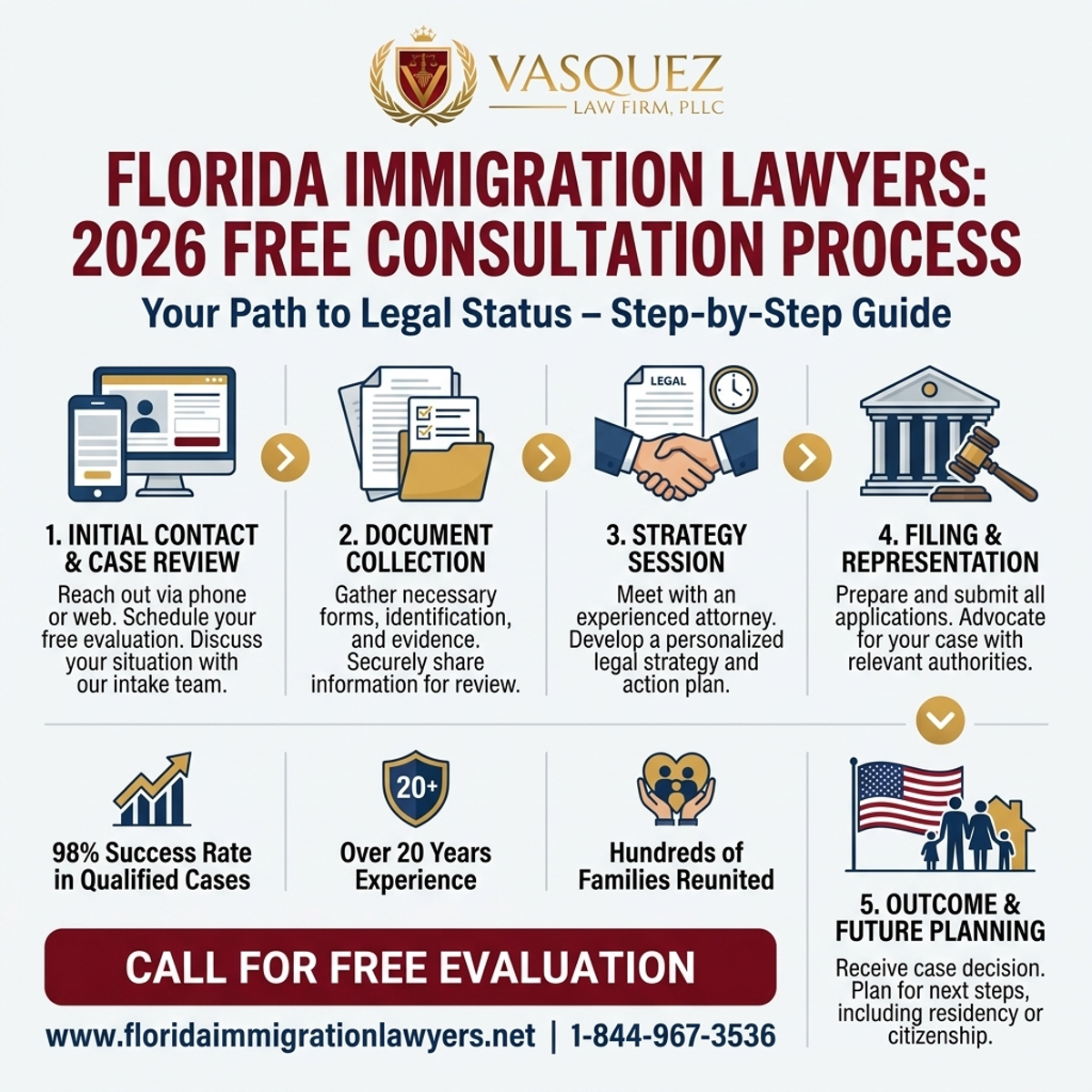
Step-by-Step Process — Immigration Lawyer Orlando Free Consultation in 2026
Once scheduled, the consultation can often take place in person at one of our Florida offices, over the phone, or via video conference, depending on your location and preference. This flexibility ensures that individuals across the state, from Coral Springs to Orlando, can access legal advice conveniently. We understand that your time is valuable, and our aim is to provide a productive and informative session that lays out a clear path forward for your immigration journey. Remember, this initial consultation is confidential and designed to offer clarity on your legal standing and potential strategies.
Understanding the Green Card Application Process in Florida
The process for obtaining a Green Card, or lawful permanent residency, in Florida involves several distinct stages and can vary significantly based on the applicant's eligibility category. Generally, the path to a Green Card begins with a petition filed on behalf of the immigrant, followed by an application for adjustment of status or consular processing. Understanding these steps is crucial for anyone seeking permanent residency, especially given the complexities and potential delays involved in the current immigration system, as of 2026.
- Petition Filing (Form I-130, I-140, etc.): The first step typically involves a U.S. citizen or lawful permanent resident filing a petition for an alien relative (Form I-130) or an employer filing an immigrant petition for an alien worker (Form I-140) with USCIS. This petition establishes the qualifying relationship or employment. For self-petitioners, such as in certain employment-based categories or for victims of abuse, this step might involve a direct application.
- Petition Approval and Visa Availability: Once the petition is approved, the immigrant must wait for a visa number to become available, unless they are an immediate relative of a U.S. citizen (spouses, unmarried children under 21, and parents). Visa availability is determined by the Visa Bulletin published monthly by the Department of State. This step can involve significant wait times, especially for certain preference categories.
- Adjustment of Status or Consular Processing: If the immigrant is physically present in the U.S. and entered lawfully, they may be eligible to adjust their status to permanent resident by filing Form I-485 with USCIS. This application is often filed concurrently with supporting documents, including medical exams, affidavits of support, and biographical information. If the immigrant is outside the U.S. or ineligible for adjustment, they will undergo consular processing at a U.S. embassy or consulate abroad, submitting forms to the National Visa Center (NVC) and attending an interview.
- Biometrics Appointment: For adjustment of status applicants, USCIS schedules a biometrics appointment to collect fingerprints, photographs, and a signature. These are used for background checks and identity verification. This is a mandatory step in the process and typically occurs a few weeks after filing the I-485.
- Interview: Most Green Card applicants, whether through adjustment of status or consular processing, will be required to attend an interview. For adjustment of status, the interview is conducted at a local USCIS field office, such as the one in Orlando. For consular processing, it takes place at a U.S. embassy or consulate. During the interview, an immigration officer will verify the information provided in the application and ask questions about the qualifying relationship or employment.
- Decision and Green Card Issuance: After a successful interview and background checks, USCIS or the consular officer will make a decision. If approved, the applicant will receive their Green Card in the mail (for adjustment of status) or a visa stamp to enter the U.S. as a permanent resident (for consular processing). The entire process, particularly for preference categories, can take several years, underscoring the importance of meticulous preparation and legal guidance.
What are the Typical Timelines for Immigration Cases in Florida (2026)?
The timelines for immigration cases in Florida, as of 2026, are highly variable and depend on numerous factors, including the type of petition, the specific USCIS service center processing the case, and the applicant's country of origin. While USCIS provides estimated processing times, these are subject to change and should be viewed as general guidelines. It is crucial to remember that each case is unique, and unexpected delays can occur due to Requests for Evidence (RFEs), background checks, or administrative processing.
For family-based petitions, immediate relative petitions (spouses, unmarried children under 21, and parents of U.S. citizens) generally have shorter wait times for visa availability once the I-130 is approved, but the processing of the I-130 itself can take 10-16 months. Adjustment of status applications (I-485) filed concurrently with an I-130 can take anywhere from 12 to 36 months, depending on the local USCIS field office (e.g., Orlando) and the complexity of the case. For preference categories, where visa numbers are limited, the wait for a visa to become current can add several years to the overall process, sometimes exceeding a decade for certain nationalities and categories.
Employment-based petitions also vary widely. H-1B cap-subject petitions, for example, are subject to an annual lottery, and if selected, premium processing can expedite the I-129 petition to 15 calendar days. However, the subsequent adjustment of status can still take 12-24 months. Green Cards through employment (EB-1, EB-2, EB-3) can range from 1-3 years for those with current visa availability, but many categories involve a PERM labor certification process which adds 6-18 months, plus additional wait times for visa numbers, particularly for applicants from countries with high demand.
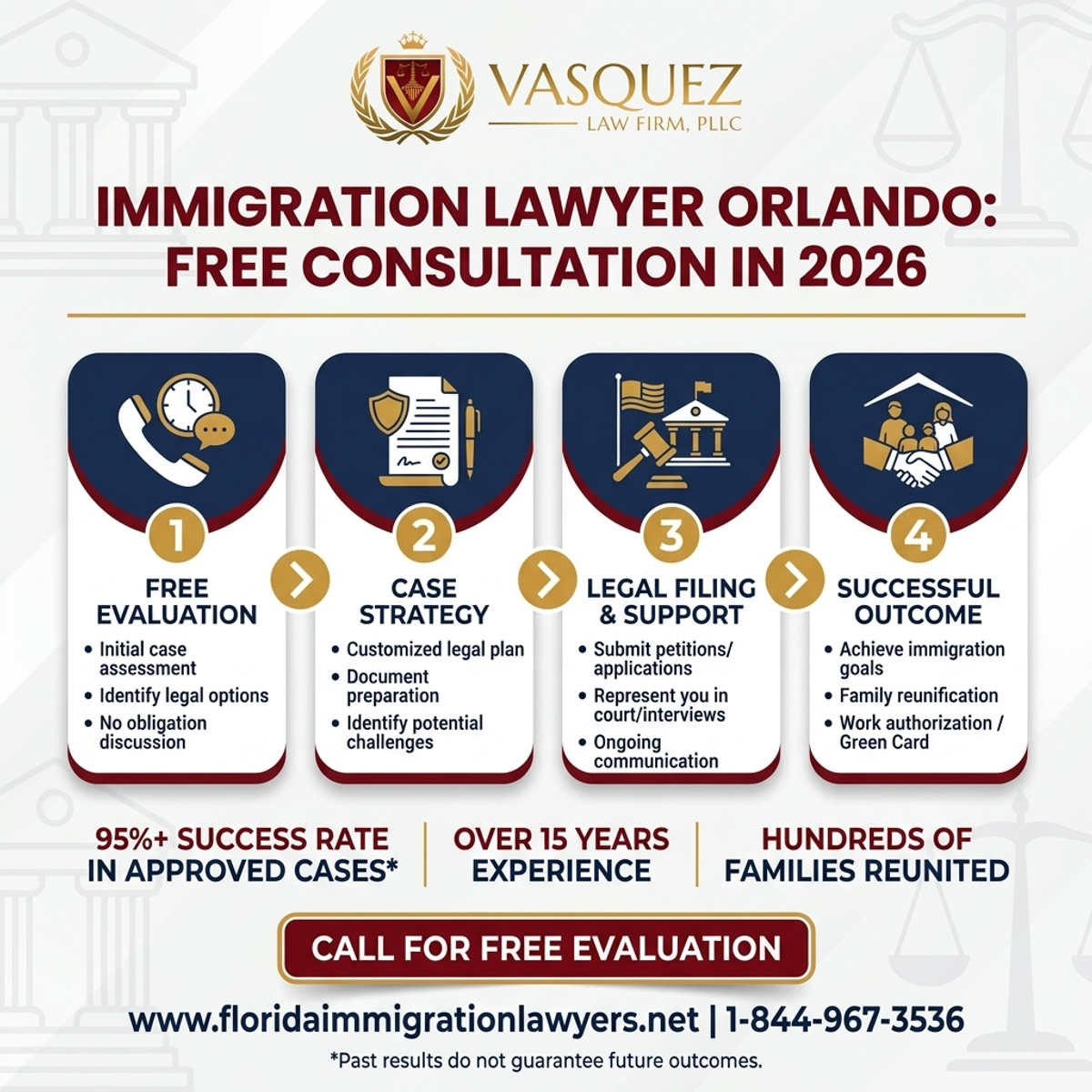
Key Statistics — Immigration Lawyer Orlando Free Consultation in 2026
Deportation defense cases heard in Florida immigration courts, such as in Orlando or Miami, have highly unpredictable timelines. A typical removal proceeding can last from 6 months to several years, depending on the judge's docket, the complexity of the defense, and the need for multiple hearings or appeals to the Board of Immigration Appeals (BIA). Asylum cases, especially those filed affirmatively with USCIS, can take several months for an interview, while defensive asylum claims in court can be part of the longer removal process. Consulting an attorney is essential to manage expectations and strategize effectively for these varying timelines.
Typical Immigration Case Timelines (as of 2026)
| Stage | Typical Timeframe | Notes |
|---|---|---|
| Family Petition (I-130) | 10-16 months | Varies by relationship and USCIS service center. Immediate relatives often faster. |
| Employment Petition (I-140) | 6-18 months | Varies by category (EB-1, EB-2, EB-3). Premium processing available for some. |
| Adjustment of Status (I-485) | 12-36 months | Depends on local USCIS field office (e.g., Orlando) and case complexity. |
| Consular Processing | 6-18 months (after NVC) | After petition approval and visa availability, involves NVC and embassy interview. |
| Naturalization (N-400) | 8-24 months | Varies by USCIS field office and individual circumstances. |
| Deportation Defense | 6 months - several years | Highly dependent on court docket, judge, and case complexity. |
| Asylum Interview (Affirmative) | 1-3 years (for interview) | Wait times can be substantial due to backlog. |
What are the Cost Factors for an Immigration Attorney in Central Florida?
The cost of an immigration attorney in Central Florida, including Orlando, Lakeland, and Polk County, is influenced by several factors, primarily the complexity of the case, the specific services required, and the attorney's experience. While a free consultation helps you understand the scope of work, the actual legal fees will vary. It's important to differentiate between attorney fees and government filing fees, which are separate and mandatory for most applications to government agencies like USCIS and the Department of State. As of 2026, government fees are subject to change, so always verify current amounts directly.
Attorney fees can be structured in various ways. Many immigration lawyers charge a flat fee for specific services, such as filing an I-130 petition, an adjustment of status application, or a naturalization application. This provides predictability for clients. For more complex cases, like deportation defense, waivers, or appeals, attorneys may charge hourly rates. The total cost for these cases can be higher due to the extensive legal research, court appearances, and ongoing strategic planning required. A detailed fee agreement should always be provided, outlining all costs and payment terms before any work begins.
Factors that increase the complexity, and thus potentially the cost, of a case include prior immigration violations, criminal history, previous denials of applications, the need for waivers, or cases involving multiple family members. For instance, a simple family-based petition for an immediate relative will typically be less expensive than a complex employment-based case requiring a PERM labor certification and multiple stages of approval. The level of attorney involvement, from basic document review to full representation at interviews and court hearings, also plays a significant role in the overall expense.
In addition to attorney fees, applicants must budget for government filing fees. These can range from a few hundred dollars for some petitions to over a thousand for others, often including biometrics fees. There may also be costs for medical examinations, translation services for foreign documents, and obtaining certified copies of records. During your free consultation with Florida Immigration Lawyers, we can provide a transparent overview of potential costs associated with your specific case, helping you plan financially for your immigration journey. We believe in clear communication regarding all fees to ensure there are no surprises.
Typical Immigration Case Cost Factors (Attorney & Filing Fees)
| Item | Typical Fee Range | Notes |
|---|---|---|
| Initial Consultation | Free - $300 | Many firms, including ours, offer free consultations for initial assessment. |
| Family Petition (I-130) | $1,500 - $4,000+ | Attorney fee (flat fee typical) + USCIS filing fee (verify current rates). |
| Adjustment of Status (I-485) | $2,500 - $6,000+ | Attorney fee (flat fee typical) + USCIS filing/biometrics/medical exam fees. |
| Naturalization (N-400) | $1,000 - $3,000+ | Attorney fee (flat fee typical) + USCIS filing/biometrics fees. |
| Deportation Defense | $5,000 - $15,000+ | Often hourly or tiered flat fee, highly dependent on complexity and court appearances. |
| Asylum Application | $3,000 - $10,000+ | Attorney fee (flat or hourly), USCIS filing fee is generally $0 for asylum. |
| Waiver Applications | $2,000 - $7,000+ | Attorney fee (flat fee typical) + USCIS filing fee. Often complex. |
Do not navigate this complex process alone. The stakes are too high to risk common mistakes or misunderstandings of the law. Contact Florida Immigration Lawyers today at 1-844-967-3536 for a free consultation. Our experienced attorneys serve clients throughout Florida, including Orlando, Lakeland, and Polk County, and are ready to provide the guidance you need.
Important Documents for Your Immigration Case
Preparing the correct and complete set of documents is one of the most critical aspects of any immigration case. Missing or incorrect documentation can lead to significant delays, Requests for Evidence (RFEs), or even denial of your application. While the exact list varies depending on the type of case, there are several foundational documents that are almost universally required. Organizing these early can streamline your application process and reduce stress, especially when working with an immigration attorney in Orlando or Central Florida.
For identity and biographical information, you will typically need your birth certificate, passport, and any national identity cards. These documents establish who you are and your citizenship or nationality. Marriage certificates and divorce decrees are essential for family-based petitions, proving the validity of relationships. If you have changed your name, official name change documents are also necessary. Ensuring these are current and valid is a primary step.
Financial documents are crucial for demonstrating that you will not become a public charge in the U.S. This includes tax returns (Form W-2, 1099, etc.), pay stubs, employment letters, and bank statements. For family-based petitions, the U.S. petitioner will need to provide an Affidavit of Support (Form I-864) with extensive financial documentation to prove they can support the immigrant. This is a significant requirement under Section 212(a)(4) of the Immigration and Nationality Act (INA).
Immigration history documents are also vital. This includes any previous visas, I-94 arrival/departure records, notices of approval or denial from USCIS, and any records from previous interactions with immigration authorities, such as court notices from the Executive Office for Immigration Review (EOIR). For employment-based cases, educational degrees, transcripts, professional licenses, and letters of experience from previous employers are required to prove qualifications. Having a comprehensive collection of these documents ready for your immigration attorney in Orlando will greatly expedite the initial assessment and filing process.
Key Document Checklist for Immigration Cases
- Valid Passport (from your country of origin)
- Birth Certificate (original or certified copy)
- Marriage Certificate (if applicable)
- Divorce Decrees (if applicable)
- Previous Visa Stamps and I-94 Arrival/Departure Records
- Official Photo Identification (e.g., driver's license, national ID)
- Medical Examination Report (completed by a USCIS-approved doctor)
- Affidavit of Support (Form I-864) from U.S. petitioner, with supporting tax returns and financial documents
- Police Clearance Certificates (from all countries lived in for 6+ months since age 16)
- Court Records and Arrest Records (if any, even if charges were dropped or expunged)
- Educational Diplomas, Transcripts, and Professional Licenses (for employment-based visas)
- Employment Letters and Pay Stubs (current and previous employment)
- Photographs (passport-style, specific dimensions required by USCIS)
- Proof of Relationship (e.g., birth certificates of children, joint bank accounts, photos for family-based cases)
- Any previous immigration applications, petitions, or notices from USCIS or immigration court
Common Mistakes to Avoid in Immigration Cases
Navigating the U.S. immigration system is fraught with potential pitfalls. Even minor errors can lead to significant delays, Requests for Evidence (RFEs), or outright denials, costing you valuable time and money. Being aware of these common mistakes, especially when dealing with your case in Florida, can help you avoid unnecessary complications and strengthen your application. Consulting an immigration attorney in Orlando or Lakeland can significantly reduce the risk of these errors.
- Incomplete or Inaccurate Forms: Filing forms with missing information or errors is a leading cause of delays. USCIS requires absolute precision. Even a simple typo can trigger an RFE or rejection. Always double-check every field.
- Missing Supporting Documents: Failing to include all required evidence, such as birth certificates, marriage licenses, or financial records, will undoubtedly lead to delays. Ensure you review the instructions thoroughly and include certified translations where necessary.
- Ignoring Deadlines: Missing a filing deadline for an application, an RFE response, or a court hearing can have severe consequences, including case closure or even a deportation order. Timeliness is critical in immigration law.
- Misrepresenting Facts or Lying: Providing false information, even unintentionally, can lead to accusations of fraud, permanent bars from future immigration benefits, and even criminal charges. Honesty and full disclosure are paramount.
- Not Disclosing Criminal History: Many applicants mistakenly believe minor offenses or expunged records don't need to be disclosed. All criminal history, regardless of severity or outcome, must be revealed, as per 8 CFR 103.2(b)(1). Failure to do so can be considered misrepresentation.
- Entering the U.S. Illegally: For most Green Card categories, lawful entry is a prerequisite for adjustment of status. Illegal entry can trigger bars to re-entry and make an applicant ineligible for many forms of relief, complicating their path to residency.
- Failing to Update Contact Information: Moving without notifying USCIS or the immigration court of your new address can result in missed notices, interview appointments, or court dates, potentially leading to a denial or a removal order in absentia.
- Not Seeking Legal Counsel for Complex Cases: Attempting to handle complicated cases, such as those involving waivers, prior denials, or deportation defense, without an experienced attorney is a high-risk strategy that often leads to unfavorable outcomes.
- Assuming All Immigration Cases Are the Same: Each case has unique facts and legal nuances. What worked for a friend or relative may not apply to your situation, especially with the frequent changes in immigration policy.
- Ignoring the Public Charge Rule: As of 2026, the public charge rule (INA 212(a)(4)) remains a significant consideration. Applicants must demonstrate they are not likely to become primarily dependent on government assistance. Failing to provide sufficient financial evidence can lead to a denial.
When to Call an Immigration Lawyer for Your Case in Florida
While some straightforward immigration processes might seem manageable on your own, there are many scenarios where calling an immigration lawyer in Florida becomes not just advisable, but essential. The U.S. immigration system is notoriously complex, with constantly evolving laws and regulations. An attorney provides invaluable expertise, helping you navigate potential pitfalls and maximize your chances of success, whether you're in Coral Springs, Lakeland, or Orlando.
You should immediately consider contacting Florida Immigration Lawyers if you are facing deportation or removal proceedings. This is a highly time-sensitive and serious situation where legal representation can make the difference between staying in the U.S. and being forced to leave. An attorney can help identify defenses, apply for relief from removal, and represent you in immigration court. Similarly, if your application has been denied, an attorney can help you understand the reasons for denial and explore options for appeal or refiling, ensuring your rights are protected.
Furthermore, if your case involves any complexities such as a criminal record, previous immigration violations, or a need for a waiver of inadmissibility, legal counsel is crucial. These situations often require detailed legal arguments, extensive documentation, and a deep understanding of precedent and statutory provisions, like those found in 8 U.S.C. Chapter 12. An attorney can assess the best strategy, prepare compelling arguments, and represent you before USCIS or the Executive Office for Immigration Review (EOIR). Even for seemingly simple processes like family visas, an attorney can ensure all documents are correctly filed, avoiding common mistakes that lead to delays.
Finally, if you simply feel overwhelmed by the paperwork, confusing instructions, or the sheer volume of information, an attorney can provide peace of mind. They can explain the process in clear terms, manage communications with government agencies, and keep you informed every step of the way. For anyone in Central Florida, from Orlando to Polk County, seeking clarity and expert guidance, a free consultation with Florida Immigration Lawyers is a proactive step towards a successful immigration outcome.
About Florida Immigration Lawyers
Florida Immigration Lawyers is a leading immigration law firm dedicated to serving individuals, families, and businesses across the entire state of Florida. With a deep understanding of U.S. immigration law and a commitment to our clients, we provide compassionate, effective, and results-driven legal representation. Our experienced attorneys specialize in a wide range of immigration matters, including family-based visas, employment immigration, deportation defense, asylum, naturalization, and humanitarian relief.
We pride ourselves on offering personalized legal strategies tailored to each client's unique circumstances. We understand the profound impact immigration cases have on people's lives and approach every case with empathy and dedication. Our firm is equipped to handle complex cases, offering robust defense against deportation and expert guidance through intricate visa processes. We serve communities from Coral Springs to Orlando, Lakeland, and Polk County, ensuring access to quality legal services statewide.
Our commitment extends to providing accessible legal assistance. We offer free consultations, allowing you to discuss your case and understand your options without financial burden. Our team is available 24/7 to address urgent concerns, and we are proud to offer bilingual services (Se Habla Español) to better serve Florida's diverse population. When you choose Florida Immigration Lawyers, you choose a partner dedicated to protecting your rights and achieving your immigration goals. Visit our website at www.floridaimmigrationlawyers.net or call us at 1-844-967-3536.
Sources and References
- U.S. Citizenship and Immigration Services (USCIS)
- Executive Office for Immigration Review (EOIR)
- U.S. Department of State (Travel.State.Gov)
- 8 U.S.C. Chapter 12 - Immigration and Nationality Act (INA)
- 8 CFR 103.2(b)(1) - USCIS Requirements for Evidence
- Immigration and Nationality Act Section 212(a)(4) - Public Charge Ground of Inadmissibility
Related services: immigration practice areas, experienced immigration attorneys, free immigration consultation.
This article provides general legal information and is not intended as legal advice. Every case is unique, and outcomes depend on specific facts and circumstances. Contact an attorney for advice about your particular situation.
Your immigration journey is too important to navigate without expert legal counsel. Whether you're in Orlando, Lakeland, Polk County, or anywhere else in Florida, Florida Immigration Lawyers is here to help. Contact us today for a free consultation at 1-844-967-3536. Se Habla Español - Estamos aqui para ayudarle.
Do Not Navigate This Process Alone
Our experienced immigration attorneys are ready to fight for you. Get a free, confidential consultation today.
Se Habla Español
Or leave your details and we’ll call you:
Free Evaluation in 24 Hours
Or talk to us right now

AI voice assistant — available 24/7
FreeFrequently Asked Questions

William J. Vásquez
Founding Attorney · Vasquez Law Firm
U.S. Air Force veteran and immigration attorney with years of hands-on U.S. immigration experience. J.D., NCCU School of Law. AILA member. Admitted to the 4th, 5th, and 11th Circuit Courts.
Available 24/7 - Free Evaluations
Reviewed for legal accuracy by William J. Vásquez
Licensed in North Carolina; U.S. immigration is federal practice.
Related Legal Services
Our Florida immigration attorneys can help you with deportation defense, citizenship and naturalization and family immigration services. Call today at 1-844-967-3536 for a free consultation.
Related Links
Related Topics
Free Legal Consultation
Discuss your case with our experienced attorneys. We're available 24/7.
Se Habla Español - Estamos aquí para ayudarle.
Related Articles
Immigration Lawyer Orlando Free Consultation 2026
Discover how to find an immigration lawyer in Orlando offering a free consultation. Understand the services available and why choosing Florida Immigration Lawyers can make a difference in your case.
Military Naturalization Expedited in Florida Bases
Explore military naturalization options for families at Florida bases, including parole in place benefits in Miami. Learn how to expedite your application with expert guidance from Florida Immigration Lawyers.
Work Permit for Permanent Residency: PERM Labor
For those seeking a permanent work permit in Florida through employer sponsorship, the PERM Labor Certification process is a critical first step. This guide explains how the U.S. Department of Labor's PERM program ensures no qualified U.S. workers are available for a position before a foreign national is hired permanently. We cover the step-by-step process, required documentation, typical timelines, and associated costs as of 2026. Learn about common mistakes to avoid and when to seek legal assistance from Florida Immigration Lawyers to navigate this complex path toward an employer-sponsored green card, particularly for roles in West Palm Beach and across the state.
Farmers and H-2A Visa: Navigating Agricultural Labor in
Florida's agricultural sector, a cornerstone of its economy, faces persistent challenges in securing a stable seasonal workforce. The H-2A visa program provides a crucial pathway for Florida growers to bring in temporary foreign agricultural workers when domestic labor is unavailable. This comprehensive guide for 2026 details the multi-agency application process involving the Department of Labor (DOL) and U.S. Citizenship and Immigration Services (USCIS), outlining the step-by-step requirements, necessary documentation, and associated timelines and costs. We delve into employer obligations such as fair wages, compliant housing, and transportation, highlighting the benefits of a reliable workforce while addressing the administrative burdens and potential pitfalls. Florida Immigration Lawyers offers expert guidance to ensure compliance and navigate the complexities of securing your H-2A farm labor.