ICE Locator: Understanding Your Check-in Requirements in
For many non-citizens in Florida, regular ICE check-ins are a mandatory part of their immigration process, bringing anxiety and uncertainty. This guide demystifies the ICE check-in process, covering everything from the purpose of these appointments to the critical role of attorney representation. We explore supervision programs like ISAP, common pitfalls to avoid, and provide practical advice for effective preparation in 2026. Understanding your obligations, knowing what documents to bring, and having legal counsel can significantly impact your immigration case. Whether you are in Naples, Miami, or anywhere in Florida, our comprehensive information will help you navigate these crucial interactions with confidence. Learn when and why to seek professional legal help to protect your rights.

An ICE check-in is a mandatory appointment for non-citizens in removal proceedings or under an order of supervision, typically managed by U.S. Immigration and Customs Enforcement (ICE). These appointments are crucial for maintaining compliance with immigration authorities and demonstrating good faith while a case is pending. In Florida, individuals must report to designated ICE offices, often as part of the Intensive Supervision Appearance Program (ISAP), which monitors their whereabouts and activities. Missing an ICE check-in can lead to serious consequences, including detention or deportation. Having attorney representation ensures your rights are protected and you navigate this complex process correctly.
- ICE check-ins are mandatory for supervised non-citizens.
- Compliance is critical to avoid detention or removal.
- ISAP is a common supervision program in Florida.
- Legal representation is highly recommended for these appointments.
- Missing a check-in can lead to severe immigration consequences.
Navigating the complex landscape of U.S. immigration law can be daunting, especially when it involves direct interaction with U.S. Immigration and Customs Enforcement (ICE). For many non-citizens in Florida, regular ICE check-ins are a mandatory part of their immigration process, a requirement that can bring anxiety and uncertainty. Whether you are subject to an order of supervision, participating in the Intensive Supervision Appearance Program (ISAP), or simply trying to understand your obligations, these appointments are critical milestones in your immigration journey.
Understanding what to expect, what to bring, and how to conduct yourself during an ICE check-in is paramount to protecting your rights and ensuring compliance. This comprehensive guide will demystify the ICE check-in process specifically for individuals in Florida, covering everything from the purpose of these appointments to the critical role of attorney representation. We will explore the various supervision programs, common pitfalls to avoid, and provide practical advice to help you prepare effectively in 2026.
If you find yourself facing an ICE check-in or have questions about your immigration status, do not attempt to navigate this challenging process alone. Call Florida Immigration Lawyers at 1-844-967-3536 for a free consultation. Our experienced legal team is here to provide the guidance and representation you need.
What is an ICE Check-In and Why is it Necessary in Florida?
An ICE check-in is a scheduled appointment where a non-citizen reports in person to an ICE officer. This is a mandatory requirement for individuals who have been released from immigration detention, are currently in removal proceedings, or are under an order of supervision while their immigration case is pending. These check-ins serve as a mechanism for ICE to monitor the individual's compliance with release conditions and track their whereabouts within the United States. As of 2026, the necessity of these check-ins remains a cornerstone of immigration enforcement in Florida.
The primary purpose of an ICE check-in is to ensure that individuals are adhering to the terms of their release or supervision. This includes verifying their current address, confirming their employment status, and assessing any changes in their personal circumstances. For ICE, these appointments are vital for maintaining public safety and national security, as outlined in the Immigration and Nationality Act (INA) sections governing supervision after release from detention, such as INA 236(a) (8 U.S.C. § 1226(a)). For the individual, it is an opportunity to demonstrate good faith and compliance with immigration authorities, which can be beneficial to their ongoing immigration case.
In Florida, ICE check-ins are particularly prevalent due to the state's large immigrant population and its role as a major port of entry. Individuals residing in areas like Naples, Miami, Orlando, or Tampa may be required to report to their nearest ICE Field Office. The frequency of these check-ins can vary, ranging from weekly to annually, depending on the specifics of the individual's case, their perceived flight risk, and other factors determined by ICE. Understanding the underlying reasons for your specific check-in requirements is the first step in effective preparation.
How Does the ICE Check-In Process Work in Florida?
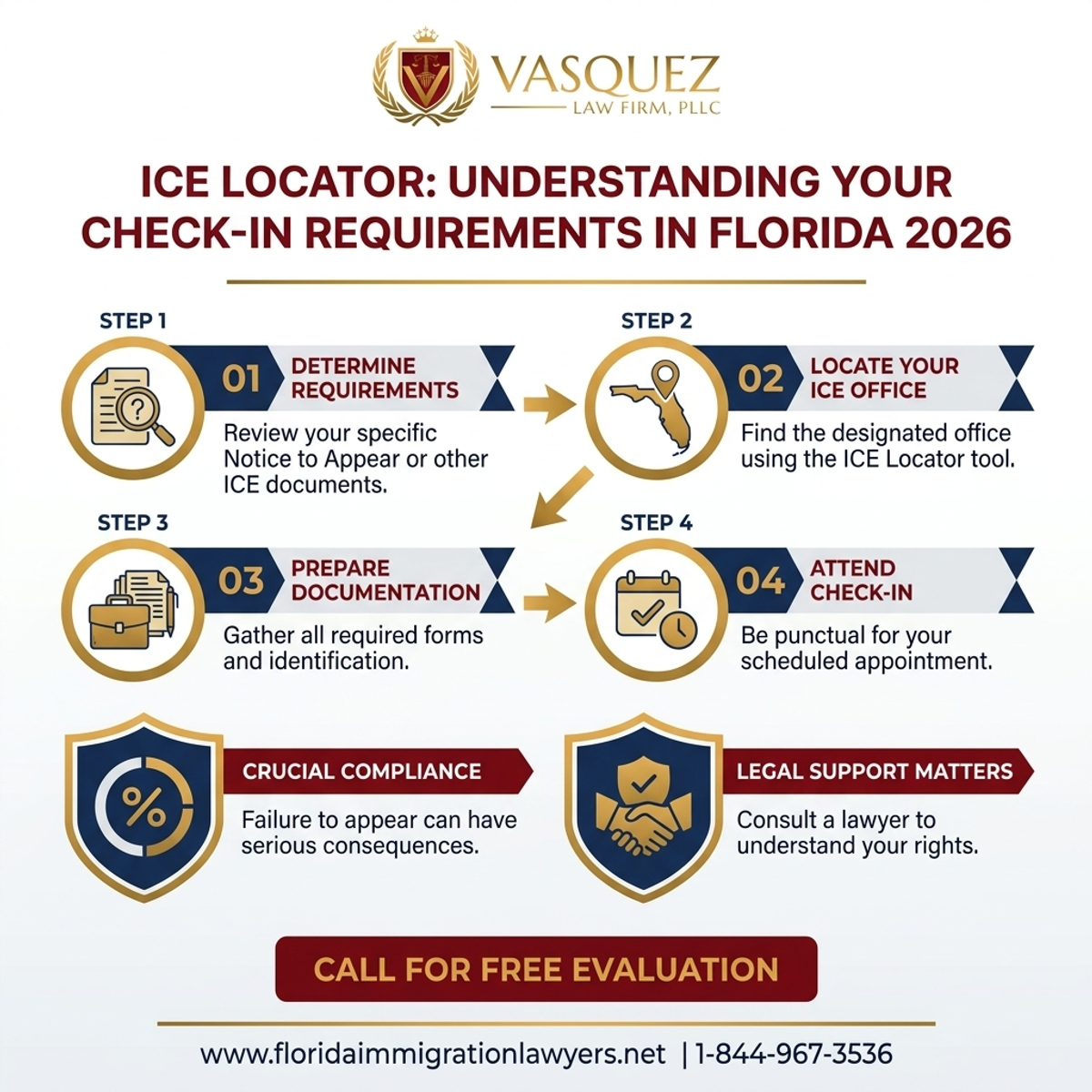
The ICE check-in process in Florida typically involves a series of steps, beginning with notification and culminating in a face-to-face meeting with an immigration officer. You will receive official notification, usually via mail or during release from detention, detailing the date, time, and location of your initial appointment. It is crucial to mark this date and ensure you have all necessary documents prepared to demonstrate your compliance and current status.
Upon arrival at the ICE Field Office, you will typically check in at the front desk and wait to be called for your appointment. The officer will review your file, verify your identity, and ask questions about your current living situation, employment, and any changes in your immigration case. They may also inquire about your travel history or any criminal interactions. The entire process is designed to ensure you are meeting the conditions of your supervision. Failure to appear for a scheduled check-in can lead to serious consequences, including the issuance of an arrest warrant or immediate detention, as stipulated in 8 CFR Part 241.
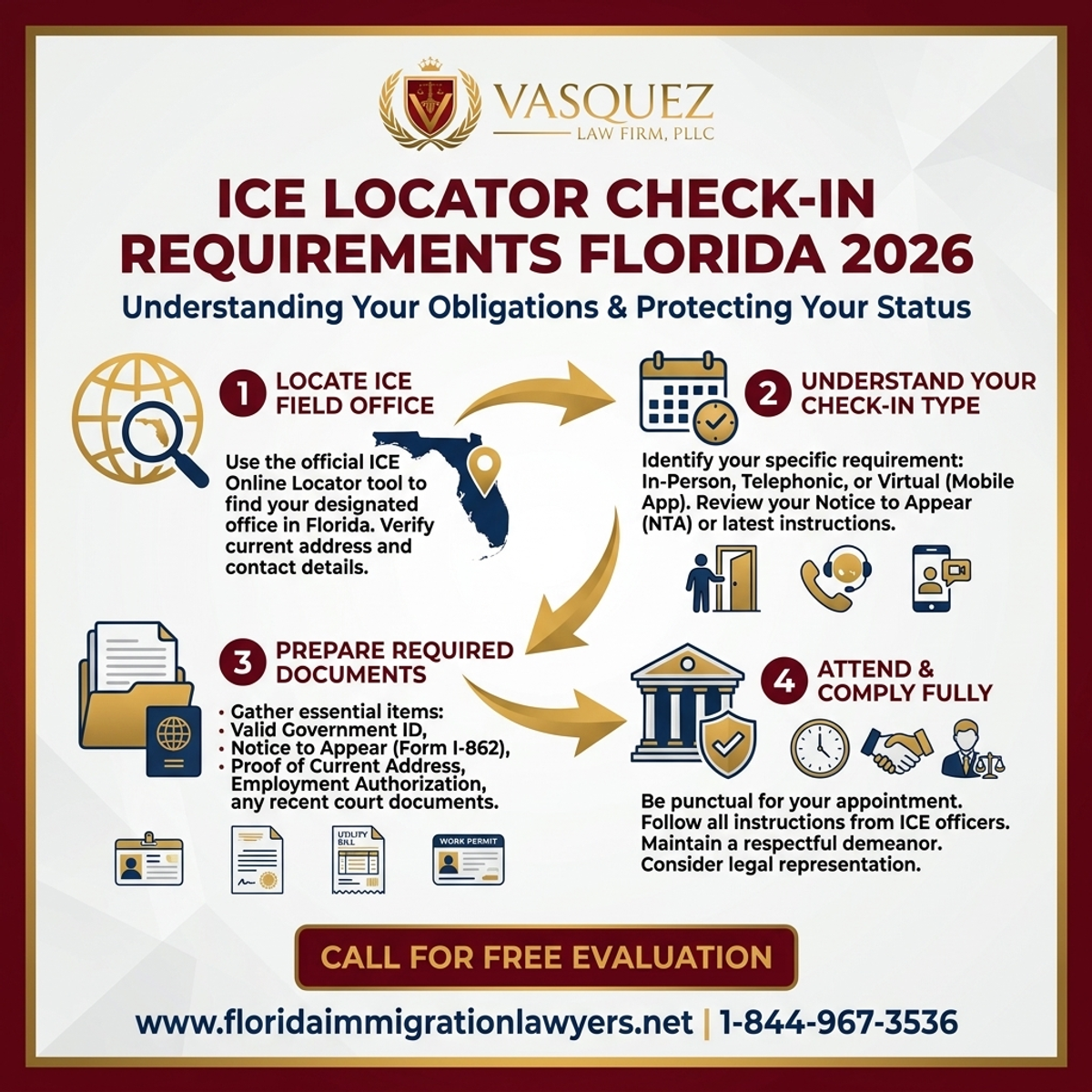
Here is a step-by-step guide to the typical ICE check-in process:
- Receive Notification: You will be informed of your check-in date, time, and location. This notification is critical; do not ignore it.
- Gather Documents: Collect all required documents, including your passport, I-94, immigration court papers, and proof of address and employment.
- Arrive Early: Plan to arrive at the designated ICE Field Office (e.g., in Miami, Orlando, or Tampa for Naples residents) well in advance of your appointment time to allow for security checks and unexpected delays.
- Check-In and Wait: Report to the reception area and wait for your name to be called. Maintain a calm and respectful demeanor.
- Meet with Officer: An ICE officer will review your case, ask questions, and update your file. Be truthful and concise in your answers.
- Follow Instructions: The officer will inform you of your next steps, which may include another check-in, a change in supervision, or a referral to an immigration judge.
- Document Everything: Keep copies of any documents provided by ICE, including your next appointment notice.
What Documents Should I Bring to My ICE Check-In Appointment in 2026?
Preparing the correct documents for your ICE check-in appointment is essential for a smooth process and to demonstrate your compliance with immigration authorities. As of 2026, ICE officers expect individuals to present a comprehensive set of documents that verify their identity, address, and current status. Having these documents readily available can prevent delays and minimize potential complications during your appointment. It is always better to over-prepare than to arrive without necessary paperwork.
The specific documents required can vary based on your individual case and the instructions provided by ICE. However, a general checklist includes items that confirm your identity, your current living situation, and your adherence to any conditions of release. These documents help the ICE officer update your file accurately and assess your compliance. Missing critical documents might raise red flags or require you to reschedule your appointment, prolonging the process and potentially leading to further scrutiny. Always bring original documents, but also have copies for your own records.
Here is a comprehensive document checklist for your ICE check-in:
Step-by-Step Process — ICE Locator: Understanding Your Check-in Requirements in Florida 2026
- Proof of Identity: Valid passport from your home country, birth certificate, or national identity card.
- Form I-94: Arrival/Departure Record, if applicable.
- Immigration Court Documents: Notices to Appear (NTA), hearing notices, or any orders from an immigration judge.
- Proof of Address: Utility bills, lease agreements, or official mail showing your current Florida address.
- Proof of Employment: Pay stubs, employment verification letters, or tax documents.
- Proof of Family Ties: Marriage certificates, birth certificates of children, or other documents demonstrating family relationships in the U.S.
- Proof of School Enrollment: If you are a student, provide official enrollment letters or transcripts.
- Medical Records: If you have ongoing medical conditions that affect your ability to travel or report.
- Legal Documents: Any documents related to current or past criminal charges, even if dismissed.
- Attorney Information: Contact details for your immigration attorney, if you have one.
- Previous ICE Reporting Documents: Any receipts or notices from prior check-ins.
Understanding ICE Supervision Programs (ISAP) in Florida
Many individuals required to attend ICE check-ins in Florida are part of the Intensive Supervision Appearance Program (ISAP), or similar alternatives to detention. ISAP is a national program managed by ICE that provides supervision for non-citizens released from custody while their immigration cases are pending. The goal is to ensure compliance with reporting requirements and appearance at immigration court hearings, reducing flight risk without relying solely on detention. ISAP utilizes various monitoring technologies and community-based services to track participants.
In Florida, ISAP can involve different levels of supervision tailored to an individual's specific circumstances. These may include electronic monitoring, such as ankle bracelets (GPS tracking), regular telephonic reporting, unannounced home visits, or required in-person check-ins at an ICE office or a designated ISAP service provider. The intensity and type of supervision can change over time based on compliance, risk assessment, and the progress of the immigration case. For example, individuals in Naples might be required to report to a specific service provider or the nearest ICE office in Miami or Tampa.
Compliance with ISAP terms is absolutely critical. Any failure to adhere to the program's requirements, such as missing a scheduled check-in, failing to charge an electronic device, or violating travel restrictions, can lead to severe repercussions. These consequences may include a higher level of supervision, an increased immigration bond, or even immediate re-detention and accelerated removal proceedings. Understanding the specific terms of your ISAP agreement and diligently following them is paramount to avoiding these adverse outcomes. An experienced immigration attorney can help you understand and comply with all ISAP requirements, protecting your right to remain free while your case is being decided.
What Are the Typical Timelines and Expectations for ICE Check-Ins?
The timelines and frequency of ICE check-ins are not fixed; they vary significantly based on individual circumstances, the specifics of the immigration case, and ICE's assessment of flight risk and public safety concerns. Generally, an initial check-in is scheduled shortly after release from detention or after an order of supervision is issued. Subsequent check-ins can range from weekly to monthly, quarterly, or even annually, depending on the intensity of supervision required. As of 2026, ICE strives for efficiency, but individuals should prepare for varying durations.
Expectations for the duration of the entire check-in process can also differ. While the actual meeting with an ICE officer might be brief, the total time spent at an ICE Field Office in Florida could be several hours, including waiting times, security checks, and administrative processing. It is advisable to clear your schedule for the entire day of your appointment. The officer will typically inform you of your next check-in date or any changes to your supervision at the end of your current appointment. Always ensure you receive and understand this information clearly before you leave.
Here is a typical timeline and expectation table for ICE check-ins:
Key Statistics — ICE Locator: Understanding Your Check-in Requirements in Florida 2026
| Stage | Typical Timeframe | Notes |
|---|---|---|
| Initial Check-In Notification | Within 1-2 weeks of release or order | Received via mail or directly upon release. Crucial not to miss. |
| First Check-In Appointment | Within 30 days of notification | Requires full documentation; sets the tone for future compliance. |
| Subsequent Check-Ins (ISAP) | Weekly, bi-weekly, monthly, quarterly, or annually | Frequency depends on risk assessment, compliance, and case progress. Can change. |
| Case Review/Supervision Modification | Periodically, or upon significant case developments | Officer may review your case, adjust reporting frequency, or change supervision method. |
| Resolution of Case | Varies greatly (months to years) | Supervision typically ends upon grant of relief, departure, or final removal order. |
The Role of an Immigration Attorney in ICE Check-Ins in Naples, Florida
Having an experienced immigration attorney by your side during an ICE check-in, especially in a region like Naples, Florida, can make a significant difference in the outcome and your peace of mind. An attorney serves as your advocate, ensuring your rights are protected and that you are not subjected to undue pressure or questioning. They can prepare you thoroughly for the appointment, explaining what to expect and how to answer questions truthfully and concisely without inadvertently jeopardizing your case. This preparation is invaluable for reducing anxiety and building confidence.
Your attorney can accompany you to the ICE Field Office, acting as a buffer between you and the immigration officer. While they cannot answer questions for you, they can advise you on your rights, interject if questioning becomes inappropriate, and clarify any misunderstandings. This presence alone often leads to a more professional and streamlined check-in process. Furthermore, an attorney can communicate directly with ICE on your behalf, addressing any issues that arise, submitting necessary documentation, and advocating for more favorable supervision terms or even the termination of supervision if appropriate.
For residents of Naples and surrounding areas, our attorneys at Florida Immigration Lawyers understand the local ICE procedures and can provide tailored advice. We can assess your specific immigration situation, identify potential risks, and develop a strategy to best protect your interests. Whether you are facing potential detention, seeking to modify your bond, or simply need clarity on your reporting obligations, our legal team is equipped to assist. Do not underestimate the power of professional legal representation in these critical interactions. Learn more about how our experienced attorneys can assist you.
Do not navigate this process alone. Contact Florida Immigration Lawyers today to ensure you have expert legal representation for your ICE check-in and all other immigration matters. Call us at 1-844-967-3536 for a free consultation.
Potential Outcomes and How to Navigate Them During an ICE Check-In
An ICE check-in is not merely a bureaucratic formality; it is a live interaction that can have significant consequences for your immigration status. The outcomes can vary widely, ranging from a routine re-scheduling of your next appointment to more serious actions like bond modification, re-detention, or even the initiation of removal proceedings. Understanding these potential outcomes and knowing how to navigate them is crucial for anyone undergoing supervision. The officer's assessment of your compliance and risk factors will heavily influence the decision made at your check-in.
In many cases, if you have been fully compliant and your case is progressing as expected, the officer may simply schedule your next check-in. However, if there are concerns about your compliance, changes in your personal circumstances, or new information in your immigration file, the outcome could be less favorable. For instance, if you have had a minor run-in with law enforcement, even if charges were dropped, it could trigger further scrutiny. Similarly, a change in address without proper notification to ICE could be viewed as a violation of your supervision terms, potentially leading to adverse actions.
Here are some potential outcomes and how to approach them:
- Routine Reschedule: The most common outcome is simply being given a date for your next check-in. Confirm the date, time, and location before leaving.
- Change in Supervision Terms: ICE might adjust the frequency of your check-ins, change your ISAP monitoring method (e.g., from phone to ankle monitor), or modify your travel restrictions. Understand and comply with all new terms.
- Bond Modification or Revocation: If ICE believes you are a flight risk or a danger to the community, they might seek to increase your immigration bond or revoke it entirely, leading to re-detention. An attorney can challenge this in immigration court.
- Issuance of a New Notice to Appear (NTA): If you were not previously in removal proceedings, or if your circumstances have changed significantly, ICE could issue a new NTA, initiating or reinstating your deportation case.
- Detention: In the most severe cases of non-compliance or if new adverse information comes to light, ICE may detain you immediately. Having an attorney present can be critical in such a scenario, as they can quickly work on bond redetermination or other relief.
It is vital to be truthful and cooperative, but also to understand your rights. If you are asked to sign any documents you do not understand, or if you believe you are being asked inappropriate questions, you have the right to consult with your attorney. For complex situations, particularly those involving potential deportation defense, immediate legal advice is indispensable.
Common Mistakes to Avoid During ICE Check-Ins
Navigating an ICE check-in without proper preparation can lead to common mistakes that have serious repercussions for your immigration case. Avoiding these pitfalls is crucial for maintaining compliance and protecting your rights. Be proactive and informed to ensure a smooth process.
- Missing a Scheduled Appointment: This is perhaps the most critical mistake. Failing to appear for an ICE check-in, even due to a simple oversight or misunderstanding, can result in an arrest warrant, immediate detention, or the acceleration of removal proceedings. Always confirm your appointment details and mark them clearly.
- Arriving Late Without Explanation: Punctuality is paramount. Arriving late without a valid, documented reason (e.g., a medical emergency) can be perceived as non-compliance and may lead to negative consequences.
- Providing False Information: Lying or providing misleading information to an ICE officer, whether about your address, employment, or any criminal history, is a serious offense that can lead to criminal charges, detention, and significantly harm your immigration case. Always be truthful.
- Failing to Bring Required Documents: Showing up without your passport, I-94, or other requested documents can cause delays, raise suspicion, and require you to reschedule, potentially leading to further scrutiny. Double-check your checklist.
- Not Notifying ICE of Address Changes: If you move, especially within Florida, you are legally required to notify ICE of your new address within 10 days. Failure to do so is a violation of 8 U.S.C. § 1305 and can result in severe penalties.
- Voluntarily Disclosing Unnecessary Information: While you must be truthful, you are not obligated to offer information beyond what is directly asked. Avoid volunteering personal details that are not relevant to the check-in and could complicate your case.
- Signing Documents Without Understanding Them: Never sign any document presented by an ICE officer if you do not fully understand its content, implications, or legal ramifications. You have the right to review documents with your attorney.
- Ignoring ISAP Rules: If you are part of ISAP, failing to charge your electronic monitoring device, missing phone check-ins, or violating travel restrictions can lead to immediate re-detention. Treat all ISAP requirements seriously.
- Engaging in Confrontational Behavior: While it is important to assert your rights, being disrespectful or confrontational with an ICE officer can create an adversarial environment and potentially worsen your situation. Maintain a calm and respectful demeanor.
- Assuming Your Case is Simple: Even seemingly straightforward check-ins can turn complex if new information arises or policies change. Never assume your case is too simple to warrant legal advice.
When to Call a Lawyer for Your ICE Check-In
While some ICE check-ins might appear routine, the stakes are always high in immigration matters. Knowing when to seek legal counsel is crucial for protecting your rights and ensuring the best possible outcome. You should always consider contacting an immigration attorney from Florida Immigration Lawyers if you fall into any of the following categories or encounter specific challenges.
It is highly advisable to seek legal representation if you have a criminal record, even for minor offenses, as this can significantly complicate your immigration case and lead to detention. Similarly, if you have previously been denied immigration benefits or have a complex immigration history, an attorney can help clarify your status and prepare you. If you do not speak English fluently, having an attorney ensures proper communication and prevents misunderstandings. Furthermore, if you are experiencing any changes in your personal circumstances, such as marriage, divorce, or the birth of a child, an attorney can advise on how these might impact your supervision and check-ins. If you receive any notice from ICE that you do not understand, or if you are facing potential detention or removal proceedings, immediate legal counsel is imperative to navigate these critical situations effectively. Our team at Florida Immigration Lawyers is ready to assist with your immigration needs.
About Florida Immigration Lawyers
Florida Immigration Lawyers is a leading law firm dedicated to providing comprehensive and compassionate immigration legal services throughout Florida. With a deep understanding of U.S. immigration law and its impact on individuals and families, we are committed to achieving the best possible outcomes for our clients. Our team of experienced attorneys offers personalized guidance, strategic advocacy, and unwavering support through every step of the immigration process, from visa applications and green cards to complex deportation defense and citizenship matters. We serve clients across the entire state, including Naples, Miami, Orlando, and Tampa, ensuring that expert legal assistance is always within reach.
We believe that everyone deserves fair and effective legal representation, especially when their future in the United States is at stake. Our firm offers free consultations to assess your case and provide clear, actionable advice. We are available 24/7 to address urgent concerns and provide immediate assistance. At Florida Immigration Lawyers, we pride ourselves on our client-focused approach, transparent communication, and a proven track record of success. Trust us to be your dedicated advocates in the complex world of immigration law. Visit our website at www.floridaimmigrationlawyers.net or call us directly at 1-844-967-3536.
Sources and References
- U.S. Citizenship and Immigration Services (USCIS)
- Executive Office for Immigration Review (EOIR)
- U.S. Department of State (Travel.State.Gov)
- 8 U.S.C. Chapter 12 - Immigration and Nationality Act (INA)
- INA Section 236(a) - Detention and Release of Aliens
- 8 CFR Part 241 - Orders of Removal; Detention and Removal of Aliens
- 8 U.S.C. § 1305 - Notices of Change of Address
Related services: asylum and refugee protection, immigration waivers, humanitarian protection programs, DACA renewal and applications.
This article provides general legal information and is not intended as legal advice. Every case is unique, and outcomes depend on specific facts and circumstances. Contact an attorney for advice about your particular situation.
Do not face your ICE check-in or any immigration challenge without experienced legal support. Our team at Florida Immigration Lawyers is ready to advocate for you. Call us for a free consultation at 1-844-967-3536 today. Se Habla Español - Estamos aquí para ayudarle.
Do Not Navigate This Process Alone
Our experienced immigration attorneys are ready to fight for you. Get a free, confidential consultation today.
Se Habla Español
Or leave your details and we’ll call you:
Free Evaluation in 24 Hours
Or talk to us right now

AI voice assistant — available 24/7
FreeFrequently Asked Questions

William J. Vásquez
Founding Attorney · Vasquez Law Firm
U.S. Air Force veteran and immigration attorney with years of hands-on U.S. immigration experience. J.D., NCCU School of Law. AILA member. Admitted to the 4th, 5th, and 11th Circuit Courts.
Available 24/7 - Free Evaluations
Reviewed for legal accuracy by William J. Vásquez
Licensed in North Carolina; U.S. immigration is federal practice.
Related Legal Services
Our Florida immigration attorneys can help you with immigration practice areas, free immigration consultation and experienced immigration attorneys. Call today at 1-844-967-3536 for a free consultation.
Related Links
Related Topics
Free Legal Consultation
Discuss your case with our experienced attorneys. We're available 24/7.
Se Habla Español - Estamos aquí para ayudarle.
Related Articles
Immigration Lawyer Orlando Free Consultation 2026
Discover how to find an immigration lawyer in Orlando offering a free consultation. Understand the services available and why choosing Florida Immigration Lawyers can make a difference in your case.
Military Naturalization Expedited in Florida Bases
Explore military naturalization options for families at Florida bases, including parole in place benefits in Miami. Learn how to expedite your application with expert guidance from Florida Immigration Lawyers.
Jerome Rothschild: Understanding CSPA & Aging Out in
The Child Status Protection Act (CSPA) is a critical U.S. immigration law designed to prevent children from "aging out" of eligibility for immigration benefits due to lengthy processing delays. For families across Florida, including Orlando, understanding CSPA means protecting a child's right to a green card. This comprehensive guide explores how CSPA works, how to calculate a child's adjusted age, the necessary documentation, and typical timelines in 2026. We also highlight common mistakes to avoid and emphasize the importance of timely legal counsel. Whether you are a U.S. citizen or a lawful permanent resident petitioning for your child, or a derivative beneficiary yourself, navigating CSPA requires precision and prompt action. Florida Immigration Lawyers are here to provide the expert guidance needed to ensure your child's future in the United States is secure.
USCIS Application Support Center Jacksonville: 2026
Discover essential information on USCIS processing times in Jacksonville, Florida, for 2026, and learn how these can impact your immigration journey. Whether you're applying for a green card or citizenship, understanding the timeline and process is vital. Call Florida Immigration Lawyers for personalized assistance.