Can DACA Recipients Travel Within the U.S. 2026: Florida
DACA recipients can travel within the U.S. in 2026 if they maintain valid status. Learn about the DACA renewal process in Florida, key documents needed, and common mistakes to avoid. Contact Florida Immigration Lawyers for personalized guidance.

Can DACA Recipients Travel Within the U.S. in 2026: Florida Edition
For Deferred Action for Childhood Arrivals (DACA) recipients, understanding travel regulations is a critical aspect of maintaining their status and peace of mind. As we look towards 2026, many DACA recipients in Florida and across the nation continue to have questions about their ability to travel domestically. The good news is that, under current policies, DACA recipients generally can travel within the United States. However, it’s essential to be fully informed about the specific rules, required documentation, and the nuances that can impact your journey, especially when considering the ongoing legal landscape surrounding DACA.
This comprehensive guide will address your concerns, clarify the domestic travel guidelines for DACA recipients in 2026, detail the DACA renewal process in Florida, and provide crucial insights into related immigration matters. Navigating these complexities requires accurate information and, often, expert legal advice to ensure your status remains secure.
DACA and Domestic Travel: What You Need to Know for 2026
The ability of DACA recipients to travel within the U.S. remains largely consistent with previous years. Domestic travel, which refers to travel within the 50 states, the District of Columbia, Puerto Rico, and the U.S. Virgin Islands, is generally permitted for DACA recipients. This means you can fly on commercial airlines, travel by bus, train, or car across state lines without needing special permission beyond standard identification.
Required Documentation for Domestic Travel
When traveling domestically, DACA recipients should always carry specific documents to verify their identity and immigration status, especially when passing through security checkpoints like those operated by the Transportation Security Administration (TSA). Essential documents include:
- Valid Government-Issued Photo ID: This could be a state-issued driver's license or a non-driver ID card.
- Employment Authorization Document (EAD Card): Your DACA EAD card serves as proof of your deferred action status and work authorization. It's often the most critical document to present if questions arise about your immigration status.
- DACA Approval Notice (Form I-797): While not always required, carrying a copy of your most recent DACA approval notice can provide additional verification of your status.
It is crucial that all documents are current and valid. Traveling with expired documents can lead to complications and unnecessary delays.
Understanding Checkpoints and Border Zones
While domestic travel is generally safe, DACA recipients should be aware of areas near international borders or coastlines where U.S. Customs and Border Protection (CBP) operates internal checkpoints. These checkpoints are typically within 100 miles of a U.S. land or coastal border. At these checkpoints, CBP officers have the authority to question individuals about their citizenship and immigration status. If you are a DACA recipient traveling through these areas, you should:
- Be prepared to present your DACA EAD card and a valid photo ID.
- State clearly that you are a DACA recipient and present your documents.
- Know your rights: You are not required to answer questions unrelated to your immigration status or citizenship. If you feel uncomfortable or believe your rights are being violated, you can state that you wish to remain silent and request to speak with an attorney.
It is strongly advised to avoid international travel without specific authorization, known as Advanced Parole. Attempting to re-enter the U.S. without Advanced Parole can lead to serious immigration consequences, including denial of re-entry and potential deportation proceedings.
The DACA Renewal Process in Florida: A Step-by-Step Guide
Maintaining DACA status is paramount for continued eligibility to travel and work. For DACA recipients in Florida, the renewal process is a critical administrative step that must be completed diligently and on time. USCIS encourages DACA recipients to submit their renewal applications between 120 and 150 days before their current DACA and EAD expire. This timeframe allows for processing delays and ensures continuity of status.
Key Steps for DACA Renewal:
- Gather Required Documents: You will need your previous DACA approval notices, your current EAD card, and any documentation of criminal history (if applicable, even if charges were dismissed).
- Complete Forms: The primary forms for renewal are Form I-821D (Consideration of Deferred Action for Childhood Arrivals), Form I-765 (Application for Employment Authorization), and Form I-765 Worksheet (I-765WS). Ensure all sections are filled out accurately and completely.
- Prepare Supporting Evidence: While extensive documentation of continuous residence and education/military service is typically not required for renewals (unless there have been significant changes since your initial application), be prepared to submit any requested evidence.
- Pay Filing Fees: The total filing fee for DACA renewal is currently $495, which covers the I-765 application and the biometrics services fee. Fee waivers are generally not available for DACA applications.
- Submit Your Application: Mail your completed application package to the appropriate USCIS Lockbox facility. It is highly recommended to send it via certified mail with a return receipt requested to track delivery.
- Attend Biometrics Appointment: After USCIS accepts your application, you will receive a notice for a biometrics appointment at an Application Support Center (ASC). This appointment is mandatory for fingerprinting and photographs.
- Monitor Application Status: You can track the status of your application online using the receipt number provided by USCIS.
Any changes to your address must be reported to USCIS promptly. Errors or omissions in your application can lead to delays or even denial. Seeking legal guidance from an experienced immigration attorney can significantly streamline this process and mitigate potential issues.
Understanding the Nuances of DACA and Advanced Parole
While domestic travel is permitted for DACA recipients, international travel is a different matter entirely, requiring a specific authorization known as Advanced Parole (AP). Advanced Parole allows DACA recipients to travel outside the United States and lawfully return without jeopardizing their deferred action status. It is a critical distinction that every DACA recipient must understand.
What is Advanced Parole and Who is Eligible?
Advanced Parole is a document issued by USCIS that grants permission to an individual who does not have a valid visa to re-enter the U.S. after traveling abroad. For DACA recipients, eligibility for Advanced Parole is typically limited to specific humanitarian, educational, or employment purposes. These categories are strictly defined:
- Humanitarian Purposes: This includes travel for medical treatment, to attend a funeral of a family member, or to visit an ailing close relative. Documentation proving the necessity of such travel is required.
- Educational Purposes: This covers academic programs, research, or study abroad opportunities that are not available in the U.S.
- Employment Purposes: This may include overseas assignments, conferences, training, or meetings required by an employer.
Recreational travel, such as vacations or visiting family without a compelling humanitarian reason, is generally not approved for DACA recipients seeking Advanced Parole. The application process involves submitting Form I-131, Application for Travel Document, along with supporting evidence for the travel purpose and the associated filing fees.
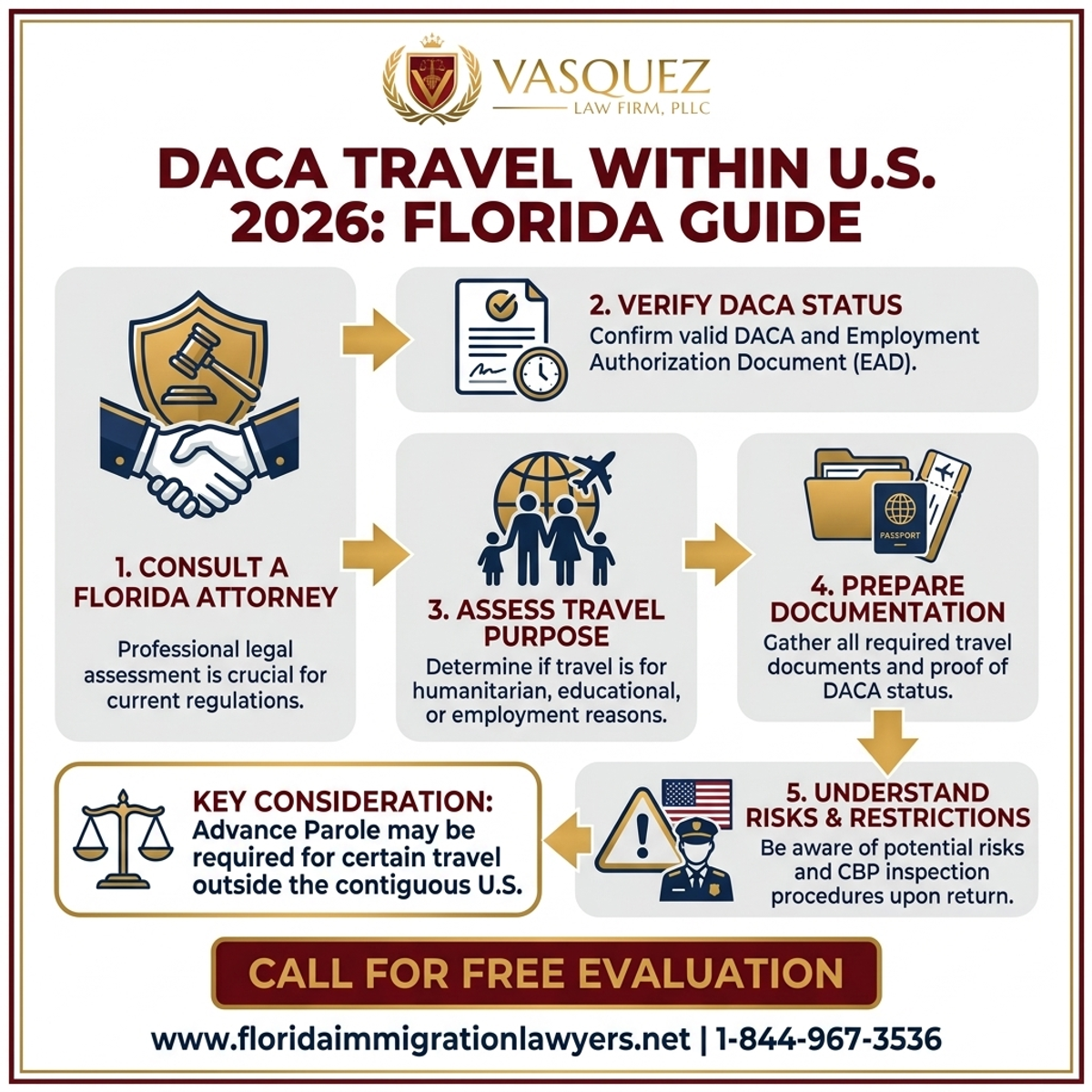
Step-by-Step Process — Can DACA Recipients Travel Within the U.S. 2026: Florida
Risks and Considerations of International Travel with Advanced Parole
Even with an approved Advanced Parole document, international travel for DACA recipients carries inherent risks that must be carefully considered. An Advanced Parole document is not a guarantee of re-entry into the U.S. Upon return, a DACA recipient will still undergo inspection by U.S. Customs and Border Protection (CBP) officers at the port of entry. CBP has the authority to deny re-entry if new adverse information comes to light, or if they determine that the individual is inadmissible for other reasons. This could include:
- Undisclosed criminal history.
- Evidence of fraud or misrepresentation.
- Changes in immigration law or policy that occur while the individual is abroad.
It is imperative for DACA recipients considering international travel with Advanced Parole to consult with an immigration attorney to thoroughly assess their individual circumstances and understand all potential risks. An attorney can help prepare the application, advise on necessary documentation, and explain the implications of travel, including how it might affect future adjustment of status opportunities. The decision to travel internationally, even with AP, should never be taken lightly.
Navigating Potential Challenges and Seeking Legal Assistance
Despite the general permissibility of domestic travel for DACA recipients, unforeseen challenges can arise. Encountering immigration officials, especially in sensitive areas, can be daunting. Knowing your rights and having a plan is crucial.
What to Do if Stopped by Immigration Officials
If you are stopped by an immigration officer, whether at an airport, a border checkpoint, or elsewhere, remember these key points:
- Remain Calm: Present your valid DACA EAD card and a government-issued photo ID.
- Do Not Lie: Always be truthful about your identity and DACA status.
- Do Not Sign Anything: Unless you fully understand it and have consulted with an attorney.
- You Have the Right to Remain Silent: You are not required to answer questions about your place of birth, how you entered the U.S., or your immigration history beyond presenting your documents. You can state, "I am a DACA recipient, and I wish to remain silent and speak with my attorney."
- Do Not Resist: Physically resisting an officer can lead to further legal trouble.
It's always wise to have contact information for an attorney readily accessible. If you are detained, politely ask to speak with your lawyer immediately.
When to Seek Professional Legal Advice
There are several scenarios where consulting an immigration attorney is not just recommended, but essential:
- Before International Travel: As discussed, Advanced Parole applications and international travel carry significant risks. An attorney can help you understand these risks and prepare your application correctly.
- If You Have a Criminal Record: Even minor infractions can impact your DACA eligibility or renewal. An attorney can assess your record and advise on the best course of action.
- If You Have Been Detained or Encountered Immigration Officials: Any interaction with immigration enforcement can have long-term consequences. Legal counsel is vital to protect your rights and status.
- If Your DACA Application or Renewal is Denied: A denial can be devastating, but an attorney can help you understand the reasons and explore options for appeal or reconsideration.
- Exploring Other Immigration Pathways: DACA is a temporary relief. An attorney can discuss potential pathways to permanent residency, such as asylum, family-based petitions, or employment visas, if you qualify.
- Facing Deportation Proceedings: If you or a loved one are facing deportation defense, immediate legal representation is critical.
An experienced immigration law firm can provide invaluable support, from preparing complex applications to representing you in court. Don't hesitate to contact us for a consultation to discuss your specific situation.
The Future Landscape for DACA Recipients in Florida
The DACA program has faced numerous legal and political challenges since its inception. While current court orders allow for renewals, new initial DACA applications remain paused. The long-term future of DACA is subject to ongoing litigation and potential legislative action in Congress. This uncertainty underscores the importance of staying informed and proactive.
Staying Informed and Advocating for Change
DACA recipients and their allies should:
- Follow Reliable News Sources: Stay updated on legal developments and policy changes from reputable immigration organizations and news outlets.
- Engage with Advocacy Groups: Support organizations working to protect DACA and advocate for comprehensive immigration reform.
- Consult Legal Experts: Regularly check in with immigration attorneys for personalized advice on how potential changes might impact your status.
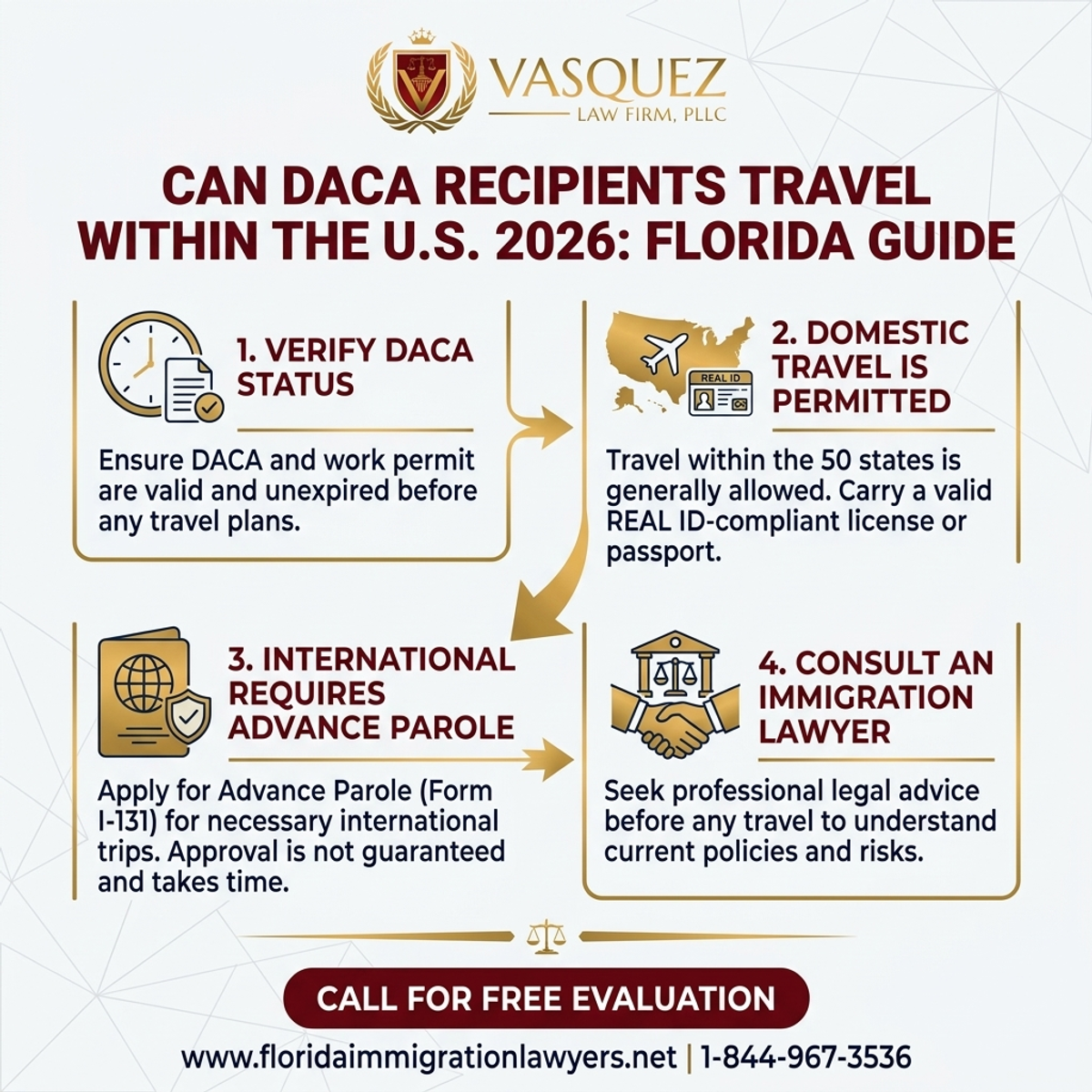
Key Statistics — Can DACA Recipients Travel Within the U.S. 2026: Florida
While the legal battles continue, the current guidance for 2026 allows DACA recipients to travel domestically and renew their status. However, the best defense is always preparation and knowledge.
Conclusion
For DACA recipients in Florida, the ability to travel within the U.S. in 2026 remains a reality, provided you carry the correct documentation and understand the nuances of border zones. The DACA renewal process is a vital administrative task that requires careful attention to detail and timely submission. Furthermore, understanding the strict requirements and risks associated with Advanced Parole for international travel is paramount.
The landscape for DACA recipients is constantly evolving, making proactive engagement with the renewal process and informed decision-making about travel more critical than ever. If you have any questions about your DACA status, renewal, travel, or other immigration concerns, seeking advice from a qualified immigration attorney is always the best course of action. Our firm is dedicated to providing comprehensive legal support to Dreamers and their families. Contact us today for assistance and peace of mind.
Sources and References
- U.S. Citizenship and Immigration Services (USCIS)
- Executive Office for Immigration Review (EOIR)
- U.S. Department of State - Bureau of Consular Affairs
- Immigration and Nationality Act (INA), 8 U.S.C. Chapter 12
Do Not Navigate This Process Alone
Our experienced immigration attorneys are ready to fight for you. Get a free, confidential consultation today.
Se Habla Español
Or leave your details and we’ll call you:
Free Evaluation in 24 Hours
Or talk to us right now

AI voice assistant — available 24/7
FreeFrequently Asked Questions

William J. Vásquez
Founding Attorney · Vasquez Law Firm
U.S. Air Force veteran and immigration attorney with years of hands-on U.S. immigration experience. J.D., NCCU School of Law. AILA member. Admitted to the 4th, 5th, and 11th Circuit Courts.
Available 24/7 - Free Evaluations
Reviewed for legal accuracy by William J. Vásquez
Licensed in North Carolina; U.S. immigration is federal practice.
Related Legal Services
Our Florida immigration attorneys can help you with family immigration services, immigration practice areas and free immigration consultation. Call today at 1-844-967-3536 for a free consultation.
Related Links
Related Topics
Free Legal Consultation
Discuss your case with our experienced attorneys. We're available 24/7.
Se Habla Español - Estamos aquí para ayudarle.
Related Articles
Immigration Lawyer Orlando Free Consultation 2026
Discover how to find an immigration lawyer in Orlando offering a free consultation. Understand the services available and why choosing Florida Immigration Lawyers can make a difference in your case.
Military Naturalization Expedited in Florida Bases
Explore military naturalization options for families at Florida bases, including parole in place benefits in Miami. Learn how to expedite your application with expert guidance from Florida Immigration Lawyers.
Immigration Lawyer Orlando Free Consultation: Costs in 2026
Understanding the cost of an immigration lawyer in Florida for 2026 is a crucial step for anyone navigating the U.S. immigration system. From family petitions to deportation defense, attorney fees vary widely based on case complexity and legal expertise. This comprehensive guide details typical immigration pricing, factors influencing costs in areas like Hollywood and Orlando, and the importance of a free initial consultation. Learn about common mistakes to avoid, essential documents, and when to seek professional legal help. Florida Immigration Lawyers offers transparent guidance and free consultations to help you understand your options and secure your future without hidden costs. Discover how to budget for attorney fees and government filing fees, ensuring a smooth and informed immigration process.
USC Department of Public Safety: Public Charge Rule for
Learn how the public charge rule affects Florida immigrants in 2026, particularly in Jacksonville. Explore benefits, inadmissibility, and get expert guidance from Florida Immigration Lawyers.